The Grow Awards 2026 🏆 








Likes
Comments
Share
@Belverde
Follow
Hi everyone 😊
This will be a very short final grow report..
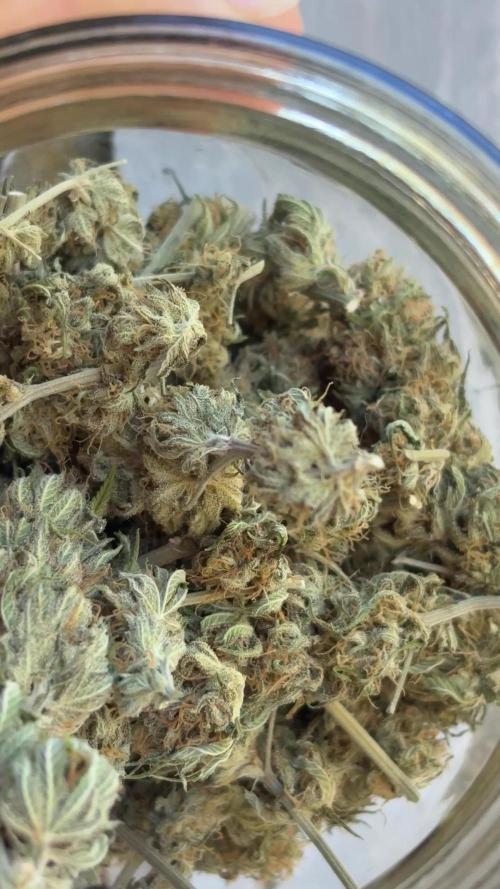
It wasn't a very lucky cycle, especially because I paid very little attention because principally it was taken from other plants and also unfortunately as you can see I couldn't bring anything else that a video and no photos🙄..
All this has an answer..
In practice, a friend whom I had not seen for a long time and without thinking, arrived since I wanted to relax a bit during his stay..gave all this Girl Scout..
I was able to test about a little more than a gram..
A little steamed, about 0.3, and the rest all in a joint, what you saw in the video🙂..
Unfortunately everything happened very quickly on I was not able to take the final photos..
The smoke test fortunately I had done the night before..
So sorry but for this diary no photos😞🙌..
I will not go too far on the story of the cult because as said before it was done a bit randomly..
This strain however is potentially quite productive and vigorous..
Despite the various stresses and with very poor lighting it has managed to produce 14g of flowers with a very strong perfume..
The flavor is quite earthy , with sweet-woods notes but with the fairly relevant presence of the ruderalis gene that gives it a slightly "strong" bitter taste..
At least that's the way it is for me..
I'm used to regular or feminized strains, maybe that's why I feel it very much🤔..
In the end of the day..
It's still a good strain..
The seeds may be a little expensive, but for those who do not pretend too much, it can be more than good..
In total from seed to harwest, the time spent was about 85 days..
Always at 18/6 light on/off..
The smoke test was carried out with organic raw papers and filter, only grass as I think it should normally be😎😉👌..
My friend smoking it with tobacco did not feel that strong taste, like smoking without being mixed..
Reason why I always say who tobacco or blunt falsify the flavor too significantly, going to mask both negative and positive notes, altering the final experience🙌..
Everyone rightly consumes as best I think🤗..
But I personally believe that the cannabis, to savor it in the its fullness and to enjoy 100% of its beneficial effects, it is convenient to consume it alone as it appears..
Pure🌱..
The ideal is with a vaporizer🚭..
Using the latter (between 180 ° and 195 °, mighty) it is still quite present a "rough" aftertaste that in mix with the already earthy flavor already present, does not leave me a good taste on the palate..
As an effect, however, is a line with a classic indica, quite relaxing and not invasive on a mental level..
Effect not too prolonged but present..
Nothing too strong anyway..
Overall it is a good strain, but considering the time taken to get to the end of the cycle by comparing it with a random photoperiod indica in relation to the hours of light for yield and general quality, I am even more inclined to choose plants feminized or regular..
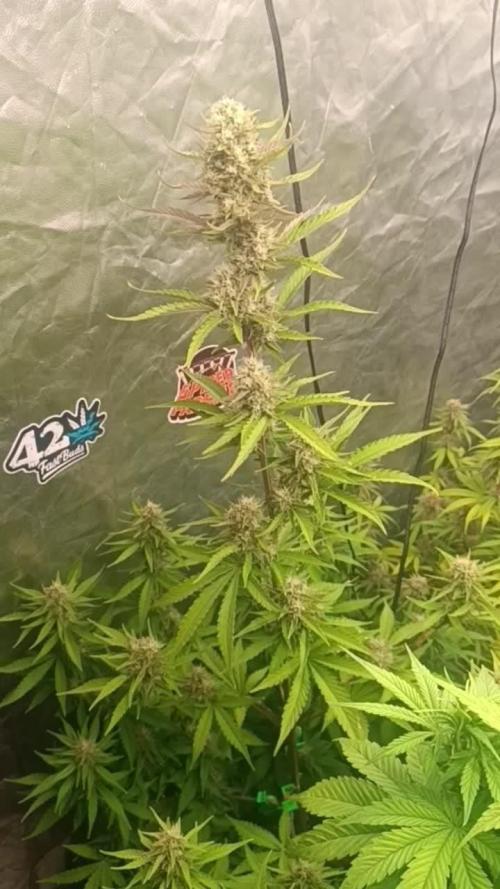
I still find the autoflowering interesting and certainly from what I see in the other diaries, Fast bud works well👍..
Maybe I will try another cultivar with their strains, managing the situation better..
See you on other diaries, already now😉..
Thanks for the support🙏..
Bye ✌️

Likes
20
Share
@eldruida_lamota
Follow
Que pasa familia, vamos a añadir la cuarta semana de vida de estas Apple Fritter de RoyalQueenSeeds, empezamos con la temperatura que la tenemos entre los 21/24 grados, la humedad está entorno al 60%, el ph está en 6.2 , el foco actualmente lo tengo encendido 18 horas y la potencia es al 50% de lo que da el foco.
También añado la gama de nutrientes de Agrobeta, que no falla, sin duda de la mejor alimentación que hay para tus plantas.
Trasplantamos a macetas definitivas, 7 litros en este caso, también se ven bien verdes ya recuperaron la carencia de nitrógeno.
Veremos estas próximas semanas como avanzan y se comportan.
Mars hydro:
Code discount: EL420
https://www.mars-hydro.com/
Agrobeta:
https://www.agrobeta.com/agrobetatiendaonline/36-abonos-canamo
Hasta aquí todo, Buenos humos 💨💨💨

Processing
Likes
11
Share
@Sgtoso
Follow
Finished transplanting the girls earlier this week. Based on the stretch from the mother plants I can get these clones roughly 36" tall (from the floor in a 5 gallon pot) before flipping to flower. So I can pretty much double these in height to maximise the final yield. We'll be on cruise control here for the next 2-3 weeks before transplanting up to 5 gallon pots.Then I'll have them in veg for another week after transplant so the roots will expand. By this time I should also have a pretty good idea how long they'll take to flower based on my information from the mother plants.

Likes
4
Share
@GREENPHOENIX6262
Follow
* 10/22 -Cherry Cherry Cola Auto - 10/22 - 9.5 Inches *
Thus far no concerns and she is growing vigorously, switched out Myco (Using Myco+ from Element) and increased nute and clean water feeds to 1 gallon per day offsetting the clean water and nute water feeds. Lite LST with bend clips applied yesterday (10/21).
* End of Week - Veg week 5 - 10/28 - Thus no issues or deficiencies, slight increase of veg dose - Defoliation will begin next week.
Processing
Likes
3
Share
@Cultiv8or
Follow
First week of flowering!! I’m glad to have 4 weeks of veg and start flowering. It’s August 17th and this tent can only be out on my balcony until the end of September to early October. So I have about 6-9 weeks of flower time before it’s too cold.
I feed 1L every other day with an 8-10ml per litre of the 3 nutes I’m using
Royal Gorilla is growing ugly , it’s bush is lush and tangled
Day 34 update - Royal Gorilla is actually in vegetation... next week it’ll start flower for sure


Processing
Likes
5
Share


Processing
Likes
5
Share
@DrGreenbutterThumb
Follow
Pistols, Pistols, Pistols, seen the flowers began to develop, she stretched lot last night, feb7-8 ir video uploaded. Took all the excess leaves off my girl
Likes
6
Share


Likes
6
Share
@Barcelona_Farmers710
Follow
Se nos fue un poco de altura pero intentaremos arreglar el error farmers... al final quedo simplemente en podas apicales y de momento ramas muy finas. Iremos comentando el proceso Farmers!🍁

Likes
3
Share
@HUUDUUH
Follow
Well.. done!
45 grams of dry flowers after trim.
Im glad and proud. That was a long way, my first oficial controled grow. Cool.
It was 14 days of dry, l have cured it, it smells so good , but that flavor they say.. not yet. The first hit is nice tho. No cof cof, the smoke is so smooth and the effects.. Its not my favorite thing, but at morning works fine.
Not the best seeds bank, but was worthy.
Likes
252
Share
@Tropicannibis_Todd
Follow
Well folks we chopped the Ztrawberriez 😁
And the second of the Strawberry Blast 🍓 🍓 🍓 🍓 Shes a killer for sure , incredibly frosty , and sticky , not the best of nugs as I said a bit airy , the smell is sweet and berry-licious ......
FC4800 from MarsHydro Lights being readjusted and chart updated .........: 1:I've added a RU45 to the mix : 1:
www.marshydro.ca
👉I am using Agrogardens for nutrients for my grows and welcome anyone to give them a try .👈
👉 www.agrogardens.com 👈
Agrogardens Cal MAG
Agrogardens Grow A B
Agrogardens Bloom A B
Agrogardens Bud Booster
Agrogardens PK13/14
I GOT MULTIPLE DIARIES ON THE GO 😱 please check them out 😎
👉THANKS FOR TAKING THE TIME TO GO OVER MY DIARIES 👈
Would you like to hang with the growdiary community 👉 https://discord.gg/gr4cHGDpdb 👈

Likes
3
Share
@JeyGanesha
Follow
Siamo all'ottava settimana di fioritura.le come non sono ancora come vorrei che siamo.... Aspetto ancora un paio di settimane poi vediamo come stanno...per ora stanno tutte bene

Likes
12
Share
@magicgarden
Follow
third week of life with this gorilla king auto from KANNABIASEED company it grows very very quickly
@kannabiassed

Likes
27
Share
@Lordshiva83
Follow
Olá companheiros, estas meninas da barney's farm, estão muito bem tiveram duas semanas a 24 /24h de luz agora passei a 20h de luz e 4h escuro, as meninas foram transplantadas para vaso de 26 litros, a shiskaberry está a crescer muito para cima por isso fiz um pequeno LST, abraço amigos, aceito sugestões ✌️🌱


Likes
15
Share
@Siriuz
Follow
Yo guys what's up
I added molasses for the very first time
Take a look, she's doing great
I'm happy for the training we've been giving her and now we are seeing some results
Alright guys let me know what's your advise
I think I'm going to be adding molasses after nutes every two days
********************************
UPDATED 08/03/2021
SHE IS DOING GREAT!
ID SAY SECOND WEEK OF FLOWERING ALREADY
WEEK 11 FROM SEED ' DAY 1 STARTS TOMORROW!
CHECK OUT THE VIDEOS AND PICS FOR BLOOM
TAKE CARE GUYS PEACE OUT!
Likes
10
Share
@TheGreenQueen420
Follow
The pistols are turning a brown colour this is the end of week 2 going into week 3.
Does anyone know if this is normal with LED lighting?
I have put a close up on the video.

Likes
14
Share
@Momgrowsthechronic
Follow
So welcome to Week 9 of the Sweet Seeds Gorilla Girl XL Autoflowering grow! Unfortunately after two years of due diligence- I was finally infected with Covid 19 so I have gotten really behind with this diary. In Week 7, I switched from the Grow to the Bloom fertilizer at a rate of 2.5 mls per gallon. I am still watering every 4th day at 3 litres per plant or 0.75 of a litre per day per plant. This strain seems particularly hungry/greedy so by the end of Week 7, I’ve decided to fertilize with every watering instead of every other. I’m not increasing the dosage of the fertilizer but the frequency in which it’s being given. Other than that the plants are doing fine through Weeks 7, 8 & 9 with the buds fattening up nicely, loads of wet to the touch resin and a super strong smell emanating from the tent even when it’s closed! That’s it for the past three weeks, Covid sucks and thank goodness harvest is just around the corner!
Apologies for not offering up any further "mom’s tip of the week" but I’m just finishing up this diary for kicks at this point. Thanks.
Processing
Likes
5
Share
@sercultiveta
Follow
35 dias de actividad en el indoor, foto periodo de 20 horas de luz y 4 de oscuridad


Likes
38
Share
@Chucky324
Follow
Hello. This is the end of week 9 and the beginning of week 10 of flowering.
Got 1 week of flushing done. I'll give the 3rd flushing tomorrow and and I should get another in before the harvest, starting on Aug 5, a Monday.
In years past, it's taken about a week to cut it down, hang the branches for a few days and then put the buds into curing bags.
Getting yellow leaves because of the flushing and there is another week to go so there will be more yellow leaves.
That's Ok. I think if you mistreat them a bit, you gets more THC at harvest.
The 3 plants I have inside were wilted when I checked on them. With the heat they went through their water faster since the last watering.
Now they have got lots of yellow leaves, especially Plant #8b. That twin has been a little strange since the start. Oh well?!?
The inside plants are a week behind the ones in the greenhouse and they will be harvested after I've finished in the greenhouse.
Showed some of my flowering peyote. They are self pollenating and the oldest is about 20 years old.
Finished book 5 of Weirdo. I've got more Freak Bros. comic books for the next diaries which will be Pink Kush and Death Bubba from weedasecgenetics.simdif.com/ or weedasec.org/
OK. Keep Growing Straight.
Chuck.

Likes
4
Share
@GLOrganics
Follow
Plants started vegetative growth again. After gowing was stunted and only weird shaped leafs were developed for a while, they started growing normal leafs again.