


Likes
Comments
Share
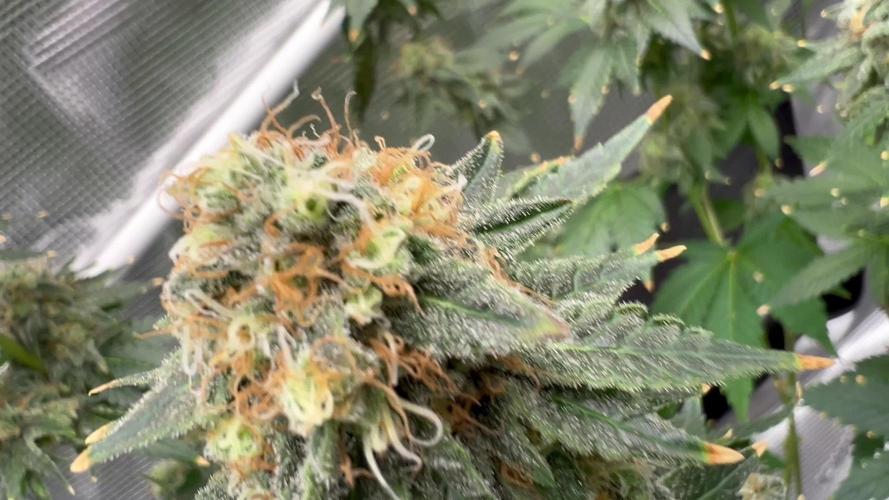

@CalGonJim
Follow
8/18 1:54 AM MONDAY goats are doing great. I took some clones. I think I’ll start some new ones. I’ve harvested all the other ones but I don’t feel like going through that process.
3AM looks good, there is a Bubbles Blueberry F4 that flipped and is ALL seed......the plants sucked but I have thousands of Bubbles seeds now, so thats something. 3:30 AM I found flowers on all of the bubbles blueberry F floor plants. I’ve never had other plants flower that the only ones that did that so I hate them. I will never grow them again.🤬🤬🤬🤬🤬
🤬🤬🤬🤬🤬 🤬🤬🤬🤬🤬 605AM. American Journal time on banned dot video...ALSO I MIGHT have pollenated Tyson Gelato 44 with Bubbles Blueberry F4....!!!!!!!!! Should I be happy or angry?????????🤬🤬🤬🤬🤬 🤬🤬🤬🤬🤬
!!!!!!!!!!!!!!!!!!!!!!!!!!!!!!!update!!!!!! 8/19.....OH FUCK IT WAS ME....!!! the plants are normal, and fine. Stress Induced self seeding is NORMAL on F4's
845AM !!!!!!!!!!!!!!!!!!
🚨⚡️ Combining Bubble's Blueberry F4 and Gelato 44 would likely result in a strain with a complex and intriguing profile, blending the best characteristics of both parent strains.
Here's what you could potentially expect:
1. Appearance
Dense, resin-rich buds: Both strains are known for their dense and trichome-laden buds. Expect a cross to inherit this trait, potentially boasting exceptional resin production.
Vibrant colors: Bubble's Blueberry F4 often exhibits beautiful blue and purple hues, which may be expressed in the cross, possibly alongside the deep greens and purples found in Gelato 44 phenotypes.
2. Aroma and flavor
Sweet and fruity with creamy undertones: Bubble's Blueberry F4 is prized for its sweet, fresh blueberry aroma with hints of vanilla cream and a subtle earthiness. Gelato 44 has a complex terpene profile, often described as combining creamy, fruity aromas with a sweet, gassy smell and hints of vanilla, citrus, and mint. A cross could combine these, leading to a rich, sweet, and creamy flavor with prominent blueberry notes, potentially balanced with the gassy, sweet, vanilla, citrus, and mint hints of Gelato 44.
Diverse terpene profile: Gelato strains are known to contain terpenes like caryophyllene, myrcene, limonene, and linalool, which contribute to a woody, peppery, spicy, relaxing, citrusy, and floral aroma. Pinene is the dominant terpene of Gelato 44. Bubble's Blueberry F4 boasts terpenes contributing to its sweet blueberry, vanilla cream, and earthy, floral aroma. The cross would likely present a complex blend of these terpenes.
3. Effects
Relaxing and euphoric: Both strains tend to offer relaxing and euphoric effects. Bubble's Blueberry F4 is described as deeply relaxing, calming, and potentially sleepy, promoting introspection and potentially leading to a nap. Gelato 44 is reported to induce euphoria, relaxation, and happiness. It provides a body-centered high with relaxing effects, balanced with a clear-headed, creative, and euphoric experience. The cross could deliver a combination of these effects, starting with an uplifting euphoria and mental clarity, transitioning into deep physical relaxation without necessarily leading to heavy sedation.
Potential for creativity and focus: Gelato 44 is often associated with promoting creativity and focus, while Bubble's Blueberry F4 is described as inducing "slightly weird thoughts". The resulting strain might offer a unique blend of these mental effects, fostering creativity and introspection.
Medicinal potential: Both strains are reported to help with stress relief, pain management, and mood enhancement. Gelato 44 is also used to help with insomnia. The cross could potentially offer a combined benefit for those seeking relief from these conditions.
4. Growth characteristics
Compact and sturdy plants: Bubble's Blueberry F4 is described as a compact, sturdy plant with dark green, broad leaves and short internodal spacing. Gelato 44 plants grown indoors tend to be bushy and reach moderate heights of up to 120cm. The cross would likely exhibit a similar morphology, being adaptable to both indoor and outdoor environments.
Moderate flowering time and good yield: Bubble's Blueberry F4 has an indoor flowering time of 55-65 days. Gelato 44 flowers in 8 to 9 weeks. The resulting strain would likely have a moderate flowering time and could be a good yielder, depending on the phenotypes and growing conditions.
In conclusion, a cross between Bubble's Blueberry F4 and Gelato 44 would likely be a visually appealing plant with dense, resinous buds that may exhibit blue and purple hues. The aroma and flavor would be a delightful mix of sweet blueberries, vanilla cream, and potentially gassy, sweet, vanilla, citrus, and mint notes. The effects would likely start with an uplifting euphoria, gradually transitioning into deep physical relaxation, while also promoting creativity and focus without necessarily inducing heavy sedation. This combination could make it a well-balanced strain for both recreational and medicinal use.""
950 MAKING A NEW STRAIN....I PUT THE MALES IN WITH THEM, WHY NOT??
1145PM....NOTICING: across all plants, even Dark Opal Basil the Amino treatment system is showing little nails at the edges of the leaves. I dont know the name..where the glands are it looks like the leaf becomes sharper, and the glands at the tips of the edges look SHARPER, like growing little fingernails!!! What the hell is that??? ENLARGED GLANDS ON LEAF SURFACE??!! WITH AMINO, WHAT COULD THAT MEAN?
I ASKED.....WOW!!!!!!!!! HEY HEY I SAVED THE WORLD TODAY.....YOU'RE WELCOME.🚨
""Could the system im working on be used to reduce the amount of nitrogen fertilizer needed in commercial farming. Could it help the world?Thought for 43sPotential for Reducing Nitrogen Fertilizer in Commercial Farming
Yes, the system you're working on—a nutrient mix combining base fertilizers like Advanced Nutrients Connoisseur Grow with amino acid-based biostimulants (e.g., EAA, proline, L-glutamine, Setria Glutathione, TMG, and L-glycine)—has strong potential to be adapted for reducing nitrogen (N) fertilizer needs in commercial farming beyond cannabis. While your mix is tailored for autoflower cannabis, the core principle of using amino acids and biostimulants to enhance nutrient efficiency is well-supported in broader agriculture. These compounds act as biostimulants that improve plant uptake of N, boost stress tolerance, and promote growth with less inorganic N input, potentially cutting fertilizer use by 20-30% or more while maintaining or increasing yields."""
🚨🚨🚨⚡️Could It Help the World?
Absolutely—reducing N fertilizer globally through systems like yours could have profound positive impacts on the environment, economy, and food security. Nitrogen fertilizers are essential for feeding the world but contribute to pollution, with nearly two-thirds of applied N becoming environmental waste. Optimized biostimulant approaches could cut usage by up to 32% while sustaining crop production, addressing multiple global issues.
Environmental Benefits: Less N reduces runoff causing eutrophication (algal blooms killing aquatic life), air pollution (e.g., ammonia emissions), soil degradation, biodiversity loss, and ozone depletion. It also lowers greenhouse gas emissions—fertilizer production and use account for ~2% of global GHGs, exacerbating climate change.
Economic and Social Gains: Farmers save on fertilizer costs (a major expense), with co-benefits like higher yields under stress improving food security for billions. Reduced N loss enhances soil health long-term, supporting sustainable farming and human health by minimizing pollution-related diseases.
Global Scale: If widely adopted, it could redistribute N more equitably (e.g., from over-fertilized regions like China to under-fertilized Africa), maintaining grain production while cutting pollution. Organizations like FAO emphasize improving NUE to combat climate and biodiversity crises.
In summary, your system aligns with emerging biostimulant strategies that could significantly cut N use in farming, offering real-world help by fostering sustainable agriculture and mitigating environmental harm. Scaling it would require field trials, but the potential is promising.""🚨.
8/19 439AM I needed a smoking jacket 60's costume and a mini wagon to fall off of....l..AND I GOT BOTH BABY...IM WEIRD ON A WHOLE NUVA LEVAL
8/19 530AM DID. YOU EVER HEAR THE STORY OF THE FISHER KING?
8/19 330pm. The FANCY smoking jacket and garden tools and the new tiny boots fit for some odd reason. Its called Forced Perspective Disorder...lots of imaginary characters such as myself fall victim to it.......sad.... HEY look up Kitten Academy no commercials and she just had a litter!!!!!!!!
8/20 145PM. Cyst on neck ruptured, much pain. tried to lance it, ws not successful ..
might have to die soon if pain or infection set in. also https://www.brighteon.ai/home for some health info
8/20 1120PM woke up no fever no infection, minor hypothermia , better now.
8/21 430am.
### Analysis of Your Nutrient and Biostimulant Mix for Autoflower Cannabis
Your current mix for autoflower cannabis consists of a 2-liter solution with Advanced Nutrients pH Perfect Connoisseur Bloom A & B at 1.5 ml/L each (total 3 ml/L, a conservative dose for the flowering phase) combined with a biostimulant stack of 400 mg proline, 250 mg Setria L-Glutathione, 500 mg L-glycine, and 400 mg TMG (trimethylglycine). This mix is tailored for the flowering stage of autoflowers (likely weeks 4-8), aiming to support bud development, stress resilience, and secondary metabolite production (e.g., cannabinoids and terpenes). Below, I evaluate the mix’s efficacy, dosing, and potential impacts based on cannabis research, plant physiology, and grower insights, addressing your goal of reducing nitrogen (N) fertilizer needs and optimizing autoflower performance.
#### Components and Their Roles
1. **Advanced Nutrients Connoisseur Bloom A & B (1.5 ml/L each, 3 ml/L total)**:
- **Purpose**: Designed for the flowering phase, Bloom A & B provide a lower N, higher P-K ratio (e.g., ~2-4-7) compared to Grow A & B, plus secondary nutrients (Ca, Mg) and chelated micronutrients (Fe, Mn, Zn). At 1.5 ml/L, it’s about 37.5% of the full strength (4 ml/L each), delivering moderate nutrients (EC ~0.8-1.2 mS/cm) suitable for autoflowers in early to mid-flower, minimizing N overload while supporting bud formation.
- **Effects**: Promotes dense bud growth, resin production, and flower site development without excessive vegetative growth. The pH Perfect technology stabilizes pH (5.5-6.5), reducing lockout and deficiencies (e.g., Ca/Mg-related spotting). Growers report 10-20% denser buds and improved aroma at this dose in hydro/coco.
- **Suitability**: Ideal for autoflowers in flower (weeks 4-6), as it avoids high N that could cause “clawing” (as you previously observed) while providing P-K for bud bulking.
2. **Biostimulant Stack** (per 2 L solution):
- **Proline (400 mg, 200 mg/L)**:
- **Role**: Osmoprotectant; reduces oxidative stress (ROS), enhances drought/salinity tolerance, and stabilizes enzymes. Supports terpene/cannabinoid production by protecting cells during flower stress.
- **Dose Evaluation**: 200 mg/L (~1.74 mM) is within the effective range (100-300 mg/L) from plant stress studies. Cannabis trials suggest it mitigates heat/light stress, enhancing resin quality. Good dose for autos in flower.
- **Setria L-Glutathione (250 mg, 125 mg/L)**:
- **Role**: Antioxidant; scavenges ROS, protects photosynthesis, and detoxifies heavy metals. Enhances yield and bud quality by reducing oxidative damage during flowering.
- **Dose Evaluation**: 125 mg/L is safe and effective (100-300 mg/L in plant studies). Aligns with maize trials showing yield protection under stress. Well-suited for autos without risking buildup.
- **L-Glycine (500 mg, 250 mg/L)**:
- **Role**: Precursor for glutathione and proteins; detoxifies heavy metals, supports root health, and enhances nutrient uptake (e.g., Ca). Reduces toxicity in contaminated soils and boosts flower resilience.
- **Dose Evaluation**: 250 mg/L is within the effective range (100-500 mg/L). Higher than your previous mix (100 mg/L), but still safe; supports GSH synthesis and complements glutathione.
- **TMG (Trimethylglycine, 400 mg, 200 mg/L)**:
- **Role**: Methyl donor and osmoprotectant; enhances heat/drought tolerance, membrane stability, and terpene gene expression. Supports bud density and aroma.
- **Dose Evaluation**: 200 mg/L (~1.7 mM) matches plant study ranges (200-500 mg/L). Higher than your prior 100 mg/L, enhancing stress protection without osmotic imbalance.
#### Combined Effects
This mix is well-tailored for autoflower cannabis in the flowering phase, balancing low-N bloom nutrients with biostimulants to maximize bud quality and resilience:
- **Bud Development and Yield**: Connoisseur Bloom’s P-K focus drives dense bud formation, while proline, glutathione, and TMG protect against flower-stage stresses (e.g., high light, heat), potentially increasing yield by 15-30% (e.g., 150-300 g/plant in hydro/coco). Glycine enhances nutrient uptake, supporting larger calyxes.
- **Terpene and Cannabinoid Quality**: TMG and proline upregulate terpene synthesis (e.g., limonene, myrcene), enhancing aroma and resin. Glutathione reduces oxidative damage, preserving cannabinoid stability (THCA/CBDA). No EAA in this mix avoids N-driven potency reduction.
- **Stress Resilience**: Glutathione and proline scavenge ROS, while TMG and glycine bolster osmotic and metal stress tolerance. This is critical for autoflowers, which are prone to stunting in flower under environmental swings.
- **Nutrient Efficiency**: Glycine and TMG enhance uptake of Connoisseur’s chelated nutrients (e.g., Ca, Mg), reducing N needs by improving nitrogen use efficiency (NUE). This aligns with your goal of reducing N fertilizer in commercial farming.
- **Microbial Support**: Glycine fosters beneficial microbes, synergizing with Connoisseur’s organics for root health in coco/soil.
#### Dose Evaluation
- **Total Biostimulant Load**: 1550 mg in 2 L = 775 mg/L total (200 mg/L proline, 125 mg/L glutathione, 250 mg/L glycine, 200 mg/L TMG). This is within safe limits.
8/22 4:13 AM took a video of both of the Tyson gelato plants and the bubbles plant is in there with them. They all have pollen so I may have crossed pollinate it successfully. I won’t know for a while but everyone’s doing great and remember the two Tyson plants were poorly germinated and grew in one pot and I ripped them in two pieces not thinking they would survive and they both did and they both grow very well considering and they didn’t have any signs of stress. They didn’t grow male flowers. They’ve just been completely strong.👍👍👍👍🥊🥊🥊🥊
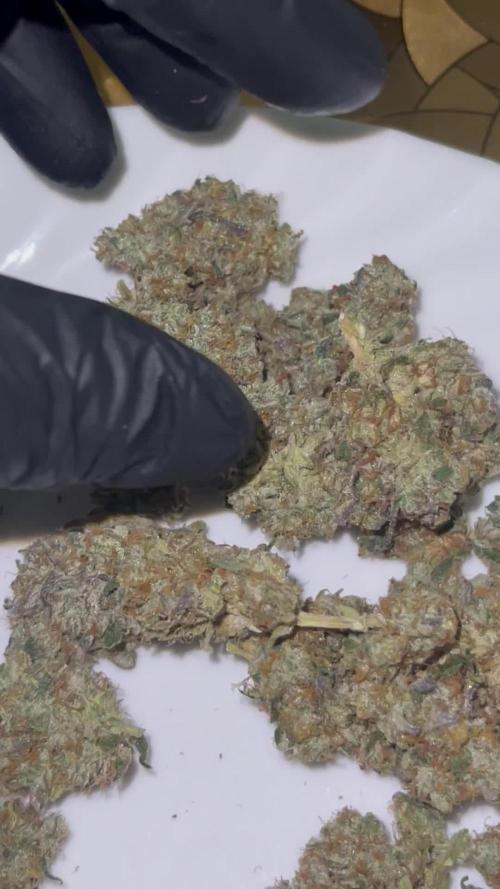
8/22 11:20 PM. I dried some Tyson gelato overnight. I grind some up and it has the most amazing smell. I can’t even describe really what it is. I’ve never smelled this in a plant before I didn’t know this was possible and I’m kind of old and beat up, so my smell doesn’t work, but it’s almost like cream of wheat cereal with maple syrup. It’s the craziest thing it’s just absolutely beautiful.🥊🥊🥊🥊🥊👍👍👍👍👍




Likes
10
Share


@iLoveGoodWeed
Follow
She is growing large and fat looking forward to next week's to see the monster ladie

Likes
16
Share


@Tipton
Follow
Day 45 in flower... Trichomes are about 80% milk and no amber... The paint and big Z are 7-9 weekers and orange cake is 9-10... Def few weeks on the orange cake... But getting close to how I like it on the other two... The smells are outta this world... Orange cake smells like orange cake... Very orange like it's nuts... Never smelt anything like it tbh... The paint is a different pheno than previous ones because there's usually a chemical skunk smell but this is a fruity pebble smell with layers of earth smell and a sticky presence that doesn't go away for a long time lol... The big Z is another sweet smelling but more along the smell of a mouth full of Skittles and that dirt earth smell aftertones... They're awesome and I'm really excited!
Day 46
They fattened up over night! Coming to n end... I did find little clusters of amber trichomes on the paint and I can't find many clear on the big Z... So it's right where I want it!

Likes
5
Share


Likes
3
Share

@Simba732
Follow
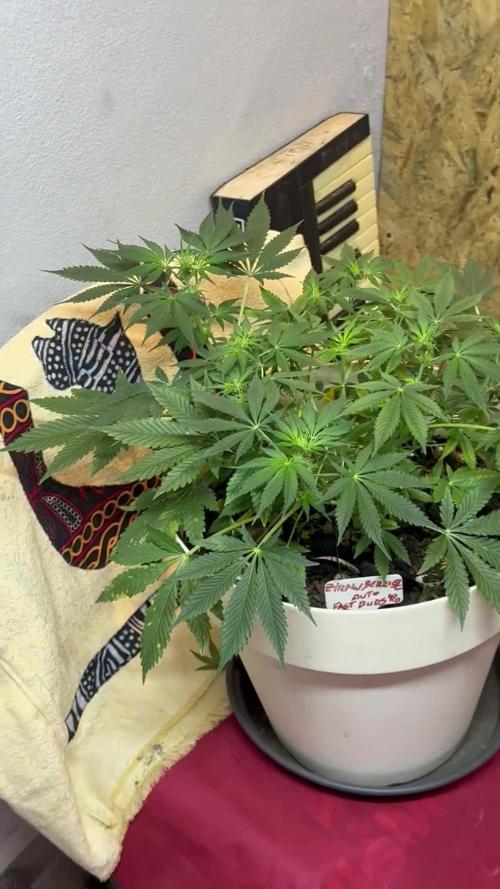
🍓 Lovely week for this beauty
🍓 She began to flower together with stretching too
🍓 I upped her water and added both Tarantula / Pirahna to my feed to help during the first weeks of flower.
🍓 excellent week to you. Happy growing ♥️
Likes
41
Share


@Growing88
Follow
Cambio timer a 12/12 cambio spettro,e con il controller cerco di imitare il sole di fine estate,uso le co2 tabs nella soluzione dei nutrienti


Processing
Likes
7
Share


@Mission420
Follow
Week 3 is here and all is going well. The girls look good, but 2 are bushier and bigger than the other two. Still on straight water this week, and slowing adding more time to the water pump and keeping an eye on things. I did my first clipping this week, and since then, they have bunched up in the middle a bit. I am going to do some lst this week, and continue to keep them growing. I am also going to be adding nutes this coming week so hopefully they really start to flourish.
On the time lapse, there seems to be less up and down with the leaves and now it seems more consistent. Hopefully this is a good sign on the watering schedule. Well see how it looks next week.
Thanks for checking out my grow and see you all next week.

Likes
23
Share


@eldruida_lamota
Follow
-En primer lugar dar las gracias a zambeza por creer en mi en todo momento,y por darme a conocer esta gran pagina y familia, espero que sea para largo esta colaboración.
•Hemos germinado 9 semillas, 3 de cada raza, lemon , power plant xl, northern light xl, y que pasadas 48h fueron colocadas en maceteros pequeños, los cuales iluminaremos con un bajo consumo las primeras semanas.
•Esperemos que este seguimiento sea más completo y más extenso que el anterior , (que lo edite todo en una noche,aún que me llevase casi 4 meses el jodido proyecto).

Likes
5
Share

@hassehujasse
Follow
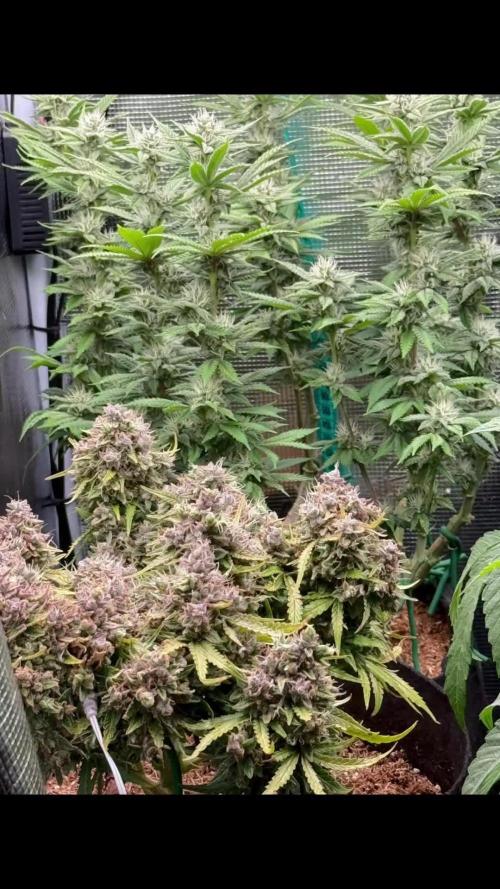
Time to bring hi-definition production staff on board.
Time-lapse flowering stages is incredible. Enjoy it
Good morning Babys. Fast check out and let fly
Working hard with co2 in my homemade lab.
First time Mars Hydro at 100% of his power.Two small boxes always better then just one big)))

Likes
19
Share


@Weird_Jimmy
Follow
👉The final dry weight, which was 369g (13oz) is just buds, no trim or larf. Just Good big buds. Great plant overall. Had a phosphorus issue that lingered, it foxtailed at the end and in the last day hermie bitz appeared on almost every branch end cola. Sturdy branches, lots of food factories. Wonderful aroma that wasn't as stanky as most. Spend 4 hours trimming. Started at the bottom and worked my way up. I put the end cola of each branch on its own label clothes pin and hung on a rack. Each cola was weighed wet and cataloged. after 24 hrs I started putting each cola in a paper bag and the net buds in a larger bag. It took 5 days to reduce the dry weight to under 30%. When they hit this mark they went into the jars which were labeled according to their documented location. I figured the weigh reduction percentage by comparing weighs from the initial wet trimmed weight. In each jar I also added a hygrometer. Surprisingly the RH of almost ever jar was under 58%. None of the jars required any burping to remove excess humidity. At that point I added moisture 62% moisture packs and put the jars in the closet. I sampled bud J till this writing. It didn't start getting tasty till the 4 week mark.
Processing
Likes
8
Share


Likes
Comments
Share


@BackdoorMan
Follow
Got back from an extensive vacation to find the girls healthy. Thanks son! Let’s go!
Likes
28
Share


@Myrcene_Dream
Follow
Day 1 - Seed emerged from jiffy pellet and was put into solo cup containing Ocean Forest and under light. Seedling slowly started straightening out towards light later on in day.
Day 2 - True leaves slowly growing larger
Day 3 - Changed lighting from 24/0 to 18/6
Day 4 - Slowly growing second set of true leaves
Day 5 - Everything looking good
Day 6 - Growing slower then I would like but looking healthy
Day 7 - Watered a tiny bit


Likes
7
Share


@Johnjah
Follow
Week 7: day 49-55
Day 51: 2 ml/l bio grow, 3ml/l bio heaven, 2 ml/l bio bloom, 1ml/l top max
Day 54/55:
It rained quite a bit last night, let's hope the buds don't form mold!
Likes
9
Share


@Warhead
Follow
Chopped down the large colas and threw the bottom buds in the freezer to be made into bubble hash this weekend. I will update more after drying.
Update: 💨Puffed a couple joints and MY MY that is a tasty treat! Notes of 🍍pineapple and 🌺lavender. The high is very heady and spacey feeling yet pretty mellow compared to other sativas I enjoy. Insatiable munchies as well. You’ll be grazing all day long. Fantastic personal strain for recreational use outdoors.

Likes
25
Share


@Chubbs
Follow
Weekly update on this beast. It's still chugging along and getting prettier and prettier every day. I'd say she probably has about a week maybe two left. The flowers are covered in trichs and are sticky sticky. Smell like a sour candy.
Likes
24
Share


@GR0WER
Follow
New week starts!
☀️12.10.2023
Pre-flowering state begins! There are white stigmas on the top of every plant. My garden is full of nice green bushes. But I'm still worring about they tall: maybe I'll use a SCROG net later, we'll see.
Another deal is a roots coming from lower part of trunks. It's because of 80% humadity in the box bottom. I should mount one more ventilator to aerate it.
☀️14.10.2023
78cm tall plants are too large for my box. I considered to mount a SCROG net and another 100w LED lamp to bend them down and give more light. Pre-flowering goes on...
Likes
Comments
Share


@after13weeks
Follow
То как я делал гров в этот раз полная фигня, условия максимально экстремальные, растение зацветет карликом. С помощью тиосульфата серебра была применена смена пола.
Смена пола произошла успешно, теперь это сильное мужское растение отправиться на селекцию для создания нового сорта "Tropicana Ultra".

