The Grow Awards 2026 🏆
Likes
Comments
Share
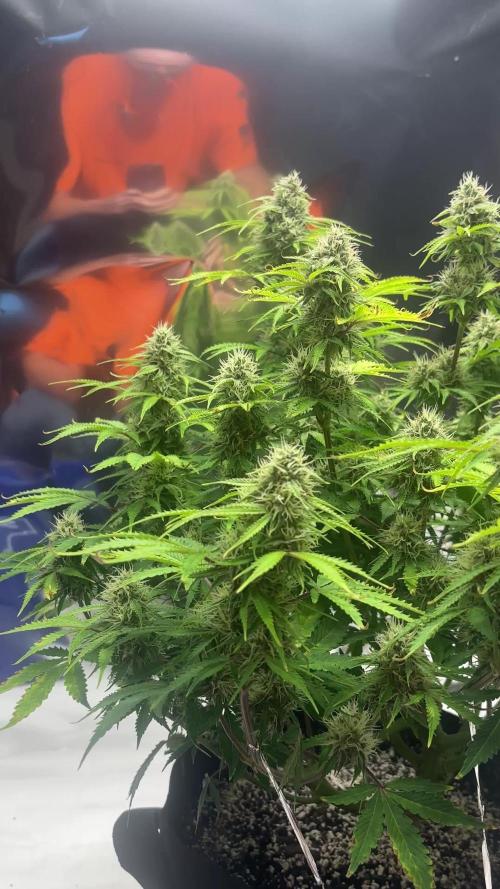
Bumped up my feed over this week which stopped my leaves from severely eating itself. Was definitely underfeeding in cal-mag and P/K which was a beginner mistake. Plan to get separated nutes for a better feed that’s not all mixed. Buds are forming nicely tho! We’ve got good dense nugs forming and a lot of orange hairs popping! The smell profile…. amazing not strong yet but the smell is like fresh green lemony pine with that hint of funk we all love. Very excited to see the finish come these last few weeks!
Likes
Comments
Share

This week was great, I flipped her to flower and pistils began sprouting. Ready to see her nug up.
Processing
Likes
2
Share
Lowered the light a little to 50cm. The humidifier works pretty good. In combination with the hygrostat, the humidity ist conctant between 68 and 70%. Added 2ml/l alga grow and 1ml/l of power roots. Watered only once until now
Likes
1
Share
Start of week 10, will harvest soon
Likes
7
Share
@Chubbs
Follow
420Fastbuds-Papayton What up, fam, little update on these beautiful girls. They got rained on a few times the last couple of days as we've had some summer storms come through. I'm starting to see some pistols on one. I'll guess the other two won't be too far behind. All in all, Happy Growing.
Likes
39
Share
@XxxAuto
Follow
It's my second grow of this baby.... and I'm in love 😍 so easy and with big buds hard as stones 💎 The tasting is fcking goooood !! Do yourself a favor and try this 🌳 Soon ill grow another of this strain again.... PEACE ✌️🏼
Likes
11
Share
@PeterC403
Follow
Losing colour in the leaves looks like some ph issues too. I flushed her to correct it. Nice stinky buds though
Likes
5
Share
Both growing under and in exactly the same conditions and substrates and nutes. Ones so much larger both are topped.
Likes
35
Share
@madlangs
Follow
All going well. Apart from cream mandarine leaves are not at all happy 17.10.21 Dg 2.2L Wc 2.7L Gb 2.6. =7.5 Gave week 3 flower full strength. Recharge. Mammoth P half strength silica 0.5mlL calmag gave fish instead of grow ph6.4 ec2.4 Chem 2.8 Cream. 2.2 Hubba. 3.4 = 10.5 Orange. 1. Gave none 0range 2 2.1 Gave week 2 flower full strength. Recharge. Mammoth P half strength silica 0.5mlL calmag gave fish instead off grow ph6.6 ec2.0 19.10.21 Dg 3.1L Wc 2.7L Gb 3.4 Chem 3.1 Cream. 2.7 Hubba. 3.1 Orange. 1. 2.7 0range 2 2.7 Gave all week 3 full strength flower apart from dg week 4 flower. Silica 2ml/L calmag 0.5ml/L gave grow instead of fish ph6.5 20.10.21 Spectrum king 85cm Lumatek 60cm 21.10.21 Dg 3L Wc 3 Gb 3 Chem 3 Cream. 3 Hubba 3 Orange. 1 3 0range 2 3 Gave all week 3 full strength flower apart from dg week 4 flower. Silica 2ml/L calmag 0.5ml/L gave grow instead of fish 23.10.21 Dg week 5 flower feed. 2.5L Wc week 4. 2.5L Gb week 4. 2.5L Cream. Week 4. 3L Chem week 3. 3L Hubba week 3. 3L Orange. 1 week 3. 0 0range 2 week 3. 2.5L Gave all recharge. Silica 2ml/1. Calmag 0.5ml/1. Mammoth p gave fish instead of grow Dg 60cm Wc 60cm Gb 63cm Chem 74cm Cream. 61cm Hubba. 64cm Orange. 1. 31cm 0range 2 41cm Spectrum king 76cm Lumatek 60cm 32 lux Dg 35 lux hubba
Likes
2
Share
Been a good ride for my first plant
Processing
Likes
18
Share
@Ktims420
Follow
Very excited , first grow. Struggling with knowing the exact amount of water they need since I am already in the big pots their final resting home
Likes
2
Share
@Autower
Follow
Missed a week as been busy but here they are coming into week 10 time to start hitting them with some overdrive for a few weeks before flushing with ph,d water
Likes
18
Share
Green light is radiation with wavelengths between 520 and 560 nm and it affects photosynthesis, plant height, and flowering. Plants reflect green light and this is why they appear green to our eyes. As a result, some growers think that plants don’t use green wavelengths, but they actually do! In fact, only around 5 – 10% of green light is reflected from leaves and the rest (90 – 95 %) is absorbed or transmitted to lower leaves [1]. Green wavelengths get used in photosynthesis. Chlorophyll pigments absorb small amounts of green wavelengths. Light that doesn’t get absorbed is transmitted to leaves that are shaded out from direct light. This means that leaves at the bottom of the canopy get more green light than leaves at the top. A high proportion of green wavelengths compared to other colors tells lower leaves that they are being shaded out, so they are able to react accordingly. Lower leaves may react by opening or closing their stomata or growing longer stems that help the leaves reach brighter light [1, 2, 3]. When it comes to growing cannabis, many cultivators are interested in the quality of light used for the flowering stage. In many plants, flowering is regulated by two main photoreceptors: cryptochrome and phytochrome. Both photoreceptors primarily respond to blue light but can also respond to green, although to a lesser extent. Green can accelerate the start of flowering in several species (although cannabis has yet to be tested) [1, 4, 5]. However, once flowering has begun, it’s important to provide plants with a “full spectrum” light that has high amounts of blue and red light, and moderate amounts of green, in order for photosynthesis to be optimized. Green light mediates seed germination in some species. Seeds use green wavelengths to decide whether the environment is good for germination. Shade environments are enriched in green relative to red and blue light, so a plant can tell if it is shady or sunny. A seed that senses a shaded environment may stay dormant to avoid poor growing conditions [1]. Some examples of plant species where researchers have documented this response are: ryegrass (a grass that grows in tufts) and Chondrilla (a plant related to dandelion) [1, 6]. Although green wavelengths generally tell plants NOT to germinate, there are some exceptions! Surprisingly, green wavelengths can stimulate seed germination in some species like Aeschynomene, Tephrosia, Solidago, Cyrtopodium, and Atriplex [1, 6, 7]. Of course, light is not the only factor affecting seed germination – it’s a combination of many factors, such as soil moisture, soil type, temperature, photoperiod, and light quality. When combined with red and blue light, green can really enhance plant growth [1, 8]. However, too much green light (more than 50% of the total light) can actually reduce plant growth [8]. Based on the most current research, the ideal ratio of green, red, and blue light is thought to be around 1:2:1 for green:blue:red [9]. When choosing a horticultural light, choose one that has high amounts of blue and red light and moderate amounts of green and other colors of light. Not many studies can be found about the effect of green light on cannabis growth or metabolism. However, if one reads carefully, there are clues and data available even from the very early papers. Mahlberg and Hemphill (1983) used colored filters in their study to alter the sunlight spectrum and study green light among others. They concluded that the green filter, which makes the environment green by cutting other wavelengths out, reduced the THC concentration significantly compared to the daylight control treatment. It has been demonstrated that green color can reduce secondary metabolite activity with other species as well. For example, the addition of green to a light spectrum decreases anthocyanin concentration in lettuce (Zhang and Folta 2012). If green light only reverses the biosynthesis of some secondary metabolites, then why put green light into a growth spectrum at all? Well, there are a couple of good reasons. One is that green penetrates leaf layers effectively. Conversely red and blue light is almost completely absorbed by the first leaf layer. Green travels through the first, second, and even third layers effectively (Figure 2). Lower leaf layers can utilize green light in photosynthesis and therefore produce yields as well. Even though a green light-specific photoreceptor has not yet been found, it is known that green light has effects independent from the cryptochrome but then again, also cryptochrome-dependent ones, just like blue light. It is known that green light in low light intensity conditions can enhance far red stimulating secondary metabolite production in microgreens and then again, counteracts the production of these compounds in high-intensity light conditions (Kim et al. 2004). In many cases, green light promoted physiological changes in plants that are opposite to the actions of blue light. In the study by Kim et al. blue light-induced anthocyanin accumulation was inhibited by green light. In another study it has been found that blue light promotes stomatal opening whereas green light promotes stomatal closure (Frechilla et al. 2000). Blue light inhibits the early stem elongation in the seedling stage whereas green light promotes it (Folta 2004). Also, blue light results in flowering induction, and green light inhibits it (Banerjee et al., 2007). As you can see, green light works very closely with blue light, and therefore not only the amount of these two wavelengths separately is important but also the ratio (Blue: Green) between these two in the designed spectrum. Furthermore, green light has been found to affect the elongation of petioles and upward leaf reorientation with the model plant Arabidopsis thaliana both of which are a sign of shade avoidance symptoms (Zhang et al. 2011) and also gene expression in the same plant (Dhingra et al. 2006). As mentioned before, green light produces shade avoidance symptoms which are quite intuitive if you consider the natural conditions where the plants grow. Not all the green light is reflected from the highest canopy leaves in nature but a lot of it (50-90%) has been estimated to penetrate the upper leaves at the plant level ((Terashima et al., 2009; Nishio, 2000). For the plant growing in the understory of the forest green light is a signal for the plant of being in the shade of a bigger plant. Then again, the plants growing under unobstructed sunlight can take advantage of the green photons that can more easily penetrate the upper leaves than the red and blue photons. From the photosynthetic pigments in higher plants, chlorophyll is crucial for plant growth. Dissolved chlorophyll and absorb maximally in the red (λ600–700 nm) and blue (λ400–500 nm) regions of the spectrum and not as easily in the green (λ500–600 nm) regions. Up to 80% of all green light is thought to be transmitted through the chloroplast (Terashima et al., 2009) and this allows more green photons to pass deeper into the leaf mesophyll layer than red and blue photons. When the green light is scattered in the vertical leaf profile its journey is lengthened and therefore photons have a higher chance of hitting and being absorbed by chloroplasts on their passage through the leaf to the lower leaves of the plant. Photons of PPFD (photosynthetic photon flux density) are captured by chlorophyll causing an excitation of an electron to enter a higher energy state in which the energy is immediately passed on to the neighboring chlorophyll molecule by resonance transfer or released to the electron transport chain (PSII and PSI). Despite the low extinction coefficient of chlorophyll in the green 500–600 nm region it needs to be noted that the absorbance can be significant if the pigment (chlorophyll) concentration in the leaf is high enough. The research available clearly shows that plants use green wavelengths to promote higher biomass and yield (photosynthetic activity), and that it is a crucial signal for long-term developmental and short-term dynamic acclimation (Blue:Green ratio) to the environment. It should not be dismissed but studied more because it brings more opportunities to control plant gene expression and physiology in plant production. REFERENCES Banerjee R., Schleicher E., Meier S. Viana R. M., Pokorny R., Ahmad M., Bittl R., Batschauer. 2007. The signaling state of Arabidopsis cryptochrome 2 contains flavin semiquinone. The Journal of Biological Chemistry 282, 14916–14922. Dhingra, A., Bies, D. H., Lehner, K. R., and Folta, K. M. 2006. Green light adjusts the plastic transcriptome during early photomorphogenic development. Plant Physiol. 142, 1256-1266. Folta, K. M. 2004. Green light stimulates early stem elongation, antagonizing light-mediated growth inhibition. Plant Physiol. 135, 1407-1416. Frechilla, S., Talbott, L. D., Bogomolmi, R. A., and Zeiger, E. 2000. Reversal of blue light -stimulated stomatal opening by green light. Plant Cell Physiol. 41, 171-176. Kim, H.H., Goins, G. D., Wheeler, R. M., and Sager, J. C. 2004.Green-light supplementation for enhanced lettuce growth under red- and blue-light emitting diodes. HortScience 39, 1617-1622. Nishio, J.N. 2000. Why are higher plants green? Evolution of the higher plant photosynthetic pigment complement. Plant Cell and Environment 23, 539–548. Terashima I., Fujita T., Inoue T., Chow W.S., Oguchi R. 2009. Green light drives leaf photosynthesis more efficiently than red light in strong white light: revisiting the enigmatic question of why leaves are green. Plant & Cell Physiology 50, 684–697. Zhang, T., Maruhnich, S. A., and Folta, K. M. 2011. Green light induces shade avoidance symptoms. Plant Physiol. 157, 1528-156. Wang, Y. & Folta, K. M. Contributions of green light to plant growth and development. Am. J. Bot. 100, 70–78 (2013). Zhang, T. & Folta, K. M. Green light signaling and adaptive response. Plant Signal. Behav. 7, 75–78 (2012). Johkan, M. et al. Blue light-emitting diode light irradiation of seedlings improves seedling quality and growth after transplanting in red leaf lettuce. HortScience 45, 1809–1814 (2010). Kasajima, S., et al. Effect of Light Quality on Developmental Rate of Wheat under Continuous Light at a Constant Temperature. Plant Prod. Sci. 10, 286–291 (2007). Banerjee, R. et al. The signaling state of Arabidopsis cryptochrome 2 contains flavin semiquinone. J. Biol. Chem. 282, 14916–14922 (2007). Goggin, D. E. & Steadman, K. J. Blue and green are frequently seen: responses of seeds to short- and mid-wavelength light. Seed Sci. Res. 22, 27–35 (2012). Mandák, B. & Pyšek, P. The effects of light quality, nitrate concentration and presence of bracteoles on germination of different fruit types in the heterocarpous Atriplex sagittata. J. Ecol. 89, 149–158 (2001). Darko, E. et al. Photosynthesis under artificial light: the shift in primary and secondary metabolism. Philos. Trans. R. Soc. B Biol. Sci. 369 (2014). Lu, N. et al. Effects of Supplemental Lighting with Light-Emitting Diodes (LEDs) on Tomato Yield and Quality of Single-Truss Tomato Plants Grown at High Planting Density. Environ. Control Biol. 50, 63–74 (2012).
Likes
12
Share
First off I believe the strain name is wrong. It should be just FF03 but I’ll need to check with fastbuds. These are photo period test genetics from fastbuds and the FF stands for fast flower. They are supposed to be done in 50-60 days of flowering. I’m going to let them do their thing for a minimum of 40 days just to be sure they don’t have ruderalis. This is a brand new setup I built with floraflex 6” pot pro using coco and I’ll be testing their nutrients out as well. That being said they are about 10 days old but I’ve been so busy I haven’t had time to get the diary going. Thanks for looking :)
Likes
9
Share
Die 6 Blütewoche hat angefangen. Ab jetzt werde ich anfangen die Pflanzen zu spülen, die Trichomköpfe sind schon sehr weit vorgeschritten was den Reife grad angeht. Deshalb muss ich das besondere Aufmerksamkeit schenken. Bis nächste Woche.
Likes
27
Share
5/23/2023 Week 7- Day 1 of Flower (Day 110 overall) (Day 49 of Flower) There was a couple of small super small sucker buds on the lower stocks that needed to be cleaned off but that was it. Just watching them Flower!! 5/24/2023 Week 7- Day 2 of Flower (Day 111 overall) Tucked a few fan leaves below lower buds but didn't see any blatant offenders that needed to be removed. I typically do start my checks in Week 8 but since this is a new strain I decided to go ahead and do a Trichome check just to see what was what.. Just as I thought nothing but clear glassy Trichomes. I will check again in one week.... 5/25/2023 Week 7- Day 3 of Flower (Day 112 overall) Just letting them grow today!! Smell is getting stronger I would say it is a hint of Pine and a heavier fruity smell. 5/26/2023 Week 7- Day 4 of Flower (Day 113 overall) I did Nothing but took some pics and I enjoyed it!!!! It is nice to be able to just sit back and watch them on auto pilot.. :-) Tomorrow Water Change Day!! 5/27/2023 Week 7- Day 5 of Flower (Day 114 overall) I admit it.. I had to defoliate a little bit.. I looked in while changing the water today and there were just a couple blatant offenders blocking the light from lower bud sites and those leaves they just had to go. Other than that I changed the water and this week is where I drop everything and start preparing them for this last phase of the grow. Loving a few of these buds they are starting to beef out very nicely. I added 36 gallons Mammoth Silica = .5Mil/Gal= 18Mil Root DRIP = 1Mil/Gal= 36Mil CalMag= .5Mil/Gal= 18Mil FloraMicro = 3.8Mil/Gal= 137Mil FloraGro= 2.8Mil/Gal= 100Mil FLoraBloom= 4.6Mil/Gal= 166Mil LiquidKoolBloom= 2.5Mil/Gal= 90Mil TPS SIGNAL= 4.0Mil/Gal= 144Mil ORCA = .5Mil/Gal= 18Mil Water Temp= 70.1 Tent Temp= 76 Humidity =64 ** I have two dehumidifiers running on Ink bird controllers to try and keep the humidity down, In late in flower I like to keep the humidity above 45 but below 60. 5/28/2023 Week 7- Day 6 of Flower (Day 115 overall) Opened the back of the tent today and boy did she need some defoliation love in the back. Other than that I took off a few little sucker buds trying to form. I did start to setup my Dry space as well as did a Trichome Check today and the brown tips are coming in nicely. 5/29/2023 Week 7- Day 7 of Flower (Day 116 overall) Found a few baby sucker buds trying to form so I removed them. Other than that I am enjoying watching her mature. I also started my Reverse of the Clone I took 6 weeks ago in Apr from #3. I am uploading footage of the reversing process for your viewing pleasure.
Likes
42
Share
@Dunk_Junk
Follow
12cm vertical growth but look how bushy she is! Not quite entered flowering yet, but that's good... More veg time = bigger plant 😍
Likes
7
Share
@refusing3
Follow
Day 48 flowering: removed small leaves and mini-buds from the bottom to the middle of the trunk. Watering volume week 12: day 43- 49 - 500 ml
Likes
141
Share
Не знаю как вы, а я очень люблю этот день - день сбора урожая. И это даже несмотря на то, что в этот день приходится маникюрить срезанные кусты(я предпочитаю делать это до сушки). В этот раз триммить было особенно сложно, много мелких сативных листочков росло прямо из шишек. А что там шишки? Да супер, твердые как камень, всё как я хотел🌿! В день харвеста(вовремя, спасибо Джа!) не выдержала моя техника - отключилась половина лампы(на 1видео 19с.), видимо действительно пришло время. 🗓️Друзья мои, всех приглашаю в мой дневник через 10 дней сушки, буду взвешивать и пробовать урожай, подводить итоги👆 Спасибо, что заглянули, и будьте здоровы! 🙏 Продолжение следует ...😶