


Processing
Likes
Comments
Share


@DankBudz
Follow
Just got a remo kit.
Goin to start adding astroflower, kelp and remo bloom this week.
Dropped humidity to 45.

Likes
22
Share


@DeepRootsGrowTrees
Follow
Week#15 GSC BY KANNABIA
Week #15 Feb 15th-22nd
This week she is doing great 👍 you can see her OG kush heritage with her tight buds and almost florescent white hairs.

Likes
2
Share


@eldruida_lamota
Follow
Que pasa familia, vamos con la cosecha de estas Gorilla Cookies Fast Flowering, de FastBuds.
Por dónde empezar, las flores son bien compactas , y van repletas de resina, tienen tonos por dentro muy bonitos, y tiene un aroma a galleta.
Es muy sencilla de cultivar, es de ciclo corto mdio aunque también si le dais una semana más no pasa nada agradecer se agradece al final.
Mars hydro:
Code discount: EL420
https://www.mars-hydro.com/
Agrobeta:
https://www.agrobeta.com/agrobetatiendaonline/36-abonos-canamo
Hasta aquí todo, Buenos humos 💨💨💨

Likes
11
Share


@Konisko66
Follow
Started smell,but I think is so small what do you think ? Maybe I do something wrong? It's my first lst in my life let me now what I can do better;)

Likes
6
Share
@Chrisandweed
Follow
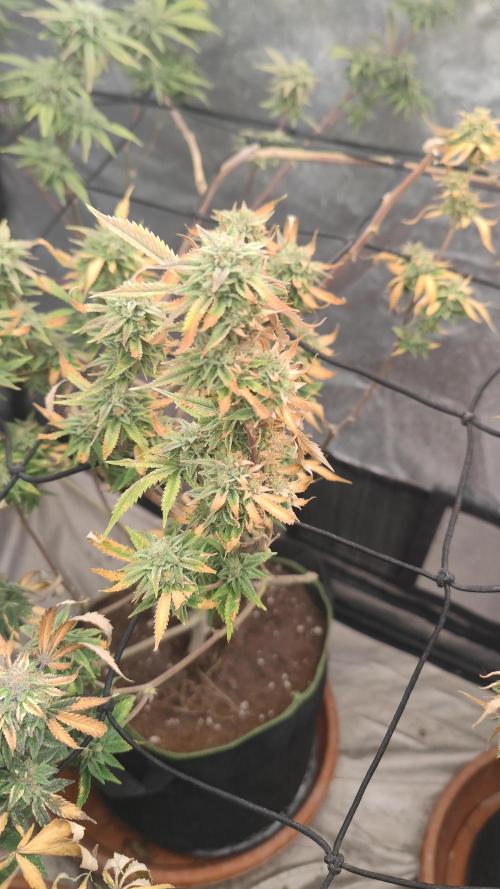
Pues la catastrofe pasó. Usé una bomba de descarga (un spray de esos que apretad y tira todo) que en teoria es compatible con las plantas dentro.... Se lío, ya se ve en las fotos y video que muuuuuchas hojas han reaccionado, fitotoxicidad y capúm. En fin, el cultivo lo voy a terminar, se salva mucha cosecha, en principio, pero eso.
Likes
94
Share


@RockoCalenberg
Follow
Blütetag 87 | Tag 147 gesamt –
Endgame ohne Shortcut
🌡️ Klima & Umgebung
Das Wetter ist umgeschlagen – kalt und nass draußen, und das merkt man im Zelt direkt.
Die Luftfeuchtigkeit zieht hoch und die Abluft läuft deutlich stärker, um das noch im Griff zu halten.
Ist aktuell keine Traumphase vom Klima her und wäre definitiv ein Argument zu ernten…
aber die Reife ist noch nicht ganz da.
🌿 Pflanzenstatus
White Gushers 33
Zieht sich weiterhin. Der Amber-Anteil ist mir immer noch zu niedrig, viele Trichome sind noch nicht da, wo ich sie haben will.
Foxtailing läuft weiter – oben wird weiter aufgebaut, obwohl Teile der Buds unten eigentlich schon fertig wirken.
Das Gesamtbild wirkt dadurch nicht mehr ganz sauber, aber das ist aktuell einfach Teil der Phase.
Ein bisschen mehr Reife geht hier noch.
Triangle Sherbet Kush
Die Kush ist sichtbar weiter und wirkt eigentlich schon ziemlich fertig.
Da ich aber nicht getrennt ernten will, bleibt sie stehen und läuft mit durch.
Ein paar Tage mehr kann sie noch mitnehmen.
🌸 Geruch
Beim Öffnen des Zelts ist weiterhin ein blumiger, süß-floraler, leicht würziger Cannabis-Geruch wahrnehmbar.
🙏 Danke für die ganzen Antworten zur Grow-Frage
Da kam richtig viel zusammen 💚
Unterm Strich war das Bild ziemlich klar:
Die letzte Phase lässt sich nicht wirklich pushen. Sobald die Trichome milchig sind, läuft eher ein natürlicher Prozess, der einfach Zeit braucht.
Viele haben ähnliche Ansätze genannt:
kühlere Nächte, Licht reduzieren statt erhöhen, Photoperiode anpassen und insgesamt etwas trockener fahren.
Genau das habe ich umgesetzt:
14/10 Licht, kühlere Nächte, trockeneres Setup und Licht deutlich runtergedimmt – Gushers ca. 40 %, Kush ca. 20 %.
Aber klar ist auch:
Das sind nur kleine Stellschrauben. Einen echten Push gibt es hier nicht.
🌱 Einschätzung & Ausblick
Klima wird schwieriger, Reife noch nicht ganz da.
Wir sind komplett im Endgame angekommen.
Jetzt entscheidet nur noch das Timing.
Grow on 🌱
🇬🇧 Day 87 Flower | Day 147 Total –
Endgame – No Shortcuts
🌡️ Environment
Weather has shifted – cold and wet outside, and you can feel it in the tent.
Humidity is creeping up and the exhaust is working harder to keep things under control.
Not the nicest conditions right now and definitely a reason to consider harvesting…
but maturity isn’t quite there yet.
🌿 Plant Status
White Gushers 33
Still dragging out. Amber levels are still too low and many trichomes aren’t where I want them yet.
Foxtailing continues – stacking on top while lower parts already look finished.
Not the cleanest look anymore, but part of this stage.
Still some ripening to go.
Triangle Sherbet Kush
Clearly further along and already looks pretty much done.
But since I don’t want to harvest separately, she stays in and runs with the others.
A few more days won’t hurt.
🌸 Smell
When opening the tent, there’s still a floral, sweet, slightly spicy cannabis aroma present.
🙏 Thanks for all the answers on the grow question
A lot of solid input came in 💚
The overall picture was clear:
This stage can’t really be pushed. Once trichomes are cloudy, it’s a natural process that just takes time.
Common suggestions were:
cooler nights, reducing light, adjusting photoperiod, and running things slightly drier.
That’s exactly what I’ve implemented:
14/10 light, cooler nights, drier setup, and reduced light intensity – Gushers ~40%, Kush ~20%.
But in the end:
these are just small adjustments. There’s no real push here.
🌱 Assessment & Outlook
Climate is getting trickier, maturity not fully there yet.
We’re fully in the endgame.
Now it’s all about timing.
Grow on 🌱

Likes
7
Share


@Unpluggy
Follow
Week 2 going well so far.
Banana purple punch is the fastest growing plant in my Little Tent and i decided to give her the Full treatment. She will get very strictly LST the next weeks.
Likes
3
Share


@GreeneScene
Follow
Day 1 — Monday 9/15/25.
Installed a timer on a 12/12 cycle finally taking this girl out of 24 hours light schedule . Because it’s day1 of flower I also gave her a full strength feed of flower nutrients which includes my new organic foop, stash, & incredible bulk . That’s 95ml per gallon of water plus 1/2 tsp of stash and 1/4 tsp of incredible bulk . She looks hungry hopefully this doesn’t overdo her . I’m thinking she still needs some “grow” nutes for these first 2 weeks atleast but I’m going to see how she responds to this strictly flower feed to make sure I haven’t overdone it .
I’ve moved the clones out the tent & cleaned out the crud in the humidifier since I stopped using purified water it gets build up .
That branch I tried taking back together has died ! Can’t save em all I only hate it bc it’s from the ONLY branch that regrew from that one half of my plant it’s near dead state . This 5x5 plant is only 1/2 of a plant trained to cover my tent’s entirety meaning if I had the other half I’d have a 5x10 plant . I’m
I dunno how long this girls is supposed to flower for . . 8 weeks ? 10 weeks ? 12 weeks ? I’ll need to find that out to adjust my feeding and light intensity accordingly .
It’s been FUN but now it’s time to get to the FUNNEST part ! The Bud!
Day2 flower 9/16/25 completed our HEAVY DEFOLIATION. Got about 93% of it out of there I’d say there’s about 7% more I want to get out of there . These next 3 weeks are the last times I’ll be able to pull leaves before these too many trichomes to not glue your fingers/tools together . Shes look crazy as she always does when I strip her back but her bones are great .
I broke another branch today while defoliating and trying to better spread out the canopy for coverage .
I’m undecided will I scrap the clone projects as I do not feel like slapping together another make shift setup for lighting purposes and I don’t want to let them get leggy between nodes before I decide what I want to do with them .
I may hate this bud and not want to grow out the clones . I may love the bud and be thanking myself I made these clones . I dunno viewers choice ! What do we do with the clones during flower??? Comment below
Lights out begins at 6:50pm she stays dark for 12 hours . Humidifiers refilled shes coasting into sweet dreams . Looking online quickly it says she flowers 8-10 weeks so that doesn’t really help me gauge when to stop feeding & when to start flushing so I’ll keep looking for more definite answers .
Day #3 flower 9/17 woke up to check in plant and make sure light was on. I found that one of the circulatory fans had fallen knocking down the tent camera! This particular fan is a wall Mount fan not made to be attached to a pole however through sheer tenacity & jerryrigging is there a fan with substantial circulatory capabilities in my tent for a reasonable price! Sooo I jerry- rigged it up again this morning in a slightly different manner using most of the original materials. The negative pressure in my tent with it fully sealed for the day cycle caused the fan to push on the “jerry-rigged” setup causing it to slide down about 16inhes. I’ve reinforced a stopping point just like last time but with far more girth than the last . Fingers crossed this makes it to the end of flower & remains as my circulation configuration because paying for a 4”. 6” or even 8” clip on fan is just ludicrous
Happy Growing ! Give us a like

Likes
34
Share


@DropSeedsNotBombs
Follow
She’s finally there! She’s been flushing for just over 2 weeks now. Been checking the trichomes and for me she is at perfect ripeness! 🤩 Now just need to get her cut and dried, will probably take me a while as I’m on the upper end of the humidity scale atm, even with a dehumidifier! Super happy with how my first photo has gone and can’t wait to start another run!

Likes
2
Share


@7circleshg
Follow
Se aplico la tecnica ScrOG, es un estrés leve por lo que esperamos buenos resultados. La planta que llamamos "D" muestra algunas deficiencias de N por lo que trataremos de corregir esto.

Likes
7
Share


@BIYEI
Follow
Al empezar a cortar se noto un aroma muy penetrante, se ve que el sabor estara estupendo, aun no la eh probado pero supongo estara de 10.


Likes
12
Share


@Aleks555
Follow
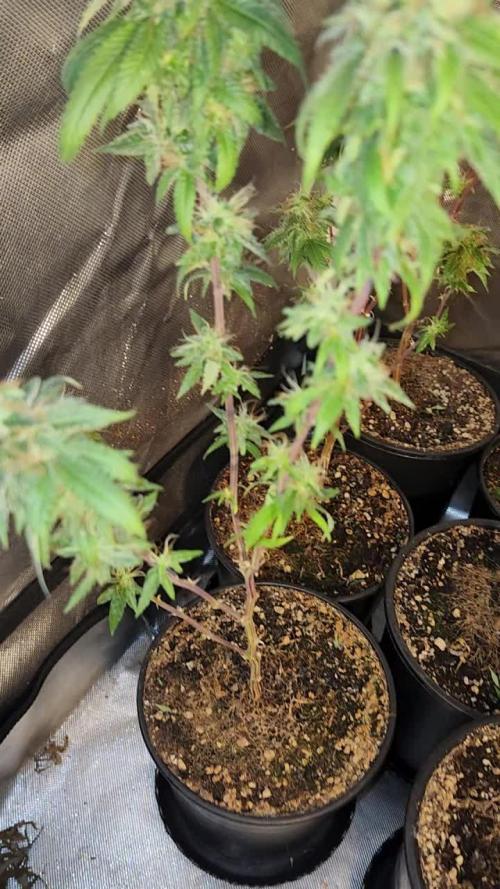
🏆Eternity Grow Cup 2025 Plagron and Zamnesia🏆 Runtz Zamnesia Seeds - 37 days in, and our girl has spread wide, reaching 60 cm in width with plenty of branches. We gave her a little trim, and now we're considering cutting some branches, but I can't decide yet if it's the right move. Feel free to comment below on whether I should or shouldn't, and what benefits it might bring. Other than that, she's doing great, happily feeding on Plagron nutrients.
Thanks again to everyone for the likes and comments. Special thanks to Zamnesia and Plagron!
Likes
20
Share

@GREENPHOENIX6262
Follow
06/13 - Preparation's for cut down have begun - Currently in hour 26 in the 48 hour blackout cycle before cutting down - Gave them a lite defol trim to remove larger leaves - The plan is to run 60/60 for about 7 to 10 days or when branch's have snap without folding - They will dry in the 2x2 with a Exhale C02 bag a fan and exhaust to control temp and humidity - If everything goes as plans they will be clipped from the stem, trimmed and placed in cure bags in about 10 days.

Processing
Likes
7
Share


@BongRip
Follow
Terrible week.
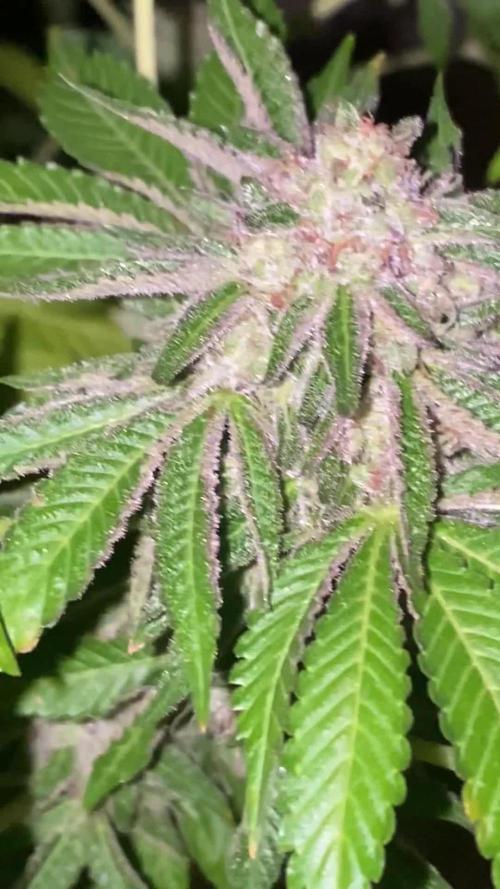
Day 43 - No sign of over-fed. They are doing great regardless the ppm so I checked online and found out the ppm In organic soil could be higher and it's normal. Anyhow, I gave my plants plain PHed water after the fed, and the run off is about 1800ppm. I think I will remain around this ppm for coming weeks.
Day 45 - Half of the Led broke.
Day 46 - Gave them natural sunlight. Accidentally broke the main stem :((((
Day 47 - New Light, New Tent!
(It's BloomPlus BP-1500 light)


Likes
21
Share


@BLAZED
Follow
Week 3 (15-2 to 21-2)
15-2
Watering: None.
No pictures, but i do have a timelapse from 4-2 to 15-2.
I bought an Wyze V2, and i recorded all my plants growing in my pre-growing closet.
Now the cam hangs in my 3x3 tent with 2 Gorilla Kush, and 2 Chemdog, so thats why this is the only timelapse i have for the Deep Candy.
The Deep Candy is in a separate tent, maybe i will buy an extra cam for this tent, so i can shoot timelapses for all my grows.
Let me know if u like it or not!
16-2
Watering: 94 ml.
17-2
Watering: None.
18-2
Watering: None.
19-2
Watering: 133 ml.
20-2
Watering: None.
As you can see, since 19-2 the leaves are showing some problems.
Maybe she is just hungry, as there are already 3 weeks past, and the Plagron Lightmix has enough nutes in it for approx 3 weeks.
I see some problems on my other plants aswell, so maybe something with the feed or the PH is off.
Or maybe she dont like the Silica i gave her while she is still in her 0.5L pot.
We will see how it goes.
21-2
Watering: 60 ml.

Likes
3
Share


Likes
14
Share


@Chi_K24
Follow
Into week 4 and they have blew up on me again. #2 still lagging behind but showing new growth at a decent pace. I think she will be the black sheep of this grow.
So far I have performed another round of topping and very lite defoliation. (Can i get more aggressive anything under the main canopy?
Watered them in with dechlorinated 6.8pH tap water. I think I may have to think about when to start top dressing them. Maybe 2 more weeks? Lol
Also noted that I they are starting to suck up allot of water! May have to start wetting out the whole pot now and see how they respond. So far its a garentee to water them ever 3-4 days. Now getting much closer to 3.
Hope you guys enjoy the video commentary and photos. I'm a bit lazy and maybe one day put a little more effort to taking better photos with my phone.
Cheers

Likes
11
Share


@Organic473
Follow
The growth for 1 week is impressive....looking forward to a monster harvest and possibly pollinating half this girl.
