


Likes
Comments
Share


@MaltaHerbman
Follow
Start of week 3 feeding
Plagron:
Alga grow 1ml per liter
Fish force 1 ml per liter
Power roots 0.50ml per liter
Calmag Pro 0.50 ml per liter
Siilic rock 0.50 ml per liter
450 to 550 ppm
Day 18 had keep same feeding but changed light to 18/6 as soon need to do first topping so plant need to rest.

Likes
Comments
Share


@Jbcultivates
Follow
This plant was a show-er for sure! The plants sprung up from the very beginning with huge leaves and thick colas! Nice purple hues and dense nugs! Would definitely grow again!


Processing
Likes
7
Share


@420keef
Follow
So i had to take all my plants inside because i found bud rot on 2 of them & the weather wasn’t going to get any better, had to transform my bedroom into a grow room😂 & i have 2 more plants which i am going to finish next to a window.. The smaller plant to the right is a Northern light by zamnesiaseeds that has a seperate diary if you are interested! I really hope the bud rot doesn’t spread anymore & if anyone has any tips or tricks for that they are always welcome!


Likes
4
Share

@StonedRAGE
Follow
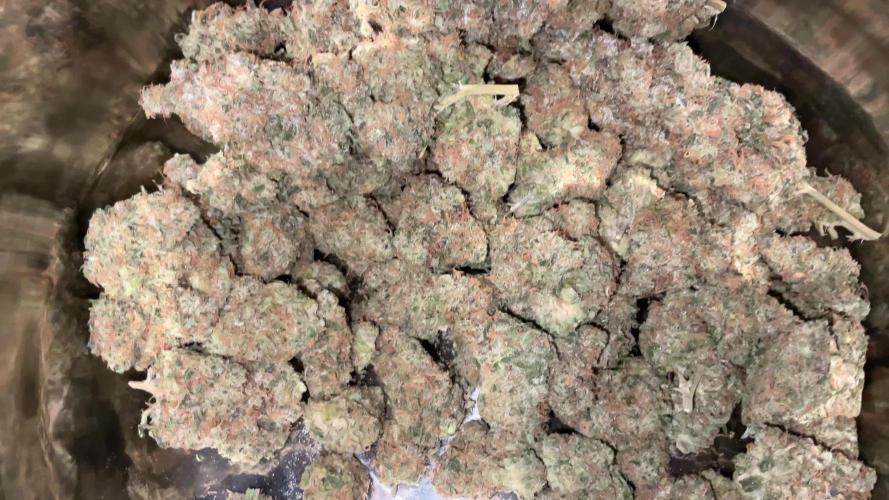
Same as stated above. Not my all time Favourite, but was nice to grow this oldschool genetic


Likes
7
Share

@all_about_420
Follow
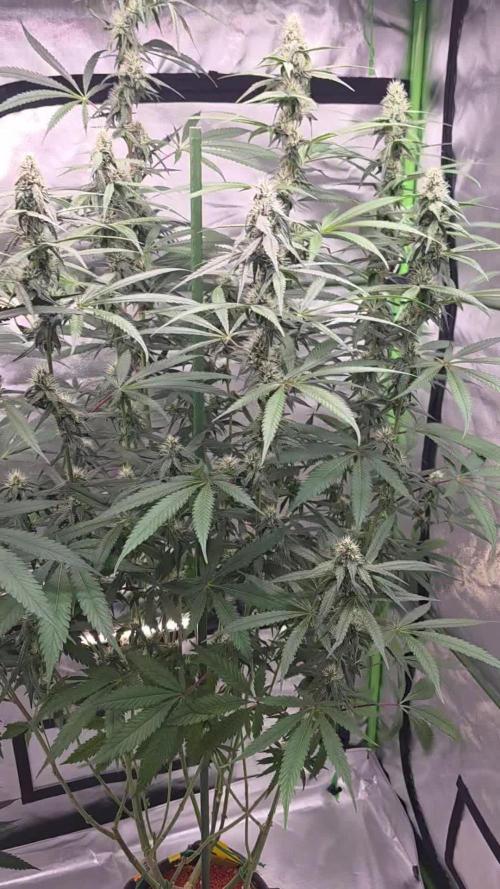
Endlich wieder beste Durchlüftung und volle Fokussierung im Zelt: Nach einem gründlichen Lollipopping ist das untere Drittel komplett freigelegt, sodass die Pflanze ihre gesamte Energie nun kompromisslos in die oberen Colas leiten kann. Trotz der beachtlichen Gesamthöhe haben die Blütenstände eine fantastische Struktur aufgebaut, schwellen kräftig an und zeigen bereits die allererste, feine Trichombildung auf den Zuckerblättern. Neben einem herrlich intensiven Terpenprofil, das den Raum mittlerweile erfüllt, deutet sich an den Spitzen und Kelchen auch schon ein dezenter, wunderschöner Farbwechsel an, der das optische Potenzial dieser Genetik für die kommenden Reifewochen eindrucksvoll ankündigt.
Likes
4
Share


@MonsieurDeLaRuche
Follow
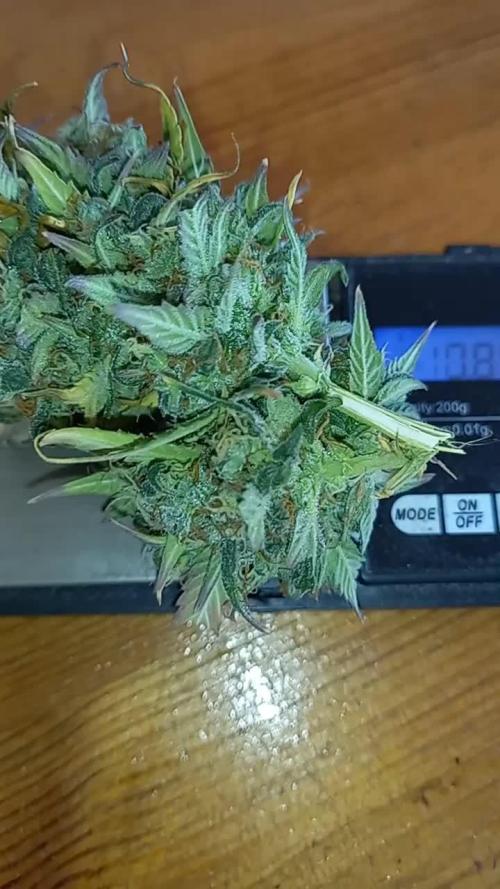
I use the demetheart system method, I put this seed to sow in a mixture of vermicompost and vegetable black earth, which I diluted with light mix! 50w LED bar for the moment but I have to change it quickly, it's not powerful enough!
I don't know how it happened but the seed came out of the ground by itself!! It’s starting well 😅
I put some mixture on top of it and luckily it came out of the ground like all the others!! let's go to the competition
UPDATE : the plants have stretched too much, the clone light is not bright enough, I'm going to move them!!



Likes
101
Share

@Tower84
Follow
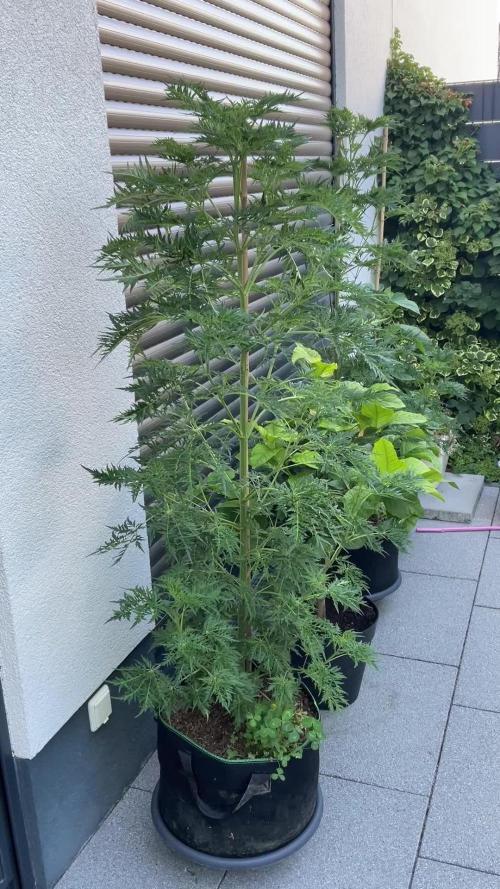
🌿 Woche 12 – Mentha de Croco 🇩🇪
Beide Mentha de Croco haben in der vergangenen Woche einen beeindruckenden Wachstumsschub hingelegt und sind von 112 cm auf stolze 131 cm angewachsen 🚀. Die heißen Sommertemperaturen von deutlich über 30 °C ☀️🌡️ sorgen aktuell für einen hohen Wasserbedarf, sodass jede Pflanze momentan etwa 4,5 Liter täglich trinkt 💧.
Interessanterweise zeigen beide Pflanzen einen völlig unterschiedlichen Wuchs. Eine entwickelt sich sehr säulenförmig, während die andere eher an einen klassischen Tannenbaum erinnert 🌲. Trotz der unterschiedlichen Struktur sehen beide Pflanzen hervorragend aus und zeigen sich in bester Gesundheit 💚✨.
Zur Unterstützung des Bodenlebens und der allgemeinen Vitalität gibt es einmal pro Woche im Wechsel entweder einen Komposttee ?🍵 oder ein Brennnessel-Ackerschachtelhalm-Ferment 🌿. Mit den aktuellen Bedingungen dürfen die nächsten Wochen sehr spannend werden! ☀️🌱
🌿 Week 12 – Mentha de Croco 🇬🇧
Both Mentha de Croco plants experienced an impressive growth spurt over the past week, stretching from 112 cm to a remarkable 131 cm 🚀. With summer temperatures well above 30°C ☀️🌡️, their water demand has increased significantly, and each plant is currently drinking around 4.5 liters per day 💧.
Interestingly, both plants display completely different growth patterns. One is developing into a tall, column-like structure , while the other resembles a classic Christmas tree shape 🌲. Despite their different architectures, both plants look exceptionally healthy and vigorous 💚✨.
To support soil life and overall plant health, they receive either a compost tea ?🍵 or a nettle and horsetail ferment 🌿 once a week, alternating between the two. With the current conditions, the coming weeks should be very exciting! ☀️🌱


Likes
4
Share
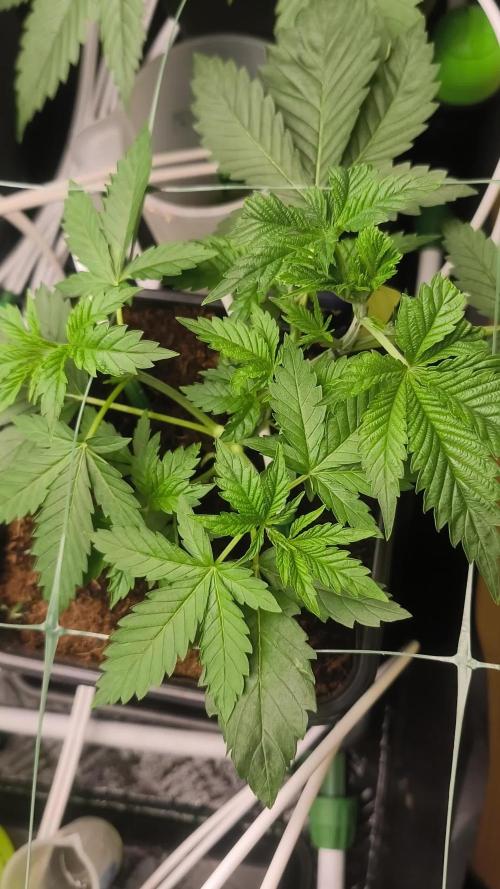

@Sadhus
Follow
# Journal de Culture Cannabis - Eternity Grow Cup 2 (Zamnesia x Plagron) 2026
**Grower :** @Sadhusfrgrow
**Localisation :** Luxembourg
**Strain :** Sticky Broccoli (Zamnesia Seeds) - Féminisée
**Description de la variété :** Sticky Broccoli est une variété indica dominante (90 %), avec un THC à 23 %. Elle se caractérise par des arômes sucrés, épicés et floraux intenses, des plantes compactes et hautement résineuses, offrant des rendements élevés et une facilité de culture en intérieur.
**Setup général :**
- Substrat : 100 % coco Plagron, pour un drainage excellent et une oxygénation racinaire optimale.
- Pots : Repiquage en pots définitifs de 5 litres effectué en début de semaine pour un espace racinaire suffisant.
- Irrigation : Automatique Netafim Drip (Netadrip), cycles de 3 minutes pour ~150-200 ml par pot (shot ~6 % du volume substrat), toutes les heures, avec 6-12 shots par jour suivis d'un dry back de 15 % pour favoriser l'oxygénation et éviter la saturation.
- Contrôle : TrolMaster pour climat, éclairage (imitation lever/coucher de soleil + 30 min IR chevauchant les lumières principales), VPD, et irrigation automatisés.
- Nutrition : Plagron Coco (A&B, Power Roots, Pure Zym, Green Sensation en preview). EC stable à 1,6 mS/cm, pH tank 5,8-6,0.
- Éclairage : Cycle 18/6 végétatif, hauteur lampe 80 cm, PPFD ajusté pour DLI optimal.
- Objectif : Maintenir une croissance vigoureuse pour le concours, avec focus sur une canopée uniforme via techniques de formation.
- Mises à jour : 2 plantes restantes, robustes et saines. Premier treillis posé pour brider la hauteur et encourager une croissance latérale. Traitement IPM préventif (Integrated Pest Management) effectué ; pulvérisation foliaire BAC (stimulant organique) prévue aujourd'hui pour booster la santé foliaire.
## Semaine 3 : Croissance Végétative Active (1-7 février 2026)
### Contexte et Objectifs de la Semaine
Cette semaine consolide la phase végétative avec un focus sur l'expansion latérale et le renforcement structurel. Repiquage en pots de 5 litres au jour 15 pour accommoder le système racinaire dense et blanc observé (inspection visuelle : racines saines, sans signes de pourriture). Nutrition Plagron augmentée à EC 1,6 (Cocos A&B 2 ml/L, Power Roots 1 ml/L, Pure Zym 0,5 ml/L, touche de Green Sensation 0,5 ml/L pour pré-floraison). Irrigation affinée pour un équilibre wet-dry : Shots de 150-200 ml (~6 % humidité substrat) toutes les heures (6-12 par jour), suivis d'un dry back de 15 % pour stimuler les racines et prévenir les pathologies. Éclairage optimisé avec imitation lever/coucher de soleil (rampe progressive) + 30 min IR (infrarouge) chevauchant les lumières principales pour un spectre complet et une transition naturelle.
Techniques : LST intensifié (courbure et attache pour canopée plate), défoliation sélective (retrait de feuilles ombrageantes pour stimuler branches secondaires), et pose d'un premier treillis pour brider la hauteur à 15 cm et favoriser une structure buissonnante. Objectifs : Atteindre une envergure de 35 cm avec 5 nœuds solides, sans signes de problèmes (pH stable, EC runoff légèrement inférieur indiquant une absorption efficace). Pulvérisation foliaire BAC prévue au jour 20 pour une prévention supplémentaire.
### Observations des Plantes
- **Jour 15-17 (1-3 février) :** Plantes repiquées en pots de 5 litres ; récupération rapide sans stress de transplant (racines denses et blanches, couvrant ~70 % du volume initial). Croissance robuste : Hauteur 12-15 cm, envergure 25-30 cm. LST et défoliation mineure appliqués pour exposer les nœuds inférieurs ; feuilles saines (envergure 14-16 cm, pétiole 7-8 cm). Aucun signe de carence ou excès (EC runoff 1,4-1,5, légèrement inférieur à l'input pour une absorption optimale). Irrigation : 6-8 shots/jour, dry back 15 % mesuré via TrolMaster (moist moyenne 67 %).
- **Jour 18-19 (4-5 février) :** Développement accéléré ; structure à 5 nœuds visible, avec branches secondaires vigoureuses grâce au FIM précédent. Pose du premier treillis au jour 18 pour brider la hauteur à 15 cm et encourager l'expansion latérale (envergure atteignant 35 cm). Plantes belles et robustes, couleur verte profonde, sans pests (IPM préventif : Rotation d'huiles essentielles et neem effectuée). pH stable à 5,8-6,0 ; EC tank 1,6 constant.
- **Jour 20-21 (6-7 février) :** Croissance optimale ; envergure feuilles 16 cm, pétiole 8 cm, plante globale 35 cm x 15 cm (bridée). Défoliation supplémentaire pour pénétration lumineuse ; système racinaire inspecté (dense, blanc, sain). Pulvérisation foliaire BAC prévue aujourd'hui (jour 20) pour stimuler la photosynthèse et la résilience. Pas de problèmes : Pas de jaunissement, flétrissement ou spots. Irrigation affinée à 8-12 shots/jour pour soutenir la transpiration accrue.
### Paramètres Environnementaux (Analyse des Données TrolMaster)
Basé sur les enregistrements TrolMaster pour "Coco Test" (moyennes semaine 3, jours 15-20) et dashboard live (05/02/2026), avec mises à jour utilisateur : Température et humidité augmentées (jour : 26 °C / 75 % RH pour booster la croissance, tout en maintenant VPD stable jour/nuit). CO2 cible 900 ppm (non mesuré, ambiant ~400-500 ppm ; supplémentation à considérer). Ajout du calcul DLI (Daily Light Integral) pour évaluer l'exposition lumineuse cumulative.
- **Température (°C) :**
- Moyenne Jour : 24,2 °C (augmenté à 26 °C per update pour métabolisme accru).
- Moyenne Nuit : 23,2 °C.
- Max Jour : 25,6 °C ; Max Nuit : 24,1 °C.
- Min Jour : 22,5 °C ; Min Nuit : 21,4 °C.
Stabilité : Excellente, avec hausse contrôlée sans chocs.
- **Humidité (%) :**
- Moyenne Jour : 69,5 % (augmenté à 75 % per update pour hydratation optimale).
- Moyenne Nuit : 71,58 %.
- Max Jour : 76,5 % ; Max Nuit : 76 %.
- Dashboard : 66,8 % actuel, mais tendance à la hausse.
Observations : RH stable, aidant au VPD équilibré.
- **Intensité Lumineuse (PPFD) :**
- Moyenne Jour : 410,4 PPFD (dashboard 434 PPFD).
- Moyenne Nuit : 0 PPFD.
- Max Jour : 449 PPFD ; Max Nuit : 0.
- Min Jour : 17 PPFD ; Min Nuit : 0.
Notes : Hauteur lampe 80 cm pour uniformité ; imitation lever/coucher + IR pour spectre étendu.
- **DLI (Daily Light Integral, mol/m²/jour) :**
Calcul : DLI = PPFD moyen (µmol/m²/s) × durée photopériode (heures) × 3600 (s/h) / 1 000 000 (pour convertir en mol).
Avec PPFD moyen jour = 410,4 et photopériode 18 h :
410,4 × 18 = 7 387,2
7 387,2 × 3 600 = 26 593 920
26 593 920 / 1 000 000 = 26,59 mol/m²/jour (arrondi à 26,6).
Analyse : DLI optimal pour veg (cible 20-30 mol/m²/jour en cannabis), favorisant une photosynthèse vigoureuse sans stress lumineux.
- **VPD (kPa) :**
- Moyenne Jour : 0,92 kPa ; Moyenne Nuit : 0,81 kPa (stable jour/nuit per update).
- Max Jour : 1,1 kPa ; Max Nuit : 1,04 kPa.
- Min Jour : 0,66 kPa ; Min Nuit : 0,64 kPa.
Dashboard : 1,06 kPa actuel.
Analyse : VPD idéal (0,8-1,2) pour transpiration saine.
- **CO2 (ppm) :**
- Moyenne : Non mesurée (---) ; cible 900 ppm.
- **Nutrition et Irrigation :**
- EC : 1,6 mS/cm stable (dashboard 1,32, mais update à 1,6 ; runoff légèrement inférieur ~1,4-1,5). pH tank/solution : 5,8-6,0 stable (dashboard 5,81).
- Irrigation : Shots 150-200 ml/heure (6-12/jour), dry back 15 % ; moist moyenne 67 %. Temp solution 20,9 °C.
- Plagron : Dosage stable ; absorption efficace sans accumulations.
### Problèmes et Ajustements
- Aucun problème : Plantes saines, racines blanches denses, pas de signes de stress ou pests (IPM préventif efficace).
- Ajustements : Hausse temp/RH pour croissance ; monitoring post-BAC foliaire. Augmentation potentielle PPFD à 500-600 pour DLI ~30-35 en semaine 4.
### Plans pour la Semaine 4
- Intensification LST/treillis ; possible second défoliation.
- EC à 1,6-1,8 si vigueur maintient ; introduction CO2 si possible.
- Photos des plantes pour documentation.
- Transition vers pré-flo si hauteur optimale.
Ce journal sera mis à jour hebdomadairement. #GrowLegendary #Zamnesia #Plagron #EternityGrowCup2
Bonne continuation !

Likes
1
Share

@foxbberg
Follow
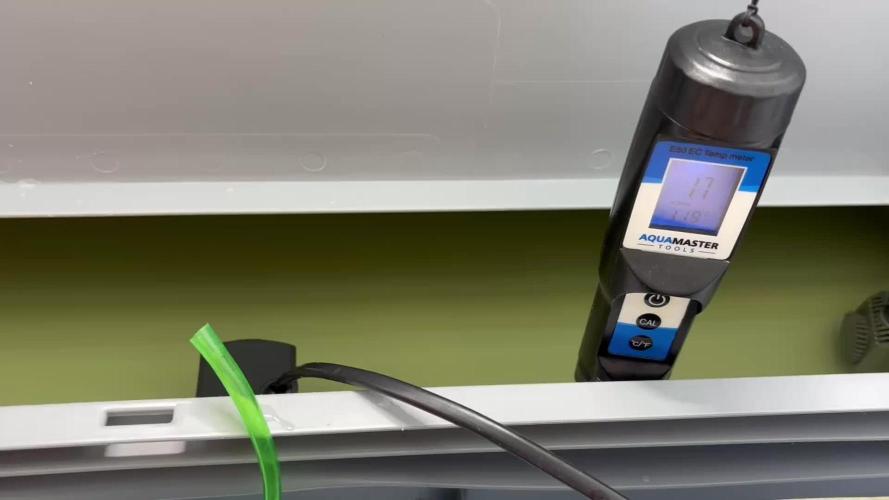
Changed ns …… now @ EC 1.7
The nerdy stuff:
As a result of my testing new growth-fertilzer, i‘m working with extremely high Ca/Mg figures right now.
Future ns will be way more conservative (~100mg Ca/~35mg Mg).
Plants don‘t show any signs of any nutrient excesses or lockouts.
The babies produce a lot of leaf-mass and really push forward. Yet they are dark green - new shoots and foliage turn dark rapidly.
Day 23
All the new growth reacts so well to the light, that i weave away light-thieves whenever i can, to get more strong shoots.
Day 24/25
Leafs start to grow from big to huuuge.
Vigourous nutrient-uptake….. filled up some ns to get back to 1.6. Daily weaving….. everything fine so far .
Day 26
Weaving and wondering how big leafs can grow in such a small tent
Day 27
Same same…..
t.b.c
Likes
8
Share

@Hempcules
Follow
WEEK 6
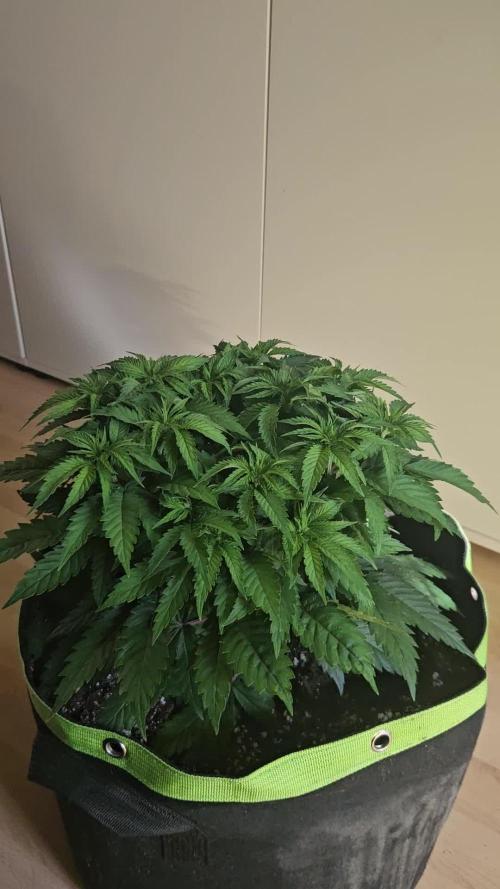
This week I transplanted the plant into a 25 L pot with Allmix as planned. Now I’ll let the 16 shoots grow a bit more before I start with the SCROG. Temperatures are very high at the moment, and before repotting the nutrients had already become a bit low. I fed with Grow fertilizer once more beforehand, though I could have started a little earlier.Other than that, I’m very satisfied. The plant has developed nicely and symmetrically, providing a great foundation for the flowering phase.
PPFD: 450µmol/m²/s
Water: 1x water, 1x nutrient solution
Processing
Likes
11
Share


@OrganicAlphapak420
Follow
Fed only distilled water every 3 days. They getting thirsty now. They grew about 2 inches n looks like they are done strething . Now they are fattening up real nice. Especially the super skunk auto in the back right corner. ..so far no problems. Just watering them wen needed n watch the temps n humidity daily. So far the most easiest n relaxing grow I've done...will update next week...good luck on your grows.
Likes
12
Share


@Gardens_of_Of
Follow
- LST continues by stretching the plant outwards.
- Both plants are progressing healthy. Kings Kush is cathing up.
- Soft Defoliation continues. I am trying to remove fan leaves shadowing potential bud sides. But still leaving outskirt fan leaves. A big defoliation and lollipopping will be applied in 3rd week.
- Light intensity is still at 90% which is still resilting with increased temp.
- VPD still fluctuated this week between 1.0 and 1.7 kPa , averaging at 1,27 kPa.
- Temperature is stabilized at 22 at night and 27 Celsius at day time, averaging at 25.2. A little lower than last week due to cold weather in Berlin. But the plan is to run the growth 1 more week with higher Temps around 27 Celcius. 2nd week of flowering, I will increase exhaustion fan speed which will hopefully decrease both temp and humidity.
- Humidity is stabilized between 50-70%, averaging at 60.4%. This week, I have added a BonAura AirOne dehumidifier into my tent. It collects around 200 ml of water per day.
- Increased the water Ph gradually to 6.6 now as Soil Ph is decreasing week on week under 6. I will keep measuring and I might increase water Ph further if necessary.

Likes
Comments
Share

@DogDoctorOfficial
Follow
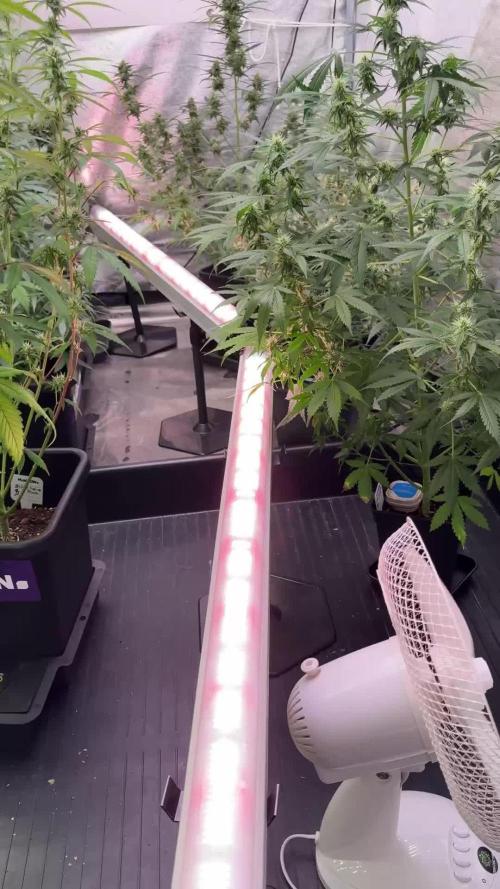
🌸 Pink Rosay Auto by Zamnesia | Pheno B | Week 9
💗 The Little Dwarf That I’m Very Glad I Kept
Some plants make you stop because they're enormous.
Some make you stop because they're covered in huge flowers.
And then there are plants that make you stop because you simply can't believe how much personality they've managed to fit into such a tiny body.
Pink Rosay Pheno B is one of those plants.
She's still a dwarf.
😂
There is no point pretending otherwise.
She's tiny.
She's compact.
She's becoming incredibly dense.
And honestly...
I absolutely love her.
When I look back at the beginning of this grow, I have to admit something.
If I had only been growing a few plants, I probably would never have given a phenotype like this the opportunity to finish.
She's just too small.
There would have been a temptation to look at her, compare her to the others, and think:
"Maybe this one isn't worth the space."
But that's exactly why I love having twelve different genetics in the 8×8 Adventure.
I didn't remove her.
I gave her time.
And now?
She's standing there covered in flowers and frost, looking absolutely adorable.
And I'm very, very happy I kept her.
🌸 Week 9 – Still Tiny. Still Beautiful.
Pink Rosay Pheno B is currently around 63 cm.
Sixty-three.
😂💗
Compared with some of the giants in this garden, she's practically a bonsai.
But here's the funny thing.
When I look at her now, I don't really see the height anymore.
I see the plant.
And the plant is beautiful.
Her structure is extremely compact, the internodes are tightly packed, and the flowers are becoming increasingly dense throughout that little framework.
She's not wasting much space.
She's not reaching endlessly upward.
She's simply putting everything she has into the structure she already built.
And that's becoming her signature.
Tiny frame. Dense flowers. Big personality.
💗 The Dwarf Is Getting Dense
This is probably the biggest change I'm seeing this week.
She's becoming really dense.
The flowers are no longer looking like little isolated flowering sites scattered across a miniature plant.
They're becoming proper little clusters.
The calyxes are becoming more pronounced.
The pistils are progressing.
And the resin is becoming increasingly visible across the flowers and surrounding sugar leaves.
There's a lovely contrast developing between the dark green foliage and the increasingly frosty flowers.
And honestly...
she looks fantastic.
Not fantastic for a dwarf.
Just fantastic.
That's an important distinction.
Because I don't want to judge her by the expectations I'd have for a much larger plant.
I'm judging her for what she is.
And what she is becoming is a beautiful, compact, heavily flowering little plant.
❄️ The Frost Is Starting to Take Over
And this is where things get particularly interesting.
The frost is becoming much more obvious.
The flowers have that increasingly sparkling appearance that makes you want to get closer and look again.
Then closer again.
And then...
"Okay, I need the macro lens." 😂📸
The resin is becoming part of her personality now.
It's no longer something you have to search for.
You can see it.
And I have a feeling she's going to become even more interesting as she continues toward maturity.
I wouldn't be surprised if, toward the end, she becomes one of those little plants where the amount of frost makes you completely forget how small she actually is.
She's certainly heading in that direction.
🌿 A Tiny Plant With Serious Density
One thing I really appreciate about this phenotype is how compressed everything is.
On a large plant, you can have flowers separated by considerable distances.
Here?
Everything is happening within a very small space.
Branches are short.
Nodes are close.
Flowers are packed into the architecture.
And now those flowers are gaining density.
It's almost like watching a miniature version of a full flowering plant.
Everything is there.
Just...
smaller.
😂
And that's what makes photographing her so much fun.
A wide photograph tells you the story:
"Look how tiny she is."
Then you get the camera close.
And suddenly...
"Holy shit, look at those flowers."
That's Pink Rosay Pheno B.
✂️ The Canopy – Now We Let Her Be
We already gave this little lady her selective defoliation when the canopy needed opening.
The objective was never to strip her.
It was to remove unnecessary congestion and give the remaining structure a little more room for light and airflow.
Now?
I'm leaving her alone.
She's doing exactly what I want her to do.
The remaining foliage is healthy.
The flowers are developing.
The structure is becoming denser.
And there is no reason to start interfering just because we have scissors available.
😂
This is another lesson this tiny plant has taught me.
Sometimes cultivation is intervention.
Sometimes cultivation is restraint.
And right now, restraint wins.
Let her finish.
💡 Small Canopy, Big Photon Story
The Future of Grow Black Series lighting continues providing the primary light from above, while the Lumiflora under-canopy system remains part of the overall flowering environment.
With a plant this compact, the relationship between light and structure is fascinating.
There isn't a huge vertical distance between the different parts of the plant.
Instead, everything is compressed into this little flowering package.
And as the flowers become denser, I'm very interested to see how she finishes under the same environmental philosophy as the much larger plants surrounding her.
She's another reminder that light doesn't dictate phenotype.
It gives the plant an opportunity.
The genetics decide what happens with that opportunity.
And Pink Rosay Pheno B decided:
"I'm going to stay tiny."
😂
Fair enough.
I respect the commitment.
🌱 The Experiment Is Working Exactly As Intended
This little plant is one of the best examples of why I wanted to run this 8×8 Adventure the way I did.
If I had selected plants purely based on early size, she probably wouldn't have made the cut.
And I would have missed this.
I would have missed watching an extreme compact phenotype develop.
I would have missed seeing how much flower she can actually carry inside that miniature architecture.
And most importantly...
I would have missed the lesson.
Not every plant needs to be a monster.
Not every phenotype needs to produce enormous numbers.
Sometimes the value of a plant is simply in what it teaches you.
And this little girl has already taught me plenty.
💗 The Sister Comparison Is Fascinating
Her sister is a completely different story.
Same genetic line.
Same room.
Same general cultivation philosophy.
And yet...
look at them.
One is compact.
The other is larger.
One has a very compressed architecture.
The other expresses herself differently.
One looks almost miniature.
The other carries herself like a more conventional flowering plant.
And that's exactly what phenotype hunting is about.
You don't grow two sisters to make them identical.
You grow them to discover how different they can become.
Pink Rosay Pheno B has certainly answered that question.
Very different.
And I'm glad she did.
💧 Feeding & Environment
The current conditions remain stable:
🌸 Flowering: Week 9
📏 Height: approximately 63 cm
💡 Light schedule: 12/12
🌡️ Day temperature: 29°C
🌙 Night temperature: 25°C
💧 Relative humidity: 60%
⚗️ pH: approximately 6.0
⚡ EC: approximately 2.0 mS/cm
🌡️ Solution temperature: 25°C
🌱 Substrate temperature: 26°C
🌬️ CO₂: approximately 639 ppm
? Pot size: 15 L
💦 Watering: approximately 1 L per plant / 24h
The feeding program remains centered around the same flowering nutrition approach used throughout the project.
No unnecessary changes.
No chasing numbers.
She's developing beautifully, so consistency remains the priority.
🌬️ Tiny Doesn't Mean Forgotten
One of the things I really enjoy about hand-watering this plant is that she gets exactly the same attention as the giants.
She may be tiny.
But she's still part of the experiment.
Every time I approach her, I get to look at the flowers.
Check the foliage.
Watch the resin.
Look for changes.
And because she's so compact, it's actually incredibly easy to observe her closely.
There aren't hundreds of centimetres of plant to inspect.
Everything is right there.
She's basically saying:
"Come on. You can't miss me."
😂💗
And I don't.
🔭 Looking Ahead – I Have a Feeling About This One
I'm not expecting a huge producer.
Let's be realistic.
She's 63 cm.
She's a dwarf phenotype.
Her total flowering structure is naturally limited by the amount of plant she has.
But that's not what I'm watching anymore.
I'm watching quality.
I'm watching density.
I'm watching resin development.
I'm watching how those flowers mature.
And I'm very curious to see where she ends up.
Because she has already exceeded what I expected from her.
She survived.
She flowered.
She developed.
She became dense.
And now she's getting increasingly frosty.
That's already a win.
And who knows...
perhaps by the end of this journey, she will become an even more interesting little specimen than I expected.
💗 Maybe I Should Have Kept More Dwarfs
This is something I've been thinking about.
If this had been a smaller garden, I probably wouldn't have grown a phenotype like this.
And that's exactly why having a larger project is so valuable.
You get to see the extremes.
You get to see the weird ones.
The tall ones.
The short ones.
The explosive ones.
The quiet ones.
The strange ones.
The beautiful ones.
And sometimes...
the tiny ones.
Pink Rosay Pheno B belongs firmly in that last category.
She's not here to win the height competition.
She's not here to dominate the tent.
She's here to show us what happens when her genetics decide:
"We're going small."
And honestly?
I'm loving every minute of it.
❤️ Final Thoughts – The Little Dwarf I Almost Didn't Keep
I think this might be my favourite part of Pink Rosay Pheno B's story.
Not how big she is.
Not how much she might produce.
Not whether she can compete with her sister.
It's the fact that she almost wouldn't have had this opportunity.
If I had fewer plants, I might have looked at her and decided she wasn't worth the space.
But because this is the 8×8 Adventure...
she stayed.
And now?
I'm really glad she did.
Because this little dwarf has become one of the plants I genuinely enjoy looking at.
She's cute as fuck.
😂💗
She's tiny.
She's compact.
She's becoming extremely dense.
She's getting frostier.
She's beautifully structured.
And she's completely comfortable being exactly what she is.
I don't need her to become a giant.
I don't need her to suddenly explode in size.
I don't need her to prove anything.
I just want to see her finish.
And I have a feeling that when she does, whatever she gives us is going to be very, very nice.
Perhaps later, when everything is finished and the entire garden has told its story, we'll decide what makes the most sense for this little harvest.
But that's a story for another day.
Right now...
she's still growing.
Still shining.
Still getting frostier.
Still being the tiniest girl in the room.
And still making me smile every time I look at her.
🌸💗❄️
Pink Rosay Pheno B.
The little dwarf.
The tiny survivor.
The compact beauty.
The one I almost didn't keep...
and the one I'm now very happy I did.
So let's give her the spotlight.
Because she has absolutely earned it.
A huge thank you once again to Zamnesia for these beautiful genetics, Plagron for the nutrition, Future of Grow for the Black Series lighting, Lumiflora for bringing the under-canopy lighting into the project, TrolMaster for the environmental control, and of course to everyone following the 8×8 Adventure on GrowDiaries.
Every phenotype doesn't have to be enormous.
Every plant doesn't have to be a champion.
Sometimes the smallest plant in the room gives you one of the biggest lessons.
And sometimes...
the little dwarf becomes one of your favourites.
This one certainly became one of mine.
Until next week...
Tiny plant. Huge personality. Getting seriously frosty. 💗❄️
Growers love and happy growing! 🌱💚
Likes
12
Share


@gr3g4l
Follow
Finales de la pasada semana y esta lavado de raices. Agua con ácido cítrico y ácido ascórbico.
Corte de los apicales más formados y con mayor riesgo de botritys y el resto seguirá una semana 10 dias más.
Han salido diferentes fenotipos, unos de más skunk y otros de más Critical,
A los 60 dias obté por cortar los apicales y dejar el resto de las plantas para que terminaran de engordar y madurar.
Entonces volví a regar con Bloom Bud y call-Mag -


Likes
Comments
Share


@BIYEI
Follow
Planta Madre en Conservacion Maximo 6 Meses mismos parametros de Nutrientes y Condiciones
Esquejes Comienzan el Proceso de Enraizamiento
06/01/2025 Se comienza corte de ramas secundarias a planta madre, se realiza el procedimiento adecuado en corte, preparacion del tallo y aplicacion de hormona, se colocan en un domo germinador con ventilacion cerrada obscuridad total primeras 24hrs y se mantiene con humedad relativa de 90% y 20 y 26 grados Celcius.
Likes
7
Share


@Rasta_Ant
Follow
All looking a little bit sick this week bit root bound in those tiny cups I think. I've repotted into 3.5 litre pots see if they perk up be under 600w hps next week so they shold shoot right up in no time


Likes
15
Share


@URUGUAY_BOY
Follow
Estupendas, estoy muy contento con los resultados que voy observando, me tienen enamorado con el olor a frutas variadas, la resina que tiene es impresionante brillan como una cucharada de azúcar,
y tiene 67 dias. El proveedor dice que con 70 dias pero alguna le queda un poquito mas de de lo recomendado si que otras están muy bien echas pero otras no.
llevo toda la semana lavando la raíz con agua.
