


Likes
Comments
Share




Likes
22
Share


@GreenHouseLab
Follow
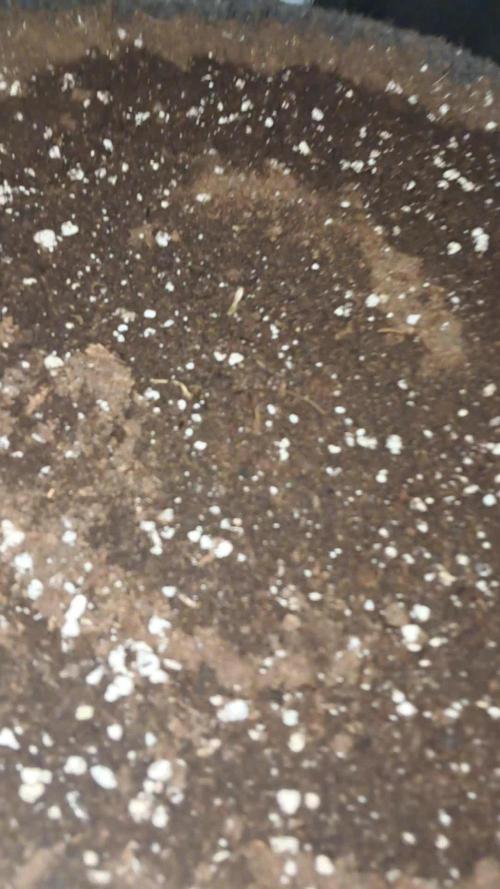
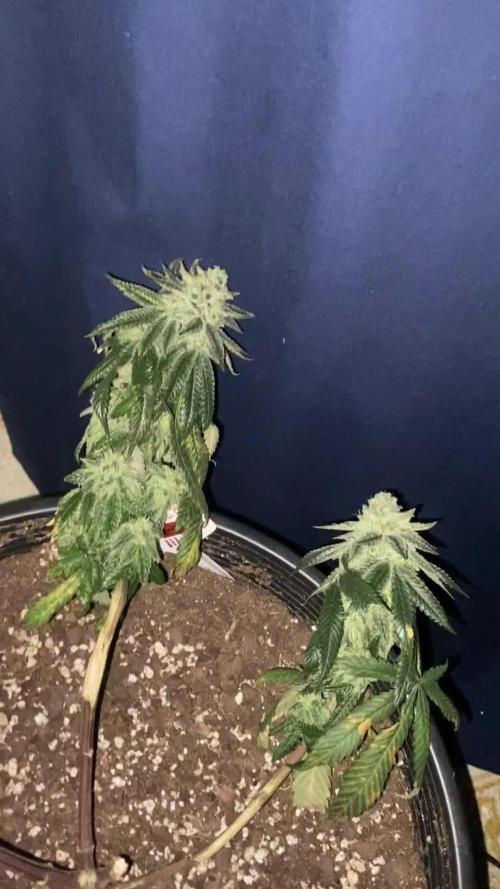
Day 46 pics Cropsalt 4 the win!
How to beat Inflation? Increase your yield and crush the quality.
💚GHL out.

Likes
26
Share


@GoodVibeGarden
Follow
She starting to get her fade, buds are getting packed and hard. She smells heavenly. And is drinking alot less.

Likes
11
Share


@emeraldlabs
Follow
Just obsessed with this plant. The bulk is real; she is getting heavy. Looks amazing, smells amazing, what else can I ask for?
Two more weeks!
Video/photos taken 105 days after breaking soil, day 56 of flower.


Likes
17
Share


@Eastbis
Follow
I decide to switch my light on 12/12 after exactly 5weeks.
On this week I'm gonna start to adj more mills nutrients for the flowering.

Likes
4
Share

@GREENPHOENIX6262
Follow
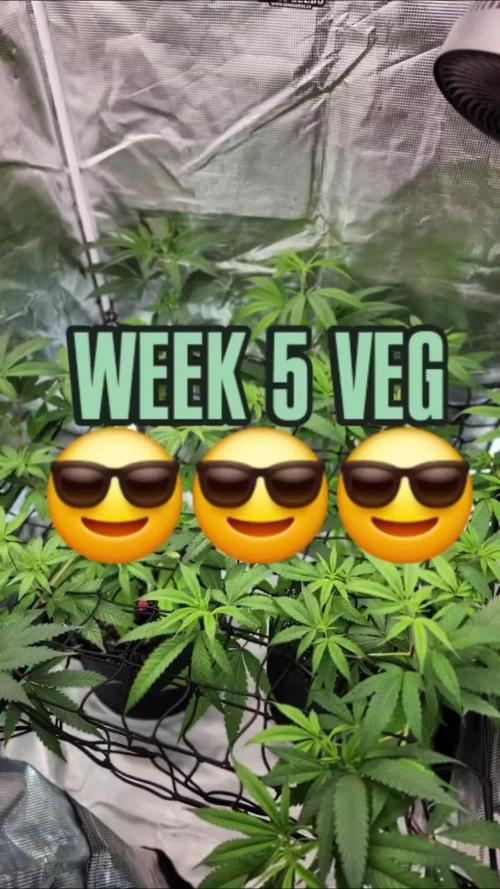
05/30 - Both of the ladies are coming along beautifully with no issues at all - Since dropping the net for better light exposure both of the ladies have adapted perfectly with new growth happening all around the plant daily - I will increase the nute feeds from two feeds a day to 3 maybe 4 as we prep for flower in about 2 maybe 3 weeks depending on the plants progress. IG:Greenphoenix6262 for more content😎😎😎
06/03 - Since dropping the net and placing in the 3x3 they have both blown out amazingly - Running supp lights underneath provides really good coverage through out both plants in combination with the sectored spacing each branch has a chance fully develop. Running with the Vivosun drip emitter definitely has allowed me to focus in on feed cycles and nutrient blends to get the most out of each feed consistently.
😎😎😎😎😎😎
06/06 - Closing out the week on a high note ( Pun intended..LOL) - Both of the ladies are thriving - There are 0 issues between both plants and this is probably my best grow yet - I will do a light defoliation to prep for a 3rd net dropped for added light/canopy coverage.

Likes
5
Share


@pzwags420
Follow
I had to top Cantaloupe haze and White widow as they were too close to the lights and I didn't want to loose any ppfd on my lowers. My GSC seems perfect for not topping. next time I would top those strains at least once. I have been flushing the CH and getting run off around 1200ppm which seems like the max she can take the others like it stronger so I have been flushing them every 2-3 days. CH is tough to keep happy but will continue to monitor. All plants are in week 4 of flower 12/12 from seed.


Likes
14
Share


@Onlygrow99
Follow
Arrancamos la 4ª semana de floración y venimos de hacer los 3 últimos riegos suaves con baja ec por que veo varias muy verdes, un color muy oscuro creo que algo pasadas.
Esta semana ya seguimos con las dosis normales, además añadiremos por ultima vez unas micorrizas para mejorar el sustrato.
Ya he puesto las luces UV para emular al máximo la luz del sol y que la planta se sienta bien arropada.

Likes
Comments
Share


@deadhead1996
Follow
To think I thought she was stunted! Doing really well this week, temps are skyrocketing where I’m at and will remain high this week. We had a lot of rain earlier this week, which seems to have helped her, but also brought some fungus gnats around. I’ve been using yellow traps + am going to let this heat finish drying out the top layer of soil.

Likes
8
Share


@Drtomb
Follow
Changed out the nutes. Dropped the calmag and the Silica. Using just the Plant Prod MJ bloom.
Gorilla Zkittles looks to have one plant that stacking. The other looks like it may be smaller yields. Time will tell and density of the bud definitely changes the weight.


Likes
1
Share


@TheGreatMoog
Follow
Highlighted a few breaks that I wasnt able to repai and a few that I was. I was a bit rough learning LST

Likes
28
Share


@Fatnastyz
Follow
2-24
1 gallon plain water, 6.4.
She may get mad, I didn't add cal/mag.
2-25
Slightly adjusted LST, just to give a little more space. She sure is purdy 😻
Removed few leaves for light. Guy didnt mind.
He had a all you can eat buffet 😂😂
3-1
1 gallon
5 ml cal/mag, 1 ml drops, 20 ml EM 1, 1.5 ml Amplify. Bubbling for 4 hrs. PH 6.4 ish
Ohhh boy, she sure is gonna be happy today. 😁😁
See you next week!
Likes
18
Share


@Ieiogrow94
Follow
Genetica sapziale l’unica ad avere sentori viola e rossi nelle cime.
Molta resina e un odore spaziale!
L’ho assaggiata che non ho resistito e ragazzi è qualcosa di straordinario!!
Consigliata a tutti!!
❤️🔥🌲

Likes
1
Share


@WeedSherpa_420
Follow
Blacked out all windows in the shed and moved Moby Dick plants here from greenhouse to ensure flowering as they are now in darkness for 13 hours uninterrupted. Growing very well for 7 week old. Ran into some nitrogen deficiency problems as these Phenos are very nutrient demanding but still no problems. Will keep in flower for 4 weeks and bobs your uncle

Likes
79
Share

@McBubatz
Follow
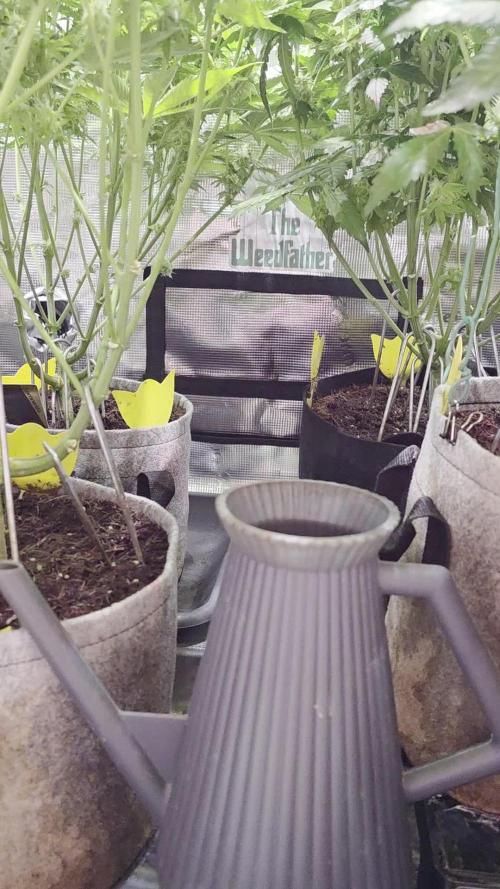
13. Woche, BW 7. Straw Limez is gut dabei, Blüten werden größer, hoffentlich noch en gutes Stück 😅. Ansonsten sieht sie gesund aus, Trichome produziert sie wie keine andren sonst, die sieht aus als wäre sie mit Trichome berieseln worden 🤣. Geruch is hier das 2. Highlight, immer noch sehr Erdbeerig, so extrem ausgeprägt 🤤 das hätt ich echt nicht erwartet 👌.

Likes
25
Share


@Ultraviolet
Follow
Thorium (chemical symbol Th) is a naturally occurring radioactive metal found at trace levels in soil, rocks, water, plants and animals. Thorium is solid under normal conditions. There are natural and man-made forms of thorium, all of which are radioactive. In general, naturally occurring thorium exists as Th-232, Th-230 or Th-228.
The atomic number of 90 - Thorium
1. Dobereiner’s Triads
German chemist Johann Wolfgang Dobereiner attempted to classify elements with similar properties into groups of three elements each. These groups were called ‘triads’. Dobereiner suggested that in these triads, the atomic mass of the element in the middle would be more or less equal to the mean of the atomic masses of the other two elements in the triad.
An example of such a triad would be one containing lithium, sodium, and potassium. The atomic mass of lithium 6.94 and that of potassium is 39.10. The element in the middle of this triad, sodium, has an atomic mass of 22.99 which is more or less equal to the mean of the atomic masses of lithium and potassium (which is 23.02). 9 controls the 6 and 3.
The Limitations of Dobereiner’s Triads are :
All the elements known at that time couldn’t be classified into triads.
Only four triads were mentioned – (Li,Na,K ), (Ca,Sr,Ba) , (Cl,Br,I) , (S,Se,Te).
2. Newland’s Octaves
English scientist John Newlands arranged the 56 known elements in increasing order of atomic mass in the year 1866. He observed a trend wherein every eighth element exhibited properties similar to the first. This similarity in the properties of every eighth element can be illustrated as follows.
Classification of Elements and Periodicity in Properties
Newland’s Law of Octaves states that when the elements are arranged in increasing order of atomic mass, the periodicity in properties of two elements which have an interval of seven elements in between them would be similar.
Azomite has an average of 180ppms of THORIUM...........I'm fucking mindblown
Alot if big things happening this weeeeek plants final form starts to take shape, light defoliation on lower parts of the plants I know make the cut later in life. Going to restrict defoliation to week 2-3. Going more cautious this time round as my excessive defo last grow was tooooooo much and effected yield greatly.
Added steel weights 💪. Big buds require a solid frame, I'm still trying to find balance for this part, I'd like to have had the reinforcement done earlier. Ever learning.
Can already tell by early flower formations these are going to be madness :
AZOMITE:
Most farmers have not had a proper understanding of what is azomite and how to use it in gardening, especially if you practice organic farming. Continuous propagation and leaching effects of water deplete the essential minerals and micro-nutrients from the soils. Such soils remain weak, not able to support the production of fruits and vegetables. Azomite mineral contains micronutrients that supplement the soil. It also balances the minerals for growth and overall productivity. Constant use of this mineral rejuvenates your soil renewing its potency again. Azomite is a naturally mined mineral product that is ready to use. It’s a unique rock that comes from a mine in central Utah. Azomite requires no mixing or special preparation before use. It is derived from volcano ash that spewed out millions of years ago. It contains the widest range of minerals of all the rock dust in the world. Azomite provides the plants with 70% essential elements. These elements include magnesium, calcium, potassium, and silicon for plant growth.
Facts About Azomite Fertilizer
It’s a natural mineral – 100% natural with no fillers or additives
Does not contain any harmful elements
Requires no special preparation before use
It’s odorless – very friendly to use
Does not restrict water penetration or aeration
Is easily broken down and absorbed into the soil
Does not burn plants
GREENSAND
Espoma Greensand, love Greensand. If you have never used the product (or never heard of it) Greensand is a mineral called glauconite, which is found on the ocean floor and mined for use as an organic fertilizer and soil conditioner. Greensand supplies marine potash, silica, iron oxide, magnesia, lime, phosphoric acid, and 22 trace minerals. Greensand works great on Southern “hard as a rock” clay soil this spring, to help improve its texture, and enrich the nutrient content of my soil without using chemicals. Greensand is one of the oldest and most generally useful tools in the organic gardening tool box. Greensand has been used since the eighteenth century as a soil amendment and slow-releasing fertilizer (0-0-3). It is one of the best certified organic sources of potassium. It comes from sandy rock or sediment containing a high percentage of the mineral glauconite (greenish-black to blue-green). It contains potash, magnesium, iron, silica and can contain as many as 30 other trace minerals. The recommended usage is to broadcast 50 to 100 lbs. per 1,000 square feet. It improves plant health in general and is also be used to loosen heavy, clay soils. It will also improve the moisture retention of sandy soils. Greensand is OMRI listed for organic use.
Sea Kelp – Ascophyllum Nodosum
Sea kelp, also known as brown algae, is the generic name for the seaweeds that make the order Laminariales. Kelp grows in huge underwater forests in shallow parts of the ocean, with some forests covering over 2230 square miles! Kelp thrives in cold and turbulent ocean water with strong currents that bring enough nutrients for the algae to grow. The coasts of Norway, Japan, Mexico, and California are some of the most abundant in terms of natural kelp density. Sea Kelp BenefitsSea kelp is rich in a wide range of nutrients, minerals, and active compounds. Some of them have great nutritional value, others show antioxidative and anti-inflammatory properties, help with diabetes, and may even fight off some types of cancer. In other words, sea kelp is jam-packed with health benefits. Let’s explore some of them in more detail one by one!
Macronutrients in sea kelp
Energy – 43 kcal
Protein – 1.68 g
Total fat – 0.56 g
Carbohydrate – 9.57 g
Fiber – 1.3 g
Sugars – 0.6 g
Minerals in sea kelp
Calcium – 168 mg
Iron – 2.85 mg
Magnesium – 121 mg
Phosphorus – 42 mg
Potassium – 89 mg
Sodium – 233 mg
Zinc – 1.23 mg
Copper – 0.13 mg
Manganese – 0.2 mg
Selenium – 0.7 mcg
Vitamins in sea kelp
Vitamin C – 3 mg
Vitamin B1 – 0.05 mg
Vitamin B2 – 0.15 mg
Vitamin B3 – 0.47 mg
Vitamin B5 – 0.642 mg
Vitamin B6 – 0.002 mg
Vitamin B9 – 180 mcg
Vitamin A – 6 mcg (116 IU)
Vitamin E – 0.87 mg
Vitamin K – 66 mcg


