


Likes
Comments
Share

@NoProbation4Weed
Follow
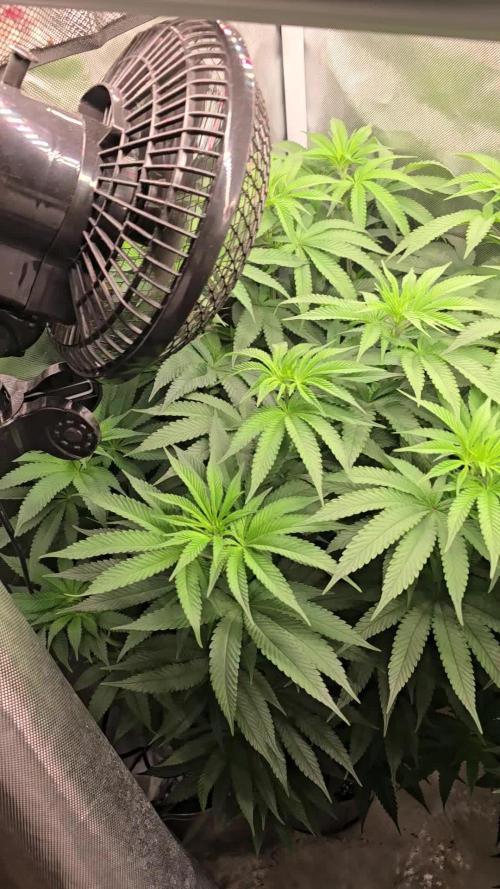
on day 21 of flower the 2 lady have got a new Haircut.
Also some composttea on day 22 of flower.
Light hits the plants with around 850 PPFD.
Both plants look very similar (same leaf shape and structure), but one is about 15% larger than her sister.
They both look healthy and vigorous.



Likes
26
Share


@CampaCavallo
Follow
E si parte con la seconda settimana vegetativa💚
Aspettiamo un attimo che si riprenda la piccola per poi iniziare a darle un po di Plagron👍🏻
30.10.23 trapianto => 6,5 litri ✅
.. Sul fondo del vaso, questa volta, ho provato a mettere lapillo vulcanico al posto della classica argilla espansa👍🏻
Ad un giorno dal travaso possiamo già vedere che la piccola è in netta ripresa💪🏻👹🍬
2.11.23 Fertilizzanti ⚗️

Likes
14
Share


@Belverde
Follow
Hi guys ... always Peyote Critical .. like in the diary with the other two sisters ...
this one is following a different diet, practically Vegetarian / almost vegan ..
I have been given the same care of its companies and, in addition to the soils, already awarded for the other two and a super soil created by me, I give them molasses, for about 5ml in 1,5l h2o ..
Later I spoiled it a little with a dessert based on fruit created by macerating peal of organic banana (x 10 days) previously dried ...and today, Friday 27th, I finely chopped a bit of barley malt and I made a top dressing, wetting with water in mix with 3ml topmax for 3l h2o, to increase the malt action ..
for more information on other, I refer you to the diary of the two without this type of SS, where I also wrote a more detailed review on light, etc. all ... "the only "difference lies in the substratum ... this is a super soil mixture, which I have been trying recently, but which worked great with other plants ....
I hope you like it 🙂.... thanks for reading👍 ... the next
....
Bye

Likes
136
Share


@Kitties_and_Colas
Follow
~_~_~_~_~_~_~_~_~_~_~_~_~_~_~_~_~_~_~_~_~_~_~_~_~_~_~_~_~_~_~_~_~_~_~_~_~_~_~_~_~_~_~_~_~_~_~_~_~_~_~_~_~_~_~_~_~_~_~_~_~_~_~_~_~_~_~_~_~_~_~_~_~_~_~_~_~_~_~_~_~_~_~_
3/26/22
😻 First day of week 6!! These girls are starting to get REALLY frosty!! We dropped the MarsHydro 2inches this week, we're approximately 22" from the lowest and 18" from the highest part of the canopy..we're monitoring closely, we've burned plants close to this distance before.. the extra shot of N straightened their color out fast, they look great today..we removed all large fans just from cola tops so they receive as much direct light as possible for the next few weeks..its been an effortless run so far!! We'll upload again midweek. thanks for dropping by and happy harvests everyone!!
⚡Mars Hydro/SP-3000⚡ Specifications ⚙️:
Diodes: Samsung LM301B / Osram 660nm (960 total!)
Driver: Meanwell 300watt 🔌 (300W±5% @AC120V-277V)
PPF: 824umol/S ☢️
PPE: 2.8 µmol/j 〰️〰️
Lifespan: 50k+ hrs ⌛
Weight: 10.1 lbs (4.6kg)
Veg Coverage: 3 x 5 ft 🌱
Flowering Coverage: 2 x 4 ft 🌼
-The SP-3000 uses an aluminum heatsink (no fan) and the driver can be placed outside the tent 🌡️⬇️
-IP65 waterproof ratings, tolerant to high humidity grow environments 💦 ..
-Up to 15 can be daisy-chained together and all controlled from a single light! 💡~💡~💡~💡
~_~_~_~_~_~_~_~_~_~_~_~_~_~_~_~_~_~_~_~
Song: "I got a girl"
Artist: Philip Morris
~_~_~_~_~_~_~_~_~_~_~_~_~_~_~_~_~_~_~_~_~_~_~_~_~_~_~_~_~_~_~_~_~_~_~_~_~_~_~_~_~_~_~_~_~_~_~_~_~_~_~_~_~_~_~_~_~_~_~_~_~_~_~_~_~_~_~_~_~_~_~_~_~_~_~_~_~_~_~_~_~_~_~_

Likes
2
Share


@Ninjabuds
Follow
Bubble og I still have 4 of these guys going. A few of them are still dark green and pretty decent growers they have thiner leaves. I'm sure a few of these will be on the chopping block later down a few of them just have crappy start growth and they need the humidity at 75% or above 100% the time with the light lower than normal or they start to shrivel up. That's not all of them just a couple. Also I am only going to flower 8 plants out if the 12 seedling and I have 5 strains going so can't have half my plants bubble og (wish I had room to grow the full 12 plants at a time)
It's looking like a good start to a week the plants are strong they are getting to the point I can let the dried dry out completely. I'm thinking by the end of this week the plants will be starting to be sold.
Last week I put all the plants into my bigger 2x4 tent with my medicgrow mini sun 2 the 500w version. Only a few of the plants were ready for that light. Seems like the only plants that really have good resistance and have a strong start are the weedseedsexpress.com seeds. Shout out to weedseedsexpress.com for the strong plants.
I ended up putting all the plants back into my 2x2 tent with the 55w amazon light it has alot more blue light in its spectrum. It's kinda weird b4 I switched the plants to the 2x4 tent they were getting 220umol under my amazon 55w led then when I put them under the 500w light 25% strength about 50in from plants and they were getting only about 195umol in that tent but it was stressing most the plants. I assume a larger light has more side lighting hitting the plants. I think when useing larger lights it's good to measure umols from the top but also coming from the sides. I think durring seedling stage they only need about 50% the umols coming from the side the plants as the top is receiving.
When I put the plants back in the small tent about the same umols as they were getting b4 the switch and they were still a little stressed. So for a few days I put the small light at the top the tent giving them 100umols for a few hrs then 130umols the rest the day.

Likes
12
Share


@russrahl
Follow
Plants are 5 weeks old and I decided to switch to flowering for week 6. Plants are all in good shape and the screen is in place to train them to fill the tent. I will be changing out the veg bulb this week and installing the 1000w HPS bulb for flowering. I’m still playing with the light rail speeds and pause times but I seem to have it dialled in now I think. I will also be doing another water change and adding flower nutrients sometime this week. ****Added 7 gal of fresh water to the reservoir on day 38. Added full strength Remo lineup for flowering to the 7 gal added to reservoir. I started to tie down/tuck the larger branches to the net as well.

Likes
22
Share

@Sundancers
Follow
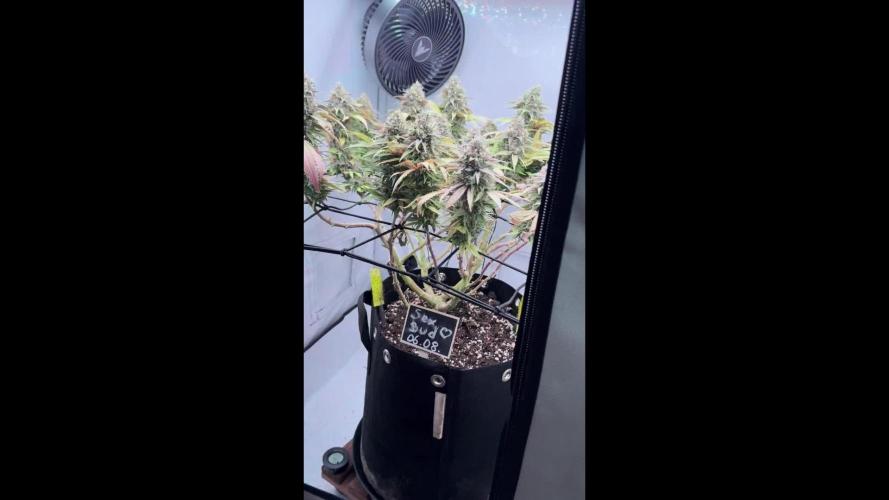
Die letzte Woche ist angebrochen.
Sie reift wunderschön weiter und hat nochmal kräftig an Farbe und Volumen zugelegt.
Nachdem nun ca. 20% braune Trichome zu sehen sind, werden wir Sie in den nächsten Tagen ernten.
Bis zur Ernte gibts noch ein paar Bilder der schönen Buds :)
Sex-Bud-Porn 😇😇😇

Likes
19
Share


@Mzsnoop2001
Follow
Está semana se siente bastante el aroma de whithe widow y blue moby, mientras que moby Dick sano y viene en viaje entrando en flora. Me quedé sin medidor de ph y sufren un desvalance de ph, más que nada ww pero ya lo voy a solucionar! Muchas Gracias por ver! Acepto críticas y concejos.


Likes
36
Share


@Ferinky
Follow
En esta actualización se incluyen 2 semanas ya que por trabajo me fue imposible añadir la semana anterior.
El día 15 de Agosto recibió la segunda pulverización de Bacillus Thuringiensis para prevenir el ataque de las orugas.
Sigo alternando riego de agua un día con riego de Ascophillum Nodosum al día siguiente. He dejado de regar con Cannazym.


Likes
8
Share

@Letterschminge
Follow
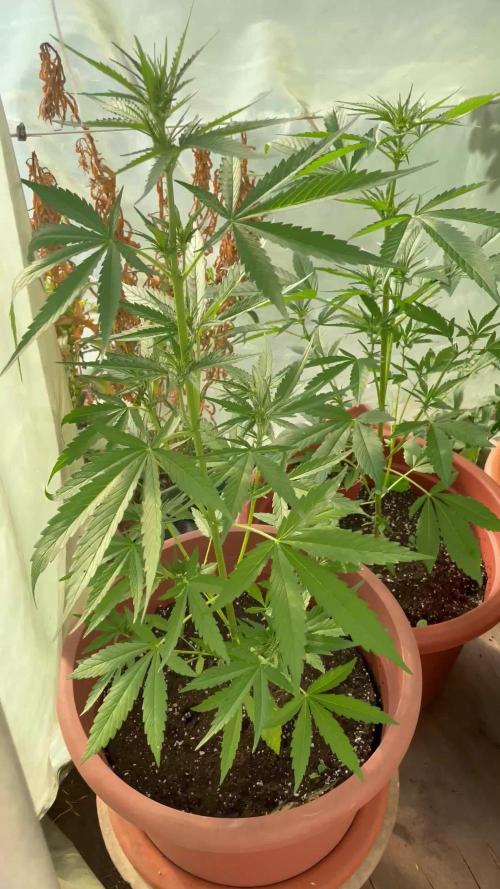
Also, wenn sich unsere kleinen weiterhin so ins Zeug legen, dann wird das vielleicht noch was mit dem spätsommerlichen Erntedankfest, dann noch ein bisschen Musik, dann werden sie ganz groovig…💃🕺👯♀️🧑??🧚♀️


Processing
Likes
32
Share


@Platinouuu
Follow
Saludos, por aquí mis hijas, que opinan amigo? Estoy muy deseoso de cambiarlas a floración. Buenos humos

Likes
6
Share


@sa2_gr
Follow
Well well well !
I'm planning to cut eveyone in about 10 days.
Just watering and slowsly starting to remove fan leaves
Pretty happy about the conditions in my room, i have around 45-55% RH and maximum 24 degres.
The drying will occur in this growbox, so i think i'll can have a nice and slow dry
See ya next week for the last 10 days 😍

Likes
5
Share


@cadur
Follow
Plant is still tiny, unless something miraculous happens yield is going to very low!
Likes
20
Share


@NONSENSE
Follow
Good day to every one of you.
Today I am starting to feed the plant with extra Guano extract from No Mercy suppliers.
Plant flowering well, very sweat aroma such candy. Thc all around so the buds will kick off for sure.


Likes
6
Share


@BasedBuds_89
Follow
This baby was horribly stunted, but I decided to keep her alive and now it's covered in Crystals. May use it for consentrates.
Likes
2
Share


@ESExPincheb00f
Follow
All three plants were loving the big bloom and voodoo juice I gave her. I raised the ph and kept it at 6.5 she’s just been really happy ever since. Giving that its an auto its going to go into flower pretty soon! ✌️✌️😎