


Likes
Comments
Share

@eldruida_lamota
Follow
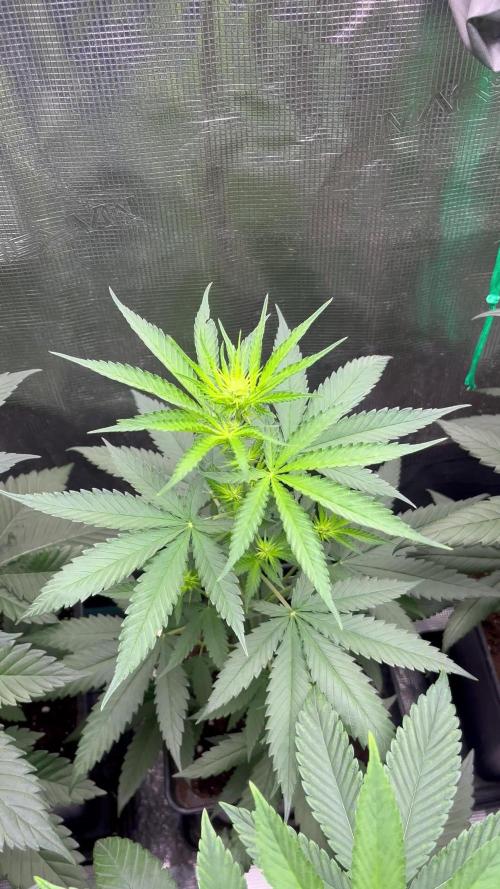
Vamos familia, actualizamos la primera semana de floración de estas Terp & Tonic de Seedstockers.
La temperatura que estuvo entre los 24-26 grados y humedad dentro de los rangos correctos.
Esta semana cambiamos a 12 horas luz,12 horas de oscuridad, estiraron bien y ensancharon bastante también, el color es verde sano.
Se nota que los nutrientes de la marca Agrobeta hacen sus funciones.
También realicé una poda de bajos que yo si las veo necesarias para explotar después la flor.
- os dejo por aquí un CÓDIGO: Eldruida
Descuento para la tienda de MARS HYDRO.
https://www.mars-hydro.com
Hasta aquí todo, Buenos humos 💨💨💨


Likes
45
Share


@Bembeto
Follow
Se acerca el final, falta por engordar pero no creo que falte más de una semana para que lo haga.
En general una muy linda experiencia con esta cepa, es lo que decía el productor dutchpassion, una planta sin olor de hojas raras para que sea difícil de identificar en el exterior y estoy totalmente de acuerdo.
Muy muy fácil de cultivar (creo me he pasado de fertilizante un par de veces) por lo que asumo que no tiene una dieta muy pesada para estar contenta. Muy buen grow este, ya veremos cómo acaba todo.

Likes
9
Share


@CannabisCultivate
Follow
There will be pleasant dreamzzzz around here in the near future, these beauties are covered in crystal and the buds are incredibly dense. They are almost near harvest and they will have a wash when the time comes. These girls have been incredible from day one and I must say, we are WOWED by this strain and the genetics within!
Likes
16
Share


@GGrows
Follow
This girl keeps growing. Started shortening her light cycle as she is getting really big. I have bent the main tops so often so that the rest can catch up. She looks great thought... Love this plant.
Likes
18
Share


@tomerakoo
Follow
buenas pues seguimos con la floracion donde van maravillosamente os hice videos para que lo viereis como evolucionas esta excelente marca todas van genial donde no da aun ningun sintoma pero ahora empieza los grandes problemas donde hay que controlar todo en general can comiendo muy bien pero ahora es cuando empieza lo bueno de verdad donde igual el minimo despiste te lleva al desastre
espero que os guste buenos humos gente

Likes
127
Share


@Tropicannibis_Todd
Follow
💩Holy Crap Growmies , we are outdoors and in the Ground and there Doing Great💩
👉It's been another full week 35 days from seed and she's doing great , very nice Growth, considering shes been up against the wind and rain 👈
No problems 😊 so far so good 👍And she's now in full on flowering 😁👈
I GOT MULTIPLE DIARIES ON THE GO 😱 please check them out 😎
👉THANKS FOR TAKING THE TIME TO GO OVER MY DIARIES 👈
👉NutriNPK NUTRIENTS USED FOR FEEDING 👈rain water to be used entire growth👈
👉www.nutrinpk.com right now get 10% off using SPRING2022 as the coupon code👈

Likes
48
Share

@Cooky_420L
Follow
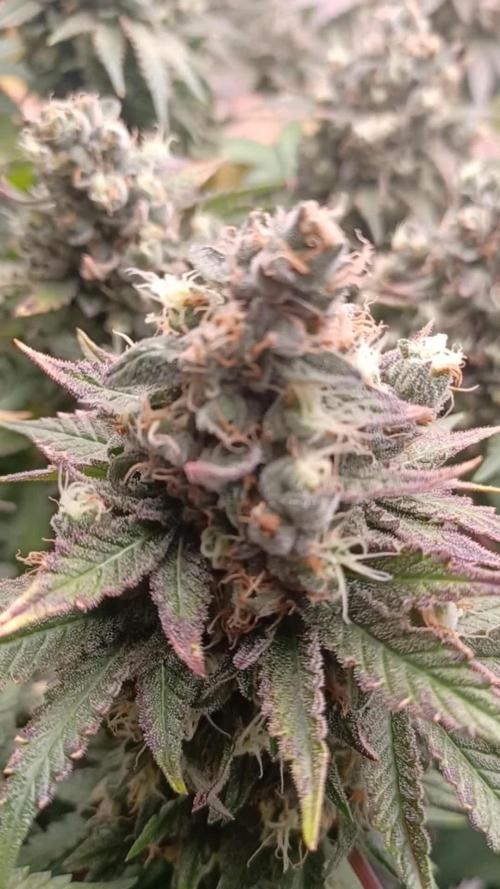
9' semaine de floraison, elles ont 107 jours dont 63 jours de floraison. Le gonflement à ralenti mais continue toujours 😁🌱? et moi je continue le rinçage. J'ai pas pris de mesures cette semaine, les trichlom sont forts laiteux mais j'attends les ambré à un certain pourcentage pour récolté.
Je réduirerai bien mon système pour accentuer le phénomène mais j'ai 2 autre plantes à semaine 6 de floraison en plein gonflement.
Merci aux Growmies qui me suivent ✌️ Bonne semaine de culture à tous les p'tites ✌️ vertes 🌱🌞🌱

Likes
5
Share


@CuriosityWebster
Follow
Got the tent set up to try to dry
Going to keep it as close to 60 humidity and 60°F
Monitor moisture level using a moisture meter, and will pull when


Likes
31
Share


@JonnyKush
Follow
everything seems to be growing well! seems to have recovered great, is stretching well the color looks great! I have 3 other growing plants that follow the same diet but they seem to have suffered. she, on the other hand, looks very healthy.
Day 40
Flowering begins! I can say I see her healthy. this is because, not having given her a green sensation with water regulated by ph down but only water with ph down, she was regular at 6.5 for all weeks. this suggests the importance of checking the values every time I change something in the power supply.
keep following me to see the progress. I like it and leave an opinion or some advice. good luck and happy day 🌱💚

Likes
9
Share


@jo69420
Follow
week 5 flower looking good so far, hoping to see the buds slowly stack and get fatter each week.


Likes
5
Share


@Terrell_Growens
Follow
1/18
Ah boy. Somethings definitely a little wiggity with her here. The fact that the tent hasn't been above 70 in a long time probably has something to do with it. These LEDs don't seem to produce sufficient heat to keep the tent warm and it has become a catch 22 because I usually dim my lights slightly when I see a plant starting to show distress.
This has always been a problem for me in this environment during these months. Some plants just adapt better than others. I might have to keep this thing alive in veg for awhile until it shows signs of improvement because flowering a struggling plant is always a bad idea imo.

Likes
4
Share


@smexy
Follow
Hey some early Week2-flowering update.
In the video you can see my 24h aerated compost tea. mhh that smells so good. I want to drink it too :P
Each plant got 2L
I did a lot of defoliation again
I wont be there for a few days :P
I turned the light to full power with a distance of 44cm
stretch is doing the rest
cya

Likes
44
Share


@Buffynuffy
Follow
I’m actually Super happy they sprouted on the 1st it just makes keeping track of what day your on so much smoother l think, but I think one was having a hard time getting the shell
Off so I helped just I tiny bit!
Likes
67
Share

@Tower84
Follow
Cherry Limeade von Doja – Wochenupdate 🌱
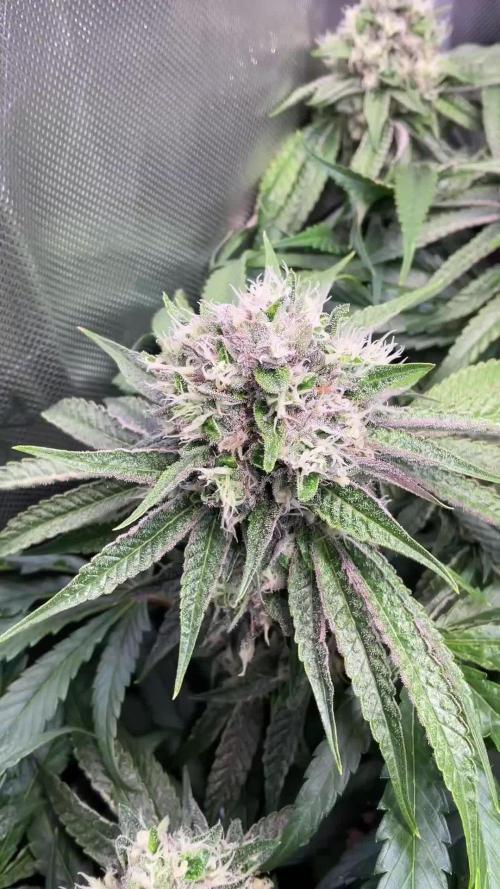
Die Entwicklung der Buds schreitet weiterhin sehr gut voran 🌸. Sie legen sichtbar an Masse zu und insgesamt entwickelt sich die Cherry Limeade genau so, wie ich es mir zu diesem Zeitpunkt der Blüte wünsche.
Auch beim Geruch hat sich wieder einiges getan 👃. Das zuvor sehr spritzige Limettenaroma ist mittlerweile etwas schwächer geworden. Dafür entwickelt sich das Terpenprofil zunehmend in eine angenehme Zitrusrichtung mit etwas Süße und Cremigkeit 🍋🍦. Genau diese Entwicklung gefällt mir sehr gut. Das erhoffte Kirscharoma ist allerdings leider weiterhin überhaupt nicht wahrnehmbar 🍒. Ich hoffe zwar immer noch, dass sich hier gegen Ende der Blüte noch etwas tut, langsam habe ich aber Zweifel, ob die Cherry Limeade tatsächlich noch in diese Richtung geht.
Beim Tensiometer habe ich inzwischen einen weiteren Versuch nach den Angaben des Herstellers durchgeführt. Leider zeigt es auch diesmal nach einigen Tagen wieder deutlich trockenere Werte an, als ich aufgrund des tatsächlichen Zustands des Substrats erwarten würde 🤔.
Ich habe inzwischen allerdings einen Verdacht, woran es liegen könnte. Mein Substrat enthält einen gewissen Kokosanteil, der bei der Herstellung der Suspension stark aufquillt. Wenn ich diese Suspension wie vorgesehen in das Loch einfülle und anschließend die Keramiksonde einsetze, scheint sich das Substrat beim anschließenden Rücktrocknen wieder etwas zusammenzuziehen. Dadurch könnte der direkte Kontakt zwischen Keramiksonde und Substrat schlechter werden und das Tensiometer anschließend zu trockene Werte anzeigen.
Diese Woche werde ich deshalb noch einen letzten Versuch mit einer entsprechenden Anpassung durchführen 🔧. Danach werde ich das Thema für diesen Grow aber auch erst einmal abhaken. Ich kontrolliere den Wasserverbrauch der Pflanze ohnehin relativ regelmäßig und habe dadurch einen zusätzlichen praktischen Anhaltspunkt 💧. Aktuell liegt der Verbrauch bei etwa 1,8 Litern pro Tag, was für die Größe der Pflanze weiterhin sehr plausibel erscheint.
Ab heute erhöhe ich den Ziel-VPD noch einmal leicht von 1,3 auf 1,4 kPa 📈. Ansonsten läuft der Grow inzwischen praktisch vollständig auf Autopilot 🤖. Alle drei bis vier Tage fülle ich den Wassertank wieder auf – viel mehr gibt es momentan nicht zu tun.
Genau so soll es sein: Die Pflanze macht ihr Ding und ich versuche, möglichst wenig daran herumzuschrauben 😎🌱.
📊 Aktuelle Parameter:
💡 Licht: 900 PPFD / DLI 39 (12/12, Stufe 6, 40 cm Abstand)
🌡️ Temperatur: 28 °C
💧 Luftfeuchtigkeit: 61 %
📈 VPD: 1,3 kPa → 1,4 kPa
🌿 CO₂: Ø 740 ppm
💦 Wasserverbrauch: ca. 1,8 l/Tag
Cherry Limeade – Weekly Update 🌱
The buds are continuing to develop very well 🌸. They are visibly putting on more weight, and overall the Cherry Limeade is progressing exactly as I would hope at this stage of flower.
The aroma has also changed quite a bit 👃. The very zesty lime aroma that dominated before has become a little less pronounced. In return, the terpene profile is developing more towards a pleasant citrus aroma with some sweetness and creaminess 🍋🍦. I really like this direction. Unfortunately, there is still absolutely no sign of the cherry aroma I was hoping for 🍒. I’m still hoping it might show up towards the end of flower, but I’m slowly starting to doubt whether this Cherry Limeade will actually develop much cherry character.
I made another attempt with the tensiometer this week, once again following the manufacturer’s instructions. Unfortunately, after a few days it is again showing noticeably drier values than I would expect based on the actual condition of the substrate 🤔.
However, I now have a theory about what might be causing it. My substrate contains some coco, which expands quite strongly when making the suspension. When I fill the suspension into the hole as recommended and then insert the ceramic probe, the substrate seems to shrink slightly again as it dries back. This could result in the ceramic probe losing some of its direct contact with the surrounding substrate, causing the tensiometer to indicate conditions that are actually drier than they really are.
I’ll therefore make one final attempt this week, with a slight adjustment to the installation 🔧. After that, I’ll probably leave the issue alone for the rest of this grow. I regularly monitor the plant’s actual water consumption anyway, which gives me another useful practical reference point 💧. At the moment, the plant is using around 1.8 liters per day, which still seems very realistic for a plant of this size.
Starting today, I’m also increasing the target VPD slightly from 1.3 to 1.4 kPa 📈. Apart from that, the grow is basically running on autopilot 🤖. Every three to four days I refill the water reservoir, and that’s pretty much all there is to do at the moment.
And honestly, that’s exactly how I like it: the plant does its thing and I try not to mess with it too much 😎🌱.
📊 Current parameters:
💡 Light: 900 PPFD / DLI 39 (12/12, Level 6, 40 cm distance)
🌡️ Temperature: 28 °C
💧 Humidity: 61 %
📈 VPD: 1.3 kPa → 1.4 kPa
🌿 CO₂: Avg. 740 ppm
💦 Water consumption: approx. 1.8 L/day
Wenn du möchtest, kann ich den nächsten Wochenkommentar wieder im exakt gleichen Stil fortführen und dabei nur die Veränderungen zur Vorwoche herausarbeiten.

Likes
2
Share


@burnercorona
Follow
Another great week. Thoroughly impressed so far. Flowers are developing nicely and have already started showing some color.
Likes
22
Share


@Stork
Follow
Finally, harvest was 3 weeks flushing without nuts am trying to test something I will see soon. Btw can't wait to smoke it 😎
Likes
8
Share

@MrWeeedWorld
Follow
🕵️♂️ Woche 2 – Der erste große Schritt ist geschafft...
Die zweite Woche meines FastBuds Mystery-Projekts stand ganz im Zeichen der Wurzeln. Nachdem alle fünf unbekannten Tester mit meiner bewährten Wasserstoffperoxid-Methode schnell und zuverlässig gekeimt sind, war es Zeit für den nächsten wichtigen Entwicklungsschritt.
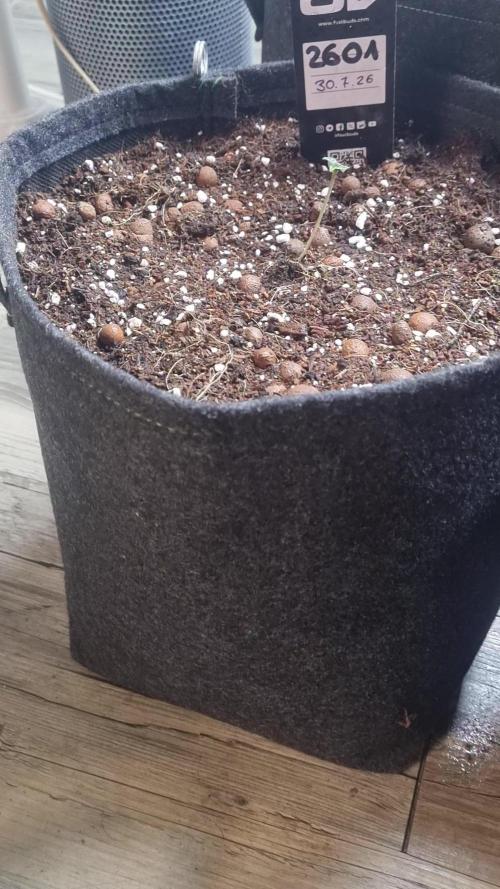
In dieser Woche sind FBA2601 bis FBA2605 in ihre endgültigen 11-Liter-Stofftöpfe umgezogen. Von diesem Moment an werden sie bis zur Ernte in ihrem finalen Zuhause bleiben und können ihr komplettes Wurzelwerk frei entwickeln, ohne weiteren Umtopfstress erleben zu müssen.
Das Umtopfen wurde von allen fünf Pflanzen hervorragend angenommen. Bereits kurz danach standen die kleinen Sämlinge wieder aufrecht und zeigen ein gesundes, kräftiges Wachstum. Die frischen Blätter entwickeln sich sauber und auch die Stängel wirken bereits erstaunlich stabil.
Besonders spannend finde ich, dass sich schon jetzt erste kleine Unterschiede zwischen den einzelnen Testern zeigen. Obwohl alle unter identischen Bedingungen wachsen, besitzt jede Pflanze bereits ihren ganz eigenen Wuchscharakter. Genau diese ersten kleinen Hinweise machen ein Mystery-Projekt so faszinierend – denn noch weiß niemand, welche Genetik sich hinter den Nummern verbirgt.
Jetzt beginnt die eigentliche Reise. Während sich unter der Erde das Wurzelsystem ausbreitet, wird sich oberirdisch in den kommenden Wochen zeigen, welche Persönlichkeiten sich hinter FBA2601 bis FBA2605 verstecken.
Das Rätsel bleibt bestehen... und genau das macht dieses Projekt so besonders. 🌱🔍
--------------------------------------------------------------------------------------------------------------------------------------------------------------------
🕵️♂️ Week 2 – The first major milestone...
Week two of my FastBuds Mystery Project was all about building the foundation. After all five unknown testers germinated quickly and successfully using my trusted hydrogen peroxide method, it was time for their first major upgrade.
This week FBA2601 through FBA2605 were transplanted into their final 11-liter fabric pots, where they will remain until harvest. From now on the roots have all the space they need to fully develop without experiencing any additional transplant stress.
All five plants handled the move exceptionally well. Shortly after transplanting they were already standing upright again, showing healthy, vigorous growth. Fresh new leaves are developing nicely, and even at this early stage the stems already look strong and stable.
What's especially exciting is that the first subtle differences between the testers are already becoming visible. Even though they're growing under identical conditions, each plant is beginning to display its own unique growth pattern. Those early differences are exactly what makes a mystery grow so much fun, because nobody knows which genetics are hiding behind those numbers.
Now the real journey begins. While the roots establish themselves below the surface, the plants will gradually reveal their personalities above ground over the coming weeks.
The mystery continues... and that's exactly what makes this project so exciting. 🌱🔍
Processing
Likes
5
Share


@Lotuspro
Follow
Realy stepped up the nutes and trying out snoops nutrents they came late but 1 bottles of a and b bloom only was enuf for 1 water change because I'm using the flow and grow and the res is like 50gal at 17mil a gal that's 850mil a week or 2 in bloom forget that but I have to say that 2weeks I did use it the plants realy looked amazing I think I should just move in to my grow room I cant even remember what my girlfriend and kids look like I found a new love and passion I can work 18hrs straight like it's nothing if I'm not looking after my new babys I'm building a new grow system or water filter system. I now have 2 familys and there both beautiful if my girlfriend makes me choose shes out the door .

