


Likes
Comments
Share

@Smoking_Joe_Frazier
Follow
Flowering Week 27: Mold Alerts & Aromatic Triumphs
Update: 14.09.2025 | Day 191
Hey Growmies,
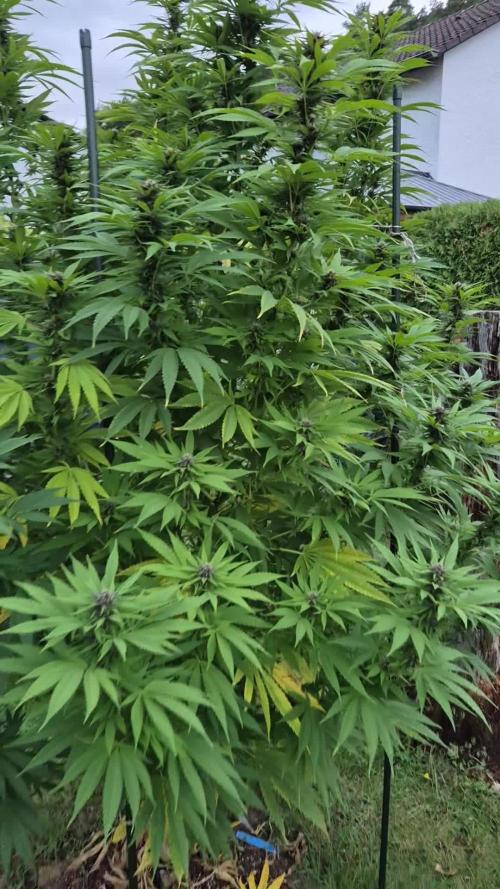
Week 27 tested us with brutal weather – rain almost daily, humidity never dropping below 60%. But the ladies are hanging tough. Had a small mold scare on Durban Poison, but caught it early. The improved support system held strong against the wind – no collapses this time!
Let’s get straight to the main characters:
Durban Poison
She’s loving the weekly mineral fertilizer – bulking up like she’s on steroids! The aroma and resin production have intensified big time. After touching her buds, my fingers are glued together with sticky goodness ❤️. Still, I’m staying vigilant – checking daily for mold and removing any signs immediately.
Blueberry
Her buds are getting denser and more beautiful every day. Finally seeing resin glistening on the sugar leaves, and the smell… unbelievably divine. Fruity, sweet – beyond anything I expected. Really hoping the weather allows me to harvest at least a few mold-free buds from her.
Next Steps
· Make a sacrifice to the weather gods (please, no more rain!)
· Continue weekly TriPart + Bokashi juice routine
· Daily mold checks and branch inspections
That’s all for this week, friends.
Catch y’all next time.
– Smoking_Joe_Frazier

Likes
Comments
Share
@MyLittleGarden
Follow
Blütewoche 3 - 29.06. – 06.07.2026
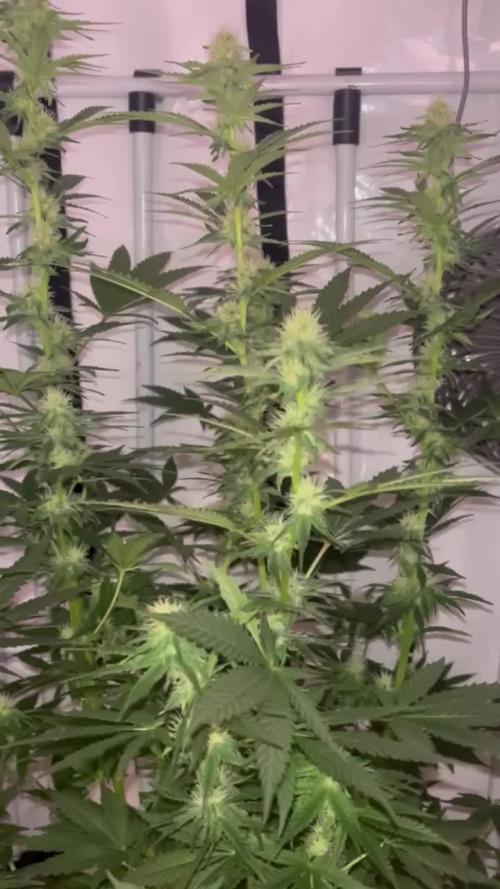
In der dritten Blütewoche setzte die Blue Sunset Sherbert ihren Stretch noch einmal fort und wuchs weitere etwa zehn Zentimeter. Damit befinden sich die höchsten Triebspitzen inzwischen sehr nah unter der LED.
In dieser Woche wurde die Pflanze einmal großzügig mit 9 Litern Wasser gegossen. Zusätzlich wurden einige Blätter entfernt, damit die unteren Blütentriebe besser Licht erhalten.
Die Pflanze wirkt weiterhin sehr vital, kräftig und gesund. Sie füllt das Zelt inzwischen stark aus und entwickelt sich sichtbar gut. Für die kommende Woche bleibt zu beobachten, ob die höchsten Triebe vorsichtig etwas zur Seite geführt werden oder ob die Lampe noch leicht höher gehängt werden muss, damit ausreichend Abstand zu den Spitzen bleibt.

Likes
30
Share


@XperencdGmanXG
Follow
well what can i say this is what I saved from the fusarium outbreak that I had with the mother and all the clones. Managed to save 5 clones 2 are with a friend now. I have 3, one is a great specimen and the other 2 are lil clones that could. Round 2 here we go! Wish me luck!

Processing
Likes
4
Share


@NPKgrow
Follow
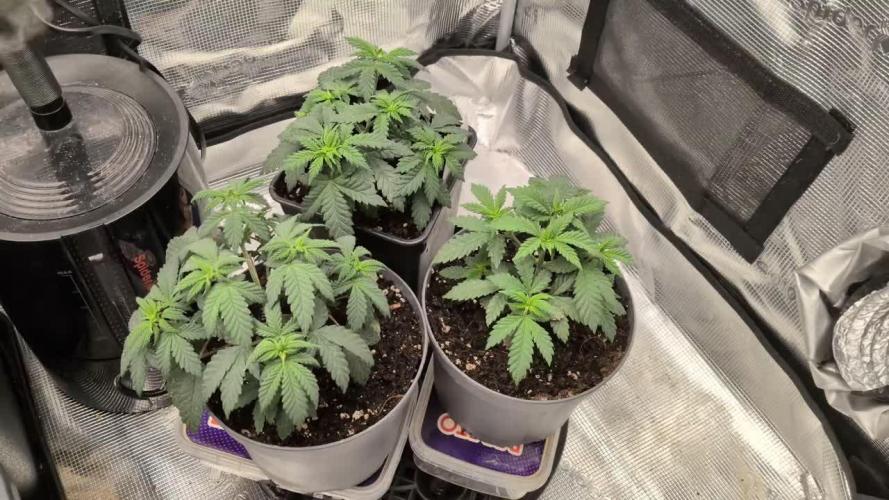
Last defoliation before serious bloom phase. Started adding Bloom nutes. Trichomes forming heavily on sugar leaves.
As a note, the day/night temps are incorrect throughout the entire journal. Regardless of the temp that's input into the journal template, the journal displays "50 F".
Has anyone else experienced this issue? (Temps have been mid 70 to low 80's throughout most of Veg and Flower so far.)
Likes
5
Share


@GermGrowFox
Follow
So langsam fangen die Blüten wirklich an schön auszusehen.
Bin zufrieden mit dem visuellen Ergebnis der Blüten. Über den Rest urteile ich vorerst mal nicht haha

Likes
52
Share


@Salokin
Follow
Hi Growmies,
the plant is doing good so far. I have upped the lamp output to 50% of the veg part for the coming week. I have put her straight away on a very heavy feeding schedule, so let's see how she will handle that. I am super stoked to grow this strain, as it was one of my favourites back in the day, when our market was flushed with it :)

Likes
42
Share


@TerpTurtle
Follow
12 day dry @ 58-63RH & 60-66F in blacked out dry tent | Glass Jar Cure
Early taste test & this Bud KOs leaving you in major terp sweats! Hits like a Sumo wrestler sitting on you tickling all over! Flower bowls hitting like fat juicy dabs, with overwhelming squeeze & flavor like you're drinking a smoothie!
Breaks down chunky and greasy with a vivivd dark purple color. LOUD N STANKY, opening a jar gives you the duck face funk face.

Likes
17
Share


@BLAZED
Follow
Week 13 (24-4 to 30-4)
24-4
Temperature: 23.8 degrees (lights on) 18.9 degrees (lights off)
Humidity: 66% (highest) 53% (lowest)
No pictures.
Opened the reservoir for a couple of minutes.
25-4
Temperature: 24.7 degrees (lights on) 18.9 degrees (lights off)
Humidity: 66% (highest) 52% (lowest)
Increased the strength of the light from 60% to 65%.
26-4
Temperature: 25.2 degrees (lights on) 19.5 degrees (lights off)
Humidity: 66% (highest) 51% (lowest)
No pictures.
I emptied the reservoir, there was 2750ml left.
I made a 15L new feed and added it to the reservoir.
Opened the reservoir for a couple of minutes.
27-4
Temperature: 26 degrees (lights on) 19.9 degrees (lights off)
Humidity: 65% (highest) 47% (lowest)
28-4
Temperature: 26.4 degrees (lights on) 21.5 degrees (lights off)
Humidity: 64% (highest) 47% (lowest)
Opened the reservoir for a couple of minutes.
29-4
Temperature: 26.4 degrees (lights on) 20.6 degrees (lights off)
Humidity: 64% (highest) 39% (lowest)
Increased the strength of the light from 65% to 70%
Opened the reservoir for a couple of minutes.
30-4
Temperature: 27.4 degrees (lights on) 21.1 degrees (lights off)
Humidity: 62% (highest) 47% (lowest)

Likes
4
Share


@Budking420
Follow
This is hands down the tallest I have ever seen an auto flower get this fast. I have a feeling this is going to have a rather large yield given the container size. I hope you enjoy the pictures and videos I have added. The data is nice to collect on the cloudcom thermo-hygrometer. I hope you come back next week to check just how fast she grows! & remember its 4:20 somewhere!!!

Processing
Likes
3
Share


@TeamQuality420
Follow
I took David Robinson's tip a little late " dont grow small flowers" So I took anything that was taking away from the main coals. Of that works out in my favour I will have to find out !!
There is a large story behind there fine ladies . But for now let's just say f*ck cancer.

Likes
147
Share


@Coco4CocoPuffs
Follow
Here we have Sleepy Joe Og 😴💤😴💤😴 From Premium Cultivars
Soaked seed for 24hrs
Placed seed in paper towel 24hrs
Once rooted placed in Main Pot
😴💤😴💤😴💤😴💤😴💤😴💤😴💤😴💤😴

Likes
27
Share

@Z420Organics
Follow
🦍 Monkey Grease — Harvest Report! 🦍
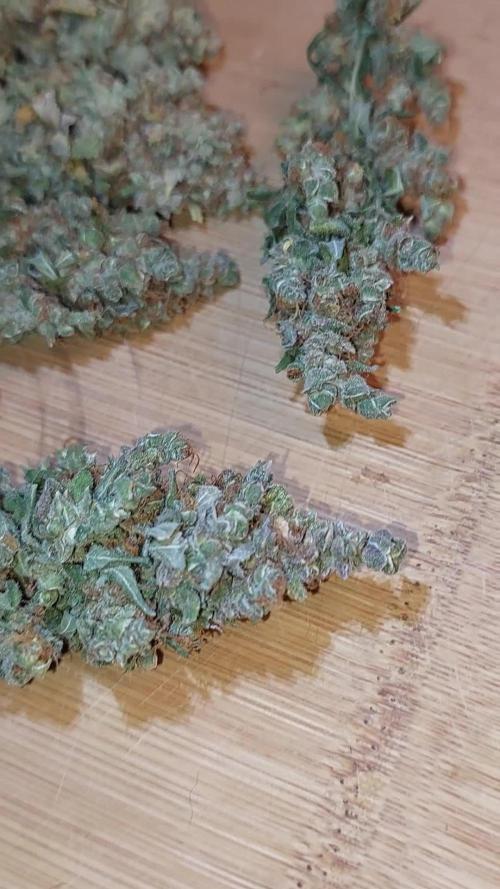
The first strain harvested from the grow was Monkey Grease, with one pheno coming down at 63 days.
Flavor & Aroma:
The first pheno gives dry nutty notes with a really unique chocolate milk vibe 🍫🥛 — such a distinctive taste!
The other pheno leans more toward a chamomile-like aroma, though I’m still not entirely sure 🌼. Very interesting!
Effect:
I’d classify it as indica-dominant vibes. Very clean, pleasant relaxation!
The aroma is super strong and fills the room.!

Likes
41
Share


@JacareGrows
Follow
Hey guys.
For this week i upload some videos 1 video per plant.
I am not giving any more the bio nova autoflower supermix, i m thinking on let them going only with water until the end, but lets see.
Plant 5 is close to harvest i think on the end of this week.
Plant 1 and 4 are doing good on flowering.
Plant 2 is slowly flowering
Plant 3 is still in middle of the transition to flowering, is going very slow. I think she probably is blocked because of the size of the pot and light .
When i harvest plant 5 the others will have more space, and i can bend some branches to increase the bud quality.
The big question is, when harvest? its the first time im doing this and i am afraid of doing that wrong.
Hope the videos can help someone to help me :D
I have also made a video of plant 5 on a more close look, not to much quality but for now its what i can get , sorry
28/05 day 69
small trichome update of plant 3,4 and 5. Plant 1 and 2 still on pre flowering
analysing the trichomes, i would say,
Plant 3 and 4 need almost 2 more weeks
Plant 5 - probably only 1 week more, so up to almost week 12
plant 1 and 2 - will take much time as fotoperiodic LOL
Likes
262
Share


@Ju_Bps
Follow
Hello my friends growers!👨🌾👨🌾,
All was fine this week,
Buds continue to grow up well 🌲,
Plant look healthy and happy,
I start to have a nice sweet/fruity smeel, look nice for the future weeks 😍.
I give water each 2/3 days,
Water + bloom tabs rqs + sugar royal 2.25l/plant
Water + cannaboost 2.25l/plant
Water + bloom tabs rqs
PH@6
I grow in underground so, sometimes it's really difficult to regulate humidity.
Average RH 65%, not really well in blooming, sometimes 50%, sometimes 80%,
Hope next week will be more stables.
Have a good week mate, and see you next week 🌲👊👨🌾💨💨
Likes
11
Share


@Grass_castle2020
Follow
Day 43 girls have the sweetest smell all good
Day 44 after the LST theses girls really started looking better we went ahead and got rid of the three that were looking bad for more room in our grow room. Girls got watered
Day 45 girls are filling out great
Day 46 girls got watered today they are starting to fill out
Day 47 girls are growing fast
Day 49 girls got watered and they smell so so sweet

Processing
Likes
29
Share


@Grey_Wolf
Follow
Ginger Nut Cookies & Aussie Music Videos
4 weeks of flowering completed
26th March 2020
Hi Everyone I hope you are well , This Plant is starting to get some frosting happening and the smell has elvolved a little once again 😏
It's still got the tropical fruit like aroma but has got an underlying smell almost like honey.
I had to get up Early this morning as an impending thunderstorm threatened to drench my plants which I wasn't going to let happen 😡 bloody rain 😆
It's all good now they are under cover and protected from any more showers we may have .
She had a good feed yesterday of some Liquid potasium, Seaweed solution , Epsom salts and Mollasses so she should be content until the sun returns .
Ph is still keeping stable at 6.4 so that's about it for the plant update Now It's time for the Weekly Aussie Music Videos 🙌
Last Week was jimmy Barnes and his song Working class Man
This week I am playing The Angels as requested from @Lovemabud .
The Angels are an Australian rock band that formed in Taperoo, a small beachside suburb in Adelaide South australia in 1974
There biggest hit "Am I ever gonna see you face again?" became iconic because of the pub chant that followed which was "No Way , Get Fucked! Fuck Off!" 😆
If you watch the 2nd vid preview you will understand what I'm on about .
Sadly the lead singer Bernard "DOC" Neeson Passed away in 2014 from a Brain tumor.
First link is to the original version of "Am I ever gonna see your face again"
and the 2nd link is to one of the final performences before Docs death with the full Pub chant
Link 1
https://www.youtube.com/watch?v=xj_QkLrW3qc
Link 2
https://www.youtube.com/watch?v=3-VZP1pCIL8
I hope you enjoy this weeks Aussie Music Video and I'll be back next week with another one .
Take care 👍👊 Stay positive 👍
Likes
7
Share

@Pompeyblue
Follow
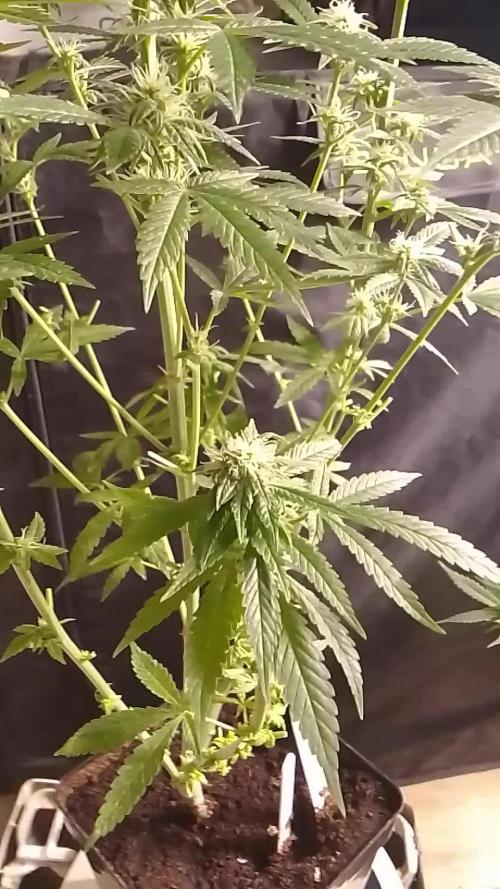
All going great have them a trim so the light can get right through them added the plagron Green Sensation to their feed now so with in a week they should all start to put on weight and in the next week then the sweet sugar smalls will come from them
Likes
77
Share


@SuggaShane
Follow
So far so good. Don’t think I’m gonna do any type of training on these but not 100% yet. Get me ideas on what to do.
Likes
43
Share


@GODSGIFT_2005_JM
Follow
🍼Greenhouse Feeding BioGrow & Bio Enhancer
⛺️MARSHYDRO
The ⛺️ has a small door 🚪 on the sides which is useful for mid section groom room work. 🤩
☀️ MARSHYDRO FC 3000 LED 300W
☀️Also special thanks to VIPERSPECTRA P2000 (200W) & XS2000(240w) LED growlights
🌱 FastBuds 420
Processing
Likes
7
Share

