


Likes
12
Share


@Papablob
Follow
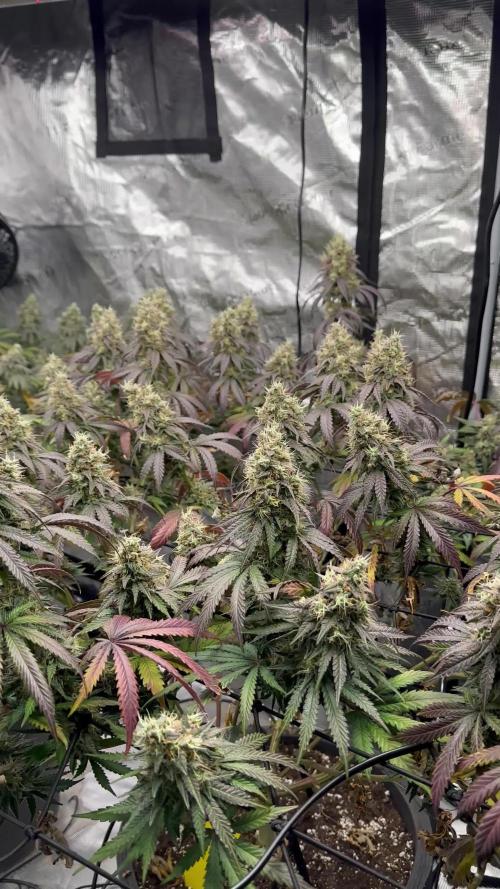
Belle plante. Certainement une Championne dans sa catégorie.
21/08 63 g sec c'est pas mal.



Likes
5
Share


@cookingwithninja
Follow
Plants are currently drying
2+ months later. And next project au79

Likes
4
Share

@Borberad
Follow
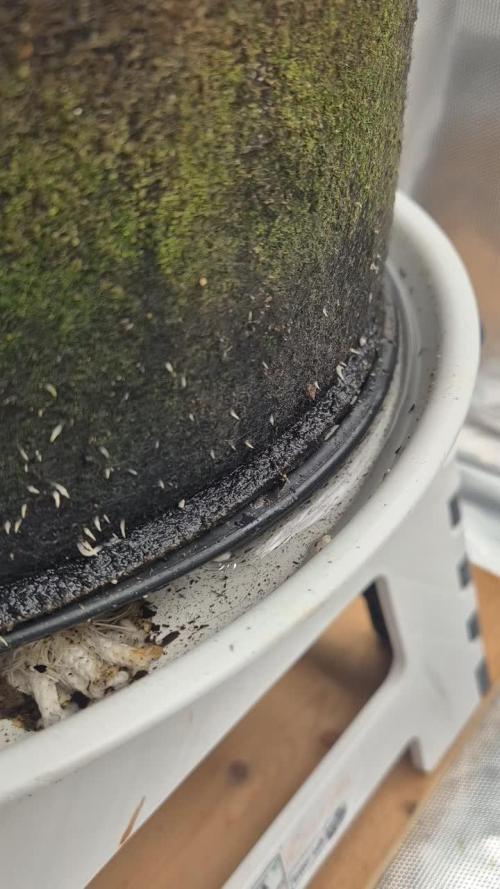
Umstellung an Tag 44. Nach einer 20h Nacht wird in die Blütephase gewechselt.
Likes
30
Share


@Canadian
Follow
Still in the process of drying and curing I wait for the snap Branch drying and they're not there yet but I two of the branches were ready and I cut them and taste them even though not cure was smooth and delicious.
I did not collect popcorns I kept everything in small pieces and put it in a pot for edibles. One of them main colas waiting 23.75 grams.
After curing this it is a very enjoyable and smooth blueberry smoke with a very strong THC content plus the very big yield and a very good recovery from abuse make this plant a real champ

Likes
125
Share


@SlowpokeFuegobud
Follow
🍊 🍋 🍮 🍭 🍊 🍋 🍮 🍭 🍊 🍋 🍮 🍭 🍊 🍋 🍮 🍭
Welcome to week 11, dear friends!! 😘
Watering with each 5ml of Growzyme, Humic Acids + Bigfruits 💧
Thanks, everybody!! 💚 💚 💚 Grower love!!! 😘🙏 🌱
_________________________________________________________________________________
SETUP:
80x80x180 cm Zelsius
240W Full Spectrum LED IR UV dimmable
DW240H-A6-HS
Heatsink color red
LED Chips:
512pcs SAMSUNG LM301H + 24pcs Osram 660nm + 8pcs Osram IR 730nm + 8pcs UV 385nm
Color mix: 2700K + 4000K
2,8umol/J
Driver HLG-240H-C2100B
Coverage: veg 5x3ft / flower 4x2ft
Product size: 628x205x68mm
Green Buzz Nutrients
Shouts go out to my sponsors @GreenBuzzNutrients, thanks so much for your support! ❤️
If anyone would like to try their amazing organic products, use code GD42025 for generous 25% discount (for orders of minimum 75€) ✨
https://greenbuzznutrients.com/
Mills Nutrients
Biobizz Lightmix
custom exhaust fan 320/270cm³/h
Carbon Active Granulate 240cm³/h
tab water pH 8 - EC 0,25 with Calmag to 0,5
Advanced Hydroponics pH minus Grow + Bloom to pH 6.2
🍊 🍋 🍮 🍭 🍊 🍋 🍮 🍭 🍊 🍋 🍮 🍭 🍊 🍋 🍮 🍭

Likes
51
Share


@GreenHouseLab
Follow
Transplanted 7 days ago they are back into high gear. Two different phenos is nice to see also nice to be back in flowering with colder weather on the horizon. Regular Gaia Green amendment mix of 4-4-4, 2-8-4, kelp meal, EWC & Glacial Rock Dust. No issues with Mg, finally solved with the rock dust.
Plants looks out of shape ever so slightly it’s cause I’ve been leaf tucking. No under carriage bs going on here and I only removed dozen lower nodes on the biggest that’s it. Trying to maintain plant height will be near impossible, plant elevators will be a must.
Still no signs of pistils I’ll need to look under canopy further to see. The higher PK food will be kicking in just now and should help with the shift in priorities.
Both drink 1.5L every 2 day's at Day 35


Likes
75
Share


@DogDoctorOfficial
Follow
Week 8: Embracing Ease and Precision with the Tent-X Controller
As we enter Week 8 of our cultivation journey with Panty Punch Auto, the spotlight shines brightly on the remarkable performance of the Tent-X controller. With its intuitive navigation and user-friendly interface, the Tent-X has revolutionized our grow environment management, surpassing even the capabilities of its predecessor, the Hydro-X. This week's report delves into the seamless integration of the Tent-X controller, alongside close inspections of our thriving botanical beauty as she approaches the final stages of her growth cycle.
The Tent-X controller has truly been a game-changer in our cultivation arsenal, offering unparalleled ease and convenience in environmental control. With its simple yet sophisticated design, navigating through the various settings and parameters has never been easier. From adjusting temperature and humidity levels to fine-tuning lighting schedules and CO2 concentrations, the Tent-X empowers us to create the optimal conditions for Panty Punch Auto's continued success with just a few clicks.
Amidst the advanced technology at our fingertips, our diligent attention to detail remains a cornerstone of our cultivation philosophy. Close inspections of Panty Punch Auto reveal a plant that must surely think we're aliens, constantly hovering and examining her every leaf and bud. Yet, this meticulous approach is essential as she enters the final stretch of her growth cycle. Trichomes are gradually changing colors, signaling the onset of maturity, but we remain vigilant, ensuring she reaches her full potential before harvest.
Panty Punch Auto stands as a true beauty, her branches adorned with glistening trichomes that resemble a blanket of snow. As we monitor her progress, the TM+ Pro app serves as our faithful companion, storing and organizing invaluable data for our analysis. From nutrient levels to environmental conditions, the app provides a comprehensive snapshot of our grow environment, allowing us to make informed decisions with ease.
With the end of the growth cycle drawing near, we've made the decision to cease all feedings, providing Panty Punch Auto with only water supplemented with enzymes. This strategic approach not only encourages a smooth transition to the final stages of flowering but also sets the stage for the reuse of our soil. Enzymes play a crucial role in breaking down organic matter within the soil, promoting nutrient availability and overall soil health. By reusing the soil, we minimize waste and cultivate sustainability in our growing practices.
In conclusion, Week 8 marks a pivotal moment in our cultivation journey, where the synergy of innovation and diligence propels us toward a successful harvest. As we express our gratitude to those who have supported us along the way, we extend a heartfelt thank you to TrolMaster for their groundbreaking technology, to Aptus Holland for their exceptional nutrients, to Grow Diaries for fostering a vibrant community of growers, and to all fellow cultivators for their unwavering encouragement and inspiration.
As we anticipate the culmination of our efforts, let us continue to nurture Panty Punch Auto with care and dedication, celebrating the beauty of growth and the promise of a bountiful harvest.
Stay tuned for more updates as we witness the final stages of Panty Punch Auto's journey and prepare for the rewards that await us at harvest. Together, we'll continue to push the boundaries of what's possible in cultivation, one harvest at a time.
#PantyPunchAutoAdventure #RootsAndFruits #TrolMasterControl #GrowDiariesCommunity #CultivationExcellence
Genetics - Panty Punch Auto - https://seedstockers.com/
Plant nutrition - Aptus Holland - https://aptus-holland.com
LED Photons - Lumatek - https://lumatek-lighting.com
Controls - Trol Master - https://www.trolmaster.eu/
Watering - myself
Love and attention - Me, myself and i
As always thank you all for stopping by, for the love and for it all , this journey of mine wold just not be the same without you guys, the love and support is very much appreciated and i fell honored and blessed with you all in my life, With true love comes happiness. Always believe in your self and always do things expecting nothing and with an open heart , be a giver and the universe will give back to you in ways you could not even imagine so
More info, the ocasional give-away and exclusive updates from all my adventures can be found - links in the profile description
Friendly reminder all you see here is pure research and for educational purposes only
Growers Love To you All 💚 💚 💚



Likes
36
Share


@Bubble_Budz
Follow
Grow notes week 3
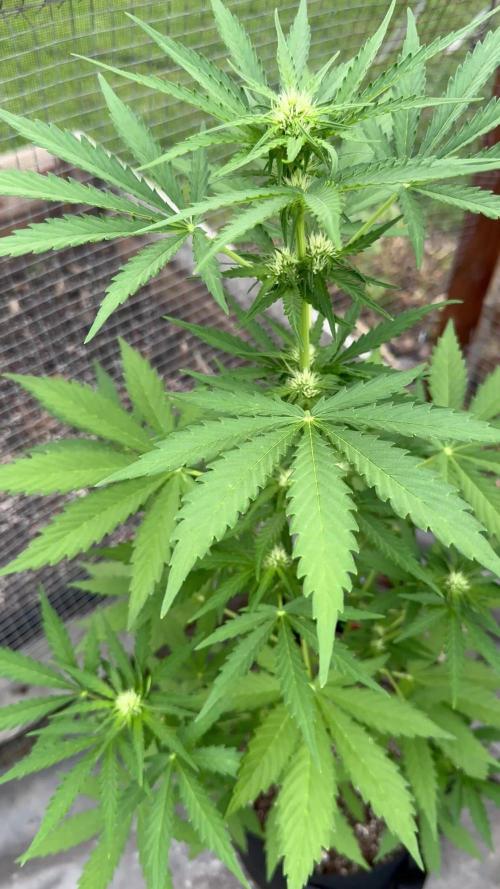
#1 This plant is healthy and thriving. She’s the first to show pistols which means I should change her status to flowering but I won’t do that until it’s pretty obviously in flower. She’s taking the training nicely and I think I’m starting to figure things out when it comes to training.. the trick is to simply SLOW DOWN.
#2 is looking great! Her leaves are healthy and node spacing is just how I like it to look. She likes LST and seems happy with the maxi grow/bloom series. The roots on each plant are healthy and white
#3 is getting greener each day but I’m starting to believe it’s either genetics or this nutrient line that’s causing this effect.
#4 is the thickest and biggest plant of the bunch. However, she is displaying rust spots and potential calcium or iron deficiency on the lower older leaves. I may have to feed heavier on cal mag while running this nutrient line up.
Thanks for reading this far! I hope you enjoy these time lapses of this weeks growth.. as always
Stay highly dedicated & highly medicated folks 🔥🌿😎💨
Peace & blessings upon you!

Likes
10
Share


@Belivitez
Follow
15.9. Girls are insane! Contest girl have biggest, harder buds with more intense smell like others 🤤 all girls get just pure balanced water. There we have 2 different phenos of this strain.
Chop day is on next door 😁
22.9. Chop day!!! I found few mold spots but nothing serious 💪

Likes
4
Share


@Elpatron152
Follow
Here we go, after 21 days of streching i make some defoliation and lolipoping, I break by the way one flower on the top what a mess of newbie 🙃 will not do it again. Thanks everyone

Likes
41
Share


@Kmikaz420
Follow
Bonjour a tous et toutes j ai enfin trouver le temp et la force de sortir les petites de la tante ;) et j ai malheureusement vue que 2 tête de ma melon gum commencer à avoir un peut de bud rot (je n ai pourtant jamais dépasser les 50% d humidité mais j doit dire que les têtes on triplé de volume en 1 semaine et pour la circulation de l air pas top ) j ai donc coupé tous cela et désinfecté aussi bien que je le pouvais, par la suite j ai augmenté l apport en air frais (rajout d 1 gros ventilateur) Autrement tous ce passe pour le mieux fin de semaine on passe au flusch 😉 voilà voilà
(Ps= 2 plantes n ont pas été sortie je ne veut pas risquer quel casse vue la hauteur et le poids en bud mais promis vous les verrais bientôt

Likes
6
Share


@masterofsmeagol
Follow
5/11 I DID NOT WATER. A COUPLE LOOKED DRY BUT STILL HAD HEFT AND I COULD FEEL MOUSTURE IN THE SOIL. I should've taken more pictures. I forgot it's a new week. Oh well. I'll be back over and I'm planning to bring the girls outside for the first time if it warms up a little more. It's windy as fuck but I can put them in the garage with the doors open. As long as that's not the direction of the wind. I raised the L.E.D light and lowered the hps. I also TRIED to FIM a 10th planet and an mk ultra. I may have just topped them. We'll see how it turns out before I do anything to the others. Pink kush grows slow and compact. Very similar to my experience with purple punch. I have two plants that have slightly twisted leaves. Nothing else is wrong with anything. Looking at the stippling on the leaf I think it might just be either low humidity or slight wind burn or a combination of the two. Now that I've looked again I think it might just be the first 5 finger leaf on those pink kush that I mat have mistaken. I'll keep an eye out. I feel better having done some research. I'll put some more pictures up and I'll update what it is that I get done.
EDIT: WENT BACK OVER AROUND THREE. EVERUTHING LOOKED GREAT AND THE LEAVES WETE PRAYING ON SOME. I MAY NEED TO WATER SELECT PLANTS TOMORROW. I'LL PLAY IT BY EAR. LOWER THE HPS AND RAISING THE LED WAS A WISE CHOICE I THINK. OH AND THE "TWISTED" LEAF I WAS WORRIED ABOUT IS NOTHING. JUST THE FAN TO CLOSE AND A FOMBINATION OF LOW HUMIDITY AND MINOR HEAT STRESS. ITS BEEN TAKEN CARE OF. I WANTED TO BRING THE GIRLS OUT TODAY. ITS SUNNY AND 60° BUT THE WIND IS WHIPPING! WE'VE GOT GOOD WEATHER COMING UP THOUGH WITH TEMPS IN THE 70'S. I THINK TOMORROW ILL CLEAN/SANITIZE THE CAGE AND WASH/SANITIZE THE GROW BAGS.
5/12 Looking and lifting some of the pots I found some that were pretty much totally dry. I watered the majority of all the plants. If soil was moist I left it alone. If it looked a little dry I gave it a little water. I didn't measure the water but it wasnt even ALL of what I had left from LAST WATERING (which was like a qtr gallon If that). I just don't want to over water. The ones that I went light on last time were the ones that were dry. Plants seem to explode after watering but this wasn't nearly as much. Everything is looking great. It's easy to tell these are all indicas due to the structure and leaf shape. Much different than even the Chem Dog #4 which doesn't LOOK as "indicay" as some of the others. I wanted to bring them outside today but it's only 50 out. I'm not going to make the same mistake as years past and stress the plants. When we get a nice warm day I'll bring them out. Other plants are ready to be topped or fimmed but I haven't done it yet. Also need to clean the cage and wash the bags.
5/13 It's 60° at 9am so I think the girls will be going outside for a little bit. Didn't fully water but I used what was left of the gallon and gave them that. Some are much drier than others. I'll probably give them a full watering tomm. I only gave them a little today because I didn't want them drying out. I FIMMed a Special Kush today. WE'LL see how the hst turns out.
EDIT: WENT AND BROUGHT THE GIRLS OUT FOR FOUR HOURS IN INDIRECT SUNLIGHT. THE TENTH PLANETS WERE THE ONLY ONES THAT LOOKED LIKE THEY HAD AN ISSUE. JUST MINOR HEAT OR LIGHT ISSUES WITH A COUPLE FAN LEAVES. EVERYTHING ELSE SEEMED LIKE THEY SHOT UP IN SIZE. THE LARGER CONTAINERS STILL SEEM KINDA MOIST BUT SOME ARE DRY. I NEED TO GET ON A STABLE WATER SCHEDULE. ITS HARD WITH DUFFERENT PLANTS OF VARYING SIZES. STILL HAVE A LOT OF WORK TO DO.
5/14 One plant was super light today and was a little droopy. I WATERED EVERYTHING TODAY USING APPROX A HALF GALLON. I brought them outside for the second day. I left them out for about 3hrs. It's hot today. I'm still floored that chatgtp gave me exact directions for hardening my plants off at my exact location taking the weather into consideration! That is awesome. They're all doing good. Pink kush is the slow starter this year. Kind of like purple punch was. The only plants that had ANY damage on them was the two 10th planet's and its not really damage. It's just a LITTLE mottling on the leaf and the serrations pointing down. It's weird because this strain did great here last time. The Special Kush #1 and the Pink Kush would probably be fine to leave out soon. Hindu Kush parents make those strains extremely resilient. The one chem dog #4 looks out of place with all tjis big fat indica leaves. I'm hoping the topping and fim-ing will take. It looks like it will.
5/15 Everything is looking great! I have some work to do bit then I'll be over to bring the girls out for a few hours. I'll edit this when I do.
EDIT: BROUGHT THE GIRLS OUT FOR THREE HOURS TODAY. I THOUGHT THE TENP WENT DOWN TO 73 BUT TUAT WAS INDOORS. OH WELL. THEY STILL DID GREAT! THEY WERE ALL LOOKING OUT OF THE LEAN-TO LIKE SUNFLOWERS! THE STRAIGHTEN OUT AFTER BEING UNDER THE GROW LIGHTS. I'M PLANNING TO CONTINUE TO HARDEN THROUGHOUT THE WEEK. STILL NEED TO CLEAN BAGS AND GROW AREA. I HAVE 'A' CAMERA DOWN. TRIED TO FIX IT TODAY BUT I WOULD GET RO THE LAST PART BUT THE CAMERA WOULDNT READ THE QR CODE ON MY PHONE. I EMAILED THE COMPANY BUT IF I DONT HEAR BACK BY TOMORROW AND I CANT FIX IT ILL JUST BUY ANOTHER CAMERA TO ADD TO THE SYSTEM. ITS THE OLDEST CAMERA I HAVE AND ITS DONE ME 5 GOOD YEARS. MAYBE ITS TIME TO RETIRE IT.
5/16 I watered a few of the girls this morning with a small ring around the pot. I brought them outside and am leaving them for 3.5 hours today in the lean-to. They get indirect light without all the wind this way. I'll slowly increase the hours outside until there is enough daylight for them to go outside without revegging. When I put them out I noticed that a few were light and since it was close to 80° I watered most everything. I used under a half gallon. I'll see how they do from here and then move forward. I fixed my down security camera and secured my cage. Now I just need to finish hardening off, clean/sanitize bags/environment and put them in tjeir final homes. I'm not rushing it though. I've learned my lesson with that.
5/17 Plants did great yesterday and were perky and praying this morning. It was HOT yesterday too. Got into the low 80's. It's 57° degrees at 9am and it's overcast and sprinkling. I haven't decided if I'm going to bring the girls out today. It might be a good day to try some direct sunlight. I'll update whatever I decide to do.


Likes
2
Share
@Olduffybastard88
Follow
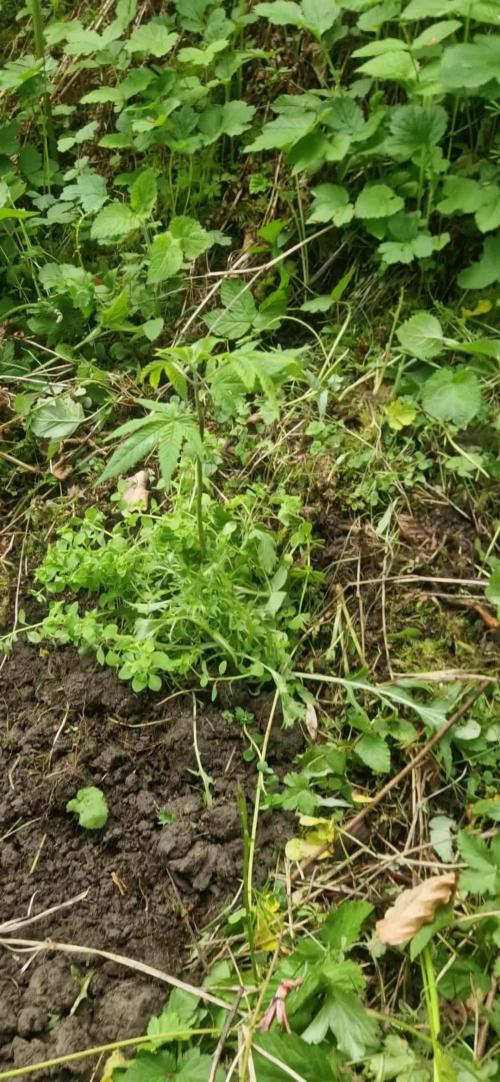
Had some sunset sherbert left over from last year so I have more than usual with this plant going put half outside in the ground and the other half to flower in the tent going attempt to take cuttings of one plant

Likes
14
Share


@GoldenWeedGrower
Follow
D50/F06 - 20/05/23 - Nothing to report
D51/F07 - 21/05/23 - Added water and nutes EC=1.1 pH=5.7
D52/F08 - 22/05/23 - Nothing to report
D53/F09 - 23/05/23 - Added water. EC=1.1 pH=6.4
D54/F10 - 24/05/23 - Added water and nutes EC=1.0 pH=6.3
D55/F11 - 25/05/23 - Start the week out. I set up a system to feeding Nora during my stay out (I'll take some picture about...)
D56/F12 - 26/05/23 - I leave today, 1 week away
Likes
40
Share


@Bread_n_Buds
Follow
When you get to a certain point in the flowering, the real magic begins, so far beautiful yes but when the flowers form I would stay there speechless admiring them for the whole time enchanted.
---- General conditions in the Growbox - We are talking about our autoflowering @zam.nesia which are all in great shape and are now showing their differences. The F1 Hybrids are flying, they are ahead of everyone else, if you want to realize how much the F1s work look at my photos in the growbox. Look, test and then talk, I never talk before trying. I get an idea based on what people say, especially when I hear the old school know-it-alls a bit hippy talk badly about a new thing I think: "this new thing is worth trying, it must be the bomb", and in fact...
---- Plant - I have sung the praises of this plant and the F1s and not just to throw words to the wind. Look at the difference between the two Blue Cheeses and all the other 10 autoflowerings (in 5 strains) that I have; they are very advanced as if they were 2-3 weeks ahead of the others. Compare the f1s with the normal ones to understand the difference. I continue to be amazed by the speed of these plants and their power. I have two very similar in everything except size. One is giant, well over a meter and flowers at a speed that is unbelievable. The other is smaller but super resinous and has already reached the time of putting on colors for me a sign of fush, with the f1s I wait a little longer but especially the smallest one could finish in 8 weeks
However, a super harvest is expected of about 70-80 grams for the large plant and 30-40 grams for the small one but really fiery with resin and wow what a smell!
---- Fertilization program - As for the fertilization program we have reached the moment to start with the Green Sensation, Plagron would recommend the 4th week but these autoflowerings accelerate and I start at the third also because it will soon go into flush
---- https://plagron.com/it
- Alga Bloom - 3 ml/l
- Sugar Royal - 1ml/l
- Power Buds - 1 ml/l
- Green Sensation - 1 ml/l
--- The dehumidifier now runs between 50% and 55% // Strain Description // If you were looking for a reliable, versatile and accessible strain, here it is. Blue Cheese F1 Automatic by Zamnesia Seeds uses F1 genetics to produce uniform, rewarding and easy-to-grow plants. This strain stays small, so you will have no problem finding a place to grow it. After just 10 weeks from seed, you can enjoy tasty buds with relaxing effects.
- Strain — Get a seed of this fantastic strain - https://www.zamnesia.io/it/10673-zamnesia-seeds-blue-cheese-f1-automatic.html -
Growbox and air sistem --- https://www.secretjardin.com/
- Light — P2000 - https://www.viparspectra.com
- Music and sound --- I made my girls listen to 432hz frequencies and music from www.radionula.com
- Z --- You can find these seeds, much more from the world of cannabis, mushrooms and an incredible series of accessories and gadgets on the reference site not only mine but of many growers
---- https://www.zamnesia.io

