


Likes
Comments
Share

@The_Doctor_Green
Follow
Hola a todos!!.
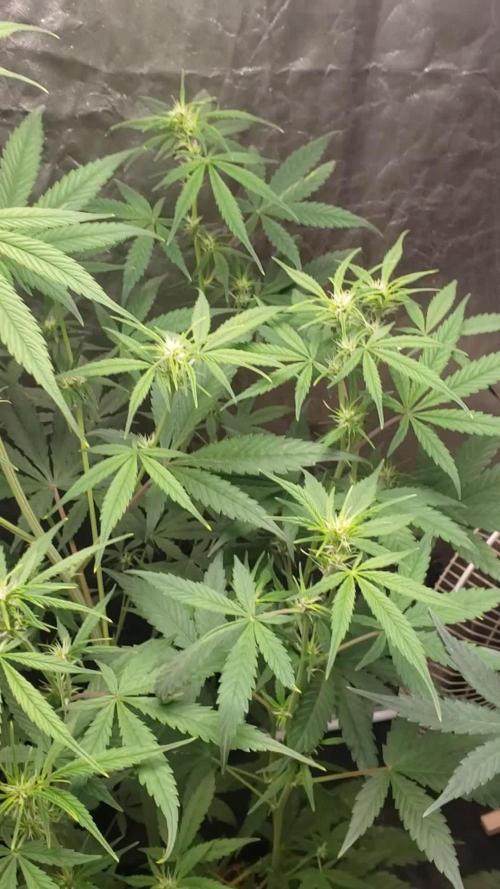
Esta divine rapier viene creciendo a pasos agigantados, en una semana ha crecido 30 cms!!.
La he regado al igual que los otros diarios 2ml x litro de agua de top auto, top bloom y top candy.
El resto de los días solo con agua.

Likes
Comments
Share

@UDUDUDUDU
Follow
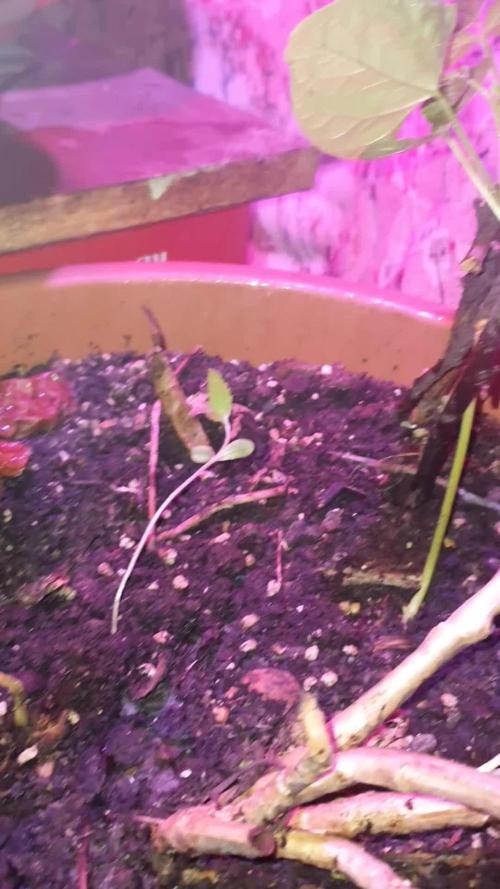
Yea. This year out of 60+ seedz only 3 are making it to harvest and an addition 4 are growing'
Plant seeds are serious messed up.
Likes
29
Share


@JeyGanesha
Follow
Un altra settimana è passata senza problemi...grazie alla mia perseveranza nel curarla e debellare i ragnetti Rossi che bastardelli mi sono arrivati anche dentro al box... sicuramente c'è li ho portati io involontariamente quando sono andato a vedere delle piante di un amico che erano impregnate di ragnetti e ragnatele sui fiori....vabbè ora devo sbattermi un po' più ma non lascerò che mi rovinino la mia terapia 💪👍🙏🕉️🙏... Boom Shiva Shankar 🕉️ belle le mie coccinelle 🐞 che mi tengono pulita la mia terapia


Likes
14
Share


@EaRtH
Follow
20.4. - Happy 420 everyone! ☘️ I'm starting the second week of full bloom and plants are looking almost perfect. I've removed Bio Grow from the mix and added more Bud Candy and Cal-Mag, I hope that plants will like it. ✌️
21.4. - Watered 💧
23.4. - Seems that plants are okay with the new mix and upped amount of water per plant 😎 Watered 💧
26.4. - Week wrap-up: Plants are thriving, however Jack and Lemon are getting a bit yellow. I'm guessing it's because they're right under the light. Watered 💧
20.4. - 26.4.2024

Likes
11
Share


@adam_pawloski87
Follow
Pre98 Bubba , oh how I’ve missed you for so many years! These ones came out absolutely gorgeous! Loving the the purple phenos 😍 ! These ladies liked to stretch quite a bit so you’re gonna want to use some LST on em but I also recommend topping at least 6 times to get a better bang on your yield ! Expect nice tight purple buds with a tremendous amount of frost covering, some of the frostiest Bubba I’ve ever had! Over all I give it 10 stars an would definitely over an over run this strain!

Processing
Likes
15
Share


@DeStarr_GhettoGrows100
Follow
Great Week! Girls are getting bigger and loving there new light. LST is going well. They are showing there sex and will be going into there stretching phase
Likes
Comments
Share


Likes
22
Share


@elevensixty6
Follow
We are 1 week in and the second set of true leaves are beginning to grow, both are doing great and moving full steam ahead. Still watering about 20-30 mL of 200ppm CalMag RO water once daily and misting a couple times throughout the light cycle seems to be working great.


Processing
Likes
15
Share


@Messypies
Follow
Sorry for the lack of uploading !
These plants have been perfect from the start. Budding out nicely and haven't shown any signs if defficiency.
All training has been stopped and I have started cutting back on the nitrogen for the 2 autoflowers.
The peanut butter cookies is growing to be very bushy so I have done some light defoliation to help with light penetrative to the lower canopy of the plant


Likes
14
Share


@Rock_n_Roll_Randy
Follow
ALL THE PHOTOPERIODS ARE IN THE 8X8 NOW. DID SOME MAJOR DEFOLIATION BECAUSE THEY ARE TOO BIG NOW. THEY ARE SWITCHED TO FLOWER AND THE STRIVE NUTRIENTS IS INSANE.. BEST FERTILIZER PRODUCTS EVER MADE. I USED IT 4 TIMES IN 13 DAYS AT FULL STRENGTH AND THERE IS NO NUTRIENT BURN AT ALL AND THEY EXPLODED. AND I HAD A FEW THAT WERE TURNING YELLOW, I THOUGHT IT WAS ROOTBOUND OR CALMAG DEFICIENCY BUT THE STRIVE NUTRIENTS BROUGHT THEM BACK AND THEY ARE SUPER HEALTHY AGAIN....
ATTENTION GROWERS:::::: YOU MUST TRY STRIVE NUTRIENTS. BY FAR THE BEST FERTILIZER PRODUCTS EVER.. I PROMISE YOU THAT AND IF YOU USE IT YOU WILL NEVER USE ANYTHING ELSE
FOR EVERYTHING MARS HYDRO VISIT:
www.mars-hydro.com
www.marshydroled.ca
PROMO CODE: rocknroll
VISIT THE ALIEXPRESS STORE:
@marshydro_aliexpress
Instagram: @marshydropenny
https://youtube.com/channel/UChU5ZWwNi-DvnO3oWVU3ceA
(NEW) STRIVE NUTRIENTS 💪
Thanks for taking the time to read and check out my diary🤜🤛
FC-E6500 LED GROW LIGHT:
FC-E6500 grow light with 3978pcs OSRAM BridgeLux Diodes & Moso Driver, market-leading PPF 2.7 µmol/J, Max 2.5g yield/watt with 30% higher Average PPE, more cost-effective when compared to same style type lights. Only consumes 650W, perfectly cover 5x5ft (personal), 4x4ft (commercial) grow space. Innovative Precise Uniform Lighting-Built-in removable bars interval & dimmability enable the exact & dynamic PPFD control over each of the plant growing stages, FC-E6500 detachable bars deliverSuperior Heat Dissipation: Real Aluminum heatsink together with 6 slim profile passive cooled bars (THINNER & LARGER surface) and detachable Meanwell Driver, create less heat. save 50% hydro than other old grow lights! Driver can be mounted remotely on the side of a grow tent/rack or on an adjacent wall to remove heat from grow space. Full Spectrum UV IR LED: With Yield Max spectrum (660nm Osram enhanced Deep Red,2800k-5000k,730-740nm IR,380-410nm UV LEDs), Average PPFD the FC-E6500 LED grow lamp enables cultivators to produce BIG FAT Dense Buds, perfect for full-cycle hydroponic, soil, grow tent/grow room.
Dimmable Commercial Grow Light: Cost-efficient, easy dimming & daisy chain With a max up to 20 lights, IP65 Waterproof, master light easily controls the rest. Perfect for commercial & home horticulture.
FC4800 LED GROW LIGHT:
GET THE MAX FROM MARS👍: Welcome one of the newest members of the Mars Hydro family🤜🤛🤘. The Mars Hydro FC 4800 480W LED Grow Light can accommodate up to a 4' x 4' area for flowering. It has OVER 2000 LED chips consisting of the best selling Samsung LM301B diodes which has a Luminous Efficacy of: 220 lm/W
0.2 W, 3 V mid power,
Osram 660nm Diodes, Infrared light and UV LIGHT👍. It boasts the incredible efficiency of 2.8 µmol/J, maximum 2.5gram yield per watt with 30% higher Average PPFD. This High-intensity spectrum is beneficial for plants at all stages - from veg to bloom, and creates Big dense Buds👍. achieve 50% higher yields & quality compared with the old lights! Only consumes 480W for 4x4ft personal grows, and 3x3ft for commerical grow. It comes with a dimmer and daisy chain function with a maximum of up to 15 lights, the master light controls the rest👍. Wide 6-bar design offers even & wide canopy coverage and can maximizes your grow space. slim 180° FOLDABLE DESIGN... YES I SAID FOLDABLE🤘🤣 , making it compact and easy to install, it's IP65 WATERPROOF and will give you no worries while growing in a humid environment and makes it a flexible high performance commercial grow light for enormous SUPER FROSTY yields.😛😛😛. MARS GETS EM FROSTY BOYS👍
AWESOME HEAT DISSIPATION: The Low energy consumption FC4800 growing light has 6 passive-cooled bars and an aluminum heat-sink a removable driver you can upgrade later or have it outside your tent. with zero noise you can save up to 50% in your electricity bill compared to HID's or HPS lights!
It also has a removable driver so you can upgrade it in the future or have it outside your grow space for better heat control in your growroom👍
UPGRADED FULL SPECTRUM: Yield Max Spectrum with enhanced red (Top-Bin Samsung 3000k-5000knm, Osram 660nm Deep Red), speed up blooming & fruiting, perfectly suited for full-cycle growing. The FC4800 LED grow lamp was born for Big Buds, perfect for commercial, grow tent, grow room, hydroponics, and all soil grows.👍
THE BEST SAMSUNG DIODES: THE FC4800 has Top Bin genuine Samsung Osram Diodes, combined with remarkable 2.8 µmol/J Efficacy, 30% higher Average PPFD, 50% less energy consumption, to maximize your yields. They give you a TRUSTED 3 years warranty 100% Satisfactory guaranteed!!!
TSW2000 LED GROW LIGHT:
INCREASE YIELD AND CROP QUALITY WITH MARS HYDRO LED GROW LIGHTS: NEWEST SMD LED technology provides the highest PAR/LUMEN output (1122umol@18") and can make you get 30% higher yield compared to OLD blurple led lights. Max 2.5g yield per wattage and achieve maximum quality and quantity, much better than traditional HPS grow systems
LOW ENERGY CONSUMPTION LED GROW LIGHT: Consuming only 300W true output with 684 LEDS! It saves up to 50% energy than other led grow lights. Perfect for 3.5x3.5ft bloom stage, 4x4ft veg stage. Over 90% light energy can be absorbed by plants, it will have higher intensity in a MARS HYDRO grow tent with diamond design mylar, or by crossing over using multiple TSW2000
HIGH EFFICIENCY FULL SPECTRUM INDOOR GROW: 3000K 5000K and IR 660nm 760nm RED, makes it close to natural light, highly engineered to provide improved growing performance for plants at all stages of growing, rapid plant response from seed to flower; Uniform and wide-beam light distribution for your plant's optimal growth
8x8 1680D GROW TENT
The MARS HYDRO 8x8 Grow Tent interior is made of a unique diamond design mylar which is highly reflective. (Other companies mylar and reflective rate is as low as 50%, and it won't provide efficient light. They use thick 1680D oxford canvas, and being double stitched, it is tear proof and perfect for locking in the light. Their grow tent keeps 100% of the light inside the tent and helps your plants absorb more light. EXTRA-THICK material means No light leaks or rips at all.👍
Strong Stable metal corner adapters and poles are the trustful supporters of the tent. It's very sturdy, neither rusting or paint flaking off. quick and easy tool-free setup. They use heavy-duty metal zippers, with double layer black lining, by far the best on the market which creates a light-proof seal.
The Easy observation windows are made by double layers of cloth. Observe the growing conditions of your plants without opening the tent and avoid disturbing your plants. The observation windows also serves to dissipate heat and ventilate the air.
The tent includes 2 removable waterproof floor trays to hold soil and water. The removable tray can be taken out to wash easily.
They guarantee the grow tents are easy to install even if you've never done something like this before. Clear Instructions and no tools needed! They also offer 30-day unconditional refunds for quality problems. Just contact their friendly 24 hours customer service 👍
Likes
18
Share


@Wakesk8
Follow
Starting 4 week! I have moved 2 Monster and the strawberry in a 11L pot and moved the dosidos and Gorilla in 6,5L pot.
I did a light Lst son Monster Zkittlez, they are growing faster then others.
Overall at moment it’s a good result but temperature are still high and for this reason I think I will give them probably around 10 daysmore in the growing stage! Happy growing !!

Likes
5
Share


@MrLahey
Follow
Day 54 update.
Gonna give her about another week maybe to let her ripen before I chop but it’s getting close!
Buds look and smell fantastic. Leaves are taking a beating from something or another.

Likes
22
Share


@BruWeed
Follow
☘️30/09 - Se encuentra en Etapa de Enraizamiento.
☘️Este diario es para participar del sorteo "Best Rarest & Smallest Pot by seedman".
☘️Estoy utilizando una de las semillas que tengo de Dutch Passion, su genética es Blackberry Kush Auto.
☘️En esta planta voy a estar utilizando el método Fotoperiodico del calendario de Top Crop.
☘️Estoy utilizando una maceta que abarca aproximadamente 1L.
☘️01/10 - voy a empezar a darle Deeper Underground de Top crop empezando por 0,5ml por 500ml de agua.
☘️03/10 - Empieza su primer semana, agregue en una botella 500ml de agua con 0,5ml de Deeper Underground.
☘️10/10 - Empezó su segunda semana de enraizamiento y también agregue en una botella 500ml de agua y 0,5ml de Deeper Underground.
☘️17/10 - Empieza su primera semana en Etapa de crecimiento.
☘️En total van hacer dos semanas en Etapa de Enraizamiento, con 1ml en total de Deeper Underground.
☘️Estos días estaré subiendo más imágenes de como va su crecimiento.
Likes
152
Share


@EBxAH
Follow
Well, I made it through another week, lol. Just your typical boring week. The weather is cooling down now and the humidity has been decent. Another great transition week. Week 14 and 4th week of flower starts today, 9/5. There's this one cola on Bruce that's really scratching my brain to bend over, lol. They're all looking great though, still responding well to the Schwazz! Time to apply some booster and hopefully watch them fatten up from here on our. I'm actually quite impressed with most of the clones, they should fill out nicely! That's pretty much it. Feeling good, feeling good 😁
Happy growing everyone ✌️🍀✌️
UPDATE: 9/8 I uploaded a video and everything is looking good. I started some booster for the clones and next feed for the mothers I'll do the same. The flowers are finally starting to grow with copious amounts of pistols!!! Only a slight smell during the day but definitely stronger at night. I'm still very excited and very fortunate to have gotten this far 🙏
Happy growing everyone ✌️🍀✌️

Likes
1
Share


@Growing_Spartan
Follow
I did a transplant, added some mychorizae? (Sorry my spelling isn’t great) and gave them some new homes from 3 gal pots to 7 gal bags
(A huge difference but it was what I had to work with in a short time frame)

Likes
19
Share


@NomadGrowDad
Follow
I’ve been dealing with an undiagnosed issue presenting with discoloured leaves. The buds however do not seem bothered as they develop happily or at least they appear to.
On day 77 of WW I noticed cloudy trichomes! This is strange however as they are only in week 6 of flower. Not sure how long the cloudy to amber transition is but crop king notes an 8 week flower while growers report 8-10 weeks.

Likes
3
Share


@CaliJ
Follow
fast eddy measures 60 cm, the 3 gelato cookies between 70 and 80 cm, the 3 northern light from 90 cm to 1 meter 20, the smell is stronger when the tent is opened, major heat problem solved thanks to a portable air conditioning🍀

Likes
7
Share

@Trinidad
Follow
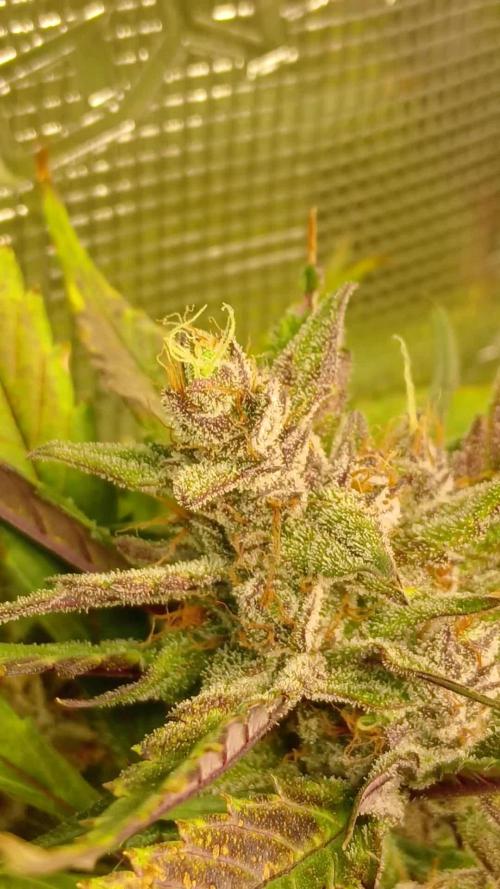
10 weeks...I am beginning to see amber trichomes. I am tempted to harvest her..I will begin flushing today...never did it before...to time it takes some experience and getting some used to..flushing in hydro usually takes around 5 days...
Day 72 and I have chopped

