


Likes
Comments
Share

@S3phwea
Follow
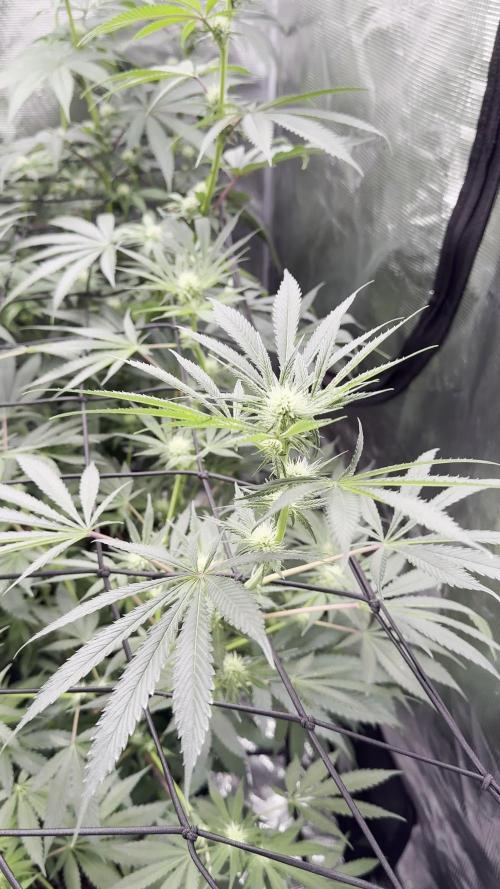
Update on the Durban Cookies lLineage - Durban Poison and Cookie F2 (PurpleCaperSeeds). Grow is looking strong. Think I should've lollipopped a bit harder, the foliage is just so thick. I have been removing fan leaves where I see them blocking budsites... and can reach. Raising the height continuously to keep it away from the Durban cookies stretch only have a few more inches left. Dehumidifier set up. Terrified of mold or anything that could hurt these girls late stage.

Likes
Comments
Share


@zombikush81
Follow
I start by saying that the genetics of this fantastic and super plant, the only exemplary because I was given after ordering, the first time I cultivated this variety .. I never had any problem from germination at the end of harvest, made grow for 6 weeks approximately with light hours 18/6, then kept in bloom for 10 weeks ...... and from about 10 days to dry with temperatures between 19/20 degrees, and humidity rate to 50% between today and tomorrow I'll make a nice manicure.

Likes
40
Share


@Chubbs
Follow
420Fastbuds
ApricotAuto/Week5
What up grow fam. Sorry for the late weekly update but was having some technical difficulties. This week has been eventful to say the least. My heater went out letting my Temps drop to high 40'f for a night or two and wow did the plants tell me they're angry. Definitely starting to bounce back but just goes to show the reselants of Fastbuds genetics. I lollipoped and did one more defoliation this week so hopefully flower stage will be smooth sailing. All in all Happy Growing

Likes
9
Share


@Krissci
Follow
Day 1 - LST train both plants... Mostly SB1 to have a wider canopy let the smaller nodes catch up.
SB2.. Nice structure, really upset to break 1/2 of it... But loads of energy and recovered /train well.
Nodes larger than SB1, but SB1 has mode nodes

Likes
77
Share


@Basementganja
Follow
Last watering, I tested the runoff PH as below 4.
I flushed 25gallons through the soil, which brought PH back up around 6.
I then Fed with 2.5 gallons of 1tsp/gal Floranova bloom(750ppm) PH to 8, and Runnoff came out above 6.
Today I Fed her 2.5 Gallons of 1tsp/gal Floranova bloom(750ppm) PH to 8, and Runnoff came out at ~5.5
I'm pretty sure the "Dry Koolbloom" is what caused the PH to start drifting downwards...
Likes
4
Share
@Trinidad
Follow
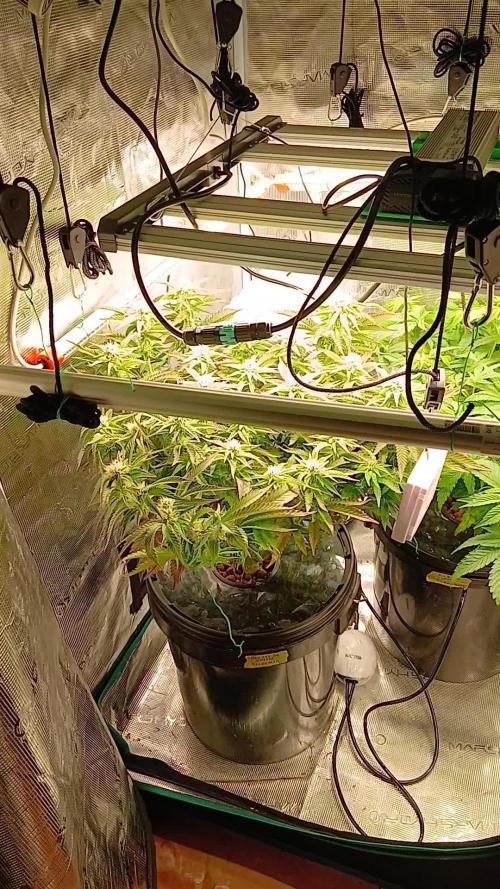
Day 110
Day 47 since badazz og cheese 12/12. She is looking good.
All 3 clones at the end are big budda cheese 2. In soil 1 in hydro. 1st time planting in soil. Using coco and worm casting with terra aquatica nutrients.


Likes
6
Share


Likes
12
Share


@Ferinky
Follow
Estamos con el lavado de raíces y esperando al ámbar.
Hubo unos días de mucho viento pero aguantaron perfectamente gracias a la red de scrog.

Likes
19
Share


@Dutch_Grower
Follow
We have some fasciation going on. Anyone ever experienced this before?
Likes
12
Share


@420Germany
Follow
small timelapse
more comments and good pictures follow up, slowly my eyes are going better and better and I can come back to fully commitment again.
Plant 1: Topping and LST done by scrogging
Plant 2: Heavy LST on Mainstem and LST done by scrogging
Plant 3: smallest plant, done nothing stunted early by a bit to much nutients + water (seed poped 3 days later treated the same because no time).
Loads of fun right now with those plants and just for refence guys its JUST a 5Liter pot!!!!

Likes
31
Share


@The_Doctor_Green
Follow
En este final de la semana 3 de floración a los nutrientes que venianos agregando, le sumamos el NIRVANA de advanced nutrients 2ml x L.
Le quite algunas hojas el día 20 , algunas que estaban amarillas y otras que tapaban algun cogollo de las ramas bajas que no quite.
Algunas hojas tienen las puntas amarillas pero no se notan cambios negativos aun., pero no logro saber que problema está teniendo.
Pero en términos generales todo marcha bien.🤞🤞🚀🚀


Likes
4
Share

@Duke88
Follow
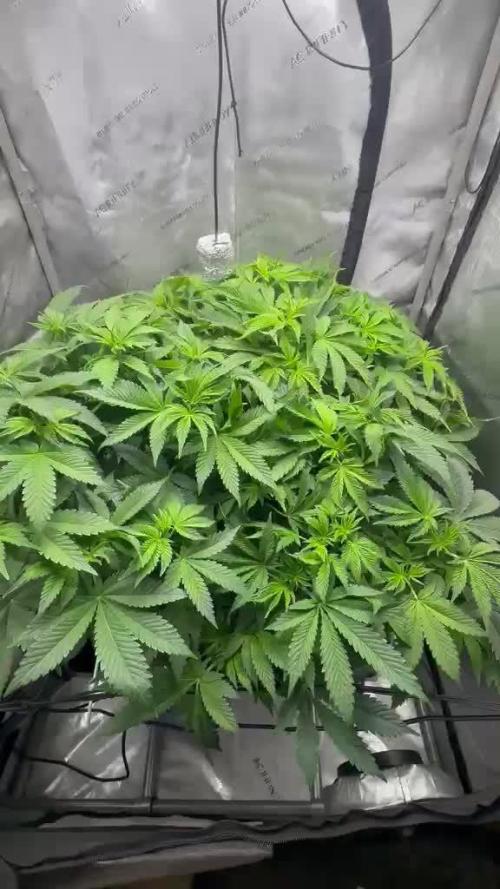
Grow Report – Black Domina | Die Drama Queen Edition 😂
Setup:
Grodan Hugo 15x15 | Tropfsystem | SCROG | LED
Aktuelle Woche: Blüte Woche 2
Der bisherige Film:
Dieses Miststück hat mich in der Vegi-Phase fast in die Psychiatrie gebracht.
pH ist hochgegangen wie mein Blutdruck (Spitze bei 6,8), Drain-EC war teilweise so tief wie meine Motivation um 3 Uhr nachts (0,6). Blätter erst hellgrün, dann olive-grün, als hätte sie Depressionen.
Einmal hab ich aus Versehen 1000 PPFD gegeben… die Pflanze hat mich angeguckt wie „Willst du mich verarschen, Bro?“
Aber wie eine echte Black Domina eben: hart im Nehmen. Hat alles überlebt, den Stretch ordentlich hingelegt und füllt jetzt langsam das Netz wie eine dicke Indica das Sofa.
Aktuelle Lage:
Drain-pH: 6,2 (endlich mal nicht mehr auf Drogen)
Drain-EC: 1,0 (sie frisst immer noch wie ein verhungerter Wolf)
Blätter: Von „kranker Spinat“ zu „geht so“
Geruch: Schon jetzt dreckig-süß, als hätte jemand Haschisch mit alter afghanischer Erde vermischt
Nächste Vorhaben:
Woche 2 Defoliation (die große Blätter-Opferung)
EC langsam hochfahren, bevor sie wieder hungert
Beten, dass sie nicht wieder einen pH-Anfall bekommt
Vibe-Check:
Von „Ich verkaufe alles und werde Mönch“ zu „Okay, vielleicht wird doch noch was Geiles“.
Black Domina bleibt halt eine Diva. Aber die fetten, steinharten Buds am Ende sind es wert. Hoffe ich zumindest… 😭😂

Likes
4
Share


@Ultraviolet
Follow
RAW GROW is a tested blend of all 12 RAW Soluble plant nutrients, essential elements and supplements. This blend has been proven to be an optimal all-in-one base “Grow” horticultural fertilizer. RAW GROW is used through out the entire vegetative stage. Derived from: Plant protein hydrolysate, mono potassium phosphate, potassium sulfate, cane molasses, sodium borate, copper sulfate, iron DTPA, magnesium sulfate, manganese sulfate, zinc sulfate and azomite. Also contains non-plant food ingredients: Humic acids derived from leonardite and peat, kelp (ascophyllum nodosum), silicon dioxide derived from diatomite and yucca extract.
When you overlap a copper wire to attract ions, it is called ion exchange. Copper wire is often used as a material for ion exchange because it has a high affinity for positively charged ions, such as copper, zinc, and nickel. When copper wire is overlapped or wound into a coil, it creates a surface area that attracts ions and allows them to bind to the wire or gather within the space. This process is used in various applications, such as electroplating, water treatment, chemical separation processes and cultivation.
Electrolysis is a chemical process that involves passing an electric current through a liquid or solution containing ions. This process causes the ions to migrate towards the electrodes, where they undergo a chemical reaction.
In the context of plant growth, electrolysis is used to increase the availability of your nutrient-rich solution that can be used to feed plants.
Electrolysis and nutrient rich reservoirs work well together since your cannabis nutrients are salt based. The process involves passing an electric current through a solution of water and plant nutrients, which causes the water molecules to break down into their constituent parts, hydrogen, and oxygen.
The hydrogen ions (H+) then combine with the nutrients in the solution to form a nutrient-rich substance that can be absorbed by the plant roots easier. This will only work in a nutrient rich solution as it requires the salt-based nutrients to engage.
This process, known as hydrolysis, provides the plant with a continuous supply of nutrients and oxygen, which can help to increase plant growth and improve yields. By providing the plant with a more efficient method of absorbing nutrients, electrolysis can help to increase the uptake of essential elements such as nitrogen, phosphorus, and potassium. Additionally, electrolysis can help to maintain the pH balance of the growing medium, which is essential for optimal plant growth. One of the key advantages of using electrolysis to increase plant growth is that it allows for greater control over the growing system. This is exactly why this is generally a technique reserved for advanced hydroponics growers. By adjusting the voltage and current levels, cultivators can custom control the nutrient concentration and pH level of the solution, ensuring that the plant receives the optimal amount of nutrients sitting perfectly on potential hydrogen spectrum.
Carotenoids absorb light in the blue-green range of the visible spectrum, complementing chlorophyll's absorption in the red range.
Carotenoids protect photosynthetic machinery from excess light. They deactivate singlet oxygen, which is a harmful oxidant formed during photosynthesis.
Carotenoids quench triplet chlorophyll, which can be harmful to photosynthesis.
Carotenoids scavenge reactive oxygen species (ROS), which can damage cell membranes and proteins.
Carotenoid derivatives signal plant development and responses to environmental cues.
Carotenoids provide precursors for the biosynthesis of phytohormones like abscisic acid (ABA) and strigolactones (SLs).
Carotenoids are pigments that give fruits and vegetables their orange, red, and yellow colors. They also act as free radical scavengers to protect plants during photosynthesis.
Beta-carotene is the most common provitamin A carotenoid. It's found in orange and yellow fruits and vegetables like carrots, sweet potatoes, and mangos. Other carotenoids include lycopene, lutein, and zeaxanthin. These carotenoids have antioxidant and photoprotective properties. In plants, Vitamin A is found as carotenoids, which are pigments that give plants their color. Vitamin A is a fat-soluble vitamin.
Vitamin B plays a vital role in plant growth and development. It acts as a coenzyme in many metabolic reactions, which are the basis for plant growth and maintenance.
Vitamin B helps plants metabolize nutrients, which are essential for growth and development.
Vitamin B helps plants respond to biotic and abiotic stress.
Vitamin B can help plants grow new roots, which can reduce transplant shock.
Vitamin B can help plants grow shoots, especially slow-growing plants.
Vitamin B1 Also known as thiamine diphosphate, vitamin B1 is a key component of metabolic pathways like glycolysis and the tricarboxylic acid cycle.
Vitamin B3 Also known as nicotinamide or niacin, vitamin B3 is a biostimulant that can improve plant growth and yield.
Vitamin B6 Vitamin B6 acts as an antioxidant and cofactor, and is involved in plant stress responses.
Vitamin C, also known as ascorbic acid, is a vital nutrient for plants that helps with growth and protects them from excess light.
Vitamin C acts as a redox buffer, which is important for regulating photosynthesis.
Vitamin C helps enzymes that regulate photosynthesis, hormone production, and regenerating antioxidants.
Vitamin C is a coenzyme in the xanthophyll cycle, which converts excess energy into heat. This process helps plants protect themselves from too much light.
seedlings to young plants can feed on 200-400 PPM, Teenage plants that have a maturing root zone can feed on 350-550 PPM and adults will feed 600-1000 PPM. The more you feed plants and watch them grow you'll get a feel for how much to give them. Less is more when trying to grasp this. High level of CEC in organic soil so I'm watering 5-gallon

Likes
26
Share


@pifflestikkz
Follow
Day 17
17/07/24 Wednesday
De-chlorinated tap water pH 6 with calmag 5ml -5L.
Very humid week, noticed a green turning colour on top of soils where the humidity has been far to high.
I have installed door netting and recently left open all day and night now so they can condition over night in colder temps.
All are doing well, one overdose slightly behind and looking ABIT swifted. But she'll come around 💪💚
Day 19
19/07/24 Friday
Lite Feed today, 250ml each pot small run off.
Seeing excellent start to these babies. Let's get it 👌💚
Day 21
21/07/24 Sunday
De-chlorinated tap water pH 6 with calmag 5ml to 5L.
Watering in 1L each day from now.
Updated video




Likes
94
Share


@love_2_grow
Follow
Earlier in the week, I saw a discolored bud, and upon closer inspection, I found bud rot. Ugh. I immediately cut off the infected bud and the one closest to it.
I looked through the canopy but couldn't see any more affected buds.
Right after, I went out of town for a few days to Mary Jane, the big Cannabis Conference in Berlin.
It was the first one after legalization, and it was wild. I had an awesome time, and it was great to meet up with friends while in Berlin.
What wasn't so great was seeing more signs of budrot when I returned home—those days of +85% humidity at the start of last week made the botrytis go brr. Sigh :(
Checking the trichomes showed it was still early to harvest, but I decided to chop anyway to save the unaffected buds.
I also decided to hang each branch separately, as it would allow me to inspect each one closely to ensure no affected buds made it into the drying tent. Another reason is to decrease the drying time. Usually, I prefer a long dry, but due to botrytis, I aim to speed up the process.
Overall, I found 12-15 affected buds, and of course, they're always the nicest-looking buds.
I don't care about the yield loss, as more than enough is still left. I only hope the remaining buds are unaffected, and I'll inspect them daily throughout the dry.
Now we wait. And hope.


Likes
Comments
Share

@Grow4ever
Follow
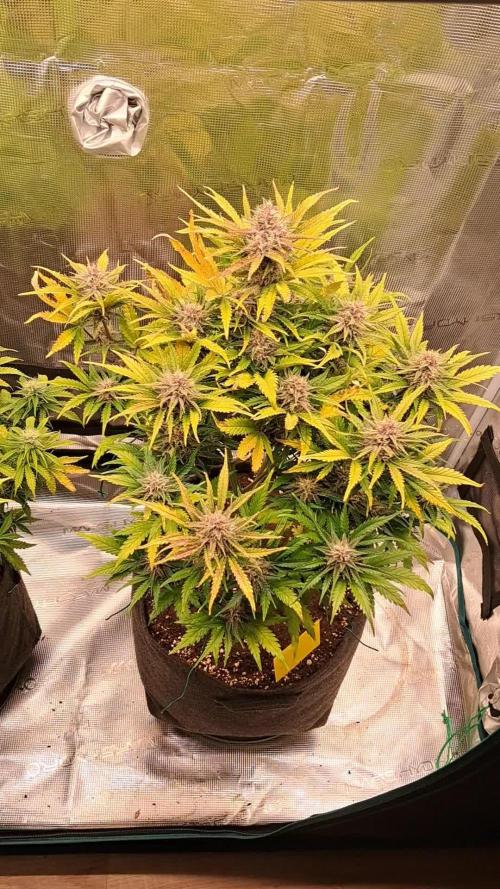
Die PH Probleme machten sich bei allen Pflanzen deutlich bemerkbar. Trotzdem war Sie wirklich vom Geruch ein wahrer Traum. Süßliche, fruchtige Note mit einem gassigen Aromer.
Likes
44
Share


@Cogollo_eu
Follow
With no doubt these plants have not produced much more quantity and density of buds due to the 2 serious mistakes I've made (those who have read the weeks will know what I mean). However, I can say that I am happy with the production obtained given the mistakes made.
Between the 2 plants, the one that has produced more and generated the most dense buds has been the Gorilla with the Man-lining technique applied, it has also loosed a bit less weight drying than the non man-lining one.
In comparison with the Money Makers with which they have grown the result is the same. Both Gorillas have each produced more than any of the Moneys comparing them 1 to 1. Also buds are a bit dense than the moneys, but none of them is really desde at all.
*****ESPAÑOL*****
Sin duda estas plantas no han producido mucha mas cantidad y densidad de cogollos debido a los 2 graves errores que he cometido (quien se haya leído las semanas sabrá a que me refiero). No obstante, puedo decir que estoy contento con la producción obtenida dados los errores cometidos.
Entre las 2 plantas, la que más a producido y ha generado cogollos más densos ha sido la Gorilla con la técnica de Man-lining aplicada, y también ha perdido un poquito menos de peso en el secado que la otra.
En comparación con las Money Maker junto a las que han crecido el resultado es el mismo. Las Gorillas han producido cada una más que cualquiera de las Moneys comparándolas 1 a 1. Así mismo, los cogollos de las Gorillas presentan un pelín más densidad que el de las Moneys, aunque realmente ninguna de las 4 plantas ha generado cogollos densos del todo.
