




Likes
39
Share


@BelgianBudtender
Follow
Heyo growmies, hope y'all had a good week.
Lots of things happened this week, I had to move the entire grow operation in preparation for the summer, so excuse the lack of pictures and time lapse, I did manage to record the plant recovering from another round of defoliation!
After adding organics at the end of this week it became clear I needed Beneficial's, my roots were slimy, I promptly cleaned the plant, put her in fresh clean water and have introduced hydroguard to my system at double dose, I suspect most of them will die to the h2o2 so ill add some more later next week.
I'm considering flipping to flower somewhere during week 7 or at the end, I feel like I've spread her out enough to fill out the tent, according to the breeder she stretches 1.5 to 2 times, we'll see.
Enjoy your week, stay safe and keep growing.

Likes
6
Share


@SecretC8keSociety
Follow
Wedding Glue is frosty . I cleaned them up bout to switch the filter on the humidifier so they can stay close to 60 % and I’m using my AC got it set to 73 in the tent though be at 77-68 which good for me until I elevate my equipment and grows…. I’ll recommend. Looking forward to Gorilla Cookies 🍪

Likes
4
Share


@Johnfrenchy
Follow
I received the rest of the range at advanced NUTRIENTS. I now use the full range. Michka is more and more imposing and beautiful.

Likes
7
Share


@Salokin
Follow
Hey growmies,
Unfortunately I have no pics this week, as I am OOT. She is developing very nicely. Her main cola was super cropped to promote an even more bushy appearance. Any growth in the lower parts of the plant where removed and she was a bit defoliated in the top canopy.

Likes
4
Share

@El-Ecko
Follow
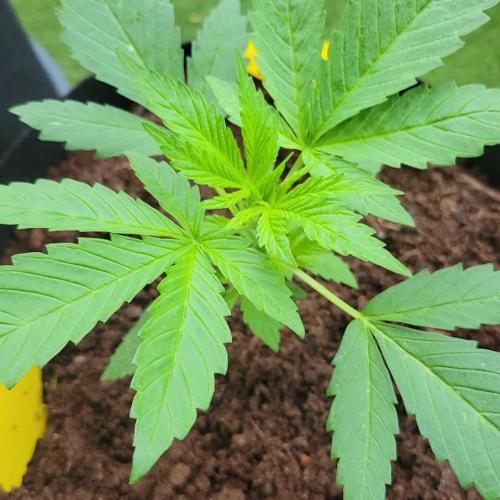
Week 3 of VEGETATION
Wow... I love how this plant is growing and thriving.🌱 At the start of this vegetation week, I fertilized the Gelato with Neudorff's Azet tomato fertilizer.🍅
And it seems to have done it good. ⬆️
The last three days have been relatively cool and it looks like it’ll stay that way for a few more days. ❄️ But this strain seems to be handling it wonderfully so far. I’m really looking forward to the next few weeks with this strain.☺️
Translated with DeepL.com (free version)
Likes
6
Share


@jojopfoh
Follow
She is not at big as the others I have grown. A very slow start. Very Very frosty and sticky. Beefing up

Likes
24
Share


@Firepharmer
Follow
This last week shit got really frosty !! The monkey berries is wicked the terps are creamy sour milk and cherry halls mmmmmmm I’m thinking about 7 to 10 days more then start flushing the monkey berries . Slurricane is putting on the weight like there’s no tomorrow and frosty too with 4 weeks to go she will be my best run by far, terps grapefruit and sweet skunk


Likes
13
Share


@Yiyis_Grow
Follow
Bestva Quantum Board 2000 W & MrHide Seeds
Semana sin problemas. Se aplicó a modo preventivo tierra diatomea disuelta en agua y pulverizada foliar.
También se utilizó hongo Clonostachys, trichoderma, levaduras lácticas y transformadoras de celulosa, y Streptomyces; todos para evitar enfermedades bacterianas y hongos.
Se están regando con agua llovida, regulada a un ph de 6.3 - 6.5.
Se empezó a utilizar fertilizante de flora a razón de 4ml por litro de agua.
Se ha defoliado 2 veces (1 en vegetación y otra apenas empezó a florar). Las hojas se están recolectando para hacer aceite full espectro medicinal sin THC.
Suerte y buenos humos

Likes
16
Share

@sanibelisl
Follow
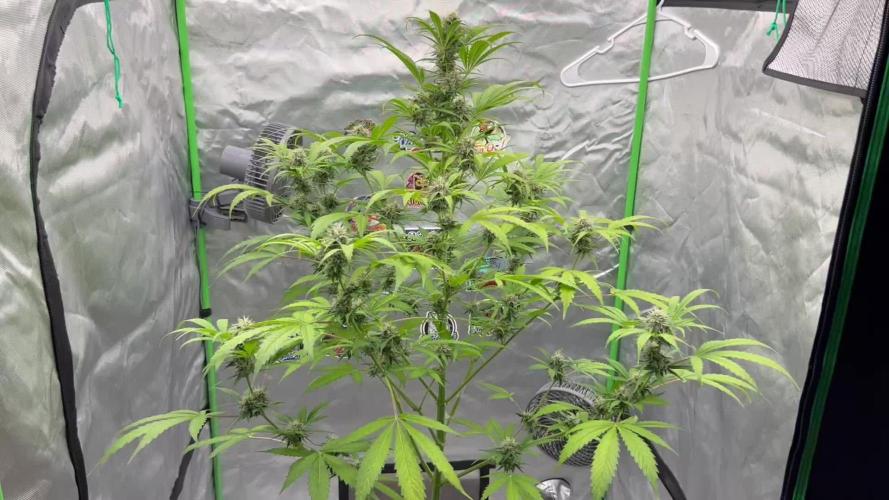
91Grapes day 72. Should have been harvested by now, she was a 65 day +/- from sprout and has two more weeks left, fuc . I think something is wrong with a nutrient imbalance as her leaves continue to lose their vibrant green color. Indications of a mag. Deficiency was evident so added epsom salts 1 tsp per gallon. Problem persisted so went with some bloom nutrients with a little nitrogen if that doesn’t help it might have to just except it and drive on. Flowers are fatter so if that continues then all is well, after all isn’t it the flowers we are growing anyway.

Likes
16
Share


@SAC87
Follow
Day 28:
I got home from 10 days of holidays and these girls had cruised along as if I had been there with them the whole time. They are very happy, especially the middle one. The small one on the right has always been small, is what it is. She could be a stack little shorty. Time will tell. I did a feed today, top dressed according to Gaia Green at 15 ml/ gal of media which should last approx 2 weeks. I also added a bit more 444 just to make sure there’s enough N during this stretch phase. All 3 have pistols showing and are starting to flower. I was unable to train as much as I’d have liked but is what it is. Sometimes the more indica strains I’ve done are negatively effected by topping and excess training. I removed a couple huge fans that were shading too much of the plant. I also am trying a “super cropping” of top fans to get them out of the way but still save them as a nute source if they need. We’ll see how it goes.
The Vipar spectra xs2000 is killling it as usual. As I’ve said 50 times it’s super powerful and I’ve had to raise the light above recommended height as I started to see leaf edge curl and light stress. No problem at all tho, better too powerful and raise it than too weak and have loose buds.
I did a micro top just to stop excessive apical meristem stretch and leaving all the other lower branches too low for effective light absorption or burn on the top cola.
Happy Growing 🌱
Likes
2
Share


@CuriosityWebster
Follow
Very hot weather, girls are managing better than I thought.
Cleaned up all the girls extra leaves, really needed to get some more airflow through it
Cut out 2 small nugs that had a little bit of spiderweb mildew
Done nutrients and done instant compost tea

Likes
7
Share


@Kayotic
Follow
*Week 2 of flower
*Sprayed NPK Mighty and leaves are looking better
*Gave Tiger Bloom and Dr. Earth Flower Girl.
*Watering every day, sometimes twice
*Smells like the Zkittles I remember

Likes
8
Share


@Spliffi
Follow
Heya👍🤙👍🌱
Almost Done. I like early Harvest.
Check out my Facebook profile:
https://www.facebook.com/share/v/H6PnoahTHrEzm63U/?mibextid=oFDknk
Big BIG BIG thank you to Sebastien, Heather from Fastbuds420. You guys are the best. Can't wait for the next live.
Even Bigger shout out to Hydroponic.co.za. My local Hydro Shop and Sponsor. Thank you Sir.
👍🤙👍🌱
Likes
47
Share


@Ultraviolet
Follow
What's in the soil? What's not in the soil would be an easier question to answer. 16-18 DLI @ the minute. +++ as she grows.
Probably not recommended, but to get to where it needs to be, I need to start now.
Vegetative @1400ppm 0.8–1.2 kPa 80–86°F (26.7–30°C) 65–75%, LST Day 10, Fim'd Day 11
CEC (Cation Exchange Capacity):
This is a measure of a soil's ability to hold and exchange positively charged nutrients, like calcium, magnesium, and potassium. Soils with high CEC (more clay and organic matter) have more negative charges that attract and hold these essential nutrients, preventing them from leaching away.
Biochar is highly efficient at increasing cation exchange capacity (CEC) compared to many other amendments. Biochar's high CEC potential stems from its negatively charged functional groups, and studies show it can increase CEC by over 90%. Amendments like compost also increase CEC but are often more prone to rapid biodegradation, which can make biochar's effect more long-lasting. biochar acts as a long-lasting Cation Exchange Capacity (CEC) enhancer because its porous, carbon-rich structure provides sites for nutrients to bind to, effectively improving nutrient retention in soil without relying on the short-term benefits of fresh organic matter like compost or manure. Biochar's stability means these benefits last much longer than those from traditional organic amendments, making it a sustainable way to improve soil fertility, water retention, and structure over time. Needs to be charged first, similar to Coco, or it will immobilize cations, but at a much higher ratio.
a high cation exchange capacity (CEC) results in a high buffer protection, meaning the soil can better resist changes in pH and nutrient availability. This is because a high CEC soil has more negatively charged sites to hold onto essential positively charged nutrients, like calcium and magnesium, and to buffer against acid ions, such as hydrogen.
EC (Electrical Conductivity):
This measures the amount of soluble salts in the soil. High EC levels indicate a high concentration of dissolved salts and can be a sign of potential salinity issues that can harm plants.
The stored cations associated with a medium's cation exchange capacity (CEC) do not directly contribute to a real-time electrical conductivity (EC) reading. A real-time EC measurement reflects only the concentration of free, dissolved salt ions in the water solution within the medium.
98% of a plants nutrients comes directly from the water solution.
2% come directly from soil particles.
CEC is a mediums storage capacity for cations. These stored cations do not contribute to a mediums EC directly.
Electrical Conductivity (EC) does not measure salt ions adsorbed (stored) onto a Cation Exchange Capacity (CEC) site, as EC measures the conductivity of ions in solution within a soil or water sample, not those held on soil particles.
A medium releases stored cations to water by ion exchange, where a new, more desirable ion from the water solution temporarily displaces the stored cation from the medium's surface, a process also seen in plants absorbing nutrients via mass flow. For example, in water softeners, sodium ions are released from resin beads to bond with the medium's surface, displacing calcium and magnesium ions which then enter the water. This same principle applies when plants take up nutrients from the soil solution: the cations are released from the soil particles into the water in response to a concentration equilibrium, and then moved to the root surface via mass flow.
An example of ion exchange within the context of Cation Exchange Capacity (CEC) is a soil particle with a negative charge attracting and holding positively charged nutrient ions, like potassium (K+) or calcium (Ca2+), and then exchanging them for other positive ions present in the soil solution. For instance, a negatively charged clay particle in soil can hold a K+ ion and later release it to a plant's roots when a different cation, such as calcium (Ca2+), is abundant and replaces the potassium. This process of holding and swapping positively charged ions is fundamental to soil fertility, as it provides plants with essential nutrients.
Negative charges on soil particles: Soil particles, particularly clay and organic matter, have negatively charged surfaces due to their chemical structure.
Attraction of cations: These negative charges attract and hold positively charged ions, or cations, such as:
Potassium (K+)
Calcium (Ca2+)
Magnesium (Mg2+)
Sodium (Na+)
Ammonium (NH4+)
Plant roots excrete hydrogen ions (H+) through the action of proton pumps embedded in the root cell membranes, which use ATP (energy) to actively transport H+ ions from inside the root cell into the surrounding soil. This process lowers the pH of the soil, which helps to make certain mineral nutrients, such as iron, more available for uptake by the plant.
Mechanism of H+ Excretion
Proton Pumps: Root cells contain specialized proteins called proton pumps (H+-ATPases) in their cell membranes.
Active Transport: These proton pumps use energy from ATP to actively move H+ ions from the cytoplasm of the root cell into the soil, against their concentration gradient.
Role in pH Regulation: This active excretion of H+ is a major way plants regulate their internal cytoplasmic pH.
Nutrient Availability: The resulting decrease in soil pH makes certain essential mineral nutrients, like iron, more soluble and available for the root cells to absorb.
Ion Exchange: The H+ ions also displace positively charged mineral cations from the soil particles, making them available for uptake.
Iron Uptake: In response to iron deficiency stress, plants enhance H+ excretion and reductant release to lower the pH and convert Fe3+ to the more available form Fe2+. The altered pH can influence the activity and composition of beneficial microbes in the soil. The H+ gradient created by the proton pumps can also be used for other vital cell functions, such as ATP synthesis and the transport of other solutes. The hydrogen ions (H+) excreted during photosynthesis come from the splitting of water molecules. This splitting, called photolysis, occurs in Photosystem II to replace the electrons used in the light-dependent reactions. The released hydrogen ions are then pumped into the thylakoid lumen, creating a proton gradient that drives ATP synthesis.
Plants release hydrogen ions (H+) from their roots into the soil, a process that occurs in conjunction with nutrient uptake and photosynthesis. These H+ ions compete with mineral cations for the negatively charged sites on soil particles, a phenomenon known as cation exchange. By displacing beneficial mineral cations, the excreted H+ ions make these nutrients available for the plant to absorb, which can also lower the soil pH and indirectly affect its Cation Exchange Capacity (CEC) by altering the pool of exchangeable cations in the soil solution.
Plants use proton (H+) exudation, driven by the H+-ATPase enzyme, to release H+ ions into the soil, creating a more acidic rhizosphere, which enhances nutrient availability and influences nutrient cycling processes. This acidification mobilizes insoluble nutrients like iron (Fe) by breaking them down, while also facilitating the activity of beneficial microbes involved in the nutrient cycle. Therefore, H+ exudation is a critical plant strategy for nutrient acquisition and management, allowing plants to improve their access to essential elements from the soil.
A lack of water splitting during photosynthesis can affect iron uptake because the resulting energy imbalance disrupts the plant's ability to produce ATP and NADPH, which are crucial for overall photosynthetic energy conversion and can trigger a deficiency in iron homeostasis pathways. While photosynthesis uses hydrogen ions produced from water splitting for the Calvin cycle, not to create a hydrogen gas deficiency, the overall process is sensitive to nutrient availability, and iron is essential for chloroplast function.
In photosynthesis, water is split to provide electrons to replace those lost in Photosystem II, which is triggered by light absorption. These electrons then travel along a transport chain to generate ATP (energy currency) and NADPH (reducing power). Carbon Fixation: The generated ATP and NADPH are then used to convert carbon dioxide into carbohydrates in the Calvin cycle. Impaired water splitting (via water in or out) breaks the chain reaction of photosynthesis. This leads to an imbalance in ATP and NADPH levels, which disrupts the Calvin cycle and overall energy production in the plant. Plants require a sufficient supply of essential mineral elements like iron for photosynthesis. Iron is vital for chlorophyll formation and plays a crucial role in electron transport within the chloroplasts. The complex relationship between nutrient status and photosynthesis is evident when iron deficiency can be reverted by depleting other micronutrients like manganese. This highlights how nutrient homeostasis influences photosynthetic function. A lack of adequate energy and reducing power from photosynthesis, which is directly linked to water splitting, can trigger complex adaptive responses in the plant's iron uptake and distribution systems.
Plants possess receptors called transceptors that can directly detect specific nutrient concentrations in the soil or within the plant's tissues. These receptors trigger signaling pathways, sometimes involving calcium influx or changes in protein complex activity, that then influence nutrient uptake by the roots. Plants use this information to make long-term adjustments, such as Increasing root biomass to explore more soil for nutrients. Modifying metabolic pathways to make better use of available resources. Adjusting the rate of nutrient transport into the roots. That's why I keep a high EC. Abundance resonates Abundance.
Likes
15
Share

@ChubbyBudBros
Follow
-
Day 59
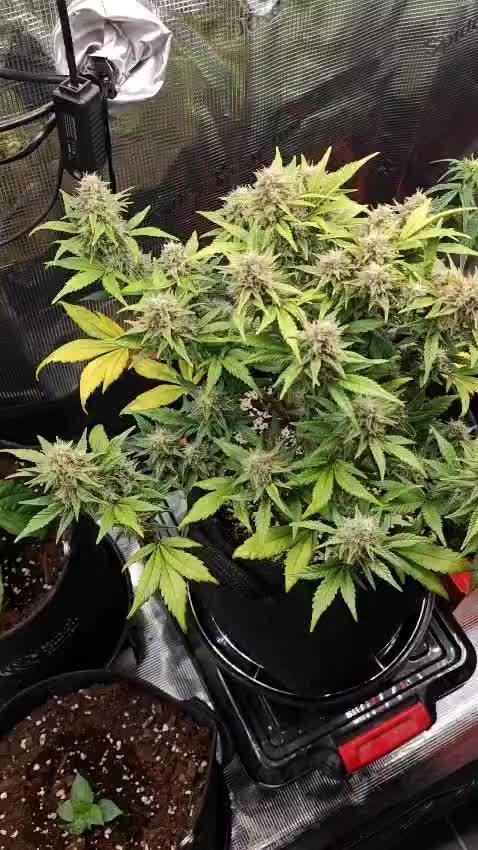
A new week already! Buds are fluffing up nicely, they look like they are getting very dense. There is some more leaves yellowing, which is clearly because of N deficiency. Hopefully that bio-grow boost I gave her yesterday will get her a bit greener again soon. I've been trying to go more gentle with the bio-grow this run because my previous grow has dark clawing leaves tips all over at the end of the grow, as I was giving too much. But it seems like now I was giving too little. 😬Note to self: next grow start with lower doses like this grow, but build up when stretch starts to happen.
Likes
101
Share

@Schnabeldino
Follow
For my first trial run with Grand Cru Genetics, I’m definitely impressed. This strain shows great potential for flavor lovers and will be interesting to run again in the future.
With a little more care and training, she could have achieved more, but she stood in the far corner of the tent and was difficult to reach.
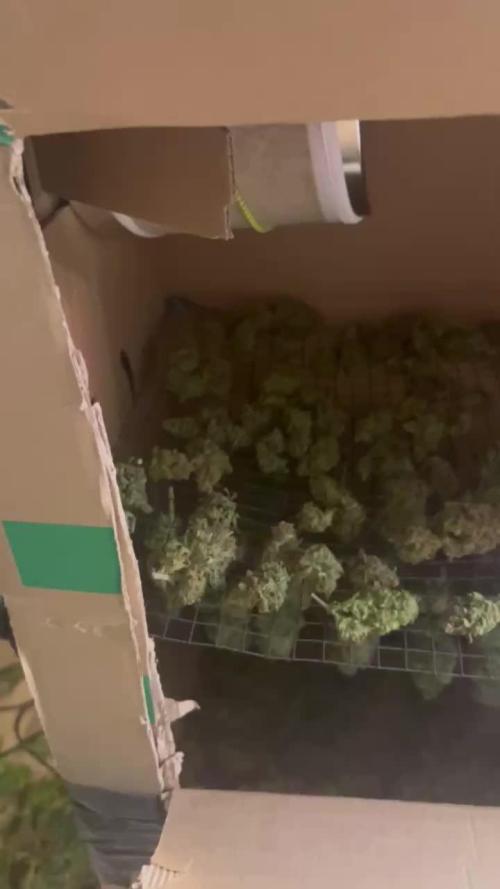
Drying takes place in our Dryomat; delivery of the Dryrocket has been delayed. According to my information, it will not arrive until October...perfect for winter growing.
Photos are wet buds. Once they are dry, the smoke report will follow!!!
See you again in 2-3 weeks 😇😇
Likes
15
Share


@Siriuz
Follow
Yo guys what's up
I added molasses for the very first time
Take a look, she's doing great
I'm happy for the training we've been giving her and now we are seeing some results
Alright guys let me know what's your advise
I think I'm going to be adding molasses after nutes every two days
********************************
UPDATED 08/03/2021
SHE IS DOING GREAT!
ID SAY SECOND WEEK OF FLOWERING ALREADY
WEEK 11 FROM SEED ' DAY 1 STARTS TOMORROW!
CHECK OUT THE VIDEOS AND PICS FOR BLOOM
TAKE CARE GUYS PEACE OUT!

Likes
26
Share


@Rangaku
Follow
The beautiful apricot has got the chop , flushed her the last week and not much else .
Stunning buds that taste so good like a sweet apricot coulis . Will deffo grow this one again .
Thanks fastbuds for the seeds , love ya work .
Likes
Comments
Share

@jojopfoh
Follow
transplanted on the 23 of feb from the solo cup to the 1 gal pot and given it's first nutrient feed. It is growing very quickly. I added a fan to the tent to promote a surdy stalk