


Likes
Comments
Share

@HOMEGROWBOOK
Follow
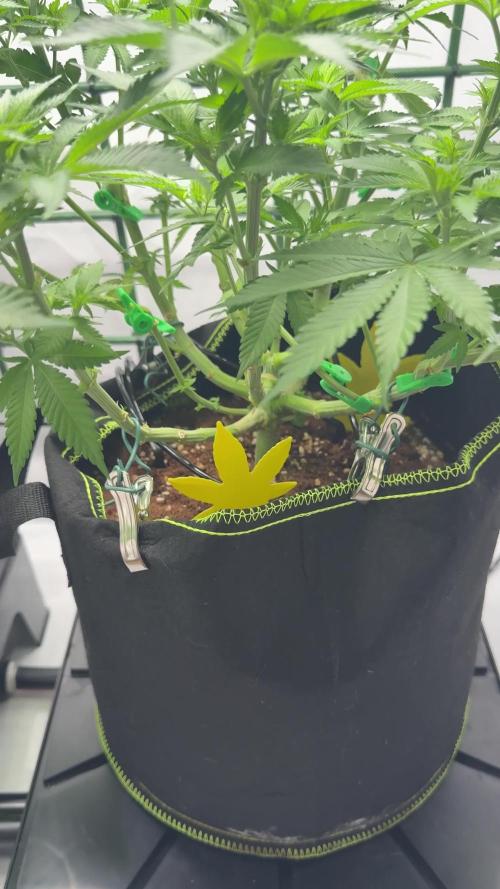
Die Pflanzen sind erfolgreich in die Blütephase gestartet! Nach dem Umstellen auf 12/12 reagieren beide Strains – 24K Gold und Gelato 33 – mit kräftigem Stretch und sichtbar zunehmender Energie.
24K Gold legt sofort los: Sie streckt sich deutlich in die Höhe und entwickelt starke Seitentriebe. Die Triebabstände werden länger, die Blätter etwas schlanker – typisch für den Übergang von Veg zu Blüte. Ihre Struktur bleibt offen, was für eine gleichmäßige Lichtverteilung über das ganze Netz sorgt.
Gelato 33 zeigt einen kompakteren Stretch, bleibt aber sehr vital. Die Seitentriebe verdichten sich weiter, die ersten Vorblüten sind bereits erkennbar. Ihr Wuchsbild ist stabil, mit sattgrünen Blättern und kräftigen Blattadern.
Das ScroG-Netz wird täglich leicht nachjustiert, um alle Triebe auf einer Höhe zu halten und die Fläche vollständig auszunutzen. Der Blätterteppich ist jetzt schön ebenmäßig – perfekte Basis für die kommende Bud-Entwicklung.
Düngung & Setup:
• 💧 Canna Coco A + B → 6 ml/l
• 📈 EC ≈ 1.6 | pH ≈ 5.8
• 💦 Tropfbewässerung in kurzen Intervallen, Drain stabil
• 🌡️ Temperatur 25–26 °C
• 💧 Luftfeuchtigkeit 50–55 %
• 💨 Starke Umluft für dicke Stämme und optimale CO₂-Verteilung
Die Entlaubung der unteren Bereiche ist abgeschlossen, damit Luft und Licht frei zirkulieren können.
Beide Pflanzen zeigen keinerlei Stress durch den Lichtwechsel – grüne, vitale Spitzen und intensives Wachstum.
➡️ Der Stretch läuft jetzt auf Hochtouren – die Fläche ist komplett gefüllt und die ersten Knospenanlagen beginnen sich zu formen.
Ein starker, gesunder Start in die Blütephase!

Processing
Likes
9
Share


@8708x
Follow
Harvested the left one and the right one will be harvested on thursday , im pretty happy with the result from the first one considering it was my first grow. Its now drying up

Likes
18
Share


@Canna96
Follow
Hey now, hope everyone is having a great weekend. This week went great for the 5 mainlines. I got the final toppings completed for all the ladies, I got them done on the Sundae Driver and Red Hot Cookies on day 38, and the Durban Nights, Green Crack, and the Bubble Runtz topped on day 40 for the final time. At this point there is not much more training left to do, just some minor LST to try and keep all 8 tops per plant level, and some minor defoliation along the way. I am planning to Veg them for 1-2 weeks and flip to flower probably sometime in week 8 depending on how fast they grow. I do have them all on milk crates which are 10" each so I will place them on the floor and adjust the light power probably about the time I flip to flower to accommodate the stretch.
I am still feeding GH nutrients, silica, cal mag, and maxi grow. I will transition to flower nutrients approximately one week after flipping to flower. I have found that it is important to continue feeding plenty of Nitrogen through the stretch. The only way I would transition sooner is if I was running out of vertical space.
Still very pleased with the Spectrum X from Medic Grow. I am running her at 69% and the plants seem very happy and healthy. The heat and humidity are finally letting up in my region so it is nice to be able to open some windows and drop the temp outside the grow tent.
I hope everyone has a great weekend, Thanks for stopping by, Stay Safe and Blaze On!!! 💪
Website: https://medicgrow.com/
https://growdiaries.com/grower/medicgrowled

Likes
3
Share


@kerby
Follow
Starting to flush today I’m starting to see tichs starting to turn amber colored on the top of the main cola and 90% cloudy and about 40% of the pistles have changed color also


Likes
7
Share


@Brickie74
Follow
My green tea plant is growing extremely well as of right now. Transplanted her into a 3 gallon fabric pot and topped her this week. She has also grown to 10 inches. I'm waiting to see how much more and how fast she grows before I decide whether or not I'm going to transplant her one more time into a 5 gallon fabric pot.

Likes
20
Share


@Densko
Follow
Medusa 2/5 is starting to get fatter.
I decided to Lollipop and remove the lower growth. Im curious to compare the colas and see if lollipopping really increases bud size.
This plant really grows beautifully, two main colas in top from the topping, and all the other colas around the two main colas.
I started giving green sensation PK booster this week
I reckon another 4 weeks before harvest.
Likes
110
Share


@SlowpokeFuegobud
Follow
💜 💚 😍🥤💜💜 💚 😍🥤💜💜 💚 😍🥤💜💜 💚 😍🥤💜💜 💚 😍🥤💜
Dear growmies, welcome to week 13 which only has 2 days!! ❤️
This was the most spiritual grow ever! 💜🙏On day 1 of flowering week 8 she started to throw out bananas, and I took that as a discreet sign that she is finished. 😅 Magically just right. ✨
So happy with this! I will miss her! Can't wait for the smoke report. 😍
Thanks @Fast_Buds for your awesome genetics, growing Fastbuds is always a bit like riding a ferris wheel! Woohooo!! 😜 🙏 💚
Thanks to my sponsors @Green_Buzz_Nutrients, their nutes never ever let me down!! Check out my diaries on how well they work! 💚 😘 In case you want to give them a try, you can find a generous discount code in the setup description further down the road ⬇️
You can find more brand hot updates on my IG, where I share real time events from my growroom, don't miss this! 😝
_______________________________________________________________________
Purple Lemonade FF
As refreshing as cold lemonade on a hot Summer day. 🌞
• Quench your thirst. Just as good as lemonade on a hot Summer day.
• The gentle giant. Up to 550 g/m2 of gorgeous pinkish-purple buds.
• Refreshing for the mind and body. The ideal all-day strain with a perfectly balanced effect.
• Sweet n’ sour terps. Mouth-puckering lemon flavors that’ll hypnotize your taste buds.
• Properly purple. The perfect choice for purple hash and extractions. As refreshing as cold lemonade on a hot Summer day.
Arising from a cross between purple and citrus Cali genetics, Purple Lemonade FF (Fast Flowering) offers a complex high made up of perfectly balanced cerebral and body effects that are ideal for daytime use. Expect an extremely enjoyable high that boosts your mood while deeply relaxing your whole body and getting
rid of muscle pain. This meticulous cross produces up to 550 g/m2 of some of the most beautiful purple buds, with pinkish and reddish hues that will catch everyone’s attention. The beautiful purple buds are ready for harvest in 7-8 weeks and come hand-in-hand with unbelievably sugary citrus terps that are just as refreshing as a cold lemonade on a hot Summer day. It’s the ideal variety for the sweet-tooth stoner seeking strains that deliver both in quality and quantity of resin.
Bud Description 🦔
Purple Lemonade FF grows chunky, spade-shaped buds that boast a whole range of pinkish-purple hues with rich, dark orange pistils shooting out of every direction. This variety stands out for the, oftentimes, lilac trichomes that give them a gorgeous pink tint and make for outstanding purple concentrates. The buds give off a delicious tart lemon aroma that reveals a sweeter, more fruity scent as you break the buds open. Definitely a must for flavor chasers and those looking for pungent terpene profiles.
Smoke Reports 💨
Purple Lemonade FF offers an effect that’s just as unique as the flavor. Expect a potent uplifting high that gives you that energy boost you need to get things done while 100% happy and stress-free. The effect gradually transforms into a wave that works its way along the limbs and through the muscles, deeply relaxing your body and putting you in the right mindset to go through a busy day with a huge smile on your face. This is an excellent all-day smoke as it not only increases energy but can also help combat chronic pain, migraine and stress.
Plant Appearance 💄
This feminized photoperiod variety develops a thick and strong structure, growing a medium-sized main cola with multiple shorter side branches, typical of hybrid strains. Purple Lemonade FF develops fairly short internodal spacing with gorgeous purple buds growing stacked on top of each other, making it the perfect choice for growers of all levels looking to get lots and lots of top-shelf purple weed, as this variety can produce up to 550 g/m2 in a 7-8 week flower cycle.
Grow Tips 🤓
This is a super fast feminized photoperiod version that takes approximately 7-8 weeks to flower with a 5-week vegetation cycle,, this means you can have faster harvests by shortening the veg cycle or have a longer veg cycle for bigger yields. Purple Lemonade FF (Fast Flowering) makes for a great candidate for growers of all levels as it’s a vigorous strain that will thrive with basic maintenance both indoors and outdoors. This is a resin powerhouse so make sure to have your trim bin close by as all the resinous sugar leaves will make for the most mouth- watering hash and extracts.
Flavor 😋
Expect a long-lasting citrus zest that taste just like it smells. Purple Lemonade FF reeks of a delicious blend of sweet fruits and tart citrus that’ll make your mouth water. On the inhale, expect sour flavors that taste just like lemon candy with hints of orange and a really subtle earthy background. And on the exhale, the citrus flavors open up, giving place to a more sugary berry fruitiness that leaves your whole mouth tasting like an extremely sweet weed-infused lemonade.
https://2fast4buds.com/seeds/purple-lemonade-fast-flowering
_______________________________________________________________
Setup:
140x70x200 cm Spiderfarmer tent
2x Monkey 16W fans (not oscillating)
1x Secret Jardin 30W
1x box fan 50W oscillating (on lowest level)
LED
Full Spectrum 320W AGLEX AGL-320W-MA
5,6 kg
foldable, dimmable
864 pieces Samsung LH301H
864umol/s
2,7umol/J
full spectrum white
RED 660nm
IR 740nm
wavelength range 380-780nm
covering 3x4ft
Green Buzz Nutrients https://greenbuzzliquids.com/
❗ Use code GD42025 for generous 25% discount (for orders of minimum 75€)
Biobizz Lightmix
coco
wormcastings
perlite
Carbon Active Granulate Filter 125/360 cm³/h
PrimaKlima exhaust EC 125-400/240 cm³/h


Likes
33
Share


@Pirangueiro
Follow
I think this species is beautiful! a light green and very symmetrical and strong leaves. it develops very well without pruning techniques. branches naturally and creates several big buds! go lemon 🍋
Likes
10
Share


@Fatzoe15145
Follow
Just finish last week of flower she still has white hair growing most leaves have changed color she passes gas like twice a day which is like heaven she is getting water twice a week no nutrients figure I need a week or two till she’s done

Processing
Likes
20
Share


@LockDownGrow
Follow
This girl is set on hold back on flowering
This girl is going too be a beast
Likes
16
Share


@NAG420
Follow
Start of week 6 the end of week 5 she was just having her pistols come out. She is doing great growing fast I might have to buy bigger tent but will see what happens. Daytime temps are74/76 and nighttime temps 68/70 RH is now at 54%. New I have not even flushed or used sledgehammer because she looking so hungry at times. I did major defoliation on her had some many big fan leafs block lower bud sites to be also did a ton of tie down to try to get the last few stretches out the lower area.
Likes
7
Share


@ReefsDad
Follow
So please don"t trip out on this. I know my conditions are not accurate or my nutrient amounts. Lost my notebook with all my notes on this grow. All I have are the pics which I'll post. The dates of the pics may not correspond with the weeks in the diary. Kids, make sure you keep up to date if you are going to keep a diary online and keep a written one. I definitely learned my lesson. Several weeks of notes on 5 different strains lost. Well enjoy the pics at least.


Likes
62
Share


@balansa
Follow
i think mexican airlines is ready for flushing. i will flush her next week smell and aroma is wonderful nore like skunky. moby dick has 2-3 weeks left i think she has more sweet smell. i wanna tell you the smth i know that its unwrighten rule that u should not touch the plant before harvest but i smoked both and they are impressive ))))


Likes
5
Share


@High_And_Hydro
Follow
- Ich hab die erste Woche des Biobizz Allmix Düngeschemas gestartet und gebe wie immer erstmal vorsichtige 100%, da meine Erde an sich durch den Kompost recht potent sein sollte.
- Außerdem hab ich mit meinem Calmag-Rechner mein Leitungswasser angepasst. Die Werte könnt ihr auf den Bildern sehen.
- Den PH-Wert passe ich ebenfalls auf 6,5 an.#
- Die Lampe bringt zur Zeit etwa einen PPFD-Wert von 350 - 360 µmol/s/m² bei 18 Stunden Beleuchtungszeit (DLI von 22 - 23 mol/d/m²). Sie wird aber nur eingesetzt bis es warm genug draußen bleibt. Tagsüber stehen sie jetzt schon draußen, sofern es nicht regnet oder stürmt.
Die Purple Haze macht sich hervorragend und sie ist ganz vorne mit dabei. Das freut mich wirklich, da ich die immer mal sehen wollte. Ist vermutlich nachvollziehbar. 💪😁👍

Likes
8
Share

@Prilyfe13
Follow
01/17/2026
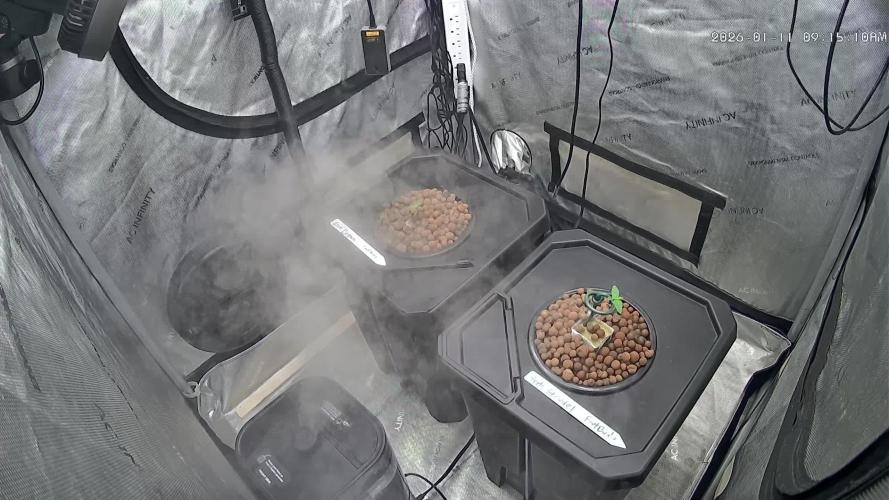
No changes to nutrients today. However, from last week to this week, the EC and TDS have increased. I'm guessing the nutrients from the hydroton are leeching in to the bucket. Probably a good thing. That way I don't need to make any adjustments right now.
No roots today. Oh well. Not too sure how she's doing. She has the right amount of nodes, but she isn't really growing. Still 2" tall. I know she's still working those roots, but still I should at least see a root. Just 1. But I see nothing.
I increased the light intensity to level 2. See readings below. So far she seems to be happy with it. It's been a couple hours and I'm not seeing any signs of stress. Still very green and pretty sturdy. If I'm guessing right, I don't think this little lady is going to get very big. I can just tell. But we'll have to see now. I hope I'm wrong. This is one of my absolute favorites and my first time growing it. I'd love to see a nice plant with long colas thick with trichomes. But we'll see.
Weekly Readings:
Water Readings:
pH: 6.3
EC: 1012
TDS: 500
Temp: 70°
Lighting:
DLI: 21.6
PPFD: 318
Environment:
Temp: 75°
RH: 62%
VPD: 1.07 kPa
CO2: 754
01/18/2026
We have a root! Just 1 root. Lol, but it's a root! I knew we'd see roots before the Apple Strudel I'm also running. It keeps stretching. So it wasn't focusing on the roots. This little lady, on the other hand, barely stretched. I was concerned at first, but now it's fine. She'll start to grow significantly soon enough. Probably tomorrow we'll see some impressive growth. Or well the start of it.
However, her leaves are kinda crinkly. I need to figure this out. Is the light too bright?! No way. No fucking way. The DLI is like 21 mol. And was 16.7 mol. last week. I'm pretty sure this strain likes light. Imma take a peeky peek... Says nothing about lighting. But it does like nutrients and lots of them. I'll have to keep that in mind. Maybe I don't have enough in there. That could be the cause of the deformed leaves. I'm going to find out somehow.
I looked it up and I have it narrowed down to lighting or Nutrients. It's really hard to tell when she just started to veg. I honestly should have left it in Germination for last week and started veg this week. Now it's all messed up. Lol. Oh well. So we'll have a 5 week veg stage. But it's still not gonna change the growth cycle.
Also, the pH was high. It was at 6.6. So that is now pHed down to 5.8. EC and TDS didn't change at all.
Temp was 67° after replacing the ice bottles.
01/19/2026
I think I figured out the issue with the crinkling leaves. The fans at night were blowing at level 6 which is really windy in a 3x3 with 2 fans. Now it's down to level 2 like it should be. Oops.
On a better note, she's on her third her node now and looking like she's about to explode with growth. I'm also seeing teeny tiny side branches coming out. So I'm not seeing any issues with growth. So I guess everything is all good. Great color. Nice full leaves. Thin though. Although it is like the first week of veg. We'll see.
Oh yah, the water was warm this morning. I definitely need to add ice bottles before I go to bed. No bad smell though, so that's good. Last run I got a brown algae bloom and it wreaked like warm piss. Nasty.
So far everything looks good in that regard.
I still need to figure out how to get temp in the tent to actually get stable. It can't hold anything. Like if the level goes below 8 on the heater, the temp drops to like 71° like immediately. I don't understand. Last run it was not like this. It hung out at a solid 75° with minimal assistance from the heater. I really don't get it. And the humidity is even worse. The humidity plummets hard. I get that it's winter and the temps are low and the humidity next to nothing, but like damn man.
However, I just thought of something. I had my AC running the whole time last run. Just to keep the temp in check and the air quality better. That could have played a major role. Granted it's the exact temp in here that I was keeping it at with the AC. I dunno. Just a thought. Clean air and all.
That's all for now.
Update:
She has 2 long roots now. Looking awesome!
01/20/2026
She's starting to grow now. The roots are getting super long and more are popping out. I have a good feeling about this. She looks great! And seems to be quite happy with the nutrient water. Very green growth. She's definitely healthy and happy.
I totally forgot to change the ice bottles out again, so I did as soon as I got out of bed. Saying "shit! I forgot the damned ice bottles!" Lol. I didn't even take measurements as I was like half awake when I did it. Now I'm waiting a few hours while the ice bottles do the thing. Unfortunately, I won't be able to swap them out again until later this evening. I set a reminder on my phone, so I'll remember.
As for measurements. I'm not expecting any changes just because there's 2 roots in the water. So I'm looking for the pH and temp. I'll check the EC and TDS, but I don't think those measurements are needed currently. That's more for next week when the growth becomes vigorous, or well should if not already.
The lighting is perfect btw, she has a great reach and isn't stretching super fast. Very evenly paced. Slightly praying just like she should be. The environment on the other hand is a solid mess. The humidity is bouncing all over the place because of the fans. But also because I don't have the air filter in the ventilation system yet.
I need to change out the charcoal or take it out, shake all the nasty stuff out and put it back in. The carbon isn't bad yet, just clogged. I need some canned air I think. I don't have an air compressor. Lol. But what I think I need to do is dump the charcoal, clean out the mesh from the filter and put the charcoal back in. Gotta wait for my new handy dandy compressed air thingy to come in.
01/21/2026
I finally remembered to switch out the ice bottles last night. The water was somewhat cool. Around 70° f. I forgot to take readings. But I'm pretty good at feeling the temp out.
She looks great! Broad leaves though. The description said really thin leaves. We'll see how she turns out. It's really too early to tell what she's gonna do.
So I definitely started the veg stage in the diary about a week too early. So now it's like day 3 of the veg stage in real life. We are on week 2 in the diary. SMH. Oh well. I think I addressed this when I started my second week as veg, but I can't remember. So here's a reminder I guess.
The heat seems to have caught up. It's now at 75°, but not holding very well. The heater remains on and overheated for like an hour last night. Then it did it again this morning, but I just turned it off for 10 minutes while I swapped out the ice bottles and took a couple pics.
Her tiny branches are starting to show more. I can't wait for them to shoot out so I can cut them off in 2 weeks. Lol. I also took a quick measurement. 3.5" tall. We started the week at 2" and have grew an inch and a half in 5 days. Not sure how much I like that. I'd love to see a half inch a day. Up until flowering. That'll give me a 17" plant by flower. If it grows twice that tall, I'll have a nice sized plant. That's based on a 4 week veg stage. If it turns out to be 5 weeks, well, the plant will be much bigger to start.
Not much else to talk about today. Kinda just letting her do her thing. I've observed. She's healthy, happy and a beautiful green.
01/22/2026
We have foliage! Wow. Like overnight boom. Right on time. Now there will be some vigorous growth.
What happened here? Oh I was busy. My bad everyone.
01/23/2026
The water was a bit warm this morning. I think I need to swap these bottles out every 4 to 5 hours. Not happening. I need a different solution. Maybe the heater hose needs to go somewhere else.
pH: 6.1
EC: 1059
TDS: 540
Temp: 68.5
So I bought a hand held air compressor to clean the dust from the air filter. The carbon isn't spent yet, it was just clogged. Now it's unclogged. Lesson learned. Use pre-filter and replace pre-filter when it gets all clogged up.
There's still a bit of resistance, but not bad.
She looks great. Good color, but it looks like she'll be needing a new dose of nutrients when next week starts. I think tomorrow. Half dose and we'll see what happens. Worst case scenario, it's too hot and I have to swap out a gallon of plain water. No big deal. A gallon would put it down between the 1/4 dose and the 1/2 dose. We'll see though.
Likes
10
Share


@nonick123
Follow
🚀 4 clones de Blueberry Pie F1 Fast seleccionados por @stacksfarmsltd - https://www.instagram.com/stacksfarmsltd
🚀 Breeding by @seedsmangenetics - https://www.seedsman.com/eu-en/blueberry-pie-f1-fast-feminised-seeds-sman-blpi-fast-fem
💦 BioTabs 15% DISCOUNT code "GDBT420" biotabs.nl/en/shop/ @biotabs_official
🌱Substrate PRO-MIX HP BACILLUS + MYCORRHIZAE @promixmitch @promixgrowers_unfiltered
💡2 x Mars Hydro FC1500 EVO Led Grow Light (2024 NEW FC 1500-EVO Samsung LM301H 150W LED) - https://marshydro.eu/products/fc1500-evo-led-grow-lights/ - https://www.amazon.de/dp/B0CSSGN5D8?ref=myi_title_dp
Likes
27
Share


@Smokepurple137
Follow
All are going strong, zkittles OG auto is nearly 30cm bigger than the rest and has started showing bud sites, the rest are not far behind at all. I think they will be into flowering stage at the end of next week and by then hopefully 30-40cm taller. Do si dos is very different, looks short and stout so will be doing some LST on her. Seems to be happy with the nutrients and strengthening nicely. Added another 600w light on 11/12/20 so 3 600w lights in now.

Likes
6
Share


@GERGrowDesigns
Follow
Welcome to Season 2 of GGD-GerGrowDesigns 🌱
Whats happend ?
Im in the middle of a Home move and Private Problems .
Ive Just started a Question for interest of the Behind the Scenes Grow of the Last operating Tent and gained good reaction .
So Here we are with Flower week 4 - Strawberry Cola Sherbet cuts which are Scroged over a 2,25x150 tent with 2x 720w Lights
Hope youre Enjoying Still the Content , Doing my Best in the Break to delivere at least something 🌱
So please take a Seat and Enjoy the Flower time with me , from my Last good Vegged cuts of Strawberry Cola Sherbet in my old Home .
Missed you all ... and keep up Growing everyone 🌱
