


Likes
Comments
Share




Processing
Likes
4
Share


@Stick
Follow
She drinks a lot and drives all her energy to the buds, they are getting really huge 😎 I noticed some slight foxtailing on the upper colas but this is probably due to my QB being too close so I'll dim the driver down to 75% to end the flowering cycle of this GoldBarKush because I have no more vertical space left. The orange smell is delicious! Can't wait!

Likes
45
Share

@RockoCalenberg
Follow
Wochenupdate – Tag 91 | Blüte Tag 31
🌱 Allgemeiner Eindruck
Der Grow läuft insgesamt noch stabil, aber man sieht inzwischen recht deutlich, dass die Pflanzen in den letzten Tagen am Limit gefahren sind.
Der Blütenaufbau geht weiter voran, der Geruch wird intensiver und die Kush zeigt ordentlich Harz, gleichzeitig zeigen beide Pflanzen sichtbare Calcium- und allgemeine Nährstofftransportprobleme, die klar auf das Klima zurückzuführen sind. Das war für die Blümchen spürbar Stress.
🌡️ Klima & VPD
Durch trockene Winter- und Heizungsluft kam es zeitweise zu sehr hohen VPD-Werten (teils im Bereich 1,7–1,9), vor allem morgens – klassisch morgens Sahara, mittags Treibhaus.
In dieser Phase stand mein Luftbefeuchter noch bei einer anderen Pflanze. Er ist inzwischen wieder im Blütezelt, wodurch sich das Klima deutlich beruhigt hat.
Die aktuellen Symptome zeigen gut, dass der Nährstoff- und Calciumtransport unter dem hohen VPD schlicht eingebrochen war.
Nährstoffe & Maßnahmen
CalMag wurde ordentlich erhöht, um die Calcium-Verfügbarkeit abzusichern.
Zusätzlich wurden Mikroben gegeben, um das System wieder besser ins Arbeiten zu bringen.
Bio-Bloom wurde ganz dezent nachgeschoben.
Durch das ungünstige VPD haben die Pflanzen zeitweise nicht sauber getrunken, was den Transport zusätzlich ausgebremst hat.
Seit der Entlaubung an BT21 ist der Wasserverbrauch sowieso etwas geringer.
Jetzt heißt es: abwarten, wirken lassen, Geduld üben
🐛 Schädlingslage
Trauermücken gehen dank Nematoden langsam zurück.
Trips sind weiterhin präsent, daher gab es nochmals Raubmilben sowie Florfliegenlarven zur Regulierung.
✅ Fazit
Insgesamt bin ich weiter zuversichtlich.
Der Stretch ist eingefangen, die Richtung stimmt, auch wenn das Klima kurz deutlich zu hart war. Jetzt geht es darum, das Setup stabil zu halten und den Pflanzen Zeit zu geben, sich wieder sauber einzupendeln.
Draußen Winter, drinnen Blüte.
Allen eine gute Woche. 🌱
RockoCalenberg
Weekly Update – Day 91 | Flower Day 31
🌱 Overall Impression
Overall the grow is still running stable, but it’s now quite clear that the plants have been pushed close to their limit over the last days.
Bud development is progressing, the smell keeps getting stronger and the Kush is showing plenty of resin. At the same time, both plants show visible calcium and general nutrient transport issues, clearly linked to the climate. This phase definitely caused some stress.
🌡️ Climate & VPD
Due to dry winter air and heating, VPD levels were temporarily very high (partly around 1.7–1.9), especially in the mornings – classic Sahara in the morning, greenhouse at noon.
During that time, the humidifier was still running with another plant. It has since been moved back into the flower tent, which helped calm and stabilize the climate again.
The current symptoms clearly show that nutrient and calcium transport was simply maxed out under those high VPD conditions – this wasn’t just isolated spots, but visible overall.
Nutrients & Actions
CalMag was increased properly to secure calcium availability.
In addition, microbes were applied to help the system get back into balance.
Bio-Bloom was topped up very lightly.
Because of the unfavorable VPD, the plants were not drinking cleanly at times, which further limited nutrient transport.
Since the defoliation at FD21, overall water uptake has been slightly lower and is being taken into account.
For now it’s about waiting and letting things work, without further interventions.
🐛 Pest Situation
Fungus gnats are slowly declining thanks to nematodes.
Thrips are still present, so another round of predatory mites was added, along with lacewing larvae for additional control.
✅ Conclusion
Overall I’m still confident.
Stretch is under control and the direction is right, even though the climate was clearly too harsh for a short period. Now it’s about keeping everything stable and giving the plants time to settle back in.
Winter outside, flowering inside.
Wishing everyone a good week. 🌱
RockoCalenberg

Likes
33
Share


@SkunkyDog
Follow
Hallo zusammen 🤙.
Sie wächst sehr schön und macht keine Probleme 🤙.
Sie bekommen 20 % Rabatt bei Zamnesia und der Code lautet ZAMMIGD2023.


Likes
12
Share


@Targona
Follow
Strain: Bruce Banner Auto®️
Breeder: Sweet Seeds
Indica: 41.1%
Sativa: 58.7%
Ruderalis: 0.2%
THC: 18-25%
CBD: 0.1%
Indoor yield: 400-500 g/m²
Outdoor yield: 50-150 g/plant
Indoor flowering time: 9 weeks from germination
Height: 50-110 cm
Effects: Happiness, Stimulation, Creativity
Taste: Sweet, Fruity, Earthy, Diesel, Floral
For cultivation I used:
Growing area: 60x60x160
1x circulation fan: 15W
LED lighting: Mars Hydro TS 600 - 100W - vegetation and flowering
Exhaust: fan into the duct - RAMTT100
Odor filter: PRO-ECO HF carbon filter 160-240m3 / h - 100mm - maximum air flow up to 240m3 / h
4x textile flowerpots 11l
Biobizz Light Mix substrate + perlite + coco
Thank you to all the friends who support me in cultivation, who advise me - @Happy_Rakosnicek, thank you to the friends from Grow Diaries for like, advice and support 😍❤️❤️
Many thanks to the Sweet Seeds team, especially Tommy, Jaypp and Apolo for providing sponsor seeds 😍
Thank you for the likes and you can follow me on Twitter 🐦: @ Targona666

Likes
2
Share

@Borberad
Follow
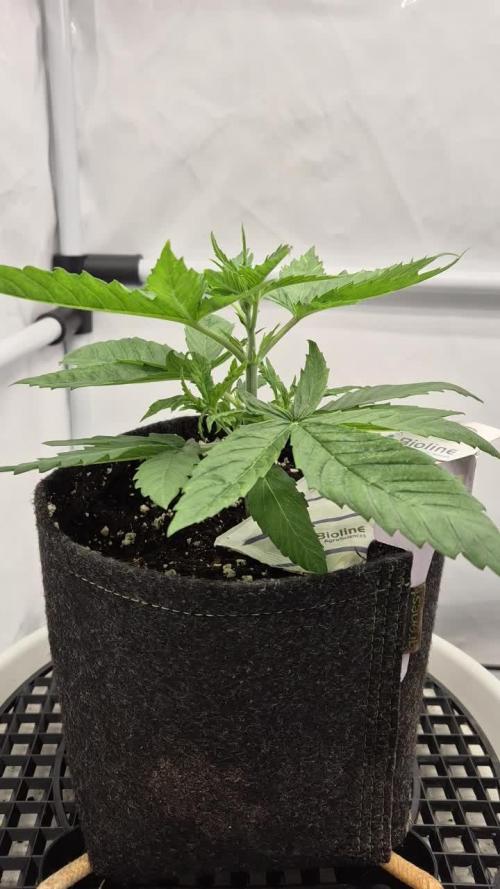
Woche 4
Topping und Blattschnitt.
Der Blattschaden wird wohl durch die zu abrupte Umstellung kommen. Etwas viel Licht und Wind im neuen Zelt der kleinen . 45. DLI (noch aus der letzten Blüte) wurde erstmal auf 35 DLI reduziert.
Likes
5
Share

@hassehujasse
Follow
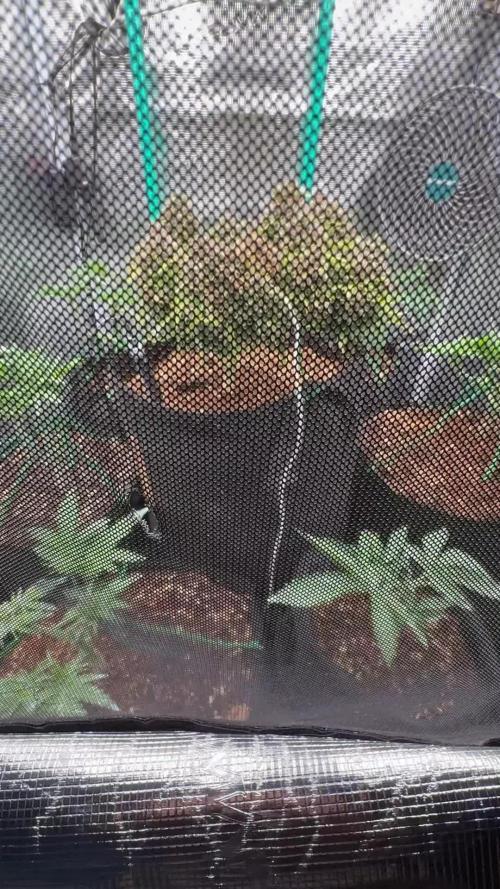
Working hard with co2 in my homemade lab.
First time Mars Hydro at 100% of his power.Two small boxes always better then just one big)))

Likes
14
Share


@BOMbolenath
Follow
We are very close to the harvest. One more week and it's good to go.
Feeding with water only. No more nutrients. Aroma from this plant its incredible, its like a very good man's perfume. Musky with fruit like tangerine and mango. Incredible.

Likes
18
Share


@YouGrowBoss
Follow
Week 2 and everything is going great so far
• They are still being fed twice a day (for 12 minutes) same as last week.
• The EC value has been increased this week because midway through last week the nutrient tank reduced in strength, meaning they were drinking slightly more water than nutrients. The aim is to keep the EC value the same as the water level drops throughout the week.
• The pH has been increased for this week too.
• The only plans for plant manipulation this week is to climb under the canope and pull down any tall bud sites to the same level as the rest. That's it, all trimming and bending is complete.
• Midweek foliar spray with BioTabs BoomBoom spray.

Likes
5
Share


@Bak2Blk
Follow
They're getting so big. I'm hoping this week I'll start to see some flowers starting to form. Gave them a ph'ed watering only today. I'll be giving them water with calmag on Wednesday.
7/27 - They're finally budding up. YIPEE! This is my best grow batch yet! GDP1 and BK are about 11 weeks old and GDP2 is about 9 weeks old.

Processing
Likes
7
Share


@Edamsgarden
Follow
Pretty busy week this week. repotted in to 5 gallon pots, defoliation just before switching to 12/12. Added a Scrog to the canopy. Also added a better fresh air in take to try and drop the humidity. Although it didn’t make much difference so ordered a better dehumidifier with a humidistat.

Processing
Likes
15
Share


@chefrob15
Follow
the girls are starting to look good! my tent is running a little hot the past couple of days though, 84 flirting with 85. I took the white light out, it runs to hot. now my question is how much light should be provided to accommodate 5 plants in a 2x2x5 space. I went to a hydro shop last night to get some green pads to add some c02 and homeboy told me to drop a light that 2 -300 watt lights should be sufficient for the space. my temps did drop down to the 79-80 degree range and that's from dropping 1 light. so im thinking im just going to ride with it like that for now. starting week 3 in a couple of days and we will start on the c-4 from mills.


Likes
9
Share


@eldruida_lamota
Follow
Familia, actualizo la semana 9 de floración de las Kritical, y ya ultima semana que está.
Ya están listas para pasar por la tijera, variedad típica muy top que está entre los mejores clásicos.
Esta semana han estado solo a agua y hemos practicado un estrés hídrico, que cada vez que aplicamos riego la cantidad va siendo reducida progresivamente.
Agrobeta:
https://www.agrobeta.com/agrobetatiendaonline/36-abonos-canamo
Mars hydro:
Code discount: EL420
https://www.mars-hydro.com/
Las maximas de temperatura no superan los 27,5 grados y las mínimas no bajan 22, así que no me puedo quejar.
Los niveles de humedad también son los correctos van entre 40%/55% de humedad relativa.
Por supuesto el Ph lo estamos dejando alrededor de 6.
Hasta aquí es todo,os actualizaré la cosecha los próximos días, buenos humos 💨💨💨.

Likes
18
Share


@Ironblimp
Follow
I fed the plants 75% nutrients for it's very last feeding although 6 or more leaves are showing signs of nitrogen deficiency but the buds are still growing, all signs show that I think they need 2 more weeks. Most pistols are amber, and a few new pistols still grow from the tops or sides of each bud. New sugar leaf growth on the tops look more rounded.
The trichomes on the oldest sugar leaves have turned amber, less so on middle and top. Trichomes on the buds range from appearing clear, cloudy and milky, but not amber.
I want the trichomes on the buds to be anywhere between 10-30% amber.


Likes
4
Share


@Jaschkoo0
Follow
On Day 92 i mixed 8l of water with 8ml of alfa boost 8ml of blüh boost some supervite some alg a mic 8ml of calmag some melasse and 40ml of powerzyme.
The left one i gave 2.5l and the right one i gave 2.3l . After a gave 700ml of this solution an lemon cheery i have. I added 8ml of bloom complex to the 2l rest solution and fed 1.5l to my right plant as well as 0,5l to the lemon cherry. Than i added one Coup of feeding bloom to the soil of the right plant.
On Day 93 i had to take the left one out of her net and mesured the drain which had an ec of 3.4 and an ph of 6 8 so i had to flushe her with 30l of water ph 6.3. After i flushed her the ec was on 0.8. So tomorrow i will Mesure the drain again and if ec still low i will give her some Light nutrient Mixtur with some Lab.
On Day 95 i transplanted the overfeeded one in an 50l pot mixed with some mycoryzha and bio feeding bloom. Then i mixed 7l with 20ml of Lab 20ml of alfa boost some melasse and some supervite as well as an ph of 6.7. I gave the left one 2l and the right one 5l.
On Day 97 i flushed the left one with 18l because the drain ec was to high. Now its on 2.
On Day 98 i gave her 2l of water with 6ml of calmag biobizz 4ml of Alfa boost some alg a mic some melasse and 4ml of LAB as well as 4drips of supervite.


Likes
Comments
Share


@Black_Venom
Follow
Flowering is developing well.
Genetics Very very greedy in fertilizer... After a written exchange with the breeder, he recommended a mineral fertilizer, and not an organic organic one. The flowering is developing very, very well, but small spots have appeared on the foliage for no apparent reason.
If anyone can give me the beginnings of a solution, I'm interested.