The Grow Awards 2026 🏆
Likes
Comments
Share
@ibbzy
Follow
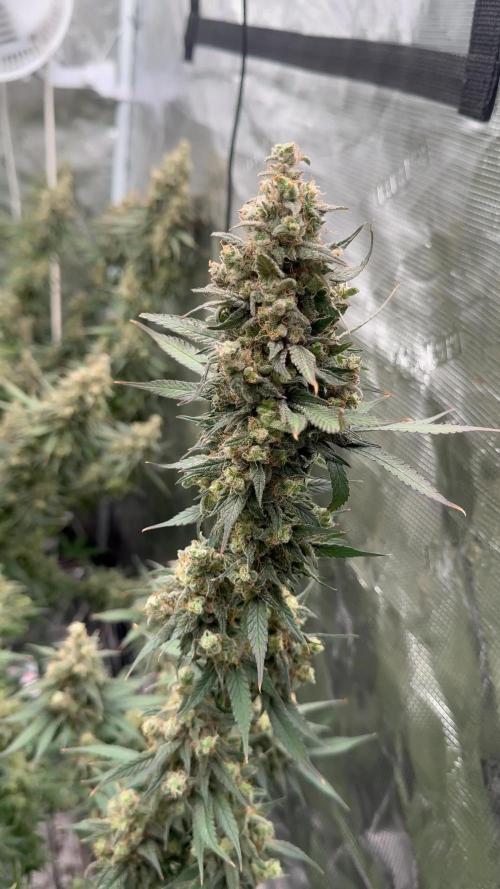
Day 56 of flower. She looks pretty much done, could chop now but will give it till day 60 She's just nicely densening up now
Likes
Comments
Share
Alles läuft sehr gut ich bin stolz
Processing
Likes
4
Share
Started light feed with Mega Crop and I'm actually surprised, the Colorado Cookie expecially, is showing to enjoy the thing.
Likes
14
Share
TUESDAY 9/3: She's slow, but steadily putting on the pistils. Looks happy...👍 WEDNESDAY: I fed her about a half-gallon of water with bembe, big bloom, tiger bloom, beastie bloomz, armor si, and terpinator. I was at the site for several hours today, so I was able to move her into direct sunshine for an extra couple hours.😎 THURSDAY, FRIDAY, SATURDAY, SUNDAY: I was sick as a dog . 2-day stomach virus, followed by an acute pancreatitis attack... 😷 MONDAY: I gave her about a half-gallon of aquarium water with some bembe, beastie bloomz, and tiger bloom. I ordered a little grow light that should arrive tomorrow. It just pulls 210w at the wall, but is 3500k with a lot of extra 660nm diodes and gets pretty good PPFD numbers. I'm gonna finish her in my closet as close to that new light as I can..along with maybe 2 of my shortest stealthy outdoor hybrid girls...maybe increasing the PAR a bunch will hurry them the f!#$k up..
Likes
25
Share
ANTHOCYANIN production is primarily controlled by the Cryptochrome (CR1) Photoreceptor ( !! UV and Blue Spectrums are primary drivers in the production of the pigment that replaces chlorophyll, isn't that awesome! 1. Diverse photoreceptors in plants Many civilizations, including the sun god of ancient Egypt, thought that the blessings of sunlight were the source of life. In fact, the survival of all life, including humans, is supported by the photosynthesis of plants that capture solar energy. Plants that perform photosynthesis have no means of transportation except for some algae. Therefore, it is necessary to monitor various changes in the external environment and respond appropriately to the place to survive. Among various environmental information, light is especially important information for plants that perform photosynthesis. In the process of evolution, plants acquired phytochrome, which mainly receives light in the red light region, and multiple blue light receptors, including his hytropin and phototropin, in order to sense the light environment. .. In addition to these, an ultraviolet light receptor named UVR8 was recently discovered. The latest image of the molecular structure and function of these various plant photoreceptors (Fig. 1), focusing on phytochrome and phototropin. Figure 1 Ultraviolet-visible absorption spectra of phytochrome, cryptochrome, phototropin, and UVR8. The dashed line represents each bioactive absorption spectrum. 2. Phytochrome; red-far red photoreversible molecular switch What is phytochrome? Phytochrome is a photochromic photoreceptor, and has two absorption types, a red light absorption type Pr (absorption maximum wavelength of about 665 nm) and a far-red light absorption type Pfr (730 nm). Reversible light conversion between the two by red light and far-red light, respectively(Fig. 1A, solid line and broken line). In general, Pfr is the active form that causes a physiological response. With some exceptions, phytochrome can be said to function as a photoreversible molecular switch. The background of the discovery is as follows. There are some types of plants that require light for germination (light seed germination). From that study, it was found that germination was induced by red light, the effect was inhibited by subsequent far-red light irradiation, and this could be repeated, and the existence of photoreceptors that reversibly photoconvert was predicted. In 1959, its existence was confirmed by the absorption spectrum measurement of the yellow sprout tissue, and it was named phytochrome. Why does the plant have a sensor to distinguish between such red light and far-red light? There is no big difference between the red and far-red light regions in the open-field spectrum of sunlight, but the proportion of red light is greatly reduced due to the absorption of chloroplasts in the shade of plants. Similar changes in light quality occur in the evening sunlight. Plants perceive this difference in light quality as the ratio of Pr and Pfr, recognize the light environment, and respond to it. Subsequent studies have revealed that it is responsible for various photomorphogenic reactions such as photoperiodic flowering induction, shade repellent, and deyellowing (greening). Furthermore, with the introduction of the model plant Arabidopsis thaliana (At) and the development of molecular biological analysis methods, research has progressed dramatically, and his five types of phytochromes (phyA-E) are present in Arabidopsis thaliana. all right. With the progress of the genome project, Fi’s tochrome-like photoreceptors were found in cyanobacteria, a photosynthetic prokaryotes other than plants. Furthermore, in non-photosynthetic bacteria, a homologue molecule called bacteriophytochrome photoreceptor (BphP) was found in Pseudomonas aeruginosa (Pa) and radiation-resistant bacteria (Deinococcus radiodurans, Dr). Domain structure of phytochrome molecule Phytochrome molecule can be roughly divided into N-terminal side and C-terminal side region. PAS (Per / Arndt / Sim: blue), GAF (cGMP phosphodiesterase / adenylyl cyclase / FhlA: green), PHY (phyto-chrome: purple) 3 in the N-terminal region of plant phytochrome (Fig. 2A) There are two domains and an N-terminal extension region (NTE: dark blue), and phytochromobilin (PΦB), which is one of the ring-opening tetrapyrroles, is thioether-bonded to the system stored in GAF as a chromophore. ing. PAS is a domain involved in the interaction between signal transduction-related proteins, and PHY is a phytochrome-specific domain. There are two PASs and her histidine kinase-related (HKR) domain (red) in the C-terminal region, but the histidine essential for kinase activity is not conserved. 3. Phototropin; photosynthetic efficiency optimized blue light receptor What is phototropin? Charles Darwin, who is famous for his theory of evolution, wrote in his book “The power of move-ment in plants” published in 1882 that plants bend toward blue light. Approximately 100 years later, the protein nph1 (nonphoto-tropic hypocotyl 1) encoded by one of the causative genes of Arabidopsis mutants causing phototropic abnormalities was identified as a blue photoreceptor. Later, another isotype npl1 was found and renamed phototropin 1 (phot1) and 2 (phot2), respectively. In addition to phototropism, phototropin is damaged by chloroplast photolocalization (chloroplasts move through the epidermal cells of the leaves and gather on the cell surface under appropriate light intensity for photosynthesis. As a photoreceptor for reactions such as escaping to the side of cells under dangerous strong light) and stomata (reactions that open stomata to optimize the uptake of carbon dioxide, which is the rate-determining process of photosynthetic reactions). It became clear that it worked. In this way, phototropin can be said to be a blue light receptor responsible for optimizing photosynthetic efficiency. Domain structure and LOV photoreaction of phototropin molecule Phototropin molecule has two photoreceptive domains (LOV1 and LOV2) called LOV (Light-Oxygen-Voltage sensing) on the N-terminal side, and serine / on the C-terminal side. It is a protein kinase that forms threonine kinase (STK) (Fig. 4Aa) and whose activity is regulated by light. LOV is one molecule as a chromophore, he binds FMN (flavin mononucleotide) non-covalently. The LOV forms an α/βfold, and the FMN is located on a β-sheet consisting of five antiparallel β-strands (Fig. 4B). The FMN in the ground state LOV shows the absorption spectrum of a typical oxidized flavin protein with a triplet oscillation structure and an absorption maximum wavelength of 450 nm, and is called D450 (Fig. 1C and Fig. 4E). After being excited to the singlet excited state by blue light, the FMN shifts to the triplet excited state (L660t *) due to intersystem crossing, and then the C4 (Fig. 4C) of the isoaroxazine ring of the FMN is conserved in the vicinity. It forms a transient accretionary prism with the tain (red part in Fig. 4B Eα) (S390I). When this cysteine is replaced with alanine (C / A substitution), the addition reaction does not occur. The effect of adduct formation propagates to the protein moiety, causing kinase activation (S390II). After that, the formed cysteine-flavin adduct spontaneously dissociates and returns to the original D450 (Fig. 4E, dark regression reaction). Phototropin kinase activity control mechanism by LOV2 Why does phototropin have two LOVs? Atphot1 was found as a protein that is rapidly autophosphorylated when irradiated with blue light. The effect of the above C / A substitution on this self-phosphorylation reaction and phototropism was investigated, and LOV2 is the main photomolecular switch in both self-phosphorylation and phototropism. It turns out that it functions as. After that, from experiments using artificial substrates, STK has a constitutive activity, LOV2 functions as an inhibitory domain of this activity, and the inhibition is eliminated by photoreaction, while LOV1 is kinase light. It was shown to modify the photosensitivity of the activation reaction. In addition to this, LOV1 was found to act as a dimerization site from the crystal structure and his SAXS. What kind of molecular mechanism does LOV2 use to photoregulate kinase activity? The following two modules play important roles in this intramolecular signal transduction. Figure 4 (A) Domain structure of LOV photoreceptors. a: Phototropin b: Neochrome c: FKF1 family protein d: Aureochrome (B) Crystal structure of auto barley phot1 LOV2. (C) Structure of FMN isoaroxazine ring. (D) Schematic diagram of the functional domain and module of Arabidopsis thaliana phot1. L, A’α, and Jα represent linker, A’α helix, and Jα helix, respectively. (E) LOV photoreaction. (F) Molecular structure model (mesh) of the LOV2-STK sample (black line) containing A’α of phot2 obtained based on SAXS under dark (top) and under bright (bottom). The yellow, red, and green space-filled models represent the crystal structures of LOV2-Jα, protein kinase A N-lobe, and C-robe, respectively, and black represents FMN. See the text for details. 1) Jα. LOV2 C of oat phot1-to α immediately after the terminus Rix (Jα) is present (Fig. 4D), which interacts with the β-sheet (Fig. 4B) that forms the FMN-bound scaffold of LOV2 in the dark, but unfolds and dissociates from the β-sheet with photoreaction. It was shown by NMR that it does. According to the crystal structure of LOV2-Jα, this Jα is located on the back surface of the β sheet and mainly has a hydrophobic interaction. The formation of S390II causes twisting of the isoaroxazine ring and protonation of N5 (Fig. 4C). As a result, the glutamine side chain present on his Iβ strand (Fig. 4B) in the β-sheet rotates to form a hydrogen bond with this protonated N5. Jα interacts with this his Iβ strand, and these changes are thought to cause the unfold-ing of Jα and dissociation from the β-sheet described above. Experiments such as amino acid substitution of Iβ strands revealed that kinases exhibit constitutive activity when this interaction is eliminated, and that Jα plays an important role in photoactivation of kinases. 2) A’α / Aβ gap. Recently, several results have been reported showing the involvement of amino acids near the A’α helix (Fig. 4D) located upstream of the N-terminal of LOV2 in kinase photoactivation. Therefore, he investigated the role of this A’α and its neighboring amino acids in kinase photoactivation, photoreaction, and Jα structural change for Atphot1. The LOV2-STK polypeptide (Fig. 4D, underlined in black) was used as a photocontrollable kinase for kinase activity analysis. As a result, it was found that the photoactivation of the kinase was abolished when amino acid substitution was introduced into the A’α / Aβ gap between A’α and Aβ of the LOV2 core. Interestingly, he had no effect on the structural changes in Jα examined on the peptide map due to the photoreaction of LOV2 or trypsin degradation. Therefore, the A’α / Aβ gap is considered to play an important role in intramolecular signal transduction after Jα. Structural changes detected by SAXS Structural changes of Jα have been detected by various biophysical methods other than NMR, but structural information on samples including up to STK is reported only by his results to his SAXS. Not. The SAXS measurement of the Atphot2 LOV2-STK polypeptide showed that the radius of inertia increased from 32.4 Å to 34.8 Å, and the molecular model (Fig. 4F) obtained by the ab initio modeling software GASBOR is that of LOV2 and STK. It was shown that the N lobes and C lobes lined up in tandem, and the relative position of LOV2 with respect to STK shifted by about 13 Å under light irradiation. The difference in the molecular model between the two is considered to reflect the structural changes that occur in the Jα and A’α / Aβ gaps mentioned above. Two phototropins with different photosensitivity In the phototropic reaction of Arabidopsis Arabidopsis, Arabidopsis responds to a very wide range of light intensities from 10–4 to 102 μmol photon / sec / m2. At that time, phot1 functions as an optical sensor in a wide range from low light to strong light, while phot2 reacts with light stronger than 1 μmol photon / sec / m2. What is the origin of these differences? As is well known, animal photoreceptors have a high photosensitivity due to the abundance of rhodopsin and the presence of biochemical amplification mechanisms. The exact abundance of phot1 and phot2 in vivo is unknown, but interesting results have been obtained in terms of amplification. The light intensity dependence of the photoactivation of the LOV2-STK polypeptide used in the above kinase analysis was investigated. It was found that phot1 was about 10 times more photosensitive than phot2. On the other hand, when the photochemical reactions of both were examined, it was found that the rate of the dark return reaction of phot1 was about 10 times slower than that of phot2. This result indicates that the longer the lifetime of S390II, which is in the kinase-activated state, the higher the photosensitivity of kinase activation. This correlation was further confirmed by extending the lifespan of her S390II with amino acid substitutions. This alone cannot explain the widespread differences in photosensitivity between phot1 and phot2, but it may explain some of them. Furthermore, it is necessary to investigate in detail protein modifications such as phosphorylation and the effects of phot interacting factors on photosensitivity. Other LOV photoreceptors Among fern plants and green algae, phytochrome ɾphotosensory module (PSM) on the N-terminal side and chimera photoreceptor with full-length phototropin on the C-terminal side, neochrome (Fig. There are types with 4Ab). It has been reported that some neochromes play a role in chloroplast photolocalization as a red light receiver. It is considered that fern plants have such a chimera photoreceptor in order to survive in a habitat such as undergrowth in a jungle where only red light reaches. In addition to this, plants have only one LOV domain, and three proteins involved in the degradation of photomorphogenesis-related proteins, FKF1 (Flavin-binding, Kelch repeat, F-box 1, ZTL (ZEITLUPE)), LKP2 ( There are LOV Kelch Protein2) (Fig. 4Ac) and aureochrome (Fig. 4Ad), which has a bZip domain on the N-terminal side of LOV and functions as a gene transcription factor. 4. Cryptochrome and UVR8 Cryptochrome is one of the blue photoreceptors and forms a superfamily with the DNA photoreceptor photolyase. It has FAD (flavin adenine dinucle-otide) as a chromophore and tetrahydrofolic acid, which is a condensing pigment. The ground state of FAD is considered to be the oxidized type, and the radical type (broken line in Fig. 1B) generated by blue light irradiation is considered to be the signaling state. The radical type also absorbs in the green to orange light region, and may widen the wavelength region of the plant morphogenesis reaction spectrum. Cryptochrome uses blue light to control physiological functions similar to phytochrome. It was identified as a photoreceptor from one of the causative genes of UVR8 Arabidopsis thaliana, and the chromophore is absorbed in the UVB region by a Trp triad consisting of three tryptophans (Fig. 1D). It is involved in the biosynthesis of flavonoids and anthocyanins that function as UV scavengers in plants. Conclusion It is thought that plants have acquired various photoreceptors necessary for their survival during a long evolutionary process. The photoreceptors that cover the existing far-red light to UVB mentioned here are considered to be some of them. More and more diverse photoreceptor genes are conserved in cyanobacteria and marine plankton. By examining these, it is thought that the understanding of plant photoreceptors will be further deepened.
Likes
77
Share
I love the sativa shaped nug-towers! When my plants grow big, I like to grow them until the very end of their cycle! That's why the extended flower period. Video of Measurement of yield: T=Tops(92grams), M=Mids(59.1 grams), L=Lowers(58.6grams) Total: 209.7 grams (1-2 grams worth, was taste-tested prior to scaling.)
Likes
73
Share
@Roberts
Follow
Deep Forest Auto is growing very vigorously and well. She made a lot of progress in this week. She got her first lst and defoliation today. It was almost too late. As she is starting to get woody in her Base. She is growing really good in the air pot. Everything is looking good at the moment. Thank you Medic Grow, Gen1:11, and Doctor's Choice. 🤜🏻🤛🏻🌱🌱🌱 Thank you grow diaries community for the 👇likes👇, follows, comments, and subscriptions on my YouTube channel👇. ❄️🌱🍻 Happy Growing 🌱🌱🌱 https://youtube.com/channel/UCAhN7yRzWLpcaRHhMIQ7X4g
Likes
175
Share
Day 15 Today I switched the lights from the Seedling program to the Growth program. I measured around 640 PPFD at the canopy level so a bit high for early veg but I will leave it where it is now and keep an eye out for light stress, and raise the lights if I have to. I also added a second USB fan for increased circulation. USB fans are great when the plants are small and you don't want the stronger winds that the regular clip fan generates. I also started the clip fan but directed it towards the lights to help keep them a bit cooler. I adjusted the extractor fan from 60 secs Off/30 secs On to 30 secs Off/30 secs On in order to remove more hot air. This will have to be tweaked further and I'll monitor my temps to figure out a suitable setting. It becomes a balance between temp and humidity. I really wish I had a system where I could set a target VPD and then the system would automatically adjust temps and humidity to follow that target. Not practical in my small setup though but maybe one day... Temps are always an issue in my setup as I have two powerful lights inside one small tent without AC. I have set the light cycle so that the lights are on during the night but off during the day to help to balance the temp a bit. I'm also considering getting some extension cables and put the LED drivers outside the tent to see if that helps to bring down the temps a bit further. Later in the grow I will use CO2 so that will help a bit against higher temps. Finally, I watered the plants as they were getting a bit dry. The left plant got 1 liter and the right plant 1.5 liters as the sensor reported that that pot was a bit drier. I reckon it has to do with the plant being larger (almost double the size of the other plant!) I should also really get my ass in gear and hook up the Blumat system so I don't need to worry about hand watering. Day 16 Nothing to report really except some additional growth, both vertical and horizontal. Day 17 Watering time again. Gave them 6.2 pH water this time and once again more to the right plant as it drinks more. I guess around 1.3 liters for the left plant and 2 liters for the right one. I tried putting in my small USB humidifier into the tent but I soon realized that it can't share the USB power that the fans are running on so will have to get another USB power cable in there. Didn't expect that small humidifier to use that much power. Oh well, that's a job for another day. Day 18 The girls are thirsty it seems as I had to water again today according to the Blumat sensors (I really, really need to install my Blumat system as soon as possible but should get the last bits that I need in a day or two). I gave them 2.5 liters of water (pH 6.7) and once again a bit more to the right plant. I also was able to squeeze in my tiny humidifier into the tent even though the tomatoes are still in there. Turns out that all I had to do was to switch the USB power adapter from the old Samsung one that I used to a more powerful iPad charger. Now it works just fine to run the fan and the humidifier on the same power. The reason why I'm using a small USB humidifier instead of a proper one is simply due to the lack of space in my small tent. This (very basic) humidifier is the smallest one I could find yet have a decent size tank so I don't need to fill it up all the time. Day 19 The cover crop EXPLODED since yesterday so the first thing I had to do today was to cut that back a bit. I also started brewing some compost tea (AACT). I mixed together worm castings, rock dust, biochar, lime, bentonite, neem meal, kelp meal, and molasses and will leave it brewing for 24 hours and then feed it to the plants tomorrow. Would have liked to add alfalfa meal as well but haven't been able to find any. I usually put my seed starter warming mat under and taped to the brewing bucket to increase the tea temperature and microbial activity. The plants are doing their thing, a little bit taller and a little bit wider. I will probably top the right plant next week but not sure about the left one as it is smaller so might need another week. Day 20 The compost tea was ready today after 24 hours of brewing. I fed each girl with around 3 liters of tea (pH 6.8) and as I wasn't planning any foliar feeding this time around I kept the tea unfiltered. So that everything that went into making the tea ended up as a top dressing. I guess I don't have to water for a couple of days after this. Not much change is plant size but the leaves are filling out. Day 21 Today was completely uneventful so not much to report except that I probably will top the right plant tomorrow as it is up to 5 nodes.
Likes
14
Share
Week 4 – Flowering (Day 22–28) 🌸🌱 At the end of Week 3 (Day 21) we carried out a deeper round of defoliation and some lollipopping. By now the stretch is coming to an end, with the plants settling close to their final height. We’ve also stopped foliar feeding, since every single plant is now covered in developing buds. To keep everything protected, we refreshed the beneficial insects, better be safe than sorry, how we say in German, sicher ist sicher. Already in this early stage of flowering, we can clearly spot differences in structure, bud formation and even the first aromas. Some phenos are showing exceptional promise — those will be the ones we’ll highlight more in the coming updates. 🔎 Pheno notes so far: AF Biostimulant 2 – strong side branching, open structure, already pushing citric aromas. AF 38 – well-built top colas, vigorous growth. AF 64, 92, 93 – impressive vigor, strong stacking, healthy canopy. Apple Fritter is already filling the room with fresh citrus tones and showing early winners.
Likes
64
Share
@Ju_Bps
Follow
Hello happy Growers! This week was better than early, I've founded few very litle banana spend the week, I will continue to check this week, Harvest will be in 2 or 3 weeks, I hope can take situation under control untill harvest. If banana start to be too big, I'll remove the branch. If no, buds start to be compact, Nice sweet smeel and sticky, Probably my last fertilizer week, after I'll start flush Plant start to take less water, sign harvest for soon :) Have a good week my friends
Likes
9
Share
This was my first grow and I did a bunch of research but I mostly figured it out as I went and I really enjoyed this strain. It was very resistant and took about 90-92 days from germination to harvest. The strain seemed to bounce back extremely well even after a heavy trimming. Did not really run into any health issues with the strain other than what I diagnosed as Leaf Septoria which is caused from to much humidity and not enough circulation. But overall will grow again and was very accurately advertised by Canuk Seeds. Ended up with 256grams from this grow which I was pleasantly surprised with. Saved all the shake and made Cannabutter and Bubble Hash. Both turned out okay but with room for improvement in the future.
Likes
18
Share
Well 150 days wasted down the drain. I woke up and decided to check the girls this morning and found a fun Webbie surprise across the bugs. Looks like she managed to find some spider mites along the way. Had to biohazard the entire house and all of the plants. She got fed to the pigs because we had to dispose of that bitch ASAP. Been a long morning since we had to do all of the laundry I had to bleach all of the tent it’s a hard lesson to learn. I guess I must’ve gotten lazy keeping everything safe and sanitize between harvest. Lesson learned all around. Thankfully it’s not my first rodeo with these so we got the green cleaner on the way for the rest of the ladies.Been a long sad morning
Likes
8
Share
Chopped on Day 62. These 2 are citrus, pinesol, gassy dipped lemon wedges smelling.
Likes
14
Share
@Farmerted
Follow
So far no real issues. Started some pruning and training this week. Also fimmed her. Will trim the top leaves soon as she gets some more foliage elsewhere.
Likes
300
Share
@Ju_Bps
Follow
Hello growmies 👩‍🌾👨‍🌾🌲🌲, 👋 Plants growing good, look happy and healthy. 💪 Have been topped and did a defoliation 🍃 Will be transplanted next week 💧 Give water each 2/3 day And vaporise plant with water + Plagron Roots (1ml/l) 0.5 l Water + Roots + Grow + Zym (1 + 4.5 + 1 ml/l) 0.5 l Water + Roots + Grow + Zym (1 + 4.5 + 1 ml/l) PH @6 💡Mars Hydro - FC 3000 27% 58 cm Mars Hydro Fan kit Setting 4 Have a good week and see you next week 👋 Thanks community for follow, likes, comments, always a pleasure 👩‍🌾👨‍🌾❤️🌲 Mars Hydro - Smart FC3000 300W Samsung LM301B LED Grow Light💡💡 https://www.mars-hydro.com/fc-3000-samsung-lm301b-led-grow-light Mars Hydro - 6 Inch Inline Fan And Carbon Filter Combo With Thermostat Controller 💨💨 https://www.mars-hydro.com/6-inch-inline-duct-fan-and-carbon-filter-combo-with-thermostat-controller Fast Buds - Tropicana Cookies FF🌲🌲 https://2fast4buds.com/us/seeds/tropicana-cookies-fast-
Likes
4
Share
She looks so amazing with those fat colas, very dense and sticky, beautiful strain to grow same sweet cherry strawberry aroma just like her sisters. 🔝. I could grow her endless times
Likes
3
Share
@Ryno1990
Follow
Grapes n Cream fast flowering photo from Atlas seeds comming in on her first week of veg from seedling stage she popped up first out of the plants an shot straight up Comming to the end of week 1 of veg the Grapes an Cream is growing good starting to pick up speed
Likes
110
Share
ACTUALIZACIONES A DIARIO!! Miles de gracias al equipo de Royal Queen Seeds y a @James por proponerme esta aventura tan trepidante y poder conocer de cerca las nuevas F1 y sobre todo a la gran Titan F1. Espero que lo disfruteis y os sirva como referencia. ¿Qué piensas cuando lees la palabra “Titán”? Hay quienes la asocian con los hijos de Urano de la mitología griega. Otros saben que Titán es la luna más grande de Saturno. ¿Y entre los cultivadores de hierba? Estas personas reconocen a la Titan F1 como una variedad de marihuana con una genética de vanguardia. Se trata de uno de los primeros híbridos F1 autoflorecientes, y es una variedad pionera que ofrece productividad, resistencia y algo completamente nuevo. La Titan F1 deleitará tu olfato durante la fase de floración y más allá. Esta variedad autofloreciente ofrece un potente perfil de terpenos compuesto principalmente por mirceno, farneseno, ocimeno, pineno, bisabolol y limoneno. Gracias a MarsHydro 😊🙏 por darme la mejor luz que hay en el mercado. La marca numero uno en focos 💡, carpas de cultivo ⛺️, extractores 🌬️ y demás aparatos que necesitas para tu cultivo. Para esta aventura arrancaremos con 💡Mars Hydro TS 1000 Full Spectrum LED Grow Light 150W Regulable y 1 semilla autofloreciente a un ciclo de 20/4. Verdaderos 150w con este TS1000, la mejor luz de cultivo LED para principiantes. Ofrece una luz adecuada para 2-4 plantas 🌱. Su precio razonable, la marcada mejora del rendimiento y el control variable de la producción la hacen amigable para los nuevos cultivadores. Todo un tesoro para cualquier cultivador que este comenzando. Usaremos para esta aventura una carpa de 60x60x90, MarsHydro una carpa para los más exigentes.Con una solapa de cremallera mejorada, dobles cremalleras de metal con forro,reflectante diamante tipo Mylar, postes de metal para una estructura mas solida, no se puede pedir nada mas. Garantizando una respuesta en solo 24 horas tanto si has usado antes la marca como si no. 🌻🚀 Consigue tus semillas aqui: https://www.royalqueenseeds.es/semillas-de-marihuana-hibridas-f1/624-titan-f1.html 💡 MarsHydro TS1000: https://www.amazon.com/gp/product/B07PLY1WKK ⛺️ 60 x 60 x 90 MarsHydro: https://www.amazon.com/dp/B081PN2QDN/ Sexta semana de floracion, las planta ha terminado de estirar, las ramas laterales han estirando junto con la cola central y se muestran los futuros cogollos, es una planta muy compacta y he tenido que quitar alguna hoja baja para evitar la aparicion de algun hongo. Se muestra una gran cola principal. Es la genetica que mejor ha respondido, por no decir la mejor. Felicidades Royal Queen Seeds y MarsHydro 😁. Los cogollos han estirado muy rápido y se ha formado una larga cola principal con muchos cogollos en las ramas laterales, continua cargandose de resina. Las flores empiezan a engordar. 📆 Día 56 : Riego con nutrientes EC 1050 📆 Día 57: Riego con nutrientes EC 1150 📆 Día 58: Riego con nutrientes EC 1150 📆 Día 59: Riego con nutrientes EC 1150 📆 Día 60: Riego con nutrientes EC 850, se aproxima el lavado de raíces, esta Titán es realmente rápida, con largos cogollos densos y llenos de resina . 📆 Día 61: 📆 Día 62:
Processing
Likes
36
Share
Due to an emergency travel across country my younglings had not survived and therefore I had to restart . So I bring to you some Cheesy headband !!! Looking forward to seeing these ladies sprout up and become big beautiful plants !!! The lights are off for the first 3 days . The reason they were on for the first set of pictures is cause I had just placed them in the dome and I needed to see what I was doing . I'd like to thank everyone for their continued support and for stopping by to check out the diaries . Remember to check my diaries daily for updates !! Day#2G : Still in the dark froming up nicely almost ready to come out Day#3G: Still in the dark lots of action coming along nicely getting ready to sprout ! -Happy Growing!
Likes
1
Share
14.10.24 VD# 29 Moin ✌️ da sind wir wieder 🙂 Neue Woche neues Glück 🍀 die Mendocino Skunk macht sich prächtig. Habe gestern alle Ihre Triebe getoppt somit kommen noch mehr Triebe die später die dicken Buds halten. Heute gab es wieder lecker Futter von Hesi somit hat sie die nächsten 4 Tage erst mal was. Dann gibt es wieder eine Ladung Ph angeglichenes Wasser somit beugen wir gerade in diesen Stadium eine über Düngung vor. Danke für den Stop und bleibt alle geschmeidig & Stay High Das nächste Update kommt wie gehabt nächste Woche zur selben Zeit. Mögen all eure Ladys Gesund und prächtig wachsen und euch mit schmackhaften Stuff versorgen ✌️ ■■■■■■■■■■■■■■■■■■■■■■■■■ 14.10.24 VD# 29 Moin ✌️ here we are again 🙂 New week, new luck 🍀 The Mendocino Skunk is doing great. I topped all her shoots yesterday so there will be even more shoots to hold the thick buds later. Today there was delicious food from Hesi again so she'll have something for the next 4 days. Then there will be another load of pH-adjusted water so that we can prevent over-fertilization at this stage. Thanks for the stop and everyone stay smooth & stay high The next update will come as usual next week at the same time. May all your ladies grow healthy and splendid and provide you with tasty stuff ✌️