


Likes
Comments
Share


@Master_weeda
Follow
Bonjour à tous les padawans et maîtres jedis
Jour84 arrosage avec 2 litres d'eau ph6.3
Jour86 arrosage avec 2. 5litres d'eau ph6.3
Jour89 arrosage avec 2 litres d'eau ph6.3
LE MEILLEUR MOMENT POUR RINCER SON CANNABIS
Le rinçage commence en général deux semaines avant la récolte. Si le plant a une période de floraison de huit semaines, le rinçage doit commencer six semaines après le début de la période de floraison. Il est préférable de regarder de près les trichomes sur le plant pour déterminer quand votre cannabis est prêt à être récolter. Si les petits trichomes commencent juste à passer d’une couleur transparente à une teinte laiteuse et blanche, c’est une bonne indication que les plants peuvent commencer à être rincés. Il faut s’arranger pour que la majorité des trichomes aient changé vers la couleur désirée pour la récolte après deux semaines – ça devient plus facile à faire avec l’expérience, alors accrochez-vous !
Le rinçage peut également être un bon moyen de remettre à zéro la terre quand un plant est toujours en phase de croissance végétative. Parfois, un cultivateur suralimente par accident son cannabis, ce qui provoque un changement de couleur et un flétrissement du bout des feuilles. Ceci est appelé une « brûlure par nutriments ». Rincer la terre peut éliminer les nutriments excédentaires, ce qui aide à résoudre le problème. Cependant, c’est une mesure drastique à ce stade de la culture, alors assurez-vous que le problème soit bien une brûlure par nutriments et non quelque chose d’autre.
Le rinçage ne concerne pas que le moment de la récolte. Cette technique peut aussi être mise en place durant la phase de croissance afin de débarrasser le sol des nutriments. Bien évidemment, les nutriments permettent à votre plante de rester en bonne santé et vous assurent des rendements maximaux, mais une trop grande quantité peut causer une accumulation et un état statique durant lequel la plante ne peut plus y accéder.
Le blocage des nutriments peut être causé par une accumulation saline ou des niveaux de pH incorrects. Ces deux causes peuvent être résolues par un rinçage de votre plante à l’eau claire. Les fluides viendront pousser les nutriments en dehors du substrat et le débarrasseront de l’accumulation, permettant ainsi aux racines de pouvoir accéder à nouveau aux nutriments.
EMPÊCHER LE BLOCAGE D'ABSORPTION DES NUTRIMENTS AVANT QU’IL NE POSE PROBLÈME
Au mieux, le blocage des nutriments peut être un problème, au pire, il peut être un vrai désastre. Comme le dit l’adage, il vaut mieux prévenir que guérir. Il vaut mieux prendre de l’avant pour empêcher le blocage des nutriments plutôt que de s’y atteler lorsque c’est trop tard.
Empêcher le blocage des nutriments peut se faire par le biais d’un rinçage de routine. En rinçant vos plantes une fois avant la floraison et une fois au milieu de cette dernière, vous minimiserez l’accumulation de nutriments.
LES ENZYMES À LA RESCOUSSE
Après le rinçage pour contrer l’accumulation ou le blocage des nutriments, vous remarquerez peut-être que vos plantes ont une apparence vert foncé, c’est le signe d’un excès de nutriments. Dans ce cas, certains cultivateurs choisissent d’ajouter une formule riche en enzymes à leur substrat.
Au cas où vous auriez oublié vos cours de biologie, les enzymes sont des protéines qui catalysent les réactions. Elles aident à rincer le substrat en décomposant l’amidon, les glucides et les nutriments. Il existe sur le marché toute une variété de produits qui contiennent des formules d’enzymes très efficaces.
Si l’eau ne suffit pas à vos plantes, ces petites protéines ne feront qu’une bouchée de l’accumulation de nutriments !
COMMENT BIEN RINCER SON CANNABIS
Rincer votre plant de cannabis est un processus simple. À chaque fois que vous apporteriez normalement des nutriments, vous rincez à la place. De l’eau du robinet non traitée est tout ce dont vous avez besoin pour rincer, assurez-vous juste que son pH est sans danger pour le cannabis. La plupart de l’eau de puits a un pH sain et ne nécessite pas de traitement, mais s’il est nécessaire de traiter l’eau de rinçage pour avoir un pH adapté, faites-le. Les ajustements du pH seront donc la seule chose à considérer.
Inonder la terre avec autant d’eau fraîche qu’elle puisse contenir. Laissez l’eau durant quelques minutes pour qu’elle puisse absorber les nutriments, puis inondez la terre encore pour rincer les nutriments loin du plant. Si vous cultivez en intérieur dans des pots, notez la couleur de l’eau qui s’échappe du fond des pots. Elle sera tâchée et aura une couleur sale. C’est à cette étape qu’un appareil de mesure des TDS (Total des Solides Dissous) est utile. Si vous récupérez et mesurez le TDS de l’eau « évacuée », elle devrait avoir un taux de 1300ppm, ce qui est assez élevé. Il est important de rincer le plant jusqu’à ce que total baisse à un niveau de 50ppm, ou du moins qu’il s’approche du TDS de l’eau fraîche que vous utilisez pour rincer le plant. La couleur de l’eau d’évacuation va s’éclaircir et apparaîtra plus propre. Vous devez tirer autant que possible de minéraux dissous du plant.
Comment et Quand Rincer les Plants de Cannabis
Rincer les plants de cannabis avant la récolte peut faire la différence entre les meilleurs têtes ou la plus rude pour la gorge. Cette petite tâche est simple et facile à faire. Ajoutez juste de l’eau ! Attention car le moment du rinçage joue un rôle critique.
Le b.a.-ba du rinçage de ses plants de cannabis.
Sommaire:
1. Qu’est-ce que le rinçage ?
2. Le meilleur moment pour rincer son cannabis
3. Empêcher le blocage d'absorption des nutriments avant qu’il ne pose problème
4. Les enzymes à la rescousse
5. Comment bien rincer son cannabis
6. Comment rincer ses plantes en hydroponie
7. Les résultats du rinçage de son cannabis
8. Quand éviter de rincer son cannabis
Vous avez enfin fini vos cultures et vous vous retrouvez avec un magnifique plant couvert de super têtes, maintenant sèches, vous avez fait le curing et vous êtes prêt à fumer – et pourtant quelque chose ne va pas. La weed semble ne pas vouloir se consumer et quand vous tirez une bouffée, c’est comme si on vous avait donné un coup de poing dans les poumons et vous toussez en craignant pour votre vie ! Le goût est rude et décevant. Si c’est une situation que vous avez vécue, il y a des chances pour que vos plants n’aient pas été rincés correctement avant la récolte.
Cette fumée bien loin d’être agréable est provoquée par la présence dans le plant des nutriments et minéraux utilisés lors de la culture, ce qui altère la façon dont le plant se consume. Rincer le plant élimine ces nutriments restants, ce qui améliore la qualité des sensations. Heureusement, le rinçage des plants de cannabis se fait facilement et sans effort, et cela vous permet de produire des têtes douces et délicieuses en un rien de temps.
ARTICLE LIÉ
Comment Utiliser les Nutriments pour Cannabis
QU’EST-CE QUE LE RINÇAGE ?
L’acte de rincer un plant implique d’utiliser de l’eau pour éliminer tout nutriment présent dans la terre. Une grande quantité d’eau est passée à travers la terre et drainée sur une base régulière. Tous les minéraux et nutriments présents dans la terre sont rincés avec le temps avec l’eau, ce qui laisse une terre propre.
Mais pourquoi vouloir éliminer tous les minéraux de la terre ? N’est-ce pas mauvais pour la récolte ? En fait, cela aide à la récolte de manière significative. Quand les nutriments sont éliminés de la terre, ceci force le plant de cannabis à utiliser tous les nutriments toujours présents dans le plant. C’est comme pour le corps humain. Quand on consomme beaucoup d’aliments, ce que nous n’utilisons pas est transformé en graisses. Dans les situations extrêmes où la nourriture est rare, le corps s’appuie sur cette graisse stockée pour tirer de l’énergie.
Comme rincer force le cannabis à utiliser tous les nutriments restants dans le plant, aucun ne devrait rester et altérer les têtes récoltées. Cependant, si vous le faites trop tôt, cela peut nuire à la santé du plant, le moment est donc clé.
LE MEILLEUR MOMENT POUR RINCER SON CANNABIS
Le rinçage commence en général deux semaines avant la récolte. Si le plant a une période de floraison de huit semaines, le rinçage doit commencer six semaines après le début de la période de floraison. Il est préférable de regarder de près les trichomes sur le plant pour déterminer quand votre cannabis est prêt à être récolter. Si les petits trichomes commencent juste à passer d’une couleur transparente à une teinte laiteuse et blanche, c’est une bonne indication que les plants peuvent commencer à être rincés. Il faut s’arranger pour que la majorité des trichomes aient changé vers la couleur désirée pour la récolte après deux semaines – ça devient plus facile à faire avec l’expérience, alors accrochez-vous !
Le rinçage peut également être un bon moyen de remettre à zéro la terre quand un plant est toujours en phase de croissance végétative. Parfois, un cultivateur suralimente par accident son cannabis, ce qui provoque un changement de couleur et un flétrissement du bout des feuilles. Ceci est appelé une « brûlure par nutriments ». Rincer la terre peut éliminer les nutriments excédentaires, ce qui aide à résoudre le problème. Cependant, c’est une mesure drastique à ce stade de la culture, alors assurez-vous que le problème soit bien une brûlure par nutriments et non quelque chose d’autre.
Flushing
Le rinçage ne concerne pas que le moment de la récolte. Cette technique peut aussi être mise en place durant la phase de croissance afin de débarrasser le sol des nutriments. Bien évidemment, les nutriments permettent à votre plante de rester en bonne santé et vous assurent des rendements maximaux, mais une trop grande quantité peut causer une accumulation et un état statique durant lequel la plante ne peut plus y accéder.
Le blocage des nutriments peut être causé par une accumulation saline ou des niveaux de pH incorrects. Ces deux causes peuvent être résolues par un rinçage de votre plante à l’eau claire. Les fluides viendront pousser les nutriments en dehors du substrat et le débarrasseront de l’accumulation, permettant ainsi aux racines de pouvoir accéder à nouveau aux nutriments.
EMPÊCHER LE BLOCAGE D'ABSORPTION DES NUTRIMENTS AVANT QU’IL NE POSE PROBLÈME
Au mieux, le blocage des nutriments peut être un problème, au pire, il peut être un vrai désastre. Comme le dit l’adage, il vaut mieux prévenir que guérir. Il vaut mieux prendre de l’avant pour empêcher le blocage des nutriments plutôt que de s’y atteler lorsque c’est trop tard.
Empêcher le blocage des nutriments peut se faire par le biais d’un rinçage de routine. En rinçant vos plantes une fois avant la floraison et une fois au milieu de cette dernière, vous minimiserez l’accumulation de nutriments.
LES ENZYMES À LA RESCOUSSE
Après le rinçage pour contrer l’accumulation ou le blocage des nutriments, vous remarquerez peut-être que vos plantes ont une apparence vert foncé, c’est le signe d’un excès de nutriments. Dans ce cas, certains cultivateurs choisissent d’ajouter une formule riche en enzymes à leur substrat.
Au cas où vous auriez oublié vos cours de biologie, les enzymes sont des protéines qui catalysent les réactions. Elles aident à rincer le substrat en décomposant l’amidon, les glucides et les nutriments. Il existe sur le marché toute une variété de produits qui contiennent des formules d’enzymes très efficaces.
Si l’eau ne suffit pas à vos plantes, ces petites protéines ne feront qu’une bouchée de l’accumulation de nutriments !
Comment et Quand Rincer les Plants de Cannabis
COMMENT BIEN RINCER SON CANNABIS
Rincer votre plant de cannabis est un processus simple. À chaque fois que vous apporteriez normalement des nutriments, vous rincez à la place. De l’eau du robinet non traitée est tout ce dont vous avez besoin pour rincer, assurez-vous juste que son pH est sans danger pour le cannabis. La plupart de l’eau de puits a un pH sain et ne nécessite pas de traitement, mais s’il est nécessaire de traiter l’eau de rinçage pour avoir un pH adapté, faites-le. Les ajustements du pH seront donc la seule chose à considérer.
Inonder la terre avec autant d’eau fraîche qu’elle puisse contenir. Laissez l’eau durant quelques minutes pour qu’elle puisse absorber les nutriments, puis inondez la terre encore pour rincer les nutriments loin du plant. Si vous cultivez en intérieur dans des pots, notez la couleur de l’eau qui s’échappe du fond des pots. Elle sera tâchée et aura une couleur sale. C’est à cette étape qu’un appareil de mesure des TDS (Total des Solides Dissous) est utile. Si vous récupérez et mesurez le TDS de l’eau « évacuée », elle devrait avoir un taux de 1300ppm, ce qui est assez élevé. Il est important de rincer le plant jusqu’à ce que total baisse à un niveau de 50ppm, ou du moins qu’il s’approche du TDS de l’eau fraîche que vous utilisez pour rincer le plant. La couleur de l’eau d’évacuation va s’éclaircir et apparaîtra plus propre. Vous devez tirer autant que possible de minéraux dissous du plant.
COMMENT RINCER SES PLANTES EN HYDROPONIE
Le rinçage des plantes en hydroponie est bien plus simple que de se débarrasser des nutriments en terre. Les cultivateurs en hydroponie pourront simplement drainer leur système et le remplacer par une eau au pH neutre.
Le rinçage des plantes en hydroponie est aussi un processus bien plus court. Une fois que la réserve d’eau aura été modifiée, les plantes en hydro n’auront pas accès aux nutriments externes. Pour cette raison, un rinçage de deux jours suffira.
LES RÉSULTATS DU RINÇAGE DE SON CANNABIS
Après la récolte des têtes, prenez du temps pour bien faire le curing pour atteindre le potentiel le plus élevé. Un affinage correct par curing permet de réduire encore plus le côté rude des têtes, en éliminant des choses comme un excès de chlorophylle. Vous serez étonné de voir la différence que ce petite effort peut avoir sur votre produit. Tout votre travail se sentira dans la première bouffée de cette weed douce comme de la soie, qui caresse la gorge comme du miel. Le plus doux de la nature. Vous pouvez donc améliorer la qualité de votre cannabis en ajoutant juste de l’eau !
QUAND ÉVITER DE RINCER SES PLANTES
Le seul moment où nous recommandons d’éviter le rinçage de son cannabis est lorsque l’on travaille avec une terre biologique amendée ou un super soil. Ces substrats ont été développés avec précaution afin d’héberger des micro-organismes bienfaisants tels que des bactéries ou des champignons. Cette délicate biodiversité pourrait être éliminée et endommagée par le rinçage.
Une fois de plus, l’absence de rinçage ne devrait pas poser de soucis, car aucun nutriment externe ou synthétique n’aura été ajouté au substrat. À la place, les plantes comptent sur les micro-organismes pour décomposer la matière organique et la livrer aux racines.
May the force be with you 💪

Likes
10
Share

@MistaOC
Follow
18.04. F8
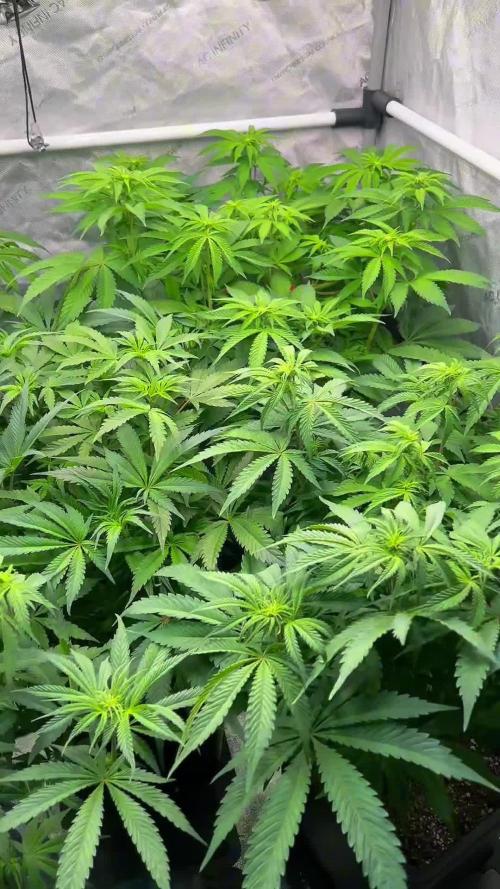
Flower Day 8 – Defoliation & Lollipopping
Today a full cleanup and structural adjustment was carried out.
Plants were defoliated and lollipopped to remove lower growth and improve airflow and light penetration. At the same time, branches were trained further to achieve a flat and even canopy.
The full 1.2 × 1.2 area is now nearly filled, which should allow for optimal light usage going forward.
Timing feels right, as the stretch is still ongoing but structure is now set for the flowering phase.
From here on, the focus will be on maintaining the canopy and monitoring development as bud formation progresses.
———————
22.04. F12
The plants are now transitioning from stretch into early bud development. First flower sites are clearly visible across the entire canopy.
HST and training have resulted in a very even structure, with the 1.2 × 1.2 space fully utilized.
The Autopot system is running consistently, supporting steady growth without fluctuations. The BioTabs setup continues to perform well, providing a stable organic environment.
Plants are healthy, vigorous, and showing no signs of stress.
From here on, the focus shifts towards bud development and maintaining optimal environmental conditions.
The plants are now transitioning from stretch into early bud development. First flower sites are clearly visible across the entire canopy.
HST and training have resulted in a very even structure, with the 1.2 × 1.2 space fully utilized.
The Autopot system is running consistently, supporting steady growth without fluctuations. The BioTabs setup continues to perform well, providing a stable organic environment.
Plants are healthy, vigorous, and showing no signs of stress.
From here on, the focus shifts towards bud development and maintaining optimal environmental conditions.



Likes
422
Share


@Crashoverite
Follow
Hi all,
Welcome to my 🍌💜👊 week update.
Thank you so much for your all support on this bananas journey 💜💚💜💚
Week 12
Jan 1 - Jan 7
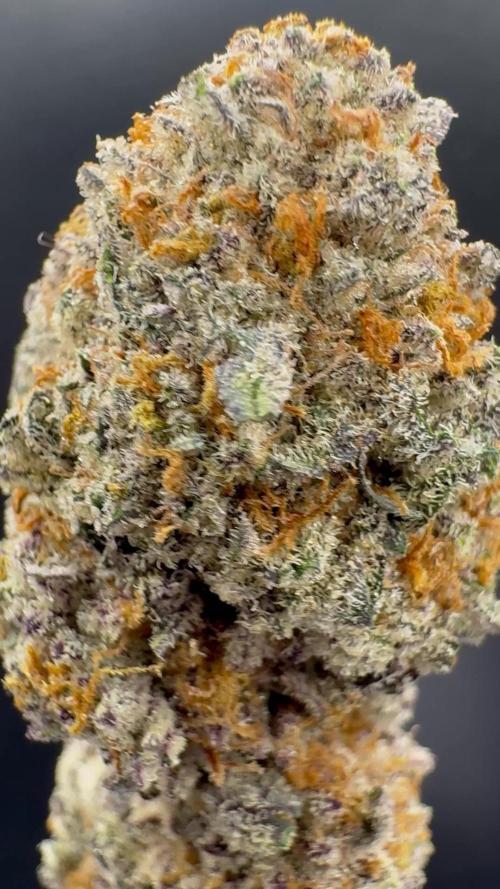
I am so happy seeing how my girls are developing. All it's going great. 2 waterings of 8ltr on 03/01 no runoff and second on 06/01 9.5ltr! Runoffs PH at 6.2. Purchased larger dehumidifier and installed on 03/01 instantly humidity decreaseed from 55-59 to 50-55 on avg. and at night from 62-69 to 54-60. Light from 01/01 on max power output 110 watts. Nutes slightly adjusted. Buds on both girls gaining size, weight. Trichomes on Athena mostly milky and clear with only very few ambers. Xena mostly 50/50 clear and milky,
They are smelling gorgeously, not sure if I should smoke or eat them first.
Next week will still feed with nutes and keep an eye on trichomes development but it seems that girls are not in a hurry at all. That's okay me neither 😁
Stay tuned for next week entry very soon!
Peace and love brothers and sisters ✌️💚
Links
https://2fast4buds.com/seeds/banana-purple-punch-auto
https://plagron.com
https://www.biobizz.com/
https://fishheadfarms.com/



Likes
110
Share


@Roberts
Follow
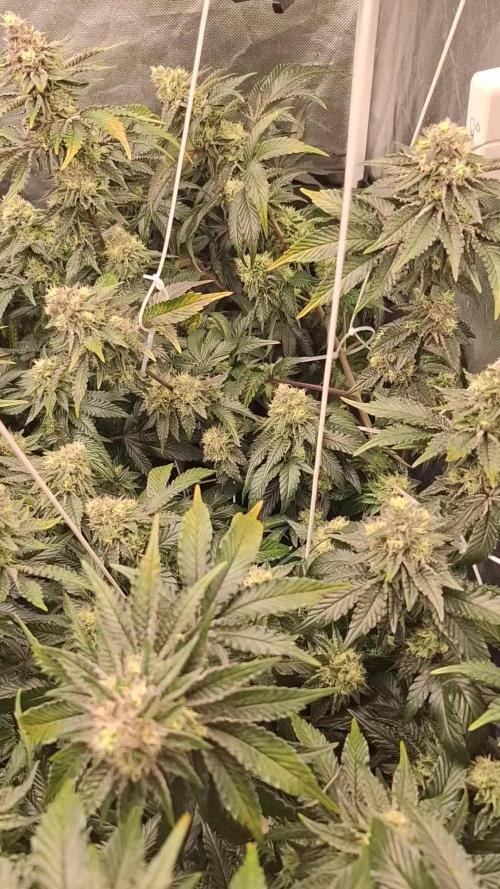
Mamba Negra was a very frosty, and smelly autoflower. Has been chopped, and hung to dry. Looks very promising to be some great smoke. We shall see. No contest winner, but got some good smoke out of it. PEV said they wanted to send me some more seeds to grow. We will see if they get back to me. After this beautiful plant, and Moby Dick auto is going monster size, check it out 🌱😁. I will work my way through some or all their autos. 🌱😏
Thank you Grow Diaries community for the likes, follows, and subscriptions on my YouTube channel. I appreciate your support. Happy Growing everyone 🌱🌱🌱🌱


Likes
7
Share

@Melacolas
Follow
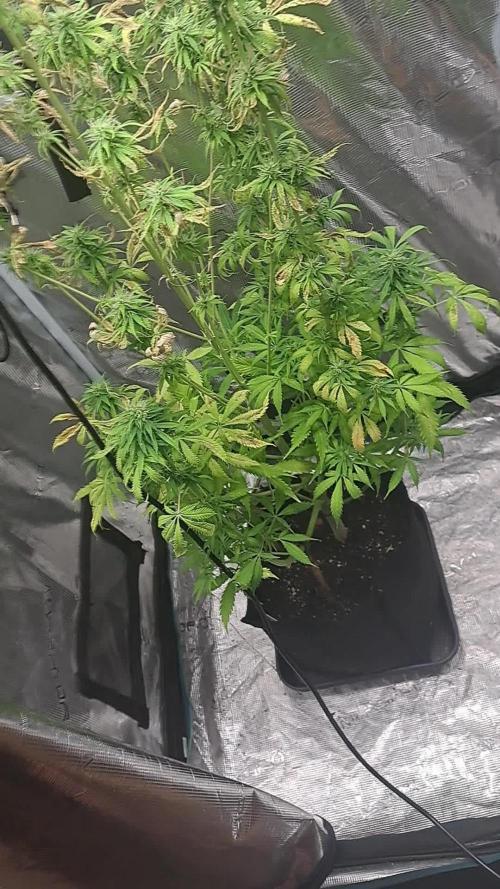
Les plants renfort tuteurs ,defoliations ,rincage des plants sans engrais l epuisement des feuilles place aux fleurs rincage peut etre du the de compost ou banane naturel les ravageurs nada netoyage aspirateurt froter le projecteur extra tourne h 24 mise en place d un ventillo mais les chaleurs font monter a 30 degrer les plants je surveille a la loupe d eventuel hermaprodite le stress l eaux tout 2 a 3 jours defoliation deux sessions enfin le run suit sont cours


Likes
5
Share
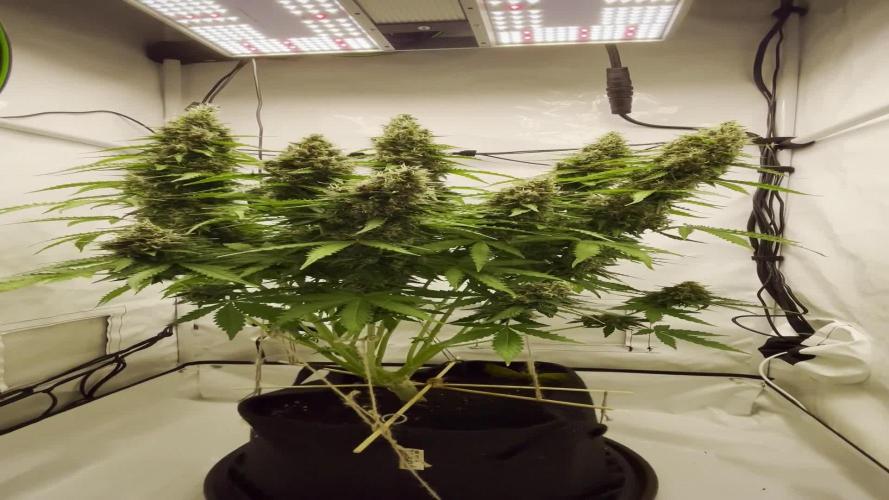

@edenminded
Follow
Week 12 Update: Solo Tent, Heatwaves, & GG Curing!
Hey everyone! I almost completely missed the Week 12 with all the excitement going on, and I also forgot to snap photos this week, so I'm dropping a video instead to show you the current state of the tent.
Here is what's happening:
The Gorilla Glue is officially out of the tent! The chop was a success, and after navigating some tricky humidity levels during the dry, she is now safely in jars. The curing process is going perfectly with Integra Boost packs holding a steady 60% RH. I will be making a separate, detailed Harvest Post for the GG very soon with all the final weights and macro shots, so stay tuned for that!
With GG gone, Crystal Candy now has the entire tent, all the airflow, and the 150W light entirely to herself. As you can see in the video, she is taking full advantage of it. She is flowering beautifully, the buds are swelling up nicely, and she is marching steadily toward her own harvest window.
The biggest struggle right now is the weather. Summer is arriving early here, and the ambient temperatures are pushing my tent up to 32°C (89.6°F) during the day. I am trying my best to counteract it and cool things down, but without much success so far.
Despite the heat, CC seems to be taking it like a champ. I'm keeping the fans on max to ensure massive airflow and prevent any mold issues like the minor scare I had with GG.
Fingers crossed the heat doesn't cause any foxtailing. She is getting closer every day! ✌️
Likes
137
Share


@MrJones
Follow
mrjones - Slurricane #7 S1
🌱Slurricane #7 S1
@inhousegenetics_official
👨🌾🏽GD Grower: MrJones
🔹🔹🔹🔹🔹🔹GOALS🔹🔹🔹🔹🔹🔹
🌞Environment - 75/80℉ and 60% Humidity Good Old Mother Nature
💧 Feeding - The Green Sunshine Company - Earth Dust All-Natural Plant Nutrients
⚗️Soil - 35% ProMix MP / 25% Ocean Forest / 20% Tupur Royal Gold / 10% lobster Compost / 10% Additional Perlite
🍃Training / So this girl was 60 Inches and spread her out under a 5x5 Trellis
🕷️ IPM - Will be using Green Cleaner" 1 OZ per Gallon, and CannControl from Mammoth alternating between product each month
🔹🔹🔹🔹🔹🔹🔹🔹🔹🔹🔹🔹🔹🔹🔹
📜 Rambling - Week 1 / So weeks are flying by, sorry for the slow updates, having unusual personal life struggles, but with that said, these outside plants are just doing great, thanks to my partner Mother Nature!!
🔹🔹🔹🔹🔹🔹🔹🔹🔹🔹🔹🔹🔹🔹🔹
▶️ Sunday - 06.06.21 / These plants are on autopilot with Mother Nature at the helm, we have been having gentile summer showers, plenty of sunlight and things are looking great!
▶️ Monday - 06.07.21 / These plants are on autopilot with Mother Nature at the helm, we have been having gentile summer showers, plenty of sunlight and things are looking great!
▶️ Tuesday - 06.08.21 / Finally got to water them today, they are just growing like crazy!
▶️ Wednesday - 06.09.21/ These plants are on autopilot with Mother Nature at the helm, we have been having gentile summer showers, plenty of sunlight and things are looking great!
▶️ Thursday - 06.10.21 / These plants are on autopilot with Mother Nature at the helm, we have been having gentile summer showers, plenty of sunlight and things are looking great!
▶️ Friday - 06.11.21 / These plants are on autopilot with Mother Nature at the helm, we have been having gentile summer showers, plenty of sunlight and things are looking great!
▶️ Saturday - 06.12.21 / These plants are on autopilot with Mother Nature at the helm, we have been having gentile summer showers, plenty of sunlight and things are looking great!
🔹🔹🔹🔹🔹🔹🔹🔹🔹🔹🔹🔹🔹🔹🔹
Earth Dust - DESCRIPTION
🔹Earth Dust is our all-natural plant nutrient designed for indoor and outdoor flowering plant growers. You can grow easily by “just adding water” to your soil for the entire growth cycle. It creates a “living soil” so your plants thrive from seedling all the way through flower and harvest. Earth Dust represents an organic dry amendment method of gardening, it’s made of a natural powder of ingredients.
🔹Because you only need to water your soil with Earth Dust, you can concentrate on caring for your plants and getting a healthy crop “on autopilot”. Now you can grow without spending hours of your life mixing chemical nutrients, and you can do it naturally. What’s more, is you will enjoy the cleanest, most aromatic, and flavorful harvest you’ve ever experienced when a plant grows in a rich, organic web of living soil.
Product Highlights
🔹All-Natural Ingredients – Mostly plant-based – Safe around children and pets.
🔹Packaged in kraft paper bags that are recyclable and compostable.
🔹Easy to Use – Just mix the powder into the soil 3 separate times – then water only.
🔹Packed full of rich microbe food & contains billions of beneficial fungi and bacteria! Creates a resilient, living soil that defends against pests and diseases.
🔹Rich in trace minerals and nutrients for full plant expression. Sourced from rock dust, sea-farmed kelp, and land-grown crops.
🔹Soil Conditioners help balance pH and make nutrients more available in the soil. Achieved with ingredients like bat guano, worm castings, limestone, molasses, and humic acid.
🔹The correct balance of N-P-K nutrients for each stage of growth:
🔹Earth Dust Base (3-1-2) contains key nutrients for sustained vegetative growth. High nitrogen (N), Low Phosphorous (P), and Medium Potassium (K).
🔹Earth Dust Boost (2-3-6) contains accelerated-release nutrients for powerful flowering growth. Low nitrogen (N), Medium Phosphorous (P), and High
Potassium (K).
🔹Re-use soil harvest after harvest by simply adding more Earth Dust Base to begin again. Create your own living soil that gets better every time it’s used.
🔹Go organic, save time, and get predictable, healthy harvests.
🔹🔹🔹🔹🔹🔹🔹🔹🔹🔹🔹🔹🔹🔹🔹
Compost Tea for Vegetative Stage
Water 4 Gallons
3 Cups Composr (Your Favorite Worm)
4 TBL Molasses
4 TBL Seaweed Extract
4 TBL Fish Fertilizer
Use air Stone o the tea for 24/3 hours 70/75F, use at full strength for establishing plants and a half strength for younger plants

Likes
6
Share


@Kardo
Follow
Sie wird ganz schön buschig hat Sehr viele Triebe und Wächst sehr gut die hat auch schon einen schönen Geruch
Likes
150
Share


@FrenchxFarmer63
Follow
Bonjour à tous ,
Ont peux dire que maintenant la floraison à commencé pour ces demoiselles , certaines sont encore en retard , en près floraisons je dirais mais ça avance ! Les journee diminue et donc la nuit arrive plus tôt dans la journée Cependant je ne sais pas pourquoi celles ci ne sont pas toutes au même niveau... La semaine dernière je voulais arrêter l'apport en azote mais je vois qu'il y a de grosse carrence donc je repars sur une production de purin d'ortie que je continuerais à apporter en plus petite quantité au long des semaines avenir afin qu'il n'y est plus de carrence.... L'odeur est forte à présent , réellement forte.. 🙌😁
Je continue le palissage / LST tous les 2 à 3 jours et cela deviens de plus en plus compliqué mais j'aime ça 😂🍀
J'ai ajouté de la cendre de bois au pieds de ces demoiselles et continue à leurs fournir des peau de bananes à foison !!!!
Je pense fournir plus de photo durant cette semaine en espérant que l'azote apporté aura un réel impact pour épargné ces carrence
Petit retour également de la Black Domina 0 qui se porte à merveille dehors avec un très beau début de floraison !! Yoouupiii
Voila voilà 🙌🙌🙌🙌🙌🙌🙌🙌
Likes
7
Share


@Dargaville_Dukes
Follow
Very rough transplant into 5 gallon bags today. Ended up ripping quite a lot of roots from Plant 1 in particular trying to get them out of ceramic pots. Fingers crossed they recover okay and this doesn't slow them down too much. Plant 1 is showing pistils. Massive learning curve on this grow.

Likes
4
Share

@Rangaku
Follow
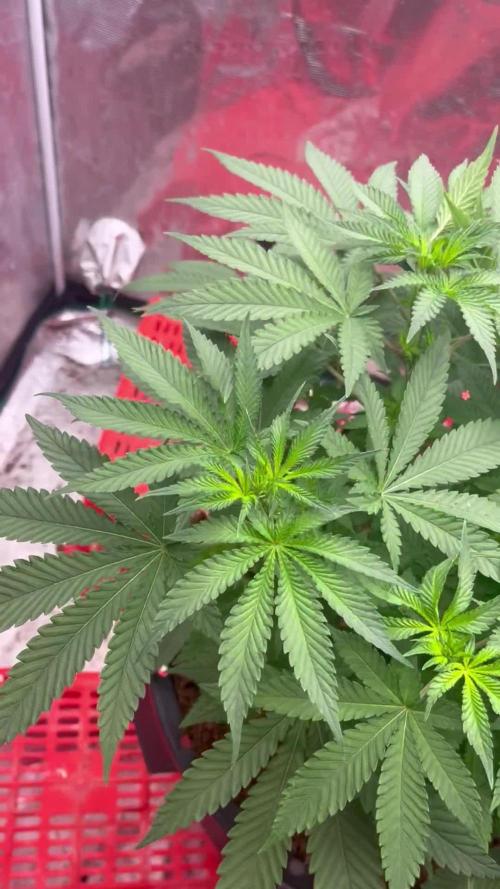
First week of 12/12 went pretty good , she’s got a fair amount of tops from some tie downs and looks green healthy and bushy . Looking to get a bit of a stretch in this week so I can tie down some more and as she does that I’ll continue to clip that bottom 1/3 off .

Likes
158
Share


@ClubRiot
Follow
Tropicanna Banana
Week 14
11L Pot
LED: SP250 (245W) for Flow. Stage
Canna COCO
Mineral Nutrients:
👇
Sensi Cal-Mag Xtra: 1 ml/L
Power House Part A: 1.5 ml/L
Calcium Plus Part B: 1.5 ml/L
Stimulus: 1.5 ml/L
Bud Explosion: 1.5 ml//L

Likes
16
Share

@World_Breeders
Follow
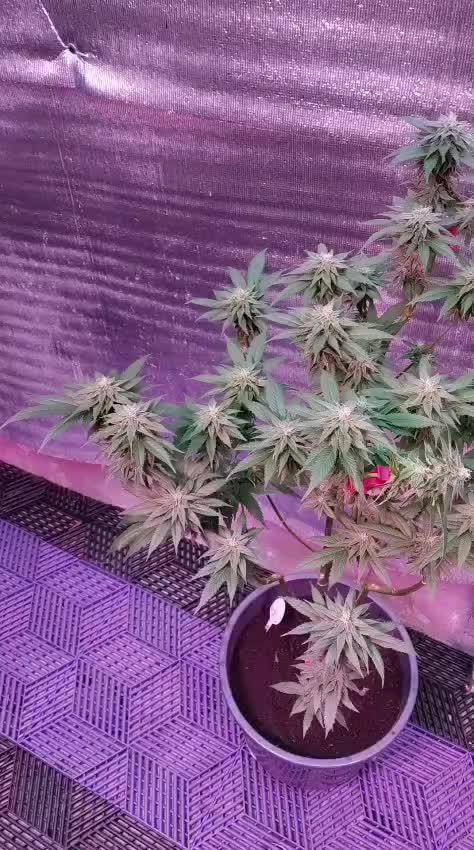
Pink Truffle continues to impress in week 6 with a clear increase in flower density and resin production. The buds are stacking tightly across every branch, creating compact, frosty colas with excellent bag appeal. Trichome coverage is now heavy, extending well onto the sugar leaves, while the terpene profile becomes richer and sweeter. The plant has maintained great structure throughout flowering and is now entering the final ripening stage with outstanding resin potential.
Seeds by World Breeders
Cultivated by Piperoots 🇲🇦 🌱🔥
Likes
Comments
Share

@Space_kydebt
Follow
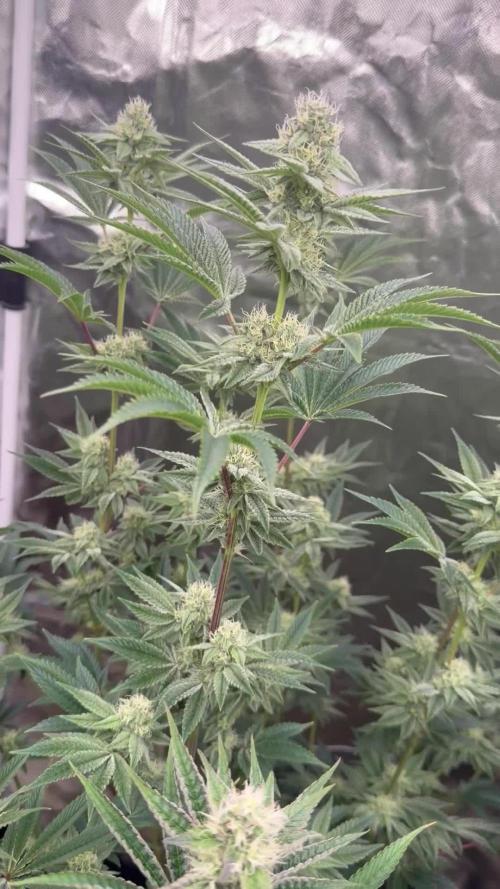
These plants are super tough , I could really find the balance for every but the plants in veg struggle two didn’t pop but one just grew and gave me grace. But that the struggle of popping seed but I got this one one I should cloned for sure give a lot of branching this is a genetic for take the main stem and blend it vs topping a lot people gonna say topping is better but not for all plants to gave that flat canopy that everyone craves for but where are here we live and lean but I love the width and structure of this plant . It did definitely 2.5 it size but if you and 3 to 6 week veg person you should have no problem .. the only thing I think that these seeds don’t have is a good germination ratio so buy ten
Likes
11
Share


@russrahl
Follow
Last week went good, had a bit of a heat issue early on in the week but I got that fixed up and we are sitting around 24c now in lights on and 18c or so in lights out. Humidity is a little low but there doing fine. Topped them yesterday on day 15 at there 3rd internode. Another 2-3 weeks before there flowering tent is ready so I will be adding some insulated tops to them this week with anchor points on them to begin there LST once there new top grow up enough in a week or so. Overall been a good week, got some decent roots now in the water and we will keep moving along. Cheers!💨

Processing
Likes
58
Share


@DailyDabs
Follow
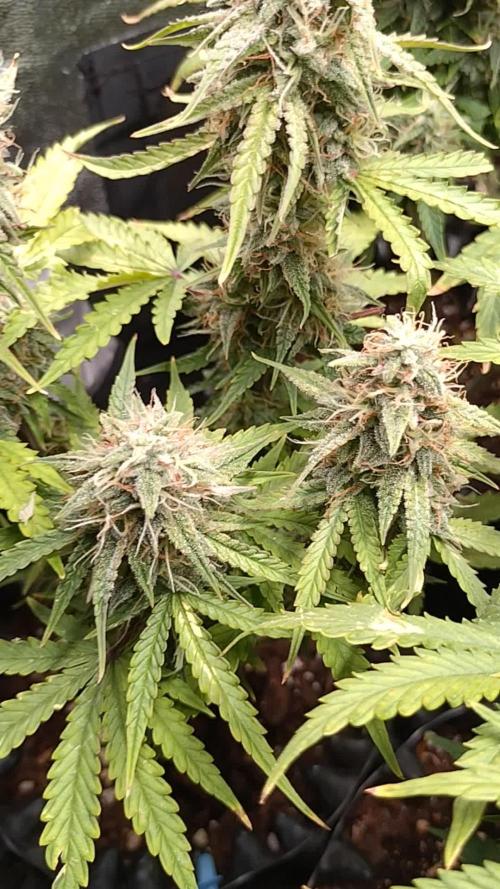
Going into week 8 she is looking great. I just added some cha ching and it looks like she doubled in frostyness over night. Its been a little longer than I thought since I last took some close up pics but I still think it shows a difference,
Likes
2
Share

@PhinolaGreen
Follow
9. Woche
Sie bekommen mittlerweile keinen Dünger mehr, ich denke mal, dass die in 1-2 Wochen Rdy sind.
Freue mich schon drauf die dann zu Smoken 😊

Processing
Likes
8
Share


@ThatoneAKguy
Follow
Here’s the moment I’ve been waiting for! I’ve decided to make some big changes for this round in the evolution of my grow! I’ve decided that since fastbuds has entrusted me with their brand new unreleased genetics to throw everything out the window and go for new, new, new!
First off I’m going to ditch most of general hydroponics nutrients to try out the brand new floraflex nutes because they claim there will be no salt buildup. I have completely ruined 6 pumps, all of my grow totes and every piece of tubing associated with my hydroponics system. Secondly I’m going to set the rockwool aside in trade for the floraflex 6” pot pro system with the “bubbler” using coco as my medium. So let’s get locked and loaded and see just what these unknown ladies are going to do for us.
The featured 3 plants here are a first from them in a photo period fast flowering 50-60 day finish and I have zero additional data.
