


Likes
Comments
Share

@Simba732
Follow
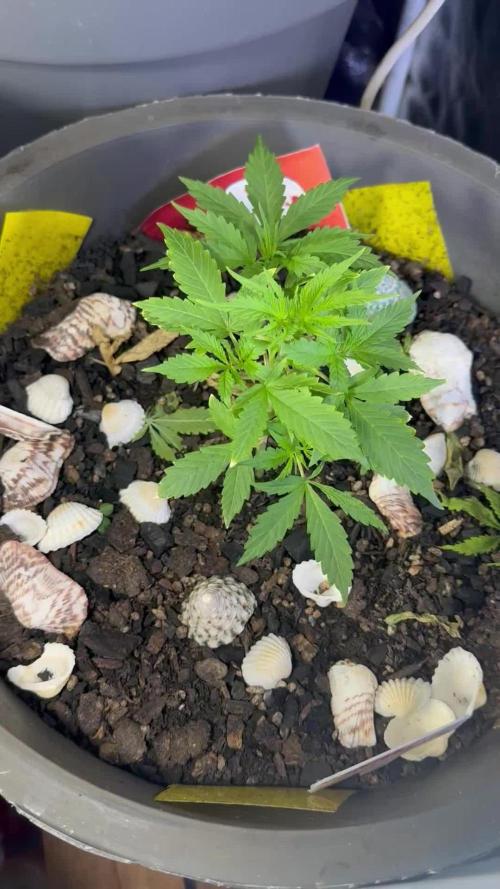
🔘 New week over
🔘Recovery from the training was prompt
🔘She’s running like track star 💫
🔘I added nutes to her water with proper ph to tackle the on going high ph issue.
🔘I can see she’s getting better and thriving
🔘happy growing !

Likes
2
Share

@Nebuloso420
Follow
21.05.2026
What can I say?
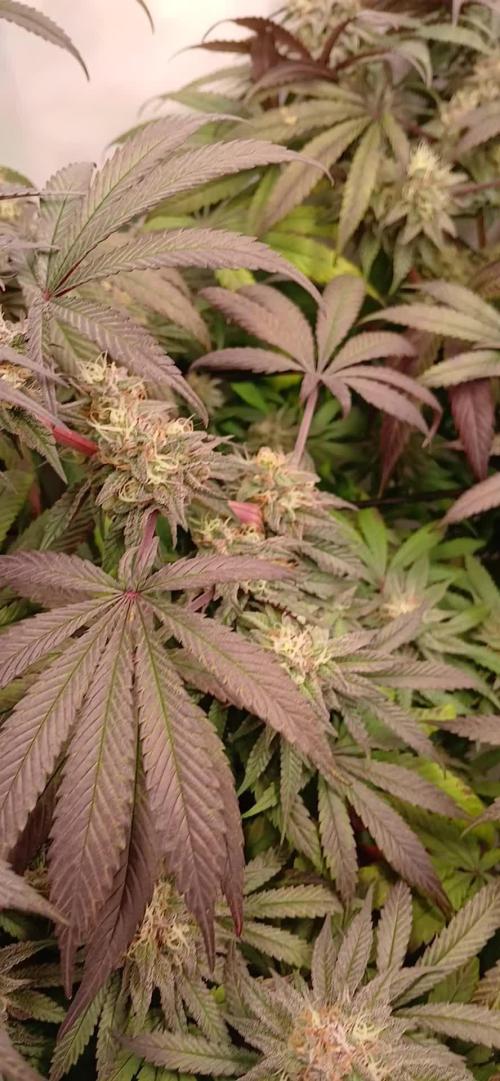
The SuperLemonHaze x Pink Candy is really a vigorous, strong growing plant with a great smell.
With beautiful colors. Its a pleasure growing this plant. Fuck I Missed Out, but it turned out great. She
is stacking up now and the best time begins. Asking myself if I should lower nitrogen already,
which means in my case stop using Biobloom, which also means lowering P/K from this source.
22.05.2026
Gave her 2 liters of water today with only 2g of CompactorBloom on 2.5liters water wich gave me an EC of 1.6
CompactorBloom is a powder wich contains 0-0-60 and is applicated 1 time a week.
Hope my microorganism soil life dont gets fucked and at this moment I think it would have been better to split up the amount on two waterings.
I never watered with an EC over 0.9 before.
Decided to finish Nitrogen at this point because she only has about 2weeks left and its comes from organic sources only.
wont flush this run.

Processing
Likes
12
Share


@jackherer
Follow
Besin miktarlarında değişikli yapmalımıyım çiçeklenme de 30 gün


Likes
7
Share


@I_Identify_As_A_Dan
Follow
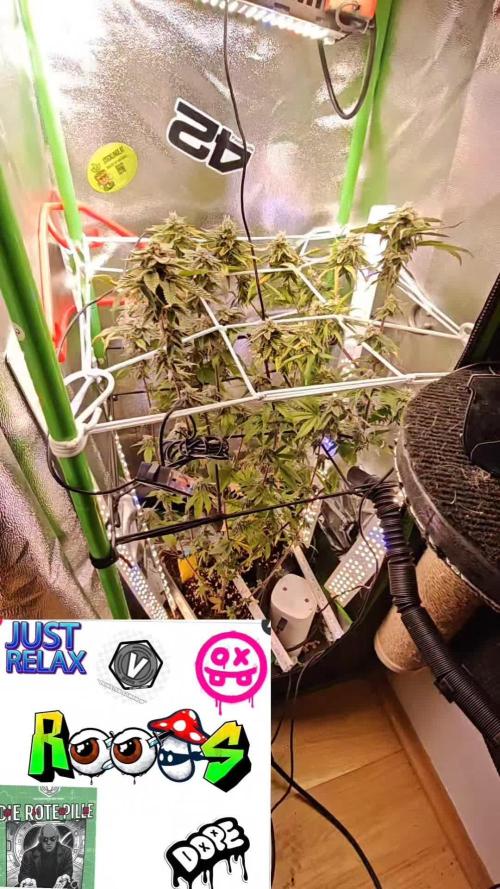
Week 10 for Lemon OG by SSSC,
Even though he started off really slow indoors she's actually seems happier outdoors... didn't show any heat stress even with these crazy temps. Maybe she will start taking off now she's happier? We'll see, would be great to remove her from my runt list😂
Going to train her a little bit more again as 1 of the tops is a little slower than the rest & seems to be getting left behind. So going to try pull them down all to the same height.



Likes
Comments
Share


@SkunkyDog420
Follow
Hallo zusammen 🤙.
Sie wächst sehr schön und macht keine Umstände.

Likes
13
Share


@VeeDro203
Follow
These 2 have slightly different structures. One more purple and heavy jelly smell! The other a lot more pale green purple and a creamy jelly smell. Similar to one of my Miami Miami with the cream

Likes
4
Share


Likes
105
Share


@Natrona
Follow
Frostbanger Plants 1-6
Week 8 May 18– 24
FLOWER 4
Nutrients :
GH Micro 25 ml
GH Gro 10 ml
GH Bloom 30ml
CalMag 30 ml
Recharge 10ml
Green sensation 16.5ml
Power buds 7.5 ml
5/17 PH 6.3, PPM 1130, temp 71
1ltr each
5/18 PH 6.67, PPM 935, temp 68.5 1 ltr each
5/20 PH 6.67, PPM 1330, temp 68.5 2 ltr each
5/21 PH 6.66, PPM 984, temp 69 1 ltr each videos & pics
5/17 Defoliation of yellowing leaves, feed, pics
As I mentioned last week, I must monitor and control the tent environment manually. For the past month, the humidifier has been an issue putting out way too much humidity; often leaving water in the bottom of the tent. In addition, the temperatures are also out of control. I added an AC last week to keep the temperature below 80. I finally determined the exhaust vent is also broken and has been for some time. AC Infinity does not extend the warranty to the replacement parts. I guess that makes sense since they would be in a state of perpetual free replacements. I bought a new one from Amazon that came with a new controller which is different from the controller 69 currently using. I decided that while it is very inconvenient and inefficient to monitor the tent through the day, I would rather finish this Frostbanger run without introducing a new unknown variable. I will continue using 3 circulating fans, the 4” exhaust vent from my 3x3.
I have the AC pushing air in and the exhaust pulling air out. This creates a neutral pressure tent environment-neither positive nor negative.
It looks like growth has stopped and plant height has been reached. Now is the time for buds to fatten and frost up. All 6 of them are short remaining less than 3 ft. They range from 15 to 31 inches. #4, 5 &6 are showing some fade, particularly #4.
Upon opening the tent, a melon smell comes off the buds if I get close, and more stickiness was observed during the process of defoliation. They are living up to the new strain’s name. #5 is the frostiest followed by #2. Wow week 3 of flower and that much frost already. Before FastBuds announced the strain name and characteristics, I was disappointed that FBA2502 could be an indica sleepy strain but the universe provides what you need at the time. The new strain profile indicates a whopping 29%THC with mainly sativa uplifting, euphoric, social effects with sweet fruity flavors which I love and enjoy. In addition, I recently bought a dap press and this strain is frosty and resinous. She will be great to press for live rosin.
FBA2502 is FROSTBANGER. Meet Frostbanger Auto, an autoflowering and Indica-leaning hybrid packing a staggeringly high THC content averaging 29%, making this one of the most potent strains on the market. It was created by Fast Buds through crossbreeding Gorilla Glue and Chemdawg, two equally iconic strains. Growers must know that these difficult-to-grow plants will pose specific challenges in terms of environmental control and nutrition, making them best suited for cultivators with some experience under their belt. The flowering cycle is short, averaging only 50 days, and yields are usually around 300g/m². The Frostbanger Auto flavor and aroma are both mouthwatering with a delightful combination of sweet, fruity, and flowery notes. The high is mainly Sativa-driven with uplifting and happiness-inducing effects that lead to euphoria and a general sense of well-being. You might feel sociable and talkative, but too spacey to say something. Following this surge of energy comes a deepening sense of relaxation, leaving you sedated and completely at ease with the world. Due to its potency and these long-lasting effects, medical patients hail Frostbanger Auto for treating chronic pain, stress, and even depression.
Measurements:
#1 15”
#2 20”
#3 17”
#4 30”
#5 31”
#6 24”
Your likes and comments are appreciated. Thanks for stopping by.
Growers love 💚🌿
💫Natrona💫


Likes
17
Share


@Chubbs
Follow
Weekly update on these three. They'll be getting the chop this week as they're super close to being finished. I'm looking for mostly cloudy trichs on them. Over all Happy Growing
Likes
7
Share


@JandM
Follow
Not much to say this week they only grew two inches last week so the stretch is over now. One of them is getting really frosty the other not so much but it is a little behind schedule since it sprouted crooked and took a little over a week to fix itself.
Likes
10
Share


@MedicinalGrower
Follow
Day 15
Both plants didn't show any stress after transplant. Started with a light feed to introduce nutrient schedule..
Day 21 they look super healthy.
Likes
92
Share


@DogDoctorOfficial
Follow
🌱 Week 1: The Journey Begins! 🌟
Hey Grow Fam! 🙌 We’re off to an epic start with our TrolMaster adventure, and I’m already feeling the love for the setup, the seeds, and the growth happening in the room! So, let’s dive right in and get into the details of this exciting week!
🌿 Germination Update:
Our first Gorilla Melon seed from Fast Buds didn’t sprout, but no worries—round two was a success! 🦍🍈 The second seed has germinated and is looking full of potential. I’m throwing in a Sweet Seeds Papaya Zoap into the germination station too, so we’re keeping this exciting lineup going strong! Germination is such a key part of the journey, and having a healthy start is what it’s all about.
🔧 Room Build & TrolMaster Setup:
The build is coming along beautifully, and I gotta say, the TrolMaster system is blowing my mind! Everything’s under control like magic 🎩✨, and the TM+ app? Wow, just wow. I mean, I can literally be in the bathroom and still keep an eye on the plants—check all the metrics, adjust settings, and fine-tune what I need, all from my phone! 😂💧 This level of control is next level. I’m loving how smooth and seamless it makes managing the room. The gear is just unreal, and seeing it all come together is truly something special.
🌱 Nutrition Talk:
As for feeding, we’re starting light but smart! I’ve begun with 0.15ml of Regulator and 0.25ml of Startbooster per liter for now. I always believe in starting easy and ramping up as the plants develop. These early stages are crucial—balance is everything. For the time being, I feel this is more than enough to keep the babies happy and healthy. 🌿💧 The Regulator is working wonders in maintaining plant structure and health, while the Startbooster is fueling the early root and vegetative growth, laying down a solid foundation for the weeks to come. It’s about getting it right from the start—too much too early can be a killer. Keeping it steady with precision, that’s the goal!
Big Shout-Outs:
To the amazing team at @TrolMaster, @Fast_Buds, @Sweet_Seeds, @AptusHolland, and all the incredible sponsors—I’m beyond grateful for the support! 💚 And to my GrowDiaries fam and followers, you guys make this journey what it is—thank you for the love, and I’m so honored to have you along for this ride. 🙏
We’re just getting started, and I can’t wait to show you what’s next. Stay tuned for more updates, epic builds, gear reviews, and plenty of insight. Don’t forget to follow me on GrowDiaries, YouTube, and IG for exclusive content, and let’s make this grow the best one yet! 🌿🔥
Growers Love to All 💚💚💚
P.S.- A deep dive into the Full Spectrum Quantum Sensor (MBS-PAR):
The Full Spectrum Quantum Sensor (MBS-PAR) is an essential tool for any serious grower looking to optimize their light environment. This sensor measures photosynthetically active radiation (PAR), which refers to the spectrum of light that plants actually use for photosynthesis—typically between 400 and 700 nanometers and more depending .
What makes the MBS-PAR sensor special is its full spectrum capability, meaning it accurately detects not just visible light but also far-red and UV light—which are crucial for maximizing plant growth, development, and flowering. With this tool, I can monitor the exact intensity of light my plants are receiving, making sure they’re getting the optimal levels for every stage of growth.
By using this sensor in my grow room, I’ll be able to ensure that the light distribution is uniform across the canopy. Plus, it allows me to fine-tune the light output from my ThinkGrow LED setup, ensuring my plants are thriving under the best conditions. Whether it’s increasing light during the vegetative phase or fine-tuning it for flowering, the MBS-PAR sensor helps me keep everything on point. And the best part? I can monitor it all through the TrolMaster app, ensuring I can make adjustments whenever needed—even if I’m not in the grow room!
This level of precision means healthier plants, better yields, and maximum efficiency. It’s a game-changer for taking the guesswork out of lighting and getting closer to growing perfection! 🌱💡
Growers Love to All 💚💚💚


Likes
Comments
Share


@Crwfz1
Follow
What a damn Beatiful plant they always fade so nicely like fall color she’s super fat tricomes everywhere perfect little plant I’d say a little over an oz dry and it was super fast it didn’t waist any time stay tuned for the harvest results


Likes
7
Share

@XanHalenTGI
Follow
Weekly Update: Aug 6th
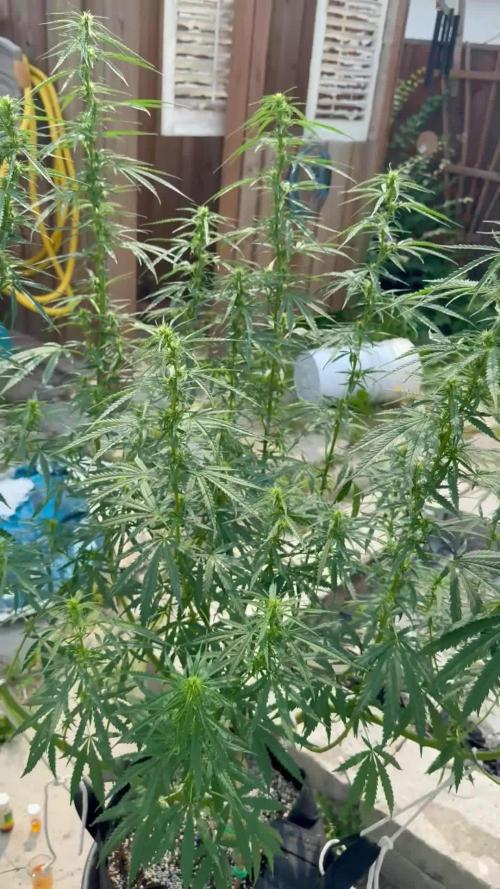
Textbook grow, no significant issues to address, super resistant to high heat which is consistent with the pheno's under high power FS-LED's. Dolomite lime top-dress early on has kept root-zone pH under control, due for another top-dress soon.
10% Runoff @ 2 gal (will be going up to 2.5 gal for 15-20%): 1900ppm, pH 5.5 (meh).