


Likes
Comments
Share

@DogDoctorOfficial
Follow
Harvest & Trim Report — RollerCoaster Haze (Zamnesia Seeds)
Overview
We’ve reached the end of the RollerCoaster Haze ride. After an intense and rewarding flowering period, the girls were harvested and processed with care. This is a full documentation of the final stage: harvest timing, drying method, trimming workflow, kief collection and pressing, and final yields. This harvest produced excellent results from two phenotypes — a true tribute to the genetics and the ecosystem we built around them.
Final dry yields:
• Pheno #3: 138 g (dry, trimmed bud)
• Pheno #2: 224 g (dry, trimmed bud)
Total dry bud: 362 g
We also collected kief and pressed it into a beautiful resinous hash using heat and pressure; this sits alongside the cured flower and will be part of the upcoming smoke review.
⸻
Harvest Timing & Rationale
The decision to harvest was made after careful observation of trichome and pistil development, the overall fade, aroma intensity, and the plants’ finish-line behaviour. The last weeks of the run had been dedicated to ripening: we completed the last balanced feed, then transitioned to plain water and a spectral end-season program (reduced whites/blues, elevated red/far-red/UV). These cues — combined with visible trichome development and the natural fade in the canopy — indicated the plants were ready to come down.
⸻
Cutting & Whole-Plant Drying
• Each plant was cut whole and hung to dry intact.
• Drying duration: two weeks (full-plant hang), at the environment you maintained (consistent conditions around your final stage set point). This allowed a controlled, gradual loss of moisture and preserved aromatic compounds and trichome integrity.
• Drying environment was monitored and managed with the same attention as the grow: consistent airflow, humidity control and gentle circulation to avoid hotspots while preventing too rapid desiccation.
(Notes: this section is a narrative of what i did. For clarity on local rules and safety, always follow local regulations and recommended practices.)
⸻
Trimming Workflow
• After the two-week hang, the plants were moved to a dedicated trimming area and placed in the trim bin for processing.
• Trimming method: primarily hand trim, using delicate, precise trimming tools and patience — “delicatessen and love” as i put it. The emphasis was on preserving trichome-rich surfaces while shaping each bud for appearance and even curing.
• Hand trimming allowed you to selectively manicure the buds, remove the remaining larger fans, and leave the finished colas in a state ideal for curing and later consumption. The results were clean, visually appealing buds with intact resin heads.
⸻
Curing & Storage
• Trimmed buds were carefully placed into Grove Bags for the finish of the cure. The Grove Bags are being used as the controlled environment for the slow biochemical processes that refine aroma, smoothness, and terpene expression.
• The plan is to allow the flower to finish its cure under stable conditions until ready for the smoke review. This prolonged, stable cure should bring out the nuanced haze profile the genetics promise.
⸻
Kief Collection & Resin Press
• While trimming, kief was collected from the trim and from screens. The kief was then pressed into a concentrated resin/hash using heat and pressure.
• The result is a solid, aromatic hash — glossy and packed with the strain’s signature terpenes — a beautiful secondary product from the harvest and a perfect complement to the flower in the smoke review.
⸻
Sensory & Quality Notes
• Aroma: intensely hazy — a dominant hay-sweet note with mature, layered complexity. The smell in the drying/trim room was strong and very characteristic of a classic haze.
• Appearance: colors trending golden to warm yellow tones, heavy frosting of trichomes, dense calyxes and robust colas. The buds visually convey potency and quality.
• Structure: each phenotype expressed the haze identity; long internodes on some branches, dense stacking on others — overall excellent structure that translated into heavy colas and great yields.
⸻
Recap: Seed → Harvest at a Glance
• Germination: pillbox water method; seeds cracked and into soil within 48 hours. Gentle Aptus start mix supported early vigor.
• Vegetative: bottom-watering to promote downward root growth; transplanted and vegged with controlled training and canopy management.
• Flower: early flip to 11/13; progressive nutrition with Aptus + Plagron mix; inner canopy lighting (ICL300) to support middle/low bud development; spectrum tuning (red/far-red/UV) toward the end of flower. Final flush and plain water to finish.
• Harvest: judged by trichome and pistil maturity, aroma, and overall plant condition. Whole-plant hang for two weeks, then hand-trimmed and cured in Grove Bags. Kief collected and pressed to make hash.
• Yield: Pheno #2 — 224 g; Pheno #3 — 138 g (dry, trimmed flower).
⸻
Gratitude & Next Steps
Thank you to everyone who followed this run — your support, questions, and shared passion have been part of what made this project so rewarding. The full smoke review will follow this harvest report and will be presented in 4K on YouTube, where we’ll document the aroma, flavor, burn, and overall experience with both phenotypes and the pressed hash.
📲 Don’t forget to Subscribe and follow me on Instagram and YouTube @DogDoctorOfficial for exclusive content, real-time updates, and behind-the-scenes magic. You won’t want to miss it.
• GrowDiaries Journal: https://growdiaries.com/grower/dogdoctorofficial
• Instagram: https://www.instagram.com/dogdoctorofficial/
• YouTube: https://www.youtube.com/@dogdoctorofficial
⸻
Explore the Gear that Powers My Grow
If you’re curious about the tech I’m using, check out these links:
• Genetics, gear, nutrients, and more – Zamnesia: https://www.zamnesia.com/
• Environmental control & automation – TrolMaster: https://www.trolmaster.eu/
• Advanced LED lighting – Future of Grow: https://www.futureofgrow.com/
• Root and growth nutrition – Aptus Holland: https://aptus-holland.com/
• Nutrient systems & boosters – Plagron: https://plagron.com/en/
• Soil & substrate excellence – PRO-MIX BX: https://www.pthorticulture.com/en-us/products/pro-mix-bx-mycorrhizae
• Curing and storage – Grove Bags: https://grovebags.com/
⸻
We’ve got much more coming as we move through new grow cycles. Trust me, you won’t want to miss the next steps, let’s push the boundaries of indoor horticulture together!
As always, this is shared for educational purposes, aiming to spread understanding and appreciation for this plant. Let’s celebrate it responsibly and continue to learn and grow together.
With true love comes happiness. Always believe in yourself, and always do things expecting nothing and with an open heart. Be a giver, and the universe will give back in ways you could never imagine.
💚 Growers love to all

Likes
2
Share


@Green_Peace
Follow
Won't be a big harvest from this girl, although the buds are fattening up nicely. Will stop adding PK in the next few days before getting ready to flush in the next couple of weeks. This plant is on the left of the timelapse video.


Likes
5
Share

@gse314
Follow
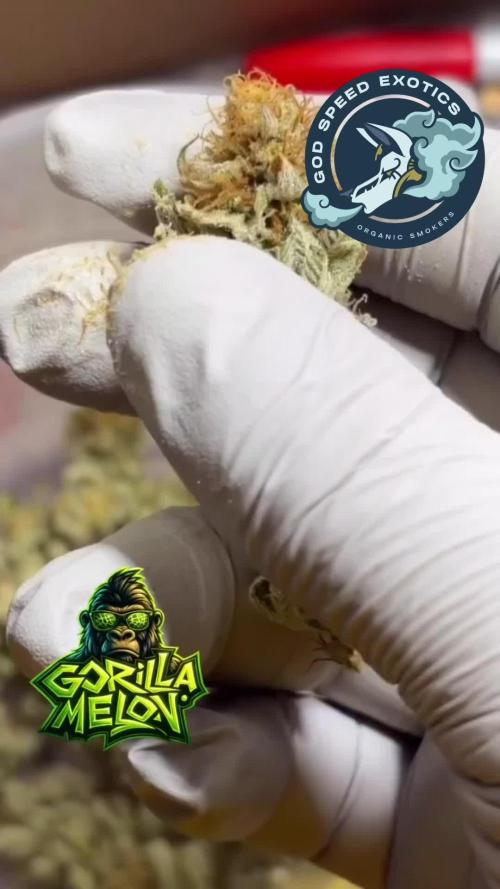
So I ended up cutting early due to light stress at 51 Flowering days but I got nervous I didn’t want the girls to herm going into the finally week of flower I harvested a dry weight of 195g Flower, 69g of was lemon mandarin, 39g trim/shake, so 234g total, the gorilla melon taste good and it’s a chill high feel like it quiets the room around me and reduces sound to a calm level regardless wats happening lol( if that make sense) Def will grow again the lemon mandarin got a sweet citrus taste buts its dank also, and I know if I would of went the full time and had each plant its own light I would of gotten way more so I made sure I bought another sf1000 for the next 4 pot grow


Likes
4
Share

@Growfather1
Follow
Hello everyone.
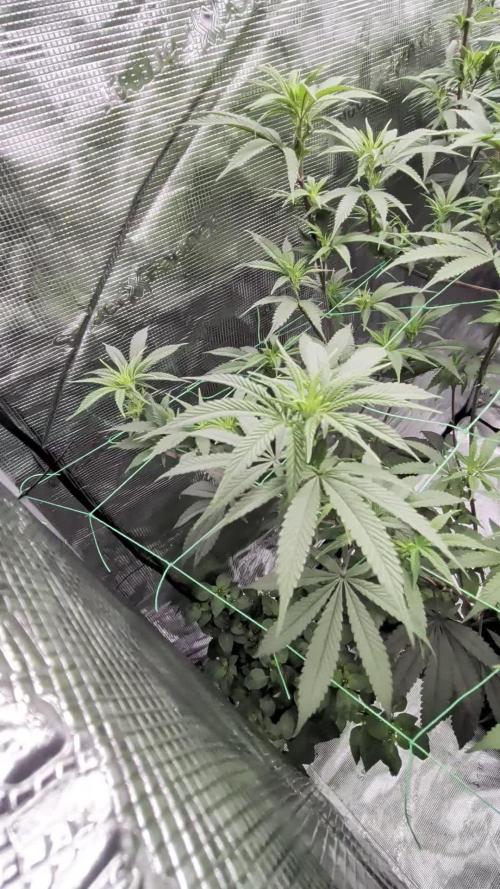
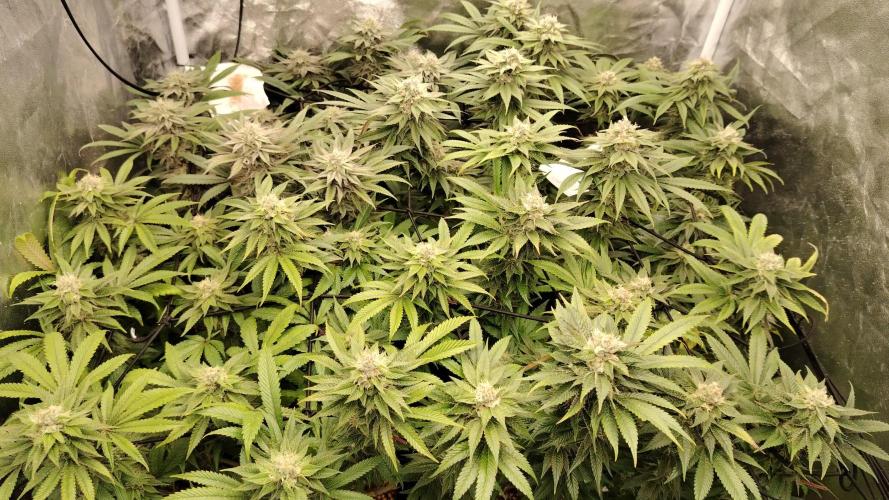
As you can see, the 150 by 150 centimeter tent is filled up almost completely.
There's maybe a little bit of room left in the right corner, but overall it's pretty full, and we still have two weeks of stretch to go.
The amount of branches are quite dense and overlapping making it difficult to give an accurate count without risking an error.
My second MAC 1 F1 hybrid is sleeping at the moment, her first time in flower, so the first time she experienced the sleep, a darkness of 12 hours.
I will update the video tomorrow to add some pictures of her.
The big one in the 150 centimeter tent is today in day eight of flower.
I wish you a nice day.
Best regards,
Growfather.

Likes
6
Share

@gdogfunk
Follow
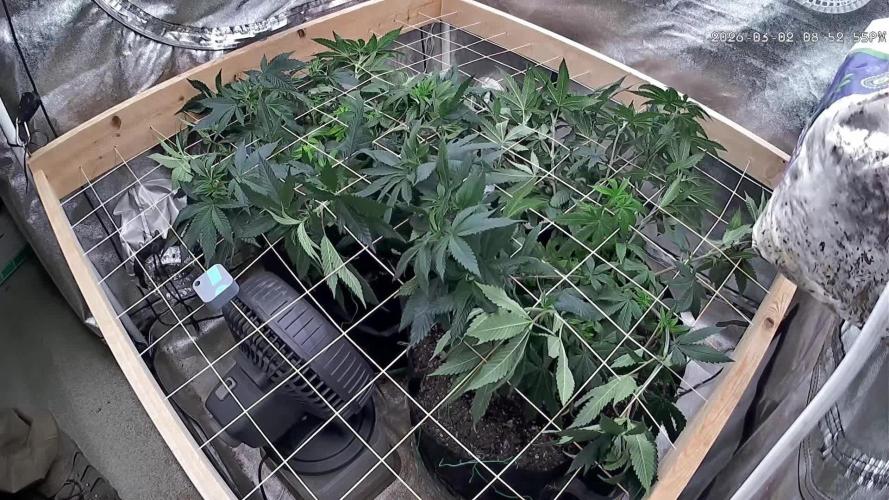
Great strain! It's been awhile since I grew a BF strain and she did not disappoint! Super stony and smells phenomenal in the jar!
Likes
18
Share

@Growtyp
Follow
Sehr schön. Denke 3 bis 4 Wochen noch dann ist ernte.
Autopot läuft sehr gut.
Likes
28
Share


@GodZilla_Owner
Follow
I was on vacation for 9 days, unfortunately I discovered some budrot on the S.A.D. despite the dehumidifier and air conditioning. It is probably also due to the fact that the flowers are extremely compact and hard. It is of course on the side facing away from the fan. It shows once again how important good air circulation is.
Apart from that, it has not been fertilized for a week and has only been watered with tap water. The plants have not had any water for 5 days and are on the verge of drying out.
The harvest will take place in the next few days. I will report further.

Likes
9
Share


Likes
7
Share


@herbcrusted
Follow
As usual Moscow Blueberry is growing fast and hardy, and the Strawberry Cheesecake is happy in her early flowering stage. She’s starting to smell a good bit, and her terp profile so far smells like sweetened coffee! French Macaron’s growth is speeding up now that it’s gotten the chance to grow into its pot. I’m concerned with Northern Lights, as the new growth is twisted and weird. Hopefully I’ll figure out the cause by the end of the week or it may solve itself once the twisted leaves grow out more.


Likes
18
Share


@captainamerica
Follow
2/20/22 I think I have everything dialed in for the most part. Trying to make sure this living soil is staying wet without water the plants too much. Think I need to up it a little, soil in certain areas is drying out much faster than others due to the light mostly. Lowered my light to 18"
I felt deep down, maybe 5-6inches, the soil was dusty dusty dry. I am now actually watering half a gallon to each container around the outside with my garden sprayer. I make sure to get the top inch wet with a mist and then glob some water in there w/o sprayer nozzle 💦💦💦
2/21/22 noticed curling on bottom leaves. Did not change anything
2/22/22 noticing more curling, the beginnings of curling maybe on the second set of leaves 😕? I dropped the fan from speed 5 to speed 2 to hopefully raise the humidity. It's working and is now at a comfortable 57%. Not ideal but much better than 42% for veg 😅
2/23/22 noticing curling on all 4 plants on both the first true leaf sets and second (1 leaf and 3 leaves ea). I moved the light to 24", which is 33% further away and according to my $40 lumen meter, about a 28% reduction in visible light FWIW. Finally put up a little oscillating fan setup on a rudimentary iPad music-stand mount. It's loud as hell, need to look into a quieter fan lol 😆


Processing
Likes
15
Share


@Dico29
Follow
5th week of flower, the plant has stopped growing and focused on the buds.
Both plants look nice, I’m hoping the 3 gallon plant gets fatter before the end though.

Likes
12
Share

@Jardin33ro
Follow
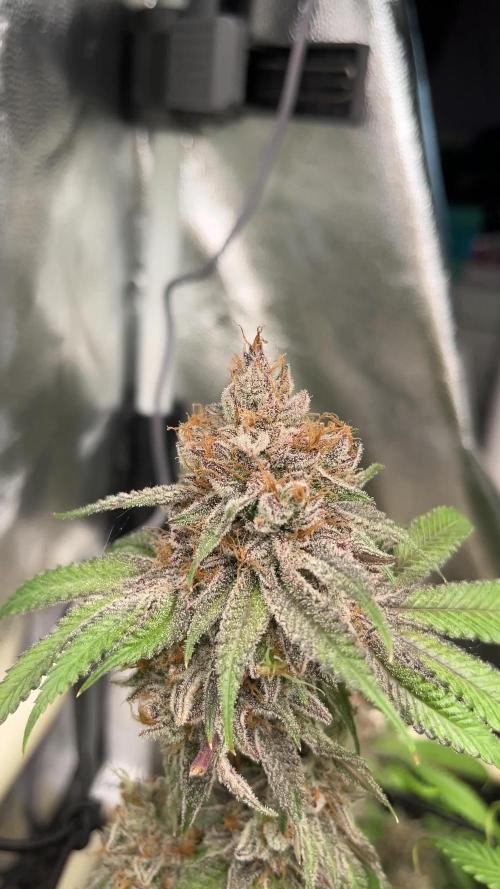
Ya comenzamos con el lavado! Flawless para terminar con un buen sabor y buena ceniza! Tratamos de bajar la EC lo mas cercano a 0 que pueda. Esta es la ultima semana antes del corte, asi llegamos a las fiestas con flores secas y frescas! Muy contento por como se ha dado todo este ciclo, pero con muchas ganas de corregir ciertas cositas que he ido aprendiendo en este cultivo, muy agradecido con la planta y con este aprendizaje! Felicidad absoluta
En la expocannabis de Uruguay pude analizar 2 muestras, f5 y f2. El f5 tiene mayor thc y mas % de terpenos! Mas presencia de limoneno, luego linalol y un poco de myrceno! Mientras el F2 tiene mas presencia de Myrceno, limoneno y linalol. Menos thc que f5 y menos terps, esto ya es otro nivel! Entender quimicamente como esta tu flor, esto otro juego! Saludos Jardin33ro


Likes
9
Share


@Ieiogrow94
Follow
Eccoci di nuovo qui!!!
Super eccitato per questa nuova collab con Anesia Seeds, team davvero al top, che mi ha dato l’opportunità di testare questa nuova genetica e di condividere i progressi con tutti voi!!!
Reggetevi forte.. NON SIETE PRONTI PER LORO... SI SCHERZA
TOP ASSOLUTO DEL CULTIVO UNA PRELIBATEZZA SIA PER IL PALATO CHE PER L'OLFATTO DAVVEROO SCONVOLGENTE..
Strain 2 è un capolavoro faccio davvero i complimenti ad Anesia Seeds che ha sganciato una bomba!!
La consiglio a tutti sia per la facilità di coltivazione che per i risultati al dir poco esagerati in dei vasi da 11l!!
Grazie a tutti per il supporto ❤️🍀🔥

Likes
26
Share


@OGbros
Follow
Ciao growers,
spero abbiate passato un buon natale. Al giorno 28 le piante stanno benone e l'odore inizia a farsi più intenso: aroma dolcissimo, sembra quasi di zucchero filato, incredibile. Ho aggiunto i soliti 10l d'acqua con il tripac floragrow 8ml, floramicro 1,6ml, florabloom 2,4ml. Qualche giorno fa ho comprato lo stimolatore di fioritura della GHE Pro Bloom (ex Biobloom) super concentrato. Questa è la prima volta che uso questo prodotto ma qua sul sito ne ho sentito parlare bene. Ne ho usato 2ml (0.2ml/l). Ho anche alzato la lampada di qualche centimetro (ora sta attorno ai 30cm dalle piante), poichè molte punte delle cime stavano diventando bianche. La lampada un po' più vicina ad alcune cime della glookies (<30cm) che si è allungata di più dell'altra ma mi sembra un peccato sacrificare tutto alzando la lampada per pochi rami più alti. Nel complesso devo dire cha stanno crescendo bene, già dalla scorsa settimana la differenza in grandezza delle cime è evidente. Sono contento.
Ci si sente tra qualche giorno o la prossima settimana, dipende se cambierà qualcosa😄
edit giorno 31: nulla di importante da segnalare, ho aggiunto alla soluzione 20l d'acqua con 0.8ml/l di floragrow, 1.5ml/l di floramicro, 2,4ml/l di florabloom, 0,1ml/l di biobloom e 0,5ml/l di cal mag (tutto dela GHE). Nell'ultima settimana hanno necessitato di più acqua rispetto alle settimane precedenti
edit giorno 34: ho eseguito una piccola defogliazione su entrambe le piante togliendo le foglie che coprivano i siti de fiori almeno superficialmente. A lavoro finito sembrava che avessi messo le mani in della colla talmente erano appiccicose. All'interno entrambe le piante seno una giungla, avrei dovuto pulirle un po' meglio durante la vegetativa (già la defogliazione al ventesimo giorno di fioritura era stata difficoltosa per l'eccessivo numero di rami che non mi permettevano di infilare le mani): moltissime foglie e fiori non ricevono luce purtroppo, mi servirà di lezione per il prossimo ciclo. Anche stavolta ho aggiunto alla soluzione 10 litri d'acqua con 0.8ml/l di floragrow, 1.5ml/l di floramicro, 2,4ml/l di florabloom, 0,1ml/l di biobloom. L'odore si fa veramente intenso
Likes
8
Share


@Solarcradle
Follow
I'm in southern Ontario. Spring is in the air! Humidity levels have risen with rainfall, and temperatures are rising outside and inside my tent. I have been leaving my tent door open during the day and semi-closed at night. Plants in tent do not yet smell and I have my air intake/carbon filter, by VIVOSUN, turned off. During the day my small clip-on fan circulates. At night I let her rest in the cooler air and turn the fan off.
May 2: Watered with a PH of 6.5, always using a bit of vinegar to PH down. Water included a pinky finger tip amount of crushed and stirred eggshells. Shells had been sitting in the water for 1.5 days. Shells did not enter the medium. Just the water they sat in.
