


Likes
Comments
Share


@Jakor420
Follow
un dia de 4ml por litro de BLOOM A+B - Y otro dia BUD CANDY 2ml x litro
un increible crecimiento
muchas ansias de que llegue su momento de cortar


Processing
Likes
10
Share


@YAKDADDYDWC
Follow
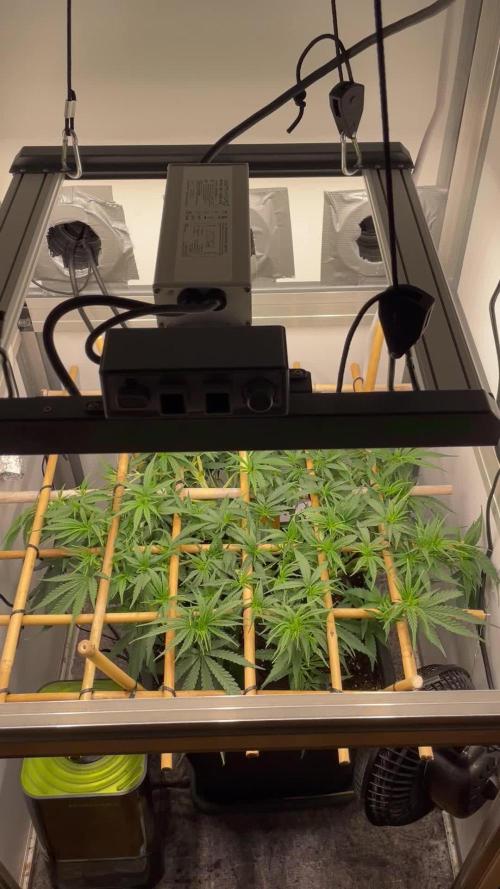
this week has had its ups and downs and if it wasn't for my little apprentice it would have all gone too shit.... she was able to keep everything in the tent stable while i was away!!



Likes
13
Share


@Weedig_Weedigson
Follow
Ich mußte heute mal entlauben. Ganz Plagron typisch keine Mängel oder sonstiges. Der Grow macht Spaß. 😊


Likes
9
Share


@valiotoro
Follow
Hello everyone 👋
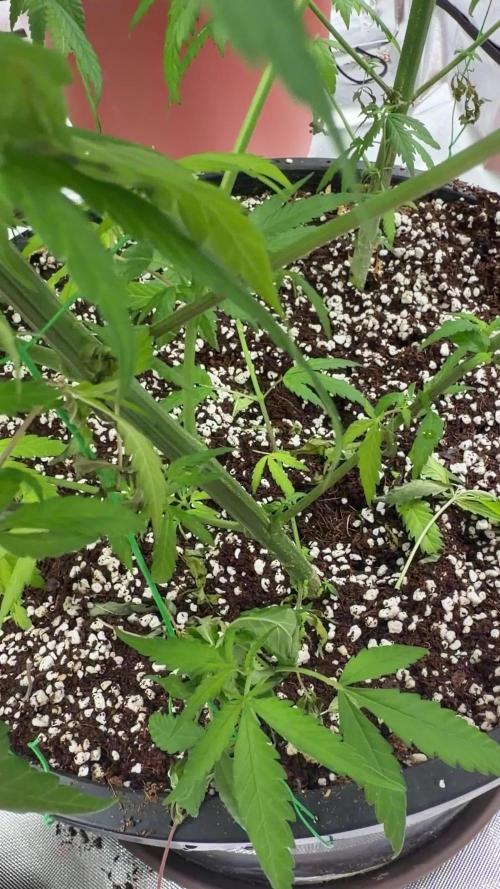
Week 2 for my girl it’s time for Topping & some LST✂️
The Barber topping made with a straight razor

Likes
9
Share

@Flavors
Follow
🌱 Sticky Broccoli – Grow Diary 🌱
Week 12 | Transition Week | Coco + Perlite
This week is the final stage before flower 🌸
Plant is fully mature with a dense, even canopy under the SCROG 🌐
Plan is to take clones from healthy top growth ✂️🌱
Selecting strong branches to preserve genetics before the flip.
One more defoliation will be done to clean up the canopy 🍃
Removing excess fan leaves to maximize light penetration and airflow 🌬️
Structure is dialed in—flat, wide, and ready for stretch 🚀
All bud sites are exposed and positioned evenly.
Plant remains healthy with deep green foliage 💪
No signs of stress going into transition.
Watering consistent with slight runoff 💧
Environment stable and optimized for flip.
📈 Next step: final defoliation, take clones, then flip to flower cycle 🌸🔥
Likes
6
Share


Likes
41
Share


@Skinnytalls420
Follow
Day 15-05/11/21 it’s the Start of week 2 of veg everything is looking good hopefully my Mars hydros are here in next few days!!! Day 16-06/11/21 today plants are looking really good I gave them there first bit of biobizz grow!! Day 17-07/11/21 nothing new today no need for watering probably water tomorrow!!! Day 18-08/11/21 didn’t give them anymore water today but defenitly will be watering tomorrow!!!! Day 19-09/11/21 i gave them all i nice 750ml of water today with biobizz grow all looking good!!! I started a new YouTube so if everyone who reads this could subscribe I would really appreciate it!!! Day 20-10/11/21 nothing new today all looking good!!!! Day 21-11/11/21 nothing new today I tried some training on about 3 of them that u see in the video they don’t seem to need water today but most definitely will tomorrow!!!
Likes
12
Share

@3rnest
Follow
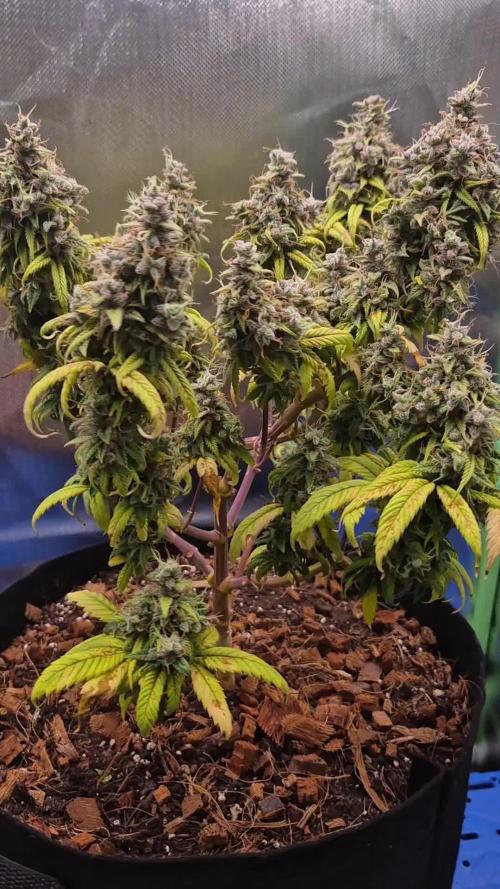
Alle drei Damen wurden geerntet. (Hier zu Amnesia Haze)
Am Ende haben die Blüten noch mal ordentlich zugelegt und wurden schön prall.
Auch war die Blütenzeit kürzer als erwartet und die Trichome hatten sich nach 10 Wochen schön ausgebildet.
Die Blüten sind schön Harzig und den Duft finde ich sehr angenehm.



Likes
6
Share


@StoneyMelony
Follow
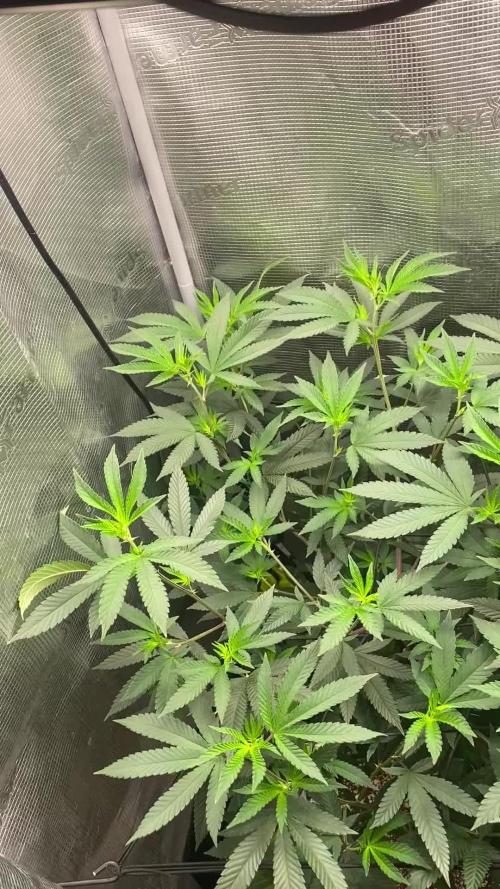
This plant did grow very fast and became very tall, i had to do a lot of LST to keep her under control. The plant has big internodes, so there are a lot of little buds on the plant. Maybe they could have grown a bit bigger if i had given her more nutrient, but she was on the same system as my lemon Kix and she was a bit overfed soon, The bag appeal of these buds are very nice, lots of trichomes very nice !
Likes
21
Share


@gottagrowsometime
Follow
Grew crazy. Really high. Co2 made growth explode and she drank like a horse. At her Height 2L a day. Nutrient feeds every day, or at min every other. Buds were huge but very airy. Very stinky zkittlez / Runtz typical smell. Nice Citrus fruity tones with earthy musky background smell & Taste, fruits range from apple to mango..
8☆, if buds are been dense, would be 9 or 10. Yield was big. But too much foxtailing. Still a very strong 8 ☆
Rougly 1.5kg of high grade, some what larfy bud. But, still of a very high grade.

Likes
3
Share

@Wycofane
Follow
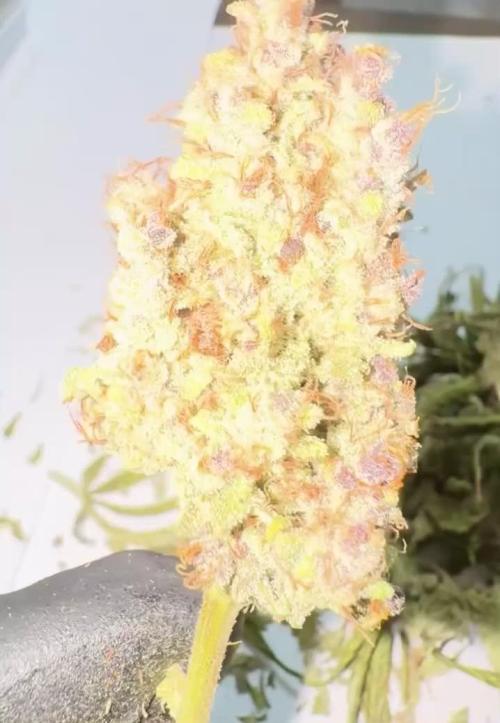
Die Gorilla Cookies wurde nun geerntet, die hälfte habe ich eingefroren um daraus im späteren Verlauf Bubble Hash draus zu waschen.
Die eine Hälfte hat ungefähr 70g Trocken auf die Wage gebracht (Natürlich wurde alles übre 50g vernichtet). Also schätze ich den Ertrag auf 120g-140g trocken. Wunderbare Genetik, wird definitiv wieder gegrowt!
Processing
Likes
2
Share


@mojogrow
Follow
Is a low budget Indoor, with 50x50x1.40 cm made by me :P
idem the leds, are COB 50w each one
Likes
12
Share


@Osito
Follow
Well, we are a few days early from our usual updates, but we are approaching are final weeks of flower and starting to prepare for harvest. We’re going to start flushing this week, but just trying to figure out the most efficient technique for the best results. If you guys have any tips and ideas we are open to all suggestions. But in the meantime, take care, happy growing, and we’ll update soon!
Likes
13
Share

@Suemchen
Follow
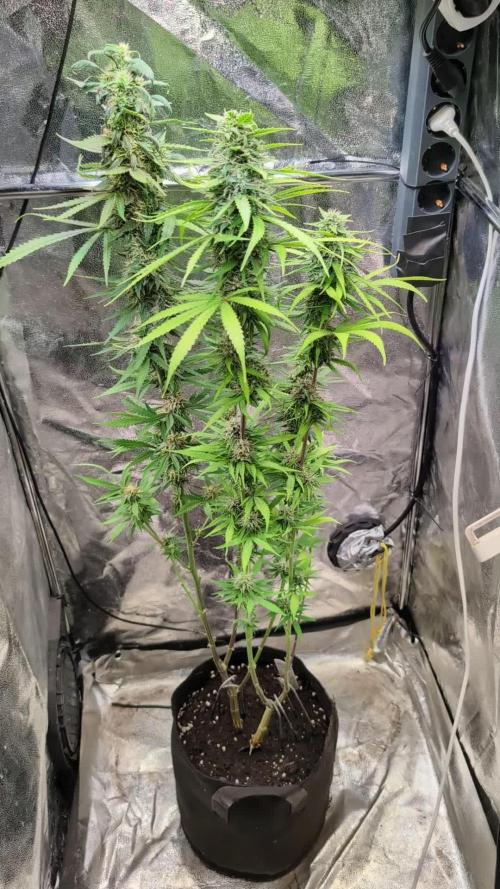
Sanlight EVO 3-60 at 80%
Day 113: looking good and watered again🌊. Watered with rain water, 1 ml/l Cal Mag, and 1 ml/l Green Sensation
Day 115: Watered with rain water, 1 ml/l Cal Mag, and 1 ml/l Green Sensation
Day 119: looking good 👍🏻 watered with out supplements 👌🏻 Just rain water 👍🏻
Likes
9
Share


@Hypnogrow
Follow
Recovery week. Last week everything went to hell this week everything is looking up. Squanch Queen is turning into my favorite one of the bunch. She is super resilient and bounced back quickly, the Skywalker and Quarter Pounder are both going to finish early due to all the stresses and stunting early on in the grow. Squanch Queen looks to be going 9 to 10 weeks inspite of all the issues. Definitely a good strain from Night Owl to pick up if your a beginner, much more forgiving. I definitely want to try the Skywalker again with a better setup. Ph runoff is looking much much better.


Likes
23
Share


@FreeSmokegrows
Follow
Not completely done yet! Still drying this baby I'll update once she's all dried up and hand trimmed.
Likes
8
Share


@eldruida_lamota
Follow
Bueno, aquí están estas candy caramelo de Zambezaseeds, la verdad que esta genética me está gustando tienen bastante densidad y son algo chatas , los nudos están muy juntos y eso me gusta porque el cogollo compacta más a mi parecer.
Sigo regulando las condiciones del ph en cada riego en 6,2 y actualmente no supera el 50% de humedad ni sube de 26 grados.
Estando a finales de mayo not bad por las condiciones climáticas pensé que sería algo más complicado 🤷♂️.
Gracias a Mars hydro y a Zambezaseeds por hacer posible estos proyectos.
.
Www.mars-hydro.com
web: http://bit.ly/2uJAjgy
ts600: http://bit.ly/3cnv0Ev
code: an420
.
Buenos humos fumetillas , las semanas que viene más y mejor 💪🖤.

Likes
13
Share


@GloveGreen
Follow
Hey guys,
Welcome everyone to this Diaries for the Taste of USA by Green House Seeds.
I would like to thank the support of the Green House Seeds Team. Excellent service!
On August 22, taking advantage of the Lunar cycle, 2 seeds of Dark Phoenix genetics were placed for germination. I will now be waiting for the beginning of the life cycle of this Wonderful Genetics that brings in its DNA Trainwreck x Jack Herer, having the following characteristics:
60% SATIVA - 40% INDICA
THC: 20-25% CBG: 0.5-1% CBD: 0%
Thank you Green House Seeds !
For germination I put the seeds in a glass of water for 8 hours. Then I placed it to germinate in Peat + Vermiculite substrate.
Temperature and Humidity are at 25 C° 56 % respectively.
26/08/2021
Fourth day of germination and Look at the wonders! Welcome to Life! A simple tribute To the great Breeder !!
27/08/2021
Sixth day of germination - 2 DP By GHSC .
The seeds of Green House Seeds showing their excellent quality!
Hello everyone today, 08/31/2021, I come to make the last update of the week of germination. From 09/01/2021 the Wonderful Dark Phoenix of Green House Seeds will go on a cycle of Light of 18/6 hours.
Environmental conditions:
Temperature: +/_ 25°C
humidity: 51%
Light:
FL 55 W + FL 36 W (I am unable to invest in a better lighting system).
Watering:
DIY Hydroponic System
Nutritional Solution:
Propia formulation until the arrival of Green House Feeding.
Thanks and I have a great week !!
Phoenix birds ready to fly to life!!
Likes
8
Share

@Mrs_Larimar
Follow
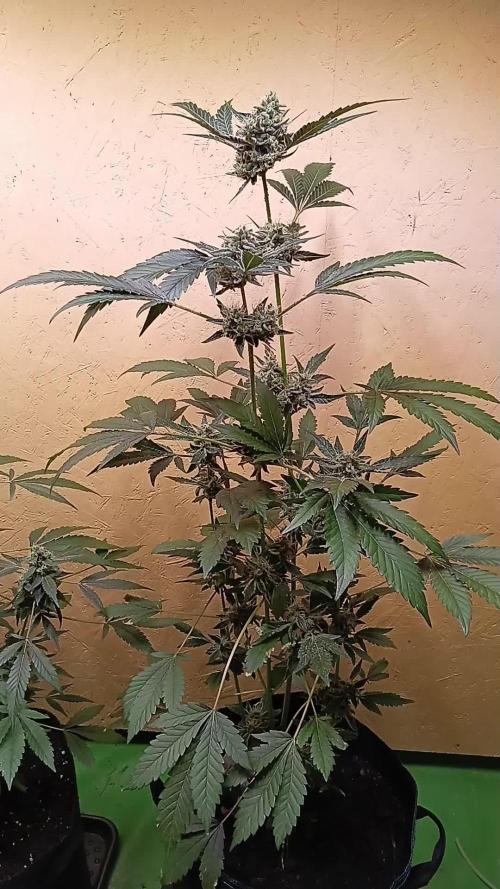
2025-11-30
buds are swelling , the autopot plant is closer to be ready, shes covered in trichomes, and the pistils starting to change.
the handwatered Girl doing her best
Multi-Setup Grow Comparison - started September 8th, 2025
🌟 Strain Profile: Permanent Marker
🏆 Breeder Information
Genetics: Award-winning strain - Leafly's Strain of the Year 2023
Breeder: JBeezy @ Seed Junky Genetics
Potency: Up to 31% THC
Aroma Profile: Floral base with soap & gas notes
🔬 Experimental Setup Overview
Total Plants: 3 seeds
Goal: Comparative analysis across different growing methods
🌱 Setup Configurations
Setup #1 -Biotabs " water-only strategy"
Container: 35L Smart Pots
Nutrients: Biotabs "Water-Only" strategy
💧 Watering: Manual feeding schedule
📍 Location: Standard grow space
Setup #2 - autopot system
🏺 Container: 35L Flex Pots
Nutrients: Biotabs "Water-Only" strategy
💧 Watering: Autopot automated system
📍 Location: Autopot station
Setup #3 - Alternative Organic Method
🏺 Container: 35l flexpot
Nurients: Alternative organic nutrient line
💧 Watering: [To be documented]
📝 Note: Separate diary documentation
📊 Expected Outcomes
Comparative Analysis:
⚙️ Automation impact on plant development
Nutrient system efficiency comparison
💧Water management effectiveness
📅 Timeline Status
Current Stage: flowering
Next Update: Weekly progress documentation
🔍 Research Focus
This comparative study will provide insights into:
Automation vs manual care benefits
Biotabs system consistency across setups