


Likes
Comments
Share

@Rangaku
Follow
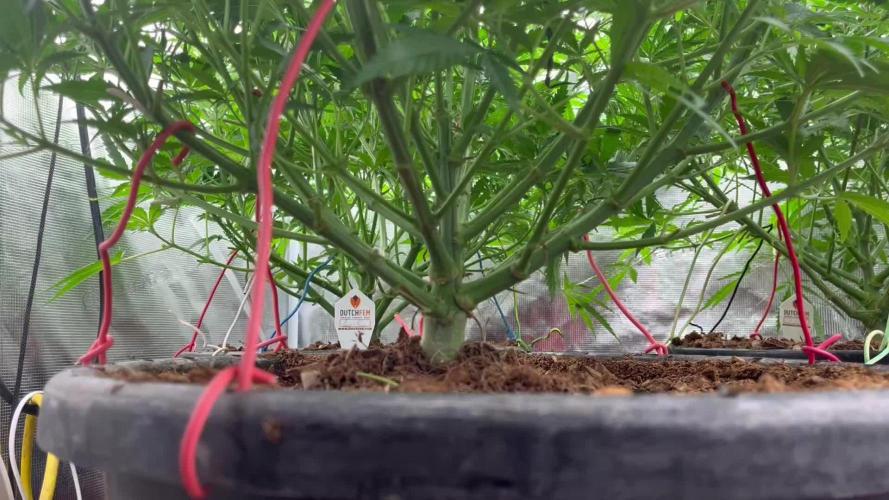
Vegged out nice , healthy strong and green . She took her tie down like a champ and showing plenty of tops . Switching to 12-12 tomorrow, bring on the stretc

Likes
5
Share


@cookingwithninja
Follow
7ft tall doing high stress training to bend down. Tent is maxed. All under control
day21 frosty oh my!

Likes
154
Share


@Tropicannibis_Todd
Follow
💩Holy Crap Growmies We Are Back💩
Code Name FBT2311
Well growmies we are at 21 days in and everything is going great 👌
👉So the low stress training been going well 👈 We got some major Pre-flower showing already 👌 let the stretch begin 💪
Lights being readjusted and chart updated .........👍rain water to be used entire growth👈
👉I used NutriNPK for nutrients for my grows and welcome anyone to give them a try .👈
👉 www.nutrinpk.com 👈
NutriNPK Cal MAG 14-0-14
NutriNPK Grow 28-14-14
NutriNPK Bloom 8-20-30
NutriNPK Bloom Booster 0-52-34
I GOT MULTIPLE DIARIES ON THE GO 😱 please check them out 😎
👉THANKS FOR TAKING THE TIME TO GO OVER MY DIARIES 👈

Processing
Likes
15
Share


@eldruida_lamota
Follow
Que pasa familia, traemos la segunda semana de floración de nuestras crazy cookies y la verdad es que se ven sanas y vigorosas, ya comienzan a verse pelos y a formarse nuestras flores.
Ph controlado 6,5 . Maximas de 28 y mínimas de 19, hemos cambiado la bombilla esta semana por una nueva de 400w HPS de sylvania.
Veremos cómo avanzan la semana que viene.


Likes
13
Share


@Swamp81
Follow
Week 3 - doing very well!
Moved the plants to an attic room in my house and positioned them under a sky light - seem to be thriving now. I taped some tinfoil around the plants to maximise sunlight.
Vegetation looks healthy and I have been watering sporadically when needed. No signs of any problems or stress, fingers crossed!
Thinking about repotting them into their final, larger containers soon. Nothing added in terms of nutrients or anything like that!
So far, so good. Let's hope they stay on track.

Likes
17
Share

@CannaArchive
Follow
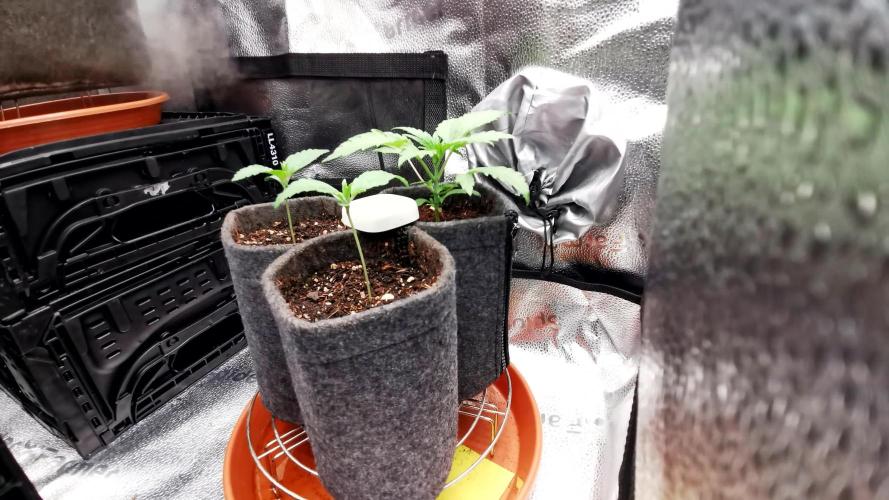
Growth Stage: Early Vegetative
Environment:
Temperature: ~23 °C
Humidity: ~65 % RH
Light cycle: 20/4
Light intensity: ~250–300 PPFD
Watering / Feeding:
The plant was grown in a 1 L pot and watered carefully with around 300 ml per watering, depending on pot weight.
Only water + CalMag (Advanced Nutrients) was used during this week. No base nutrients were added.
Observations:
During Week 2, the Jelly Donutz was moved into the grow tent, which helped the plant recover very well from the difficult seedling stage. Growth stabilized quickly, and the plant continued its development in a much more normal and healthy way.
Leaf color looks healthy, structure improved noticeably, and overall vigor increased throughout the week.
Even though temperatures were slightly cooler, the plant adapted well and showed no further signs of early stress.
Training / Work Done:
No training was applied. The focus was fully on recovery and establishing stable vegetative growth.
Notes:
Week 2 was an important recovery phase. With stable conditions and gentle feeding, the plant built a solid foundation for stronger vegetative growth in the following weeks.

Likes
8
Share


@Piro420
Follow
Getting a little crispy on the tops within 1 inch of the light. But all and all plant is healthy happy and starting to smell wonderful. Looking like a full 9 weeks of flower needed.
Likes
14
Share


@ConspiracyFly
Follow
The little plant is growing well in height and width
This week I used a liter and a half of water
I put two tablespoons of horse manure on pallets on top and covered it with normal substrate
I increased the brightness to 10000 Luxs
I keep the distance of the LED 50 cm from the plant
Started LST plant training


Likes
7
Share


@Pjm70
Follow
She is moving right along. She comes inside at night. She makes the entire garage stink and the hallway leading to it.
She is a few days into the week. The weather has been cloudy from the hurricane. She is drinking a lot less, have not had to water her in a few days.
Supposed to be cloudy for a few more days. She is close to being done, 1 or 2 weeks tops and she will be harvested.
10/2 Day 108. She is drinking very little, it has been very cloudy outside. Don't like her pot sitting around wet. Although at this point there is very little that could cause a serious problem
She either comes in the garage or stays on the porch and maybe gets a fan blowing on her. Depending on the humidity. Last couple of days humidity has been in the 50s and windy.
I am guessing 1 possibly 2 weeks and she will be harvest ready. First site of an amber tricomb and she is coming down.
9/4 Day 109. Cloudy out and her pot is still heavy. The last time I watered her could be considered a flush. She is on plain water until harvest. She smells so good, very hard to describe, a fruity diesel.
9/5 day 110 Another cloudy and rain day. Will harvest soon. Don't want anything going wrong, I am too close.
9/6 day 111 finally a sunny day after a week of rain or clouds. She is close to being done. The first amber tricomb I see and she is coming down.
Likes
39
Share


@BubbleWeedMasterKush
Follow
Ce fut une bonne semaine dans l'ensemble. J'ai augmenté la dose de l'engrais de base à 4,5ml/l. Les feuilles du bas ont commencé à jaunir sur un plant. Les autres sont encore verts foncés pour certains, quelques feuilles sont tombées aussi. J'ai coupé certaines branches du bas pour améliorer la qualité de celles supérieures mais pas sur tous les plants. Quand j'ai arrosé avec les engrais, un ppm de 650 et un pH de 5,75. J'ai attendu quatre jours puis j'ai arrosé à l'eau Mont roucous ( pH 6 indiqué mais des fois plus faible, et ppm constamment à 14) à raison de 1 litre par pot. La température le weekend fut gérée bien, entre 24 et 26 degrés, au niveau de la canopée, sinon la semaine, c'est entre 29 et 33 degrés ( pendant la journée) portes fermées
Likes
18
Share

@TrickzGrowz
Follow
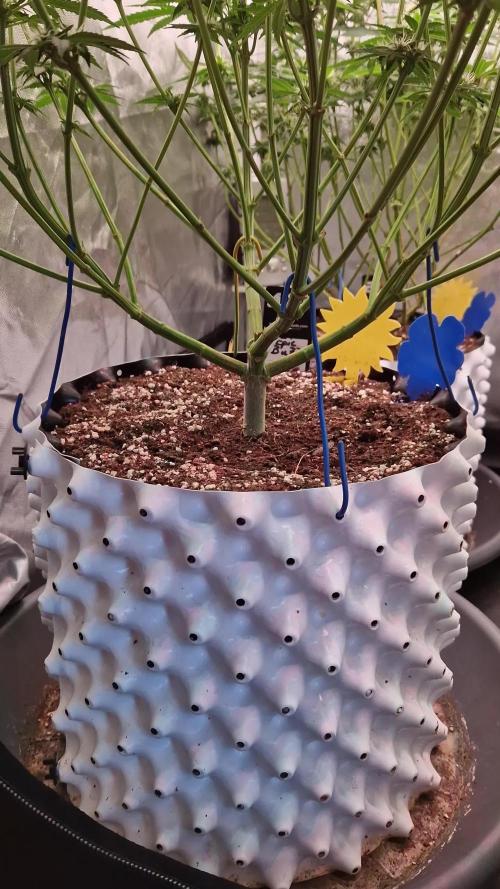
Die Epic Buzz entwickelt langsam richtig haarige Köpfchen. Ich hab das Scrognetz reingemacht damit die anderen Ladys nicht so sehr abhauen noch.

Likes
13
Share


@GrowerGaz
Follow
The autopots are flying now , you can see the Cuppa T has gone from the biggest to the smallest plant. In 10 days. I have been defoliating daily as the plants are growing so fast now. Will flip on Monday hopefully there should be a new flowering light arriving soon, a slight upgrade. I have also been giving the plants a weekly foliar feed with some of the KNF nutrients I have , FAA (Fish Amino Acid) WCAP ( Water Soluable Calcium Phosphate ) and LAB ( Lacto Bacillus )


Likes
4
Share


@trigs
Follow
She is starting to stretch into flower here, and this is where my notes stopped on 7/14/2023 until 8/13/2023.
Switched to 24hrs to try to get some more growth out of her. Absolutely explosive growth and I am in shock.
Been training her down with those LST clips and gently bending branches/the main cola.

Likes
12
Share

@Xpie77
Follow
GrowDiary Verslag: The Bird × Red Wine – Feminized F1 Pheno-Hunt (Week 6 Bloei)
Kweker: Xpie77
Datum: 11 januari 2026
Strain: The Bird (Sensi Seeds) × Red Wine (Seeds Genetics) – zelfgemaakte feminized F1-zaadjes
Aantal planten: 16 stuks
Huidige fase: Week 6 bloei
Foto-update (Week 6)
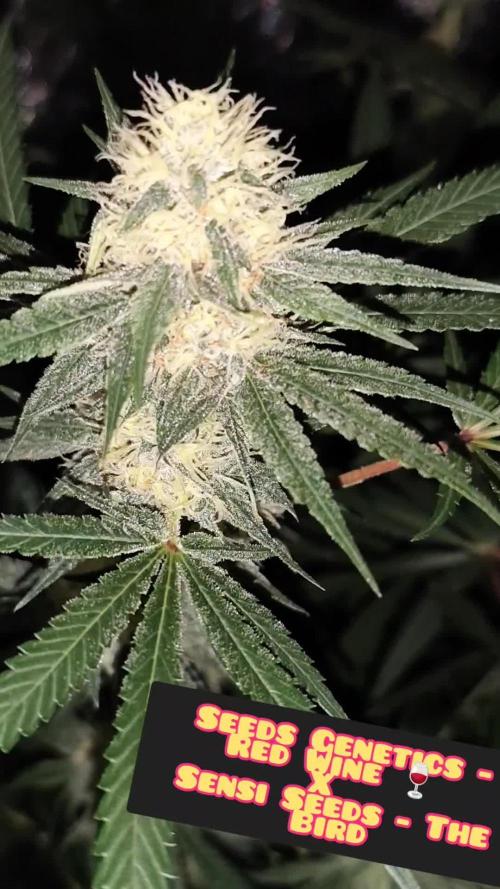
Hier een close-up van één van de buds in week 6 – kijk die insane trichome-laag! De hele top is bedekt met een dikke laag frost, alles glinstert onder het licht. Nog steeds voornamelijk groen, maar de pistillen worden dikker en donkerder, en er zit al een lichte paarse gloed in de calyxen bij sommige pheno’s. De echte paarse/blackout kleuren laten nog even op zich wachten, maar de resin-productie is nu al next level.
De bud ziet er super gezond en harsachtig uit – precies wat je wilt zien in week 6 van een indica-dominante kruising zoals deze.
Stand van zaken in Week 6
De 16 planten zijn in volle ontwikkeling en de bloei versnelt echt:
Bud-ontwikkeling: Buds zwellen flink op, calyxen worden groter en dikker. De toppen beginnen compact te worden.
Trichome-productie: Mega frost overal! Sugar leaves en buds zitten onder de hars – veel pheno’s lijken nu al harvest-ready qua trichomes (maar nog niet qua kleur/rijpheid).
Kleur: Nog grotendeels groen, met lichte paarse hints bij een paar planten. Ik hou de nachttemperatuur laag om de anthocyaninen te boosten – verwacht meer paars in week 7-8.
Aroma: Wordt steeds intenser in de tent: zoete druiven/bessen (Red Wine) met een gassy/funky punch (The Bird). Ruikt nu al als een premium strain.
Gezondheid: Topconditie. Bladeren donkergroen, geen tekorten, goede stretch voorbij, alles gelijkmatig.
Wat te verwachten de komende weken
Nog 2-4 weken bloei (afhankelijk per pheno: 8-10 weken totaal).
Buds harden verder op en trichomes gaan van helder → milky → amber (tijd om te checken met loep!).
Hopelijk meer kleurverkleuring bij de Red Wine-dominante pheno’s.
Beginnen met lichte flush richting het einde.
Conclusie
Week 6 is waar het echt spannend wordt – de frost is insane en de potentie schreeuwt eruit. Deze The Bird × Red Wine F1’s ontwikkelen zich prachtig, en met zoveel variatie in de 16 planten ga ik zeker een paar absolute killers vinden. Nog geen paars spektakel, maar de resin-laag maakt het al de moeite waard!
Stay tuned voor week 7/8 – dan komt de echte magie. 🍇✈️🐦
#TheBird #RedWine #F1PhenoHunt #FeminizedSeeds #ColloidalSilver #Week6Bloom #GrowDiaries #CannabisBreeding #Xpie77
Wat denken jullie: hoeveel weken nog tot harvest, en gaat het paars nog komen? Drop je voorspelling! 🔥


Processing
Likes
29
Share


@Grey_Wolf
Follow
Ginger Nut Cookies and Aussie music videos week six Thursday 6th feb 2020
Hi Growers well I decided to bite the bullet and attempt some LST and topping , I gently bent it over and tied each branch down to a predrilled hole in the pot with some soft wire. I then topped each node that was showing. If any one has any extra tips or advice on how I should go about my training I would welcome it as I am still learning .
This girl is definately showing some Indica dominant characteristics about her and looks nice and healthy.
I will continue to train the branches as they grow and tuck fan leaves that block light .
Now for the Music Videos ######
This Week I chose two songs from two different Music Videos and two different artists both spreading the message about Reconciliation and land rights for our Indigenous
Brothers and sisters here in Australia . This is something I feel is very important and is still a major issue over 200 years later. The first song and video is from Yothu Yindi which is an Aboriginal based group with their hit song "Treaty" heres the link for that video
https://youtu.be/Jf-jHCdafZY and their is a brief snippet of it above in the pics and vids for this weeks update.
Song and video number two is from a Group called Midnight Oil and this one is also all about giving back to the Indigenous. And basically giving them the oppurtunity to make decisions for themselves based on their own culture and beliefs and not what the politicians say they should. Here is the link for that one I hope you enjoy
https://youtu.be/ejorQVy3m8E
I will be back next week with another growth update and more Aussie music Videos 👍 Grey_Wolf 6th Feb 2020
Likes
28
Share


@Salgeezi
Follow
I know people say wait til end of week 3 to defoliate but I was too impatient. Did it a few days early. Never cut basically every fan leaf before lol. But she seemed to take it okay.
Grew another inch or two after that. EC is at about 1000 now still 5x a day. Just feeding a smaller amount. With all the leaves off the ladies are not drinking as much. Temps at 80F with humidity around 65.

Likes
14
Share


@EaRtH
Follow
27.4. - Plants are looking nice and healthy, buds are getting bigger, smell is improving too. Still worried a bit about the yellowing, but I think it slowed down. Also, I'm fitting a bit with humidity. However, still better than last round 😎
28.4. - Watered 💧
30.4. - Buds are getting bigger and fatter each day. Even the smell is starting to get stronger. Watered 💧
2.5. - Watered 💧
3.5. Week wrap-up: Everything goes smoothly for now. I am still fighting with humidity level raising after watering, but it seems that airflow is good. Buds are getting fatter and smellier 😎 I am already excited for the final results, even though I still have some weeks left.
27.4. - 3.5.2024
Likes
3
Share

@Grasshopper96
Follow
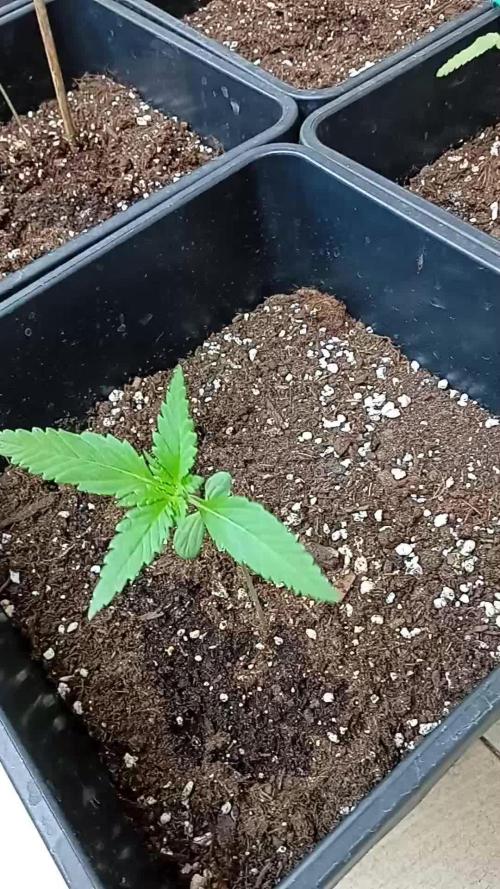
Thiss week start Better , the plant grow and make new couple of leaves, i Hope this plant grow much😁
Likes
19
Share


@RFarm21
Follow
Olá growmies.
Regada dia 17 Dezembro, nutrientes misturadas em 2l de água. Runoff pH: 6.5/ EC: 2.09


