



@BLAZED
Follow
Average conditions 12 days dry period:
Temps: 20.2 to 22.4 degrees
Humidity: 57.4% to 61.7%
Results:
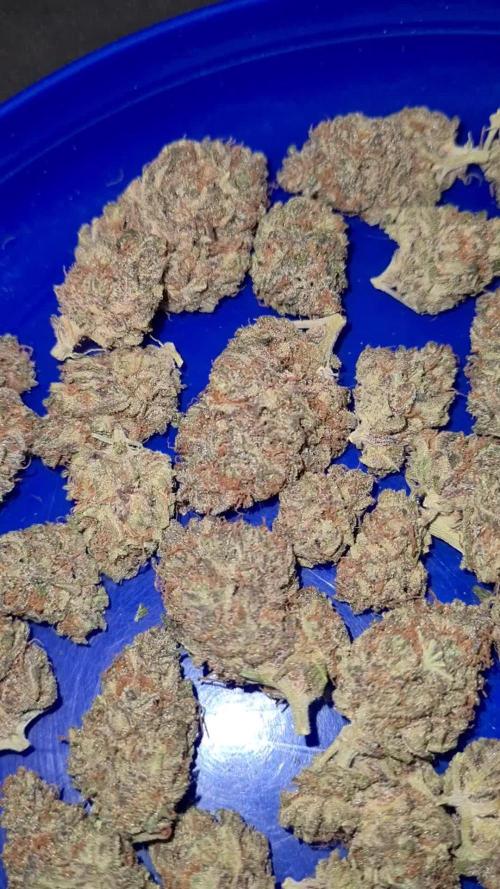
White Widow #1: Buds: 82 grams. Trim: 36.04 grams.
White Widow #2: Buds: 87 grams. Trim: 34.54 grams.
Total gram per watt: 2.22
Thanks for following this journey! See you in the next one!
(Will add smoke report soon)



@Suemchen
Follow
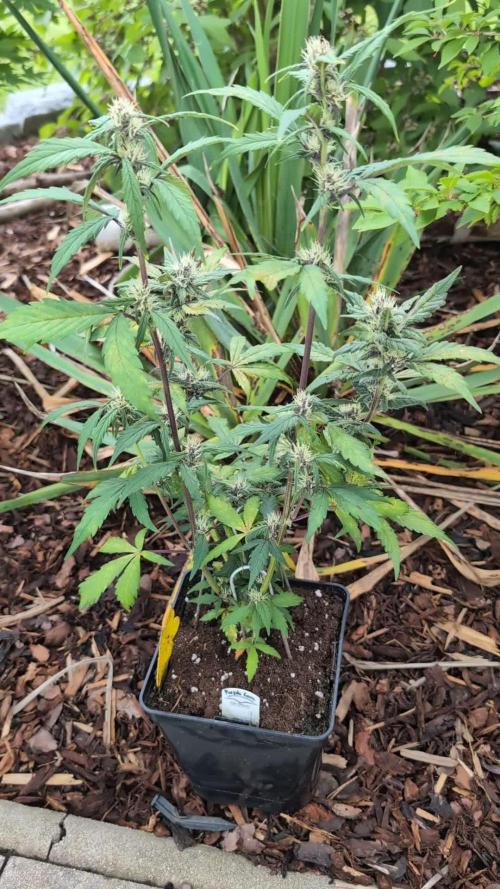
Outside during the day INSIDE during the night
Day 44-54: On Vacation, automatic watering with Rain water.
Day 54: Automatic watering system Watered way to much ?. Better than Last year though 🤣. She streched quit a Bit. Letting the soil dry out and then I'll see how she took IT.🙏
Day 55: looking better 🤗, needs more Magnesium and the soil is still very wet. Needs to dry out more👌🏻
Day 56: looking good 🤗 almost dry🤗



@Still_Smoq
Follow
📆 Week 14, 11 - 17 April 2024
11 April - Cut off all yellowing leaves. Reduced light power to 50%. Began the Flush.
12-13 April - Flushed plant.
14 April - Harvested plant and hung in closet for drying.
15-17 April - Continued to hang in closet for drying.
📑 I decided to trim this plant before hanging because of its size, and having the time to dedicate to it. Either way it would have been sticky. It will hang it for 7-10 days in a somewhat climate controlled closet with a RH 60% and temperature of 65 degrees F using a small fan for circulation. Then it will be cut and placed into 1 quart mason jars with Boveda 62% TerpShield, and burped daily until a RH of 62% is maintained for long term storage.
Overall Grow Review:
With all environmental conditions staying within ideal throughout the grow, I am impressed with the size of these buds and resin production. But she was not on the bigger side of the auto family varieties as far as yield. I contribute this to size of the plant. The breeder claims a height of 100 centimeters, where this plant only achieved about 75. Time of harvest from seed the breeder claims 65-70 days. I did have to add an additional week of flowering to get her matured due to the higher sativa genetics, but that was expected. The time of this harvest was 94 days (42 veg, 52 flower). Would I grow it again? Absolutely!
As with any autoflower I’ve grown in hydroponics, they have taken this long, under these conditions, without any major manipulation - seed to harvest just over 90 days. The only major differences are size of plant, and type of bud - not time to grow and properly mature.
I did not get the wet bud weight. I still can’t understand the reason for this number, it is the most irrelevant thing to add in this process because it just doesn’t matter. My opinion.
Smoq Review:
She has a nice profile of terps and the taste doesn’t leave your mouth dry. The high is very pleasant and makes you feel energetic and talkative, leading into an evening of good times.
There is not a lot to say when the it’s the right one for anytime, recreational or medicinal, it’s definitely a depression eliminator!
🍶 11 April nutrient changed to RO water
💧 Using reverse osmosis water with EC/TDS at 0
🔆 Light power at 50%, DLI 40-45 canopy coverage at 12hrs
😤 Using PYPABL, Air Pump, 400GPH
That is it for this grow. Thanks for the looks, reads and stopping by.





@Roberts
Follow
Plant grew very well overall. Will join my monster auto flower collection. Unfortunately my harvest video was corrupted during filming, and I lost the footage. 😢😭🤬. Pretty much explains my feelings. Plant has a great citrus smell, and grew massive. It loved the Viparspectra P4000 light. Thanks again PEV
Thank you grow diaries community for all the support. I greatly appreciate the likes, follows, and subscriptions on my YouTube channel. Happy growing everyone 🌱🌱🌱





@DogDoctorOfficial
Follow
# 💙 Project Blue Tent – Week 12 💙
## 🥒 Pickle Lemon Haze F1 – Pheno A
### 🌸 Same Tent. Same Ecosystem. Another Ridiculously Frosty Girl! ❄️😂
Hello everyone, and welcome back to another chapter of Project Blue Tent! 💙🌱
And here we go again...
ANOTHER GIRL LOOKING ABSOLUTELY OUTSTANDING! 😂❄️
Seriously, my friends, what is happening inside this tent?
Every time I think the flowers can't look any frostier, I take another look at the plants, grab the camera, and end up spending far too much time staring at the photographs.
And Pickle Lemon Haze F1 Pheno A?
She's giving us plenty of reasons to do exactly that!
Welcome to Week 12 of our journey, where the major structural work is behind us, the ecosystem is running beautifully, and our attention is increasingly focused on the flowers themselves.
The plants are stacking. The buds are developing. The trichomes are becoming increasingly visible, and the entire tent is looking absolutely beautiful.
This week, we decided to keep the photography more focused rather than taking endless individual pictures. But that doesn't mean we spent less time behind the camera!
Quite the opposite.
We created three separate photo stacks, combining a total of 1,452 photographs.
Yes, you read that correctly.
ONE THOUSAND FOUR HUNDRED AND FIFTY-TWO PHOTOGRAPHS!
😂📸❄️
But we'll get to that in a moment.
First, let's give this beautiful girl her own chapter.
## 🌸 WEEK 12 – PICKLE LEMON HAZE IS SHINING
Pickle Lemon Haze F1 Pheno A is approximately 145 cm tall, and the structure we've worked so hard to establish is now supporting the developing flowers beautifully.
The long vegetative period gave us the framework.
The topping and training helped us distribute the growth.
The first SCROG helped organize the canopy, while the second SCROG provided additional support as the plants progressed through the flowering stretch.
We also performed the major defoliation, improved the airflow arrangement, and made room for the under-canopy lighting.
All those decisions happened over several weeks.
Now we're looking at the result.
And honestly, this is one of my favourite stages of the project.
Not because we're doing more.
Because we finally have the opportunity to step back and appreciate what we've built.
The structure is established. The support is in place. The irrigation and drainage systems are working beautifully, and the plants are continuing to develop.
So we're not looking for unnecessary interventions.
We're watching the flowers, monitoring the environment, and allowing the plants to continue their journey.
And Pheno A?
She's looking absolutely fantastic!
💙🥒🌸
## ❄️ THE FROST – I DON'T EVEN KNOW WHAT TO SAY ANYMORE!
Let's be honest.
The photographs speak for themselves.
Look at those flowers!
The close-ups reveal an incredible amount of detail across the developing buds and surrounding sugar leaves.
The trichomes are clearly visible, the pistils remain prominent, and the flowering sites are continuing to develop.
This is the stage where the details become increasingly fascinating.
From a distance, we can appreciate the overall structure and how evenly the flowers are distributed throughout the canopy.
But when we get closer, there's a completely different world waiting for us.
Individual trichomes. Delicate pistils. Resin-covered sugar leaves. The intricate structure of the developing flowers.
And that's why I love macro photography so much.
It allows us to appreciate details that can easily go unnoticed when we're simply looking at the entire plant.
And this week, Pheno A gave us some absolutely beautiful subjects to work with.
She's frosty.
Her sisters are frosty.
And honestly, the whole tent is becoming a photographer's dream!
😂💙❄️
## 📸 THREE PHOTO STACKS – 1,452 PHOTOGRAPHS COMBINED!
Now, let's talk about the photography, because this week's report has something special to show.
We decided not to take quite as many individual photographs this time. Instead, we concentrated on creating three detailed photo stacks.
Here's what we produced:
- One photo stack combining 666 photographs.
- A second photo stack combining 393 photographs.
- A third photo stack combining another 393 photographs.
That's a total of 1,452 photographs combined into three final images!
And yes, this takes considerably more time than simply taking a few pictures and choosing the best ones.
😂📸
Each stack requires patience, attention, and time behind the camera and at the computer.
But I think the results are worth sharing.
These stacks allow us to explore the flowers in much greater detail and give everyone following Project Blue Tent a closer look at the development we're documenting.
We're not simply trying to produce attractive photographs.
We're also trying to preserve a visual record of the plants as they progress through flowering.
And when you look at the finished stacks, you can really appreciate the intricate details across the flowers and the surrounding sugar leaves.
That's what makes this kind of photography so rewarding.
You start with hundreds of individual frames, work through the stacking process, and eventually produce a single image that reveals a remarkable amount of detail.
Three stacks.
Three opportunities to look closer.
And one very photogenic Pickle Lemon Haze F1 Pheno A!
## 🔬 WHY PHOTO STACKING IS WORTH THE EXTRA WORK
For anyone unfamiliar with the process, focus stacking involves combining multiple photographs taken at different focus distances to produce a final image with a greater depth of field.
In macro photography, the depth of field can be extremely shallow.
You can have one part of a flower beautifully in focus while another part, only a short distance away, falls outside that narrow focus plane.
By combining multiple frames, we can bring more of those details into focus in the final image.
Of course, stacking hundreds of photographs takes time, and the result depends on the source images and how well the stacking process handles them.
But when everything comes together, it can be a fantastic way to document small details.
And that's precisely what we wanted to achieve here.
Rather than filling the diary with endless individual pictures, we concentrated on three detailed stacks that allow everyone to appreciate the flowers from a different perspective.
I'm genuinely happy with the results.
And I hope you enjoy looking at them as much as I enjoyed creating them!
📸💙
## 🌿 SAME TENT. SAME ECOSYSTEM. SAME CULTIVATION APPROACH.
One of the most interesting aspects of Project Blue Tent is that we're documenting individual plants while keeping the shared environment consistent.
The plants share the same tent, lighting environment, irrigation system, reservoir, and nutritional program.
That gives us an interesting opportunity to observe their development side by side.
And when I look at Pickle Lemon Haze F1 Pheno A alongside her sisters, I continue to be impressed by the similarities we're seeing.
The overall structure is remarkably consistent.
The flowering development is progressing beautifully.
And the visible frost across the plants is becoming increasingly impressive.
Of course, we're still documenting each plant separately because individual differences remain interesting, even when the plants look remarkably similar.
The subtle details matter.
Flower shape, development, structure, and the way each plant progresses over time are all worth observing.
That's the beauty of keeping individual diaries.
We can appreciate the similarities without losing sight of each plant's own story.
And today, Pheno A gets the spotlight.
She's earned it!
💙🥒🌸
## 💡 UNDER-CANOPY LIGHTING – COMPLEMENTING THE MAIN LIGHTS
Our two LumiFlora 150W full-spectrum under-canopy fixtures remain part of the setup.
The main LEDs provide the primary lighting from above, while the LumiFlora fixtures supplement the lower portions of the canopy.
With plants reaching approximately 145 cm, the canopy has developed into a substantial three-dimensional structure.
Naturally, different parts of the plant receive different amounts of light depending on their position.
That's why we've been interested in exploring supplemental lighting beneath the canopy.
Rather than treating the overhead lights as the only source of illumination, we're experimenting with adding light to the lower portions of the plants.
And now we have another interesting question to follow throughout the coming weeks.
How will the lower flowering sites continue developing under this arrangement?
We're not going to promise a particular result before we have the observations to support it.
We're documenting the setup and watching what happens.
That's the whole point of this project.
Introduce an idea. Keep the other conditions as consistent as possible. Observe the plants. Record the results.
And learn something along the way.
💡🌿
## 🕸️ THE STRUCTURE IS ESTABLISHED – LET HER DO HER THING
Remember how much work went into getting these plants to this stage?
The topping.
The training.
The first SCROG.
The flowering stretch.
The major defoliation.
The second SCROG.
The airflow adjustments.
All those steps helped us establish the structure we see today.
And now, we're not trying to reshape the plant every week.
The branches are supported, the canopy is established, and the flowering sites are developing throughout the plant.
There is always something we could do.
We could move something, adjust something, cut something, or change something simply because the opportunity exists.
But that doesn't mean we should.
At this stage, stability and observation are just as important as the earlier structural work.
The plant doesn't need us to keep proving that we own scissors.
😂✂️
Sometimes the best decision is to leave things alone.
And that's exactly the approach we're taking with Pheno A this week.
## 🌬️ AIRFLOW – KEEPING THE WHOLE CANOPY IN MIND
The airflow arrangement remains part of the established system.
With a substantial canopy, we want to maintain air movement throughout the upper, middle, and lower portions of the plants.
The earlier defoliation helped open the structure, and the airflow system helps keep air circulating through the available space.
This is particularly relevant when we're working with supplemental lighting beneath the canopy.
Light is one part of the environment, but it doesn't exist in isolation.
Air movement, temperature, humidity, irrigation, and nutrition all contribute to the overall conditions the plants experience.
So we continue paying attention to the entire ecosystem rather than focusing on one piece of equipment in isolation.
The goal isn't to make constant adjustments.
It's to maintain a balanced environment and respond when there's a genuine reason to do so.
## 💧 IRRIGATION AND DRAINAGE – KEEPING THE SYSTEM CONSISTENT
The irrigation and drainage system continues to be an important part of Project Blue Tent.
All four plants share the reservoir, allowing us to maintain a consistent nutritional approach across the tent.
The recorded watering volume is approximately 1.6 litres per plant over 24 hours.
As always, that figure is a recorded value rather than a guarantee that every plant consumes exactly the same amount under every condition.
Plant demand can vary, and our observations remain important.
The key point for this week's report is that we're maintaining the established system while observing the plants.
No unnecessary changes.
No need to complicate something that is already working.
Keep monitoring, keep recording, and let the plants show us how they're progressing.
💧🌱
## ⚗️ NUTRITION – GREEN SENSATION IS PART OF THE RECIPE
Now, let's make sure we document the nutrient program correctly.
We're continuing with the PLAGRON Hydro line, and **Green Sensation is included in the current recipe**.
We are not using Hydro Roots in this recipe.
There is also a small documentation correction underway across the earlier Project Blue Tent reports. Some previous entries listed Hydro Roots where Green Sensation should have been recorded.
Those reports will be corrected to reflect the actual nutrient program. The exact week Green Sensation was introduced will be checked against the original records rather than guessed.
For this week's report, we're recording the current recipe as shown in the diary.
### Current nutrient recipe
- PLAGRON Hydro A — 2.2 ml/L
- PLAGRON Hydro B — 2.2 ml/L
- PLAGRON Power Buds — 1 ml/L
- PLAGRON Green Sensation — 1 ml/L
- PLAGRON pH Plus — 0.03 ml/L, as recorded
- PLAGRON pH Minus — 0.03 ml/L, as recorded
The recipe remains unchanged this week.
The recorded pH is 6.01, and the recorded EC is 2.24 mS/cm.
This also explains why the previous discussion about the EC changing alongside a supposed nutrient substitution was misleading: the report had the wrong product listed. We were already using Green Sensation, not Hydro Roots.
That's an important distinction when documenting a grow.
The written report needs to reflect what was actually being used, not simply repeat an incorrect entry from the previous week.
We'll correct the earlier reports as needed, and from here onward, we'll keep the recipe accurate.
Consistency in the reservoir is one thing.
Consistency in the documentation is another.
Both matter!
## 🌡️ CURRENT BLUE TENT CONDITIONS
- Cultivar: Pickle Lemon Haze F1
- Phenotype: Pheno A
- Flowering: Week 12
- Height: Approximately 145 cm
- Light schedule: 12/12
- Day air temperature: 27°C, last recorded
- Night air temperature: 27°C, last recorded
- Relative humidity: 59%, last recorded
- pH: 6.01, last recorded
- EC: 2.24 mS/cm, last recorded
- Solution temperature: 25°C, last recorded
- Substrate temperature: 24°C, last recorded
- CO₂: Approximately 666 ppm, last recorded
- Pot size: 8 litres
- Watering volume: Approximately 1.6 litres per plant per 24 hours, recorded value
- Under-canopy lighting: 2 × LumiFlora 150W full-spectrum fixtures
- Nutrient line: PLAGRON Hydro
- Green Sensation: 1 ml/L
- Hydro Roots: Not included in the current recipe
The temperature and humidity were adjusted slightly as part of the ongoing environmental management. The values above are the last recorded readings, so any newer measurements should replace them when available.
## 🔭 WHAT I'M WATCHING NEXT
At this stage, my attention is on the flowers and how they continue to develop.
I'm watching the bud formation.
I'm watching the visible trichomes.
I'm watching the lower flowering sites and the areas receiving supplemental light.
I'm watching how the plants continue developing under the established environmental conditions.
And, of course, I'm looking forward to creating more detailed photographs as the journey progresses.
These three stacks have given us a beautiful look at Pheno A, but they're only one moment in a much longer story.
There's still plenty to document.
And I'm particularly interested in seeing how the flowers change as flowering progresses.
We're not going to predict the ending before we get there.
We're going to keep observing and let the plants show us what comes next.
That's what makes this journey worthwhile.
## 💙 FINAL THOUGHTS – PICKLE LEMON HAZE IS LOOKING OUTSTANDING!
My friends, Week 12 has been another beautiful chapter inside Project Blue Tent.
Pickle Lemon Haze F1 Pheno A is looking fantastic.
The structure is established, the flowers are developing beautifully, and the visible frost is absolutely impressive.
The irrigation and drainage system remain part of our consistent setup, the under-canopy lighting continues to supplement the main lights, and the nutrient recipe remains unchanged.
We've also put a considerable amount of time into the photography, producing three stacks from a combined 1,452 photographs.
And honestly, I'm delighted with the results.
The stacks allow us to appreciate details across the flowers that a single photograph might not capture as clearly.
That's one of the things I enjoy about documenting these plants.
There is always another detail to discover, another photograph to create, or another observation to record.
And when I look across this tent, I'm reminded of why we started Project Blue Tent in the first place.
Four individual plants.
Two cultivars.
One shared environment.
And a chance to follow their development separately while keeping the growing conditions consistent.
The similarities are fascinating, the flowers are beautiful, and Pheno A is giving us plenty of reasons to keep the cameras ready.
So, for now, we're keeping things steady.
We're observing.
We're documenting.
We're learning.
And we're enjoying the show.
Because sometimes the best part of cultivation isn't doing more.
It's seeing what happens when you've done the work, established the system, and given the plants the time they need.
And this beautiful girl?
She's making that wait worthwhile.
💙🥒🌸❄️
## 🙏 A HUGE THANK YOU
A huge thank you to Zamnesia for making Project Blue Tent possible and giving us the opportunity to document these beautiful Pickle Lemon Haze F1 cultivars individually.
Thank you to PLAGRON for the Hydro nutrient line supporting the project, including Green Sensation as part of our current recipe.
Thank you to Mars Hydro for the irrigation and drainage equipment helping us maintain consistency throughout the tent.
A massive thank you to Zamnesia for the Phytonaut LED lighting, curved scissors, and clip fans that have become important parts of this ecosystem.
And a special thank you to LumiFlora for the 150W full-spectrum under-canopy fixtures that we're using to explore supplemental lighting beneath the canopy.
Thank you to GrowDiaries for giving us a platform to document the journey, share the photographs, and keep a record of the experiments and lessons along the way.
And, of course, thank you to everyone following Project Blue Tent!
Your support makes sharing every individual chapter even more enjoyable.
We're still learning. We're still observing. We're still finding new details to appreciate.
And Pheno A has given us another beautiful week to document.
Until next week...
Same tent. Same ecosystem. Another beautiful girl.
More flowers, more frost, and more reasons to pick up the camera.
Growers Love, happy growing, and take care everyone! 🌱💙🥒❄️


@BudMunchies
Follow
11/27: harvest day. Well, i have chopped them all down. I trimmed all the bud and put it in seal bags in the freezer. No drying - fresh frozen. Sometime in the next few days i will turn it all into bubble hash. If i had gotten the buds that i wanted I would have dried and cured much of this. But as this is just a typical looking and smelling lemon strain, it all went in the freezer.
If not for all of their expectations set by FastBuds, i would likely have loved at least one of the plants. The one labeled PL1 was a monster. It produced over 27oz of trimmed wet bud. The hat is more than the other 3 plants combined. With a total of 53 Oz of trimmed wet bud harvested and frozen. The one that i labeled PL4 was insanely frosty when compared to the other 3 phenos. I have clones of bother PL1 and PL4 that i may consider using for breeding projects where i want a strong lemon. The other two plants were mostly forgettable.


@MrRaid
Follow
Day 16 some low stress training for her 👍
I'm using tap water so not fully organic but food wise it's all organic


@Bossy_Marmalade
Follow
Its clear at this point that Big Lemon is root bound bc i did not transfer her into 7gal w/One Shot. So, this week she is recovering from a calcium deficiency because my (now former) hydro store completely lagged on my 5 gal of Herc. Damn you , ZenHydro!!!! Hence, lots of sacrificed and cooked leaves, but of course the buds are fine 😎.


@The_Projexx
Follow
Welcome to week 7 of flower for this lovely project. Things are moving along and hopefully we will be looking to start flushing soon so we can harvest these beautiful flowers around day 70. I'm very pleased so far with the way things are going for this run looks like I'll be pulling in some big numbers when it's all said and done!
Huge shoutouts to @MarsHydroLED and Hidden Vault Genetics for all their work on outstanding gear that make growing a breeze!
Huge shout outs to all my followers and people who stop into the diary alike , keep inspiring to grow!
-The Projexx
Day#43F Pictures N/A. Ladies are grooving along. Still putting on mass and trichomes daily!
Day#44F Some of the plants are starting to throw some colour around now. Won't be long tell we're looking to flush I'm sure.
Day#45F Some of the ladies are starting to slow down now while other push on gaining mass daily.
Day#46F Pictures N/A. Lowered temps in room, increased water to some of the plants while decreasing some for others.
Day#47F Pictures N/A. Ladies seem to be enjoying the temp decrease. Most plants are still gaining mass.
Day#48F Pictures N/A. Creamy Cereal #1 starting to fade. I will be looking at the trichomes of all the plants in the coming days!
Day#49F Macmelonz and Banana Smoothie #1 are still going strong putting on mass daily these ladies will be closer to 80 day finish I willing to be.
Recap: Things are going good , with some plants showing signs of slowing down on mass its time to start checking trichomes to see if we can begin the flush period. I will be looking at the trichomes in the next couple of days to see where things are at on an overall level. The more time passes the more excited I am for the race to the finish line!

@Tropical_Grow
Follow
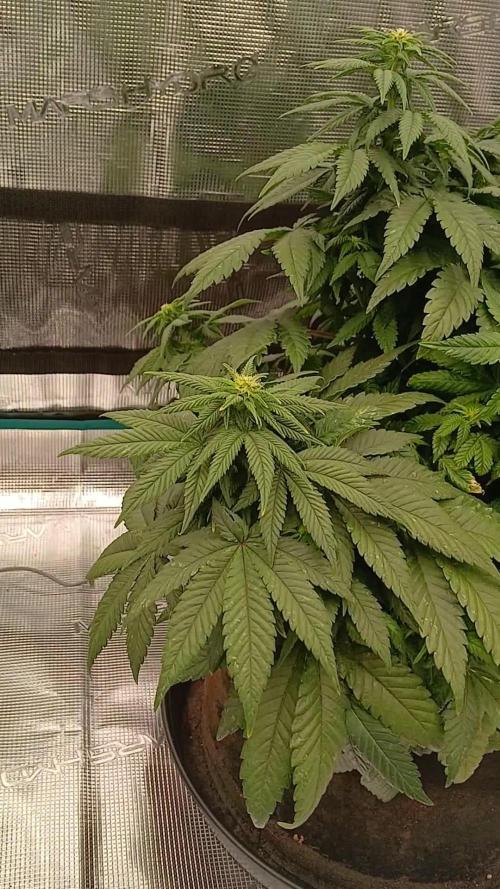
Very good structure, the branches are sturdy.
Short and compact plant. Flowering has begun; I'll see how it stretches.


@TheCannaProphet
Follow
____________________________
~Seedsman Fuel D.O.G.~
____________________________
'Fuel D.OG Feminized was bred by crossing two highly celebrated and popular strains from the USA - Chemdawg (Sour Diesel x OG Kush) and Fuel OG (Diesel x Headband). Fuel D.OG is a 70% sativa, 30% Indica plant with very good potential yields both indoors and outdoors. Resin and THC production is also at a very high level.
Fuel D.OG improves on Chemdawg, being a much more robust plant with a much more intense flavor while also developing a larger calyxes than Chemdawg. Its robust appearance is typified by a thicker central stem that is so strong that it does not need to be supported during the later flowering stage in spite of the high degree of sativa stretch it undergoes once flowering has been initiated. Large spear-shaped buds surround the main stem like a crown. Outdoor cultivation produces plants that can grow up to 350 cm. tall in optimum conditions.
When cultivated indoors Fuel D.OG produces yields of 450 - 600 gr/m2 in a 65 - 70 day flowering period with generous quantities of resin already noticeable in the nascent buds during the third week. Its height can be controlled indoors by switching to the flowering light-schedule once plants are established and also by the use of the SCRoG technique whereby plants are trained horizontally. Outdoors, each plant can yield 700 - 800 gr. of large, sticky buds with harvests in the northern hemisphere ready at the beginning of October. Its large trichomes, concentration of terpenes and the sheer quality of resin make this a very serious proposition for extract/concentrate makers.
Fuel D.OG has more intense OG Kush flavors than the Chemdawg parent, with increased diesel emphasis and with citric, lemon and grapefruit scents. THC content is very high with low proportions of CBD. The effect experienced by consumers is one of intense relaxation evolving into a long-lasting narcotic stone that makes Fuel D.OG more suitable for evenings unless there are no important tasks to be completed.'
*description credit to Seedsman Seeds
__________________________________________________________________________________________________________________________________________________________________________________________________________________________________________________________________________________________________________________________________________________________________________________________________________________________________________________
-Characteristics-
BREEDER/BRAND: Seedsman
GENETICS: Chemdawg (Sour Diesel x OG Kush) and Fuel OG (|Diesel x Headband)
VARIETY: Mostly Sativa
FLOWERING TYPE: Photoperiod
SEX: Feminized
THC CONTENT: 20% Plus
CBD CONTENT: <1%
YIELD: Indoors: 450 - 600 gr/m2; Outdoors: 700 - 800 gr/plant
PLANT HEIGHT: Up to 350 cm. outdoors
GROWS: Greenhouse, Indoors, Outdoors
FLOWERING TIME: 65 - 70 days
HARVEST MONTH: Beginning October
TASTE / FLAVOR: Citrus, Diesel, Grapefruit, Kush, Lemon
EFFECT: Powerful, Relaxing, Sedative, Stoned
__________________________________________________________________________________________________________________________________________________________________________________________________________________________________________________________________________________________________________________________________________________________________________________________________________________________________________________
THE SETUP:
~Planted into Jiffy Peat Pellets that were hydrated with de-chlorinated water with SuperThrive added then ph'd to 6.0 @ 80℉
~Grown 100% organic in 10g fabric pots with Mother Earth 70/30 Coco/Perlite medium amended with 2tbs/g of Down To Earth 4-4-4 / 2 cups/g of Earthworm Castings / 1tbs/g of Dr. Earth Flower Girl 3-9-4, 1tbs/g of Dr. Earth Bat Guano, 3/4 cup of Down To Earth Azomite and 1 tsp/g Down To Earth Fish Bone Meal.
~24hr light cycle during Germination / 19/5 light cycle for Vegetation and 12/12 for Flower
~Straight water ph'd @ 6.2-6.8 when needed and weekly Compost Tea's.
__________________________________________________________________________________________________________________________________________________________________________________________________________________________________________________________________________________________________________________________________________________________________________________________________________________________________________________
Weekly Updates:
10/4- Week Eight of flower is here and we're getting closer to wrapping things up with this girl!
Her flowers are continuing to bulk up and are covered in glistening trichomes. She appears to be starting to fade which is exactly what I'm hoping to see, meaning that she's just about used up the nutrients in her medium.
I watered today with 1.5g of de-chlorinated water which was then ph'd to 6.6 @ 72℉ turned her pot and shot a few pictures of her.
10/6- Today I watered her with 1.5g of her usual straight de-chlorinated water that's ph'd to 6.5 @ 72℉ and turned her pot.
She's definitely starting to fade, is still stacking her flowers, bulking up and has an incredible amount of trichomes which I'm beginning to monitor daily.
10/8- The routine of watering every other day continues like clockwork. Yesterday was a 'no water' day and I did a basic check over of the plant, removed a couple of yellowed lower leaves and turned her pot.
Today she got the usual 1.5g of straight de-chlorinated water that's ph'd to 6.5 @ 72℉ and had her pot turned. I've also begun to check her trichome development with a digital USB microscope to try to identify the ideal harvest time which will be in the next 12 days +/-.
10/10- Well, Week Eight has come, gone and has been a trial once again of my patience!
She's so frosty and into her fade now that I've wanted to chop her several times but, I know from experience, good things come to those who wait... then wait a bit more. I anticipate that she'll be ready by the end of this coming week, and I can't wait!
I've cut the wattage back on the HLG 650R to 500w at the wall now to simulate the way that sunshine becomes weaker as fall approaches due to the lower angle of the sun in the sky. This helps outdoor plants to know that winters on the way and they need to hurry up and complete their life cycle. Cutting the wattage back creates the same effect on the indoor plants, especially when coupled with lowered temperatures in the tent.
I have also noticed that her water uptake has slowed. After her heavy watering on the 8th, her pot still had some weight to it and she was looking great so I went ahead and skipped watering her today, watering her tomorrow at lights on with her usual.
Next week promises to be exciting so don't forget to check in! Harvest time is right around the corner and I'm getting stoked to see the results! 😎🙏💚
~Thanks for stopping in! This epic run is in the home stretch with harvest fast approaching...Stay lifted and be Blessed! 😎🙏~


shorts_status_processing


@PETEROG
Follow
Hey guys everything is going great with these ladies all 6 germinated and popped up in 3 days after planting 1 of the six shooters is a lot smaller than its sisters so I've order LEMON PIE from FASTBUDS should be here tomorrow to take its place and I'm going to move the six shooter outside so if you would like to see its journey comment and like bellow ⤵️
The only thing I wish I did differently would of been starting these girls under a cfl or a cheap led to stop stretching but lesson learned if anyone has any question's please comment and thank-you all for your support ✌️


@Elpicor
Follow
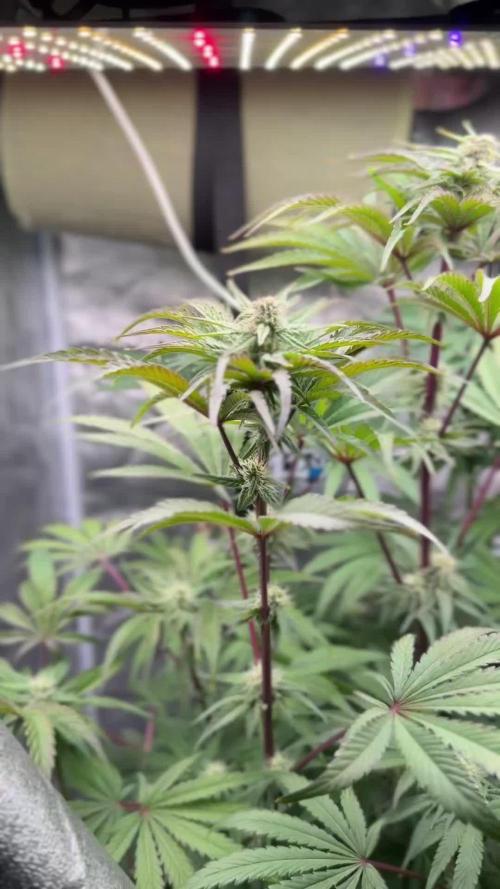
D15
Today I come back home after 24 hours and found the living room foggy, I had to open the windows wide, the temperature in the growbox was 32 degrees and the humidity at 79%... -> ( temperature and umidity was set to all time range, so values is not of this season).
-> I will follow your advice and only apply LST to keep them low THANKS GROWERS!
D 17
I've feed all plants with 1 ml of Algamic/Activera and 0.5 ml of bio heaven.
I do love stress training 😂 for orange sherbet which is the tallest one
D 18
Orange Sherbet loves training, today LST also for Purple Lemonade and Strawberry Gorilla
D 20
Future space problems are expected, I think I have to switch to the 1x1x2 MT growbox, spring is upon us I could always put a couple outside, we'll see what I feel like doing



@Raizativa
Follow
Riego:
1ml Bio grow
1ml Top max
1ml top bloom
1ml bud candy
1ml calmag
1ml Bio Heaven
0.5 Micorrizas colectivo científico
Se han ido ajustando los amarres de LST cada día por medio aprox.