




Likes
12
Share


@ScrogFreak
Follow
Flipped to 12/12 at the end of Week 7.
The manganese issue seems to have been solved by lowering the pH levels. Ordinarily I'd strip most everything below the net this week, but a friend asked me to leave him some clippings until week 2-3 of flower. I cleaned it up a little underneath the net, continued to tuck new growth, and started to slack back on grow nutes, and slowly introduce flower nutrients.
I was hoping to have a second Aglex 2000 COB LED to add to the tent for flower, but it may be another week or two before I can add it.

Likes
12
Share


@CheeRz
Follow
We finally made it ladies and gentlemen. It is an honor to introduce you to the beautiful Lady Wedding Cake and the beautiful Cookies Kush twins. Even though I'm pretty sure cookies kush #1 would have needed another week, she had to go under the knife and was finished just in time for the super bowl. we also need the space now for the next round of the Eternity Grow Cup. Next Stop Zami Runtz and Blue Gelato 41

Processing
Likes
7
Share


@Cogollo_eu
Follow
**Encontrarás la traducción a español al final de la descripción**
From/Desde: 22/03/19 || To/Hasta: 28/03/19
From day/Desde día: 29 || To day/Hasta día: 35
You can find the Gorillas Diary here:
** Podéis encontrar el diario de las Gorilla aquí:**
https://growdiaries.com/diaries/25675-makingmoney-with-gorilla-mm-vs-gorilla
-----IMAGES & VIDEOS-----
Video 1:
Exactly the same video as 2 but accelerated +400% to fix it to 1 minute for instagram.
Video 2:
7 days (29~35) TimeLapse, 1 image each 60 secs @ 30 fps
Video 9:
An overview video not as awesome as the music 😂💪
Video 10:
Myself working on the babies, lowering tops, topping & training.
-----WEEK SUMMARY-----
Well, now i'm getting a bit scared as i adventured myself into Photoperiod, high training, full topping... in indoors at once. I feel that plants are going good, but i really don't know what am i doing, and if i'm doing well. Also i don't know how much time should i give them of vegetation stage, because i don't want to eternalize myself with this tent, so i'm planning to leave this upcoming 6th week and maybe the 7th of vegetation, but no more. Anyway they look pretty atm 😻.
-----WATERING CALENDAR-----
24/03/19 - 1.000 ml with all week nutrients @ 0.9 E.C. PH5.8
*****ESPAÑOL*****
-----IMÁGENES & VÍDEOS-----
Vídeo 1:
TimeLapse, exactamente el mismo vídeo que el 2 pero acelerado a un poco más del 300% para ajustarlo a 1 minuto para Instagram.
Vídeo 2:
7 días (29~35) TimeLapse, 1 imagen cada 60 segundos @ 30 fps.
Vídeo 9:
Un vídeo general no tan increíble como la música de fondo 😂💪.
Video 10:
Yo trabajando en las pequeñas, rebajando las alturas, haciendo topping y entrenando.
-----SUMARIO SEMANAL-----
Bueno, ahora estoy empezando a estar asustado. Me he aventurado a probar con fotodependientes, entrenamiento fuerte y super topping, todo a la vez. Siento que las plantas van bien, pero realmente no se lo que estoy haciendo ni si lo estoy haciendo bien. También tengo dudas sobre cuento tiempo más dejarlas en estado vegetativo ya que no me quiero eternizar con este armario. Por lo que estoy planeando dejar esta sexta semana de crecimiento y quizás una séptima, pero no más. Aun así y con todo, se ven preciosas 😻.
-----CALENDARIO DE RIEGO-----
24/03/19 - 1.000 ml con todos los nutrientes semanales @ 0.9 E.C. PH5.8

Likes
16
Share


@Tipton
Follow
Let the flower begin! Shut the lights off April 1st so when they wake up at 7am the flower cycle is on!!!! Let's "flipping" GOOOO

Likes
10
Share


@Hempire
Follow
Hello growers !
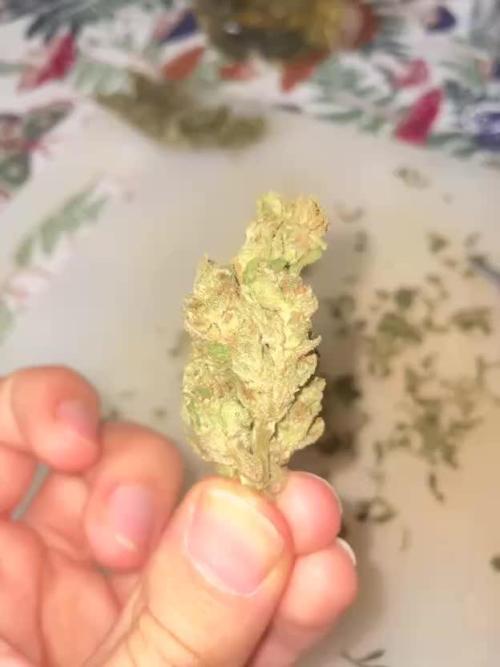
This week started the pistils colours white into orange /red. Let’s check at the final of the week it should be ok for the harvest :)

Processing
Likes
7
Share


@Kushizlez
Follow
Days 35-42
(Day 36) Some minor problems starting to arise here. A few times this week it got up to 90+ degrees which I think may have caused a bit of heat stress in some of the plants. I’m seeing a bit of cupping/crinkles on some of the fan leaves and some of the new growth is looking pretty gnarled and twisted. I hear windburn can cause this too so I’m turning my fans down to low speed. This could also be a problem with humidity so I’m going to turn off my humidifier, dim the lights and raise them. During my last feeding I mulched in some worm castings but it seems like they’re keeping the soil/coco from drying out. Pots are still decently heavy and even the surface is still quite moist but they aren’t showing any major signs of overwatering. I figure it will only be a few weeks before the castings break down so I will just leave it.
A few of the plants are starting to show yellowing leaf tips which is probably some kind of micro nutrient lockout from my PH being slightly too high. It could also be from nute burn so I will water in 6.0 until I see some runoff. Although the most likely culprit is potassium excess. I’ve been feeding potassium almost as much as nitrogen so far. I know that can cause the yellowing of leaf tips by locking out trace minerals. It can also cause leaf problems like crinkling. Excess K can even cause water retention! Will water at 6.0 until run off next watering.
The lst is coming along nicely. It was a good idea to remove the first two sets of branches (not leaves). Now I have 4-6 perfectly even stems coming from each plant that I plan to top one more time each.
(Day 37) Today I’m going to vacuum, clean, wipe down and spray all my equipment in the tent. I’ve been letting the floor get quite dirty and I haven’t had the chance for a thorough clean since last round. I’m kind of surprised I haven’t seen any powdery mildew yet. I guess the prevention spray is working because the room has to be infected from my last crop.
(Day 40) I was reading that you can foliar spray whatever you are deficient in for an immediate uptake. I‘m going to try that with my current potassium excess since it locks out trace minerals. I’m going to foliar feed a bit of phytoplankton at 15ml/L and some MagnifiCal + VeloKelp from Remo nutrients both at 5ml/L. The cal mag is not organic but as long as it’s not going into the soil and doesn’t contain chlorine I’m fine with it. I’m also going to be changing the light cycle to 18/6 for the remainder of veg. This will be their first dark cycle so they can properly foliar feed. Edit: humidity shot up to 85% a few hours after foliar spray.
I went to top dress everything today and I mixed up the plants while doing so! So the ones I was unsure about I gave 1 extra tablespoon. I won’t top dress again for at least 10 days. Might give a light tea sometime next week. I also tilled the shit out of the top of each pot. It had a hard crusty layer on top that was keeping the medium from drying out properly. I’m not going to water again until everything is bone dry. Then I will water until slight runoff at 6.0 ph with some Dr. Marijane bacteria/root probiotic.
I’m starting too see a lot more of these abrasions on some of the bigger fan leaves. It almost looks like thrip damage but I’m 100% sure it’s not a pest above ground. It could be bulb mites, which I found in my worm castings but I can’t check until the roots are more established in their pots. The leaves themselves are cold and feel damp to the touch. I haven’t even seen a fungus gnat since I last fed. I’m hoping it’s related to the K excess and clears up with the troubleshooting.
(Day 41) Just ordered a wire cube rack to prop my plants up with and help evaporation/root warmth. Each cube is 11.8”x11.8”x11.8” and it comes with 16 cubes. So it will fit just perfectly in my 4x4. Depending on the size, I might order another one for the flower room where I would need 25 cubes.
Likes
Comments
Share

@craudiaoDaMassa
Follow
What’s up my diplomats, all good?
Here’s the latest grow update — I’m super excited for the next few weeks.
Let’s get to it:
---
* **July 23, 2025**
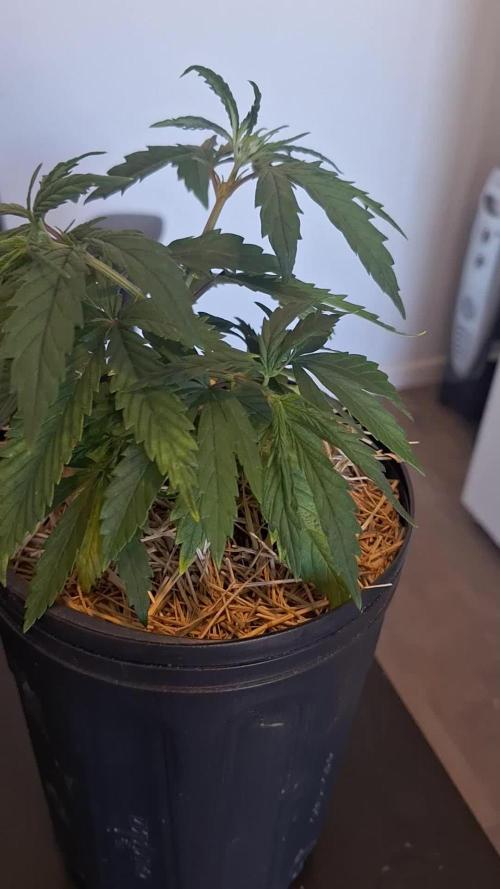
My pH meter arrived. After calibration, just like my buddy @FishWhistler pointed out, the pH was a bit off. I also got some pH down, and now I’m watering with water adjusted to around 6.5.
Result: all the plants started showing much better growth, and the two that were struggling are now clearly bouncing back. Huge thanks @FishWhistler!
Plants 1 and 2, which were moved to bigger pots a week ago, are looking way better now.


---
* **July 26, 2025**
I transplanted plant 3 into a bigger pot. Since the move, it’s shown clear improvement. With a richer soil mix, it should thrive even more now.
---
* **July 28, 2025**
Before lights out, I applied a preventive spray made of water, andiroba oil, and potassium silicate to protect from pests.
Also did a TOP cut on plant 3.
At sunrise, the girls looked beautiful! Some of them have droopy tips because the photo was taken before watering.

Likes
63
Share


@AsNoriu
Follow
Day 120. All Gorillas are choped.
Now i have new worry - my bag seed Strawberry Cough went hermie aswell.
So whatever it is in 10 days Control garden will be finished. Hope to take Cookies in 3 days, one ended up in really nice frosty nugs, other is a pity to look at ...
Anyway both Cookies big fail , not even close to my 100g/plant target, Control garden with 3 not 8 weeks of veg will destroy them in weight and size , maybe frost is really nice on one of 5 Cookies and that is only positive side. Plus this plant is going nice violet too...
I will monitor Strawberry for naners, but plans has changed, need to properly wash tent from pollen before next run and half of next is flowering outside already , another is almost ready to be poted to final spot.
Water water water and patience
Day 123. New day - new worry ...
Today found second largest Incredible Bulls cola damaged by BudRot ...
Sad story ...
Now i am contemplating last two days in my head and :
1. Third time in my life i touch bud and squeeze it a bit and third time i have bud rot ...
2. While watering i hit it with watering can.
So double trouble for amazingly huge bud and he is gone.
I don't know why , but every time when disaster happens - my phone is flat ...
Cola went straight to toilet. Took 3 buds down, but its a small part of i guess 10g grenade ...
Watching for naners and budrot now ...
If i see any rot , all crop is chopped same day. Have last night shift and then holidays , should monitor them better from now on ...
Tough run ....
Day 126. Girls are too young to chop, but i need to do it, so today is last day. After night they out, autos from green house in.
All girls left is Control Garden, last 4th bean is in green house growing like rockets, but not weed ;))
RQS Cookies are disaster, 36 days younger plants outperformed them totally.
I was very disappointed to have all 5 out of 5 mutated and with issues ...
Happy Growing


Likes
21
Share


@Excalibur
Follow
11 September 2018 -
Day 78
Higher pH than wanted.
Nutrients increased, so far so good, no negative results.
Second stretch about to occur.
Climate better
Day 79 -
Slightly lifted tips, will watch nutrients and heat.
Day 80 -
600ml Water added 6.0 - 0mg Nutrients, to dilute heavy use of nutrients.
A few leaves removed to open up light on newer bud sites.
Day 82 -
500ml Water Added - 0mg Nutrients.
LST Tightened alot to expose lower buds and increase overall bud.
Day 83 -
Nutrients added, lets watch her double.
Day 84 -
Happy with grow. Red viens in leaves and slight stem... beginning research.
Likes
4
Share
@Guerrilla_grower777
Follow
19/09/2025 19:15
Very good climate this week,finally buds are bumping and showing some frostyness
Almost at the 12/12 light cycle now,days will be soon shorter and croptober Is near
Pic #1 and #2 Coco Milk and Coco fresh before defoliation and Lollipopping
Pic #3 video #2 and#3 Coco Milk 62 days from seed
Heavy defoliation on this one pretty impressive,there Is a lot of leaves,but i wanted to do from the start because this time i didn't top like i use to
Buds have already a good flavour not so strong but sure It will be
Pic #4 video #4 Coco fresh 50 days from seed
Defoliated less because It was dark,next time i will cut the rest but not as much as the Coco Milk
Flowers now forming but they are very small,i think this could be the last plant to harvest
Video #1 Apricot auto 58 days from seed
Buds now stacking this could be one of the fastest autoflower but also the one with the lower yield since the very first one
Smell Is just like rotten fruit,awesome
At the end there Is what i left of the gorilla z,those buds seems to flower Forever
Video #5 21/09/2025 gorilla z joint
While the gorilla z and the frostbanger are still hanging in the dark at 20°C 48%rh,the bud i took more than a week ago Is fully crisp and ready to be tested
Nice smoke not so flavourful but clean,ash looks pretty clean too,i hope with a proper cure It will be Better
High is not so strong on the body initially,only after some minutes tou can fell the body slowly relax
Next week it will be probably rainy as hell,maybe i will be back at the end of September

Likes
14
Share

@MrGrowDiarie
Follow
Day 113
The leaves are still a healthy green, with only minor fading visible on the lower foliage, which is expected at this stage as the plant begins to draw stored nutrients from older leaves. The sugar leaves surrounding the buds show a perfect balance of color, and the pistils are gradually turning amber and curling inward, signaling that the harvest window is approaching.
The plant's overall posture is strong, with branches supporting the weight of the buds nicely - a good indicator of strong stems and well-managed airflow. The grow space looks clean and stable, maintaining ideal environmental control for these crucial final days.


Processing
Likes
Comments
Share


@Mr_nugs_lover_David
Follow
I'm having some trouble with a leaf that is showing a problem however I don't know what's going on with her because she's being fed up with the same to the other plants in this grow and she's the only one showing that,I think it's a burn leaf maybe because of the water and three sun hitting too hard,but I only water from 21:00pm every day so let's see if I can solve the problem


Likes
3
Share


@MicroHidroGrow
Follow
Día 19.
Las Tropicana han reaccionado muy bien. Aproveché para hacerle LST a una y HST a la otra. Las Polaris estaban revegetando, así que esos las demoró. Pero ya empezaron a estirar. Además a una le tuve que cortar la rama principal y dejar 2 laterales, dado que estaba muy maltrecha.
Mantuve la solución nutritiva de la semana pasada y la voy a cambiar hoy o mañana seguramente. Voy a tener que esperar para pasarlas a floración, ya que tengo una mudanza en unas semanas. Así que la floración va a ser post mudanza.
Likes
2
Share


@Delta9tetrahidro
Follow
Nuevamente repito siempre el mismo proceso en el cuidado de la planta en cada etapa. Siempre cuido el ph que para mí es lo más importante en este trabajo. Despúes todo lo demas se puede mejorar.
Likes
7
Share


@Cultivatorcarlos
Follow
Week 4 was actually pretty smooth. she was showing nitrogen and potassium deficiencies because she was being terribly underfed and because i had weened her off the veg nutes WAY too soon. I found the dyna gro nutrient schedule and ive been following that. i will definitely be following the schedule much better next round as i wasnt actually aware they had a schedule out. Shes currently week 5 day 1 and shes already fat af and super trichomey.s he still got at least 2 weeks left. she might be ready by week 7 honestly tho who knows guess well see. Ive been giving her 1 gal each time of dechlorinated tap water just straight water. it has been phd to 6.6 ph. runoff tested at 6.3 ph. will probably flush one last time before continuing the bloom feed.
Likes
14
Share


@Finsfan
Follow
I am probably going to purchase these seeds again. I liked how they all few, and they all were very similar in growth styles so I knew exactly what to expect after the first time. I loved that aspect for sure.


