


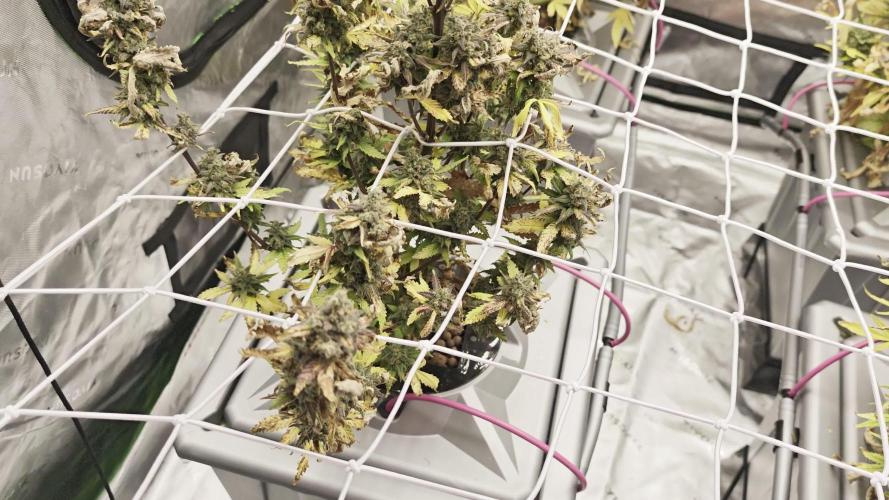



Likes
422
Share


@Crashoverite
Follow
Hi my friends!
Thank you all for such amazing support on this sweet journey 🙏✌️💚
I'm updating and uploading daily so if week not completed yet. Please revisit to see full week content.
So far everything is going great. Girls are are stretching nicely approx 2cm per 24h. It's looking that will cover entire scrog net with these 2 beauties. Simple plan for the week. Training on the net and maybe selective defoliation on week end.
Week updates:
20-26 Nov.
20/11 day 43
Girls adapting well to net😁
21/11 day 44
First watering for this week.
2.5 ltr each pot. Runoff approx 200-300ml from each. Runoff Ph Xena 5.9 Athena 6.0.
23/11 day 46
It's seems that they stretched at least an inch overnight 😁 absolutely love my 🍌💜👊 girls.
25/11 day 48
Second watering for this week. Approx. 3L each 🤤 runoff 150-200ml.
26/11 day 49
Athena was stretching so much that decided for sort of heavier selective defoliation and cleared good bit under the net. Xena is at the same stage of flowering as sister but she is still much smaller, branches are shorter and tinner, will wait bit longer before go any heavier on her. Was able to nicely relocate longer branches of Athena all over the net.
It's the end of this amazing week 😁
Thank you all for stopping by and for such amazing support on this bananas ride 🍌💜👊
Love you all brothers and sisters 💚💚💚
Likes
6
Share


@AnkleNibblersOrganics
Follow
Things are picking up slowly had some terrible weather over the last few weeks could really do with some sun again lol. We live and learn hopefully we pull thro this one.

Likes
39
Share


@GrowWiththeBro
Follow
Start of week 3.
Feeding a little more consistently. 1gal of the above every 3 days.


Processing
Likes
6
Share


@xAK47FULLx
Follow
Stressing over this calmag deficiency that I can't fix 😞
Tried adding more calmag
Switched to marshydro
Change nutes and adjusted ph
I transplanted to soil f#ck it


Likes
8
Share


@CanabisLoverHobbyGrower
Follow
Well crisis averted she reacted really well to what turned out to be just a very early top,.. she reacted so well I've topped the other one today,.. both look good and healthy, roll on next week 👌
Likes
20
Share


@birdmountain
Follow
Es ist vorbei, jetzt wird geerntet. Zwei sehr unterschiedliche Phänotypen werden sehr bald im Vaporisator auf ihren Geschmack, Duft und Wirkung getestet werden. Auch wenn die kleinere der beiden Pflanzen vielleicht noch etwas länger hätte stehen können. Es war kein Platz mehr im Zelt und der oberste Bud der großen Runtz fing an zu verbrennen. Für ein SOG halte ich solch unterschiedliche Phänotypen nicht geeignet, anders sieht es allerdings mit Stecklingen von ihnen aus. Insgesamt unkomplizierte Pflanzen, nur die Thripsen bekam ich nie vollständig in den Griff. Dies war mein erster Indoor Grow und ich stelle fest, daß meine Grow Box nur Platz für eine Pflanze hat wenn es eine Schönheitskönigin werden soll. Immerhin habe ich es noch geschafft eine paar schöne Blattverfärbungen an der größeren Pflanze zu erreichen. Auf den Bildern kann man das wilde, ungestüme gut erkennen.
Danke an Zamnesia, dass ich diesen Strain ausprobieren konnte! Ich habe ja noch ein paar Samen für weitere Grows.
Vielen Dank auch an Plagron für den Blütendünger. Das solch dicke Blütenkolben möglich sind hätte ich vor diesem grow nicht geglaubt.
Ich wünsche allen anderen Teilnehmern dieses Contests einen erfolgreichen Abschluss und eine gute Ernte!
P.S. Wenn ich mir so in der Verößerung die Frostigkeit der Buds ansehe, wird mir etwas Bange...
---
It's over, now it's time to harvest. Two very different phenotypes will soon be tested in the vaporizer for their taste, aroma and effect. Even if the smaller of the two plants could perhaps have stood a little longer. There was no more room in the tent and the top bud of the large Runtz started to burn. I don't think such different phenotypes are suitable for a SOG, but the situation is different with cuttings from them. All in all, uncomplicated plants, but I never got the thrips completely under control. This was my first indoor grow and I realize that my grow box only has room for one plant if it is to be a beauty queen. At least I managed to get some nice leaf coloration on the larger plant. You can see the wild, impetuous growth in the pictures.
Thanks to Zamnesia for letting me try this strain! I still have a few seeds for further grows.
Many thanks also to Plagron for the flower fertilizer. I would never have believed that such thick flower bulbs were possible before this grow.
I wish all the other participants in this contest a successful conclusion and a good harvest!
P.S. When I look at the frostiness of the buds as they grow, I get a bit scared...

Likes
5
Share


@HegauHillsFarmers_D23
Follow
In dieser Woche haben die Blüten an Größe dazu gewonnen.
Auch Trichome bilden sich jetzt um die Blütenblätter und der Geruch wird langsam stärker.😳
Vorallem süße und Zitronen Terpene sind schon heraus zu riechen 🍋🍬⛽️
Ich habe jetzt den Blühstimulator etwas reduziert und dafür Overdrive dazu gegeben, denn jetzt wird es an der Zeit die Blüten zu mästen.😏
Leider sind die braunen bis rostfarbenen Punkte auf den Blättern nicht verschwunden.. es hat sich aber zu letzter Woche verlangsamt.
Ich halte den pH-Wert weiterhin etwas höher wie zu Beginn und hoffe das es so stoppt.
Den Blüten hat es weiterhin noch nicht geschadet.🌱🍀
Likes
31
Share


@The_Doctor_Green
Follow
Hola a todos! Esta semana relice 2 riegos foliares una con aceite de neem para controlar unos trips que han aparecido y otro con un fertilizante organico MEN. Luego otro riego con PS.
La planta de tierra la voy llevando para los costados para que no crezca para arriba, ya que de noche la luz de la calle llega a donde esta.
Likes
31
Share


@Brujha77
Follow
Beginn 5. Blütewoche.
Der Strech scheint fertig zu sein.
Sie bekommen gerade 2-2,5l Wasser alle 2 Tage. Ansonsten ist nicht viel zu tun👍
Ab und an werden ein paar Blätter entfernt.
Tag78
Da ich grade wieder etwas Met a setzte, dachte ich mir warum nicht. CO2 is CO2😁😁
(Temperatur etc. sollte passen. Wird in der Lichtphase natürlich abgedeckt)
Tag80
Beide haben heute jeweils 1,5l Wasser mit 1g/l Greenhouse Feeding BioEnhancer bekommen.
(CO2 scheint wirklich zu funktionieren. Komme mit den 2 auf ca 1000-1100ppm)

Likes
33
Share


@Rollex420
Follow
Impressive how this plant managed to grow despite the few hours of light .. I guess what it could do with a better season than this year (there has been a lot of rains) and in a place where it grows with constant light.. anyway I am very happy with her, I would also say proud of how the growth went.
In the last few weeks, as you can see, the plant has suffered an attack by caterpillars that have eaten some of its leaves in a short time, the plant has remained very strong anyway. I tried to remove them manually until they disappeared completely
Before proceeding with the cut, I put the plant in the dark for 48 hours, further stressing it by shocking the roots with ice cubes. I've never used these two methods, but I've heard a lot about them. some say it is useless while others say that these methods work to increase the production of trichomes and terpenes. We'll see, I'll share my experience with you as always.
Also follow me on Instagram for daily updates!
Keep growing fam!
Much love 💚
Likes
2
Share

@GREENPHOENIX6262
Follow
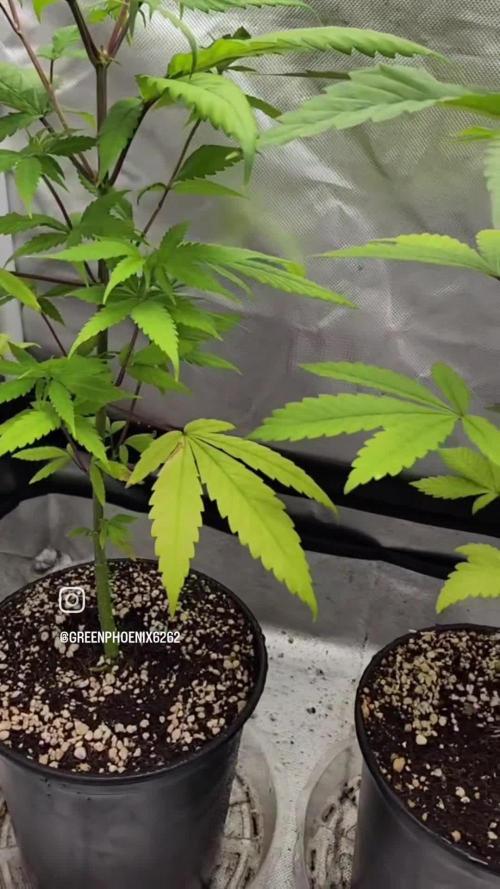
05/10 - Coming into week 4 and the ladies are thriving - Had a little yellowing going on but they have since recovered amazingly - Did a little defoliation on the bottom growth to remove any sick sites - Both will be transplanted into 5 gallon pots later this week. 😎😎😎😎😎
05/15 - Ending week 4 Veg and both ladies are thriving amazingly - I have some defol to do and transplant prep work is under way - Transplanting into 5 gallons puts and moving into the 4x4 through harvest - Coco will be preconditioned with Myco and worm castings for 5 gallon pot drop - LST will be applied to help out with the mid level plant growth and to even out the canopy to grow aligned.


Likes
40
Share


@Ganjagrandaddy
Follow
Day 16 Veg : Holy molly these girls have impressed me this week. I started with barely seedlings and now at the beginning of week 3 above the soil , they are going for it. Seeing the LOS girl#1 slowly start to gain a little more green to her leaf finally has me thinking the soil is becoming active now. The coty leaves are still all looking ok and not even nibbled by them. I wonder if autos can bypass them when resources are there for them ?. So far the coco girls have been consistently getting bigger but the LOS seems to have spurted up in their pots.
They all had a treat of a life-cycle feed a few days back which seems to have accelerated them all a little too. No doubt their ruderalis genetic also is a huge help but no signs of deficiency besides the paling , so all good in the world. I am curious to see when the first signs of flower kick in now the 2 week mark has passed. Training starts soon.
Likes
5
Share


@Mr_nugs_lover_David
Follow
This lady has grown up for real what an awesome strain guys, the leaves are exactly the same lookimg on each pheno of runtz muffin, I got 3 plants, and this pheno #2 as you guys can see it's a beauty! I CANNOT WAIT TO TRANSPLANT HER! follow me on this beautiful journey guys! 💛❤️💚
Likes
5
Share


@TherealNICOGREEN
Follow
Er blevet plantet over i 17 liter potter i stedet en 12 liters! Hun er allerede begyndt at vise tegn på rigtig gå i blomst 🌸. Det er først gang jeg prøver pulver gødning OG JEG ER SÅ POSITIV OVERBEVIST OM DET ER DET JEG VIM FORSÆTTE FREM AF ( undtagen det der ikke fåes i pulver ( endnu) 😇glæd jer til flere dagbøger og nye spændende planter og NYE SKUNK STRAINS OG NY GØDNING ÆGTE GRO JORD MED TILHØRENDE PULVER GØDNING! Det bliver fantastisk spændende😇🤩🤩🤩🧐🤩🤩😜😝😎🤪😇💚🖤💛💚🖤💛💚

Likes
1
Share

@NAG420
Follow
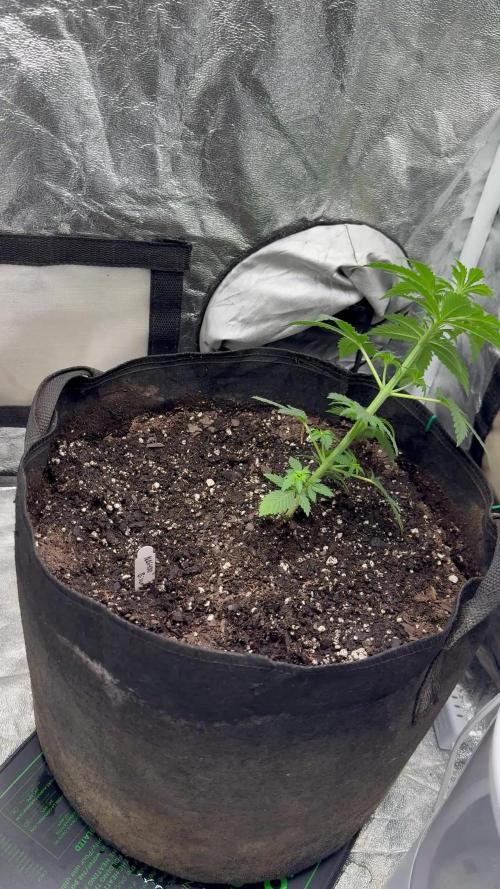
She is doing great on the transplant! I really don’t like to transplant I would normally grow in straight to the end pot which I like to grown in 5 gallon pots. Temperature in tent is 79-75 during day drop to about 72-69 at night. The RH 62%.
Likes
62
Share


@SimpleGrow
Follow
Hello and Welcome back 🌱
It‘s now 7 days ago since I put them in Water to Germinate and now it‘s their 5th day of growing. Yesterday, they got their first 4 hours of darkness and now i‘m slowly going down to 18/6 light schedule. I admit, the environment was sometimes very off due to experiments with VPD and leaf temperatur but I think I can dile it in correctly for this growing stage and beyond (hopefully). I was trying to see what happens if I stress them a little and hoped they would grow faster but they 100% didn‘t like it. They heat up pretty fast when the Air is too hot and dry because the roots are not developed and the plant is not established enough. An established plant can stay outside in the heat of the sun and still have cool leaves.
So my environment for this stage is as above (27°C,70%RH). Light at 15000 Lux (≈370 ppfd) a little high but I‘ve noticed some stretching and I asumed they wanted more light and I really don’t want any more stretching. My media comes without nutriens so i feed little amounts of it every time they dry out enough. This is a Indica dominant strain so I asume they will stay fairly smal. Btw. If anybody wonders if CO2 bags work, check out the Video I uploaded.
They are still seedlings (not really in Veg yet) and so i‘m treating them as such for the rest of the week. Root developement is now the top priority wich, if you didn‘t know, is better in a smal pot first because they are more likely to develope secondary roots but we’ll see. I heard It‘s like topping just underneath the plant. When they are ready to be transplanted I most likely will take the first three.
Update: I did all the preperations for Transplant bc I was worried about root bound. I took Nr. 4 out and washed it as carefully as I could to expose the roots. Some of them got stuck on harder peaces of dirt and got ripped off. But it looks like alot of secondary roots developed instead of just one long taproot, wich is nice. I assume i can transplant them in the next few days.
I rearanged the plants according to the Lux reading, wich is highest in the middle so the bigger plants (Nr.1 and Nr. 3) went to the sides. Maybe Nr.1 got the „smal“ genetics and it’s not anything environmental.
thanks for following along this far and happy growing!
Update: hey guys so yesterday I noticed, that the roots are coming out of the bottom. They were trying to get to the bottom of the three pots 😭 i had to do an emergency Transplant wich went very bad because they were stuck in the little pots. I don‘t think i‘m going to use these kind of pots anymore because they were not easy to get out. I even dropped Nr. 3 but luckily nothing bad happened.
After the transplant both Nr. 1 and 2 were already ready to get more light. But Nr.3 was turning away from the light and the leaves were hanging down. So to lower the stress and encourage root groth I redusced the amount of light to a minimum and lowered the Temperature and highten the RH. This seemed to work well because the leaves were purking up again. The next day after 6-7 hours of darkness they are doing fine again but i‘m going to give them a little longer to establish themselves in the new pot. I changed the light schedule to 18/6 since I had to give them more darkness yesterday. I hope everything goes smothly from now on.


