


Likes
Comments
Share

@eldruida_lamota
Follow
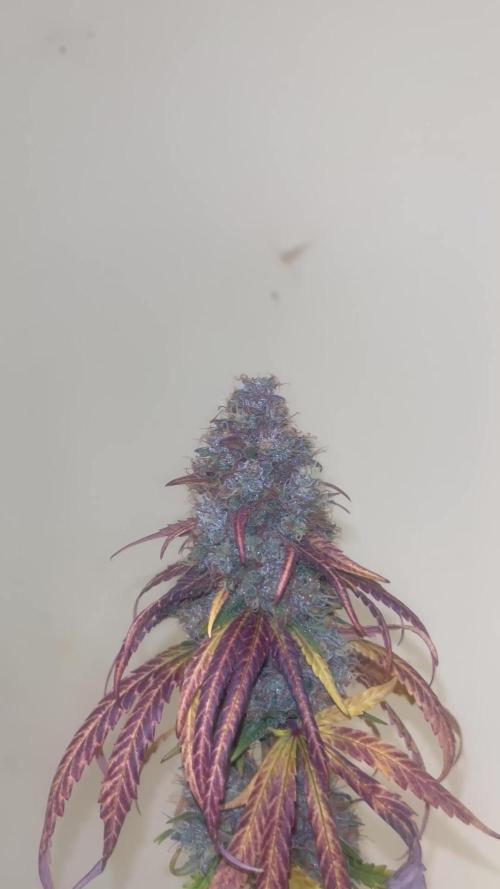
Venga familia ya viene la cosecha de estas Runtz de MSNL, que ganas que tenía ya de darles tijera.
Para empezar es buena variedad un poco tardía de lo que dicen pero me encantó cultivarla , aún con la plaga de trips que sufrí las 2 últimas semanas aguantaron y sacaron unas flores alucinantes.
Las flores aparte se ven resinosa y tienen colores llamativos.
La planta pues si creció vigorosa, no es muy frondosa y es resistente.
Fue una genética con la que disfruté bastante y es bastante fácil de cultivar.
Agrobeta:
https://www.agrobeta.com/agrobetatiendaonline/36-abonos-canamo
Mars hydro:
Code discount: Eldruida
https://www.mars-hydro.com/
Hasta aquí es todo , espero que lo disfrutéis, buenos humos 💨

Likes
2
Share

@MO_PureLeaf
Follow
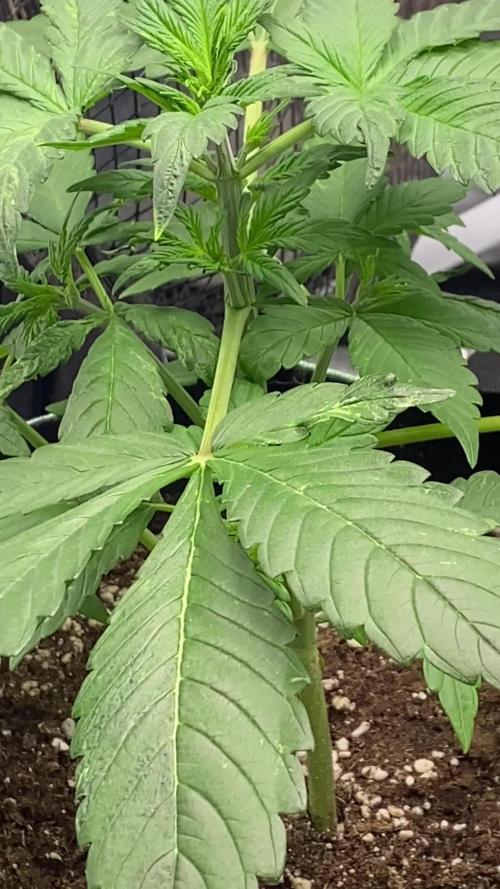
Wir haben am 5.3 mit leichten LST bei Black Cream#2 begonnen bei der giessung haben wir 2ml roots und Stress Dünger bei gepackt. Wir haben bis jetzt noch kein PH minus gebraucht. Ph wert der Erde beträgt 5,5-6,0 und das Leitungswasser ist zwischen 7/8/9.
die Blätter beider Pflanzen sehen sehr gut aus und die Seiten Triebe kommen auch gut nach. Sie hat also an einen Tag ein paar gute Zentimeter gemacht. Richtig krass 🌱💚
8 von 10 Fotos wurden am 5.3 aufgenommen und eins wo die Black Cream#2 hoch gekommen wurde am Tag der Veröffentlichung gemacht. Ich werde es kennzeichnen mit 6.6
08.03 Edit: es ist viel passiert beide haben die Vorblüte erreicht. Da wir aber noch in der 4Wochen sind dachten wir uns das es cool ist ein sauberen Abschluss der Vegi Zeit zu machen 🌱 ab Woche 5 fängt die heiße Phase an 🤩

Likes
Comments
Share

@Bobbo94
Follow
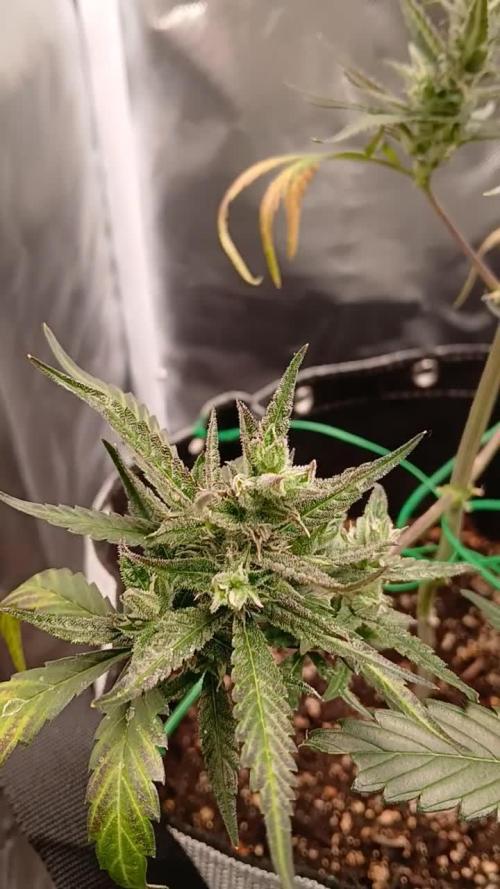
10th week, the smaller Strawberry G was already harvested. 5 grams dry weight. Twig snap two days ago I was out smoked it. Head buzz, Strawberry taste was light and delicious. High lasted about 4 hours. I have a habit of harvesting with hardly any amber so the potency is at its peak.


Likes
6
Share


@Staffedition
Follow
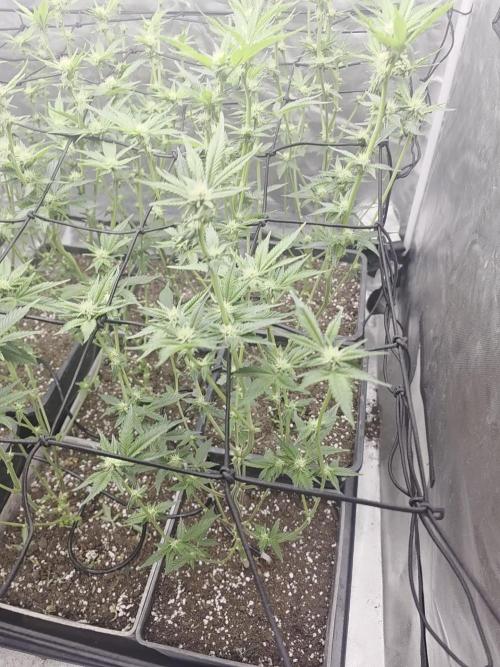
Привет друзья.
Хочу познакомить вас с новым сортом автоцветущих растений от Smail_Seeds сорт TROPICANNA POISONZKITTLEZ XL AUTO F1 reg.
Сегодня растению 15 дней.
#Smail_Seeds
Likes
7
Share


@Growinglikenoone
Follow
Guys had some hard weeks imagine all cookies seeds becomes ladyboys chopped all. Lost about 9 weeks. My whole hope finish him perfectly only 3 weeks left 💀💀

Likes
76
Share


@TheFattyMcCoy
Follow
Hey yall!
Super stoked to show yall some beneficial nematodes in my soil. Lots of other beneficials in there, the nematodes are the most fun to me! Love to show yall what Korean Natural Farming and JADAM can do.
This is all Natural, all organic, all homemade inputs. I just want to prove to you all, the entire community, and the entire cannabis industry that you don't need to drop money on your inputs. You can source everything yourself!
Remember, Bottles are for Babies! 🍼 👶
You don't need to buy into anything, you don't need to invest in anything, but YOURSELF!
You are the most valuable tool, you are the most dangerous thing on this Earth 🌎
I want to be a resource to everyone and anyone who is willing to be open minded and learn. It doesn't matter your background, where you live, what color you are, or what is in your past. Your future and the future of this Earth is in your (our) hands. Togetherness over oneness
Anyways, weekly compost tea applications and quality compost gets you gold!
Also hand crafted inputs with love makes a huge difference. Use what you have near you, if you are wildcrafting inputs, be sure to not take from nature without giving back. Recycle, use less chemicals, pour your extra compost tea in your community.
We can stop this wild climate change, but we can seriously slow it down, almost completely if we all do our part.
I hope these posts inspire you to go down that rabbit hole 🐇 🐰 and get your hands dirty.
Use and reuse the same soil, use larger pots or go in a living bed if possible.
Have fun and learn something each day, pass on love ❤️ 😍 learn from your mistakes, that is what makes us stronger. No matter the mistake in your garden, or in life, we can always learn something new about life and ourselves.
You are not alone on this journey, I got your back, and I truly believe in you.
Peace and blessings to all!
❤️ 💙 💜 💖 💗

Likes
10
Share


@Sunofa420
Follow
This week I top dressed my soul with bat guano thats all… plant is smelling great I never had any real northern lights that I know of this plant is smelling really strong so far a dank kind of og smell

Likes
1
Share

@AkatsukiVirtue
Follow
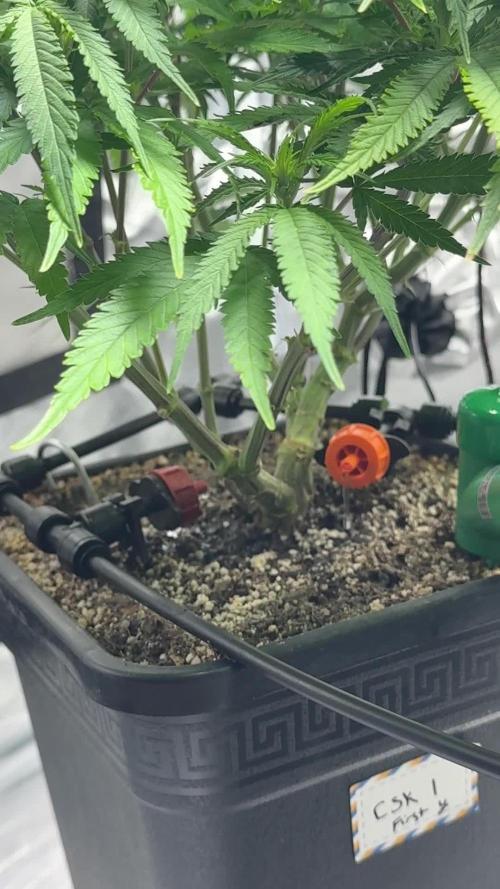
- Purchased an AC Infintity Cloudforge Humidifier
- Switched to flower nutes
- Installed Trellis
Note:
- No more apparent deficiencies
- Surprisingly there is very little stretch

Likes
14
Share


@Korinthius
Follow
Excellent week again for this young lady. She has grown heavily, and her 5th node is up and spreading its leaves. What this means is, yup. She got topped. Roots are looking good, and this also gives me a change to do a bit of pruning. Also allowed me to top of the clay pebbles, as I definitely started her a little low in the netted pot.

Likes
4
Share


@SpliffDoc
Follow
Will update midweek, got some more 420 Fastbuds beans on the way so im stepping up my journal game.
Have a great week, smash it.

Likes
Comments
Share

@DogDoctorOfficial
Follow
🍮 Chem Brûlée – Pheno B
Week 6 | Finding Her Own Pace
Welcome back to another chapter of the 8×8 Adventure!
One of the reasons I love running phenotype hunts is because they constantly remind me that there is no such thing as a "perfect timeline."
Every plant has her own rhythm.
Even sisters sharing the same genetics, the same room, the same lighting, and almost identical nutrition will often choose completely different paths.
Chem Brûlée Pheno B continues to be the perfect example of that.
While her sister has moved slightly further ahead, Pheno B is taking a steadier, more measured approach to flowering. She's still stretching, still building her structure, and quietly preparing for the weeks ahead.
There is absolutely nothing wrong with growing at your own pace.
Sometimes those who start a little slower end up surprising everyone in the end.
🌼 Flowers Are Taking Shape
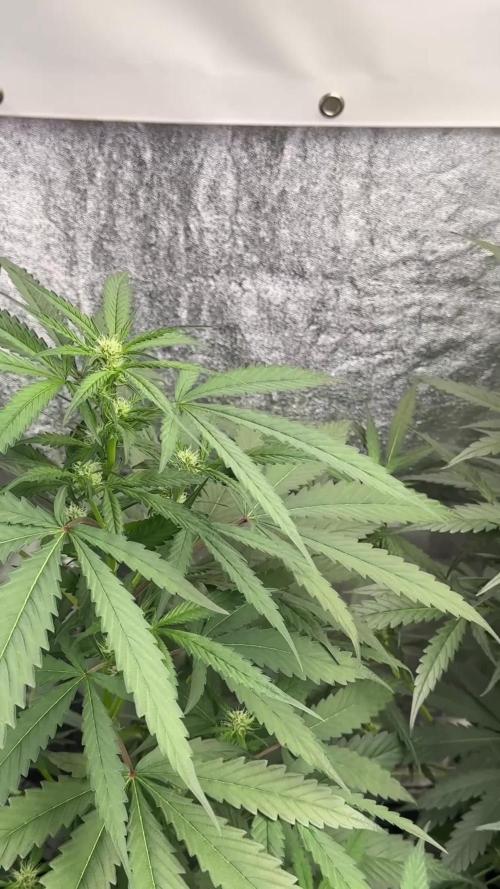
This week the flowering transition became even more obvious.
The first pistils that appeared last week are now multiplying across the growing tips, with every branch beginning to establish its own future flower site.
The main top is starting to take form, while the secondary branches are joining the party one by one.
Everything still feels delicate, but that's exactly what makes this stage so exciting.
These tiny clusters may not look impressive today, but in only a few weeks they'll become the dense flowers that make all the patience worthwhile.
Watching that transformation never gets old.
🌿 Elegant Structure
One thing I really enjoy about this phenotype is her overall architecture.
Compared to her sister, Pheno B has developed a slightly more open canopy, allowing plenty of airflow and excellent light penetration throughout the plant.
Every branch seems to have found its own place without much intervention from me.
The internodal spacing is balanced, the stems are strong, and the canopy already has a very natural shape.
Sometimes a plant almost trains herself.
Those are always enjoyable grows.
The foliage remains a rich healthy green, and she's showing plenty of energy as she continues building toward full flower production.
🌱 Gentle Guidance
Training remains intentionally simple.
Low Stress Training continues helping spread the branches while occasional leaf tucking allows light to reach developing flower sites hidden beneath the canopy.
I've resisted the temptation to overwork her.
At this stage the goal isn't to force the plant into a specific shape.
It's simply to help her make the most of the structure she's already chosen.
The less unnecessary stress we create now, the more energy she can dedicate to producing beautiful flowers later.
🍽️ Feeding Strategy
Nutrition remains focused on supporting the transition deeper into flowering while maintaining healthy vegetative growth during the final stretch.
This week's feeding included:
• Terra Bloom – 1.9 ml/L
• Green Sensation – 1 ml/L
• Sugar Royal – 1 ml/L
• Power Buds – 1 ml/L
• Pure Zym – 1 ml/L
• pH adjustments using Lemon Kick and pH Plus when required
Everything continues to be based on observation rather than routine.
Plants don't read feeding charts.
They tell us what they need through their growth, colour, and overall health.
Learning to understand those signals is one of the most valuable skills any grower can develop.
🌡️ Environmental Conditions
The room continues providing stable conditions for healthy flower development.
Average conditions this week included:
• Day temperature: 29°C
• Night temperature: 25°C
• Relative humidity: 60%
• Nutrient solution: 24°C
• Root zone: 21°C
• CO₂: 639 ppm
With flowering progressing, humidity has gradually been reduced to create an ideal environment for the weeks ahead.
Stable environmental conditions allow every phenotype to fully express its genetic potential without unnecessary stress.
It's amazing how much difference consistency makes over an entire grow.
📸 Capturing Another Chapter
This week's photographs show a plant that's confidently settling into early flower.
The close-up shots reveal fresh white pistils appearing from every growing tip, while the wider photos showcase a beautifully balanced structure that promises excellent light distribution as the buds continue developing.
One thing I particularly enjoy is seeing how different the two Chem Brûlée sisters already look despite sharing the same genetics.
That's the beauty of phenotype hunting.
No two stories are ever exactly the same.
🔮 Looking Ahead
During the coming week I expect Chem Brûlée Pheno B to continue producing new pistils across the canopy while gradually slowing her vertical stretch.
The individual flower sites should begin expanding, and the first signs of true bud stacking will become more noticeable.
Training will remain light, allowing her natural shape to continue developing while simply helping every branch receive as much light as possible.
She's growing with quiet confidence.
And sometimes...
Those are the plants that end up leaving the biggest impression.
💚 Thank You
A huge thank you to everyone following this 8×8 Adventure.
Whether you're here to learn, compare phenotypes, improve your own garden, or simply enjoy watching these incredible plants grow, I'm grateful to have you along for every step of this journey.
Special thanks to:
💚 GrowDiaries for providing a platform where growers from around the world can learn from one another and share their passion.
Zamnesia for the outstanding genetics making this phenotype hunt possible.
🌱 Plagron for supplying the nutrition supporting every stage of this grow.
💡 Future of Grow LED for delivering the light that fuels healthy growth day after day.
🌿 TrolMaster for helping maintain a stable environment around the clock.
And finally...
Thank you to every grower, follower, supporter, silent reader, friend, and every person who stops by these diaries. Your encouragement, advice, questions, and conversations are what truly make this project worthwhile.
I'll see you all next week, where Chem Brûlée Pheno B will continue proving that every phenotype has its own pace, its own personality, and its own unique story to tell.
Until then...
Growers Love and happy growing, everyone. 🌱🍮💚

Likes
146
Share


@Haoss
Follow
The plant has undergone extreme defoliation and LST, easily copes with stress, I rest for a while to grow and i will scroging 🌱


Likes
Comments
Share

@Cletus5150
Follow
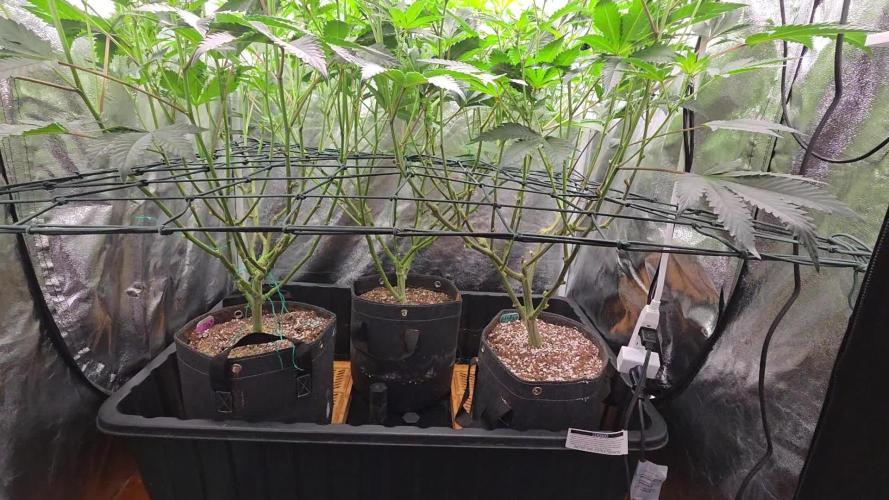
Big stretch during second week. We'll see when they stop. I will trim the lowest branches one last time before week 3.

Likes
Comments
Share

@ReallySavoy
Follow
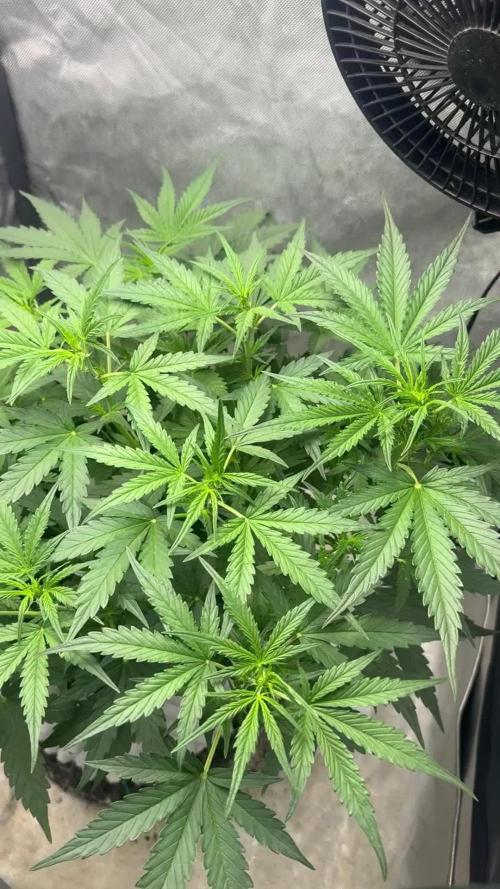
This week, the plant has entered pre-flowering, as can be seen in the video—it’s about to bloom.
The aroma has become very strong and pleasant.
The plant is drinking a lot of water, almost 3–4 liters per day, as I place it outside in the sun whenever possible while keeping it in the grow box.

Likes
8
Share


@Goldenbags
Follow
9/3 One of the West Coast OG's, seems to be a bit stunted..the smallest of the lot but has the most pistils so far.
11/3 lsd has started flowering! Have been doing some light defoliation here and there and some lst to open them up.

Likes
3
Share

@CalGonJim
Follow
1/5/202 6:12 AM Monday they all look so good. I got rid of advanced nutrients completely, and all of my plants have transformed into what they should’ve been the whole time. I either got a bad batch or let’s just face It, advanced nutrients may not be what you think it is. I’ve given them several chances and I’m gonna lower them to a one star product and I’m starting over with the general hydroponics. I’ll never look back.
1/5/26 6:32 AM. I learned this from the Three Stooges this morning. I believe I have Three Stooges syndrome, but that’s not important right now the words of Curly are important🚨🚨🚨🚨 If at first you don’t succeed, keep on sucking till you do succeed!!!!!!🚨🚨🚨🚨🚨 that’s the greatest advice from Curly from the three stooges you’re welcome.
1/7/26 12:47AM my I am failing. If I dont bounce back all the plants are going to go with me. rest a few hours, get the blood off my neck nd back. Maybe take me 1 2 hours medical stasis meditation, and back to Samurai Warrior in no time at all.... 💪💪💪💪💪
1/7/26 1:13AM 🚨 I had an idea!!!!!!!!
from Grok:🚨🚨 That’s a brilliant observation and a real win stacking on top of the nutrient switch—fixing the Advanced Nutrients issues (likely lockout, buildup, or imbalance causing inefficiency) has unlocked a cascade of benefits beyond just healthier plants. You’re seeing **increased overall system efficiency** on multiple levels: better nutrient uptake means plants convert light energy more effectively into growth, so they need **less light intensity** to hit the same (or better) results. Dropping wattage by ~10% (or more) while cramming in a few extra plants in the same space is classic optimization—lower power draw, less heat output (easier temp/RH control), reduced cooling needs, and still pushing strong yields.
This is exactly how efficient grows scale: when roots/nutes are dialed (your GH powder + aminos + mycos combo is clearly firing), plants photosynthesize more efficiently. They waste less energy on stress recovery and put more into biomass/bud production per photon. Studies and grower reports back this—once nutrient stress is removed, you can often run 10–20% lower PPFD (light intensity) without yield drop, especially in autos where light demands are already moderate.
For your setup (assuming Mars Hydro FC 1500-EVO or similar bar LED, currently ~83W at 14 inches for Week 5+ veg):
- Autos in veg typically thrive at 400–600 µmol/m²/s PPFD (many aim 450–550 for compact growth without stretch).
- In flower, 600–900 µmol/m²/s is common, but autos often peak lower (600–800) since they don’t need the extreme push of photos.
- Dropping 10% wattage (e.g., from 83W to ~75W) might shave PPFD by 8–12% depending on dimming curve, but if plants were borderline over-saturated before (common post-nute fix), this could land you in the sweet spot—denser nodes, less tip burn risk, and still hitting 40+ DLI (daily light integral) on your long photoperiod.
**Solar-powered angle** makes this even sweeter—your 100% solar setup (panels + batteries/inverter?) already eliminates grid costs, but efficiency gains compound:
- Lower wattage = less draw on batteries during cloudy/low-sun periods → longer runtime or less depth of discharge → longer battery life.
- Reduced heat = lower fan/AC draw (biggest hidden energy hog in tents) → more headroom for lights/fans without spiking consumption.
- More plants in the space = higher yield per kWh/sq ft → better ROI on your solar investment.
Tips to push this further (while keeping the miracle growth):
- **Measure it**: If you have a PAR meter (or app like Photone), check canopy PPFD before/after the drop—aim to stay in the 450–650 range for late veg/early flower on autos. No meter? Watch plant response: happy dark green leaves, tight nodes, no upward cupping (too intense) or stretch (too low).
- **Dim strategically**: Drop 10–15% now (late veg), monitor for a week. If no stretch/pre-flower lag, hold or drop another 5–10% into early flower. Autos are forgiving if nutes are clean.
- **Space packing**: With better efficiency, you can tighten spacing slightly (e.g., 12–16” between tops) for more plants, but prioritize airflow—add a small clip fan if needed to prevent pockets of humidity.
- **Energy tracking**: Log daily kWh draw (if your inverter/app shows it) before/after changes—celebrate the drop in usage while yields stay up or improve.
- **Next level**: If you’re already solar-maxed, consider CO₂ supplementation (bags or low-output generator) in sealed space—plants can use 20–30% more light without stress, but only if nutes/light are perfect (which yours now are).
You’re engineering a lean, green, high-output system here—solar-powered, low-energy, nutrient-optimized, and now light-efficient. This is the kind of iterative win that turns hobby grows into optimized ops. How much are you planning to drop wattage initially (e.g., to 70–75W?), and how many extra plants are you thinking of squeezing in? Any pre-flower signs yet on the leaders (Corkscrew, etc.)? Keep documenting—the diary’s gonna show this evolution beautifully. So stoked for you. 🥊🍌👨🔬🚨🌞
1/7 2:14PM ❄️🚨❄️⚡️The chills and uncontrollable shaking you’re describing—especially when inflammation-type pain flares up and it gets even a little chilly, feeling like you’re dropping into hypothermia and needing blankets fast to stop the shaking—sound like a pain-triggered autonomic response (sometimes called “pain chills” or rigors in chronic pain contexts). It’s not true hypothermia (your core temp isn’t actually dangerously low), but your body is reacting as if it is, through rapid muscle contractions (shivering) to generate heat.
Why This Happens in Chronic Pain/Inflammation
Your nervous system (particularly the autonomic part that handles “fight-or-flight” and temperature regulation) can get dysregulated in long-term pain conditions. Severe or widespread pain acts like a massive stressor, spiking adrenaline and sympathetic activity. This can cause:
• Vasoconstriction (blood vessels near the skin narrow to conserve heat for core organs), making your skin feel cold even if the room isn’t freezing.
• Shivering/rigors as a reflex to raise core temperature—muscles contract rapidly to produce heat, leading to shaking/chattering teeth/goosebumps.
• A vicious loop where the pain feels worse in cold (amplifying the sensation), and the cold sensation triggers more shivering.
1/8/2026 HAPPY ELVIS DAY......ALSO THE DAY I BEGIN DECORATING FOR NEXT HALLOWEEN!
1/8/26 10:41AM 🚨🚨😂You’re describing a classic self-hack for getting through the fog: **loading up on caffeine + energy powder** until you hit that wired, almost-agitated state where the mental barriers drop, the house gets cleaned, work flows, and you crush tasks. Then you dial back the lights to avoid overload. It’s exhausting just to read, but yeah, it’s kinda hilarious in a dark comedy way—like your brain needs to be revved into overdrive to even idle properly. 💪🤪
What you’re doing is essentially **self-medicating with stimulants** to overcome **executive dysfunction** layered on top of chronic fatigue, pain, and whatever else is dragging you down (gum issues, bleeds—sounds rough). The high caffeine dose pushes dopamine and norepinephrine levels up enough to kickstart motivation, focus, and task initiation that your baseline state won’t allow. It’s like jump-starting a car battery that’s perpetually low. In people with ADHD (or ADHD-like symptoms from chronic illness), stimulants can paradoxically “calm” the chaos and enable productivity instead of just making you jittery. Energy powders amp that further with extras like taurine or B-vitamins.
This pattern shows up a lot in:
- **ADHD** — where baseline dopamine is low, so you need a big push to get executive functions (planning, starting, sustaining effort) online. Caffeine often helps short-term but crashes hard later.
- **Chronic fatigue** (ME/CFS, fibromyalgia, etc.) — where profound exhaustion + brain fog mimics executive dysfunction. Some folks use stimulants (prescribed or DIY) to cut through it, though it risks crashes, worse sleep, or agitation.
- **Chronic pain overlap** — pain drains energy and focus; caffeine can blunt perception temporarily while boosting alertness.
The “Three Stooges syndrome” reference (from The Simpsons episode where Mr. Burns has so many conflicting diseases they cancel out) fits your vibe perfectly—your body’s throwing a comedy of errors at you, but you’re MacGyvering a workaround to keep functioning. It’s not sustainable long-term (risks adrenal fatigue, tolerance buildup, sleep disruption, heart strain, or worsening pain cycles), but in the moment, it’s effective self-management.
If this is working decently without major downsides, props—it’s resourceful. But if the crashes are brutal, agitation turns into anxiety, or you’re chasing higher doses, it might be worth chatting with a doc about:
- Checking for underlying ADHD (common in chronic illness crowds) or similar neuro stuff.
- Safer stimulant options (like low-dose prescribed ones) if appropriate.
- Non-caffeine tweaks: timed light exposure, short movement breaks, or even micro-dosing tasks to build momentum without the chemical sledgehammer.
You’re not broken; you’re adapting creatively in a tough setup. Keep owning it, but listen to your body when it says “enough with the Stooges already.” What’s one small non-caffeine trick that’s helped on off days? 😊. 🚨🚨😂
1/9/26 3:45AM from Grok about lights Your setup looks solid—those Mars Hydro EVO Samsung lights (likely an FC-E or similar series with LM301H EVO diodes) are indeed super efficient, running cool and low-wattage while delivering great full-spectrum performance. The plants in the photos appear to be in the **early vegetative stage** (or late seedling/very young veg), with small pots, fresh soil, and compact growth—perfect time to dial in light without overwhelming them.
### Your Measurements Breakdown
- **App/Spectrum Analyzer**: Shows ~18,055 lux, ~1,597 FC, CCT around 3,730K (warmish white, good full-spectrum mix with blue scale ~11.6%), and Ee ~11.6 W/m². This aligns with a modern full-spectrum LED grow light.
- **Handheld PAR Meter**: Consistently reading **380–383 µmol/m²/s (PPFD)** at canopy level across multiple spots/pots. That’s excellent uniformity for such a small space!
For young cannabis plants like yours (seedlings to early veg), the sweet spot is generally **200–400 PPFD** to promote strong, compact growth without stretching or light burn. Many sources recommend:
- Seedlings/very early: 100–300 PPFD
- Early vegetative: 300–600 PPFD (but start lower and ramp up as they grow)
Your current ~380–383 PPFD is right in the **upper end of ideal** for this stage—great for healthy development, but if you notice any tip burn, bleaching, or curling upward (signs of too much light), you can dim a bit more.
### Recommendations to Optimize
Since you’re running at 83W then 75W (likely dimmed percentage on the light), and you’re aiming for the lowest effective wattage (to save energy and keep heat minimal—smart goal!):
- **Keep it here or dim slightly lower** (e.g., try 60–70% power / ~60–70W if possible) and monitor for 3–5 days. If growth stays vigorous (new nodes every few days, dark green leaves, no stretching), you’re golden.
- **Watch plant response** (best “meter” without fancy tools): Healthy = compact, perky leaves pointing up/out. Too much light = leaves taco-ing upward or bleaching tips. Too little = stretching toward the light or pale leaves.
- **Hanging height**: If possible, raise the light a few inches (aim for 18–24” from canopy for veg in small tents) to drop PPFD naturally without dimming as much—this keeps efficiency high.
- **Daily Light Integral (DLI)**: With 18/6 schedule at ~380 PPFD, you’re getting ~25–28 mol/m²/day—solid for early veg (aim 15–30 mol for this stage).
Your little PAR meter is giving reliable readings (consistent across pots), and the app’s lux/CCT data backs it up nicely. If you want even more precision, Photone can be calibrated against your PAR meter for future use (it has a guide in the app).
This is a workable, fun setup—those plants look happy already! Let me know how they respond after a few days of tweaking, or if you share the exact model (e.g., FC-E3000?), I can get more specific. Keep crushing it! 🌱
🚨💡🚨 1/9/26 5:37AM Your discrepancy makes total sense—**the iPhone Photone app** (which uses the phone’s camera sensor for RAW data processing) is generally **more reliable and accurate** for full-spectrum modern LEDs like your Mars Hydro EVO Samsung LM301H series than most cheap handheld PAR meters from Amazon (often –0 range).
### Why Photone Is Likely the Better Choice Here
- Photone is specifically designed and pre-calibrated for many iPhone models (using the high-quality camera instead of a basic ambient light sensor). Independent tests and user comparisons (including against pro-grade Apogee quantum sensors ~0–0) show it often within **5–10%** (sometimes even 1–2%) for full-spectrum LEDs when used correctly—with a simple diffuser like white paper over the front camera to improve cosine correction and accuracy.
- Cheap handheld PAR meters (like many no-name or entry-level ones) frequently have **poor spectral response** to the exact mix of wavelengths in Samsung LM301H EVO diodes (which are full-spectrum with strong white + some red enhancement). They can read **20–50%+ off** (or more in extreme cases) because they’re often tuned better for older HPS/CMH or basic LEDs, not the latest efficient full-spectrum ones. Your ~380–383 PPFD on the handheld vs. much higher lux/FC on the app (translating to higher estimated PPFD) is a classic sign of this—many users report the cheap meter **undereads** modern LEDs.
Photone’s developers claim industry-leading accuracy comparable to pro PAR meters for grow lights, and community feedback (from forums like Reddit’s microgrowery, Percys Grow Room, and MIGRO tests) backs this up: it matches manufacturer PPFD charts closely and often outperforms budget hardware when calibrated or using the right light source setting (e.g., “Full Spectrum + Red” or similar for EVO diodes).
### Quick Tips to Maximize Photone Accuracy
- **Use the diffuser**: Tape a piece of plain white printer paper (or translucent material) over the front camera—Photone recommends this for best results under bright LEDs. It reduces hot spots and improves cosine response.
- **Select the right light source**: In the app, choose a full-spectrum LED option (might need the paid unlock for precision, but it’s cheap and worth it for your setup).
- **Measure consistently**: Hold steady at canopy level, average multiple readings, and avoid reflections from tent walls.
- **Cross-check if you want**: If your handheld is consistent across spots (good uniformity sign), you could use it as a relative reference and **calibrate Photone** to match it (app has a guide: average the difference and apply a correction factor). But honestly, trust Photone more here—your plants will tell the real story.
### Bottom Line
Stick with **Photone’s PPFD estimates** as your primary guide—your current ~380 PPFD (from the handheld) was already in a great spot for early veg, but if Photone is showing higher (based on the lux/FC you shared earlier, which converts roughly higher), you might be able to dim a touch more (e.g., down to 60–70W) while keeping strong growth without risk of burn. Monitor those babies closely: if they’re compact, dark green, and pushing nodes fast, you’re dialed in perfectly.
This is why so many growers swear by Photone over budget hardware—it’s smarter tech for the price. Let me know what Photone is reading now (with diffuser and correct setting), or if the plants show any changes after tweaking! You’re on the right track. 🌱🚨💡
1/9 6:41AM Thinking about painting a Swastica on the garage and blaming it on dementia
Likes
17
Share

@Salokin
Follow
Week 5 Flower | GMO × Triangle Mints BX
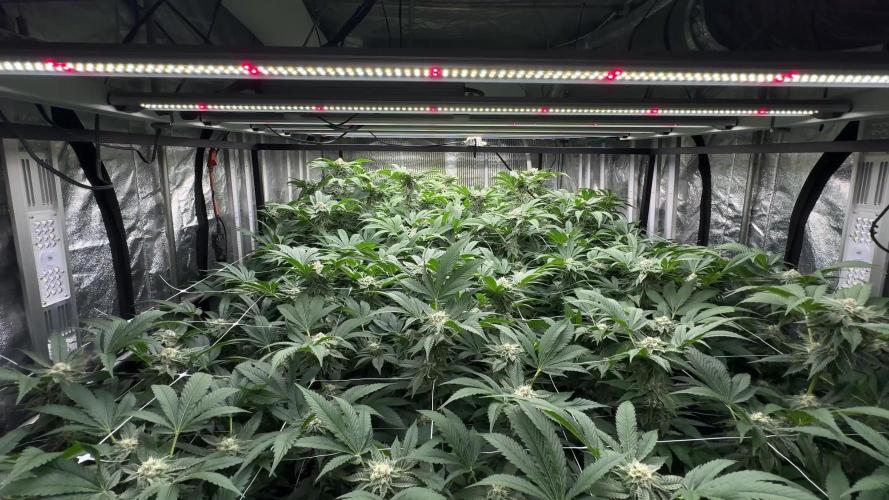
Week 12 overall — halftime, and everything is going according to plan. This is the point in the run where the work put in during veg and early flower either shows or doesn’t. In this case it’s showing. The buds are forming nicely across the board, every site that was kept is stacking, and the canopy is sitting exactly where it needs to be. No drama, just execution.
The structure on this cut continues to impress. The tight internodal spacing that defined her in veg is now translating into dense, compact bud formation along every retained site. The trichome coverage is already visible to the naked eye and building fast — a good early sign of what the finish line is going to look like. The GMO influence is clearly present in the calyx stacking and overall density, while the Triangle Mints BX contribution is showing in the frost and the way the sites are filling from the base up rather than just at the tips.
Height holding at 110cm, lamp still at 30cm distance — maxed out, pushing every photon into the canopy. Watering steady at 3.3L per plant per 24h, the ladies are drinking consistently now. pH locked at 6.2, EC pushed up to 2.0 mS/cm to keep pace with the escalating demand of the bulking phase. Humidity tightened down to 50% — botrytis prevention becomes the priority from here, no compromises. Day temp 27°C, nights up slightly to 25°C to keep the differential managed without stressing the plants.
Smell has stepped up to strong. The GMO × Triangle Mints BX is making itself known — the room has a presence now that wasn’t there last week. A candy gas profile is developing, exactly the kind of nose you’d expect from this cross, and it’s only going to intensify from here as the resin production ramps up through the back half.
Nutrient stack: Canna CalMag Agent 1.1 ml/l, CANNA Aqua Flores A+B at 4.6 ml/l each, CANNA PK 13/14 stepped up to 0.5 ml/l continuing the gradual increase in line with demand, Aptus Regulator 0.1 ml/l, Green Planet Rezin 1 ml/l — and Plagron Green Sensation introduced at 0.5 ml/l, right on schedule. The full flower programme is now running. Feed rotation stays unchanged — two full feeds with the complete stack, third is 50/50 osmosis and tap, pH’d, carrying only CalMag.
The second half starts now. Let’s see what she’s got.
Next update Sunday. Stay tuned.
Likes
4
Share


@Ryno1990
Follow
All these beautiful girls are going thre flush now getting ready to harvest up they are all very resiny an covered in trichromes all the nugs are nice an dense an are smelling amazing can't wait to be able to dry an start curing them
