


Likes
Comments
Share

@Smokeygrows420
Follow
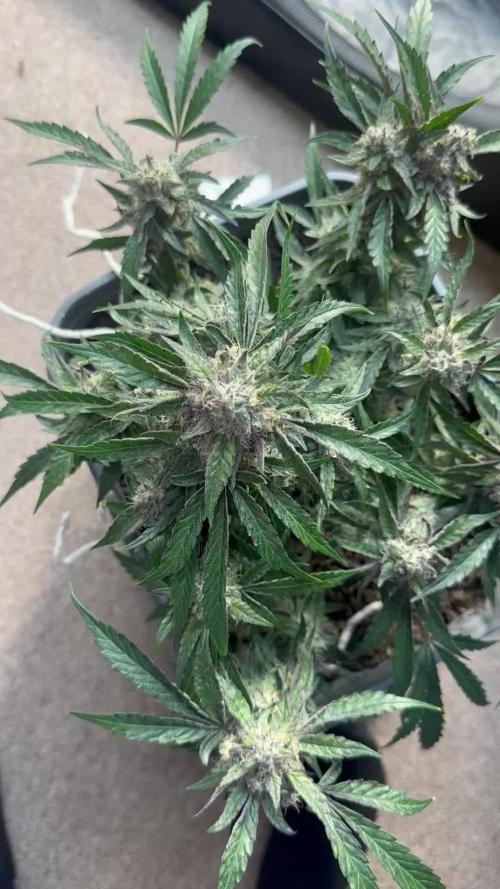
Great run with little effort definitely shows its name in smell and taste

Likes
11
Share


@CanadianFillmore
Follow
Start of week 15. A little defoliation and LST training on a few branches. The grow medium has not dried out enough since last week's repotting, so no feeding at this time.
Update 6/15, moved to flowering room and 12/12 light.

Likes
33
Share


@GoldenArrow
Follow
Son 2 hafta civarına girdik someklerin en cok şişiceği dönemi gozlemleyecegiz .

Likes
31
Share


@MadeInGermany
Follow
Info:
Unfortunately, I had to find out that my account is used for fake pages in social media.
I am only active here on growdiaries.
I am not on facebook instagram twitter etc All accounts except this one are fake.
Have fun with the update.
Hey everyone ☺️.
This week she has developed beautifully ☺️.
I have already started training (topping) :-).
Otherwise the tent was cleaned and the humidifier filled up.
Until then, I wish you a lot of fun with the update.
Stay healthy 🙏🏻 and let it grow 👍
You can buy this Strain at :
www.Zamnesia.com
Type:
Runtz
☝️🏼
Genetics:
Zkittlez x Gelato
👍
Vega lamp: 2 x Todogrow Led
Quantum Board 100 W
💡
Bloom Lamp : 2 x Todogrow Led
Cxb 3590 COB 3500 K 205 W
💡💡☝️🏼
Soil : Bio Bizz Coco
☝️🏼
Nutrients : Green House Seeds Company Powder Feeding Bio
☝️🏼🌱
Water: Osmosis water mixed with normal water (24 hours stale that the chlorine evaporates) to 0.2 EC. Add Cal / Mag to 0.4 Ec Ph with Organic Ph - to 5.8

Likes
10
Share


@Exploding_buds
Follow
Esta semana hemos implementado la iluminacion metiendole junto al fc3000 de marshydro, 3 barras de led kappa solux para explotar este scroog💥🌱

Likes
10
Share


@RFarm21
Follow
Semana 7 julho - 13 julho
9 julho - feed day - bloombastic 0.5ml/l - causou uma ligeira queima de nutrientes aparentemente.
12 julho - feed day (2L)


Likes
4
Share


@eldruida_lamota
Follow
Vamos familia, actualizamos la quinta semana de vida de estas Terp & Tonic de Seedstockers.
La temperatura que estuvo entre los 24-26 grados y humedad dentro de los rangos correctos.
Todavía estamos en el ciclo 16 horas luz, 8 oscuridad, estiraron bien y ensancharon bastante también, el color es verde sano.
Se nota que los nutrientes de la marca Agrobeta hacen sus funciones.
También realicé una poda de bajos que yo si las veo necesarias para explotar después la flor.
- os dejo por aquí un CÓDIGO: Eldruida ,descuento para la tienda de MARS HYDRO.
https://www.mars-hydro.com
Hasta aquí todo, Buenos humos 💨💨💨

Likes
3
Share


@theicyeffect
Follow
Always cool to see what old school strains are all about. If there’s something experience has taught me is that classics are classics for a reason, and that’s the theme of this cycle.
The germination was exceptionally fast, followed by the development of a thick stalk and huge broad leafs, this Gorilla surely started strong.
Humidity and temperature kept fairly high throughout the week (70%/ 24°C), with regular misting, which they love!
So far so good, feels like a happy and healthy seedling. Let’s see what she’s got 💪🌱

Likes
35
Share


@FacelessGardens
Follow
❄️🤩💚 Frost for days loud Terps, dense nugs not hard to trim and a good Harvest what can you which more for...?! Def together with Tricho Jordan the best Beans I grew out so far, highly recommend trying them out !

Likes
10
Share


@Prop207
Follow
3 GAL RO Starting PMM 111
CAL MAG, 10ML
SILICA BLAST, 15ML
PURE Blend Pro Grow 40ml
No issues. Ppm meter shitted, maybe that's why ppm is sick and off the charts.
Likes
2
Share


@nickeri
Follow
9.7.2k24✅ 💚 Flowering 🌸👌
Nutri:
Plagron Alga Bloom = 4 ml/l
Plagron PK 13-14 = 1,5 ml/l
Plagron Sugar Royal = 1 ml/l
🌹🌹🌹
Fan adjusted and large leaves torn off 🌿
13.7.2k24 + Biobizz Alg-a-Mic = 4 ml/l

Likes
10
Share


@HideAndFly420
Follow
Flowering period started, i added adv nutrients to biobizz line and i just have to understand the reaction of blue dream, i just think there is something too much.
I m not sure cause i'm experiencing problems with temperature and humidity too, so i can't exactly recgnize wich is the problem now.
i'll update next week hoping the problem will be solved.
Let's go!



Likes
7
Share


@Damonkey
Follow
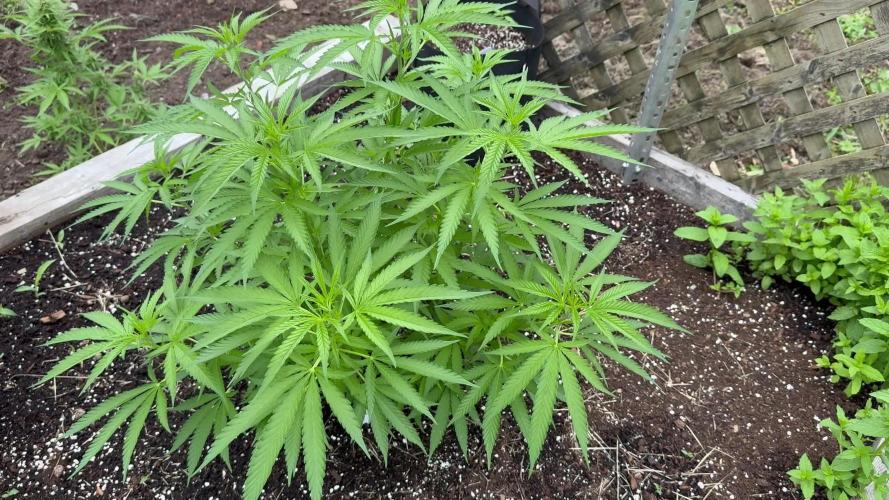
Transplant tomorrow and new home then after. Flowering will begin in a week or so. She’s responded well to all training and is ready to open up into a nice wide canopy. She’ll be tied down to her new pot a little to encourage a bit more spread and open her up a bit so light can get in.
Likes
35
Share

@TherealNICOGREEN
Follow
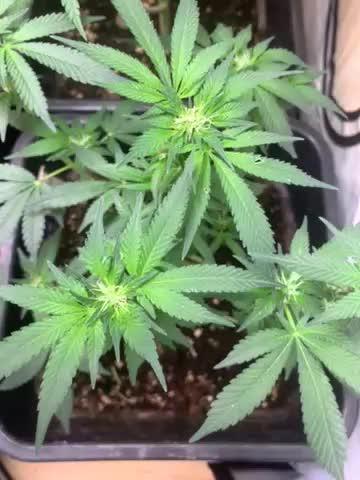
Hun er virkelig sød og dejlig og hun er virkelig smuk og spændende og se på hun . Jeg har gang i et forsøg med at hun kun skal lave topskud og gerne 3-4 pr gren ;) pt ser det ud til at lykkes. Håber i vil være sød at rette mig hvis i ser fejl ! Jeg overvejer brug mit sidste frø i DWC :)
Likes
111
Share


@DogDoctorOfficial
Follow
Harvesting An ELEPHANT !!!
And after 118 day from seed and 101 from wen she started her mix veg/flowering process, i cant say for sure but i am starting to believe that this auto world do veg, then veg and flower in conjunction for a wile and only after they a wile they move to a flowering stage completely but thats another post another day lol today was harvest day for this Auto Elephant from SSSC , and let me tel you she is a delight with huge fruits, so big that i normally cut and hang the all plant and for this i did not take the risk of doing that and getting bud rot , better safe than sorry, so what i broke her in smaller peaces and put it all in the rack.
Now not much to do than waiting for it to get around 10/15% humidity and jar with it all.
This one as you guys can see from the video , this is a full covered in trichomes BIG MAMA and touching her is like touching super glue or something lol i was trying to put all the colas in one picture , but is simply just not possible , they all look great so i selected 4 of them for a true back back ground <3
Thank you Super Sativa Seed Club for this opportunity, i fell like a champion no matter what with this 2 Mamas, much respect on the work you guys did on this Elephant
As always thank you all for stoping by for your love and for it all, i fell humble and honored

Likes
1
Share


@bmvape
Follow
I apologize for this diary not being thorough. I haven't had the extra time to fully document, or even give this grow the attention it deserves. Now that I have a couple grows under my belt, I feel more comfortable and know what to expect. I wanted to try and keep things as simple as possible, so I decided to try the Lucus Formula and only use Maxibloom through the full life cycle. For the first few weeks, I used nothing but filtered tap water, and once the plants had a few set of leaves, I began with a half feeding. After a week, I bumped to the full 7g/gal of the nutes and have continued that to this point, week 11. One plant looks to be at least a week closer to being ready to chop. I plan to flush after this week and cut the larger one, and then maybe one last feeding for the other. I think I will only grow 1 plant at a time going forward as I always have an issue with keeping both healthy and on pace. And LST works great in this setup.

Likes
12
Share


@Froggman
Follow
Flowering nicely now. Not drinking a ton of water but I attribute that to lower temps lately.
Likes
13
Share


@STAYINGONMYMAINCBATORUNTWO
Follow
04/01/21
Amazing colours have came through during cure showing off her red and purple! And she’s frosty all over and tastes like a tropical dream!mango pineapple tones with a side of lime! Would defiantly recomiod
Update; colours are coming through got some amazing hues just uploaded some vids 😍
Got the green pheno on both???! But it’s but either way I love this strain tastes a lot like the black cream auto I’ve done of sweet seeds too. So many colours in the bud and the flavour is immense throughout! Tastes like tropical mango and slight pineapple with a lovely pungent limeish taste it’s so nice and the high sent me to sleep when I tested the result! Just had to lay there and close my eyes and enjoy it and woke up to the end of my film ahahah would defiantly recommend Anyone growing very easy and amazing results!
Processing
Likes
22
Share


@Luv2Grow
Follow
Day 43 - First day of week 7 today and she looks really good just not sure if she’s really starting to flower yet. I’m hoping this is just typical of the GC strain.
Day 44 - No major changes, she’s growing and I’m loving the looks of her. Will continue uploading daily pictures.
Day 45 - She’s looking really good and budding more and more each day. Gave her straight pH’d water today and tomorrow and will give her another feeding on Saturday. She’s drinking almost a gallon of water a day.
Day 46 - Things are looking good with this girl. Bud sites are growing daily and this thing is a beauty. Gave her another feeding of just pH’d water and will “feed” her tomorrow.
Day 47 - ALL is looking good and she’s looking purdy. Gave her a feeding with the foxfarm nutes today. Did a true measurement to the biggest branch and she’s at 25.5”. Will continue to measure each day to see how much she’s growing in a 24 hour period.
Day 48 - Looking gorgeous and still stretching. Grew another two inches and is sitting at 27.5” right now. She’s really starting to fill in now and looking forward to the next few weeks.
Day 49 - The way thing thing is growing, she’s gonna be a beast. Gave her straight pH’d water tonight and will give her a feeding tomorrow. Looks like she finally stopped stretching, sitting at 27.5” still so hopefully she’ll start putting on the weight.