


Likes
Comments
Share


@KannaGrowing
Follow
Esta semana toca trasplantar, ya que el sustrato ha sido colonizado.
Utilizamos Macetas textiles de 4L para mejorar el drenaje, esta vez solo añadimos Bio Terra Plus, nada de perlita.
Nada más finalizar los trasplantes, regamos abundantemente solo con agua y en el siguiente riego continuamos con la mezcla de fertilizantes.
La potencia de los LazerLite Pro 720 sigue al mínimo, aunque ya son cuatro conectados (uno por variedad = 1 m2).

Likes
7
Share


@caliriot73
Follow
the bud start to fat really fast and the trichomes production is over the top the smell is really sweet n creamy

Processing
Likes
6
Share


@xAK47FULLx
Follow
Stressing over this calmag deficiency that I can't fix 😞
Tried adding more calmag
Switched to marshydro
Change nutes and adjusted ph
I transplanted to soil f#ck it

Likes
9
Share


@HIAZ_urbanbudfarmer
Follow
Hello , GG going well , have upgraded light to a Mars Hydro Fce 4800, 480w . Great fit for my 1m X 1m tent. Currently dimmed down to 150w. Good quality build, looking forward to see what it can do. Increased nutes & feedings to every 2 hours for 15 minutes, will start Lst this week. Till next time , smoke up Gromie's 🤙🤘
Likes
11
Share

@Borberad
Follow
Woche 8
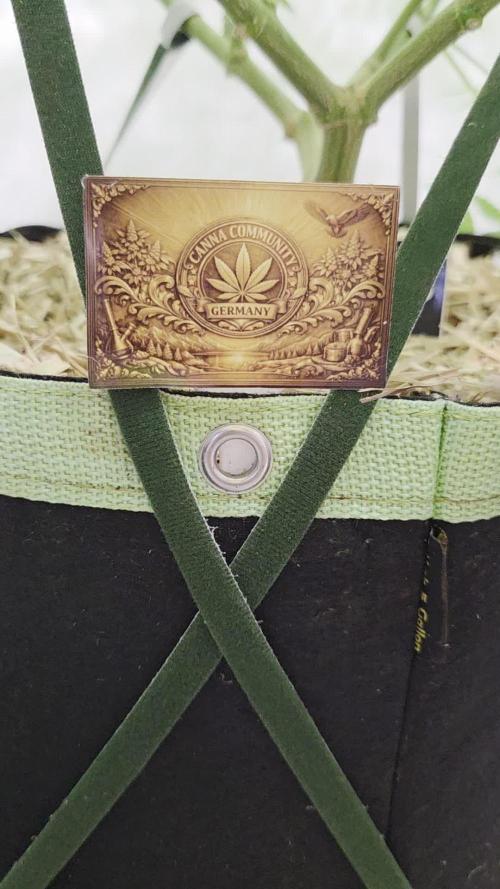
Die Blüte ist mittlerweile deutlich in Fahrt gekommen und wir wechseln von TNT und Root zu Bloom und Boost. Aktuell hoffen wir noch, dass sich das Blümchen selbst tragen kann und versuchen das einziehen von Haltefäden (Scrognetz) solange es geht zu vermeiden. U.a. für die Stärkung der Zellwände bekommt sie daher zusätzlich Silca force. Das Blümchen wächst hervorragend und hat die 80cm (ohne Topf versteht sich) erreicht. Ohne Training (bei nicht gekrümmten Trieben) wäre sie jetzt mindestens 1m bis 1,20 je nach Trieb.

Likes
10
Share


@Wynh1
Follow
Plants growing lovely getting big took well to topping, slight yellowing on bottom leaves so will have to up the grow slightly

Likes
56
Share


@Cannabeast40
Follow
Let´s get this going asap 😎
See you again very soon 😍
____________________________________________________
If you want to see more macro and micro photos, don’t forget to visit my Instagram page 🙂🙏🏻
https://instagram.com/cannabeast40?igshid=YTQwZjQ0NmI0OA%3D%3D&utm_source=qr

Likes
18
Share


@Mr_Dior21
Follow
This week has been all about shaping the plant. I’ve learned from last that the colas weren’t the same height, because I let the plant do it’s things with just a bit of training. Now I know what to look for so I’m trying my hardest.
I top dressed this week with crab meal, Gaia green all purpose 4-4-4, insect frass, kelp meal, bone meal, azomite, and covered it with a healthy serving of worm castings (about an inch to 2 inches). All of which was sprinkled on all the chopped and dropped leaves/branches. I believe in adding biomass to soil, especially for an indoor growing who is money conscious. Doing that can help save me money going back to the store for more soil.


Likes
45
Share


@Ultraviolet
Follow
2nd net is up. Early bud formations are promising. holding up to the extremes pretty well, some leaves taking minor damage, but overall, she is holding up, gave her 1 night at 50F see how she would react, stressful. Not advised as it messes with her metabolism, but I want to see if it triggers any anthocyanin response. Love to see her purp up but no signs yet.
My homework.
Rubisco regeneration is intrinsically linked to nitrogen supply because Rubisco is a major sink for nitrogen in plants, typically accounting for 15% to over 25% of total leaf nitrogen. The regeneration phase itself consumes nitrogen through the synthesis of the Rubisco enzyme and associated proteins (like Rubisco activase), and overall nitrogen status heavily influences the efficiency of RuBP regeneration.Structural Component: Nitrogen is an essential building block for all proteins, and the sheer abundance of the Rubisco protein makes it the single largest storage of nitrogen in the leaf.
Synthesis and Activity: Adequate nitrogen supply is crucial for the synthesis and maintenance of sufficient Rubisco enzyme and Rubisco activase (Rca), the regulatory protein responsible for maintaining Rubisco's active state. Nitrogen deficiency leads to a decrease in the content and activity of both Rubisco and Rca, which in turn limits the maximum carboxylation rate, Vmax, and the rate of RuBP regeneration Jmax, thus reducing overall photosynthetic capacity.
Nitrogen Storage and Remobilization: Rubisco can act as a temporary nitrogen storage protein, which is degraded to remobilize nitrogen to other growing parts of the plant, especially under conditions of nitrogen deficiency or senescence.
Nitrogen Use Efficiency (NUE): The allocation of nitrogen to Rubisco is a key determinant of a plant's photosynthetic nitrogen use efficiency (PNUE). In high-nitrogen conditions, plants may accumulate a surplus of Rubisco, which may not be fully activated, leading to a lower PNUE. Optimizing the amount and activity of Rubisco relative to nitrogen availability is a target for improving crop NUE.
Photorespiration and Nitrogen Metabolism: Nitrogen metabolism is also linked to the photorespiration pathway (which competes with carboxylation at the Rubisco active site), particularly in the reassimilation of ammonia released during the process.
To increase RuBisCO regeneration, which refers to the process of forming the CO2 acceptor molecule Ribulose-1,5-bisphosphate (RuBP) during photosynthesis, the primary methods involve optimizing the levels and activity of Rubisco activase (Rca) and enhancing the performance of other Calvin-Benson-Bassham (CBB) cycle enzymes.
Biochemical and Environmental Approaches:
Optimize Rubisco Activase (Rca) activity: Rca is a crucial chaperone protein that removes inhibitory sugar phosphates, such as CA1P (2-carboxy-D-arabinitol 1-phosphate), from the Rubisco active site, thus maintaining its catalytic competence.
•Ensure optimal light conditions: Rca is light-activated via the chloroplast's redox status. Adequate light intensity ensures Rca can effectively maintain Rubisco in its active, carbamylated state.
•Maintain optimal temperature: Rca is highly temperature-sensitive and can become unstable at moderately high temperatures (e.g., above 35°C/95F° in many C3 plants), which decreases its ability to activate Rubisco. Maintaining temperatures within the optimal range for a specific plant species is important.
•Optimize Mg2+ concentration: Mg2+ is a key cofactor for both Rubisco carbamylation and Rca activity. In the light, Mg2+ concentration in the chloroplast stroma increases, promoting activation.
•Manage ATP/ADP ratio: Rca activity depends on ATP hydrolysis and is inhibited by ADP. Conditions that maintain a high ATP/ADP ratio in the chloroplast stroma favor Rca activity.
Enhance Calvin-Benson-Bassham (CBB) cycle enzyme activity: The overall rate of RuBP regeneration can be limited by other enzymes in the cycle.
•Increase SBPase activity: Sedoheptulose-1,7-bisphosphatase (SBPase) is a key regulatory enzyme in the regeneration pathway, and increasing its activity can enhance RuBP regeneration and overall photosynthesis.
•Optimize other enzymes: Overexpression of other CBB cycle enzymes such as fructose-1,6-bisphosphate aldolase (FBA) and triose phosphate isomerase (TPI) can also help to balance the metabolic flux and improve RuBP regeneration capacity.
Magnesium ions, Mg2+, are specifically required for Rubisco activation because the cation plays a critical structural and chemical role in forming the active site: A specific lysine residue in the active site must be carbamylated by a CO2 molecule to activate the enzyme. The resulting negatively charged carbamyl group then facilitates the binding of the positively charged Mg2+ion. While other divalent metal ions like Mn2+ can bind to Rubisco, they alter the enzyme's substrate specificity and lead to dramatically lower activity or a higher rate of the non-productive oxygenation reaction compared to Mg2+, making them biologically unfavorable in the context of efficient carbon fixation. The concentration of Mg2+ in the chloroplast stroma naturally increases in the light due to ion potential balancing during ATP synthesis, providing a physiological mechanism to ensure the enzyme is activated when photosynthesis is possible. At the center of the porphyrin ring, nestled within its nitrogen atoms, is a Magnesium ion (Mg2+). This magnesium ion is crucial for the function of chlorophyll, and without it, the pigment cannot effectively capture and transfer light energy.
Mg acts as a cofactor: Mg2+ binds to Rubisco after an activator CO2 molecule, forming a catalytically competent complex (Enzyme-CO2-Mg2+). High light + CO2) increases demand: Under high light (60 DLI is a very high intensity, potentially saturating) and high CO2, the plant's capacity for photosynthesis is high, and thus the demand for activated Rubisco and the necessary Mg2+ cofactor increases. Mg deficiency becomes limiting: If Mg2+ is deficient under these conditions, the higher levels of Rubisco and Rubisco activase produced cannot be fully activated, leading to lower photosynthetic rates and potential photo-oxidative damage.
Optimal range: Studies show that adequate Mg2+ application can enhance Rubisco activation and stabilize net photosynthetic rates under stress conditions, but the required concentration is specific to the experimental setup.
Monitoring is key: The most effective approach in a controlled environment is to monitor the plant's physiological responses e.g., leaf Mg2+ concentration, photosynthetic rate, Rubisco activation state, and adjust the nutrient solution/fertilizer to maintain adequate levels, rather than supplementing a fixed "extra" amount.
In practice, this means ensuring that Mg2+ is not a limiting factor in the plant's standard nutrient solution when pushing the limits with high light and CO2.
Applying Mg2+ through foliar spray is beneficial to Rubisco regeneration, particularly in alleviating the negative effects of magnesium (Mg) deficiency and high-temperature stress (HTS). While Mg can be leached from soil, within the plant it is considered a mobile nutrient, particularly in the phloem. Foliar-applied Mg is quickly absorbed by the leaves and can be translocate to other plant parts, including new growth and sink organs.
Foliar application of: NATURES VERY OWN MgSO4 @ 15.0g L-1 in a spray bottle.
Foliar sprays are often recommended as a rapid rescue measure for existing deficiencies or as a supplement during critical growth stages, when demand for Mg is high. Application in the early morning or late evening can improve absorption and prevent leaf burn.
The starting point [of creativity] is curiosity: pondering why the default exists in the first place. We’re driven to question defaults when we experience vuja de, the opposite of déjà vu. Déjà vu occurs when we encounter something new, but it feels as if we’ve seen it before. Vuja de is the reverse—we face something familiar, but we see it with a fresh perspective that enables us to gain new insights into old problems. Come walk in the enchanted forest.
Likes
14
Share


@danieljeremiah2911
Follow
The girls are really starting to fruit up, they have been on 10 scoops of flower food per week and this past week we added one scoop of flower finisher to the mix. Their feeding has been split into two days so as not to flood the plants with nutrients and burn the leaves. This means they still get their 10 scoops but in 5 scoop intervals. Watering has been every 2 days because of the 12/12 light schedule the soil doesn't dry out as quickly.
The buds are getting massive on the White Widow plant, they are getting to be too heavy for the branches so I have begun to support the lower branches by tying them up to the main stem. I am using a plant wire so that as the plant moves and grows it isn't constricted. You can see the green supports in the newest pictures I uploaded. I also began thinning out the fan leaves so that all of the plants energy can be focused on the bud growth regions. I began removing the larger fan leaves that were blocking light to the bud regions. You can see how the plants are less bushy now. This should provide some low stress to the plants and boost bud production.
Continued to thin out the fan leaves today. Made a lot of progress, now all of the bud sites should be receiving light. We also began a new fertilizer. I added a flower finisher into the mix with the Build A Bloom 2-10-5 flower food. Starting with just a 2 scoops mixed into the other flower food from pride lands. Cut down the pride lands scoops to 3 per serving to balance out with the new 2 scoops of flower food. This will keep me at 1 scoop per gallon of media per plant per week.
Likes
13
Share


Likes
8
Share

@PlantMike
Follow
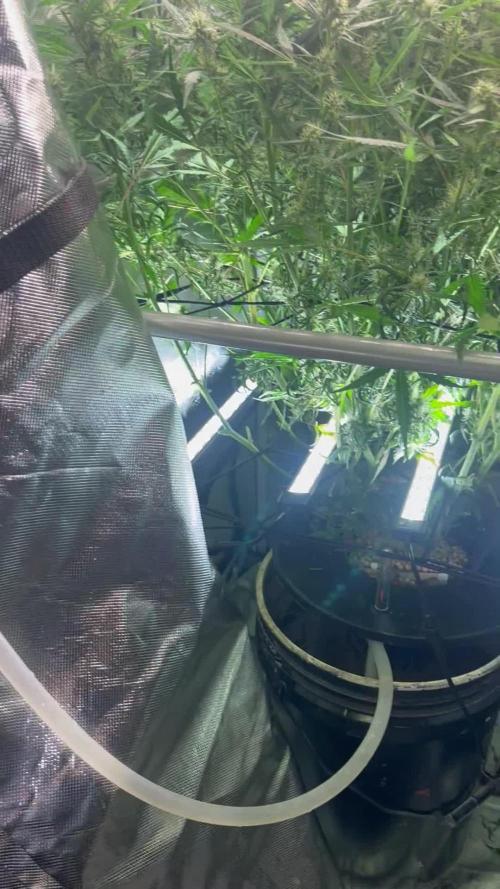
She's really starting to fill out at each nug site, pistil hairs are still vibrant white and an intoxicating citrus/melon smell has taken over the grow tent! Still feeding at an EC of 2 and keeping the pH around 5.5-5.8. Leaf health is good for the most part and I did add a small under canopy fan to keep air moving through the plant. Plant shows no signs of senescence at this point so let's keep it going!
Processing
Likes
14
Share


@Nookandplant42o
Follow
previous watering was fed with liquid nutrients, my temperatures are not low so the nutrients come slowly with some intervals giving only water without much runoff occurring a mixture of soil and mycorrhizae for better performance i know i needed calcium and magnesium good the problem was money, i will continue with epsom salt the option i have direct sulfur in the soil has helped me hear a visible change.
water ph 6.2 solution temperature 20 ° - 0.50 g of great white mycorrhiza 2 days earlier were sprayed with water without ppm via leaves - lights off to serve as a cooling shower in the heat is great for stomata .
Simple led panel added as main light source 260watts being divided to 3 plants in the fullspectro tent model, did not get much difference in temperatures compared to HPS, is more the same spectro ratio and UV to reach more directly in the trichomes and terpenes.
Large leaves, like a true sativa even if they are long, go in equally straight and thin shape, trichomes with glands larger than their sister, but this one in front really does not hear physical stress from something just high temperature training, but are very resistant To this, I imagine later on taking this same genetics at favorable temperatures and hydro. A strong smell that I will have to turn to buy a filter, I can not with curious and malicious neighbors need to really contain the smell.
Likes
31
Share


@Pedrojuan
Follow
Bueno esta semana se sube el EC a 0,8 aprox. Probé a hacer un corte apical ( no sé si lo hice bien 🙁) y una defoliación, si todo va bien la próxima pasamos a floración. Esperemos resistan mis torturas, pobrecitas!🙏
Esta semana fue bien, soportaron los cortes y se recuperaron bien, mucho olor a vegetal....🌲🌲🌲🌲👌


Likes
19
Share


@CanabisLoverHobbyGrower
Follow
Well all 7 have done really well,.. all have 4/6 true leaves so started a little bit of root juice today, really happy as of now,.. roll on next week 👌
Likes
60
Share


@Roberts
Follow
Alaskan Purple auto Is doing pretty good. She is growing great under the Medic Grow mini sun 2. She got some lst, and roots pruned today. Everything is looking good at the moment. Thank you Medic Grow, and Seedsman. 🤜🏻🤛🏻🌱🌱🌱
Thank you grow diaries community for the 👇likes👇, follows, comments, and subscriptions on my YouTube channel👇. ❄️🌱🍻
Happy Growing 🌱🌱🌱
https://youtube.com/channel/UCAhN7yRzWLpcaRHhMIQ7X4g
Likes
12
Share


@Drtomb
Follow
This is the final week these girls have to get there tan on in the flower tent. Next weekend is harvest. I've been running straight water for the last 3 days. Will continue the course for a total of 7 days followed by a couple days of nothing to allow the roots to dry.

Likes
21
Share


@DeepRootsGrowTrees
Follow
SATIVA DREAM by KANNABIA
Week #11 Overall
Week #10 Veg
No issues this week she's looking 👍 dealing with elements outside with no problems even the heat isn't really bothering her she's under a sun screen to also help out with the scorching heat. A strong plant great genetics 💪
Stay Growing!!


