


Likes
Comments
Share


@Bones_1986
Follow
Trichomes are 100% cloudy
Plan to flush tomorrow when the pot is dry and harvest Sunday which will be day 68.
Day 67 :
Decided to flush one more time for a final push.

Likes
4
Share

@AlpenZilla
Follow
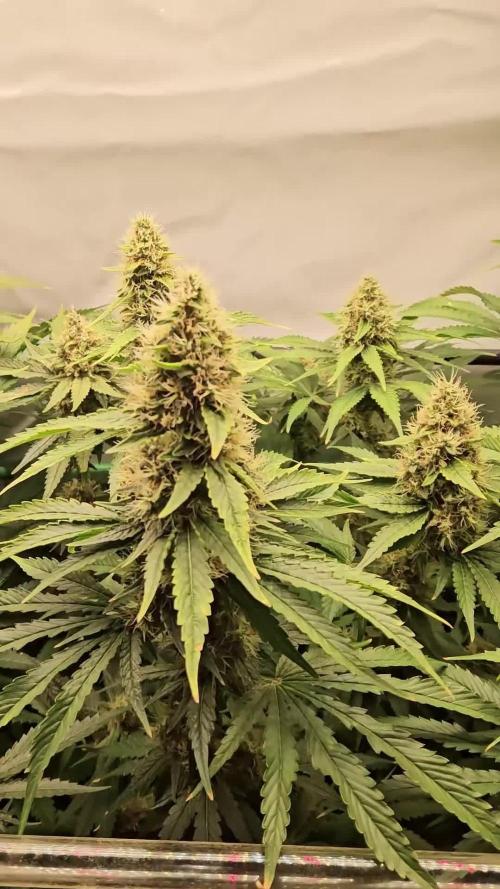
Flowering – Week 10 | Day 67 (Week 15 overall)
Quick update focused on the Future #1 plants.
At this stage, everything is developing largely as expected, with no major surprises. The two Future #1 plants show slightly different levels of maturity, with one being a bit further along than the other, but this remains well within a normal range of variation.
Overall, the grow is running very stable. There is currently very little intervention required. The routine mainly consists of watering roughly every four days and allowing the plants to continue their natural development.
For now, the plan is simply to keep observing and give the plants the time they need to fully finish. 🌿

Likes
1
Share


@lalee
Follow
first time I grew Dutch passion, and it was orange bud auto. I love Sativa dominant strains, and this strain is now on my favorite list. First on my list is Amnezia haze auto, which is 70% Sativa dominant seedstockers and fastbud seeds. I love it. The second is chocolope DNA genetics feminized; this strain is really heavy and many thc. Three is orange bud auto from Dutch Passion, really nice buds, many thc, and long-lasting sativa effect. This strain really tells you that you are really high.



Likes
47
Share


@Hydro_Hiebs
Follow
What up Growmies, this one grew hella fast maturing in 9 weeks from seed to harvest fast. Buds is true to their name. This one has some serious resin on the flowers reminding me of some sort of a gelato Gorilla glue cross, but we shall see when it's released! I could be far off lol. I had no problems growing her. She was really easy and happy her whole life. She's a great one for extractions!
Thank you grow diaries and thank you fastbuds for the opportunity to show the world my organic gardening skills! I appreciate all the support from the growing community here on grow diaries. Big thanks for my followers!

Processing
Likes
229
Share


@DadasGrow
Follow
Well I got my Scrog screen installed on Saturday and I remembered to Ph my Mix this week. The girls look healthy, and from Monday to Today they have shown Growth!! YAY I'm so excited. I know Im so far away.

Likes
1
Share


@Grow_miss
Follow
The effect was very Indica-heavy, but I also harvested it with a relatively high amount of amber trichomes.
W
Likes
56
Share


@Island
Follow
After many weeks believing that I have mites in my cultivation, I start to believe that my real problem is my soil.
Apparently my soil still has decomposing material and it has affected the leaves.
Waiting the flowering goes and how will plant react of it.
I hope it not serious thing.
My leaves problem look like excess of nutrient in soil formulation.
On this week I turn lights on.
Now there will be 360W full power to flowering stage.

Likes
109
Share


@Prototype0181
Follow
Didn't Pay to much attention to em this week😅
Deu to a shopping Spree😉 Got a new light and tent this week 😁
Light: Geeklight Geekbeast pro 630w
Tent: Budbox pro xl 120x120
Expecting a lot from this upgrade stay tuned😉


Likes
11
Share


@Chubbs
Follow
420 Fastbuds
BlueDream Auto
Week 4
Holy 420 Fastbuds these girls have exploded thus past week. I'm start to see preflower sites all over which is very exciting because we all know what that means. Off to flower we go. I still have fed them 2 liters of well water daily and so far no signs of any nute deficiencys.
All in all Happy Growing
Likes
7
Share

@all_about_420
Follow
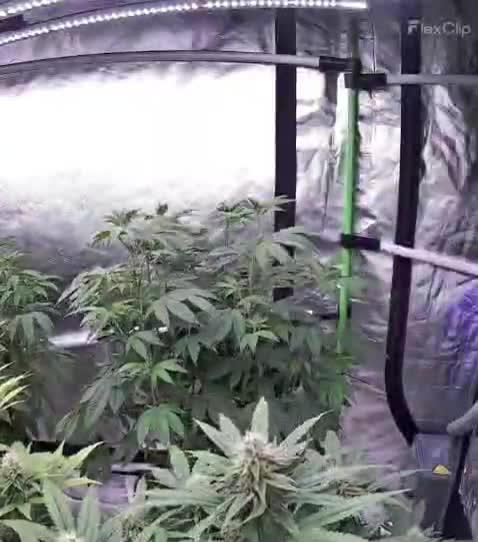
Momentan fokussiert sich die Naughty Dawg vollständig auf die Endreife ihrer Fruchtstände. Die Triebspitzen sind mittlerweile so schwer, dass sie ohne mechanische Hilfe kaum noch aufrecht stehen würden. Ein Blick auf die Details zeigt eine beeindruckende Harzentwicklung: Die Trichome überziehen die Kelchblätter in einer dichten, klebrigen Schicht, während die Buds stetig an Umfang gewinnen. Das tiefe Chlorophyll-Grün des Blattwerks bleibt stabil und versorgt die schweren Köpfe optimal. Geruchlich wird es jetzt richtig ernst – die scharfen Gas-Noten paaren sich mit einem schweren Moschus-Aroma zu einem intensiven Bouquet. Es ist faszinierend zu sehen, wie dieser unbändige Teil meines Gartens nun die Zielgerade ansteuert.
Likes
28
Share


@Adkguerrilla44
Follow
Man oh man the gp x bkp is taking off like a champ and filling out very nicely now that she's starting to flower 🌼 🌸!!!!! Gp x shb is starting to come back finally and is about to start flowering smells like straight up sour d already!! The gp x bkp is smelling like skunk and fruit I'm super excited for these strains especially after seeing somebody went and tested a few of wicked genetics strains and all of them came out to be 23%thc-27%thc !!! Fricken pumped gary payton is supposed to be a heavy hitter so I cannot freakin wait until both of these are finished
Likes
4
Share

@NoProbation4Weed
Follow
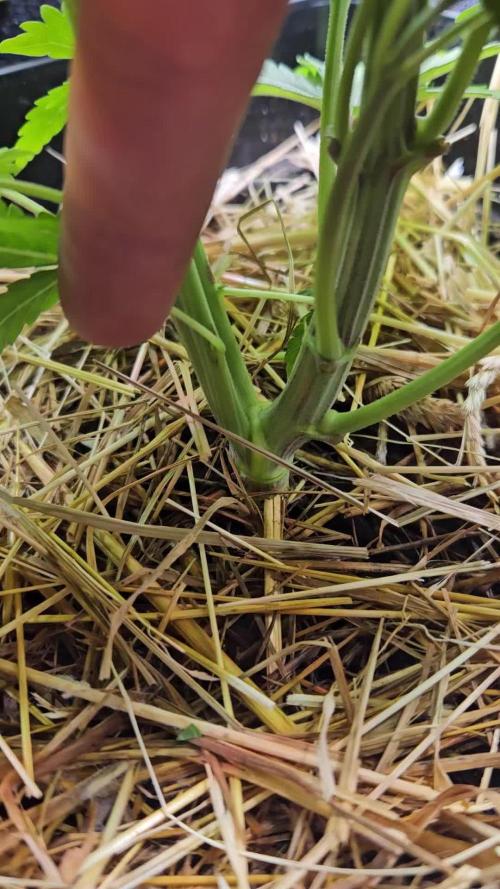
The Lemon Orange has a crazy mutation. She topped herself and the leaves are growing strange from the main stem. The Top gets Fluffy like it has topped itself multiple times.
Unfortunately, during my absence, the ladies were under-watered and could’ve used a bit of nutrients as well. I’m optimistic they’ll bounce back and recover.
I topped and defoliated them.
Light is hitting the leaves with around 500 PPFD.
Likes
9
Share


@Kushizlez
Follow
Harvest:
Everything dried up to 347 grams + 96 grams of super high quality trim. Overall I am not too pleased with the smoke of the product. Although the bud size, bag appeal, smell and taste are pretty much all there, the shitty burn is a deal breaker for me and the majority of this weed is quite frankly useless. Another downside is while smoking I’ve found 4 seeds in an ounce from almost every strain. Light leaks? At least I learned a ton, including how to get super good burn for my next crop. I’m hoping that curing for a month or so will improve the burn but I wouldn’t really count on it. I have seen weed dried for 4 days with no cure and no flush smoke clean and not go out once. I have been told that the key to white ashes/clean burn is proper mineral content in the soil and there is tons of scientific studies on cigar ash going back 100 years. Plants grown in a medium with high levels of decomposing organic matter, phosphorus, magnesium, chlorine and heavy metal ratio tend to produce black/grey ash. Whereas plants grown in a medium with a higher ratio of trace minerals like calcium carbonate and potassium in the form of wood ash, rock dusts, oyster shell flour and lower levels of decomposing organic matter will produce a dense, uniform white ash that rarely goes out. But this is still all theory until I test it to confirm for myself a few times. My last few outdoor harvests did not improve with curing at all so I’m hoping this will be the missing link. Plain peat moss and coco clearly lack essential minerals that help burn. If said theory is correct I should find a synthetic nutrient line with more trace minerals. Makes me wonder if growing if rockwool/basalt rock could improve burn in a hydro setup.
I think I did a fairly decent job for my first grow. I went wrong in a million different places but I still stuck it out and got some decent herb. Things went wrong early when I got black spot mold, nitrogen/magnesium deficiencies and powdery mildew. I corrected most of it but things didn’t get really bad until mid veg when I intentionally skipped a few feedings and defoliated quite heavily stunting the plants. I also didn’t even top or start LST until the 6-9th node which was really stupid and hurt my yield. My temperatures were all over the place from the learning curve. I was severely overwatering without realizing it. 100% peat moss is a shitty medium. I also fed way too late in flower (not what caused shitty burn). I also used synthetic nutrients in soil.
Zkittlez bonsai
Yield: 1.9g
Smell: 7/10 - sweet, candy, berry, gassy, piney hints
Bag appeal: 7/10 - slightly leafy/stemy
Crystal coverage: 7.5/10 - very impressed
Ash: 6/10 - flaky, mostly white/grey
Fire holding: 4/10 - stays lit for 10-30 seconds
Smoke: 6/10 - taste is decent, needs curing
High: 6/10 - indica dom
Comment: looks nice, smells nice, tastes nice, burns like shit.
43.5/70 = 62% 👎🗑️
Black Garlic #1
Yield: 53.6
Smell: 8/10 - gassy, piney, earthy, skunky
Bag appeal: 7/10 - slightly leafy/stemy
Crystal coverage: 7.5/10 - very impressed
Ash: 8/10 - thick, uniform white ash
Fire holding: 7.510 - stays lit for 45+ sec
Smoke: 7.5/10 - taste is good until the end
High: 7/10 - sativa dom
Comment: looks nice, smells nice, tastes nice, burns great but quite leafy.
52.5/70 = 75% 👍🔥
Black Garlic #2
Yield: 42.3
Smell: 7/10 - woody, earthy, tea
Bag appeal: 6.5/10 - slightly leafy/stemy
Crystal coverage: 7/10 - impressed
Ash: 6/10 - flaky, mostly white/grey
Fire holding: 4/10 - stays lit for 10-30 seconds
Smoke: 6/10 - taste is decent, needs curing
High: 8/10 - sativa dom
Comment: looks nice, smells nice, tastes nice, burns like shit.
44.5/70 = 63% 👎🗑️
Zkittlez
Yield: 39.4
Smell: 7/10 - sweet, candy, berry, gassy, piney hints
Bag appeal: 6.5/10 - slightly leafy/stemy
Crystal coverage: 7.5/10 - very impressed
Ash: 8/10 - thick, uniform white ashes
Fire holding: 8/10 - stays lit for seconds
Smoke: 7.5/10 - taste is decent, needs curing
High: 7/10 - indica dom
Comment: looks nice, smells nice, tastes nice, burns great but smalls didn’t fill out.
51.5/70 = 73% 👍🔥
Blackberry Breath #1
Yield: 57.5
Smell: 9/10 - sweet, grape, berry, gassy, earthy, hashy
Bag appeal: 8.5/10 - dense, sparkly buds
Crystal coverage: 9/10 - super impressed
Ash: 5/10 - flaky, mostly grey/blackish
Fire holding: 4/10 - stays lit for 10-30 seconds
Smoke: 5/10 - tastes like chalky shit
High: 6/10 - indica dom
Comment: looks amazing, smells amazing, tastes like shit, burns like shit.
46.5/70 = 66% 👎🗑️
Blackberry Breath #2
Yield: 76.1g
Smell: 6/10 - musky, tea, berry, herbal
Bag appeal: 8/10 - slightly leafy/stemy
Crystal coverage: 7.5/10 - very impressed
Ash: 5/10 - flaky, mostly grey/black
Fire holding: 4/10 - stays lit for 10-30 seconds
Smoke: 5/10 - taste is shit
High: 6/10 - indica dom
Comment: looks nice, smells shitty, tastes shitty, burns like shit.
41.5/70 = 59% 👎🗑️
Slurricane #4
Yield: 34.5g
Smell: 8.5/10 - gassy, deep piney, fuel, earthy,
Bag appeal: 8.510 - slightly leafy/stemy
Crystal coverage: 7.510 - impressed
Ash: 6/10 - flaky, mostly white/grey
Fire holding: 4/10 - stays lit for 10-30 seconds
Smoke: 6/10 - taste is decent
High: 6/10 - indica dom
Comment: looks amazing, smells amazing, tastes nice, burns like shit.
46.5/70 = 66% 👎🗑️
Badazz OG Cheese
Yield: 43.5g
Smell: 6.5/10 - musty, woody, cheesy, piney hints
Bag appeal: 6/10 - slightly leafy/stemy
Crystal coverage: 6/10 - very impressed
Ash: 5/10 - flaky, mostly white/grey
Fire holding: 4/10 - stays lit for 10-30 seconds
Smoke: 6/10 - taste is decent
High: 6/10 - sativa dom
Comment: looks like shit, smells decent, tastes decent, burns like shit.
39.5/70 = 56% 👎🗑️



Likes
7
Share


@dank604
Follow
No nutes yet, just 2 full waterings (plain water ph'd 6.5) but she'll get her first feeding within the next few days. She's growing strong! A bit of LST on her side branches.

Likes
29
Share


@Hashy
Follow
This week the wedding cheesecake
has come along fine, she is as low as i can get her and has probably finished stretching, this one has probably had the biggest stretch out of the 4. All 4 strains in the tent are quite close in development still but this one is a little behind at the moment.
Notes
Day 50 manually feed this weeks nutes
Day 51 nothing
Day 52 nothing
Day 53 autofeed water.
Day 54 nothing
Day 55 autofeed this weeks nutes
Day 56 big defoliation. 461 ppfd, 29.9 DLi.
Back in a week
Take it easy.
Likes
1
Share


Likes
25
Share


@Kakui
Follow
Veg22, riego con 3.0 EC y pH 5.9, drenaje promedio de 5.8 pH y 2.6 EC(muy bien), primer riego con Sensizym para limpiar un poco las raíces, y este será el último riego de vegetación con Voodoo Juice, Tarantula y Piranha.
Se hizo una pequeña defoliación de las hojas abanico más bajas y se volvió a ajustar el LST, ya van tomando la forma final.
Veg23, creciendo bien.
Veg24, se mide la temperatura de las hojas 22°C y se compara con la temperatura del indoor 23°C, con una humedad de 50% RH, la calculadora arroja un valor de VPD=1.24 kpa, lo que está dentro del rango óptimo.
Veg25, hoy toca una pequeña defoliación y probaré también hacer un último apical en 2 o 3 plantas a modo de prueba.
Al final, tomé un gran riesgo, y hice varios apicales extra y una defoliación más grande de lo que tenía en mente, tengo fe que resultará bien 😎👌
Veg27, riego con 0.8 EC y pH 6.0, drenaje de 6.0 pH y EC 2.0, se están alimentando y creciendo bien, quedan casi 2 semanas para pasar el fotoperiodo a 12/12, espero que crezcan suficiente para esa fecha.
Veg28, un par de hojas de 2 plantas presentan mordidas tipo oruga, revise y no encontré nada, aplique spray insecticida, espero no siga pasando. A parte de eso siguen creciendo bien, quedan un poco más de 10 días para el paso a 12/12.

Likes
12
Share


@TheBudWhisperer
Follow
Week 2 of veg. In the books and if was only half the week. We flipped to flower a few days ago now and they’ve all started the stretch in earnest. #2 was pistoling heavy during the rooting stage and appears to have caught some pollen prior to reveg. Not sure how that’s gonna translate later on to be honest. #1 is still stretchy as hell and probably gonna need a supercrop at some point soon. They’re all growing with renewed vigour now and we’re well positioned for a great flower cycle. Interesting to see how quickly they develop over the next week in comparison to their parents. Other than that - alls well and somewhat boring with this grow. Exactly the way we like it👌.
Background
This cycle of clones represents all the potential of this F1 line of WalkerBerry OG. Bred by myself over the last couple of years. This genetic shows excellent hybrid vigour, incredibly stable nutrition requirements to date and an eclectic mix of long and short internodal spacing bu specimen.
We know we have indica and sativa dominant traits spread evenly across the 6 available clones. Now it’s just a matter of seeing them run out under controlled and pollen free conditions.
We’ve labelled each plant and it’s resulting seed accordingly. Once we get to the F2 run, we’ll hopefully be able to isolate down to 2-3 phenos if the bud is any good. From there, who knows. It’d be great to get to a finished, stable generation that would be fem worthy but that could be a very long way off. For now - we’ll focus on this line and see where it goes🤞🤞.
Likes
16
Share

@Guero666
Follow
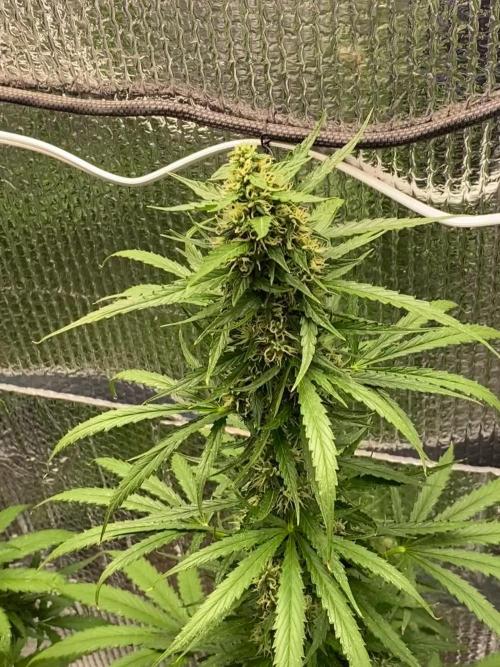
8 weeks old and seem to be doing well. Still fertilizing with ff cultivation nation flower granules, big bloom, cal-mal, molasses, and bonemeal. Plants have been thirsty so been giving them plain saved rainwater as well. I’d imagine that they have a few more weeks to harvest but I’ll keep monitoring the situation. Little by little a few degrees cooler at night but still hot during the day but doesn’t seem to be affecting the plants at all. Still getting sunlight and sf2000. 9-6-25 plants looking healthy. They got a light top dressing of bonemeal with ff big bloom. Hopefully another couple weeks til harvest 9-8-25 weather cooled down a bit so better temps in the grow room. Gave them cn veggie, big bloom and molasses. The runt seems to be further ahead in bud production than its sibling. A couple more weeks and harvest time