


Likes
Comments
Share

@Canna96
Follow
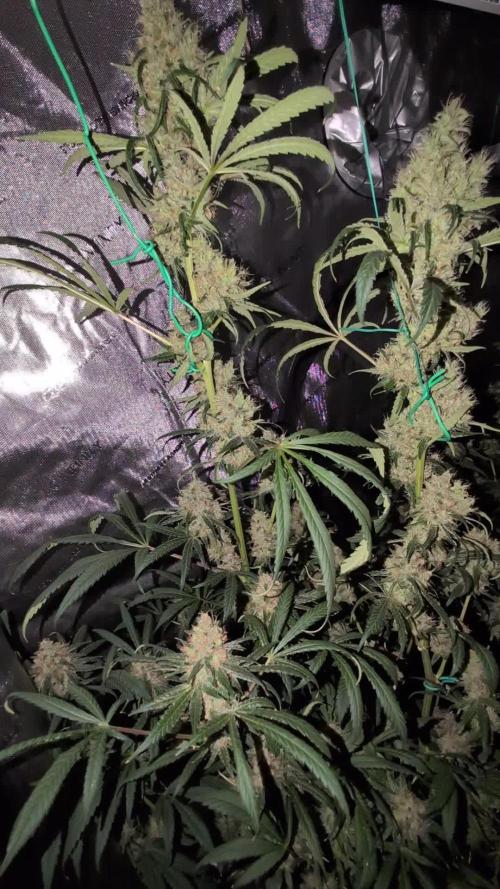
Hey now, hope everyone is having a great weekend! The Donuts is flushed and ready to chop, the flowers are very dense and smell amazing. I will start flushing the Cherry Garcia tomorrow, and the Apple Fritters and Durban Thai X C99 need another 2 weeks or so. Hopefully the flowers continue putting on weight. Thanks for stopping by, stay safe, and blaze on!



Likes
19
Share


@Iamdisabl3dsgirl
Follow
Welp today ends week 6 on these beauties 😍 from @fastbuds_genetics_official 2x Gorilla Glue girlies are showing off with perfect node spacing things are looking gorgeous with these 2 ladies ...they are thriving super hard in their 8 gallon self wicking pots from @grotechgarden and their tasty nutes by @koshernutrients and basking under the cool rays 😎 of the QB4000 by @sunraise_led

Likes
7
Share


@MadeInGermany
Follow
Hey everyone 🤗.
This week you really put your energy into your growth 👍.
They look beautiful, thanks also to the nutrients in Green Buzz Liquids 😍👌.
Next week she will be moved to the flower tent 👍.
I wish you lots of fun with the update, stay healthy and let it grow 😎
You can buy this Strain at
https://thecaliconnection.com/original-sour-diesel.html
You can buy this Nutrients at
https://greenbuzzliquids.com/
Type:
Original Sour Diesel ( Clone )
☝️🏼
Genetics:
Fem seeds- Original Sour Diesel to Original Sour Diesel BX3 RVSD Male
Reg seeds- Original Sour Diesel x Original Sour Diesel BX3 Male
👍
Vega lamp:
2 x Todogrow Led
Quantum Board 100 W
💡
Bloom Lamp :
2 x Todogrow Led
Cxb 3590 COB 3500 K 205W
💡💡☝️🏼
Soil :
Canna Coco Professional +
☝️🏼
Fertilizer:
Green Buzz Liquids :
Organic Grow Liquid
Organic Bloom Liquid
Organic more PK
More Roots
Fast Buds
Humic Acid Plus
Growzyme Big Fruits
Clean Fruits
Cal / Mag
Organic Ph - Pulver
☝️🏼🌱
Water:
Osmosis water mixed with normal water (24 hours stale that the chlorine evaporates) to 0.2 - 0.4 EC. Add Cal / Mag 2 ml per l water every 2 waterings . Ph with Organic Ph - Pulver to 5.8 .


Likes
4
Share

@GREENPHOENIX6262
Follow
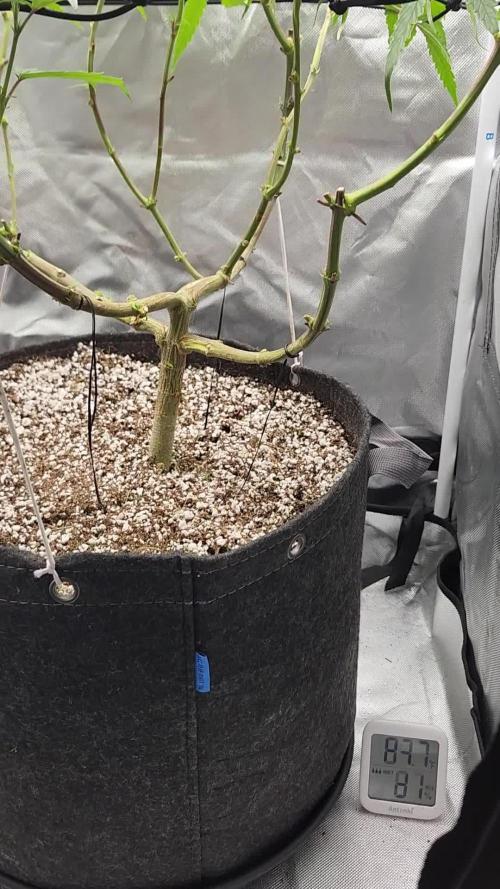
09/16 - Mother plant prepped and flipped - running 12/12 from veg starting today - flushed with clean water and Lotus (Carbo flush) clone update coming soon.
09/19 - Mother flipped pruned and flipped into flower - Flushed with clean water - Flower nutes in a week or 2 . Clones rooted- ready for transplant next week into 1 gallon pots.
Likes
27
Share

@For2itous
Follow
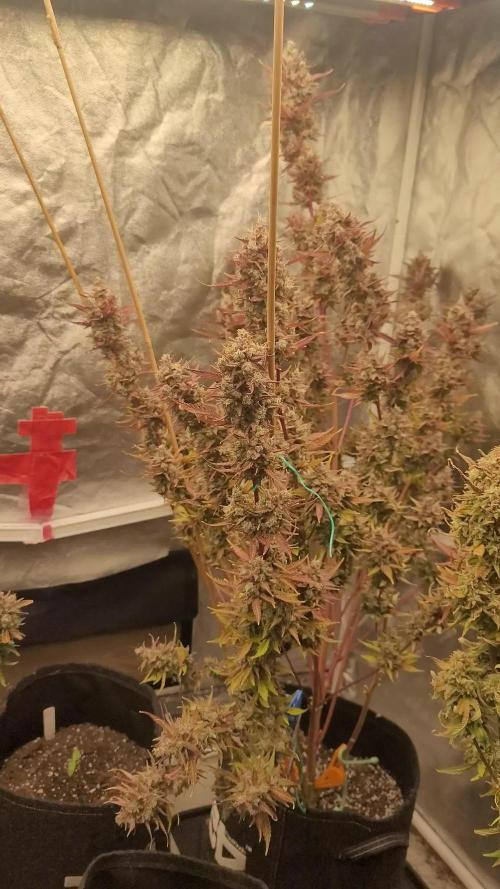
Its very frosty and big plant. Gorgeous colors and pungent cherry smells. Probably my biggest auto to date only like 3.5g soil. Looks like she'll be a good smoke just have to see. Probably only needs a week or so left Happy growing 🌴


Processing
Likes
8
Share


@GrownwithLED
Follow
Both Barbarian (=AK-47 x Barbara Bud) plants are filling up more and the first pistils start to get brown, which shows the plants start to ripen and go towards harvest time. The smell they exude is STRONG now and VERY PLEASANT. The aroma is sweet, peachy with sandalwood undertones and is MOUTH-WATERING. The plants are TRICHOME MONSTERS and are covered in crystals, any little touch and your fingers stay sticky for hours.


Likes
24
Share


@MediciGrade
Follow
End of Week 4 of Flower (day 28):
Some flowers look like they're starting to swell. Resin production has begun in earnest.
I put a tower fan with 180 deg. oscillation into the tent in order to increase overall airflow.
Noticed a slight tip burn showing up on some of the leaves and realized I had stopped getting adequate runoff after each fertigation event. I increased the volume (+16%) of nutrient solution they were getting during each of the 5 daily feedings and there have been no further spread of the tip burn.
Seems like the plants are all on cruise control. Here's hoping I can avoid any stupid mistakes the rest of the way. Until next week!

Likes
64
Share


@Roberts
Follow
Baked bomb auto is doing good this week. She has not shown any pistils yet. I imagine they are not far off. She looks like she is starting a stretching stage. She loves extra cal mag as well. She got a decent defoliation to open her up. She is ready for another week. Thank you Bomb seeds. 🤜🏻🤛🏻🌱🌱🌱
Thank you grow diaries community for the 👇likes👇, follows, comments, and subscriptions on my YouTube channel👇. ❄️🌱🍻
Happy Growing 🌱🌱🌱
https://youtube.com/channel/UCAhN7yRzWLpcaRHhMIQ7X4g

Likes
13
Share

@HydroLab-Germany
Follow
*english version below*
**HydroLab – Blüte Woche 1:
Der Stretch entfesselt & der Teppich lebt**
Willkommen zurück im HydroLab, dem einzigen Ort, an dem Pflanzen schneller wachsen als meine Stromrechnung. Die 12/12-Umstellung liegt nun offiziell sieben Tage zurück – und die Damen haben das Memo verstanden. Der Stretch? Vollgas. Der angekündigte „Kräuterteppich“? Er ist da. Und er rollt sich gerade selbst aus. 🌿🔥
Systemstatus: Wissenschaftlicher Wahnsinn in Zahlen
EC: stabil auf 1.5
Wasser: Vollentsalzt, nur noch 0.05 EC – so sauber, dass es vermutlich als „Destillat Light“ durchgeht
CalMag: jetzt Pflicht! Leitungswasser war nett, aber wir gehen jetzt pro
pH: von 5.8 hochdriftend bis 6.2, dann korrigiere ich
Klima: kalt draußen → warm im Labor dank Luftentfeuchter + 130W IR-Heizung (Nachtschicht-Modus)
Operation „Wurzel-Schutzschild“
Die Netpots haben ein Upgrade bekommen:
Alufolie-Abdeckung!
Nicht hübsch, aber verhindert sicher, dass irgendwo Licht in die Root-Zone kommt.
(Hydrolab-Regel Nr. 18: Wenn’s reflektiert, funktioniert’s. 🤓)
Pflanzenverhalten: Unkontrollierte vertikale Energie
Ich habe in dieser Woche nichts geschnitten und die Mädels einfach machen lassen. Ergebnis:
🔬 Hypothese: „Sie werden etwas wachsen.“
🔬 Ergebnis: Sie sind komplett durchgedreht.
Der Stretch ist massiv, die Tops schießen überall nach oben, die Mitte wird dichter, und die ersten Blütenansätze zeigen sich bereits in voller, flauschiger Pracht. Die Mykos arbeiten im Untergrund weiter wie ein italienischer Straßenbau-Trupp auf Koffein: die Wurzeln sind dick, cremefarben und gesund.
Labor-Kommentar
Manchmal muss ein Wissenschaftler lernen, loszulassen.
Und manchmal heißt das:
„Ich lass sie einfach eine Woche wild wachsen und schaue später, was weg muss.“
Genau diese Methode wenden wir hier an.
Aktuell sieht alles brutal vital, extrem dicht und herrlich chaotisch aus – genau wie ein Sativa-Scrog aussehen muss, bevor der Dompteur eingreift.
Ausblick
Nächste Woche geht’s ans Feintuning im Netz, am Lollipop wird nachjustiert und Bud Blood sollte sein Zauberwerk tun, damit sich das Ganze bald in ein Meer aus weißen Härchen verwandelt.
Bis dahin:
Das HydroLab beobachtet, misst, lacht – und füttert.
🌱⚗️😄
_________________________________________________________
**HydroLab – Bloom Week 1:
Stretch Protocol Activated**
Welcome back to the HydroLab, where the plants grow faster than my ability to explain what’s going on, and where chaos is considered a valid research method.
The flip to 12/12 was seven days ago — and the ladies took that as a personal challenge.
The stretch?
Immediate and aggressive.
The “herbal carpet” I predicted last week?
Fully deployed.
🌡️ System Diagnostics
EC: holding steady at 1.5
Water: ultra-clean, 0.05 EC from the deionization unit
CalMag: now part of the baseline (unlike with tap water)
pH: adjusted to 5.8, drifting naturally up to 6.2 before correction
Climate: cold nights outside → warm enough inside thanks to a 130W IR heater + dehumidifier tag-team
🛡️ Root Protection Protocol
I covered the pot tops with aluminum foil — not pretty, but absolutely effective at blocking any stray light from entering the root zone.
HydroLab Law #7:
If it looks improvised but works perfectly, it’s not a bug — it’s a feature.
🌱 **Plant Behavior Report:
Unrestricted Vertical Ambition**
This week I didn’t cut anything…
And the plants responded with:
“Okay, we’ll take over now.”
The stretch is in full swing, tops are pushing upward everywhere, and the first flower sites are forming beautifully. The canopy is dense, lively, and wild — exactly what a sativa-leaning scrog looks like right before it becomes a jungle.
Roots?
A fluffy, creamy, active masterpiece.
The mycorrhiza is clearly having the time of its life.
🔬 Researcher’s Note
Sometimes science requires intervention.
Other times… science requires stepping back, folding your arms, and whispering:
“Let’s see what happens if I just don’t touch anything this week.”
This was one of those weeks.
And honestly?
The system handled it better than expected.
🔭 Next Week’s Outlook
canopy refinement begins
lollipopping adjustments
Bud Blood should fully kick in
floral development expected to accelerate
Until then:
The HydroLab observes. The HydroLab measures.
The HydroLab feeds.
And the HydroLab cackles quietly in the corner.
🌿⚗️😄

Likes
14
Share


@thebito
Follow
17/05 - Colheita realizada. Flores cortadas nas bases dos galhos para serem pesadas antes da secagem. Após isso foram removidas todas as fan leaves maiores e de fácil remoção e as flores foram deixadas em uma rede de secagem dentro da estufa.
18/05 - flores retiradas da rede e penduradas no teto da estufa com barbantes, pois estavam ficando amassadas > 21.3ºC - 22.3ºC / rh 52% - 64%
19/05 - 21.5ºC - 22.1ºC / rh 45% - 50%
20/05 - 21.7ºC - 22.3ºC / rh 46% - 51%
21/05 - 17.9ºC - 21.9ºC / rh 48% - 84%
22/05 - 20.1ºC - 23.3ºC / rh 49% - 81%
23/05 - 23.5ºC - 24.1ºC / rh 56% - 60%
24/05 - 23.5ºC - 24.0ºC / rh 46% - 65%
25/05 -
26/05 - 23.8ºC - 24.3ºC / rh 64% - 65% > flores aparadas e preparadas para a cura, sobra da poda guardada para dry sift, flores guardadas em jarros herméticos com higrômetros, ainda sem sachês de umidade

Likes
33
Share


@valiotoro
Follow
Always rock hard buds💥
Sticky glue👀
The smell is divine & refreshing :
imagine a walk in a pine Forest in Summer with hint of lemon🤤🍋🌲
Moon safari effect
Likes
13
Share


@Gorilaweed420
Follow
Muchas gracias por dejarme participar BsF y grow diariaries y compartir este cultivo gorila glue 4. Fue un hecho en scroog en un metro veinte cuadrado usando dos masetas de 23 ltrs usanso microorganismos y productos orgánicos súper contento con esta sepa, fueron criadas con dos focos galoponeros en un armario con poco a lo q tengamos podemos hacer mucho lo importante es aprender un poco todos los días y disfrutar de nuestras cosechas un fuerte abrazo para todos @gorilaweed420

Likes
12
Share


@HIAZ_urbanbudfarmer
Follow
This girl was a fast finisher harvested on day 46 of flower, nearly 7 full weeks.
Likes
6
Share


@Pjm70
Follow
7/7 17 days old. Calling this her first week of veg. She did not appear to be growing much for a few days after being transplanted. However in the last couple of days she has been putting on height.
Now that she is growing again it seemed like a good time to top her.
Topped her at the fifth node. A few of my previous grows I topped at the single leaves. This gave me two main branches that I just tied down. Then let all the branches grow up. Gave me a very uniform plant.
7/9 She has a very healthy dark green color. Her branches almost immediately started growing after being topped. I can see the difference in 2 days. Her nodes are very close together.
7/10. This lady has huge tits/leaves. Her leaves are so big they’re blocking out the light for the branches. I used some coat hanger to pull the leaves out of the way.
Really her leaves are huge for her age. They’re almost the size of my hands and I’m 6,3. I pulled 1 leaf off to help open her up some. I will do some reading on this strain. I believe as she gets older she will look more sativa. Right now she looks heavy indica.
7/11 She broke ground 21 days ago. She graduated into veg 4 days ago. This plant is growing very nicely.
7/14 25 days old. Gave her water with liquid kelp. Her branches are quickly growing to the top. Would love to do some defoliation but I’m not. Other than a few 3 blade leaves in the center. Absolutely love her dark green color.
So far the living soil is doing a great job. The company says just water. We will see.
Ethos Genetics is top shelf. My friend grows mostly Ethos and these plants are just amazing. I was hunting for old school so I didn’t grow any Ethos until now. Old school is gone. I have never saw buds like these Ethos. This plant needs to come out close to or better than my friends.
She is growing in organic living soil and her color is great. The only thing I added was myco supreme on her roots. The next time I water her she will get some liquid kelp and humic acid.
The plant is relying on the living soil to eat. So I want to make sure her root system is very healthy and able to process nutrients.
Likes
12
Share


Likes
16
Share

@carlitoshaze44
Follow
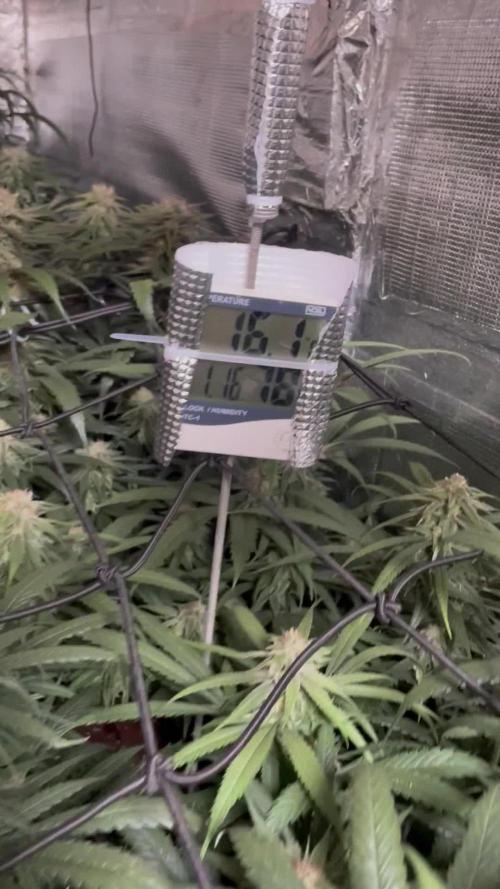
Buenas a todos compañeros deciros que hemos terminado el cultivo.
Con unos 61 días de floración.
El olor y la resina son increíbles.
Voy a obtener grandes estracciones con esta maravilla de amnesia haze!
Lamentablemente no pude obtener todo el resultado óptimo que quería pero bueno.
Mejoramos para el siguiente..
Estoy preparando la zona con un doble techo estanco y más sustrato para alcanzar un total de 1100l en un 250x125
Montaré 300w mas de iluminación acompañados de un doble sistema de extracción.
Voy a trabajar con Amnesia haze nuevamente junto a gelato33/ y Chanel + .
Junto con nuestro otro seguimiento de banana x Orange bud de un compañero y breeder.
De unas características increíbles!
Saludos a todos y lamento el poco contenido añadido estos 8 días atrás.
Las vacaciones me ocuparon mi tiempo libre!
Mi hermana tuvo que dedicar la poda y el corte final!
Saludos!

Likes
3
Share


@Dash58
Follow
1.4. Buds fatening up, looking good. 34DLI
8.4. Had some problems around, not with plants. I have to discard them, it’s tearing my hearth but it’s what it is.

Likes
2
Share


@TEKNOGROW
Follow
CONTEST TEKNOGROW
BIG BUDDHA SEEDS
BUDDHA TAHOE
GROWER GIOVANNI
www.teknogrow.it
Instagram @teknogrow
