




Likes
33
Share


@StickyFingah420
Follow
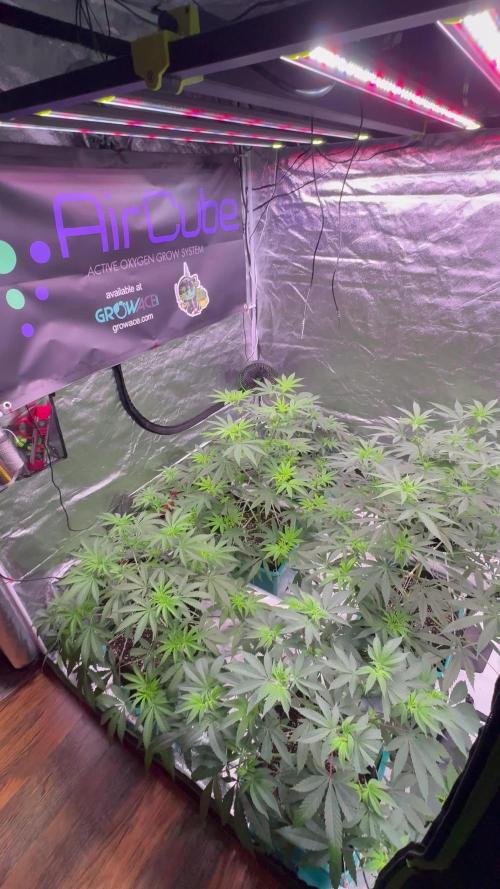
Día 88 y penúltimo antes del corte.
Ya se aplicó Flawless Finish para un acabado impecable como su nombre lo indica. Siempre prefiero hacer el lavado de raiz solo aplicando agua en las últimas 2 semanas, pero esta vez lo hice aplicando el finalizador y luego los últimos riegos con agua purificada.
La verdad es que estoy contento con los resultados de esta nena, que es hermosa por cierto, desprende olores ácidos, cítricos, dulces.
Los colores son hermosos y las flores están rebosantes de tricomas, lo que la vuelve muy vistosa.
Es todo por ahora, estaré manteniendoles informados en estos últimos días.
Buenos humos! 👽

Likes
Comments
Share


@DogDoctorOfficial
Follow
🌿 Sour Diesel — Catch-Up Report (Weeks 2.5 → 4 | 12/12 Transition)
First — a quick word to everyone following the diary
We want to start this update by apologizing for doing a two-and-a-half week report in one go.
This is not a change in transparency or process — it’s simply to bring Sour Diesel back in sync with the rest of the room.
All plants are evolving under the same tent, same environment, same rhythm.
Having one diary lag behind doesn’t serve the journey — so we’re catching her up, cleanly and honestly.
Thank you for understanding 💚
⸻
🌱 General Behavior & Growth
Sour Diesel has been growing beautifully.
• Strong, healthy structure
• Deep green, lush foliage
• No stress signals
• Calm, confident growth
She transitioned into 12/12 smoothly and is now fully sharing the same rhythm as the rest of the room.
⸻
✋ Training Response (Week 3)
Training started in Week 3, using only:
• leaf tucking
• gentle leaf bending
No aggressive techniques.
Her response was excellent.
By the end of Week 4:
• She became noticeably bushier
• Leaves increased in size
• Side branches began to push outward and upward
• Branch length reached roughly 4–5 fingers, which is perfect for this stage
Nothing exaggerated, nothing forced — just natural structure opening up.
⸻
🌸 Flowering Signals (or lack of — and why that’s okay)
Despite being under 12/12:
• No visible flowering signs yet
• No pistils
• No true flip signals
This is expected.
Why?
• She had ~15 days of 18/6 vegetative phase
• She’s now completing ~2 weeks of 12/12
• Sour Diesel often hesitates, then commits fully
She feels close — almost like she’s thinking about it.
We expect clear signs very soon, likely at the start of the next week.
Ending this week:
➡️ bushier
➡️ more structured
➡️ clearly preparing
⸻
Nutrition & Autopot Reality (Important Note)
She is currently being fed the same vegetative recipe, with one key adjustment.
Autopots & organics — the reality
Some of the inputs we normally use are organic / biological.
These work beautifully with:
• some gravity feeding
• hand watering
• living solutions
But they do NOT work well in irrigation systems like Autopots.
Why:
• Living inputs can settle
• Cause build-ups
• Create pH fluctuations
• Reduce line consistency
• “Alive” water doesn’t like being stored or recirculated
So for now:
What she’s receiving
• Plagron Terra Grow only in the Autopot system
• EC lowered to 0.8 (instead of 1.0)
• Even though NPK is present, we keep EC conservative
• No boosters in the reservoir
Occasional top feeding
Once or twice, when watering the rest of the room:
• She received the full recipe via top watering
• This is likely how we’ll continue once demand increases
Flower will bring higher needs — we’ll adapt when she asks, not before.
⸻
🌬️ Environment
No changes here:
• Temperatures stable
• Humidity stable
• Airflow unchanged
Everything remains identical to the rest of the room, so no need to repeat values.
⸻
👑 What to Expect / What Not to Expect
Expect:
• A clear flip soon
• Stretch after commitment
• More expressive structure than some of the others
• Increased nutrient demand once flowering starts
Do NOT expect:
• Instant pistils just because she’s in 12/12
• Heavy defoliation yet
• Aggressive feeding right now
• Identical behavior to other cultivars
Sour Diesel does things her way — and she’s doing them well.
⸻
🌿 Final Notes
She’s healthy.
She’s calm.
She’s aligned with the room now.
This Queen is not late — she’s intentional.
Thank you to everyone following this journey, and thank you for allowing us to keep the diary honest, educational, and paced by the plant — not the calendar.
As always:
observe → adjust → repeat
FOR DISCOUNT CODES AND MORE JUST FOLLOW THE LINK https://website.beacons.ai/dogdoctorofficial
📲 Don’t forget to Subscribe and follow me on Instagram and YouTube @DogDoctorOfficial for exclusive content, real-time updates, and behind-the-scenes magic. We’ve got so much more coming, including transplanting and all the amazing techniques that go along with it. You won’t want to miss it.
GrowDiaries Journal: https://growdiaries.com/grower/dogdoctorofficial
Instagram: https://www.instagram.com/dogdoctorofficial/
YouTube: https://www.youtube.com/@dogdoctorofficial
⸻
Explore the Gear that Powers My Grow
If you’re curious about the tech I’m using, check out these links:
🔆 Lighting & Environmental Control
• Future of Grow — Advanced LED lighting technology
https://www.futureofgrow.com/
DISCOUNT CODE: DOG20
• Lumiflora — Under-canopy LED lighting
https://lumiflorade.com/
• TrollMaster — Environmental controllers and automation gear (past collaboration)
⸻
Genetics
• Zamnesia Seeds — Genetics used in this project
https://www.zamnesia.com/
⸻
🌱 Soil, Substrates, Boosters & Root Support
• Plagron — Substrates, bio mixes, and supportive products
https://plagron.com/en/
⸻
🎒 Storage, Curing & Preservation
• Grove Bags — Curing and storage solutions
https://grovebags.com/
⸻
📸 Photography Equipment & Tools
(Not sponsors, but part of my creative toolkit)
• Sony A6700
• Sony full-frame macro lens + few more
• Stacking photography workflow - learning
• iPhone (for behind-the-scenes shots)
We’ve got much more coming as we move through the grow cycles. Trust me, you won’t want to miss the next steps, let’s push the boundaries of indoor horticulture together!
As always, this is shared for educational purposes, aiming to spread understanding and appreciation for this plant. Let’s celebrate it responsibly and continue to learn and grow together.
With true love comes happiness. Always believe in yourself, and always do things expecting nothing and with an open heart. Be a giver, and the universe will give back in ways you could never imagine.
💚 Growers love to all 💚
📸 P.S. – The Eye Behind the Lens
All photos in this diary (for now — except for the ones showing the camera, which I took with an iPhone) are taken with a Sony A6700 paired with a Sony full-frame macro lens and a few more.
Photography is part of the story — it’s how we share the fine textures, the glow, and the quiet details that words can’t always capture.
I’ve also started experimenting with photo stacking — a technique where multiple images, each taken at a slightly different focus point, are layered together to create one perfectly sharp image from front to back.
It’s not digital enhancement or AI; it’s pure photography — a way to reveal the plant’s beauty in microscopic depth, from trichome to petal.
You’ll even see a few shots of "ghost me" capturing the shots — camera, lens, setup — because every grow deserves not just to be cultivated, but documented like art.
FOR DISCOUNT CODES AND MORE JUST FOLLOW THE LINK https://website.beacons.ai/dogdoctorofficial
NEW DISCORD - Official Server Invite Link : https://discord.gg/ksjAkA5T74

Likes
4
Share

@Piratenarm
Follow
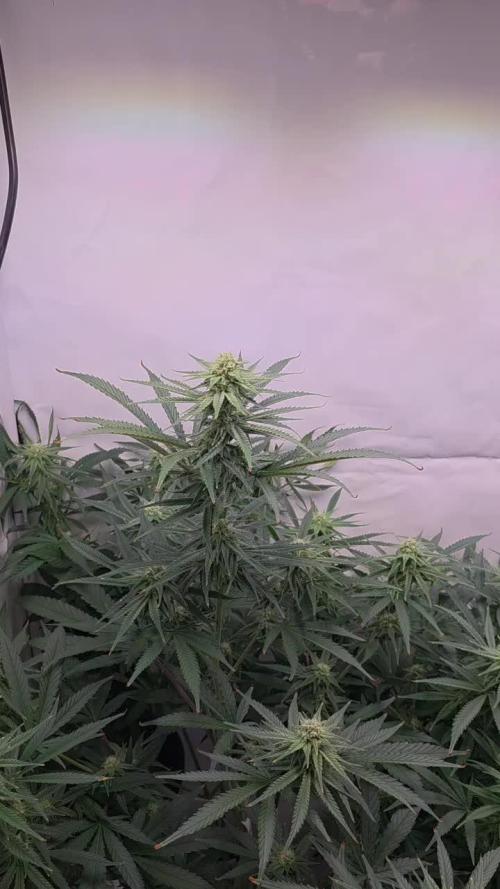
Die buds werden langsam dicker und die ladies riechen schon wirklich stark. Hab hier und da noch ein wenig leaf tucking gemacht, aber Jetzt kommt der ruhigere Teil, wo man einfach nur gießen und warten muß


Likes
13
Share


@NordicClosetGrower
Follow
The strain has proven to be extremely sturdy compared to the autoflower version. The smell has been a bit problematic. Some terpenes just can't seem to be tamed even with a brand new carbon air filter. I hope this pays off in terms of aroma quality :)
Likes
16
Share


@OutdoorRebelGenetics
Follow
Well started flush on out door cheese well greenhouse indoor only just preflowering off site so less pics like the gorilla frisan duck so yeah more pics this week peace ended up chopping cheese 2 as bud rot struck so got rid and got 11.3 grams wet from 1 so quite low yield mould resistances not the best not the most crystals I have seen nor the least it's a 2 out of 10 so far yeah staying at 2 as was fun to grow but yeil was disgraceful 1.6 g dried she had the cheese smell and taste but little vegy so going to cure the remainder try in 2 weeks utterly as for the rest can't wait frisan duck has like 70+branches so she's going to be a nice harvest no pre flower yet peace


Likes
5
Share


@HighOhioAn
Follow
Truly, starting to show their beauty cannot wait until they start packing on the buds🔥💯
Likes
38
Share


@MrLahey
Follow
So far all is well. Left plant is looking great still. Right plant is still the same as it was, kinda "off." I cut the top off the main cola due to light burn. There's just no way that the plants energy it was directing to it was being used well. I'd rather it go to the rest of the plant because there's just no way that initial top was going to produce anything. It was gnarled.
I've also noticed something odd going on with a couple of the buds on the stressed (purple) plant. I posted one of the pics in the pics for this weeks update. Looks kinda like bud rot to me but this is also my first grow so I could be wrong. It looks like it's only affecting the pistils. I may ask a question in the question forum just to be sure. It's odd though because conditions in the tent seem to be too dry maybe for bud rot (averaging in the 50-60% RH range and there is plenty of air circulation in that part of the tent. I'm thinking it could either be the plant negatively reacting to me cutting the main top off the other day or it's just the fact that due to the plant being stressed out for the entire grow that it's lost resistance to things like bud rot, etc.. essentially, I'm not sure at all lol..
Both plants are already showing a good amount of trichome production as the plants have almost switched from stretch flowering phase to pure on flowering/bulking phase. I can't wait to see the buds really start to mature and grow and get stinky. Carbon filter so far is working flawlessly. A week ago I was thinking it wasn't keeping up because when I'd come home from work I could smell pot but it turns out it was just my cannabutter supplies that I left out lol. D'oh.
I've also been monitoring conditions in my basement over the past few weeks and have noticed that rain or no rain, the conditions down there are an average 66 degrees and 60-64% RH. With my dehumidifier if the conditions down there remain in that range, I should be able to achieve perfectly optimal drying conditions for when I harvest in 4-6 weeks or so. :)
I am having a blast so far and can't wait to harvest and then really apply what I've learned online from youtube, here and reddit combined with my hands on experience from this grow to really fill out the canopy next time and also ensure both plants are the same height for some great yield. I'll probably mainline 2-3 plants for my next grow. I also want to eventually get into building my own soil and amendments but for now I'm just focusing on not learning & applying too many things at once. I just know that at some time I'd like to switch from synthetic nutrients to organic. I'm hooked for life to growing though!

Likes
160
Share


@StarLorr
Follow
Welcome to my Banana Purple Punch diary.
🍌💜🤪💥🥊💨
In this Diary:
Seeds: [420 Fast Buds]from my growmie Tropicannibis_Todd 👊🏻😎
Media: Pro~Mix HP Open Top Grow Bag, Connect.
Nutrients: Green Planet Nutrients,
2 Part Dual Fuel starter kit.
RealGrowers: Recharge.
Diablo nutrients: Ripping.
Advanced Nutrients: Flawless Finish.
___________________________
Feeding :
Mon 01Apr: 3L Monster K pH'd 6.5
Fri 05Apr: 2L Flawless Finish pH'd 6.5
___________________________
Wednesday 03-Apr-24 i broke a branch somehow😭
Today Monday 08-Apr-24 is 83 Days from seed or 79 Days from Sprout🌱and
the trichomes are just about right.
Tomorrow morning the chopping will happen.😁
___________________________
Thanks for stopping by, likes and comments are appreciated.👊🏻😎
Keep on growin!
Keep on tokin!!!
😙💨💨💨💨💨
Likes
16
Share


@Rungood
Follow
Floraison +10 tout va bien ! Rajout d'un deuxième filet pour mieux guider les têtes vers la lumière
Likes
8
Share


@hooolian
Follow
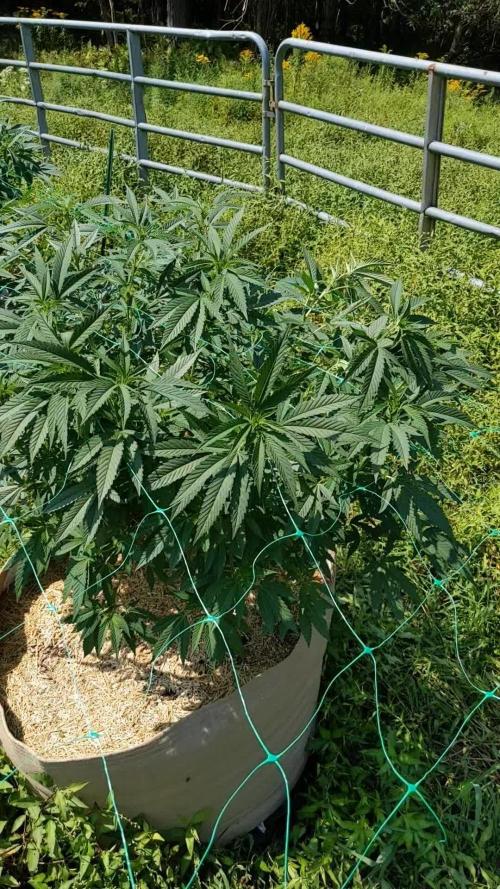
20/02: The plants are overall reacting well to the larger dose of nutrients especially the ignitor - there are lots of bud sites throughout. I was under watering some plants which has resulting in wilting stems and leaves - will move onto 1 litre of water every other day from next week. 1 OG kush and 1 White Widow is lagging behind but we'll get there. Good strong stalks mostly for all the plants. Gave the a hefty defoliation this week also trimming the fan leaves and letting light penetrate the lower branches and bud sites.


Likes
15
Share


@Chubbs
Follow
Week 6 update:
What up Grow family. These testers are growing fast and strong. Where in week 6 now and the swelling and ripening of flowers are going amazing. Still feeding 500ml/16oz daily as I've found that's the sweet spot for 3gal fabric pots for these. I'd say these probably have about 2 weeks left until they'll be finished.
All in all Happy Growing.
Likes
16
Share


@Lazuli
Follow
This was my last grow during the winter ever, its too hard for me to keep the room warm, the plants suffered and less yield then my other blue dreams i grew in the past.
Likes
16
Share

@BLAZED
Follow
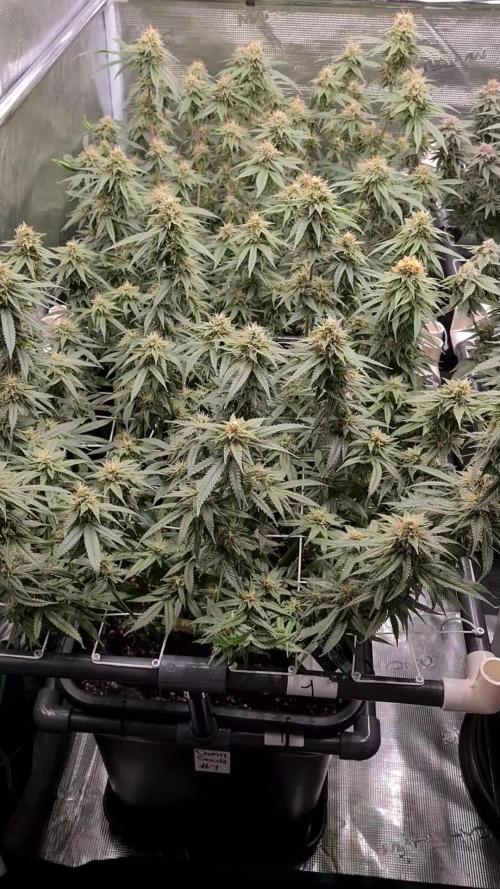
Week 16 (12-5 to 18-5)
12-5
Temps: 19.9 to 25.1 degrees
Humidity: 41% to 55%
Watering: Both 1000 ml. EC: 1.6
13-5
Temps: 19.4 to 23.8 degrees
Humidity: 42% to 49%
Watering #1: 1000 ml. EC: 0.5
14-5
Temps: 19.2 to 23.5 degrees
Humidity: 47% to 54%
Watering #1: 1000 ml. EC: 1.6
15-5
Temps: 19.5 to 23.5 degrees
Humidity: 43% to 55%
Watering: Both 1000 ml. EC: 0.5
16-5
Temps: 18.3 to 23.8 degrees
Humidity: 48% to 56%
Watering: Both 1000 ml. EC: 1.6
17-5
Temps: 18.8 to 24.5 degrees
Humidity: 49% to 57%
18-5
Temps: 19.8 to 24.2 degrees
Humidity: 47% to 56%
Watering #1: 1100 ml. EC: 0.5

Likes
32
Share

@Cooky_420L
Follow
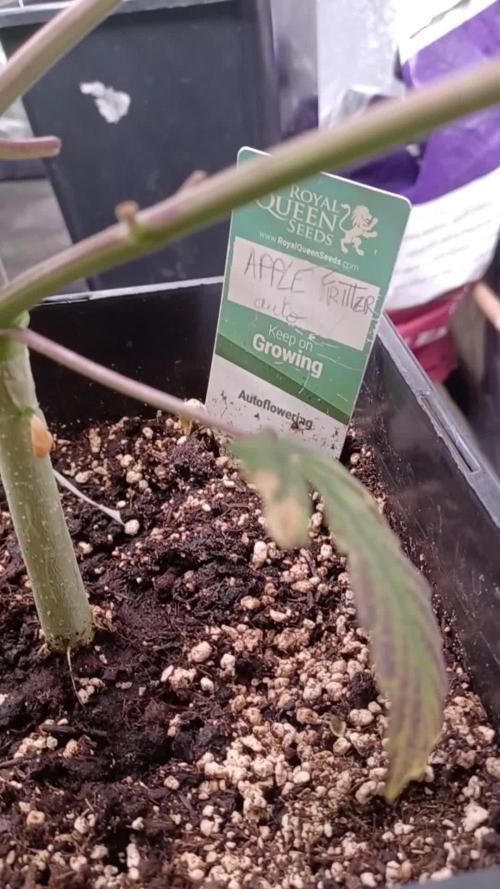
je me suis trompé de journal pour cette mise à jours fait partie du journal Appel Friter.
Merci les Growmies bonne semaine de croissance les p'tites ✋️ vertes 🌱🌞🌱
Likes
8
Share


@Omni420
Follow
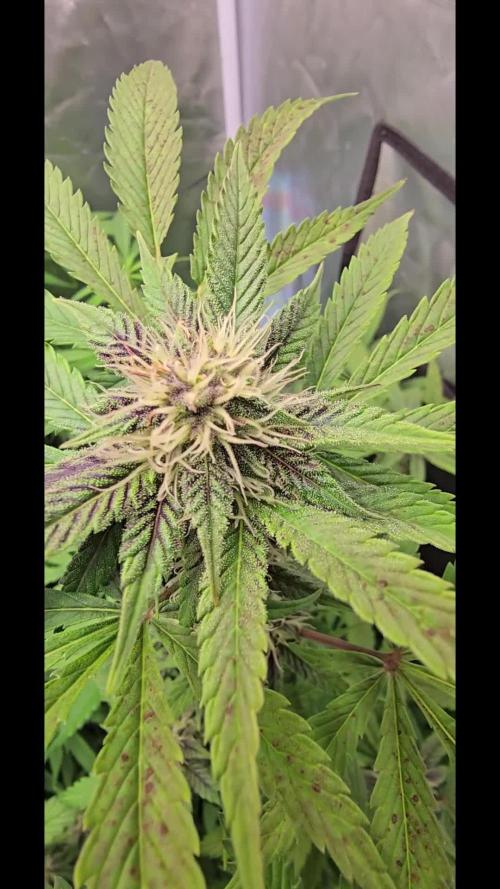
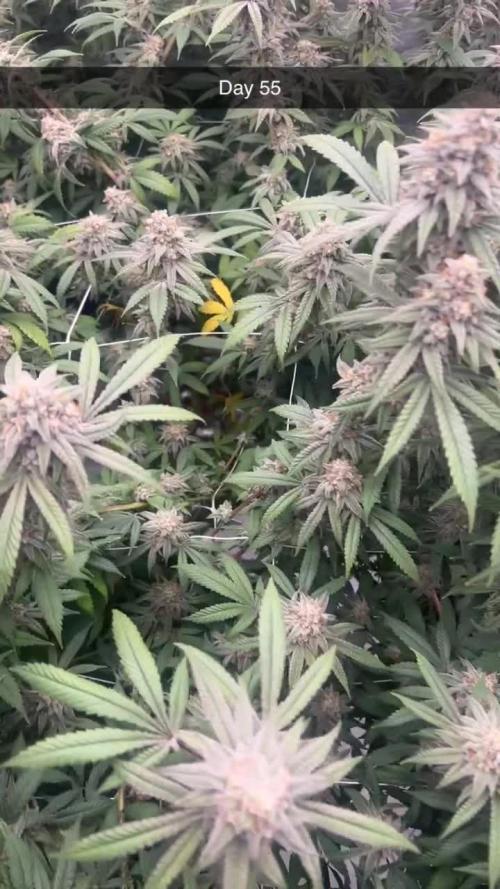
She really took off this week after some more defoliation. I’m sorry if the pictures suck this was my first grow and I’m just excited to share.


Likes
7
Share


@Dargaville_Dukes
Follow
All seems to be going well. I'm watering twice a week with 80ml per plant. Using mainly plain water with a little Fish Mix. If growth is strong this week, I'll look potting into 5 gallon pots next week. I've begun some small training with my fingers to keep the stalks malleable and see what shape I want. Once they're in their final pots I'll start training with clips.
