



@GERGrowDesigns
Follow
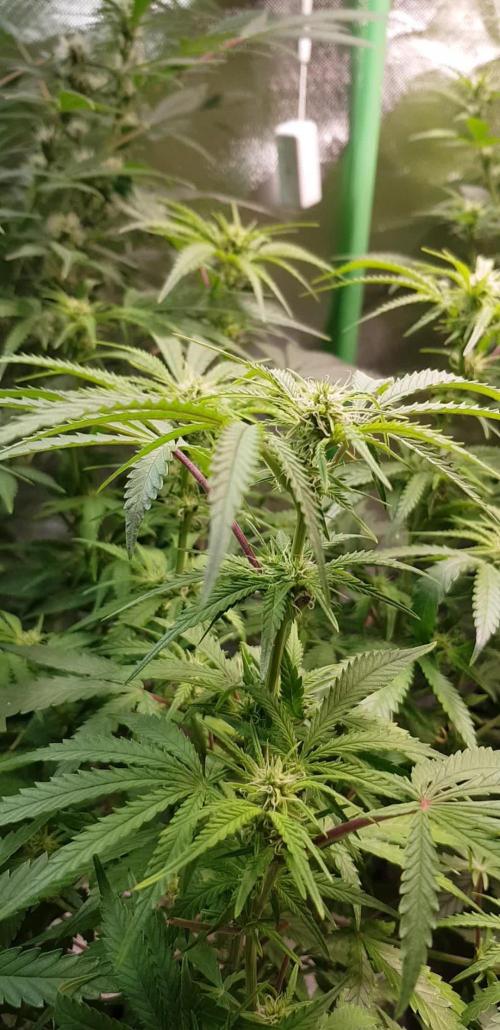
Welcome to Flower Week 3-4 of Divine Seeds Auto Black Opium
I'm excited to share my grow journey with you all as part of the Divine Seeds Autoflowering Competition 2025. It's going to be an incredible ride, full of learning, growing, and connecting with fellow growers from all around the world!
For this competition, I’ve chosen the Feminized Automatic strain: Auto Black Opium
Here’s what I’m working with:
• 🌱 Tent: 120x60x80
• 🧑🌾 Breeder Company: Divine Seeds
• 💧 Humidity Range: 50
• ⏳ Flowering Time: 60-63 Days
• Strain Info: 25%THC
• 🌡️ Temperature: 26
• 🍵 Pot Size: 0.5l
• Nutrient Brand: Narcos
• ⚡ Lights : 200W x 2
A huge thank you to Divine Seeds for allowing me to be a part of this amazing competition and Sponsoring the Strains. Big thanks for supporting the grower community worldwide! Your genetics and passion speak for themselves!
I would truly appreciate every bit of feedback, help, questions, or discussions – and of course, your likes and interactions mean the world to me as I try to stand out in this exciting competition!
Let’s grow together – and don’t forget to stop by again to see the latest updates!
Happy growing!
Stay lifted and stay curious!
Peace & Buds!


@Herbz_Unkraut
Follow
nice strain with a rich terpene profile! sweet, gelato like, hard hitting smoke!
sadly my phenos had no banana taste but still very nice


@Twizz
Follow
She's blooming and looking healthy, i'm thinking about taking away some low brenches.. but 'im not sure.


@AsNoriu
Follow
Day 85 since seed touched soil.
Trim jail !!!
2.4 meters of hanging frosty buds and air ;))))))
Happy Growing !!!


@MumboJump
Follow
They now geht 4l of water every 2 days. The left Lemon Og Candy has a very heavy citrus flavor and the right one more Like Candy. The left one has more orange/red pistils than the right one


@DyadyaAsya
Follow
Germination, days: 3
Vega (18/6), days: 35
Flowering (12/12), days: 75
Total, days: 110
EC 0.07 (Athena Cleanse)
Ph 6.5
Red 100%
Blue 25%
UV 20%
DLI ~32
T. Day: ~25C
T. Night: ~21.5C
Humidity: ~57%
T.leaf: 24.5C
Washed for 2 days with Athena Cleanse (EC 0.07), then 24 hours of darkness and Harvest!
Results by dry weight and smoke test after drying and curing (10 days).



@Trees_of_weed
Follow
It just goes to show great results can come from Autoflowering plants !
This is a incredible strain plenty of taste and smell. With a lovely relaxed stone great for anytime of the day ! But smoke to much and you will feel sleepy ! Great strain helps me sleep and feel relaxed !
Big smile on my face when I smell the buds crushed up in the Grinder 🔥🔥💨💨 zambeza seeds have got some fire at amazing prices !!🔥🔥💚


@AlpenZilla
Follow
🗓️ Week 12 – Flower Week 8 (MAC n Cheese only)
Stage: Late Flower
MAC n Cheese is now fully into late bloom and continues to impress:
🌿 Development:
• Buds are dense, frosty, and maturing evenly across the canopy
• No significant leaf discoloration
• Aroma profile is becoming increasingly intense – leaning towards creamy and earthy notes
💧 Feeding & EC:
• Input EC: 1.65–2.0
• pH: 6.3
• Current runoff EC: 2.3
→ Still well-balanced, no visible signs of overfeeding despite the elevated drain values
Flush status:
No flushing yet – plants are still feeding actively
→ Final flush with Flawless Finish planned in ~1 week
✅ Summary:
MAC n Cheese remains healthy and consistent. Structure is solid, frost levels are high, and everything looks on track for the final push. Late-stage nutrient uptake is still strong without stress indicators – ideal conditions heading into the home stretch.


@DrGanj
Follow
Started flush now. I'm adding Nature Delight Active Sugar Boost as it's been recommended to boost terpene production. No idea if it will work this late into flower but trying anyway as apparently it has no need to be flushed and is fully organic.


@Mr_nugs_lover_David
Follow
It's been a beautiful strain to work with, the flowrs are definitely worth it after all this time, the quality is definitely high. However this pheno of ak420 smells very different from the other 2 phenos I've grown along with her. The flowrs are beautiful, very solid and frosty nuggets, I smoked a few little nuggets when trimming but I'm excited to taste the big buds, hope you guys enjoyed the process. I want to say that this pheno #1 has a different smell compared to the other 2 phenotypes of ak420 that you can see here on my page as well, so stay tuned guys! Overall result is very nice, good quality, strong weed, sticky, stinky. I can say that it's very great and also you can get them for a very cheap price so it's a very good investment if you're looking for a powerful and affordable strain. Cheers growmies! ❤️💚💛💎👨🌾




@Altitonans_Fulmen
Follow
For most crops, a slightly acidic soil pH between 6.0 and 6.8 is ideal because it optimizes nutrient availability. When soil pH rises above 7.0 (alkaline), the concentration of hydrogen ions H+ drops significantly, and they are replaced by calcium, magnesium, or sodium ions on the clay colloid exchange sites. To naturally lower alkaline soil pH, you can add organic matter (carbon-rich materials), which produces weak organic acids as it decomposes. Maintaining this slightly acidic range stimulates a highly active, diverse microbial community; these microbes decompose organic matter and release carbon dioxide CO2, which plants absorb through their roots and leaves to boost photosynthesis and sugar production. Furthermore, the added organic carbon acts like a sponge, drastically improving the soil's water-holding capacity.
While soil biological activity does involve cellular electron transport, electrical conductivity (EC) in soil is actually a measure of dissolved mineral salts, not a voltage carried by individual microbes. Soil microorganisms secrete organic acids and chelate metallic and non-metallic minerals, transforming locked-up inorganic compounds into bioavailable organic complexes. Unlike harsh synthetic fertilizers that can dehydrate soil life in high concentrations, these naturally chelated nutrients safely nourish the plant, creating a thriving, self-sustaining ecosystem where plants can efficiently synthesize their own food.
Metal-based: Could include elements like iron, manganese, copper, or zinc, which are essential nutrients for plants but can exist in forms not readily accessible.
Non-metal-based: Examples like calcium carbonate, phosphate, or sulfur are also important for plant growth and potentially serve as building blocks for the organic salt.
Chelation in a plant medium is a chemical process where a chelating agent, a negatively charged organic compound, binds to positively charged metal ions, like iron, zinc, and manganese. This forms a stable, soluble complex that protects the micronutrient from becoming unavailable to the plant in the soil or solution. The chelate complex is then more easily absorbed by the plant's roots, preventing nutrient deficiency, improving nutrient uptake, and enhancing plant growth. Chelation is similar to how microorganisms create organic salts, as both involve using organic molecules to bind with metal ions, but chelation specifically forms ring-like structures, or chelates, while the "organic salts" of microorganisms primarily refer to metal-complexed low molecular weight organic acids like gluconic acid. Microorganisms use this process to solubilize soil phosphates by chelating cations such as iron (Fe) and calcium (Ca), increasing their availability.
Added sugars stimulate soil microbial activity, but directly applying sugar, especially in viscous form, can be tricky to dilute. Adding to the soil is generally not a beneficial practice for the plant itself and is not a substitute for fertilizer. While beneficial microbes can be encouraged by the sugar, harmful ones may also be stimulated, and the added sugar is a poor source of essential plant nutrients. Sugar in soil acts as a food source for microbes, but its effects on plants vary significantly with the sugar's form and concentration: simple sugars like glucose can quickly boost microbial activity and nutrient release. But scavenge A LOT of oxygen in the process, precious oxygen. Overly high concentrations of any sugar can attract pests, cause root rot by disrupting osmotic balance, and lead to detrimental fungal growth. If you are one who likes warm tropical high rh, dead already. Beneficial, absolutely, but only to those who don't run out of oxygen. Blackstrap is mostly glucose, iirc regular molasses is mostly sucrose. Sugars, especially sucrose, act as signaling molecules that interact with plant hormones and regulate gene expression, which are critical for triggering the floral transition. When sucrose is added to the growth medium significantly influences its effect on floral transition.
Probably wouldn't bother with blackstrap given its higher glucose content. Microbes in the soil consume the sugar and, in the process, draw nitrogen from the soil, which is the same nutrient the plant needs. Glucose is not an oxygen scavenger itself, but it acts as a substrate for the glucose oxidase (GOx) enzyme, effectively removing oxygen from a system. Regular molasses (powdered if you can), as soon as she flips to flower or a week before, the wrong form of sugar can delay flower, or worse. Wrong quantity, not great either. The timing of sucrose application is crucial. It was more complicated than I gave it credit for, that's for sure. When a medium's carbon-to-nitrogen (C:N) ratio reaches 24:1, it signifies an optimal balance for soil microbes to thrive, leading to efficient decomposition and nutrient cycling. At this ratio, soil microorganisms have enough nitrogen for their metabolic needs, allowing them to break down organic matter and release vital nutrients like phosphorus and zinc for plants. Exceeding this ratio results in slower decomposition and nitrogen immobilization, while a ratio below 24:1 leads to faster breakdown and excess nitrogen availability.
Carbon and nitrogen are two elements in soils and are required by most biology for energy. Carbon and nitrogen occur in the soil as both organic and inorganic forms. The inorganic carbon in the soil has minimal effect on soil biochemical activity, whereas the organic forms of carbon are essential for biological activity. Inorganic carbon in the soil is primarily present as carbonates, whereas organic carbon is present in many forms, including live and dead plant materials and microorganisms; some are more labile and therefore can be easily decomposed, such as sugars, amino acids, and root exudates, while others are more recalcitrant, such as lignin, humin, and humic acids. Soil nitrogen is mostly present in organic forms (usually more than 95 % of the total soil nitrogen), but also in inorganic forms, such as nitrate and ammonium. Soil biology prefers a certain ratio of carbon to nitrogen (C:N). Amino acids make up proteins and are one of the nitrogen-containing compounds in the soil that are essential for biological energy. The C:N ratio of soil microbes is about 10:1, whereas the preferred C:N ratio of their food is 24:1 (USDA Natural Resource Conservation Service 2011). Soil bacteria (3-10:1 C:N ratio) generally have a lower C:N ratio than soil fungi (4-18:1 C:N ratio) (Hoorman & Islam 2010; Zhang and Elser 2017). It is also important to mention that the ratio of carbon to other nutrients, such as sulfur (S) and phosphorous (P) also are relevant to determine net mineralization/immobilization. For example, plant material with C:S ratio smaller than 200:1 will promote mineralization of sulfate, while C:S ratio higher than 400:1 will promote immobilization (Scherer 2001).
In soil science and microbiology, the C:S ratio helps determine whether sulfur will be released (mineralized) or tied up (immobilized) by microorganisms.
A carbon-to-sulfur (C:S) ratio smaller than 200:1 promotes the mineralization of sulfate, when the C:S ratio is low, it indicates that the organic matter decomposing in the soil is rich in sulfur relative to carbon. Microorganisms require both carbon and sulfur for their metabolic processes. With an excess of sulfur, microbes take what they need and release the surplus sulfur into the soil as plant-available sulfate
A carbon-to-sulfur (C:S) ratio higher than 400:1 will promote the immobilization of sulfur from the soil. This occurs because when high-carbon, low-sulfur materials (like sawdust) are added to soil, microbes consume the carbon and pull sulfur from the soil to meet their nutritional needs, temporarily making it unavailable to plants.
200:1 C:S 400:1: In this range, both mineralization and immobilization can occur simultaneously, making the net availability of sulfur less predictable.
This dynamic is similar to how the carbon-to-nitrogen (C:N) ratio regulates the availability of nitrogen in soil. Just as microbes need a certain amount of nitrogen to process carbon, they also require a balanced amount of sulfur. Both mineralization and immobilization are driven by the metabolic needs of the soil's microbial population.
Sulfur is crucial for protein synthesis. A balanced ratio is particularly important in relation to nitrogen (N), as plants need adequate sulfur to efficiently use nitrogen. A severely imbalanced C:S ratio can hinder the efficient use of nitrogen, as seen in trials where adding nitrogen without balancing sulfur levels actually lowered crop yields.
Maintaining a balanced carbon-to-sulfur (C:S) ratio is highly beneficial for plant growth, but this happens indirectly by regulating soil microbial activity. Unlike the C:N ratio, which is widely discussed for its direct effect on nutrient availability, the C:S ratio determines whether sulfur in the soil's organic matter is released (mineralized) or temporarily locked up (immobilized).
Glucose will hinder oxygenation more than sucrose in a solution because glucose is consumed faster and has a higher oxygen demand, leading to a more rapid decrease in oxygen levels. When cells respire, they use oxygen to break down glucose, and this process requires more oxygen for glucose than for sucrose because sucrose must first be broken down into glucose and fructose before it can be metabolized.
In a growth medium, glucose is a more immediate and universal signaling molecule for unicellular and multicellular organisms because it is directly used for energy and triggers a rapid gene expression response. In contrast, sucrose primarily acts as a signaling molecule in plants to regulate specific developmental processes by being transported or broken down, which can be a more complex and slower signaling process.
Critical stuff.


@MadeInGermany
Follow
Flowering day 65
since clock change
to 12/12
Hey guys :-) .
It's so far, the lady is ripe and will be cut at the bottom end in the coming days and hung upside down in the drying tent :-) .
Next week there will be an extra update on how they are hanging.
Watering would be done twice this week with 1 l each (nutrients see table above)
Otherwise it was checked and everything was cleaned.
Have fun and stay healthy 💚🙏🏻
👇🏼👇🏼👇🏼👇🏼👇🏼👇🏼👇🏼👇🏼👇🏼👇🏼👇🏼👇🏼
You can buy this Nutrients at :
https://greenbuzzliquids.com/en/shop/
With the discount code: Made_in_Germany you get a discount of 15% on all products from an order value of 100 euros.
👇🏼👇🏼👇🏼👇🏼👇🏼👇🏼👇🏼👇🏼👇🏼👇🏼👇🏼👇🏼
You can buy this strain at :
https://www.ripperseeds.com/en/feminized/kmintz-feminized-cannabis-seeds
Water 💧 💧💧
Osmosis water mixed with normal water (24 hours stale that the chlorine evaporates) to 0.2 EC. Add Cal / Mag to 0.4 Ec Ph with Organic Ph - to 5.8 - 6.5
MadeInGermany


@BudXs
Follow
All I can say is wow. The crystal development and the absolute stank of this genetic is something to behold. A brush of the arm against a set of pistils will leave you with matted arm hair and a difficult mess to clean. Strong limonene presence in 2 of the phenos, heavy red color through most stems.
Will be a very special harvest and a very sticky trim. The frost is living up to the hype so far


@Laplantadelpie
Follow
distintos fenotipos se pueden apreciar ya en esta 3era semana!😍
•1g de enhancer x litro de agua
aplicación en el riego


@timbarin
Follow
The plant gotten bit taller but now she is getting fatter. Because of that I know she is finishing the 1st 3rd of her flowering cycle. So I trimmed her, cleaned all the small bud sites and added more flowering food as top dress.
She also got boost


@Inceptionist
Follow
Melonade Runtz is staring to purple as well. It's so beautiful and it's just the beginning.
They are loving life.





@Prilyfe13
Follow
04/04/2026
Water change day! We're adding Overdrive and taking out big bud. I. Pretty sure she has 2 to 3 weeks left. I haven't checked trichomes yet. No point when I can tell they aren't ready yet. Just by the amount of white pistils. And somehow I can tell she's not ready. Colors, swelling and water intake.
Readings:
pH: 6.58
EC: 1214 cm
TDS: 858 ppm
Temp: 67.8°
The environment is a bit wonky today. 73° and 50% humidity. I have a feeling the heat is being blocked by the canopy. That's why the environment is off today. No heat increased humidity and decreased temp. Honestly not sure what to do here. I'll just have to let it do its thing. I'm pretty sure it was from me opening the tent up. Oh well. She does look happy. Good nice green. Excluding the dark color of course.
There's a bit of an issue with the rear fan. The way she's moving around the tops has left one of them to fall right onto the oscillating fan. Not to mention the area around the fan is super stressed. Not exactly sure what to do about that.
Anyway, lots of work to do.
04/05/2026
Readings:
pH: 6.55
EC: 1180 cm
TDS: 820 ppm
Temp: 70.2°
Readings after pH:
pH: 6.08
EC: 1190 cm
TDS: 850 ppm
Temp: 65.5°
So we can see that there is a fluctuation in all readings. The EC went up by 10 cm. TDS went up 30 ppm. Temp dropped 4.5°. Finally there's the pH. I dropped it to a reasonable level. Around 5 points.
Something I'd like to note. The buckets don't drain completely. There's roots in the way. So there's always a gallon or so left in the bottom of the bucket. After pHing, everything changed. I believe that is just a common pH swing. A little high, but I brought it right down. I'm going to check later this afternoon and see if it leveled out. Hopefully it'll be around 6.1. That's when you know the pH perfect is working.
The EC and TDS are higher than yesterday. But I'm assuming the pH was high as well as the water temp. It should be down to about 65° and that would fix the portability of the nutrients.
The environment is doing pretty good. Temps right there at 73° the Humidity is a bit high today. 47%. I'd really like it down to 40% but that's probably not happening until this wet weather goes away. Then everything should level out.
04/06/2026
Readings:
pH: 5.95
EC: 1158 cm
TDS: 823 ppm
Temp: 67.3°
04/07/2026
Readings:
pH: 5.68
EC: 1187 cm
TDS: 836 ppm
Temp: 68.4°
After pHing:
pH: 6.04
EC:1192 cm
TDS: 878 ppm
Temp: 67.1°
After Topping off the bucket:
pH: 5.8
EC: 1240 cm
TDS: 880 ppm
Temp: 65.3°
04/08/2026
Readings:
pH: 5.54
EC: 1250 cm
TDS: 889 ppm
Temp: 63.1°
After pHing the jug:
pH: 6.17
EC: 1465 cm
TDS: 965 ppm
Temp: 69.1°
Bucket Readings:
pH: 6.15
EC: 1302 cm
TDS: 927 ppm
Temp: 66.7°
04/09/2026
Readings:
pH: 5.91
EC: 1288 cm
TDS: 917 ppm
Temp: 69.4°
It seems as though this lady may be a bit hungry. TDS and EC are both dropping. Not much, but I can see a pattern. She wants more. But she's stressed out. The tacoing is real! But I'm not sure it's from the light. What else is there?
There's more spots on the top leaves. Definitely seems like a deficiency to me. Along with the tacoing. Which I might add also has tons of trichomes to help protect the leaves and buds.
The environment is looking good today. However, the heat must have been on this morning when the light turned on. Oh well. An ice bottle from last night would have done nothing.
04/10/2026
Readings:
pH: 5.5
EC: 1298 cm
TDS: 528 ppm
Temp: 67.8°
Reading top off water:
pH: 5.8
EC: 1244 cm
TDS: 949 ppm
Temp:67.3°