


Likes
Comments
Share

@SkunkyDog420
Follow
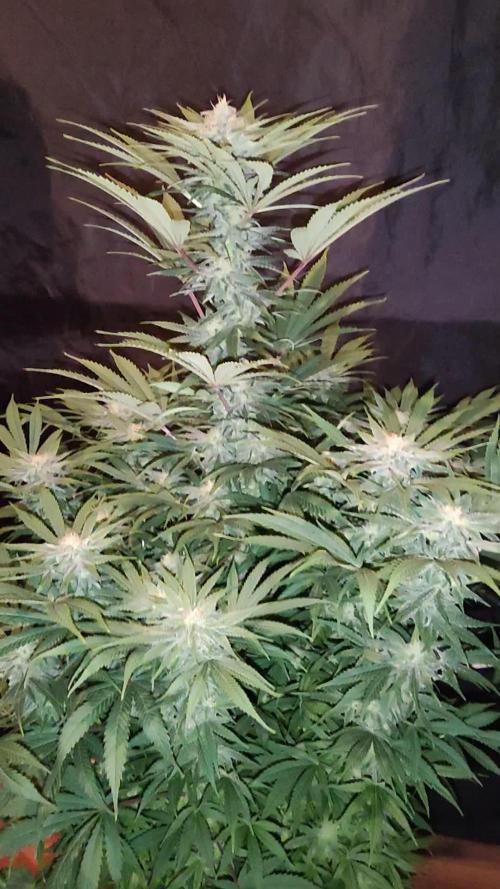
Hallo zusammen 🤙.
Sie wächst sehr schön und macht keine Umstände.

Likes
117
Share


@PEAKYPLANTERS
Follow
WELL WELL WELL BROTHERS OF THE WEED!
MY FIRST EXPERIENCE WITH THIS SEED HOUSE WAS SENSATIONAL !!!! AS WAS MY FIRST EXPERIENCE OF GROWING MY PLANT IN PHOTOPERIOD FOR THE FIRST TIME IN MY LIFE ...... THE RESULT ???? FANTASTIC QUALITY GEMS THAT SPILL WITH GLUE.
MY SUPER CHALLENGE WAS MAKING THEM GROW OUTDOOR FOR THE WHOLE VEGETATION, THEN PUSH THEM TO FLOWER IN THE TENT! IT WAS NOT SIMPLE ....
AT THE BEGINNING I HAD TO FACE MANY PARASITES .... BUT AFTER VARIOUS PRECAUTIONS WE WERE ABLE TO GO THE RIGHT TOWARD ME AND MY BELOVED CHILDREN .... I CUT THE BUDS FROM THE TOP TO THE BOTTOM, that is, I REDUCED THE CANOPY BY CUTTING FIRST THE TOP AND AFTER A FEW DAYS, THE UNDERLYING PART.
THEIR RESISTANCE WAS REALLY NOTABLE FOR THE LITTLE SPACE AVAILABLE IN THE TENT AND SINCERE I BELIEVE THAT I COULD NOT ASK MORE FROM SANTA CLAUS THAT A LARGE HARVEST IS EXCELLENT QUALITY FOR THE CHRISTMAS HOLIDAYS (IF THIS WE COULD HOLIDAYS)
AFTER AN EXPERIENCE SO CLEARLY POSITIVE .... I CANNOT TRY THEM ALL ... YOU CONTINUE TO FOLLOW ME AND SUPPORT ME AS ALWAYS
BEST REGARDS
PEAKYPLANTERS

Likes
44
Share


@MadeInGermany
Follow
Info :
Unfortunately, I had to find out that my account is used for fake pages in social media.
I am only active here on growdiaries.
I am not on facebook instagram twitter etc All accounts except this one are fake.
Flowering day 9
since time change to 12/12 hrs.
Hi guys :-) .
Just unbelievable how the lady goes off 😊👍.
She has started the stretch and is slowly starting to form her first pistils.
I completely remixed the water this time not only with Aqua Vega but also with some Aqua Flores.
The individual shoots were woven into the net, which I will continue to do for the next 1-2 weeks.
Next week all shoots under the net will be removed so that the upper ones get all the energy and not the lower ones that are in the dark.
The entire plant was checked for health.
The tent was cleaned as well as all the pumps and the heating rod.
I wish you all a nice week.
Stay healthy 🙏🏻
You can buy this Strain at
www.Zamnesia.com
Type:
Runtz
☝️🏼
Genetics:
Zkittlez
X
Gelato
👍
Vega lamp: 2 x Todogrow LED CXB3590 COB 55 W
1 x Sanlight S2W 62 W
💡
Flower lamp : 2 x Todogrow LED CXB3590 COB 55 W
1 x Sanlight S2W 62 W
💡 ☝️
Grow Aero System : Growtool 0.8
☝️
Fertilizer:
Canna Aqua Vega A + B , Canna Aqua Flores A + B , Rizotonic, Cannazym, CANNA Boost, Pk 13/14, Canna Cal / Mag, Canna Ph - Grow, Canna Ph-Bloom
☝️🌱
Water:
Osmosis water mixed with normal water (24 hours stale that the chlorine evaporates) to 0.2 EG. Add Cal / Mag to 0.4 Ec Ph with ph- to 5.2 - 5.8
💦 💧


Likes
27
Share


@Dunk_Junk
Follow
She's done!! Will be chopped within 24h.
Her flowers are mega frosty! 💪

Processing
Likes
8
Share


@leliantu
Follow
Se cosecho la mas pequeña de las Northern Light. Finalmente salieron 68 gramos en verde y 13 gramos en seco de esa planta (escribo esto con 2 meses de desfase perdonen los pocos detalles).
Likes
23
Share


@Kakui
Follow
F29, se comenzó con el riego de engorde, con una EC 2.6~2.8 y pH 6.4, se han quitado un par de hojas bloqueando sitios de cogollos, los cogollos están muy resinosos, súper frosty, el olor está súper fuerte también.

Likes
23
Share


@DeepRootsGrowTrees
Follow
MATARO BLUE by KANNABIA
Week #9 Overall
Week #8 Veg
This week it's gotten extremely hot she's covered to help protect her with a sun screen that being said she's doing good dealing with the elements. Stay Growing!!
Kannabia.com MATARO BLUE

Likes
52
Share


@Ultraviolet
Follow
Lacewings seemed to have mostly killed themselves by flying into hot light fixtures. I may have left the UV on which was smart of me :) Done very little to combat if anything but make a sea of carcasses, on the bright side its good nutrition for the soil.
Made a concoction of ethanol 70%, equal parts water, and cayenne pepper with a couple of squirts of dish soap.
Took around an hour of good scrubbing the entire canopy.
Worked a lot more effectively and way cheaper.
Scorched earth right now, but it seems to have wiped them out almost entirely very pleased.
Attempted a "Fudge I Missed" for the topping. So just time to wait and see how it goes.
Question?
If I attached a plant to two separate pots but it was connected by rootzone, one has a pH of 7.5 ish the other has 4.5. Would the Intelligence of the plant able to dictate each pot separately to uptake the nutrients best suited to pH or would it still try to draw nitrogen from a pot with a pH where nitrogen struggles to uptake?
Food for stoner thought experiments!
Another was on my mind.
What happens when a plant gets too much light?
Well, it burns and curls up leaves.
That's the heat radiation, let's remove excess heat, now what?
I've always read it's just bad, or not good, but when I look for an explanation on a deeper level it's just bad and you shouldn't do it.
So I did.
How much can a cannabis plant absorb, 40 moles in a day, ok I'll give it 60 moles. 80 nothing bad ever happened.
The answer, finally. Oh great........more questions........
Reactive oxygen species (ROS) are molecules capable of independent existence, containing at least one oxygen atom and one or more unpaired electrons.
"Sunlight is the essential source of energy for most photosynthetic organisms, yet sunlight in excess of the organism’s photosynthetic capacity can generate reactive oxygen species (ROS) that lead to cellular damage. To avoid damage, plants respond to high light (HL) by activating photophysical pathways that safely convert excess energy to heat, which is known as nonphotochemical quenching (NPQ) (Rochaix, 2014). While NPQ allows for healthy growth, it also limits the overall photosynthetic efficiency under many conditions. If NPQ were optimized for biomass, yields would improve dramatically, potentially by up to 30% (Kromdijk et al., 2016; Zhu et al., 2010). However, critical information to guide optimization is still lacking, including the molecular origin of NPQ and the mechanism of regulation."
What I found most interesting was research pointing out that pH is linked to this defense mechanism. The organism can better facilitate "quenching" when oversaturated with light in a low pH. Now I Know during photosynthesis plants naturally produce exudates (chemicals that are secreted through their roots). Do they have the ability to alter pH themselves using these excretions? Or is that done by the beneficial bacteria?
If I can prevent reactive oxygen species from causing damage by "too much light".
The extra water needed to keep this level of burn cooled though, I must learn to crawl before I can run.
Reactive oxygen species (ROS) are key signaling molecules that enable cells to rapidly respond to different stimuli. In plants, ROS plays a crucial role in abiotic and biotic stress sensing, integration of different environmental signals, and activation of stress-response networks, thus contributing to the establishment of defense mechanisms and plant resilience. Recent advances in the study of ROS signaling in plants include the identification of ROS receptors and key regulatory hubs that connect ROS signaling with other important stress-response signal transduction pathways and hormones, as well as new roles for ROS in organelle-to-organelle and cell-to-cell signaling. Our understanding of how ROS are regulated in cells by balancing production, scavenging, and transport has also increased. In this Review, we discuss these promising developments and how they might be used to increase plant resilience to environmental stress.
Temperature stress is one of the major abiotic stresses that adversely affect agricultural productivity worldwide. Temperatures beyond a plant's physiological optimum can trigger significant physiological and biochemical perturbations, reducing plant growth and tolerance to stress. Improving a plant's tolerance to these temperature fluctuations requires a deep understanding of its responses to environmental change. To adapt to temperature fluctuations, plants tailor their acclimatory signal transduction events, specifically, cellular redox state, that are governed by plant hormones, reactive oxygen species (ROS) regulatory systems, and other molecular components. The role of ROS in plants as important signaling molecules during stress acclimation has recently been established. Here, hormone-triggered ROS produced by NADPH oxidases, feedback regulation, and integrated signaling events during temperature stress activate stress-response pathways and induce acclimation or defense mechanisms. At the other extreme, excess ROS accumulation, following temperature-induced oxidative stress, can have negative consequences on plant growth and stress acclimation. The excessive ROS is regulated by the ROS scavenging system, which subsequently promotes plant tolerance. All these signaling events, including crosstalk between hormones and ROS, modify the plant's transcriptomic, metabolomic, and biochemical states and promote plant acclimation, tolerance, and survival. Here, we provide a comprehensive review of the ROS, hormones, and their joint role in shaping a plant's responses to high and low temperatures, and we conclude by outlining hormone/ROS-regulated plant-responsive strategies for developing stress-tolerant crops to combat temperature changes.
Onward upward for now.
Next!
Adenosine triphosphate
(ATP) is an energy-carrying molecule known as "the energy currency of life" or "the fuel of life," because it's the universal energy source for all living cells.1
Every living organism consists of cells that rely on ATP for their energy needs. ATP is made by converting the food we eat into energy. It's an essential building block for all life forms. Without ATP, cells wouldn't have the fuel or power to perform functions necessary to stay alive, and they would eventually die. All forms of life rely on ATP to do the things they must do to survive.2
ATP is made of a nitrogen base (adenine) and a sugar molecule (ribose), which create adenosine, plus three phosphate molecules. If adenosine only has one phosphate molecule, it’s called adenosine monophosphate (AMP). If it has two phosphates, it’s called adenosine diphosphate (ADP).
Although adenosine is a fundamental part of ATP, when it comes to providing energy to a cell and fueling cellular processes, the phosphate molecules are what really matter. The most energy-loaded composition for adenosine is ATP, which has three phosphates.3
ATP was first discovered in the 1920s. In 1929, Karl Lohmann—a German chemist studying muscle contractions—isolated what we now call adenosine triphosphate in a laboratory. At the time, Lohmann called ATP by a different name. It wasn't until a decade later, in 1939, that Nobel Prize–-winner Fritz Lipmann established that ATP is the universal carrier of energy in all living cells and coined the term "energy-rich phosphate bonds."45
Lipmann focused on phosphate bonds as the key to ATP being the universal energy source for all living cells, because adenosine triphosphate releases energy when one of its three phosphate bonds breaks off to form ADP. ATP is a high-energy molecule with three phosphate bonds; ADP is low-energy with only two phosphate bonds.
The Twos and Threes of ATP and ADP
Adenosine triphosphate (ATP) becomes adenosine diphosphate (ADP) when one of its three phosphate molecules breaks free and releases energy (“tri” means “three,” while “di” means “two”). Conversely, ADP becomes ATP when a phosphate molecule is added. As part of an ongoing energy cycle, ADP is constantly recycled back into ATP.3
Much like a rechargeable battery with a fluctuating state of charge, ATP represents a fully charged battery, and ADP represents a "low-power mode." Every time a fully charged ATP molecule loses a phosphate bond, it becomes ADP; energy is released via the process of ATP becoming ADP.
On the flip side, when a phosphate bond is added, ADP becomes ATP. When ADP becomes ATP, what was previously a low-charged energy adenosine molecule (ADP) becomes fully charged ATP. This energy-creation and energy-depletion cycle happens time and time again, much like your smartphone battery can be recharged countless times during its lifespan.
The human body uses molecules held in the fats, proteins, and carbohydrates we eat or drink as sources of energy to make ATP. This happens through a process called hydrolysis
.
After food is digested, it's synthesized into glucose, which is a form of sugar. Glucose is the main source of fuel that our cells' mitochondria
use to convert caloric energy from food into ATP, which is an energy form that can be used by cells.
ATP is made via a process called cellular respiration that occurs in the mitochondria of a cell. Mitochondria are tiny subunits within a cell that specialize in extracting energy from the foods we eat and converting it into ATP.
Mitochondria can convert glucose into ATP via two different types of cellular respiration:
Aerobic (with oxygen)
Anaerobic (without oxygen)
Aerobic cellular respiration transforms glucose into ATP in a three-step process, as follows:
Step 1: Glycolysis
Step 2: The Krebs cycle (also called the citric acid cycle)
Step 3: Electron transport chain
During glycolysis, glucose (i.e., sugar) from food sources is broken down into pyruvate
molecules. This is followed by the Krebs cycle, which is an aerobic process that uses oxygen to finish breaking down sugar and harnesses energy into electron carriers that fuel the synthesis of ATP. Lastly, the electron transport chain (ETC) pumps positively charged protons that drive ATP production throughout the mitochondria’s inner membrane.2
ATP can also be produced without oxygen (i.e., anaerobic), which is something plants, algae, and some bacteria do by converting the energy held in sunlight into energy that can be used by a cell via photosynthesis.
Anaerobic exercise means that your body is working out "without oxygen." Anaerobic glycolysis occurs in human cells when there isn't enough oxygen available during an anaerobic workout. If no oxygen is present during cellular respiration, pyruvate can't enter the Krebs cycle and is oxidized into lactic acid. In the absence of oxygen, lactic acid fermentation makes ATP anaerobically.
The burning sensation you feel in your muscles when you're huffing and puffing during anaerobic high-intensity interval training (HIIT) that maxes out your aerobic capacity or during a strenuous weight-lifting workout is lactic acid, which is used to make ATP via anaerobic glycolysis.
During aerobic exercise, mitochondria have enough oxygen to make ATP aerobically. However, when you're out of breath and your cells don’t have enough oxygen to perform cellular respiration aerobically, the process can still happen anaerobically, but it creates a temporary burning sensation in your skeletal muscles.
Why ATP Is So Important?
ATP is essential for life and makes it possible for us to do the things we do. Without ATP, cells wouldn't be able to use the energy held in food to fuel cellular processes, and an organism couldn't stay alive.
As a real-world example, when a car runs out of gas and is parked on the side of the road, the only thing that will make the car drivable again is putting some gasoline back in the tank. For all living cells, ATP is like the gas in a car's fuel tank. Without ATP, cells wouldn't have a source of usable energy, and the organism would die.
Eating a well-balanced diet and staying hydrated should give your body all the resources it needs to produce plenty of ATP. Although some athletes may slightly improve their performance by taking supplements or ergonomic aids designed to increase ATP production, it's debatable that oral adenosine triphosphate supplementation actually increases energy.
An average cell in the human body uses about 10 million ATP molecules per second and can recycle all of its ATP in less than a minute. Over 24 hours, the human body turns over its weight in ATP.
You can last weeks without food.
You can last days without water.
You can last minutes without oxygen.
You can last 16 seconds at most without ATP.
Food amounts to one-third of ATP production within the human body.

Likes
108
Share


Likes
114
Share


@TheFoxFarmer
Follow
Week 8 Flower
The last week of flush for these two. They were taken down on Day 56, after a 16 Day flush. I think Twin2 could have finished at 7 weeks, but of course I hadn't planned for this, or I would have flushed sooner. So she was taken to the originally planned 8 weeks. Twin2 has also foxtailed quite a bit, from only slightly higher temps and also because she's having a last attempt at catching any pollen in order to reproduce. Although the pots were slightly damp still when I harvested, it is best to take them down when they're dry. The only reason I didn't, was because I knew I'd be too busy the next day, and there were plants in veg that were desperate to be thrown into the flower tent! The pics do make them look wetter than they were though.
Their fan leaves were taken off and they were each hung in seperate boxes, where they'll dry as slowly as possible for between 6-10 days. I dont suffer with very high humidity, so I'm able to do this without any issues. When I feel it is too humid, I simply burp the box for the first day or 2 once a day.
The slower the dry the better the buds will taste/smell. Once she's dry enough she'll be trimmed and jarred for curing.
It's going to be a pretty tough one for keeper pheno! They both have similar but very different smells. By that I mean, they both smell very floral and sweet, but T2 smells extra sweet (although definitely not as dense). That doesn't mean T1 doesn't smell just as nice. Hers buds are thicker and more dense, so even though I've favourited T2 in the pics, I think I'm leaning towards T1 still. But in all honesty it's still down to dry weight and the taste test! This can all be looked forward to in the harvest update!
It's been a seriously fun diary with these two twins. I'm definitely glad I separated them. Do you think you'll attempt to separate them after seeing my experience? Please let me know!
Thanks for following and happy growing! 🐺

Likes
4
Share

@420abbybox
Follow
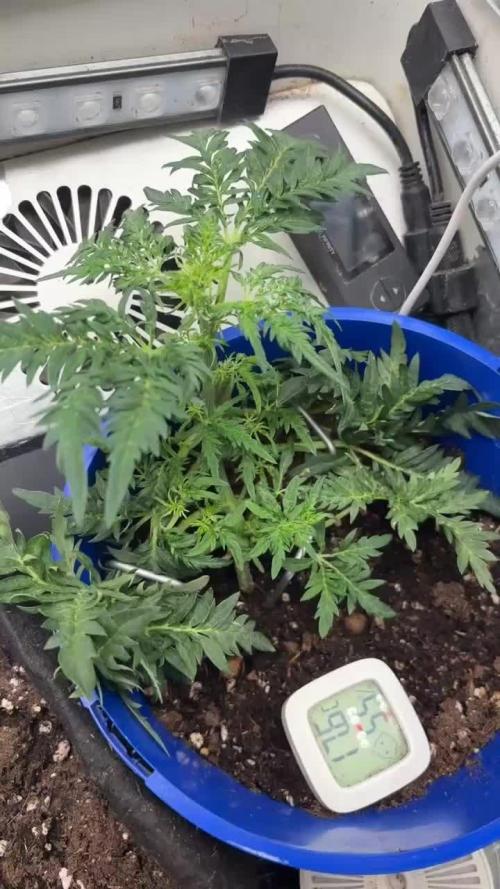
Frosty’s auto freak is now in the preflowering stage as I see the signs of stretching and the first few white hairs are appearing with multiple side branches with a couple already showing whitepistols

Likes
21
Share


@LittleBigTrees
Follow
I started Flushing two plants as there nearing the end of there days. I'll start Flushing the others this week apart from the kalimist indica pheno as it started flowering 3 or so weeks after the others even though they were all forced together. (alkward bugger)
Some of the plants are showing red /purple colours a little bit 👍
Likes
Comments
Share


@Dabking
Follow
I was told to never judge a strain purely off it's THC percentage. To smell a plant, and what your nose picks out is generally the strain that will jive the best with the endocannabinoid system in your body. This strain exemplifies that. It's only around 17% but the high is amazing. An under-rated strain for sure.
Very easy strain to grow. Although the same strain, one looked pretty different and was much frostier despite getting the exact same treatment from seed to chop.

Likes
Comments
Share

@Bir7822
Follow
08 septembre 2025
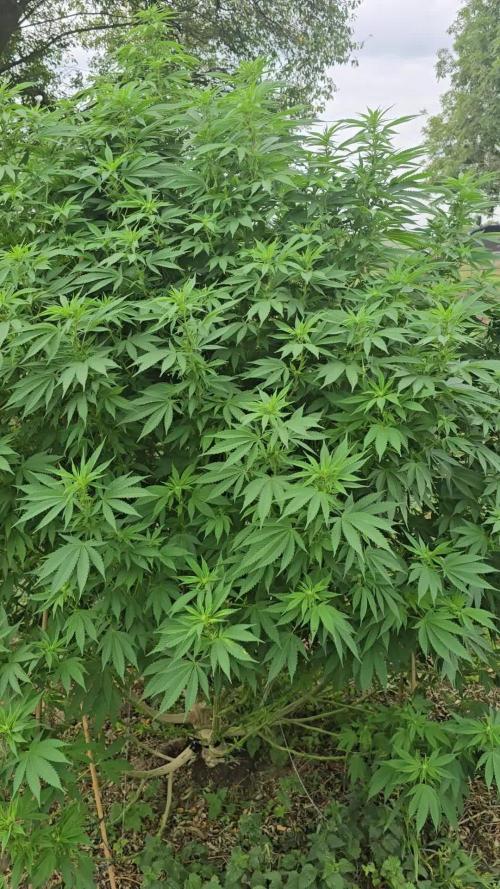
des fortes raffales de vents ont endomagé 2 ou 3 branches sur chaque plantes. jai du mettre des tuteurs et les fixer...

Likes
4
Share

@GoodTimesOrganics
Follow
Hi liebe Community and Welcome Back! 💚
Weiter geht's im Vergleichsgrow!
Bio Tabs NL. vs. Weedefix (Stuttgart/ Germany)
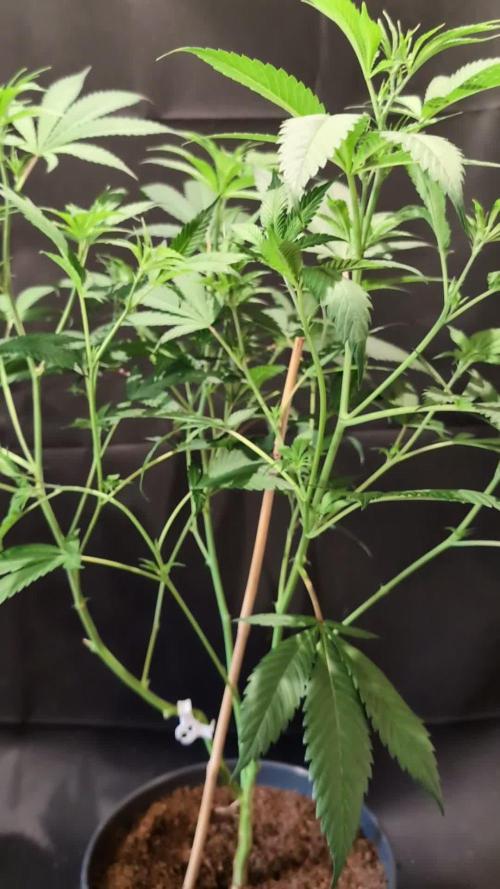
Hier im Bio Tabs NL Grow haben wir nun nach Tag 42 des Einpflanzens eine Höhe von 68 cm Erreicht.
Die Triebe bilden sich schön und akkurat aus.
Die Blattfarbe ist im Bio Tabs Grow mit einem tieferen etwas dunkleren Grün zu beobachten, im Wuchsverhalten hat die Pflanze nun etwas aufgeholt. Sie ist etwas Buschiger geworden.
Diese Woche, habe ich nur mit Wasser gegossen.
Nun ist es Zeit die Pflanzen in die Blüte zu bringen.
Es ist echt spannend, wie sich die Pflanzen so entwickeln.
Die Bedingungen im Growschrank sind Top!
—————
🌞 Temp: 21
🌚 Temp: 18°C bis 19°C
💨 RH: 58%
VPD: 0,75 kPa
💡ppfd: 330 mpm
—————

Likes
21
Share


@Budhunter
Follow
As I did the flushing in day 68 I was watching the trichomes and on day 87 I could see 25-35% amber so I decided to cut it. I cut the whole plant on the base and hang them all to dry. For this reason I will update my findings later when it gets dry and trimmed. So far really happy with the results. It won’t yield much but the quality is impressive
Likes
5
Share


@Kickdrum
Follow
She has left the Sunset Sherberts behind, and deciced to take advantage of the nice and toasty environment. Jedi (her name) has finally broken through. Steady at 21.5-24 C. RH at 65-75% with Spider Farmer Huimidifier and Dehumidifier, shooting for VPD. (day 1)
Let's quickly review the key new components I've planned to integrate or have already:
Circulation Pump - Adding this to the 14L Mars Hydro reservoir will ensure even fresh, circulated-for-a-miniute-every-hour, batch of water (and later nutes) to the auto-drip system, maintaining optimal feeding for my plants when I am away, next week.
Biobizz & BioTabs Supplements - These organic nutrient and microbial products will provide a comprehensive and balanced feeding regimen for my plants.
Auto-Drain Potted Plant Stands - The wheeled, auto-draining stands will simplify watering and prevent any spills or overflows.
Inkbird Humidity Controller - Pairing this with the Spider Farmer humidifier and dehumidifier will allow me to precisely maintain the ideal VPD (Vapor Pressure Deficit) levels.
LST Clips, Trellis Net & Shelves - These will help me maximize my grow space and optimize the plant canopy for optimal light exposure.
Pest Control Strips - An important preventative measure to stay ahead of any potential pest issues.
Smart Soil Sensors - The Zigbee-enabled sensors will provide vital data on soil moisture, temperature, and more, which I can monitor remotely.
Air Purifier/Ion Generator - Ensuring my grow environment has clean, high-quality air circulation.
With all of these elements in place, combined with my existing setup and the automated control via the iGrow app, I'm truly creating a "hands-off" grow operation. (theoretically, with a bro, coming to phiscally check too)....The ability to monitor and adjust key parameters remotely while I'm away in Italy.
Running on Sunrise/set mode(18/6) over the "seedling" scene, in iGrow app, keeping track of DLI and later on, the Adlites will come into play.
Temp at 23.5 and RH is at 60%.

Likes
2
Share

@DogDoctorOfficial
Follow
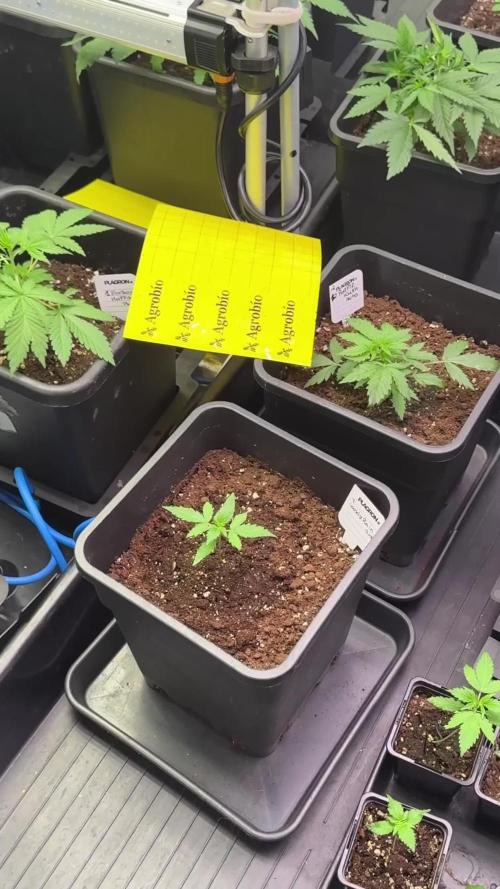
Blueberry Muffin – Pheno A | Week 3
The Awkward Start Is Officially Behind Her
Welcome back to another week of the 8×8 Adventure, where twelve cultivars are being documented individually from seed to harvest under a strict 12/12-from-seed schedule. Each phenotype receives its own diary so development can be followed independently, allowing subtle differences in structure, vigor, and expression to reveal themselves over time.
This week marked one of the most significant environmental changes since the project began. The lighting intensity was increased from approximately 370 µmol/m²/s PPFD to 700 µmol/m²/s PPFD at canopy level. Rather than easing into the increase slowly, the decision was made to provide the plants with a much stronger light source and observe their response carefully.
The result? They loved it.
Alongside the increase in light intensity, feeding volumes and nutrient strength were also adjusted to support the accelerating growth rate.
Week 3 Environment
🌡️ Temperature: 27.4°C
💧 Relative Humidity: 55%
💡 PPFD: ~700 µmol/m²/s
🌱 Medium: Plagron Lightmix
? Growing Method: 12/12 From Seed
💦 Water Consumption: ~0.9–1.2L per day
Feeding Schedule
Days 18
* EC 1.0
* pH 5.99–6.0
* Approximately 1L
Day 21
* EC 1.3
* pH 6.0
* Approximately 1.2L
As always, the objective remains simple: provide stable conditions, observe carefully, and allow each plant to express its own personality.
⸻
Blueberry Muffin Pheno A
I have to admit, this one is becoming increasingly enjoyable to watch.
If you’ve been following this diary since germination, you’ll remember that this phenotype showed a few odd characteristics during its earliest days. The first leaves arrived with a slightly unusual appearance and briefly raised some questions about how she would develop.
Fast forward to Week 3 and those concerns feel very distant.
The new growth is absolutely beautiful.
Leaf structure has normalized completely, color is rich and healthy, and the overall plant has developed into a compact, vigorous young specimen with excellent symmetry throughout the canopy.
One of the first things that stands out is the internodal spacing.
Despite the substantial increase in PPFD, the plant continues to stack nodes tightly, creating a dense structure that suggests strong genetic vigor and efficient use of the available light. Rather than stretching upward, she is focusing her energy on building a solid framework.
Looking closely at the canopy, the branching is already beginning to establish itself naturally. Side shoots are emerging confidently and there is a clear sense that this plant is preparing for the next stage of development rather than simply adding height.
At this point she is already pushing into the seventh to eighth node range, which is impressive considering the timeline and the 12/12-from-seed approach being used throughout the project.
The foliage itself is another highlight.
Large, healthy fan leaves radiate outward from the center of the plant, creating a broad solar panel that is capturing every available photon. Color remains a lush, vibrant green from top to bottom, with no signs of stress despite the environmental changes introduced this week.
The newest growth is particularly exciting.
The central growth tip is expanding rapidly and showing the kind of vigor that makes a grower eager to check on the plant every day. There is a feeling that this phenotype is only beginning to reveal what it has planned.
For now, she sits comfortably among the stronger performers in the room, combining healthy structure, excellent color, strong branching, and compact growth habits into a very promising package.
Most importantly, she simply looks happy.
And happy plants tend to tell the best stories.
⸻
Looking Ahead
The coming week should be very revealing.
With the root zone continuing to expand, nutrient levels increased, and lighting now operating at a much higher intensity, the pace of development is expected to accelerate noticeably.
The main points of interest moving forward will be:
* Continued internodal spacing
* Branch development
* Overall vigor compared to her sister phenotype
* Early indications of Blueberry Muffin structural traits
* Response to the elevated PPFD levels
If this week’s momentum continues, Pheno A could become one of the more interesting plants to follow as the project progresses.
⸻
Thank You
A huge thank you to everyone following along and supporting these diaries week after week.
Thank you to the entire GrowDiaries community for creating a place where growers from around the world can learn, share, and improve together.
Thank you to Plagron for the nutrients and cultivation support that help power this project.
Thank you to Zamnesia for providing the genetics, equipment, and the opportunity to explore these cultivars from seed to harvest.
And thank you to every grower who takes the time to stop by, leave a comment, share advice, or simply follow the journey.
The adventure continues.
🌱💚🍇?Growers Love and see you next week.
Likes
6
Share

@420DeepGrow
Follow
📆 Semana 9
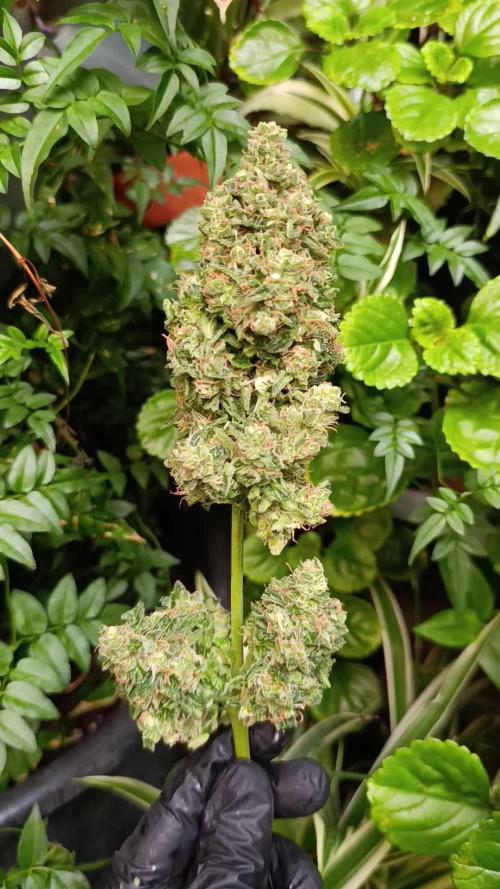
La Gaia F1 Auto llega al final de su ciclo, mostrando una maduración avanzada, cogollos compactos y una buena capa de resina. Después del lavado de raíz, la planta ha completado su última etapa manteniendo una evolución limpia y equilibrada.
Esta semana llega el momento de la cosecha. Retiro la planta en su punto de maduración y comienzo el proceso de secado, buscando conservar al máximo los aromas, terpenos y calidad de la cosecha.
🔥 Nota de cultivo: Fin de ciclo para la Gaia F1 Auto. Una cosecha que llega con buena densidad, mucha resina y una maduración muy completa.
Seguimos creciendo fuerte 💪!