


Likes
Comments
Share

@JeanMichedu95000
Follow
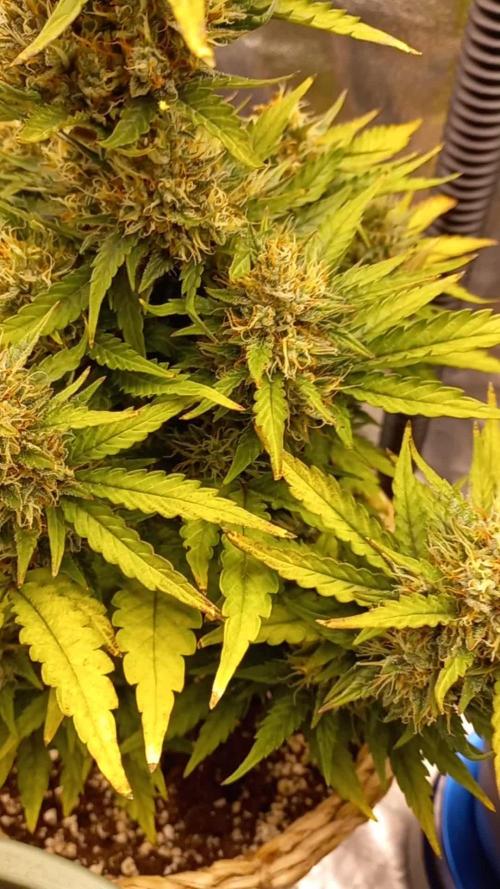
All seems to be okay, 90% milky so i will cut her in few days !

Likes
3
Share

@skipakz
Follow
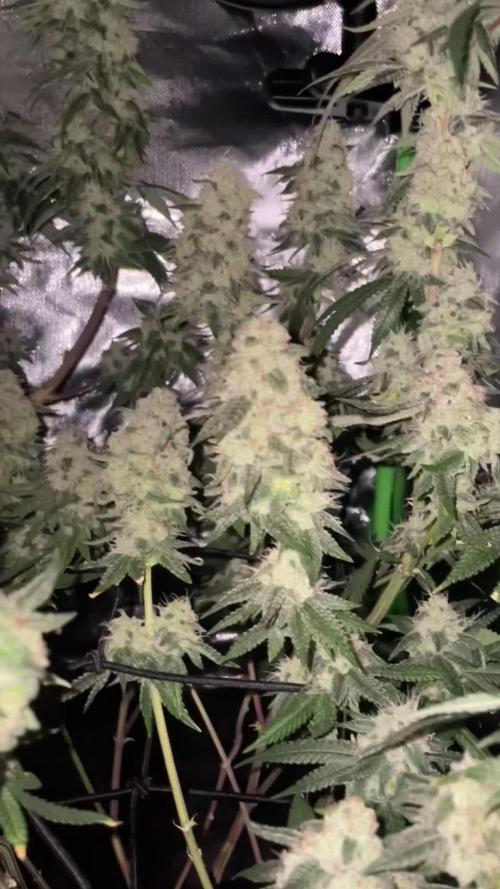
Kein Dünger mehr seit letzter Woche, habe heute angefangen auf Ernte vorzubereiten (deswegen manche so kahl, so muss ich später nicht so viel trimmen auf einmal sondern kann auf die letzten Tage verteilen…
Likes
21
Share


@CanadianFillmore
Follow
Welcome to week 3F of growfessor theatre, 4x4 edition.
The ladies are looking happy and healthy. Do-si-dos received a heavy defoliation, there were a ton of small inner branches starved for light, so they got cut.
LSD, Green Crack and Mandarin dreams all received a light defo, yellowing leaves were removed.
Lighting provided by Mars-Hydro TSW2000.
Thanks for stopping by, tune in next week growfessors for the next episode 👽🌳💚


Likes
33
Share


@Ferenc
Follow
Day 65: All good they are stinky and getting ready soon. BlackBerry Kush and LSD-25 will be harvested in 2 weeks so I started flushing them. Rest of them need more time at least 3 weeks or 4.
Water intake 200 ml a day no more fertilization for Balckberry Kush and LSD-25. 600W LED, 18 hours on 6 hours off humidity is low approx 35 percent.


Processing
Likes
13
Share


@Xelxz
Follow
ºDay 65 (11Jan) - 6th video;
ºDay 67 (13Jan) - 18th watering (3rd vegNute);
ºDay 67 (13Jan) - 7th video;
ºDay 68 (14Jan) - Took LST;
ºDay 69 (15Jan) - 19th watering (1st flush);
ºDay 70(16Jan) - End of week 10;

Likes
24
Share


@Ganjaman19
Follow
Another banger by @divineseeds make sure your following them on Instagram awesome company awesome genetics top service and some top fire strains
Thank you Divine seeds for this opportunity its been great and hopefully be doing work with you guys all the time now


Likes
24
Share


@1_Plant_Wonder
Follow
Day 63 from seed, about 5 weeks into flower 🌹✌️🏽🌱
Plant has finally stopped growing vertically, stopped at 57 cm,
Considering the topping and LST, that's pretty high i would say.
Had to do another huge defoliation and cutting down all immature branches and popcorn buds.
Also started to add Atami bloombastic (pk14-15) for the second stage of flower.
All in all everything is going smoothly now, buds getting bigger in size, although still fluffy.
Hopefully they'll get danser in the next week or so🤞🏽
Until next week ppl 😎✌️🏽💚
Likes
23
Share


@Kakui
Follow
F11, riego con EC 2.2 y pH 6.3, se cambió la luz de 1 LED de 480w a 3 LEDs de 240w, sumando un total de 720w, a una distancia de 40cm de las plantas y una intensidad de 80%, estamos en la semana 2 de floración, esperaré hasta la semana 3 para hacer una gran y última defoliación, Lollipop y acompañado de instalar una pequeña estructura de tutores.
F16, gran defoliación y armado de la estructura de tutores, se puede ver cómo la luz pasa de manera uniforme hasta el fondo de los maceteros, antes de la defoliación el fondo del macetero se veía con sombra, oscuro. Se puede apreciar que aunque estamos iniciando la tercera semana de floración, ya hay presencia de tricomas. Las plantas se ven muy saludables.
Likes
14
Share

@OlyGrower
Follow
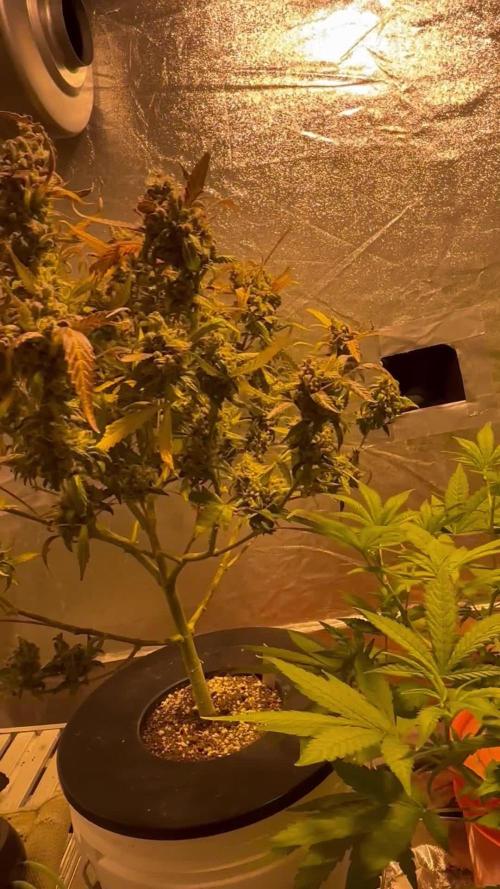
This Origin Glue (#2) went into flower 2-2.5 weeks after the rest do. I was wondering if this was an auto flower for a minute.
She seemed like she got stunted early but bounced back great. Better stem structure, better bud . Structure, grows better, nicer leaves. Good producer and smells good.
This pheno was way different than the other pheno in this grow. This one was way better. I would recommend this strain but I won’t grow it again cuz I’m picky.
2/25 update - a couple more weeks of flowering To go
Likes
252
Share


@Tropicannibis_Todd
Follow
Well folks we chopped the Ztrawberriez 😁
And the second of the Strawberry Blast 🍓 🍓 🍓 🍓 Shes a killer for sure , incredibly frosty , and sticky , not the best of nugs as I said a bit airy , the smell is sweet and berry-licious ......
FC4800 from MarsHydro Lights being readjusted and chart updated .........: 1:I've added a RU45 to the mix : 1:
www.marshydro.ca
👉I am using Agrogardens for nutrients for my grows and welcome anyone to give them a try .👈
👉 www.agrogardens.com 👈
Agrogardens Cal MAG
Agrogardens Grow A B
Agrogardens Bloom A B
Agrogardens Bud Booster
Agrogardens PK13/14
I GOT MULTIPLE DIARIES ON THE GO 😱 please check them out 😎
👉THANKS FOR TAKING THE TIME TO GO OVER MY DIARIES 👈
Would you like to hang with the growdiary community 👉 https://discord.gg/gr4cHGDpdb 👈

Likes
10
Share
@Thedibber
Follow
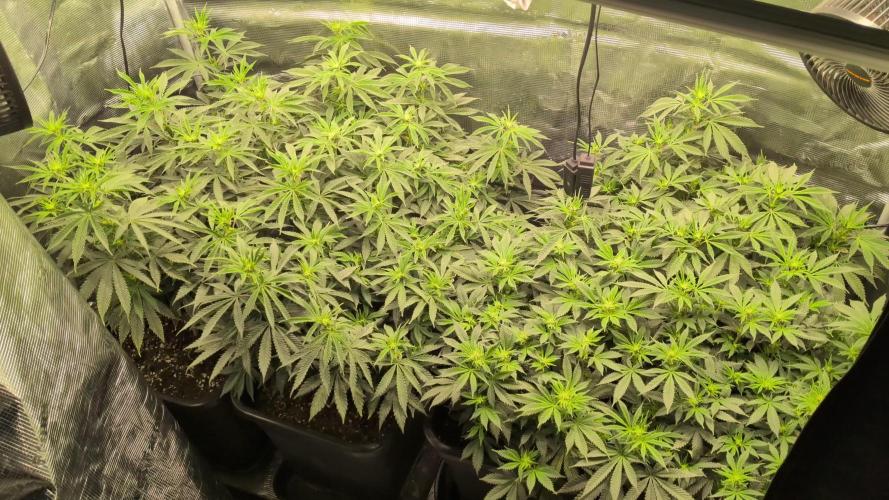
Week 2 starts the 3 plants on the right are the Blood moon gelato. Jungle inc 😅
Likes
18
Share


@Rando1314
Follow
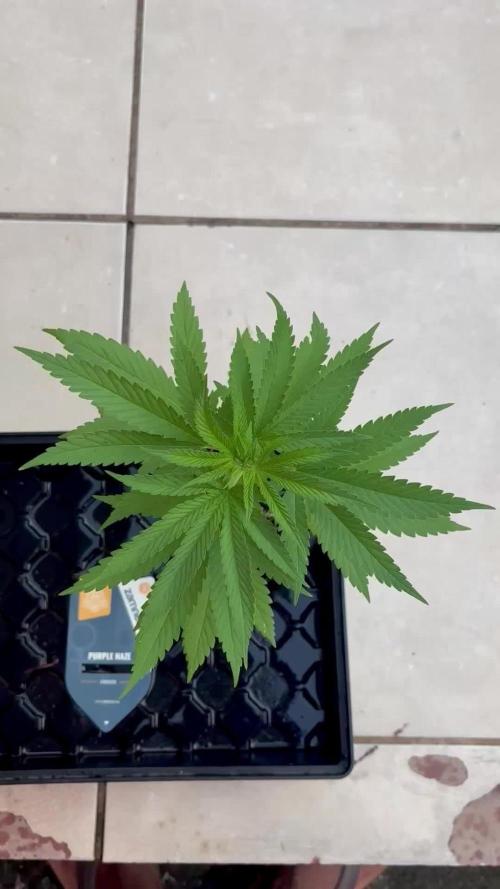
Girls are really full on flowering!!! They all seem super happy! Been trying to get on a better flushing regiment as it seems to really help around harvest with salt build up using general hydroponics nutrients. I can already see some buildup around the fabric pots. Gonna do a basic pesticide foliar spray with azomax. I don’t see any pests but I’d like to keep it that way esp since I’m flowering now. But everything is going as planned and keeping a watchful eye on them. Oh and also did a little defoliation again...the Maui seems to just keep bushing out while the dosi just wants to stretch!! Super impressed with the genetics and resilience of these 2 strains



Likes
26
Share


@MG2009
Follow
03/05/2021
Beginning of week 4 looking good, I think she will start flowering in week 5-6, so I might top her, she is growing fast so I hope it will not harm flowering time.
Ps.
I did top
And 24 hours later I can see all is well, where I topped her is healing, and side branches responding! I know she will be ready for flowering.
Check out video and see.
Likes
2
Share

@Chucky324
Follow
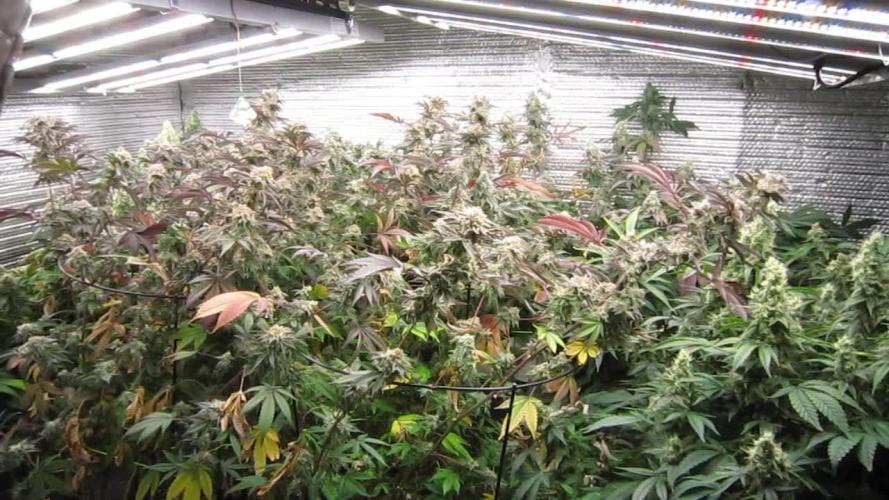
Hello. This the end of week 8 and the beginning of week 9 of flowering.
Took that partly dead Pink Kush branches out and will use them for kief. The room looks much better with it gone.
The plants/buds are bulking up and some are heading for the floor The Critical is quite heavy
The Pink Kush is Pinkish Purple now. And the Dos Si Dos 33 is frosty.
Just started flushing, I'll flush for the next 2 weeks. Then a day or 2 of dark... then harvest.
It's all about taste from here on.
I add 30 mm of 30% hydrogen peroxide with every 5 gallons of tap water I use for flushing.
Helps finish the plants better than anything else I've used. They will even get color when it's not cold out.
The Blackberry Moonrocks will be finished in 2 weeks even thou it's mostly white with stigmas now... see the pics.
OK. Keep Growing Straight.
Chuck.

Likes
58
Share


@AsNoriu
Follow
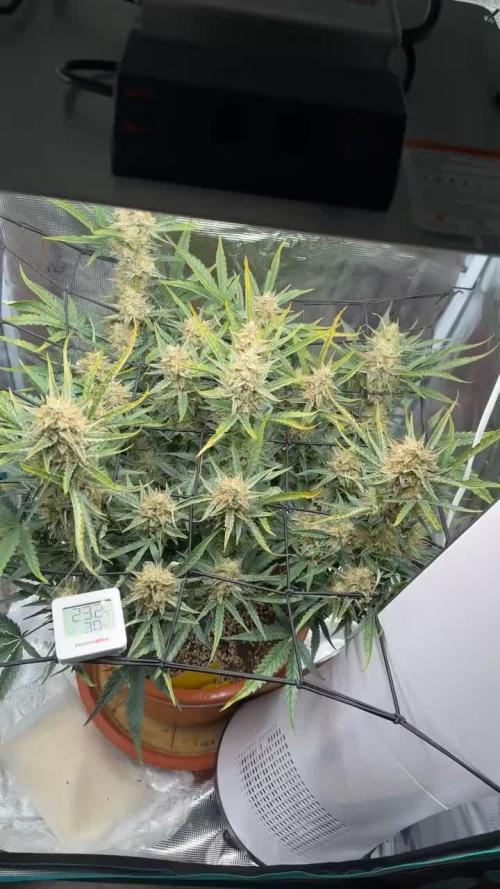
Day 74. One more victim of war against bud rot. Prevention needs sacrifices sometimes...
Day 78. Second was sacrificed for more space too ;)))
Day 84. First girl is Jared . Fantastic bud quality !!!
Day 88. I said fantastic quality about first one ??? ;))) That's till I touched second !!!
Purple phenotype is pure joy for eyes !!!
Happy Growing !!!

Likes
50
Share


@Pr3m_85
Follow
My cat died this morning !! It was my painkiller with weed when the disease was breaking my balls !!! His name was RICK and his Sister named MORTIE. Rick was the sweetest cat of the world. apparently he had an autoimmune disease which took him away. he was 4 years old. RIP my RICK

Processing
Likes
13
Share


@Gdot96
Follow
day 46, a couple of the plants are showing signs of a deficiency.. i think it might be calcium, but i have no calmag. so i've sprinkled some bonemeal on top of the soil and watered it so it washes through to the soil.. hopefully 😅 ill see how they react tomorrow.. some really nice bud growth going on.. every day i go in i notice swell.😎
Likes
Comments
Share


@Growshh
Follow
The top dress from last week is working nicely. Everyday watering with brix, green aminos, calmag and silica.
2 of the Blueberry Cherry are ultra blueberry phenos.
2 black patronus are very sherbsy but one is ultra sherbs
