The Grow Awards 2026 🏆
Likes
Comments
Share
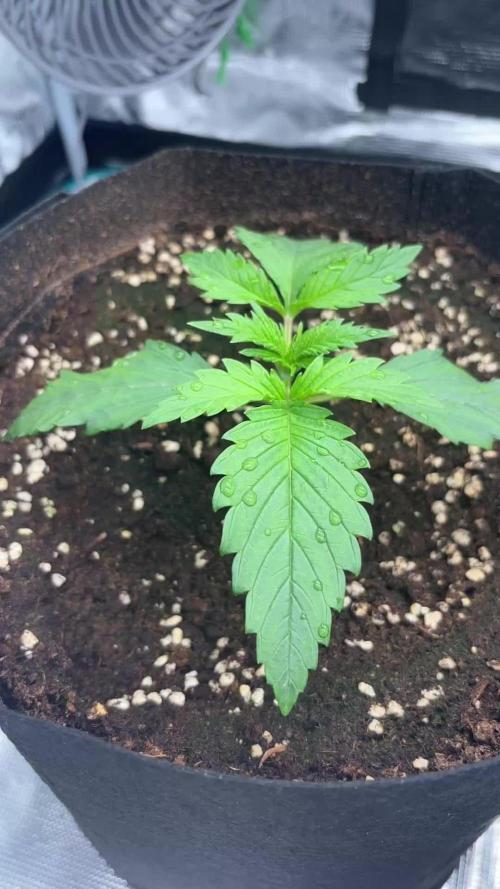
Slow start caused by a temperature drop. Adjusted the lights to an 18/6 schedule, keeping them off during the day to prevent nighttime temperature dips.
Likes
6
Share
@rvabudman
Follow
The buds are forming! Changed to a nicer light recently, light is great, although my mars hydro 600w did me justice. This new one I got of amazon for under $100 is 1000 watt led and crushing it. It has increased temps significantly which is a bit tough for me to control given my tent is in a closet. Also it is starting to getting less humid outside, so I reduced airflow in the tent to keep the humidity at 50. I have a small humidifier coming soon (oddly a Corporate work gift lol).
Likes
31
Share
So for the last week or two, i've implemented Plagrons green sensation to help bulk up the buds and it appears to have helped... With that being said, divine seeds both times i've grown than the buds have been fat and healthy... Big shouts out to them for having such amazing contests... I truly wish I had the room so I could have a whole bunch of their genetics running for this contest, because they're auto flowers are really good... As everybody knows, autos are hit-and-miss. But for me, divine seeds hasn't missed yet =) .. Good luck to everybody in the contest. I hope all is doing well.God bless and happy growing RIPCK
Likes
19
Share
Few lower leaves turned yellow, i gave them some more nutes with water. Everything is okay now. Every friday around 7 pm new upload. Don't forget to like (helps with the algorithm) Thank you, have a nice one!
Likes
17
Share
Green Crack is wack!! Both ladies got the chop and are drying now. Both packed on considerable size during their last week, hopefully it translates to higher dry weight. Will update in 7-10 days with dry weight and smoke report.
Likes
7
Share
@Car1bGrow
Follow
This week went well, cut, dried and I began to cure the second plant in potting soil. The third and final one is doing really well showing nice bud formation. Will let it go until the end of the month just to see if the buds will fatten.
Likes
31
Share
Info: Unfortunately, I had to find out that my account is used for fake pages in social media. I am only active here on growdiaries. I am not on facebook instagram twitter etc All accounts except this one are fake. Flowering day 14 since the time change to 12/12 h. Hi everyone :-) . She has developed really well this week. it grows super in height 😀. I am very curious how it will develop. It was poured twice with 1.2 l per watering. Otherwise the tent was cleaned as usual and everything checked. Stay healthy đŸ™đŸ» You can buy this Strain at : https://www.royalqueenseeds.de/feminisierte-hanfsamen/220-pineapple-kush.html Type: Pineapple Kush â˜ïžđŸŒ Genetics: Pineapple x O.G. Kush 👍 Vega lamp: 2 x Todogrow Led Quantum Board 100 W 💡 Bloom Lamp : 2 x Todogrow Led Cxb 3590 COB 3500 K 205W đŸ’ĄđŸ’Ąâ˜ïžđŸŒ Soil : Canna Coco Professional + â˜ïžđŸŒ Fertilizer: GHSC Powder Feeding Bio â˜ïžđŸŒđŸŒ± Water: Osmosis water mixed with normal water (24 hours stale that the chlorine evaporates) to 0.2 EC. Add Cal / Mag to 0.4 Ec Ph with Organic Ph - to 5.5 - 5.8 .
Likes
3
Share
@AustinRon
Follow
Week 15 - Flower Week 11 Lemon Jeffrey by IRIE Genetics (14 Starts for 8 Finishers) 63-70 Days Flower (9 - 10 Weeks) Weeks Observations: - Our light leak on July 6th through July 31 ‘cost’ us ~ 21 Days. Extending Harvest to account for 21 day light leak. New Harvest Date 12 Sep 2023, Plant Day 121, Flower Day 86 Seeds Wet: Monday 14 May 2023 Harvest Date Range: [ 2023-08-11, 2024-08-21] Start of week: - Dates: [2023-08-27: LJ2Q 106:F:11:1, ‹ 2023-09-03: LJ2Q 112:F:11:7 ] End of Week: - Plant Height Range: [46, in] - Water/Day/Plant: [935, ml] EnvironmentalCurrent: - Scotoperiod: [ 11, hrs] # 1900 - 0600 + 24 - LightIntensityPeak: [ 1000, ”Mol/m2/s ] - DailyLightIntegral: [ 42.1, Mol/m2] # Target: < [ 40, Mol/m2/day] - LightDistance: [ 6, in] # 3.5” LESS than Optimal for SP3000 - TempAvg: [79.1 , °F] - RH: [ 68, %] - VPD: [ 1.10, kPa] - 230*4*11/8 - FeedwaterPerPlantPerDay: [ 1265, ml] - Feedwater: [ 10.12, l] - EC: [ 2.0, mS] Environment NOTES: - RULE - CLOSE Room Airflow during LOW TEMP periods(2030 - 0700) - OPEN during HIGH TEMP Period (0700 - 2030) SOP: - WEAR CLEAN GLOVES FOR ALL SEED OPERATIONS - CLEAN All Instruments before use - Light Strengthvegetation := 100 + (#nodes * 100) - Light Strengthflower := [ 1000, 600, ”Mol/m2/s] - Scotoperiodvegetation := [ 1300, 1900, 6, hr] - Scotoperiodflower := [ 0600-1900, 13, hr] Environment - Late Flower (Week 10-14) (F5-F10) - Temp: 78-80°F - VPD: 1.2 ± 0.2 - Photoperiod: 11/13 - Light Strength: [930, 850, ”Mol/m2/s] - EC: 2.3 # Week F5-F8 - EC: 1.8 # Week F9 - EC: 1.1 # Week F10 - Finish (Week 14) ( F10) - Temp: 78°F - VPD: 1.3 ± 0.2 PPFD: 750 peak - Resin Bloom ONLY - EC: 0.8 _______________________ Base Application for 10 Gal: - [x] Primer A: [ 100, ml] - [x] Primer B: [ 100, ml] - [x] Silica Skin: [ 35, mll] # Reduce to reduce/eliminate Sediment - [x] SLF-100 (Enzymatic Root Cleaner): [ 50, ml] - [x] King Crab (Biology): [ 5, ml] __________________________________________ - @ EC: 1.7 Supplement: [ Application Rate], [ Total Delivery for 2 Gal Solution] - [ ] Primer A: [ 10, ml, gal], [ 12.5, ml] - [ ] Primer B: [ 10, ml, gal], [ 12.5, ml] - [ ] Silica Skin: [ 4, ml, gal], [ 5, ml] - [ ] CalMag Fuel: [ 4, ml, gal], [ 5, ml] - [ ] Peak Bloom: [ 4, ml, gal], [ 5, ml] - [ ] Resin Bloom: [ 4, ml, gal], [ 5, ml] - [ ] SLF-100: [ 5, ml, gal], [ 10, ml] - [ ] King Crab: [ 0.5, ml, gal], [ 1, ml] - [ ] EC: [ 1.7, mS] 85 ml/plant X 11, : 935 ml/plant/day, 2.4x of field capacity Meaning ALL Fertigation through pot is Refreshed 2.4 times per day with this schedule. ____________________________________ Mon 28 Aug 2023 # End of Harvest ORIGINAL Window , before discovering light leak LJ2Q 106:F:11:1 - [x] Will scope trichomes by hand, and set a chop date today. - Some are ready today, Some look to need 10 - 14 days. This has been an interesting grow - the extra stretch munged the SOG Strategy - with severe Chiropractics I still have >±12” of height per plant. We should be harvesting today . . . - We could conceivably take the grow as far as Day 139, if we calculate a 4 week light leak forward. That would make LATEST DATE 24 SEPTEMBER - - IF We go more than this week - Week 15 Nutes (Mixed Daily) - Mon - Wed: ONE SHOT, EC: 1.7 - Thus - Sun: ONE SHOT, EC: 1.4 - NEXT WEEK - Mon: Resin Bloom: EC: 1.1 - Tuesday - Harvest: Resin Bloom: EC: 0.8 - ELSE if we take them down next Sunday: - [ ] Been feeding The Rooted Leaf Hydro schedule, Base Nutes plus Silicon. Need to move to harvest nutes, potassium (+Resin Bloom/+Peak Bloom) at - [ ] Monday:+Resin Bloom/+Peak Bloom: EC: 1.7 - [ ] Tuesday: EC: 1.4, (+Resin Bloom) - [ ] Wednesday: EC: 1.1, (+Resin Bloom) - [ ] Thursday EC: 0.8 (Resin Bloom Only) - [ ] Friday EC: 0.8 (Resin Bloom Only) - [ ] Saturday EC: 0.8 (Resin Bloom Only) - [ ] Sunday - Harvest Growtek Mod - 170 ml/event per emitter -> 2 Gallons Input - ___ EC: [ 2.0, mS] Tue 29 Aug 2023 LJ2Q 107:F:11:2 EC 1.6+ - Defoliated (final) blocking and unviable fans. Looks better - clearer airflow Wed 30 Aug 2023 LJ2Q 108:F:11:3 EC: 1.6 For 2 Gal (ml’s) RLA Minerals 14.0 Primer A 14.0 Primer B 7.0 Silica Skin 10.5 Peak Bloom South Cascade Organics - [x] SLF-100: [ 5, ml, gal], [ 10, ml] ___ Plant Success (Beneficial Bacteria, Crab ‘Frass’) - [ ] Sunday - Harvest? - [x] King Crab: [ 0.5, ml, gal], [ 1, ml] Thu 31 Aug 2023 LJ2Q 109:F:11:4 EC 1.4 For 2 Gal (ml’s) RLA Minerals 12.3 Primer A 12.3 Primer B 9.2 Peak Bloom Required 1 qt to bring down from 1.6 to 1.4 Friday 01 Sep Jul 2023 LJ2Q 110:F:11:5 EC 1.1 For 2 Gal (ml’s) RLA Minerals 7.6 Primer A 7.6 Primer B 5.7 Peak Bloom Sat 02 Sep 2023 LJ2Q 111:F:11:6 EC: 1.4 Peak Bloom as Needed for Dilution - [ ] Scope Trichomes Last Time With a 21 day light leak, we’ll extend harvest to Day 118, Flower Day 90 - or 69 Unleaked Light Days . . . Through End of Harvest, Daily Daily Feed through Harvest Day -2 Per TWO Gallons: EC 1.4 - [x] Primer A: [ 12, ml, gal] - [x] Primer B: [ 12, ml, gal] - [x] CalMag Fuel: [ 4, ml, gal] - [x] Silica Skin: [ 4, ml, gal] - [x] Peak Bloom: [ 4, ml, gal] - [x] Resin Bloom: [ 8, ml, gal] - [x] King Crab: [ 0.5, ml, gal] - [ ] SLF-100: [ 5, ml, gal] - [ ] Reduce to EC 1.1 on Harvest Day -2 - [ ] Reduce to Resin Bloom Only, EC: 0.8 Pre Harvest Day DECISION - We’ll take the girls down Flower Day 83, Nominal Day 62 assuming 21 Day push for light leak. It’s not in practice3 that long - we should be good, if not - latest day 90 (Nominal 69) ____ Sun 03 Sep 2023 # Flower Day 77 LJ2Q 112:F:11:7 EC 1.4 - [x] Dismantle And Clean Res, Pump, Chiller, Lines - [x] Clean Res - [x] Clean Pump - [x] Load Res with a a gallon of HOT tap water, a cup of 30% Vinegar - [x] Run Pump for :30 - [x] After 30: Reverse Lines - [x] Run Pump for :30 - [x] Stop pump - [x] remove tubing from pump and chiller - [x] Remove pump, reclean - [x] Clean Chiller Tubes - [x] Rinse with 30% Vinegar - [x] When Dry: Reassemble & Replace
Processing
Likes
6
Share
@Weedzoks
Follow
Hi, La sĂ©nescence se fait naturellement du fait d’une lĂ©gĂšre carence en N, j’ai quand mĂȘme ajoutĂ© du Power Clean pour l’accĂ©lĂ©rer et amĂ©liorer encore plus le goĂ»t et l’odeur. Les couleurs violettes se propagent petit Ă  petit vers le bas de la #2, et trĂšs lĂ©gĂšrement sur la #1, comme des reflets. La puissance du panneau LED a Ă©tĂ© abaissĂ© sur 55% La floraison est prĂ©vu pour 7-8 semaines et pourtant j’en suis Ă  10, sĂ»rement du Ă  la carence post stretch qui a ralentit la floraison et rĂ©duit le rendement ; J’ai observĂ© les trichromes le 28/10, ils sont presque tous laiteux et les premiers ambrĂ©s arrivent doucement.. A la semaine prochaine 👋
Likes
37
Share
Disclaimer: Crazy Trichomes take a look! Slurricane - Micro Worlds - 10x We are in our Purple Time, we went crazy for the beauty of the purple plants seen in Micro and so we look for colored plants and we are really lucky because they are branded Zamnesia. This time it is the turn of the newly released Slurricane, it is breathtakingly beautiful at first glance, look at the colors, look at how much resin and what a Pure Californian appearance it seems like something from Compound Genetics but it is Zamnesia guys. Our breeders are great and have reached unimaginable levels. **Remember that for all the varieties we have at least two plants, one left to grow straight and one worked with the techniques (go back in the week to see). today we talk about the harvest of the dark phenotype, which is also the most beautiful and picturesque to show in the hole of both colas and wonderful macros. Technique used // In this case we only practiced repeated Topping until we got to 16 tops, the plant is not very big, it grew in winter but it has a more than exceptional flower quality. Better with the techniques or normal? This time we have two very different phenotypes, a plant with medium internodal distance this time I prefer this plant because it is purple but the other seems to be producing something more, let's wait for it to finish and I'll let you know, for sure the beauty of this purple will be unsurpassed. Flower quality // From one to 10 stars 15. The plant has resinated in a crazy way, extreme and exceptionally abundant, it seems to see the best Californian flowers for real I'm not joking. They are fighting flowers, they will probably go to some contest so we washed the buds if you don't know how to do it there is an excellent article Zamnesia. Check the article in your language // https://www.zamnesia.io/it/guida-growing-cannabis/333-lavaggio-delle-ceme Fertilizers// I am very happy with how I managed to flush the plant that at a certain point before going to flush was fed for a few days only with additives and then went to flush and we are very very well discolored, predicting a very tasty flower, grown organic and flushed successfully, the flavor and taste will be epic. Look at how yellow the sun leaf is, the plants must be like this in the end otherwise you smoke / vaporize / ingest fertilizers that are then more or less heavy metals often, CLEAN YOUR WEED! For the reasons mentioned above and for a great taste I prefer Organic, All the fertilizers and additives of Plagron in the green / 100% organic version have fully satisfied me. Choose your soil based on your style and calculate the sheet on the website www.plagron.com - Bro if you are a stubborn type "I don't put anything in it" use additives listen every now and then .... and then come and tell me. Fertilizers instead can be found in convenient all-inclusive packages on the Zamnesia website. This variety is truly exceptionally Cali usually plants hybridized by Europeans do not look so Cali, not this one. ---- https://www.zamnesia.com/11177-zamnesia-seeds-slurricane.html Zamnesia Description // Slurricane is a first-choice US variety, created by In House Genetics, and now available to all growers thanks to the hybridization processes implemented by Zamnesia. Born from the fusion of Purple Punch and Do-Si-Dos, Slurricane contains 60% indica genes and is extraordinarily vigorous. Whether indoors, outdoors or in a greenhouse, this variety is able to produce large quantities of dense and aromatic buds. Add Slurricane to your assortment and enjoy growing one of the most beloved hybrids in the United States. Slurricane seeds quickly produce very robust specimens with an extraordinarily solid structure. The plants in the vegetative phase develop a massive stem, with large fan leaves and small internodal spacing. Thanks to their resistance and thick canopy, they are ideal for training techniques. Opening a jar full of Slurricane buds will make your mouth water: this strain produces dense, fragrant and resinous buds that will charm even the most demanding cannabis fans! After curing, the flowers retain a marbled texture, with sparkling trichomes coating the inside and outside of them. The aromas are sweet and spicy, with clear berry undertones. With 28% THC, Slurricane produces a vigorous effect. By consuming it in the evening hours, you will notice a pleasant sense of numbness on a physical level and enveloping vibrations, useful for aiding sleep. Music and Frequencies // For about 4/6 hours a day my plants listen to 432Hz frequencies made especially for their well-being and sometimes a bit of black music to give them those vibrations that only music can give. www.radionula.com All the best that mother nature has to offer is at ---- www.zamnesia.com
Likes
11
Share
@Urunascar
Follow
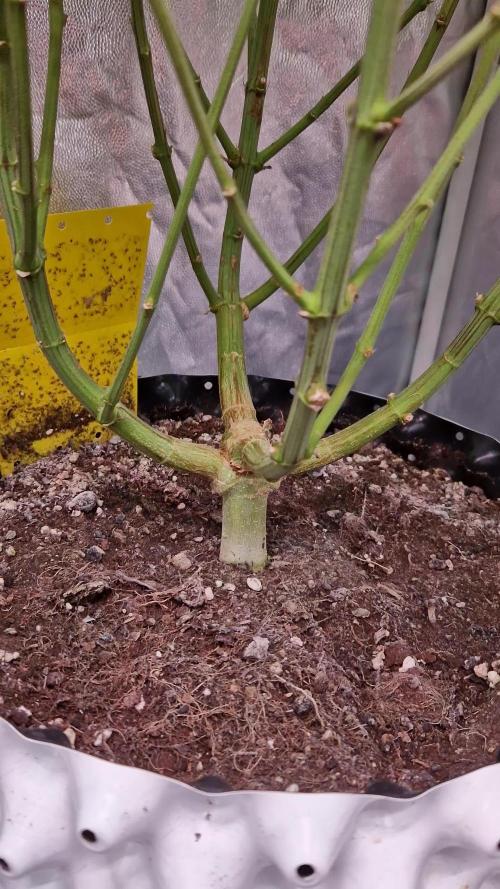
Since she's the one closest to the outside wall I decided to place some weight on it so it wouldn't grow that much taller and started to grow the lower branches
Likes
52
Share
Once again she passes my expectations, late to the show with trichome production. I'm surprised there is purple on the bud, maybe Purpinator does work. I thought I could see hints under the grow lights and thought my eyes were deceiving me, I was just being hopeful. But nah 2 of the 3(under the UV) have developed a beautiful tone of purple. I was never going to bother with a deep freeze but maybe the whole bud will change given conditions, that would be something, fingers crossed. đŸ€” was a little skeptical that reducing temps humidity would change density, but it does, buds are solid something I've not been able to achieve before. Rule of thumb is never to surpass 60% RH in the flowering phase and try to progressively reduce it down to 40% in the last 2–3 weeks before harvest. The plant will react as it seeks to protect its flowers, responding by producing denser buds and a higher concentration of resin. Cannabis plants are sensitive to sudden temperature changes, especially in the flowering stage. Extreme heat or cold can impact bud density and overall yields. In nature as a defense mechanism from cold, the plant sensing sudden dips in temperature will attempt to remove the pockets of air within the bud, it achieves this by compacting itself in doing so to better protect itself from cold snaps which are normally indicators in nature that worse weather is on the way. Terpene levels are the highest just before the sun comes out. Ideally, you want as many terpenes present in your plants as possible when you harvest. Cannabis plants soak up the sun during the day and produce resin and other goodies at night. The plant is at its emptiest from "harvest undesirables" so to speak right before the lights on. Boiling cannabis roots during harvesting slows down the drying process. When you boil cannabis roots, it shocks the plant, closing the stomata on the leaves. This prevents massive moisture loss through the leaves, leaving only the floral clusters actively losing moisture at a reduced pace. I've always run a strict 60/60 and it took almost twice as long to dry to a snap than previous grows where I didn't boil for what it's worth. Chlorophyll is good for the plant but not for you. When you harvest the buds, even after you flush them, if you flush them, they’re still filled with chlorophyll. Freshly cut buds are greener than dried buds because they still contain loads of chlorophyll. However, when rushed through the drying process, the buds dry but retain some chlorophyll, and when you smoke it, you will taste it. Chlorophyll-filled buds are smokable, but they aren’t clean. Slow drying gives the buds enough time and favorable conditions to lose the chlorophyll and sugars, giving you a smoother smoke. How the plant disposes of the chlorophyll and sugars by a process of chemically breaking them down and attaching the decomposed matter once small enough to water molecules which then evaporate back into the ether. Time must be given to the process to break down the chlorophyll and sugars. Think of it like optimizing the environment for decay. All the nutrients it could ever need are in abundance, it eats nutrients based on its demand for growth, which is dictated primarily by available light. Plant growth and geographic distribution (where the plant can grow) are greatly affected by the environment. If any environmental factor is less than ideal, it limits a plant's growth and/or distribution. For example, only plants adapted to limited amounts of water can live in deserts. Either directly or indirectly, most plant problems are caused by environmental stress. In some cases, poor environmental conditions (e.g., too little water) damage a plant directly. In other cases, environmental stress weakens a plant and makes it more susceptible to disease or insect attack. Environmental factors that affect plant growth include light, temperature, water, humidity, and nutrition. It's important to understand how these factors affect plant growth and development. With a basic understanding of these factors, you may be able to manipulate plants to meet your needs, whether for increased leaf, flower, or fruit production. By recognizing the roles of these factors, you'll also be better able to diagnose plant problems caused by environmental stress. Water and humidity *Most growing plants contain about 90 percent water. Water plays many roles in plants. It is:* A primary component in photosynthesis and respiration Responsible for turgor pressure in cells (Like the air in an inflated balloon, water is responsible for the fullness and firmness of plant tissue. Turgor is needed to maintain cell shape and ensure cell growth.) A solvent for minerals and carbohydrates moving through the plant Responsible for cooling leaves as it evaporates from leaf tissue during transpiration A regulator of stomatal opening and closing, thus controlling transpiration and, to some degree, photosynthesis The source of pressure to move roots through the soil The medium in which most biochemical reactions take place Relative humidity is the ratio of water vapor in the air to the amount of water the air could hold at the current temperature and pressure. Warm air can hold more water vapor than cold air. Relative humidity (RH) is expressed by the following equation: RH = water in air Ă· water air could hold (at constant temperature and pressure) The relative humidity is given as a percent. For example, if a pound of air at 75°F could hold 4 grams of water vapor, and there are only 3 grams of water in the air, then the relative humidity (RH) is: 3 Ă· 4 = 0.75 = 75% Water vapor moves from an area of high relative humidity to one of low relative humidity. The greater the difference in humidity, the faster water moves. This factor is important because the rate of water movement directly affects a plant's transpiration rate. The relative humidity in the air spaces between leaf cells approaches 100 percent. When a stoma opens, water vapor inside the leaf rushes out into the surrounding air (Figure 2), and a bubble of high humidity forms around the stoma. By saturating this small area of air, the bubble reduces the difference in relative humidity between the air spaces within the leaf and the air adjacent to the leaf. As a result, transpiration slows down. If the wind blows the humidity bubble away, however, transpiration increases. Thus, transpiration usually is at its peak on hot, dry, windy days. On the other hand, transpiration generally is quite slow when temperatures are cool, humidity is high, and there is no wind. Hot, dry conditions generally occur during the summer, which partially explains why plants wilt quickly in the summer. If a constant supply of water is not available to be absorbed by the roots and moved to the leaves, turgor pressure is lost and leaves go limp. Plant Nutrition Plant nutrition often is confused with fertilization. Plant nutrition refers to a plant's need for and use of basic chemical elements. Fertilization is the term used when these materials are added to the environment around a plant. A lot must happen before a chemical element in a fertilizer can be used by a plant. Plants need 17 elements for normal growth. Three of them--carbon, hydrogen, and oxygen--are found in air and water. The rest are found in the soil. Six soil elements are called macronutrients because they are used in relatively large amounts by plants. They are nitrogen, potassium, magnesium, calcium, phosphorus, and sulfur. Eight other soil elements are used in much smaller amounts and are called micronutrients or trace elements. They are iron, zinc, molybdenum, manganese, boron, copper, cobalt, and chlorine. They make up less than 1% of total but are none the less vital. Most of the nutrients a plant needs are dissolved in water and then absorbed by its roots. In fact, 98 percent are absorbed from the soil-water solution, and only about 2 percent are actually extracted from soil particles. Fertilizers Fertilizers are materials containing plant nutrients that are added to the environment around a plant. Generally, they are added to the water or soil, but some can be sprayed on leaves. This method is called foliar fertilization. It should be done carefully with a dilute solution because a high fertilizer concentration can injure leaf cells. The nutrient, however, does need to pass through the thin layer of wax (cutin) on the leaf surface. It is to be noted applying a immobile nutrient via foliar application it will remain immobile within the leaf it was absorbed through. Fertilizers are not plant food! Plants produce their own food from water, carbon dioxide, and solar energy through photosynthesis. This food (sugars and carbohydrates) is combined with plant nutrients to produce proteins, enzymes, vitamins, and other elements essential to growth. Nutrient absorption Anything that reduces or stops sugar production in leaves can lower nutrient absorption. Thus, if a plant is under stress because of low light or extreme temperatures, nutrient deficiency may develop. A plant's developmental stage or rate of growth also may affect the amount of nutrients absorbed. Many plants have a rest (dormant) period during part of the year. During this time, few nutrients are absorbed. Plants also may absorb different nutrients as flower buds begin to develop than they do during periods of rapid vegetative growth. 432 Hz is said to be mathematically consistent with the patterns of the universe. Studies reveal that 432 Hz tuning vibrates with the universe’s golden mean PHI and unifies the properties of light, time, space, matter, gravity and magnetism with biology, the DNA code and consciousness. When our atoms and DNA start to resonate in harmony with the spiraling pattern of nature, our sense of connection to nature is said to be magnified. Another interesting factor to consider is that the A=432 Hz tuning correlates with the color spectrum while the A=440 Hz is off. Audiophiles have also stated that A = 432 Hz music seems to be non-local and can fill an entire room, whereas A=440 Hz can be perceived as directional or linear in sound propagation. Once you adopt the idea that sound (or vibration in general) can have an equalizing and harmonizing effect (as well as a disturbing effect), the science of harmony can be applied to bring greater harmony into ones life or a tune to specific energies. There is a form of absolute and of relative harmony. Absolute harmony can for example be determined by the tuning of an instrument. The ancients tuned their instruments at an A of 432 Hz instead of 440 Hz - and for a good reason. There are plenty of music examples on the internet that you can listen to in order to establish the difference for yourself. Attuning the instrument to 432 Hz results in a more relaxing sound, while 440 Hz slightly tenses up to body. This is because 440 Hz is out of tune with both macro and micro cosmos. On the contrary, 432 Hz is in tune. To give an example of how this is manifested micro cosmically: our breath (0,3 Hz) and our pulse (1,2 Hz) relate to the frequency of the lower octave of an A of 432 Hz (108 Hz) as 1:360 and 1:90. It is interesting to note that 432 Hz was the standard pitch of many old instruments, and that it was only recently (19th and 20th century) the standard pitch was increased. This was done in order to be able to play for bigger audiences. Bigger audiences (more bodies) absorb more of the lower frequencies, so the higher pitch was more likely to “cut through”. One of the oldest instruments of the world is the bell ensemble of Yi Zeng (dated 423 BC), tuned to a standard F4 of 345 Hz which gives an A= 432 Hz. The frequency of 345 Hz is that of the platonic year! Similarly many old organs are tuned in an A=432 as well; for example: St. Peter’s Capella Gregoriana, St. Peter’s Capella Giulia, S. Maria Maggiore in Rome. Maria Renold’s book “Intervals Scales Tones and the Concert Pitch C=128 Hz” claims conclusive evidence that 440 Hz and raising concert pitch above scientific “C” Prime=128 Hz (Concert A=432 Hz) disassociates the connection of consciousness to the body and creates anti-social conditions in humanity. The difference between concert pitch A=440 Hz and Concert A=432 Hz is only 8 cycles per second, but it is a perceptible difference of awareness in the human consciousness experience of the dream we share called existence.
Likes
35
Share
@MS2845
Follow
day 50 going well i think but i got one leaf dying is that normal? Day 53 need help I don't know what's going on
Likes
2
Share
@GroloCup
Follow
Week 2 underway and she's developing accordingly. Everything is in the soil so we continue to just let her sip from the reservoir thru the wicks. I'm still misting the top of the soil to make sure she's getting enough to drink.
Likes
27
Share
@BB_UK
Follow
Can’t say I’m not disappointed, I can say it was probably caused by wrong nutrition and it’s good to say that I have the opportunity to re run it and either way on the next run in 2 weeks or so is watermelon candy back to back one trimmed topped etc and one not so I can see if it actually makes a difference as I’ve done this on its own and not in a visual to see together so will be good to do! But stay tuned she’s still a great smelling flower! Smells like a nice Cali I smoked a while back part of the paris packs and she’s frosting over already as she’s setting herself to finalise!
Likes
Comments
Share
Likes
19
Share
What a fun run this was ! These Ogreberrys finished up from 81 days to 102 days with nice hints of gassy , sour purple , sweetness and glistening with frost! These ladies will cure up for a month an will be ready to test out ! So much fun , I highly recommend this strain if your looking for some oooy gooohy resiny grape smelling nugs !
Likes
31
Share
En esta semana 12 de floracion hemos bajado los niveles de ppm y de ph... no estan en los valores mas optimos pero han bajado considerablemente. A causa de los valores altos, he leido que muchas veces las hojas se quiebran con gran facilidad y lo pude comprobar, en las fotos se pueden ver algunas hojas asi. Los nutrientes en los riegos han sido los valores minimos, esto fue un experimento ya que no quiero seguir sobrefertilizandola, quedan las ultimas semanas y no quiero hechar a perder todo el esfuerzo y tiempo que le dedico a ella. Varias hojas se han ido poniendo amarillas al punto de caerse, los pistillos se han empezado a oxidar, todos sintomas de que estamos llegando a la parte final del ciclo. (Esta semana por falta de tiempo quizas no he sido tan dedicado a la hora de tomar fotos,y tal vez el diario de esta semana se ve un poco desprolijo, espero sepan entender) :-)
Likes
47
Share
@AsNoriu
Follow
Day 15 since seed touched soil. All is going amazing. Yesterday topped them up a bit. Stems looks lanky, would expect stronger by now, but generally girls fly ! Off course i watered them straight after goodies were rubbed into top soil. Great White - 4 g sprinkled around for each plant BioSys same amount. Ecothrive Bio Blend - 200 grams added to each pot. Cookie is racing Devil for the win ;) my back up plan is the only slow runner ;))) That's my luck this summer in EVERYTHING ;))))) Lights are still on 40%, Mars as always has great products for growers. Think this week i will start some training. Day 19. Yesterday girl got 800 ml oh 6.3 phed water. She tries to win this grow, very nice girl, not giving up and chasing Devil for biggest girl of this grow award ;))) Think to start training her tomorrow. Day 20. First LST. Watering straight after, plus Biobizz Leaf Coat shower. Approx 2.5 liters went in, first big saturation. Happy Growing !!!
Likes
6
Share
@EKWCR
Follow
The Black Cream on the left corner stretch a lot and on of the Red Poison is a little bit late and smaller than the other. She just start to flower. All the plants need very few fertilizer, i already have tip burn but nothing terrible. They flower a lot faster than i tought. Right now i'm trying to limit the stress of the plants and give them 25% of the recomended dosage every 3 watering. They are vigorous and react pretty well to "intense" LST.