


Likes
Comments
Share

@MasterSkunk1
Follow
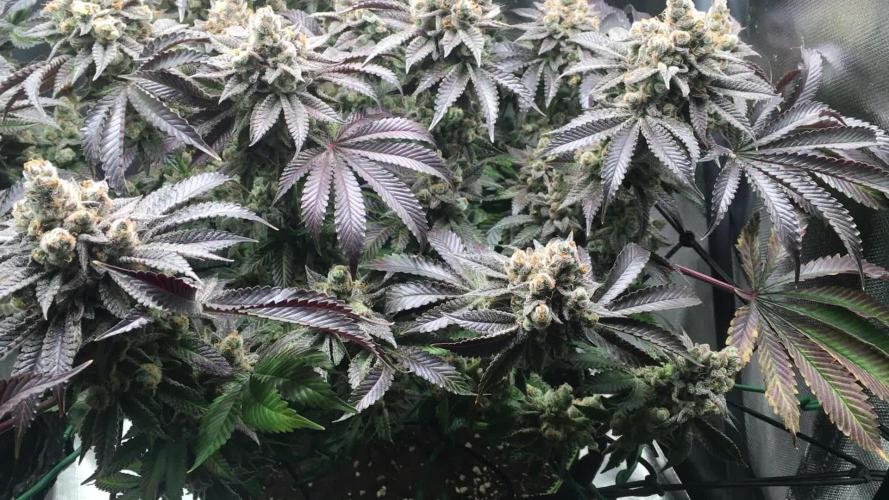
12.12.25 licht 30cm 100% ,XXX ppfd, RLF 60% temp 25°C bei tag , und RLF 61% temp 21°C bei nacht
13.12.25 licht 30cm 100% ,XXX ppfd, RLF 57% temp 25°C bei tag , und RLF 59% temp 21°C bei nacht
ca.3l wasser PH 6,8
,bio-bloom 6ml, top max 6ml, calmag 1,5ml
14.12.25 licht 30cm 100% ,XXX ppfd, RLF 58% temp 25°C bei tag , und RLF 62% temp 21°C bei nacht
15.12.25 licht 30cm 100% ,XXX ppfd, RLF 54% temp 25°C bei tag , und RLF 60% temp 21°C bei nacht
16.12.25 licht 30cm 100% ,XXX ppfd, RLF 55% temp 25°C bei tag , und RLF 59% temp 21°C bei nacht
17.12.25 licht 30cm 080% ,XXX ppfd, RLF 54% temp 25°C bei tag , und RLF 58% temp 21°C bei nacht
Licht auf 80%
18.12.25 licht 30cm 080% ,XXX ppfd, RLF 55% temp 25°C bei tag , und RLF 58% temp 21°C bei nacht
Likes
6
Share


@Puff_TM_Dragon
Follow
Still vegging hard despite the early pistols showing up. Responding well to the FloraNova Bloom.

Likes
3
Share

@Bob29
Follow
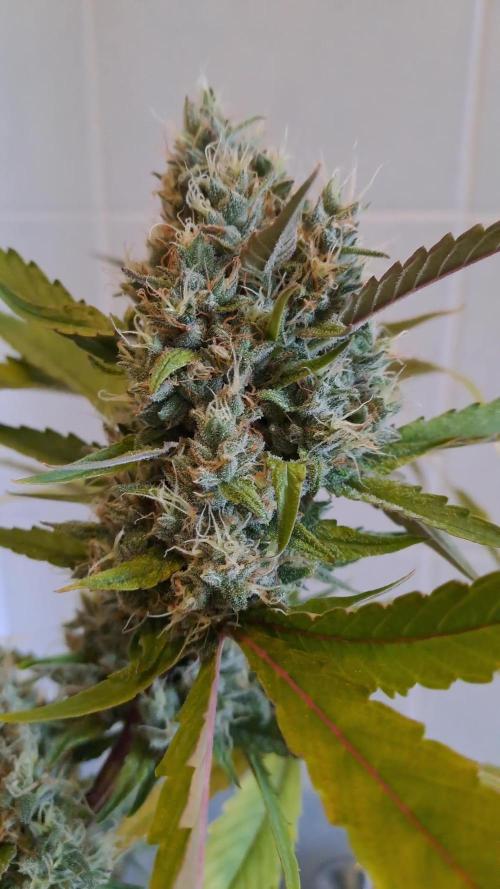
I am really satisfied with the cultivation. The buds are big and super resinous.

Processing
Likes
141
Share


@Eyeduno
Follow
Week 5 of flower the tallest plant the pisltols are starting to turn already, wish I would have stripped the underneath abit more now

Processing
Likes
24
Share


@GrowGuy97
Follow
Day 21 - Ladies are looking nice & healthy! Everything seems to be going great, one is still growing a little slow but all in all extremely happy with this grow so far! Thanks for following & happy growing friends!✌️🏼🌱
Day 22 - They are really starting to take off now😍😍
Day 23 - not sure if it’s the pheno type or the nutrient but the plant that is getting the Technaflora Nutrients is starting to get a little bigger🤷♂️🏼
Day 24 - Babies are really starting to take off😍😍 got my New420GuySeed gear in today as well👍🏼🙏🏼
Day 25 - Starting to really grow now, the smaller of the 3 I starting mainlining today to do another comparison at harvest time!
Day 26 - Another good day of growth! Thank you for following & happy growing friends!🌱✌️🏼
Day 27 - End of the week & these ladies just keep looking better & better😍

Likes
22
Share


@MaxWax
Follow
I started flushing my plants three days ago, except for the Captain Future, which needs a little longer. I’ve been checking the trichomes under the microscope; most are milky now, so it won’t be long until there’s enough amber—which is exactly what I’m looking for🙃


Likes
47
Share


@Ultraviolet
Follow
What's in the soil? What's not in the soil would be an easier question to answer. 16-18 DLI @ the minute. +++ as she grows.
Probably not recommended, but to get to where it needs to be, I need to start now.
Vegetative @1400ppm 0.8–1.2 kPa 80–86°F (26.7–30°C) 65–75%, LST Day 10, Fim'd Day 11
CEC (Cation Exchange Capacity):
This is a measure of a soil's ability to hold and exchange positively charged nutrients, like calcium, magnesium, and potassium. Soils with high CEC (more clay and organic matter) have more negative charges that attract and hold these essential nutrients, preventing them from leaching away.
Biochar is highly efficient at increasing cation exchange capacity (CEC) compared to many other amendments. Biochar's high CEC potential stems from its negatively charged functional groups, and studies show it can increase CEC by over 90%. Amendments like compost also increase CEC but are often more prone to rapid biodegradation, which can make biochar's effect more long-lasting. biochar acts as a long-lasting Cation Exchange Capacity (CEC) enhancer because its porous, carbon-rich structure provides sites for nutrients to bind to, effectively improving nutrient retention in soil without relying on the short-term benefits of fresh organic matter like compost or manure. Biochar's stability means these benefits last much longer than those from traditional organic amendments, making it a sustainable way to improve soil fertility, water retention, and structure over time. Needs to be charged first, similar to Coco, or it will immobilize cations, but at a much higher ratio.
a high cation exchange capacity (CEC) results in a high buffer protection, meaning the soil can better resist changes in pH and nutrient availability. This is because a high CEC soil has more negatively charged sites to hold onto essential positively charged nutrients, like calcium and magnesium, and to buffer against acid ions, such as hydrogen.
EC (Electrical Conductivity):
This measures the amount of soluble salts in the soil. High EC levels indicate a high concentration of dissolved salts and can be a sign of potential salinity issues that can harm plants.
The stored cations associated with a medium's cation exchange capacity (CEC) do not directly contribute to a real-time electrical conductivity (EC) reading. A real-time EC measurement reflects only the concentration of free, dissolved salt ions in the water solution within the medium.
98% of a plants nutrients comes directly from the water solution.
2% come directly from soil particles.
CEC is a mediums storage capacity for cations. These stored cations do not contribute to a mediums EC directly.
Electrical Conductivity (EC) does not measure salt ions adsorbed (stored) onto a Cation Exchange Capacity (CEC) site, as EC measures the conductivity of ions in solution within a soil or water sample, not those held on soil particles.
A medium releases stored cations to water by ion exchange, where a new, more desirable ion from the water solution temporarily displaces the stored cation from the medium's surface, a process also seen in plants absorbing nutrients via mass flow. For example, in water softeners, sodium ions are released from resin beads to bond with the medium's surface, displacing calcium and magnesium ions which then enter the water. This same principle applies when plants take up nutrients from the soil solution: the cations are released from the soil particles into the water in response to a concentration equilibrium, and then moved to the root surface via mass flow.
An example of ion exchange within the context of Cation Exchange Capacity (CEC) is a soil particle with a negative charge attracting and holding positively charged nutrient ions, like potassium (K+) or calcium (Ca2+), and then exchanging them for other positive ions present in the soil solution. For instance, a negatively charged clay particle in soil can hold a K+ ion and later release it to a plant's roots when a different cation, such as calcium (Ca2+), is abundant and replaces the potassium. This process of holding and swapping positively charged ions is fundamental to soil fertility, as it provides plants with essential nutrients.
Negative charges on soil particles: Soil particles, particularly clay and organic matter, have negatively charged surfaces due to their chemical structure.
Attraction of cations: These negative charges attract and hold positively charged ions, or cations, such as:
Potassium (K+)
Calcium (Ca2+)
Magnesium (Mg2+)
Sodium (Na+)
Ammonium (NH4+)
Plant roots excrete hydrogen ions (H+) through the action of proton pumps embedded in the root cell membranes, which use ATP (energy) to actively transport H+ ions from inside the root cell into the surrounding soil. This process lowers the pH of the soil, which helps to make certain mineral nutrients, such as iron, more available for uptake by the plant.
Mechanism of H+ Excretion
Proton Pumps: Root cells contain specialized proteins called proton pumps (H+-ATPases) in their cell membranes.
Active Transport: These proton pumps use energy from ATP to actively move H+ ions from the cytoplasm of the root cell into the soil, against their concentration gradient.
Role in pH Regulation: This active excretion of H+ is a major way plants regulate their internal cytoplasmic pH.
Nutrient Availability: The resulting decrease in soil pH makes certain essential mineral nutrients, like iron, more soluble and available for the root cells to absorb.
Ion Exchange: The H+ ions also displace positively charged mineral cations from the soil particles, making them available for uptake.
Iron Uptake: In response to iron deficiency stress, plants enhance H+ excretion and reductant release to lower the pH and convert Fe3+ to the more available form Fe2+. The altered pH can influence the activity and composition of beneficial microbes in the soil. The H+ gradient created by the proton pumps can also be used for other vital cell functions, such as ATP synthesis and the transport of other solutes. The hydrogen ions (H+) excreted during photosynthesis come from the splitting of water molecules. This splitting, called photolysis, occurs in Photosystem II to replace the electrons used in the light-dependent reactions. The released hydrogen ions are then pumped into the thylakoid lumen, creating a proton gradient that drives ATP synthesis.
Plants release hydrogen ions (H+) from their roots into the soil, a process that occurs in conjunction with nutrient uptake and photosynthesis. These H+ ions compete with mineral cations for the negatively charged sites on soil particles, a phenomenon known as cation exchange. By displacing beneficial mineral cations, the excreted H+ ions make these nutrients available for the plant to absorb, which can also lower the soil pH and indirectly affect its Cation Exchange Capacity (CEC) by altering the pool of exchangeable cations in the soil solution.
Plants use proton (H+) exudation, driven by the H+-ATPase enzyme, to release H+ ions into the soil, creating a more acidic rhizosphere, which enhances nutrient availability and influences nutrient cycling processes. This acidification mobilizes insoluble nutrients like iron (Fe) by breaking them down, while also facilitating the activity of beneficial microbes involved in the nutrient cycle. Therefore, H+ exudation is a critical plant strategy for nutrient acquisition and management, allowing plants to improve their access to essential elements from the soil.
A lack of water splitting during photosynthesis can affect iron uptake because the resulting energy imbalance disrupts the plant's ability to produce ATP and NADPH, which are crucial for overall photosynthetic energy conversion and can trigger a deficiency in iron homeostasis pathways. While photosynthesis uses hydrogen ions produced from water splitting for the Calvin cycle, not to create a hydrogen gas deficiency, the overall process is sensitive to nutrient availability, and iron is essential for chloroplast function.
In photosynthesis, water is split to provide electrons to replace those lost in Photosystem II, which is triggered by light absorption. These electrons then travel along a transport chain to generate ATP (energy currency) and NADPH (reducing power). Carbon Fixation: The generated ATP and NADPH are then used to convert carbon dioxide into carbohydrates in the Calvin cycle. Impaired water splitting (via water in or out) breaks the chain reaction of photosynthesis. This leads to an imbalance in ATP and NADPH levels, which disrupts the Calvin cycle and overall energy production in the plant. Plants require a sufficient supply of essential mineral elements like iron for photosynthesis. Iron is vital for chlorophyll formation and plays a crucial role in electron transport within the chloroplasts. The complex relationship between nutrient status and photosynthesis is evident when iron deficiency can be reverted by depleting other micronutrients like manganese. This highlights how nutrient homeostasis influences photosynthetic function. A lack of adequate energy and reducing power from photosynthesis, which is directly linked to water splitting, can trigger complex adaptive responses in the plant's iron uptake and distribution systems.
Plants possess receptors called transceptors that can directly detect specific nutrient concentrations in the soil or within the plant's tissues. These receptors trigger signaling pathways, sometimes involving calcium influx or changes in protein complex activity, that then influence nutrient uptake by the roots. Plants use this information to make long-term adjustments, such as Increasing root biomass to explore more soil for nutrients. Modifying metabolic pathways to make better use of available resources. Adjusting the rate of nutrient transport into the roots. That's why I keep a high EC. Abundance resonates Abundance.
Processing
Likes
6
Share


@Lazuli
Follow
The plants stretched a lot this week also started flowering
so i started with 4 of these seeds.
3 of them got the exact same hight and width so i took out the smallest plant to make seeds with it in another room.
the cannopy is filled nice with just the three of them i hope stretching stops and flowers start to fatten up.
they will continue to flower under this 104watt Led untill harvest


Likes
4
Share


@ZinosBest
Follow
- COMING SOOOOOOOOOOOOOOOOOON -
Bro... I want something write here, just give me some time, sure?
You can trust me, it will be worth it.
So could you do me a favor?
Check back a bit later, homie...
Likes
31
Share


@SkunkyDog
Follow
Hallo zusammen 🤙.
Sie erhalten 25 Prozent Rabatt in unserem Shop
Mindestbestellwert beträgt 75 Euro
https://greenbuzzliquids.com/en/shop/
Code: GD42025

Likes
8
Share


Processing
Likes
3
Share


@MMatos
Follow
Week 1
Today, I started 2 Gorilla Cookies Auto from Fastbuds. 🍪
I'll start by giving 18 hours of light and controlling the ph 6.5 without nutrients
Let's see if they want to grow or not.
Likes
11
Share

@BalconyBoy
Follow
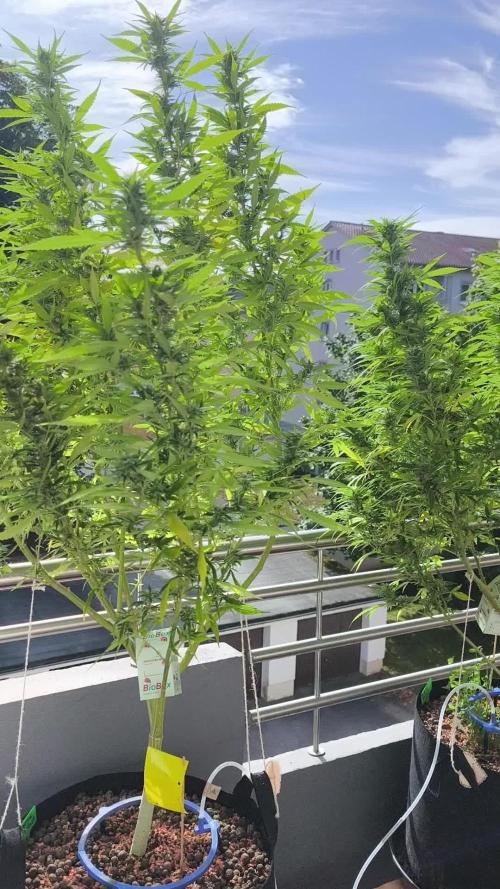
08.09.25 the first week of September was a mix of sun and clouds on the balcony. The seedsman strains continue their road to frosty flowers and the quick sherbets now also join in the tracks. Repeated H2O2 Spraying didn't fight the powdery mildew on the Sherbets enough for me to let it go, I'll get some hardware store product to have tried everything in time instead of yapping afterwards. Also I applied 100g of flower fertilizer as top dressing. Thanks to Bavarian Krauts for hooking me up with this cheaper alternative to the greenhouse feeding line, it performed very nice on the first half of flowering, now this is the dose for the last chapter of 2025 making sure nutrients last to the end of the season. There are still leaves turning yellow on the flowering plants but the amount has come down and the overall structure now seems ready to support the buds and give them good direct light as well.


Likes
1
Share


@Aleks555
Follow
4th week of vegetation
The fourth week of vegetation has started, and we are preparing to switch the light cycle to 12/12 for flowering. So far, everything is going great—Xpert Nutrients fertilizers have started showing fantastic results, and our lady is looking wonderful. A huge thank you to Xpert Nutrients for the amazing fertilizers and continuous support! We’re confident that great results are ahead.
Likes
8
Share


@Salokin
Follow
Week went again very uneventful. The plant does what she is supposed to be doing (gaining weight) :). Still lots of new pistils appearing overnight, I am checking the Trichomes daily, however, everything remains milky, with only very little % of amber trichomes. Once amber colours start increasing I will start flushing.
Likes
102
Share


@MiyaguiOkPolilla
Follow
Hola amigos! Hemos llegado al final de esta hermosa aventura, una planta perfecta desde su siembra, ni un daño por plagas, calor o exceso de nutrientes la afectó.
Tengo que ser honesto y es que realmente me costó cortar la planta al final, olía a maravilla y con toques de alegría.
Su estructura súper robusta me indica que debería cultivar una más y dejarla crecer libremente por más tiempo. Es increíble el tiempo de floración de esta genética, ya que en solo 7 semanas de floración está perfecta para cosechar 💐😍
Tricomas de gran tamaño cubren cada rincón de los cogollos y destellan bajo la luz.
No hay mucho más que decir, disfrutemos todos de la magia del auto cultivo y seamos felices!
IRIE

Likes
3
Share

@4hundert20
Follow
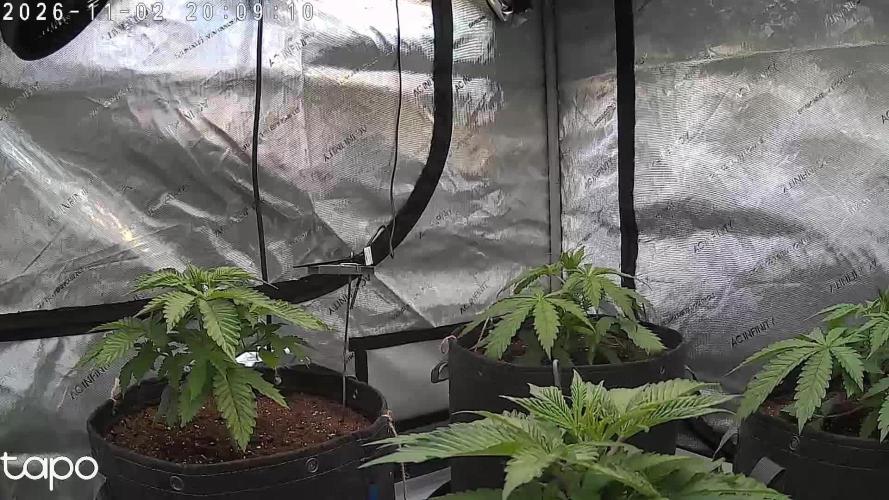
Ich habe momentan sehr wenig Zeit.. und das sieht man den Kleinen an 😅
Immerhin scheint noch alles soweit okay zu sein, obwohl mir das ein oder andere Blatt nicht gefällt. Da Ich Hochparterre wohne, heizt unter mir niemand, sodass mir viel zu spät auffielt, dass die Ladys kalte Füße hatten 😑 und das hemmt natürlich das Wurzelwachstum. Habe mir mit einer Korkplatte geholfen und einige Tage später dann einfach in den finalen Topf (26,5L) umgetopft.
Mit dem Düngen werde ich mich ganz sachte verhalten, halbe Dosierung sollte ausreichend sein.
Jetzt sollen die Kleinen erstmal ankommen und sich von dem Stress erholen 😆❤️

Likes
3
Share


@Renatissima
Follow
* Watering 2l every 3 days
* Always tuck in the leaves to expose lower tops
* Check the trichomes for amber
Likes
13
Share


@GYOweed
Follow
2 of 3. 3rd one cracked in same paper cloth for testing but was a dud. 1 jack knifed like a long trailer truck so i had to dig it up and bend it twice in one day lol.
1 looking nice n hairy.
Hope to get a more sativa fast growing structure than zkittzy mutant.
*update* making this 1/3 canceled the craplato due slow growth.

Processing
Likes
21
Share


@LittleBigTrees
Follow
Defoliated some leaves to let light in, chopped one down early as I run out of bud 🙄 it's good for less than 4 weeks flowering.
Have them rice water starch again this week in with there food.
A layer of frost is slowly forming 😎 hopefully they will fatten up nice and frost up really good to 🤞