




Likes
Comments
Share

@The_Doctor_Green
Follow
Hola a todos
Lsa imagenes corresponden al periodo 28/08 al 03/09.
Regue con agua 400ml ph 6.3
100ml con top veg. Ph 6.4.
También esta semana empece a aplicar algo de LST.


Likes
11
Share

@Lajolend
Follow
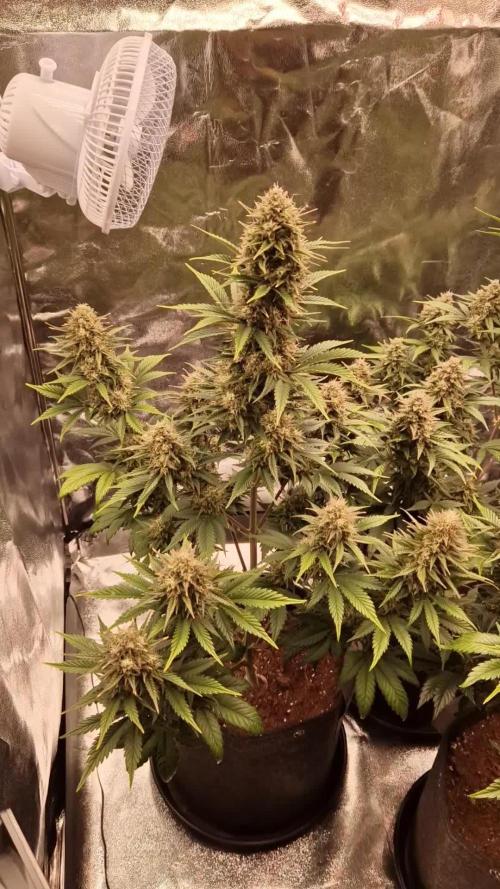
Holky se začaly hezky zabarvovat, velmi silně voní a do výšky už nerostou. Jen koukám, jak krásně nabývají palice :) O něco málo jsem snížil hlavní hnojivo a přidal víc PK na květ. Těším se :)

Processing
Likes
19
Share


@cubansoldier
Follow
Gave the girls their first big feed yesterday and so far they seem to love it. One of the Bubba kush plants has a slight case of heat stress but it's not much n she's still growing. Happy growing my friends.. #CultivationsTheMotivation 🌱


Likes
9
Share

@World_Breeders
Follow
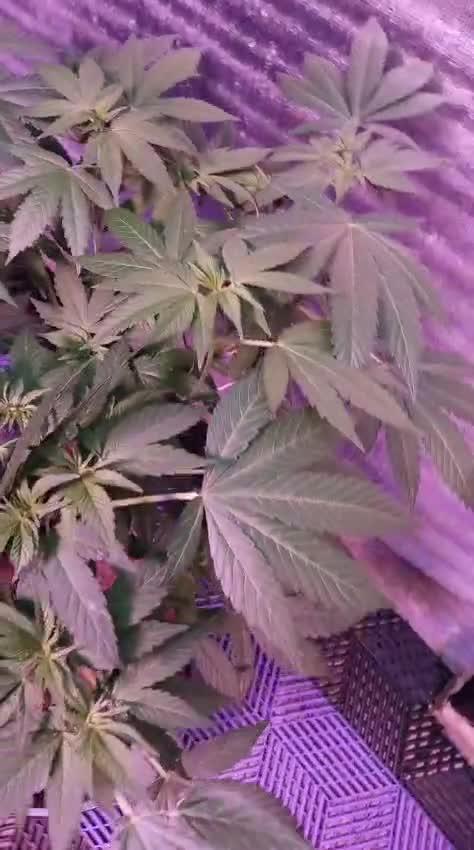
Pilot begins its first week of flowering with a very balanced and uniform structure. The plant has responded exceptionally well to training, developing a broad canopy with multiple active tops distributed evenly across the entire plant.
The transition into bloom is progressing smoothly, with visible flower initiation on both primary and secondary branches. Internodal spacing remains moderate, creating an ideal framework for stacking dense flowers while maintaining excellent airflow throughout the canopy.
Its architecture combines strong lateral development with controlled vertical growth, allowing efficient light penetration across all flowering sites. The main branches display good strength and support, suggesting excellent potential to handle increased flower weight during the coming weeks.
At this stage, Pilot stands out for its symmetry, canopy uniformity, and productive branch structure. The combination of healthy vigor, multiple flowering sites, and a well-managed stretch indicates a phenotype with strong yield potential and excellent space efficiency moving forward. 🌱🔥🚀


Likes
4
Share


@Lazuli
Follow
It took its time to fmower but damn what a tree.. the big bud and overdrive really helped push the weight
Likes
12
Share

@C17H19NO3
Follow
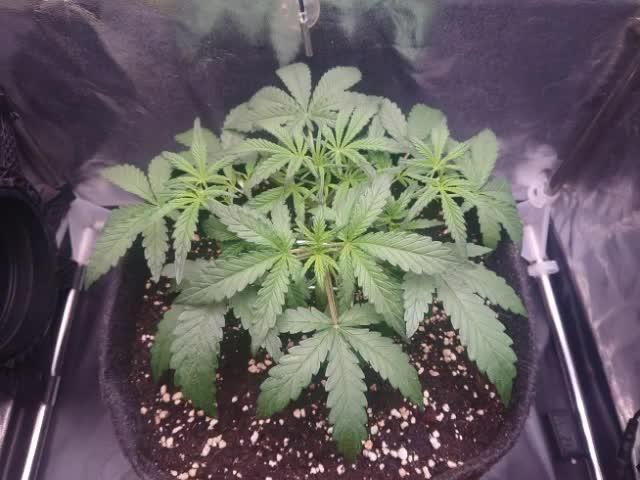
🤙🏻
9.August (22) 1,2l Wasser & 0,3l Wasser in Untersätzer
10.August (23) zwei kleine Blätter entfernt

Processing
Likes
6
Share


@Ferenc
Follow
Hey! Just back well I started a diary but stopped growing so placed to my friend's house. Now I decided to be back and yeah here we go....
They are nice fertilization happens 3x a week with the mixture of Biobizz family (Biobloom, Topmax, BioGrow, Epsom salt, Gunokalong extract.) They grow as hell. 600W LED, 18 hours on 6 hours off, 200 ml water per plant a day, humidity approx 35 percent.
Day 49: More LST has been done they grow unbelievably fast...


Likes
14
Share

@DogDoctorOfficial
Follow
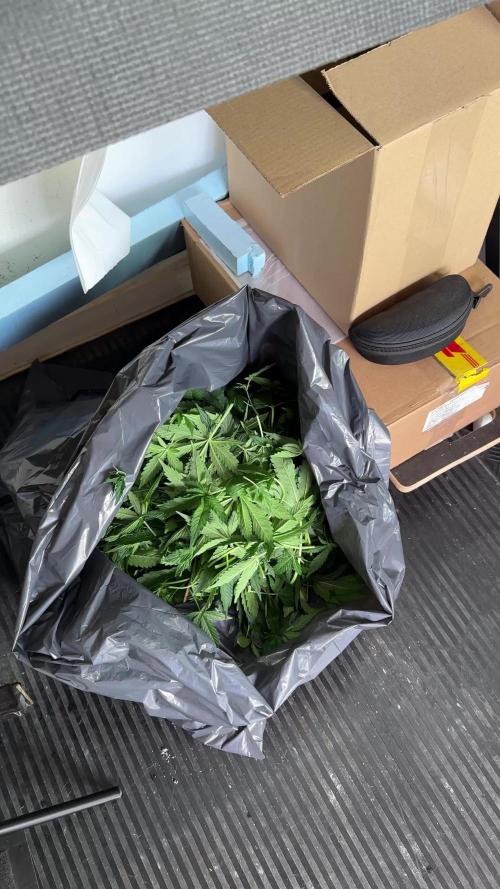
🌱 Ghost Train Haze — Week 7 From Seed
🔁 Quick Recap — How We Got Here
• 12/12 from seed
• Mineral base in AutoPots (steady availability, no dry-back stress)
• Occasional top-feed with organic inputs
• Selective defoliation in the room — but these girls were left untouched
• Multi-layer LED canopy + under-canopy lighting
• Week 7 from seed → stretch phase still active
And now?
She’s around 70 cm, some phenos pushing 80 cm, praying nonstop, stretching like she has somewhere important to be.
That’s Haze.
⸻
🌡️ Environment Snapshot
• Day temp: ~28 °C
• RH: ~65%
• EC: ~2.9 (higher than the rest — intentionally)
• pH: ~6.5
• Height range: 40–80 cm
• LED full-spectrum, layered canopy
On paper?
Some growers panic at 28 °C in flower.
In practice?
Understanding numbers.
⸻
🍃 LED Physics — Why 28 °C Is Not 28 °C
Under LED:
• No infrared dumping
• Leaf surface runs 2–4 °C cooler than room
• Lower radiant load
• Different transpiration dynamics than HPS
So if:
• Ambient = 28 °C
• Leaf temp ≈ 24–26 °C
• RH = 65%
👉 Leaf-level VPD lands beautifully in early–mid flower comfort zone.
And the plants confirm it:
• Deep healthy green
• No tacoing
• No clawing
• No light bleaching
• Strong internode spacing
• Constant upward praying
That praying?
Not stress-praying.
It’s metabolic confidence.
⸻
⚡ Why EC Is Higher on These Girls (~2.9)
This is important.
Ghost Train Haze is:
• Vigorous
• Long-flowering
• High metabolic rate
• High transpiration under LED
She’s drinking more.
She’s moving nutrients faster.
She’s building vertical structure aggressively.
If we fed her like the others?
She’d outpace availability.
So EC is slightly higher here to match:
• Growth speed
• Stretch demand
• Structural building phase
We’re not pushing blindly.
We’re matching consumption.
And the uniform leaf color across the canopy confirms uptake is balanced.
⸻
Let’s Talk Genetics — Why She’s “Late”
Ghost Train Haze carries heavy Haze lineage.
That means:
• Longer stretch
• Longer flowering time
• Slower early flower stacking
• Higher final terpene complexity
• More cerebral profile
Compared to hybrids or more indica-leaning cultivars, Haze types:
• Take longer to show flower mass
• Spend more time building structure
• Finish later
But what do they give back?
• Airy-but-resinous spears
• Intense terpene complexity
• Electric, clear-headed medicine
• Beautiful, elegant bud architecture
They compensate.
Always.
⸻
📏 The Stretch Question — Will She Outgrow the LEDs?
At 70 cm in Week 2 flower?
Yes. She’s not done stretching.
Haze typically stretches:
• 2–3 weeks into flower
• Sometimes up to Week 4 depending on phenotype
Expect:
• Another 10–25 cm possible
• Internodes to slightly elongate
• Apical dominance to stay strong
Bringing LEDs up soon?
Smart move.
Better to anticipate than react.
⸻
🍃 Defoliation Choice — Why We Didn’t Touch Her
We left her natural.
Why?
Because:
• Haze structure is naturally airy
• She manages light penetration well
• Over-defoliation can slow stretch momentum
• She’s showing perfect airflow already
Sometimes restraint is the better technique.
⸻
🔮 What To Expect Next Week
You will likely see:
• Continued vertical stretch (but slowing by end of week)
• First real bud site stacking
• Slight shift from lime green to deeper flower tone
• Increased thirst
What you should NOT expect:
• Massive bud density yet
• Hard swelling
• Early frost explosion
It’s too early.
Haze builds in stages.
⸻
Stability Over Reaction
We are not chasing numbers.
We are reading the plant.
Temperature? Fine.
Humidity? Fine.
EC? Matching demand.
Structure? Strong.
Leaves? Praying but relaxed.
This is controlled vigor.
⸻
Final Thoughts
Week 7 from seed.
Week 2 flower.
~70 cm.
Still climbing.
And honestly?
This is exactly what you want from a Haze.
Patience now equals magic later.
⸻
🙏 Gratitude
To the OGs.
To the new followers.
To the lovers and even the skeptics.
To the GrowDiaries platform.
To the GD community.
To the sponsors.
To everyone watching silently.
Thank you.
We’re learning together.
We’re growing together.
We’re documenting honestly.
And in the end?
We grow medicine.
With respect. 🌿❤️
📡 Please stay tuned they can try and take us down but we never quit https://www.youtube.com/@DOGDOGTHEDOCTOR NEW
🙏 Thank you for your patience and continued support.
FOR DISCOUNT CODES AND MORE JUST FOLLOW THE LINK https://website.beacons.ai/dogdoctorofficial
📲 Don’t forget to Subscribe and follow me on Instagram and YouTube @DogDoctorOfficial for exclusive content, real-time updates, and behind-the-scenes magic. We’ve got so much more coming, including transplanting and all the amazing techniques that go along with it. You won’t want to miss it.
GrowDiaries Journal: https://growdiaries.com/grower/dogdoctorofficial
Instagram: https://www.instagram.com/dogdoctorofficial/
YouTube: https://www.youtube.com/@dogdoctorofficial Deleted by Youtube
Vimeo : https://vimeo.com/dogdoctorofficial Under construction stay tuned ⸻
Explore the Gear that Powers My Grow
If you’re curious about the tech I’m using, check out these links:
🔆 Lighting & Environmental Control
• Future of Grow — Advanced LED lighting technology
https://www.futureofgrow.com/
DISCOUNT CODE: DOG20
• Lumiflora — Under-canopy LED lighting
https://lumiflorade.com/
• TrollMaster — Environmental controllers and automation gear (past collaboration)
⸻
Genetics
• Zamnesia Seeds — Genetics used in this project
https://www.zamnesia.com/
⸻
🌱 Soil, Substrates, Boosters & Root Support
• Plagron — Substrates, bio mixes, and supportive products
https://plagron.com/en/
⸻
🎒 Storage, Curing & Preservation
• Grove Bags — Curing and storage solutions
https://grovebags.com/
⸻
📸 Photography Equipment & Tools
(Not sponsors, but part of my creative toolkit)
• Sony A6700
• Sony full-frame macro lens + few more
• Stacking photography workflow - learning
• iPhone (for behind-the-scenes shots)
We’ve got much more coming as we move through the grow cycles. Trust me, you won’t want to miss the next steps, let’s push the boundaries of indoor horticulture together!
As always, this is shared for educational purposes, aiming to spread understanding and appreciation for this plant. Let’s celebrate it responsibly and continue to learn and grow together.
With true love comes happiness. Always believe in yourself, and always do things expecting nothing and with an open heart. Be a giver, and the universe will give back in ways you could never imagine.
💚 Growers love to all 💚
📸 P.S. – The Eye Behind the Lens
All photos in this diary (for now — except for the ones showing the camera, which I took with an iPhone) are taken with a Sony A6700 paired with a Sony full-frame macro lens and a few more.
Photography is part of the story — it’s how we share the fine textures, the glow, and the quiet details that words can’t always capture.
I’ve also started experimenting with photo stacking — a technique where multiple images, each taken at a slightly different focus point, are layered together to create one perfectly sharp image from front to back.
It’s not digital enhancement or AI; it’s pure photography — a way to reveal the plant’s beauty in microscopic depth, from trichome to petal.
You’ll even see a few shots of "ghost me" capturing the shots — camera, lens, setup — because every grow deserves not just to be cultivated, but documented like art.
FOR DISCOUNT CODES AND MORE JUST FOLLOW THE LINK https://website.beacons.ai/dogdoctorofficial
NEW DISCORD - Official Server Invite Link : https://discord.gg/ksjAkA5T74

Likes
3
Share

@Hitthejuan
Follow
7-19-2026 Mix Pack Auto RF3
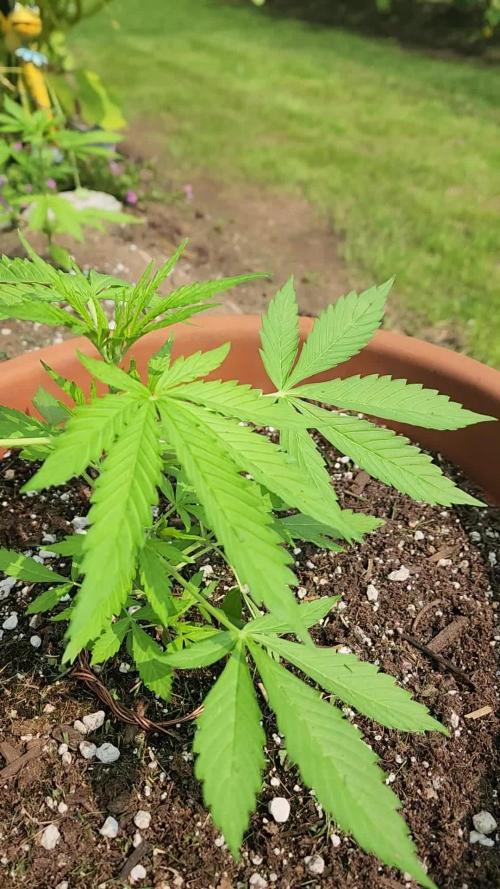
Hell everyone this week has been hot, humid and smokey as hell from the wildfires 🔥 in Canada. Very smokey to the point it blocks the sun. Had a couple of thunderstorms too. Air quality has been shity. But plants love this kind of weather. Both plants are looking healthy and great structure on the stems on both. I did add copper wire ive read it it helps with pestt, giving it a try. Also one of the plant's has started to flower 🌼 will change to flower stage when both plants start to flower, for now keeping it on vegetation.
Temperature: (daytime 80°- 100°+)( night time 60°-90°)
Humidity: 52% - 71%
Daytime:15 hours 6 mins
Tall: (A. 8 inches ) (B. 8 inches )
Smell: yes
Water: rain water for both
Plant (A) has a skunky/diesel/gassy with some fruity liomone sweet smell at the end. Kinda slicky feeling when you rub your fingers on the stem nodes. This plant has grown 5 inches and a nice wide too since last week and has a darkish green look to it. Structure of the plant's is looking great stems are nice and strong with a whitefish look to it. Its got some nice leafs to it im guessing it going to lean more towards a indica.
Plant (B) doesn't have a strong smell yet. A little fruity smell but not much. Structure on the plant is great the nodes are perfect spaced apart. This plants is also 8 inches tall but not as wide. Didn't really grow much since last week. But this plant has started to flower 🌼 two days ago on Friday. I wounder if it got stressed out or maybe this is not an nood out door plantto grow. Its been 27 so we will see. Its got a light green color on the leafs and the stems are starting to get more purple on it. I also took out the sunflower plant that was next to it.
It was starting to cover it up by its shade by like 3 pm so not getting the sunlight so it got pulled.
Thank for watching
Likes
11
Share


@CampExotic
Follow
Starting week 2 and the bud sites have come outta nowhere. Got some LST hooks in but I’ll take them out soon. Gonna use more CalMag but besides that she looks cool!
Changed the nutes to flower nutes of course. Adding some new LST to see what happens.
So far the buds are growing and expanding. Went from one cola to many. Not sure if I’ll remove the hooks yet

Likes
5
Share


@HoffmanShulgin
Follow
Hoy quiero compartir mis pensamientos sobre el estado de mis plantas. Sinceramente, quería creer que no habían sufrido mucho por el frío, pero desafortunadamente la realidad resultó ser diferente. Algunas de ellas parecen un poco deprimidas y su crecimiento se ha ralentizado. Pero no me doy por vencido y sigo esforzándome por su recuperación. Además, no me gusta el régimen de luz que se ha utilizado desde el inicio de la siembra de las semillas, 12/12. La próxima vez utilizaré 18/6. Espero que esto ayude a estimular su crecimiento y desarrollo.
Ayer empecé a darles a las plantas PK13/14 en una dosis de 1 ml/l y Diamond Nectar en una dosis de 2 ml/l. Espero que estos aditivos les ayuden a obtener los nutrientes necesarios y a estimular el proceso de floración y crecimiento. A pesar de algunas dificultades, no me doy por vencido y sigo cuidando de mis plantas. Creo que con el cuidado adecuado y las condiciones apropiadas, podrán superar las dificultades y crecer saludables y fuertes. Sigo siendo optimista y seguiré creciendo junto con ellas.
Likes
3
Share


@Vierhundertzwanzig
Follow
Das war die letzte Woche mit 18h Beleuchtung.
Morgen stelle ich auf 12/12 um.
Processing
Likes
12
Share


@Therbalist
Follow
#3 has beautiful pink buds very happy with these girls, hopefully the other two show some colour as the Temperature comes down.
Have swapped the 250 red CFL for a 150 blue. May turn it off for the last week to get every last bit of pink possible! Pots have a nice wet dry cycle, have tried to hold back and not over water so I've been watering with a spray bottle. I use a 1L hand spray bottle and fill it up three to four times depending on the weather. Although it seems impossible to overeater with the breathable fabric pots. Which are awesome if I haven't said already. Perfectly fit 11 in my small cupboard which is lucky as I ordered ten as soon as he free one arrived without measuring them! Stoners eyes never lie! 👁️
Buds should be huge if they keep going at this speed! Haven't topped them for the natural look, been a few years since I've done it can't wait to see a big fat cola bud at the end!
Likes
9
Share


@Atom_x_Andromeda
Follow
Growing strong cut 13clones today and transplanted the two biguns loving how they are turning out


Likes
48
Share


@Northern_Ent
Follow
Aug 24: cool and rainy lately but will warm up again in a couple days. Gorilla Cookies looks really good and is flowering nicely. Very nice strain. Added some soluble seaweed to the water mostly for the K.
Don’t take flash pics of photoperiods unless you’re immediately using a 730 nm light to put them into dark mode.
Using the far red light like this is known as phyto-forcing and it’s like getting an extra two hours of darkness making a 26 h day. This far north I think it moves flowering up by 3-4 weeks so obviously a huge trick. Easy and cheap if you have daily access at dusk.
Aug 26: it’s been a couple of weeks but I figured it was time for a lazy compost tea. I watered with it slightly diluted and the plants look almost immediately greener and more vigorous…amazing actually. 👍👍
Aug 27: this is definitely the fastest flowering of the four. Hopefully it stays sunny for a few more weeks. Thinned out the understory a bit as there were some small branches and bud sites that were not going to do anything.
Check out the birds sounds on the first video. The magpies thought I was too close to their nest in the tree or something…they’re usually not quite that annoying.
Aug 29: this is a great strain, and the manifold is working its magic.
Likes
Comments
Share

@A-C-H
Follow
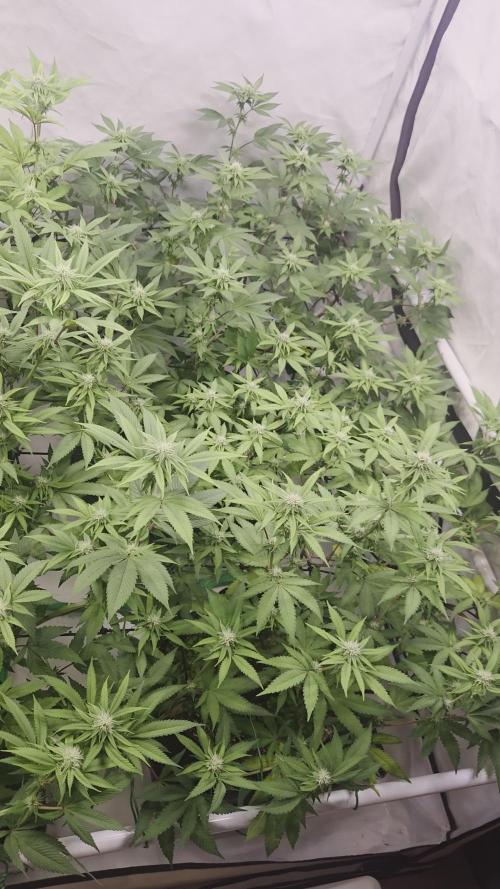
Dritte Blütewoche: Sie sind gut gewachsen, haben ein paar leicht gelbliche Blätter, aber ansonsten ist alles in Ordnung.