


Likes
Comments
Share

@BlunthumbMD
Follow
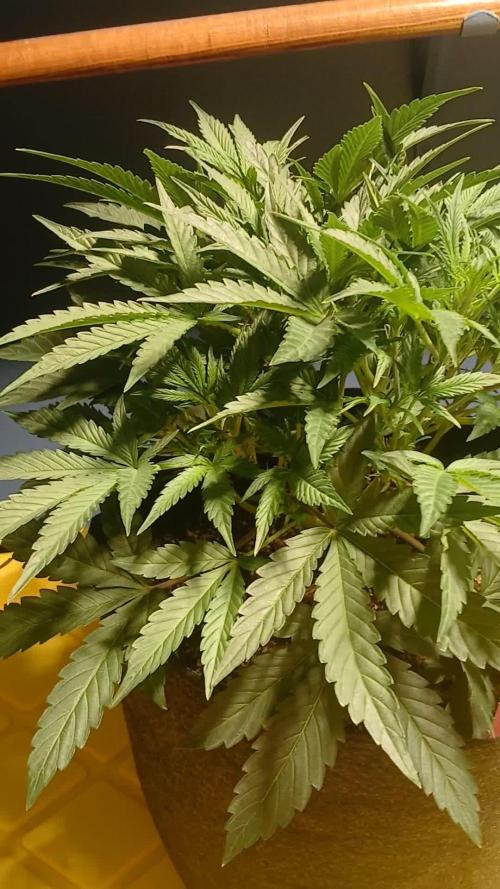
She is doing well, some slight defoliation. The topping was perfect to match her sister plant. Starting the stretch with a nice uniform canopy.

Likes
25
Share


@Aleks555
Follow
Chimera Cut from Anesia Seeds has grown to 44 cm and looks fantastic! The foliage is dense and bright green, and the plant has taken on a beautiful spherical shape. 🚀 We're using nutrients from @xpertnutrients for maximum results. Stay tuned for updates! 🌸 #ChimeraCut #AnesiaSeeds #GrowDiaries #XpertNutrients #IndoorGrowing #CannabisCommunity

Likes
7
Share


@Drtomb
Follow
These are the replacement crew for the left hand side of my tent. They have been growing for around 1-2 weeks in 1 gal pots and then 1 month in the final 4gal. They are currently running on veg nutes for the first week or 2 of the flip, then they will join the other side with a 1000pm flower version of the Mega Crops.
For veg I run part a/part b at a 1:1
For flower i run it at 2:1.
Ill be slowly removing bud site growth that is closer to the bottom. Also will remove all the lower leaves around week 3 or 4,depending on foliage.
Likes
6
Share


@GanjaDjarin
Follow
Things are now advancing smoothly, having effectively weathered the majority of the challenges encountered. It's a truly uplifting experience to watch the process unfold, seeing how the plants are developing and thriving. Each day brings new progress, and I am continually enthusiastic about maximizing the sunlight that each plant receives as they continue on their growth journey.
In addition to the hands-on cultivation aspect, I'm also diligently working on expanding my clones collection. The plan for the next week or so is to cultivate and ready these clones for transplantation. It's an exciting aspect of the process that helps me stay committed to my ultimate goal.
That goal, of course, is to maximize my supply chain and provide high-quality cannabis. This involves more than just horticultural efforts. I am also persistently studying and researching the relevant laws to familiarize myself with the legal process. Navigating the licensing phase is a vital part of this journey, and I am committed to understanding and adhering to all legal requirements to ensure success in this venture.
Diary Entry for Growth Project: Day 24 - Today, a slower-growing plant was effectively moved from its soil environment into an idle hydroponic system. With this transition, the count of prospering plants stands at eight, with a couple more still being monitored due to uncertain growth. Significant discoveries include the paramount importance of light distance to the plants, which was underestimated initially. Further, it has been found that genetically modified seeds hold no superiority over the prevalent autoflower seed market. Additionally, the positioning of the plant and the volume of medium placed between the plants and the water source have been recognized as key determinants in accelerating early stage growth.
Welcome to the Day 25 update of our grow journal. I must apologize for the slight confusion - although the video says it’s day 23, today indeed marks the 25th day of our journey. I’m thrilled to announce that we’ve had a successful transplant. The plants are now settling nicely into their new environments. The question now at hand is, should we introduce stress training?
As we move into days 26 and 27, I have been pondering on this. High-stress training can sometimes stimulate growth, but in our current situation, it might not be the most prudent course of action. This time around, we are expecting all our plants in the grow tent to blossom concurrently.
In light of this, I’m leaning towards letting nature take its course rather than intervening with stress training. By doing so, we will allow our plants to focus their energy solely on flowering. The goal here is to encourage the production of dense and frosty buds, the hallmark of a successful growth cycle.
Rest assured, we’ll continue to provide the plants with the care and nutrients they need. Remember, every cycle is a learning experience, and we’re on this botanical journey together. Keep checking back for more updates on our garden’s progress.


Likes
34
Share


@rhodes68
Follow
12/20 Week 7
Happy with the growth and the smell is so sweet, minty, and berry so terps are doing just fine.
Backed off nuets ever so slightly
12/21 new pics and backing off the nuets more tonight - 10ml each see if I can get rid of those white tips
Helps if you upload the right files 😎
12/23 pics
12/24 All is good but think I am going to continue reducing the nuets and checking EC of runoff as still getting some small issues on leaf tips.
Maybe I am chasing ghosts we will see
12/25 White tips under control, runoff checked at 1600ppm unadjusted 950ppm unadjusted in, adjusted for water thats 1400 and 750 so ok now.
Buds building fast swapping positions in the tent tonight.


Likes
47
Share


@Northern_Ent
Follow
June 22: nice weather has arrived and she’s ready to grow fast now. Entering the “inch a day” growth phase which is always fun. She’s done great so far considering how cool it has been so far this season.
She had a compost tea yesterday morning and is looking really great this morning.
June 22: tied down with Scrog net to leave eight growth tips at same elevation and exposed to sunlight.
June 25: looking good. Some leaves are a bit thick and wrinkly which could be a B deficiency but likely just excessively low humidity causing the leaves to dry a bit. Stepping up spraying the leaves to counteract the low humidity.
June 26: third and final round of topping done to complete the 16 cola manifold. Also removed lower growth tips so the plant puts all her energy into the new growth tips. Should be good. Adjusted SCROG net after topping.
#seedsman420growoff
#seedsmanseeds

Likes
Comments
Share


Likes
2
Share


@AlexanderVu77
Follow
I uesd Advanced Nutrients Voodoo Juice 7 day on the 7th day of the seedling
Likes
34
Share


@Salokin
Follow
Hello Growmies,
Two weeks into vegetation, our Watermelon Candy by Zamnesia is striking a fine figure in the grow tent. Each plant has achieved a notable height of 14 cm, an impressive feat for their age, suggesting that they are well on their way to becoming vigorous and bushy specimens.
The uniformity observed in the first week continues to be a defining trait of the Watermelon Candy strain. These plants, with their symmetrical leaf structure and consistent growth patterns, are reflecting their strong genetic lineage. The lush green leaves and the tautness of the stems speak volumes about the care they've received.
Their transplant into the 12.5-liter air-pots, coupled with the application of Great White during the process, has provided them with a fertile foundation for root development. This mycorrhizal support will surely bolster their ability to uptake water and nutrients efficiently, setting them up for success in the coming weeks.
The controlled environment, with precise management of temperature and humidity, continues to foster their growth. With the lights dimmed to 25% and delivering 150-180 PPFD, the plants are receiving the perfect amount of energy to thrive without the stress of overexposure. The IR lighting before lights on and off, along with the midday UV light exposure, is fine-tuning their growth cycles and boosting their natural defenses.
Once the inline fan is connected and operational, you'll have complete control over the tent's environment, enhancing dehumidification during the night and ensuring optimal conditions 24/7. It's this attention to detail and environment that is paving the way for these Watermelon Candy plants to flourish.
Stay lifted,
Salokin.
Likes
243
Share

@Natrona
Follow
NYC Diesel Auto (Was Hey Abby)
W20 F9 2/1-7
New York City Diesel is ready for harvest. I plan to harvest this weekend, time permitting. I flushed her with 5.5 gal of water since 1/24. Not as much as I would have liked. 2/5 trichome pics show a moderate amount of amber but in some colas, nearly 80%. This maturation was very fast as I was planning for the 15th.
Given the amount of amber now showing, I have grown past what I prefer for maturity, this will now lean more indica.
We had our first big snow this week following a light dusting last week.
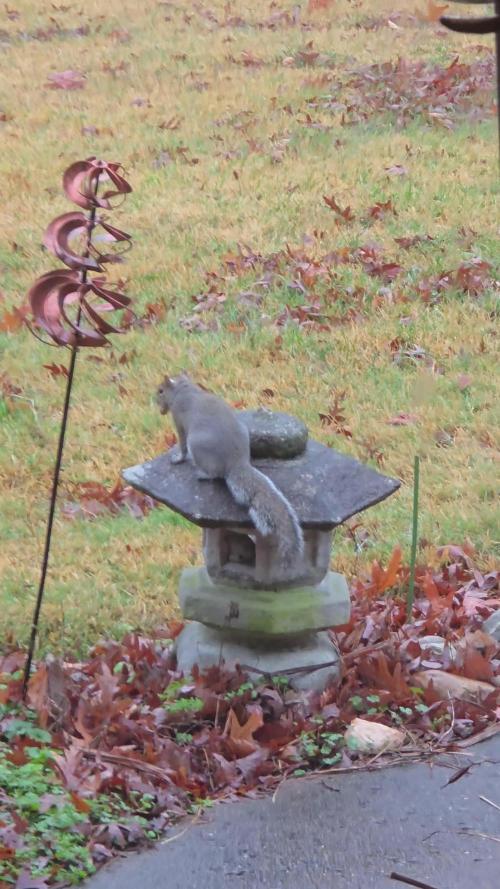
Pics show my kitties investigating ( but not for long)
Stay green, growers love 💚🌿
💫Natrona💫

Likes
26
Share


@Kirsten
Follow
29.3.25:
This week has flown by. Everything is looking good.
I've been watering alternatively with Bud Explosion PK booster and Sea K(elp) by Greenleaf nutrients. Also, plain water I'm between feeding.
I watered yesterday and had run off from 2 pots, so I will wait for them to dry out sufficiently before watering again.
Trying to mitigate the risks of mildew and / or mould due to too much water / humidity.
31.3.25:
I cleaned out the tent and disinfected it again. Had a bit of runoff, which had left a bit of residue on the floor.
Today, I took all the photos and videos whilst cleaning the tent.
The pots had sufficiently dried, so I will water with the Greenleaf nutrients.
I watered with dechlorinated water PH'd between 6.2-6.4. 6.5 litres contained the following nutrients:
♡ 1/4 Tsp Mega Crop Part A.
♡ 1/2 Tsp Bud Explosion PK booster
♡ 1/4 Tsp Sea K(elp).
(All by Greenleaf nutrients).
Thanks for hanging out 🍃 ✌️ 💚 🙂
Likes
33
Share

@GreenHobbit
Follow
Woche 7
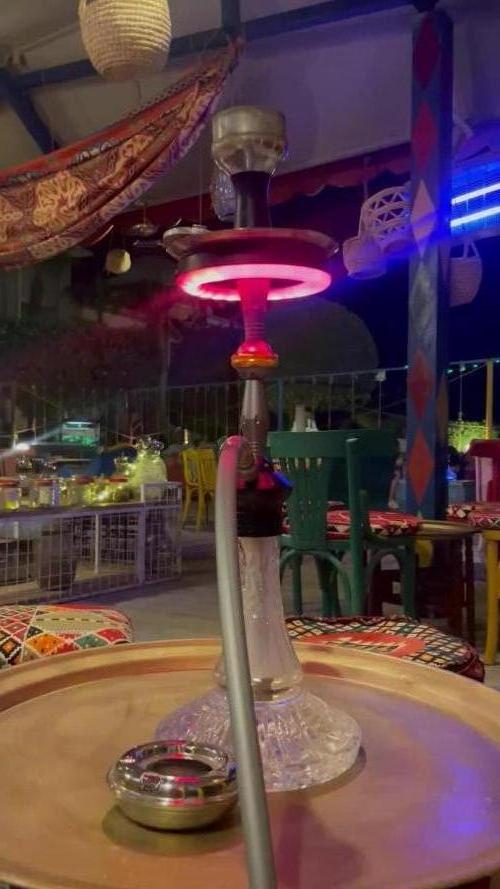
Meine Schwiegermutter hat das Gießen übernommen und ich habe mein Leben unter der ägyptischen Sonne genossen.

Royal Haze Automatic · Royal Queen Seeds

Dos Si Dos Auto · Barney's Farm

Lemon Wonder Automatic · Zamnesia Seeds
Blue Cheese F1 automatic · Zamnesia Seeds
Northern Light Automatic · Royal Queen Seeds
Skywalker OG Auto · Barney's Farm
Pink Rozay Automatic · Zamnesia Seeds
Purple Haze Automatic · Zamnesia Seeds


Likes
70
Share


@Fatnastyz
Follow
3-26
Day 69
Game time 1.2 grams. Green Sensation 1.5ml, frosty nugs 1ml, cal/mag 2 ml, 1.5 ml slf-100 and 1.5 ml drops of balance.
Made 6 liters water. Ppm in 265 ph 6.0
Runoff ppm 956 ph 6.8.
I believe this was her last light feed.
That home stretch is in the sights. LETS GO! 💪💪💪🤘
3-29
Plain ph water
Ppm in 10 ph 6.2
Runoff 746 ph 6.9 after 5 liters
Gave 1000ml more
Ppm 605 ph 6.6
Mark this as start of flush 💪
Lets go!!!!! Super stoked 🔥🔥🔥
See you next week!
Likes
69
Share

@Growingdaddyo
Follow
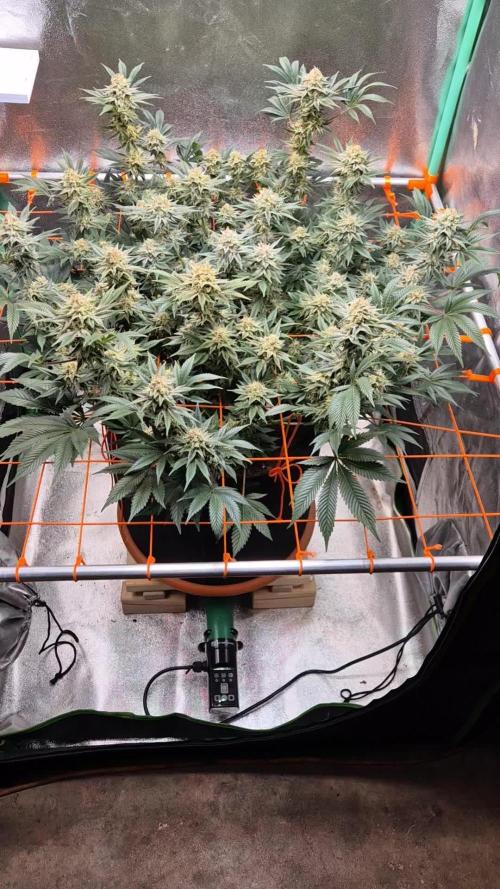
8. Woche der Blüte. Einfach zuschauen und genießen, wie die buds täglich immer mehr an Fülle zulegen. Schätze mal das wir noch 2 Wochen vor uns haben. Mal sehen..
Ich muss schon zugeben, die Sanlight macht richtig Spaß! Läuft bei 80% und hat fantastischen output! Die buds entwickeln sich hervorragend..

Processing
Likes
12
Share


Processing
Likes
10
Share


@Greenfingers666
Follow
Purple shot this is definitely the extended version to her sister next to her little and large.
Trying to get a better picture of the size of her she's about 6foot
Here's a little video of the biggest bitch in town.

Likes
9
Share


@Kushizlez
Follow
Harvest:
Everything dried up to 347 grams + 96 grams of super high quality trim. Overall I am not too pleased with the smoke of the product. Although the bud size, bag appeal, smell and taste are pretty much all there, the shitty burn is a deal breaker for me and the majority of this weed is quite frankly useless. Another downside is while smoking I’ve found 4 seeds in an ounce from almost every strain. Light leaks? At least I learned a ton, including how to get super good burn for my next crop. I’m hoping that curing for a month or so will improve the burn but I wouldn’t really count on it. I have seen weed dried for 4 days with no cure and no flush smoke clean and not go out once. I have been told that the key to white ashes/clean burn is proper mineral content in the soil and there is tons of scientific studies on cigar ash going back 100 years. Plants grown in a medium with high levels of decomposing organic matter, phosphorus, magnesium, chlorine and heavy metal ratio tend to produce black/grey ash. Whereas plants grown in a medium with a higher ratio of trace minerals like calcium carbonate and potassium in the form of wood ash, rock dusts, oyster shell flour and lower levels of decomposing organic matter will produce a dense, uniform white ash that rarely goes out. But this is still all theory until I test it to confirm for myself a few times. My last few outdoor harvests did not improve with curing at all so I’m hoping this will be the missing link. Plain peat moss and coco clearly lack essential minerals that help burn. If said theory is correct I should find a synthetic nutrient line with more trace minerals. Makes me wonder if growing if rockwool/basalt rock could improve burn in a hydro setup.
I think I did a fairly decent job for my first grow. I went wrong in a million different places but I still stuck it out and got some decent herb. Things went wrong early when I got black spot mold, nitrogen/magnesium deficiencies and powdery mildew. I corrected most of it but things didn’t get really bad until mid veg when I intentionally skipped a few feedings and defoliated quite heavily stunting the plants. I also didn’t even top or start LST until the 6-9th node which was really stupid and hurt my yield. My temperatures were all over the place from the learning curve. I was severely overwatering without realizing it. 100% peat moss is a shitty medium. I also fed way too late in flower (not what caused shitty burn). I also used synthetic nutrients in soil.
Zkittlez bonsai
Yield: 1.9g
Smell: 7/10 - sweet, candy, berry, gassy, piney hints
Bag appeal: 7/10 - slightly leafy/stemy
Crystal coverage: 7.5/10 - very impressed
Ash: 6/10 - flaky, mostly white/grey
Fire holding: 4/10 - stays lit for 10-30 seconds
Smoke: 6/10 - taste is decent, needs curing
High: 6/10 - indica dom
Comment: looks nice, smells nice, tastes nice, burns like shit.
43.5/70 = 62% 👎🗑️
Black Garlic #1
Yield: 53.6
Smell: 8/10 - gassy, piney, earthy, skunky
Bag appeal: 7/10 - slightly leafy/stemy
Crystal coverage: 7.5/10 - very impressed
Ash: 8/10 - thick, uniform white ash
Fire holding: 7.510 - stays lit for 45+ sec
Smoke: 7.5/10 - taste is good until the end
High: 7/10 - sativa dom
Comment: looks nice, smells nice, tastes nice, burns great but quite leafy.
52.5/70 = 75% 👍🔥
Black Garlic #2
Yield: 42.3
Smell: 7/10 - woody, earthy, tea
Bag appeal: 6.5/10 - slightly leafy/stemy
Crystal coverage: 7/10 - impressed
Ash: 6/10 - flaky, mostly white/grey
Fire holding: 4/10 - stays lit for 10-30 seconds
Smoke: 6/10 - taste is decent, needs curing
High: 8/10 - sativa dom
Comment: looks nice, smells nice, tastes nice, burns like shit.
44.5/70 = 63% 👎🗑️
Zkittlez
Yield: 39.4
Smell: 7/10 - sweet, candy, berry, gassy, piney hints
Bag appeal: 6.5/10 - slightly leafy/stemy
Crystal coverage: 7.5/10 - very impressed
Ash: 8/10 - thick, uniform white ashes
Fire holding: 8/10 - stays lit for seconds
Smoke: 7.5/10 - taste is decent, needs curing
High: 7/10 - indica dom
Comment: looks nice, smells nice, tastes nice, burns great but smalls didn’t fill out.
51.5/70 = 73% 👍🔥
Blackberry Breath #1
Yield: 57.5
Smell: 9/10 - sweet, grape, berry, gassy, earthy, hashy
Bag appeal: 8.5/10 - dense, sparkly buds
Crystal coverage: 9/10 - super impressed
Ash: 5/10 - flaky, mostly grey/blackish
Fire holding: 4/10 - stays lit for 10-30 seconds
Smoke: 5/10 - tastes like chalky shit
High: 6/10 - indica dom
Comment: looks amazing, smells amazing, tastes like shit, burns like shit.
46.5/70 = 66% 👎🗑️
Blackberry Breath #2
Yield: 76.1g
Smell: 6/10 - musky, tea, berry, herbal
Bag appeal: 8/10 - slightly leafy/stemy
Crystal coverage: 7.5/10 - very impressed
Ash: 5/10 - flaky, mostly grey/black
Fire holding: 4/10 - stays lit for 10-30 seconds
Smoke: 5/10 - taste is shit
High: 6/10 - indica dom
Comment: looks nice, smells shitty, tastes shitty, burns like shit.
41.5/70 = 59% 👎🗑️
Slurricane #4
Yield: 34.5g
Smell: 8.5/10 - gassy, deep piney, fuel, earthy,
Bag appeal: 8.510 - slightly leafy/stemy
Crystal coverage: 7.510 - impressed
Ash: 6/10 - flaky, mostly white/grey
Fire holding: 4/10 - stays lit for 10-30 seconds
Smoke: 6/10 - taste is decent
High: 6/10 - indica dom
Comment: looks amazing, smells amazing, tastes nice, burns like shit.
46.5/70 = 66% 👎🗑️
Badazz OG Cheese
Yield: 43.5g
Smell: 6.5/10 - musty, woody, cheesy, piney hints
Bag appeal: 6/10 - slightly leafy/stemy
Crystal coverage: 6/10 - very impressed
Ash: 5/10 - flaky, mostly white/grey
Fire holding: 4/10 - stays lit for 10-30 seconds
Smoke: 6/10 - taste is decent
High: 6/10 - sativa dom
Comment: looks like shit, smells decent, tastes decent, burns like shit.
39.5/70 = 56% 👎🗑️

Processing
Likes
9
Share


@Tokologo
Follow
Day 73, took another batch if clones three days after taking the 2nd batch so now I have 80 clones that will root in 11 to 14 days.
The sun is hot again back to +30C° day temps, I was to lazy to take individual photos of my mother plants.
I'll give the plants 10 days to recover from the stress from taking cuttings.
Day 75, last day in the tent for my mother plants, tonight there going inside boxes for 3 day of darkness so that the plants forget the 18 hrs veg lighting to follow the sun.
2nd batch of clones to veg for a week before going outside to flower.
Mothers in boxes they will come out on the 24th September