


Likes
Comments
Share


@Kardo
Follow
Die Blätter werden schön Purple und die buds werden fester ich bin gespannt wie sie in 1-2 Wochen aussieht


Likes
16
Share


@Big_Rade_SCLA
Follow
Great week. Cloudy days and laid off the water. Only issue has been a consistent influx of caterpillars. Have been picking them off and removing the damaged flowers. The smell is powerful.
Happy growing to all the viewers. May your harvest be bountiful.

Likes
5
Share


@Cana_Bus92
Follow
This week I tried some gentle LST by just bending the main branch over every day once or twice a day I didn’t use tie downs, I figured for my first grow I’ll keep it as simple as possible and see if I can even get it to harvest. It has definitely grown this week from last, and seems to be liking the 50-50 mix of FFOF and FFHF. I have noticed some yellow on the tips of a few leaves I’m assuming it’s cal mad deficiency comparing with others pictures but it’s minor. I have to say fast buds has a very hearty strain here it withstands well despite not having quite enough light, but I hope that’s something I can change in the future grows. I just worry that when she flips to flower she will struggle more under my lighting configuration and fox tail or larf out. That being said I’m intrigued to see what happens and see what she produces. I see her getting into a stretch getting taller daily and wanting more frequent watering I’m assuming I’ll start to see flower in week 5 or maybe 6. All in all I’m very happy for my first grow and the fast buds northern lights, I agree with others that say this strain is resilient. Happy growing!

Likes
10
Share


@CanarianGrow92
Follow
Last week for our C-vibez grom dutch Passion! 🇳🇱
Awesome strain, fruity and citric smell with very hard and sticky buds, we see trichomes all over the plant and leaves!
This strain is close to one of my favorites so far.
This week we continue with water and in some days we will harvest!

Likes
24
Share


@BelSun_420
Follow
At the beginning of the week🌱
Pound Cake - 25 cm🥇
LSD 25 - 15 cm (the plant is one week shorter than the others)🥈
Banana Purple Punch - 14cm🥉
-----------------------------------------------------------
NUTS:
1 day : +/- 0.2 - Mammoth p
+/- 0.2 - Mico Chum
2 day : 0.2 - [email protected] Grow Soldier
0.2 - [email protected] Green Mystic
3 day - Just Water
Repeat ♻️
-----------------------------------------------------------
With the room already painted, it's time for them to grow up free from additional stress! 🌱😃
This week I should start with low stress training👨🏻🌾
Likes
2
Share
@Kardo
Follow
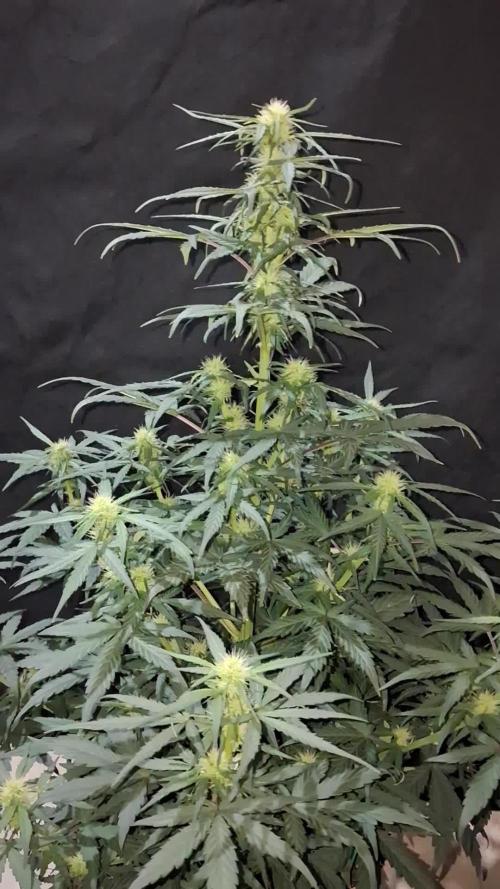
Die Blätter werden schön Purple und die buds werden fester ich bin gespannt wie sie in 1-2 Wochen aussieht


Likes
15
Share


@Herbinator
Follow
Great week overall, environment working very well and maintaining temp even on hot summer days - 33C outside!
Humidity is too high at night when the extractor switches off. Plug timer need to run from 10pm to 4am.
Reduced pump to 1 min fill as planned
Took reservoir from 22L to 17L to save chems and avoid spillage as roots grow. As they fill their pot I was finding progressively larger puddles every morning
Video of rootball and Flood and Drain in action
Scrog net finally arrived after being delayed in the mail by a month :D
Had a go at FIMing, waiting on results
Raised lamps by 5cm
Green leaves showing no signs of burn
Roots looking healthy and well developed
I keep getting too enthusiastic with the pH+ and always have to top-up with water to raise the level back. No more than 0.5ml needed at each test.

Likes
14
Share


@Mr_Dior21
Follow
Last 2 weeks before I put her in a 3 day dark period! I’m no longer giving any nutrients and I’m letting the plant deplete all the nutrients in the soil, I’m also only using water for now own. I have her in a 11.5 hour light schedule. There’s slight nutrient burning too on some parts but it’s nothing drastic.

Likes
Comments
Share

@hassehujasse
Follow
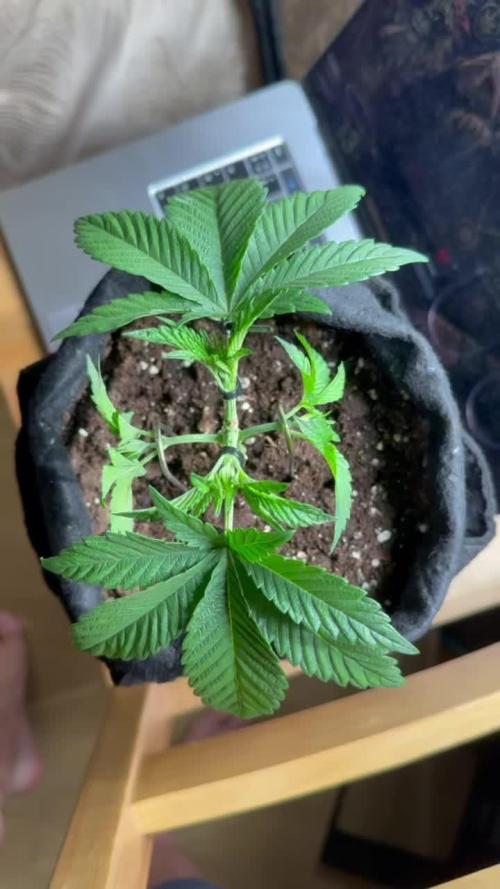
Lemon Cherry Gelato by @Barneys going well after transplantación, topping,LST
Lemon Cherry Gelato de @Barneys esta empesando dar su poder

Likes
17
Share


@AlbasDiary
Follow
Buenas tardes queridos compañeros jardineros:
Aquí traigo actualización de las pequeñas autoflorecientes, mantienen su fuerza, un color verde preciosos, y a pesar de que están más pequeñas de lo normal por el fallo en la alimentación la primera semana, podemos observar como están floreciendo y llenándose de tricomas, además de un olor profundo y penetrante que solo puede augurar momentos muy divertidos y placenteros.
Si algo bueno está trayendo la crisis del coronavirus, es que al menos tenemos más tiempo para dedicarnos a ellas.
Nos vemos la siguiente semana con una nueva actualizacón, muchos ánimos y fuerzas a todos, pasará y para entonces ya tendremos nuestras cosechas listas!!
BUENOS HUMOS😇

Likes
20
Share


@Spudz
Follow
Day 70 — Cruising right along with the grow. Can’t say enough about the Sensi Bloom. I will definitely be using it for the next grow. Both Veg and Bloom. Buds are really filling on the short LB. Getting fat and sticky. Smell is really nice as well. Remind me of the pot from the 70’s. I’m starting to stress a bit about when to harvest. I don’t have a magnifying glass strong enough to see the trichromes. Is there another telltale sign the plant is ready? I’m starting to see the red hairs so is that an indication flowering is winding down? I still think I have a couple weeks, but will be watching them closely. Thanks for reading.
Likes
18
Share


@prebiancagrower
Follow
...and here I am, at the end of this fantastic journey, with so much knowledge I have got in this process, including regarding myself! Fantastic!!
I harvested one week early because I got some issues with mold!
Thank you people for helping me when I got into some trouble hahaha
Love you all! :-)
Peace and freedom!

Likes
27
Share


@w33dhawk
Follow
Moin ihr growmies😇 ich Weiss gar nicht was ich großartig erzählen soll, die Ladys laufen meines Erachtens nach wunderbar. Die 4. Vegi Woche ist rum und ich muss sagen alles ist entspannt zurück lehnen und genießen....
Die Ladys trinken mittlerweile 1liter Wasser in 3 Tagen, das Wasser ist nicht Ph angepasst ist aber immer mindestens 24 Std abgestanden damit das chlor aus dünsten kann. Habe den Wert aber trotzdem mal überprüft liegt genau bei 7,5 und hat eine gieß Temperatur von 22 Grad.
Am Montag 30.01.23 habe ich mich dazu entschieden die ersten 3 Damen zu toppen, vorne links, hinten links und hinten rechts sind getoppt, vorne rechts kommt dann nächste Woche dran da sie ja 7 Tage jünger ist als die anderen 3 und somit auch noch nicht die Bio Masse hat um beschnitten zu werden das wars für diese Woche auch schon....
wie gesagt zurücklehnen,entspannen und den Grow genießen, mehr mach ich eigendlich nicht. Ach ja und natürlich täglich den Lampen Abstand kontrollieren und ggf. Nach justieren
Euch allen einen wunderschönen Grow, mit Schnee behaftet, und der Potenz einen Ochsen auf die Couch zu klatschen 😁😂😁

Likes
88
Share


@ILoVeThiSpLaNt
Follow
Giorno 55.Le due Kmintz da oggi prenderanno solo acqua ph 6.2. Hanno entrambe il 10% di tricomi ambrati e entro 7/14gg max verranno tolte. Ho proprio voglia di fumarle!!! Le due Watermelon sono più lente. Sicuro altri 20/25gg minimo. Alla prossima settimana e grazie del passaggio 😊

Processing
Likes
17
Share


@Easygrower
Follow
Hello growers I’m back with sweet seeds genetics I must say a massive shout out to @sweetseeds for sending me these seeds it’s very much appreciated iv never tried sweet seeds before and the fact they send me seeds to try for free with free p&p is banging 2 big thumbs up from me👍🏻👍🏻 Now it’s day 7 and the girls are looking good just keeping them moist with tap water I will continue to do so for the next week after that I’ll hit em with some juice until next week be safe and happy growing ✌️

Likes
82
Share


@ClubRiot
Follow
Week 7 ,
pH Perfect Connoisseur Bloom Part A ( 1 ml/L )
pH Perfect Connoisseur Bloom Part B ( 1 ml/L )
CarboLoad Liquid ( 2 ml/L )
Sensi Cal-Mag Xtra ( 2 ml/L )
Sensizym ( 2 ml/L )
Bio-Heaven ( 2 ml/L )
Big Bud ( 2 ml/L)
Nirvana (2 ml/L)

Likes
9
Share


@rownz
Follow
EC Wert müsste etwas korrigiert werden mit CaLMAg, Entlaubung wurde durchgeführt, wuchs ist gleichmäßig bis auf eine AH die ich nachträglich als Steckling bekommen habe.


Likes
8
Share


@medicalcannabelfast
Follow
Well it’s day 49 and this c4 is looking absolutely amazing :) , she is changing everyday and I can’t wait to taste her .
I think I’ll give her one last feed mid week then be water only until she ready ..
Likes
22
Share


@Chucky324
Follow
Hello. This is the end of week 7 and the beginning of week 8 of veg.
I took another look at the males and found them to be average. Not that smelly or resinous. So, no good for breeding.
That's ok though. Let see what these females can do.
They are topped already and ready to be repotted and put in the tent.
There's still 1 plant undecided. Has small male looking flowers. I'll leave it for a few more days before deciding.
Man, there are lots of large female orb weaving spiders around here this year.
Huge webs, when you walk into them in the dark, they don't break off like the little webs.
What a difference in design though. These spiders are all in my yard.
I find them fascinating to look at.
Hope your enjoying the comics.
Keep Growing Straight.
Chuck.