


Likes
Comments
Share


@DogDoctorOfficial
Follow
🌱 Skywalker OG — Week 3 VEG Report
12/12 from seed | Vegetative phase ongoing
General Overview
Week 3 of vegetative growth ends with Skywalker OG performing exceptionally well. Both plants are growing in near-perfect sync, once again showing that environmental consistency is doing the heavy lifting here.
Despite being grown in different containers (plastic pots vs Pro-Mix bags), there is no visible difference in growth rate, structure, or vigor. Rhythm, height, and development remain aligned — true twins in motion.
Growth this week has been fast, confident, and clean.
Growth & Structure
• Stage: Vegetative
• Flowering signs: None observed
• Node count: ~6 nodes
• Growth habit: Compact, fast, very controlled
• Internodal spacing: Tight
• Leaf development: Large fan leaves, dominant canopy
At this stage, Skywalker OG is clearly prioritizing leaf mass and photosynthetic surface over branch elongation. Branches are present but still relatively short compared to leaf size — a classic sign of a plant building energy reserves before structural expansion.
There are a few funky leaf expressions here and there — small personality traits rather than problems. Nothing concerning, nothing progressive, and nothing that requires correction.
No training has been applied so far.
⸻
Container Comparison — Pot vs Pro-Mix Bag
An important observation this week:
There is no meaningful difference in growth between the plastic pot and the Pro-Mix bag.
Both plants:
• Grow at the same pace
• Maintain similar height
• Express similar leaf size and color
This reinforces that, at this stage, root environment is equally supportive in both setups under these conditions.
⸻
Training Outlook
While no training has been done yet, Week 3 observations suggest that training may begin next week to encourage lower branch development.
The idea is not to force growth, but to:
• Balance canopy dominance
• Promote lower branch exposure
• Prepare structure early and gently
For now, observation continues.
⸻
📸 Photo & Video Documentation
This week includes both photos and a short video captured during the photo session.
During the session, content from My Cheap Home Grow was playing in the background — a YouTube channel focused on home growing, sharing practical experience, open discussion, and solid grow knowledge.
It’s a great resource with:
• Passionate growers
• Real-world setups
• Honest learning environments
If you’re into growing and learning from others, it’s definitely worth checking out. https://www.youtube.com/@cheaphomegrow7096
⸻
Environment — Room Conditions (Week 3)
• Photoperiod: 12/12 from seed
• Day temperature: ~26 °C
• Night temperature: ~18 °C
• Relative Humidity: 60–65%
• VPD: In optimal vegetative range
• Airflow: Gentle, constant, non-stressful
• Solution temperature: ~21 °C
• Substrate temperature: ~21 °C
Environmental stability remains consistent across the room.
⸻
💡 Lighting
• PPFD: ~600–700 (adjusted to plant size)
• Plants continue to grow naturally into the light
• No stretch, no light stress
⸻
💧 Watering & Nutrition
• pH: 6.0
• EC: 1.0
Nutrient program:
• Plagron Terra Grow
• Power Roots
• Pure Zym
• Sugar Royal
Foliar:
• Vita Race
• Used selectively and intentionally
Nutrition continues to support strong vegetative growth, lush color, and clean metabolism.
⸻
🔍 What to Expect / What Not to Expect (Next Week)
What to expect:
• Continued vegetative expansion
• Larger fan leaves
• Potential start of gentle training
• Increased lower-branch response once canopy opens
What not to expect (yet):
• No flowering initiation
• No stretch explosion
• No need to increase EC or push inputs
Patience and observation remain the focus.
⸻
Final Thoughts
Skywalker OG closes Week 3 as fast, lush, and confident. Tight internodes, big leaves, and twin-like behavior across different containers confirm that conditions are dialed in and the plants are comfortable.
No rush.
No force.
Just strong foundations being built.
Thank you to everyone following along and sharing this journey with us 🌱
FOR DISCOUNT CODES AND MORE JUST FOLLOW THE LINK https://website.beacons.ai/dogdoctorofficial
📲 Don’t forget to Subscribe and follow me on Instagram and YouTube @DogDoctorOfficial for exclusive content, real-time updates, and behind-the-scenes magic. We’ve got so much more coming, including transplanting and all the amazing techniques that go along with it. You won’t want to miss it.
GrowDiaries Journal: https://growdiaries.com/grower/dogdoctorofficial
Instagram: https://www.instagram.com/dogdoctorofficial/
YouTube: https://www.youtube.com/@dogdoctorofficial
⸻
Explore the Gear that Powers My Grow
If you’re curious about the tech I’m using, check out these links:
🔆 Lighting & Environmental Control
• Future of Grow — Advanced LED lighting technology
https://www.futureofgrow.com/
DISCOUNT CODE: DOG20
• Lumiflora — Under-canopy LED lighting
https://lumiflorade.com/
• TrollMaster — Environmental controllers and automation gear (past collaboration)
⸻
Genetics
• Zamnesia Seeds — Genetics used in this project
https://www.zamnesia.com/
⸻
🌱 Soil, Substrates, Boosters & Root Support
• Plagron — Substrates, bio mixes, and supportive products
https://plagron.com/en/
⸻
🎒 Storage, Curing & Preservation
• Grove Bags — Curing and storage solutions
https://grovebags.com/
⸻
📸 Photography Equipment & Tools
(Not sponsors, but part of my creative toolkit)
• Sony A6700
• Sony full-frame macro lens + few more
• Stacking photography workflow - learning
• iPhone (for behind-the-scenes shots)
We’ve got much more coming as we move through the grow cycles. Trust me, you won’t want to miss the next steps, let’s push the boundaries of indoor horticulture together!
As always, this is shared for educational purposes, aiming to spread understanding and appreciation for this plant. Let’s celebrate it responsibly and continue to learn and grow together.
With true love comes happiness. Always believe in yourself, and always do things expecting nothing and with an open heart. Be a giver, and the universe will give back in ways you could never imagine.
💚 Growers love to all 💚
📸 P.S. – The Eye Behind the Lens
All photos in this diary (for now — except for the ones showing the camera, which I took with an iPhone) are taken with a Sony A6700 paired with a Sony full-frame macro lens and a few more.
Photography is part of the story — it’s how we share the fine textures, the glow, and the quiet details that words can’t always capture.
I’ve also started experimenting with photo stacking — a technique where multiple images, each taken at a slightly different focus point, are layered together to create one perfectly sharp image from front to back.
It’s not digital enhancement or AI; it’s pure photography — a way to reveal the plant’s beauty in microscopic depth, from trichome to petal.
You’ll even see a few shots of "ghost me" capturing the shots — camera, lens, setup — because every grow deserves not just to be cultivated, but documented like art.
FOR DISCOUNT CODES AND MORE JUST FOLLOW THE LINK https://website.beacons.ai/dogdoctorofficial
NEW DISCORD - Official Server Invite Link : https://discord.gg/ksjAkA5T74

Likes
7
Share
@Samsationalseeds
Follow
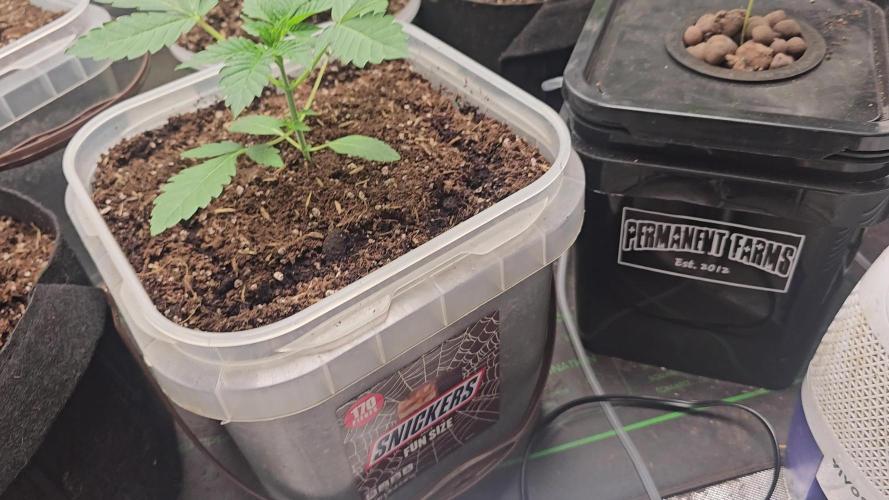
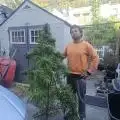
Week 3 most of the photos are in the plastic containers to grow in before being transferred outside

Likes
11
Share


@Bread_n_Buds
Follow
This strain has a name that really intrigues us, a fame that goes beyond the oceans and is produced by Zamnesia top ingredients for success. One of the two Green Crack F1 Hybrids was replanted because I noticed too late some placenta problems and it was damaged but only because of me it was immediately replaced and we are ready to give our best.
Growing projects for autoflowering plants ----- As for autoflowering plants I really love preserving the Main Cola. So I will try to make or grow the plants well or badly without damaging the main cola. Nowadays topping autoflowering plants is very accepted but it is not my favorite thing to transform a baby born to finish in 10 weeks into a baby that finishes in 14, I say at this point I do photoperiodic. But in times of people who only grow autoflowering everything is permitted for goodness sake if you want to do it, do it I will not be the one to stop you. Also because the results are excellent nothing to really discuss about anything except time.
All this to tell us that I recommend for example fimming on plants that tend to grow tall to give power to the lateral branches, LST as much as you want, I don't like too much spread out I need space. HST and splitting are with experience. These are my tips not the absolute truth please do not mistake me for a great wise holder of the truth I speak as I see it.
The first week went only with Power Roots 1 Ml/l and Pure Zym 1 ml/l from now on we will start with ALga Grow. The plants were transplanted shortly after germination because the biodegradable pots were very small. The soil is Plagron Pro Mix 100% organic renewed with 30% new soil and 20% Perlite added. (Pro mix has no perlite but it is airy, we added it anyway)
Plagron nutrients are available at Zamnesia in convenient pack formats for all growing styles. I used this one with a simple search you can find the other products.
---- https://www.zamnesia.io/it/12119-plagron-top-grow-box-100-naturale.html
Try a seed of this strain that drives us crazy...
---- https://www.zamnesia.io/en/10677-zamnesia-seeds-green-crack-f1-automatic.html
Zamnesia Description // Forget what you think you know about cannabis. Green Crack F1 Automatic by Zamnesia Seeds is here to shake up the whole industry. Using F1 genetics, growing cannabis has never been easier. These plants offer uniform and abundant yields. Get ready to harvest high-quality buds, full of flavor and amazing effects.
Growbox and Air System - Secret Jardin DS120w + fans + exhaust fans and DF16 filters kit ---- https://www.secretjardin.com
All the best that mother nature has to offer is at ----www.zamnesia.com
Collaboration request: I am available for collaborations with companies of lights and various growing equipment (please no seed and nut companies) I would like to renovate my 120x120 space that has slightly outdated lights and would like to try some controllers. If you have any proposals available.


Likes
14
Share


@Peeman
Follow
Dealing with very strong winds this week. Also morning temperatures are below 15°C causing quite a bit of morning dew. Clear tarps are a big help as long as the strong wind doesn’t blow it away ha ha

Likes
2
Share

@DogDoctorOfficial
Follow
🍮 8×8 Adventure – Week 14 🌸 Chem Brûlée – Pheno A
🔥 Still Wild. Still Evolving. Letting the Beast Reach Her Own Finish Line.
Hello everyone, and welcome back to another chapter of the 8×8 Adventure! 🌱💚
And here she is again...
Our beautiful Chem Brûlée Pheno A! 🍮🔥
Now, my friends, I'm not going to pretend that we've done something spectacular to this girl this week.
We haven't.
😂
She's doing her thing.
She's continuing to evolve, moving through the later part of her flowering journey, and we're simply watching her progress.
No big changes.
No unnecessary interventions.
No dramatic new plans.
Just observation, consistency, photographs, and a little bit of appreciation for what this girl has become.
And honestly?
Sometimes that's exactly what a good update should be.
Not every week needs a big event.
Not every report needs a problem to solve.
Sometimes the plant is doing her job, and the grower needs to know when to step back and let her continue.
💚🌸
So let's give Chem Brûlée Pheno A her own spotlight this week.
Because even when we're doing very little, she's still writing her own story.
────────────────────────
🔥 THE WILD GIRL KEEPS DOING HER THING
If you've been following this girl from the beginning, you'll know she's never been particularly interested in following anyone else's schedule.
She's got her own personality.
Her own structure.
Her own rhythm.
And now, as we move further into the later part of her journey, we're continuing to watch that expression develop.
She's still evolving.
We're still observing the flowers and the overall plant.
And we're allowing her to continue toward her finish line without trying to force a particular date onto her.
That's the important part.
I'm not going to tell you she's finished next week.
I'm not going to invent a harvest date.
And I'm not going to make predictions just because we're getting deeper into the run.
The calendar gives us context.
The plant gives us something to observe.
And we'll keep documenting what actually happens.
😂🍮
For now, the wild girl is still here, still evolving, and still deserving of every bit of attention we give her.
────────────────────────
🌸 NOT MUCH INTERVENTION — AND THAT'S THE POINT
Honestly, we're not doing much to this girl at the moment.
We're observing.
We're keeping an eye on her development.
We're maintaining the shared environment.
We're documenting the changes.
And we're letting the plant continue her journey.
Why create extra work when there's no specific problem demanding our attention?
The structure is already there.
The flowers have their own story.
And this stage is about watching the plant develop rather than constantly finding something new to do.
Sometimes growers can feel as though they need to intervene every week to prove they're doing something.
But growing isn't measured by how often we touch a plant.
Sometimes the work is maintaining consistency.
Sometimes it's noticing a change.
Sometimes it's recognising that the best thing we can do is leave the plant alone.
😂🌿
And that's where we are with Chem Brûlée Pheno A.
We're not ignoring her.
We're paying attention without inventing unnecessary interventions.
There's a difference.
────────────────────────
🍮 HER OWN PLANT, HER OWN TIMELINE
One of my favourite parts of the 8×8 Adventure is seeing how differently these plants behave when they're sharing the same general environment.
Some girls have been moving quickly.
Others have taken their time.
Some have developed very different structures from their neighbours.
And Chem Brûlée Pheno A has certainly established her own identity in this room.
She's the wild girl.
The one we've watched evolve week after week.
The one with that impressive main cola and her own distinctive expression.
And now we're letting her continue toward the next stage without rushing her.
That's what individual phenotype diaries are all about.
We're not trying to make every plant behave identically.
We're documenting what each plant actually does.
Same room.
Same general conditions.
Same lighting ecosystem.
Different plants.
Different expressions.
Different timelines.
And twelve opportunities to learn something new.
💚🌱
────────────────────────
🌱 THE 8×8 ADVENTURE — SAME ROOM, DIFFERENT STORIES
For anyone discovering this diary for the first time, welcome to the 8×8 Adventure!
Twelve plants.
Different genetics and phenotypes.
One shared room.
One general environmental strategy.
One 12/12 lighting schedule.
One nutritional program.
One lighting ecosystem.
And a whole lot of individual personalities.
😂🌿
That's the idea behind this experiment.
We keep the general conditions consistent and observe how the different plants develop within that shared environment.
We can control many aspects of the room, but we cannot make every phenotype respond identically.
And that's precisely why we give every plant her own report.
Chem Brûlée Pheno A doesn't need to have the same story as her sister or the other girls in the room.
She needs to have her own story documented properly.
So even when the weekly update is simple, she still gets her own chapter.
Because the quiet weeks are part of the journey too.
────────────────────────
💡 THE ARTIFICIAL SUN — FUTURE OF GROW BLACK SERIES
The lighting setup remains part of the upgraded Future of Grow Black Series ecosystem.
We're continuing with the two additional Black Series 600W fixtures supplied for this experiment, with output previously reduced to approximately 59% from the plug.
Our working reference remains around 1,500 PPFD across the upper canopy, with actual intensity varying according to plant height and position.
The important point is that we're not simply running everything at maximum because we have the capacity to do so.
Having additional lighting capability gives us more flexibility.
The goal is to work with the setup we have, maintain the shared environment, and observe how the different plants respond.
And Chem Brûlée Pheno A continues her journey beneath that artificial sun.
Same photons.
Same room.
Her own expression.
💡🌱
A huge thank you to Future of Grow for supplying those additional Black Series fixtures and giving us the opportunity to explore this upgraded setup throughout the 8×8 Adventure!
────────────────────────
🔴 THE RED-LIGHT UPDATE — WHAT ARE WE ACTUALLY DOING?
Let's revisit the additional 15-minute red-light period after the main lighting period.
Since we're discussing this across our individual reports this week, I want to keep the explanation consistent and, most importantly, scientifically accurate.
Plants don't just respond to the amount of light they receive. They also respond to its wavelength and timing.
One important group of photoreceptors is the phytochrome system, which responds to red and far-red light and helps plants interpret changes in their light environment.
Red and far-red wavelengths can influence plant signalling, but their effects depend on the spectrum, intensity, duration, timing, and physiological state of the plant.
Our additional 15-minute red-light period is part of the lighting routine we're documenting.
However, we're not going to claim that those 15 minutes automatically improve flowering, increase yield, or guarantee a better finish.
Those are specific outcomes that would need evidence.
We're recording the routine, learning about the underlying science, and keeping our conclusions separate from our assumptions.
That's how we should approach these techniques.
Curiosity is good.
Experimentation is interesting.
But understanding what we're actually testing is even better.
🔴🌱
────────────────────────
🔬 THE EMERSON EFFECT — A LITTLE PHOTOSYNTHESIS EDUCATION
While we're discussing light, let's talk about the Emerson effect.
It's a fascinating and well-established phenomenon in photosynthesis.
In simplified terms, the Emerson effect describes how photosynthetic activity can increase when certain red and far-red wavelengths are supplied together, producing a response greater than expected from their individual effects under the relevant experimental conditions.
Why?
Photosynthesis uses two cooperating photosystems:
🌿 Photosystem II (PSII)
🌿 Photosystem I (PSI)
Both play important roles in the light-dependent reactions that convert light energy into chemical energy.
The photosystems have different light-absorption characteristics, and their cooperation is essential to photosynthesis.
Under suitable conditions, combining particular wavelengths can improve the balance between their activity and increase the overall photosynthetic response.
That's the basic principle behind the Emerson effect.
But here's the important distinction:
The Emerson effect does not mean that adding a short red-light period after the main lights automatically produces the same response.
The classic phenomenon concerns the combined effects of red and far-red wavelengths under particular illumination conditions.
Our additional 15-minute red-light period is a different situation, and we shouldn't automatically attribute a measurable benefit to it.
The actual spectrum matters.
The intensity matters.
The timing matters.
And the result we want to measure matters.
So yes, the Emerson effect is real and scientifically interesting.
But we need to distinguish the established phenomenon from the specific lighting routine we're using in this grow.
That's how we turn interesting information into useful knowledge.
🔬💡🌱
────────────────────────
🌙 RED LIGHT, FAR-RED LIGHT, AND THE END OF THE DAY
One final point worth remembering:
Red light and far-red light are not interchangeable.
They interact with plant photoreceptors in different ways, and the response depends on the precise conditions.
A short red-light period after the main lighting period isn't automatically equivalent to a far-red treatment, nor does either treatment guarantee a particular outcome.
For this adventure, we're documenting our additional 15-minute red-light period as part of the current lighting routine.
We're explaining the science behind plant responses to light.
And we're avoiding claims that go beyond what we can establish from the information available.
If we want to determine whether this particular treatment makes a measurable difference, we'd need suitable comparisons and measurements.
Until then, let's keep learning, keep observing, and keep asking good questions.
That's what makes a grow diary more than a collection of photographs.
It's a record of the process and the things we learn along the way.
💚🔬
────────────────────────
🌱 NUTRITION — CONSISTENCY ACROSS THE ROOM
The general nutritional program remains consistent with the shared setup.
Our current recipe reference remains:
🌱 Plagron Pure Zym — 1 ml/L
⚗️ Plagron pH Plus — 0.03 ml/L
🍋 Plagron Lemon Kick — 0.03 ml/L
🌸 Plagron Terra Bloom — 2 ml/L
🌿 Plagron Power Buds — 1 ml/L
🍯 Plagron Sugar Royal — 1 ml/L
🌱 Plagron Green Sensation — 1 ml/L
The previous solution readings were approximately pH 6.04 and EC 2.05 mS/cm.
We're keeping the overall approach consistent while continuing to observe each plant individually.
And as Chem Brûlée Pheno A approaches her own finish line, we're not going to make decisions based on the week number alone.
We'll continue assessing her development and decide on any changes when there's a reason to do so.
No unnecessary drama.
No invented work.
Just observation and consistency.
────────────────────────
🌡️ WEEK 14 — ROOM CONDITIONS
The shared room setup continues to be documented using the following reference readings:
🌸 Flowering — Week 14
💡 Light schedule — 12/12
💡 Lighting — Future of Grow Black Series, upgraded setup
🔌 Approximate lighting output — 59% from the plug
☀️ Upper-canopy PPFD reference — ~1,500
🌡️ Day temperature — ~27°C
🌙 Night temperature — ~26°C
💧 Relative humidity — ~61%
⚗️ Previous pH reading — ~6.04
⚡ Previous EC reading — ~2.05 mS/cm
🌡️ Nutrient solution temperature — ~25°C
🌱 Substrate temperature — ~25°C
🌬️ CO₂ — ~693 ppm
🌱 Pot size — 15 L
💦 Irrigation reference — ~1.45 L per plant / 24h
These are the shared room references from the previous update, not a claim that every reading has been independently remeasured this week.
Same room.
Same general strategy.
Same lighting ecosystem.
And Chem Brûlée Pheno A continues developing in her own way.
────────────────────────
📸 SOME WEEKS, THE BEST UPDATE IS SIMPLY ANOTHER LOOK
I think it's important to say this.
Not every report needs a dramatic change.
Not every week needs a new technique.
Not every photograph needs to show something completely different.
Sometimes the value is in continuing to document the same plant over time.
Because when we look back at the complete diary, those individual weeks become part of a much bigger picture.
We can follow the structure.
We can observe the changes.
We can compare photographs.
We can see how her development unfolded.
And we can remember what we were seeing at each stage.
That's the point of keeping the diary going.
Chem Brûlée Pheno A doesn't need a new headline-grabbing event this week.
She's still here.
She's still evolving.
And we're still watching.
🍮💚📸
────────────────────────
💬 COME JOIN THE DOG DOCTOR COMMUNITY!
If you're enjoying the 8×8 Adventure and want to chat about growing, genetics, lighting, equipment, experiments, or simply share your own growing journey, come and join us on Discord!
We love a good discussion.
Questions are welcome.
Different experiences are welcome.
And respectful debates about techniques and equipment are always part of learning.
Whether you're here to share your own progress, ask questions, exchange ideas, or just hang out with fellow growers, there's room for you in the community.
💚🌱
Come say hello!
🔗 https://discord.gg/dogdoctorofficial
Bring your questions, bring your experiences, and let's keep learning from one another.
Growers helping growers.
That's what it's all about.
────────────────────────
❤️ FINAL THOUGHTS — LET HER FINISH HER STORY
Week 14.
Chem Brûlée Pheno A.
And this week?
She's doing her thing.
😂🍮💚
We're not making big changes.
We're not trying to invent a new intervention.
We're not rushing her toward a date on the calendar.
We're observing.
We're documenting.
We're maintaining the shared environment.
And we're allowing her to continue toward her own finish line.
She's already given us plenty of interesting chapters throughout this adventure, and she still deserves her own spotlight, even when the update is simply about continuing to evolve.
We've also used this week's report to revisit our red-light routine and the Emerson effect.
Because sharing a grow means sharing what we learn, but it also means being honest about what the science does and doesn't establish.
The Emerson effect is a real photosynthetic phenomenon involving the cooperation of photosystems under particular illumination conditions.
Our additional 15-minute red-light period is something we're documenting, not proof that we're reproducing that effect or guaranteeing a particular result.
We can be curious without making promises.
We can experiment without pretending we already know the outcome.
And we can keep learning while the plants continue their journey.
That's the spirit of this adventure.
💚🔬🌱
So, Chem Brûlée Pheno A...
Keep doing your thing, wild girl.
Keep evolving.
Keep moving toward your finish line.
We're not going to rush you.
We're not going to invent work for ourselves.
We're simply going to keep watching and appreciate the journey you've given us.
One week at a time.
One photograph at a time.
One phenotype at a time.
🍮🌸💚✨
────────────────────────
🙏 THANK YOU
A huge thank you to Zamnesia for the Chem Brûlée genetics and for giving us the opportunity to follow this individual phenotype throughout the 8×8 Adventure. 🌸
Thank you to Plagron for supporting the nutritional side of the journey. 🌱
A massive thank you to Future of Grow for the Black Series lighting and especially for supplying the two additional Black Series 600W fixtures for this experiment. 💡🙏
Thank you to LumiFlora for adding another lighting dimension deeper into the canopy.
Thank you to TrolMaster for helping us monitor and maintain the environment behind the scenes.
And, of course, thank you to everyone following these reports on GrowDiaries.
Thank you for the comments, the questions, the support, and the interest in these individual plant stories.
And if you'd like to continue the conversation, don't forget to join us on Discord:
🔗 https://discord.gg/dogdoctorofficial
Let's keep sharing experiences, asking questions, and learning together.
Chem Brûlée Pheno A is still writing her story.
We're still here to document it.
And when she's ready for the next chapter, we'll be here to give her the spotlight again.
🍮💚🌸
Growers Love & Happy Growing! 🌱💚
Likes
11
Share


@Liamp1603
Follow
This grow cycle was one of my best from start to finish I had 5 females 4 of which were brilliant all shown colour all fruity gassy and amazing only the one was bland and green in colour and smelt different really good nug atructure but the smell wasn't there for me ... this is around my fifth grow and I'll be running these strains again to get it down to one pheno of these genetics

Likes
18
Share


@mk8factory
Follow
I switch to 12/12 the 02/11/2020 so about one week i think the scretch finished so it's F+2, i started to give the RQS BLOOM booster to give a nice start in nute and i think in 2-3 week i will regive another tablet
I also have a high RM about 70% but my exhaust fan is loud and i already have negative presure in my tent so i guess im good?

Likes
7
Share


@ChitownCannaChica
Follow
Starting the flush this week and she should be ready to harvest next week!
I’m not getting any Runtz terps— more nutty piney terps on this one.
She’s happy she’s healthy and almost there!
🏻💚
Likes
9
Share


@PalanKush
Follow
Amnesia already forming dense buds, Cheese's internodes are too long so the buds are taking it's time to grow, and just like last week, Northern Light still hasn't started to flower, but, it's starting to show the first pistils

Likes
15
Share


@Cr0mEtheus
Follow
She's doing great, I defoliated a bit at the end of this week. Just the big fan leaves not connected to a bud sight. Any big fan leaf attached to a bud sight I bound. I just want to keep a clear line of sight to where I defoliated. These buds are so dense I can't see through to the stem.
Trichs are still glassy. No amber anywhere. Even the trichs on the fan leaves are still glassy. This wild goddess might be sticking around for a bit longer.

Likes
36
Share


@Ganjagrandaddy
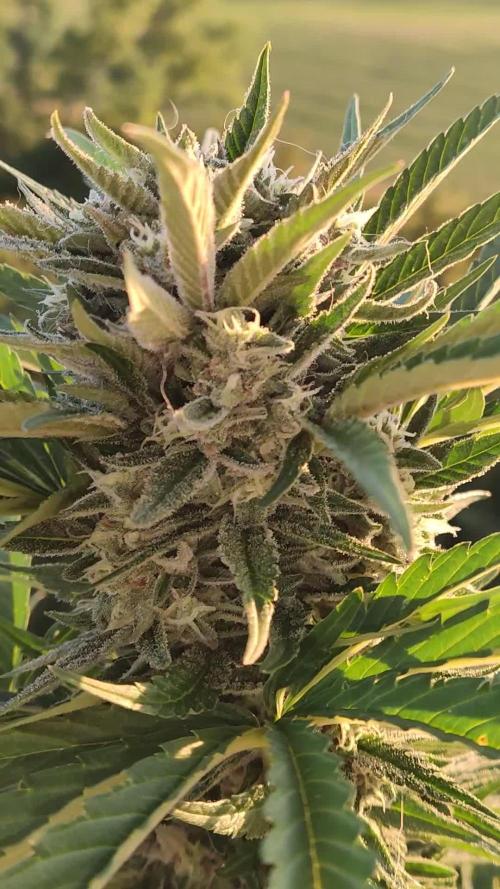
Follow
Day 8: All of thesenladies are nice and settled now.
They all have 3rd nodes visible and are close to letting the 4th nodes out too. besides the damage from germination and seed husk , they are looking OK so far. I am attempting to get the rootbball wide by watering more towards the pots edges. hopefully this will make them spread out above the soil similarly. A quiet and steady week Growmies. They will bendirectly under light in a few days time so should have grown a good amount for the next update.
Be safe



Likes
136
Share


@Kitties_and_Colas
Follow
~_~_~_~_~_~_~_~_~_~_~_~_~_~_~_~_~_~_~_~_~_~_~_~_~_~_~_~_~_~_~_~_~_~_~_~_~_~_~_~_~_~_~_~_~_~_~_~_~_~_~_~_~_~_~_~_~_~_~_~_~_~_~_~_~_~_~_~_~_~_~_~_~_~_~_~_~_~_~_~_~_~_~_
04/16/22
😻 Week 9 and almost ready for the chop!!! 🐱 ✂️🌱..most of the plants are finally starting to flush out, this will be week 3 of PH water only..1 of the 4 plants is still pretty dark so she's getting an extra gallon every watering. I'd say we still have a few weeks left but we'll inspect trichs again soon be sure. The MarsHydro is killing it! This is only our 2nd grow using this light, if you're hung up on 4x2 lighting, just buy one, they guarantee massive, resin coated buds with minimal effort.. I honestly wish I had discovered it before all our other LED purchases but live and learn ❤️🌱 ... Something interesting to note, the plant with the split main stem has made twice the amount of frost, this is at least the 4th time we've seen split stems lead to this type response..It got us thinking that maybe there's some merit to the nail trick from the 90's but idkl (please comment if you have any information on this) ...it could all be coincidence but it's compelling imo..
..Not too much else to report, its been a great week! Thanks for dropping by and happy harvests everyone!!!
❤️💡🌱😽💨
⚡Mars Hydro/SP-3000⚡ Specifications ⚙️:
Diodes: Samsung LM301B / Osram 660nm (960 total!)
Driver: Meanwell 300watt 🔌 (300W±5% @AC120V-277V)
PPF: 824umol/S ☢️
PPE: 2.8 µmol/j 〰️〰️
Lifespan: 50k+ hrs ⌛
Weight: 10.1 lbs (4.6kg)
Veg Coverage: 3 x 5 ft 🌱
Flowering Coverage: 2 x 4 ft 🌼
-The SP-3000 uses an aluminum heatsink (no fan) and the driver can be placed outside the tent 🌡️⬇️
-IP65 waterproof ratings, tolerant to high humidity grow environments 💦 ..
-Up to 15 can be daisy-chained together and all controlled from a single light! 💡~💡~💡~💡~💡
~_~_~_~_~_~_~_~_~_~_~_~_~_~_~_~_~_~_~_~_~_~_~_~_~_~_~_~_~_~_~_~_~_~_~_~_~_~_~_~_~_~_~_~_~_~_~_~_~_~_~_~_~_~_~_~_~_~_~_~_~_~_~_~_~_~_~_~_~_~_~_~_~_~_~_~_~_~_~_~_~_~_~_

Processing
Likes
34
Share


@LockDownGrow
Follow
Time too flush this lady for two weeks if she allows
All went fantastic and the green buzz nutrients range has performed ,
This lady will be coming down very soon ,
Really packed on weight and trics are 100% cloudy , just waiting for a few more amber's ,
I suspect she will be finnished within the next 7 days

Likes
73
Share


@Herbz_Unkraut
Follow
i looked awesome all growcycle...i streched alot & i noticed it drank alot more then the other plants while growing...had a good yield, i´m very happy overall


Likes
10
Share


@RookieGrower65
Follow
Day 95 harvest of last 2 of 4 plants. 10 days after first two were harvested. BB1 and GG1 seem to have denser buds than BB2 and GG2. I think the yield will be greater also. First two plants dried for 6 days at 45-50 RH and 65-70F and put into quart Mason jars with humidity meters and pouches at 62 RH. Once second two have dried, will update dry weight for all 4 plants in Harvest week.

Likes
2
Share


@aquaMan
Follow
Premise was to see how "optimal" i can get my first ever Grow. After some Research i came up with the idea to build an Aeroponic System myself using Water Buckets and Venturi Injektors to provider proper aeration.
Sadly Seedlings had to wait in EazyCubes cause some parts and Nutrients didnt arrive on time. System was fully operationable on Day 16. Atami Nutrients are inside the System since Day 24, Calmag has been added Day 28. Before that, some Tri-part Nutrient.
Planning on switching to Plagron in the Long run, as well as adding Co2, a water chiller and a ~700W LED.
Stats:
- 5 30L Buckets, 4 Plants and 1 Reservoir
- Recirculation happens through 90mm PVC pipes
- 16000 l/h pump going through 4x 1" Venturi Injektors pulling around 700 liters of Air per hour
- 1mx1mx2m Growtent
- 250W The Jackson Nemesis LED
Happy about any Questions and Suggestions!
Likes
15
Share

@TheFamilyShire
Follow
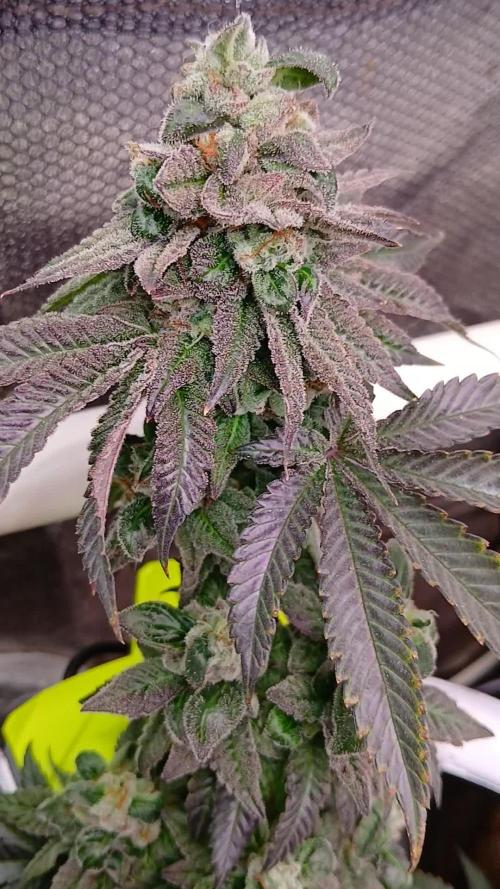
So it's 10 weeks flower. The reveg messed up the flow of flower. Most plants are ready but a few 2 b Blunt included seems to have an explosion of new growth. I might let them go another week or chopped this weekend. I haven't decided yet. I will probably chop tomorrow or Sunday. Well see

Likes
15
Share


@emeraldlabs
Follow
Everything is going well; colas are packing on weight. Will try to get some trichrome pics next week.
Photos/video taken 105 days after breaking soil, day 42 of flower.


