Likes
Comments
Share
@WetWillie
Follow
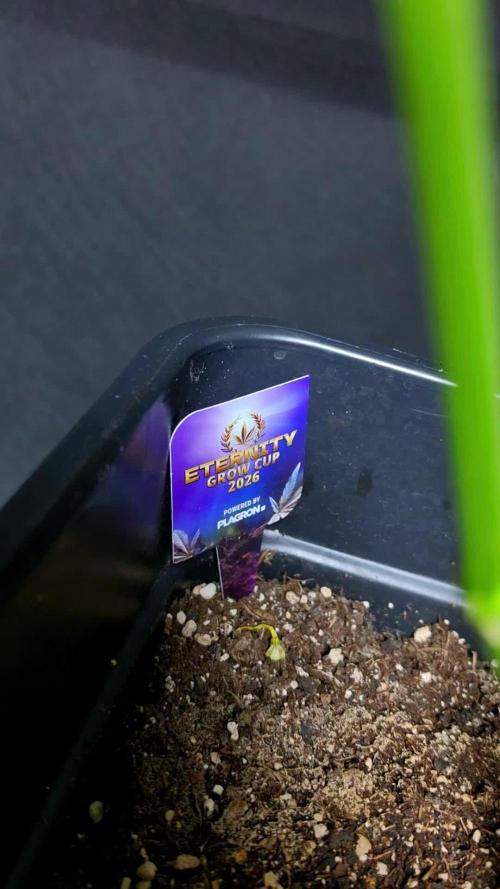
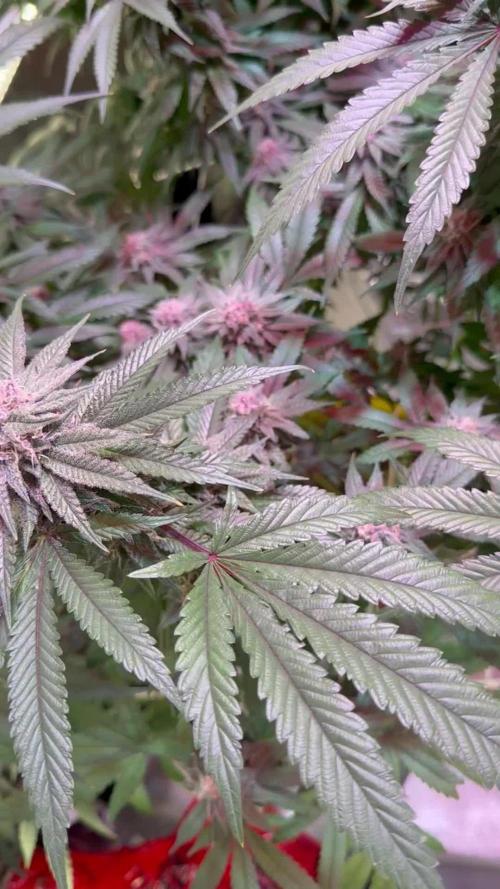
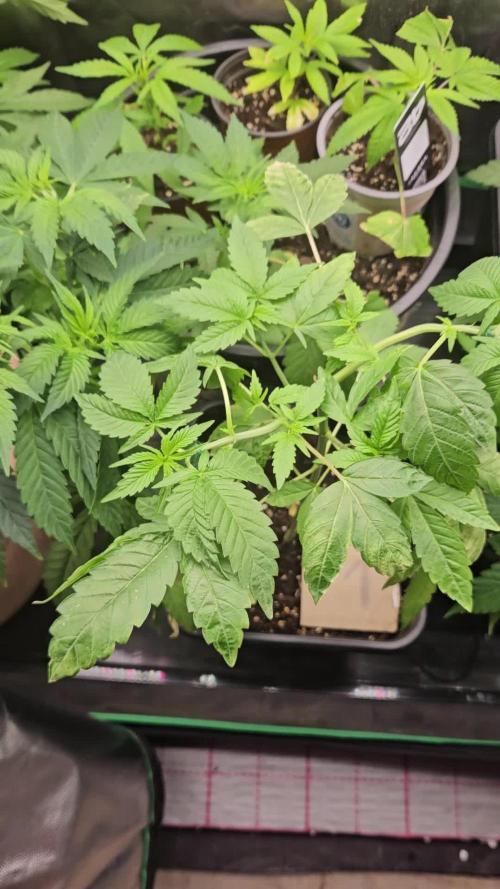
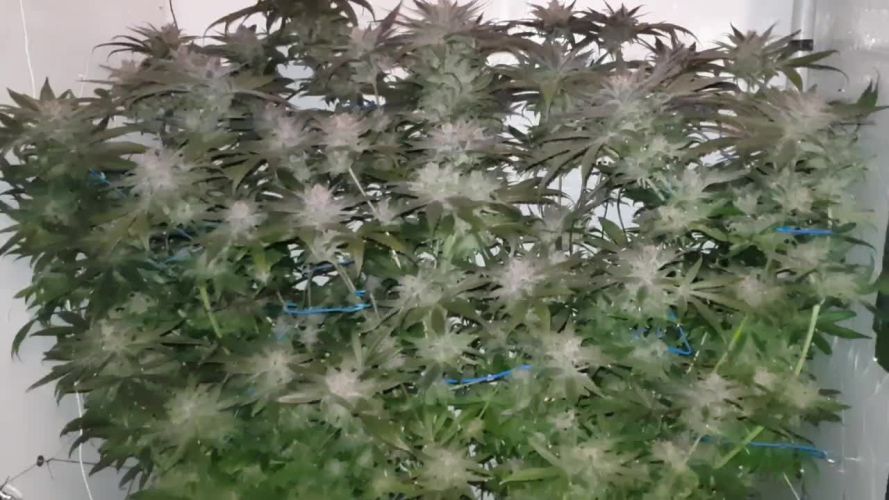
Defoliation and LST performed 12/31/2025, flipped to 12/12 lighting on 01/01/2026 (35 days from germination).
Likes
50
Share
@AsNoriu
Follow
Day 29. SPA#2 is flying, #1 still curly a bit. Misting, tucking, tieing - thats all i do now. Monday - first feed ! Day 30. Girls are showing sex like crazy and i think SPA#1 has some sort of genetics mutation, all leaves are patchy in colours and generally unhealthy, but she is FLOWERING already !!! I blamed myself, improved envoirment to almost perfection and girl still looks not right... First feed - done ! Next feed - Silica Acid ! Happy Growing !
Likes
97
Share
JungleBoys Gelato33 x ZkittlezCake (clone) THC: 30+% Terp: 45% Nutrients • GreenBuzzNutrients (DISCOUNT CODE • ORGANICNATURE420) %15 I use the whole product range and this stuff is a game changer. I've not had one bad grow with this company and it hasn't let me down once. Terps and taste are through the roof. No need for run off in coco only during flush week (i use a 0ppm distilled water) Hands down the best nutrients on the market LIGHT/TENT • Mars Hydro FC-E6500 5x5 tent HOLF FUCK! the colours coming from this clone are unreal. I don't know if the pic quality on GD is good enough to see on my pics but in 20years of growing I've never seen such a beautiful plant. Hands down this will be the one everyone dreams about growing and ive not even got her on coco yet. I can literally picture the frosty nugs from here. Now as i have access to these I think I will do the Organic Grow off using this strain next year 💚
Processing
Likes
6
Share
TUESDAY 9/3: She's still branching out and budding up.👍 WEDNESDAY: I was out at the property for awhile today, hosed off the horsies and cleaned their hooves really well. I was there long enough that I was able to move the plants into direct sunshine for an extra couple hours. I fed her with a half-gallon of water including bembe, terpinator, tiger bloom, beastie bloomz, armor si, and big bloom...just enough to wet her whistle. THURSDAY, FRIDAY, SATURDAY, SUNDAY: I was sick as a dog . 2-day stomach virus, followed by an acute pancreatitis attack... 😷 MONDAY: I gave her about a half-gallon of aquarium water with some bembe, beastie bloomz, and tiger bloom.
Likes
2
Share
67 days since April 16th, 2026 We become aware at such times of man's wonderful ability to bring seemingly unrelated elements into harmonic balance, and receive a glimpse into a world where everything exists in conscious sympathetic attunement to everything else. When we listen to a piece of music that seems to strike a beautiful chord somewhere inside us, or view a painting that simply glows with harmonic awareness well executed, we probably do not spare much time to contemplate the wonderfully intricate combination of vibrations that our sensors make it possible for us to perceive. We tend to appreciate the relationship between the parts of something by an awareness of the harmony or dissonance of the whole. This ability enables us to say "what a beautiful house!" instead of "analysis has proven that this collection of building materials exhibits certain elements of harmonic proportion." While this ability to instinctively appreciate the beauty of true harmony has an important role to play in evolution, a more analytical understanding of the laws involved can be most useful. This is especially so if we wish to create works of art where each part exists in true harmony, not only with the other part of that particular whole, but with the universe within which the creator and the created exist. Everything vibrates. From the most dense matter to the most subtle cosmic rays, everything which our senses allow our thoughts to become aware of, can be specified in terms of wavelength or frequency of vibration. These two terms define the same thing, but from different points of view. The following are the approximate wavelengths of various energy carriers: Cosmic rays 0.000,000,001 mm Gamma rays 0.000,000,1 mm X rays 0.000,500 mm Ultraviolet rays 0.003 mm Visible light 0.006 mm Infrared 0.01 mm Sound waves 1 meter Radio waves 300 meters Violet light 400 nm to 450 nm Blue light 450 nm to 500 nm Green light 500 nm to 570 nm Yellow light 570 nm to 590 nm Orange light 590 nm to 610 nm Red light 610 to 700 nm 1 nanometer (nm) = 0.000,000,1 cm = 1/10,000,000 cm If a guitar string is plucked and we hear a sound, it is not too difficult for the human mind to associate this sound with the vibration of the guitar string. With color it is quite different. It is difficult for us to conceive that the color of a substance is not an inherent property of the substance itself, but an indication picked up by our senses of that substance's ability to absorb or reflect the light which happens to be shining on it at that moment. Neither the matter nor the light is colored. What happens is that the brain learns to differentiate between the frequencies reflected or transmitted by the substance the eyes are focused on. The same thing happens with sound. When we say "Oh! Listen, they're playing my favorite song," what we really mean is: "My brain has stored within it a particular pattern of frequencies. I have compared the new information being received with this stored pattern and have deduced the answer that the two patterns are similar within certain specified tolerances." The 'pleasure' involved could have something to do with our running the pre-recorded pattern at the same time, in 'sympathy' with the new pattern as it is received. The word sympathy describes very well our ability to appreciate color and sound. It also describes the reason behind certain elements of harmony. For instance, if a substance vibrating at 100 cycles per second (tone 1) is in the proximity of another substance vibrating at 200 cycles per second (tone 2), we could perceive, if we had the right equipment, a certain sympathetic relationship between the two. We will see from this that there is a uniform doubling of the first tone seen in the second. At various points along the waves, the two are the same in amplitude. At other points, they are at opposite poles to each other. This doubled frequency has more points of similarity to the original than any other frequency except the original itself. If the equipment we had available for measuring these two frequencies was a soundboard amplifier and a pair of ears, then we would hear what would sound to us like one tone. If we had the opportunity to hear one at a time, we would hear that although they sound the same, one is higher in pitch than the other. This characteristic of 'the same but different in pitch', musicians have called the octave. Any two tones produced where one has exactly doubled the frequency of the other is called an octave. Speaking in ratios, an octave would appear then as the ratio 2:1 or 1:2, depending on whether we are talking of an octave up or down. A single note produced by almost any instrument will contain more than one wavelength or frequency. It will have a dominant frequency, the wavelength of which we would call the note's 'fundamental' or 1st harmonic. It will also have a varying number of upper harmonics, gradually fading in intensity into infinity or silence. Natural harmonics always have the same pattern of intervals between them. The interval between the 1st and 2nd harmonic is a perfect octave; between the 2nd and 3rd a perfect fifth; between the 3rd and 4th a perfect 4th; and so on, the intervals becoming smaller and smaller until they lose any relationship with the western 12 tone scale as it exists at the moment. Just as an octave has certain elements of sympathy with its fundamental, so some intervals have been noted to be more perfectly in sympathy with the fundamental than others. The ratio of the 'perfect 5th' or interval of 7 semitones, as it occurs in the harmonic series, is 3:2 or 2:3, while that of the 'perfect fourth" is 4:3 or 3:4. All the tones in the western 12 tone scale can be expressed in terms of the ratio between the upper tone and its fundamental. This would seem to be an ideal way of generating a scale from any given fundamental and several attempts have been made to do this, the Pythagorean system being probably the most well known. Although when working with a single tone instrument playing on its own, the Pythagorean formula works wonderfully well, if we had several instruments tuned this way together and asked them to play almost any western music, we would find that at times they sounded quite out of tune to each other. The lack of flexibility of the various scale systems based on the harmonic series has led to what is known as the 'tempered' scale. This uses as its primary unit of interval the ratio of the octave or 2:1. It then proceeds to divide the interval between any fundamental and its upper octave into 12 smaller intervals by applying the ratio: two to the one-twelfth power, to one (21/12:1). This equals 1.059463094, so by multiplying any frequency by this number, we will obtain the tempered semitone next up from our fundamental. We will also find that any tone twelve semitones up from any other tone, in a scale generated in this way, will have exactly double the frequency. If we took the note middle C on a piano and halved the wavelength, we would have the note C one octave above. If we halved this, we would have the C above, and so on. However, within about 6 octaves, we would find that although a 'sound' was being produced, no human ear could perceive it. If we kept on going, halving and producing upper octaves of our fundamental C, we would proceed through the infrared band, into the visible light spectrum. If we happened to be outside during the day, we would, for one octave only, see the note C with our eyes. The next octave above would already be in the ultraviolet band, and outside the eye's sensitivity range. If we can think of color as being an indication of a substance's vibratory rate or wavelength, we may begin to see a relationship that could exist between the color and sound spectrums. The logical extension of what has so far been said is that there exists a scale in the color spectrum that corresponds exactly to the scale in the sound spectrum, each color tone being an octave of the equivalent note in the sound range. This is not the end of the story but only the beginning. If we can for the moment accept that any wavelength in one band has upper and lower octave stretching out to infinity, then the next question is 'fine, but what shall we use as our fundamental? A particular color? A particular sound frequency?' The musicians among us will probably say 'A 440'. This means that the note A should vibrate at 440 Hertz, or 440 times per second. They would tell us that this is standard pitch has been adopted by most orchestras around the world; pianos are tuned to it, instruments are constructed to formulas based on it, and so to them it would probably seem the most appropriate place to begin. Some of these musicians may know of the battle that is still raging with regards to this being the standard, but few would know why A = 440 Hz was chosen except that it worked when it was set to be a suitable compromise between the many different pitches in use at the time. 432 Hz is said to be mathematically consistent with the patterns of the universe. Studies reveal that 432 Hz tuning vibrates with the universe’s golden mean PHI and unifies the properties of light, time, space, matter, gravity, and magnetism with biology, the DNA code, and consciousness. When our atoms and DNA start to resonate in harmony with the spiraling pattern of nature, our sense of connection to nature is said to be magnified. Another interesting factor to consider is that the A=432 Hz tuning correlates with the color spectrum, while the A=440 Hz is off. Audiophiles have also stated that A = 432 Hz music seems to be non-local and can fill an entire room, whereas A=440 Hz can be perceived as directional or linear in sound propagation. Once you adopt the idea that sound (or vibration in general) can have an equalizing and harmonizing effect (as well as a disturbing effect), the science of harmony can be applied to bring greater harmony into one's life or tune to specific energies. There is a form of absolute and relative harmony. Absolute harmony can, for example, be determined by the tuning of an instrument. The ancients tuned their instruments at an A of 432 Hz instead of 440 Hz - and for a good reason. There are plenty of music examples on the internet that you can listen to in order to establish the difference for yourself. Attuning the instrument to 432 Hz results in a more relaxing sound, while 440 Hz slightly tenses up the body. This is because 440 Hz is out of tune with both macro and micro cosmos. On the contrary, 432 Hz is in tune. To give an example of how this is manifested microcosmically: our breath (0,3 Hz) and our pulse (1,2 Hz) relate to the frequency of the lower octave of an A of 432 Hz (108 Hz) as 1:360 and 1:90. It is interesting to note that 432 Hz was the standard pitch of many old instruments and that it was only recently (19th and 20th century) the standard pitch was increased. This was done in order to be able to play for bigger audiences. Bigger audiences (more bodies) absorb more of the lower frequencies, so the higher pitch was more likely to “cut through”. One of the oldest instruments of the world is the bell ensemble of Yi Zeng (dated 423 BC), tuned to a standard F4 of 345 Hz, which gives an A= 432 Hz. The frequency of 345 Hz is that of the platonic year! Similarly, many old organs are tuned in A=432 as well; for example, St. Peter’s Capella Gregoriana, St. Peter’s Capella Giulia, S. Maria Maggiore in Rome. Maria Renold’s book “Intervals Scales Tones and the Concert Pitch C=128 Hz” claims conclusive evidence that 440 Hz and raising concert pitch above scientific “C” Prime=128 Hz (Concert A=432 Hz) disassociates the connection of consciousness to the body and creates anti-social conditions in humanity. The difference between concert pitch A=440 Hz and Concert A=432 Hz is only 8 cycles per second, but it is a perceptible difference of awareness in the human consciousness experience of the dream we share called existence.
Likes
10
Share
This is final harvest week in the growroom Plants are coming down all around me. As always I strip the plants down and put them back under the lights for a few days then I cut them down a hang them by the toes until around 20% humidity which is still a little wet but I like to start the sweating early so it slows the drying down a little and starts the cure Thanks for stopping by and for following along with me on another grow.... Cyrus
Likes
12
Share
Servus Moin! Die Chemical Candy geht jetzt langsam in die Blüte. Bin gespannt wie sie nach dem Stretch Aussehen wird.
Likes
5
Share
Bonjour à tous, Très jolie départ sur (21g) (21 de sortie 👍👍👍). Mise en pots définitive aujourd'hui 😊 c'est parti, maintenant je vais encore plus les bichonner 😊😊😊 j'ai hâte qu'elles grandissent. Je vous ferai une photo tout les jour pour voir leurs évolution. Bonne journée à tous 😉
Likes
6
Share
@WeedM8
Follow
Gorgeous flowers getting pumped by this beautiful 600w led light
Likes
21
Share
Flowering day 15 since time change to 12 / 12 h Hey guys :-) This week the ladies developed beautifully 👍. The stretch has started very strongly :-) . Watering was done twice this week with 1.2 l (see table above for nutrients). The heating mat does exactly what it is supposed to do, you can see that the ladies are doing perfectly again 😃. Fresh osmosis water was mixed with tap water in a 100 liter tank so that I would have enough stale water for the coming week 👍. Otherwise everything was cleaned and checked. During the check, I noticed that after spraying neem oil 3 times, there were still a few damn trips to see. I have ordered nematodes for leaf and substrate against tripse. Then they should finally be gone again 🙏🏻 have fun and stay healthy 💚 👇🏼👇🏼👇🏼👇🏼👇🏼👇🏼👇🏼👇🏼👇🏼👇🏼👇🏼👇🏼 You can buy this Nutrients at : https://greenbuzzliquids.com/en/shop/ With the discount code: Made_in_Germany you get a discount of 15% on all products from an order value of 100 euros. 👇🏼👇🏼👇🏼👇🏼👇🏼👇🏼👇🏼👇🏼👇🏼👇🏼👇🏼👇🏼 You can buy this strain at : Clearwater Seeds Water 💧 💧💧 Osmosis water mixed with normal water (24 hours stale that the chlorine evaporates) to 0.2 EC. Add Cal / Mag to 0.4 Ec Ph with Organic Ph - to 5.8 - 6.5 MadeInGermany
Likes
18
Share
week intel: everything is perfect! stresses : just a little E.C stress around 1.7 once a week feeding: i feed them 3 times this week with this order : day 1 : i feed them heavy with silicate +base nutrients(calcium & micros + Bloom) about 818 ppm - 1.7 e.c to cause a little stress. day 3 : i feed them low dose of Feeding Booster + Karbo Boost around 382 ppm - 0.7 e.c to let them recover a little but not fully recover still a little stress will caused. day 5 : i feed them with low dose of Top-Max + B-52 around 250 ppm - 0.5 e.c to let them recover the stresses to get ready for another stress next week. guide of the week : know your plant tolerance limit of E.C stress once you saw the very very little yellowing on tips of leaves , that's the sign to don't go further , never reach that limit if you want a high quality buds, in my case tolerance is 1.8 and i'll reach to that level only once a week to cause precision stress , love your plants and have a happy growing!
Processing
Likes
2
Share
Likes
81
Share
@MrJones
Follow
MrJones Girl Scout Cookies ╰⊰🍪╰⊰´🍪⊱╮🍪╰⊰Pre Harvest Report╰⊰🍪╰⊰´🍪⊱╮🍪╰⊰ 🌱Girl Scout Cookies @originalsensibleseeds 👨‍🌾🏽GD Grower: MrJones ╰⊰🍪╰⊰´🍪⊱╮🍪╰⊰🍪╰⊰🍪╰⊰´🍪⊱╮🍪╰⊰ 📜Week So today I chopped the Girl Scout Cookies and put 1420 GRMS of bud into the dry tent / should be drying for about 7 to 10 days. ╰⊰🍪╰⊰´🍪⊱╮🍪╰⊰🍪╰⊰🍪╰⊰´🍪⊱╮🍪╰⊰ 🔶Saturday 02.06.21 / Started drying the cookies today, environmental's locked in at 62F/58%RH ╰⊰🍪╰⊰´🍪⊱╮🍪╰⊰🍪╰⊰🍪╰⊰´🍪⊱╮🍪╰⊰🍪╰⊰🍪╰⊰🍪⊱╮
Likes
18
Share
@Mr420
Follow
Harvest was easy pulled all fan leafs off five days ago but left bud leafs on top to help drying process and it makes trimming easier as you can see I trim plant as it stands then I cut branches off or the whole plant. Only took 1hr to harvest.
Likes
Comments
Share

Well we thought something was wrong with our white widow being that from one day to the other she was crooked and looking Ill.. so we cut her way before time.. BUT (bud hehe) after closer inspection it was a block of in the autopot.. so she prolly could have bounced back..
Likes
6
Share
@OS_Farmz
Follow
Second week of blooming and all goes good. Raised ppm to 950 and added some boosters. First inflorescences started to appear.
Likes
2
Share
@Comfrey
Follow
Das Pflänzchen wird zur Pflanze. Bis jetzt läuft es gut. Die Entscheidung, in den Kompost 20% Kokosfasern einzumischen war richtig. Dieser Strain war eine spanische gratis Samenspende des Saatgutlieferanten meiner Wahl. 😊 5 Samen haben sie beigelegt. Beim ersten Versuch habe ich die Samen draußen zum Keimen bringen wollen, das hat gar nicht geklappt. Alle vier Strains sind noch unter der Erde verfault. Es war zu kalt und zu nass.
Likes
176
Share
@DevilsBud
Follow
Week 2 Veg phase Day 8 Veg phase This morning the leaves where twisting not sure in the beginning what was happening. pH is 6.5 my humidity in the tent in around 63 to 69 % . And i have the marshydro 1000 on 70% . At distance off 40cm from the plants . I will wait and see. Day 9 Veg phase Have bin letting the soil dry up . And today start giving them 2ml per liter In a 5 liter sprayerbottle and added the following nutrients 4Liter Filtered water with pH of 6.5 8ml of the nutrients below : Advanced Nutrients pH Perfect Bloom Advanced Nutrients pH Perfect grow Advanced Nutrients pH Perfect micro Advanced Nutrients B-52 Advanced Nutrients Voodoo Juice Advanced Nutrients Rhino Skin Day 10 Veg phase Everything looking good besides the waving leaves . 3 part of leaves are slowly coming out 👍. Giving them around 0.3 L per plant per 24 hours Day 11 Veg Phase They are growing very nicely in good tempo . Going to be Adding some Biobizz calmag 1ML per 1Liter in the mix today Day 12 Veg Phase Everything going good nothing to tell 😎😎 Day 13 Veg Phase The New leaves are coming out nicely Day 14 Veg Phase It was a perfect week for the 2 Cookies Gelato on to week 3 of Veg 👌👌
Likes
5
Share
@TJHeadley
Follow
RSQ Wedding Cake has just start producing hairs but still not in flower yet. FB Cherry Cola has already started producing some Icy . SS Bruce Banner has an issue going on, I've got mixed reviews on what it could be. Added about 8ml of Athena IPM to the water for that one. Hopefully she snaps back and grows strong
Likes
59
Share
@Coopmc
Follow
Looking good the 3 in front are a week behind the two in back! Buy chance 2 should be typ 1 hight THC plants and 2 should be type 3 plants 50/50 THC/cbd