


Likes
Comments
Share

@Fyno_TH
Follow
✂️ Harvest — From Chop to Bubble Hash (Final Review) 🌿❄️
Harvest completed with dense, resin-heavy buds and fully swollen calyxes. Trichomes were mostly cloudy with a touch of amber, and the aroma at chop was loud — sweet, citrusy, and greasy, filling the room instantly 🍊🔥
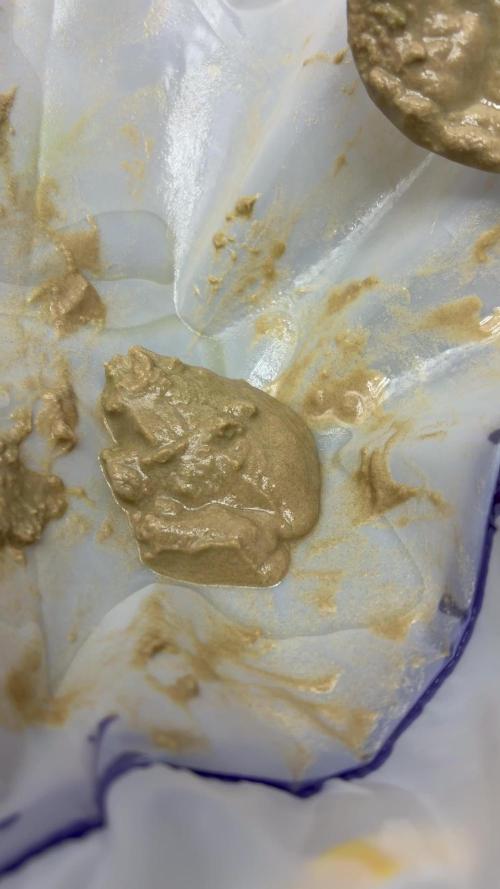
After harvest, the plant was air-dried for ~5 days at 16–19 °C, keeping conditions cool to preserve terpenes and trichome heads. Instead of a full flower cure, I chose to process the harvest into Bubble Hash, focusing on resin quality and terpene retention ❄️🌿
The wash went very clean — trichome heads separated well, showing strong resin production despite earlier challenges during the run. Smell stayed fresh and powerful throughout the process, confirming the effectiveness of the environment control and flush.
This grow was a big learning experience. From training in veg, managing powdery mildew in early flower, switching to RO water, and finishing with Flawless Finish, everything contributed to a clean and satisfying result. Ending with one plant proved that quality and consistency matter more than numbers 👑
Overall, very happy with the outcome — solid resin, loud terps, and valuable lessons gained for the next run. Looking forward to applying everything learned into the next diary 🌿🔥



Likes
29
Share

@PapaBlob
Follow
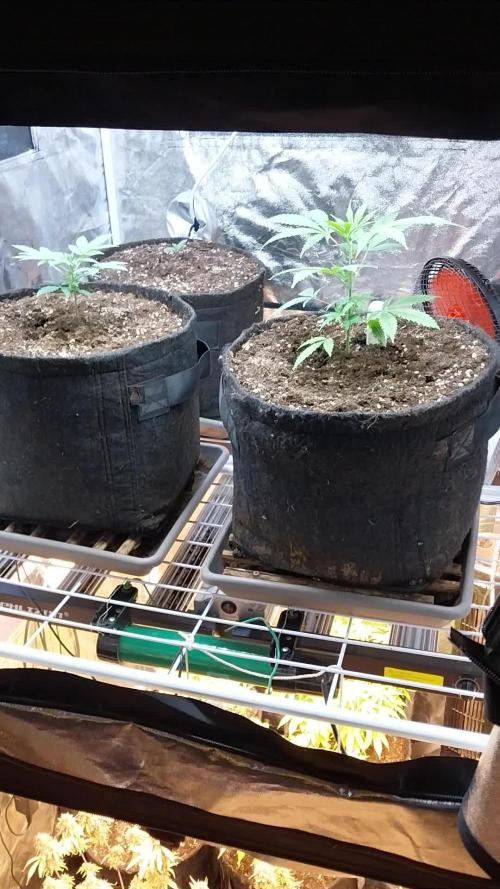
05/11 Elle est vraiment toute petite, hein.. Mais elle à l'air d'être bonne.. 😁👍
Merci encore à Divine Seeds pour toutes ces superbes souches. Que l'ont peut trouver là : Divine Seeds : https://divineseeds.net/

Likes
2
Share


@L8bloomr1008
Follow
Day 21. Plan to hit em with a good defol and one more top dress. I can push them a little more as I have no burning what so ever. As of now, no issues, just a few gnats


Likes
26
Share


@Gunnen
Follow
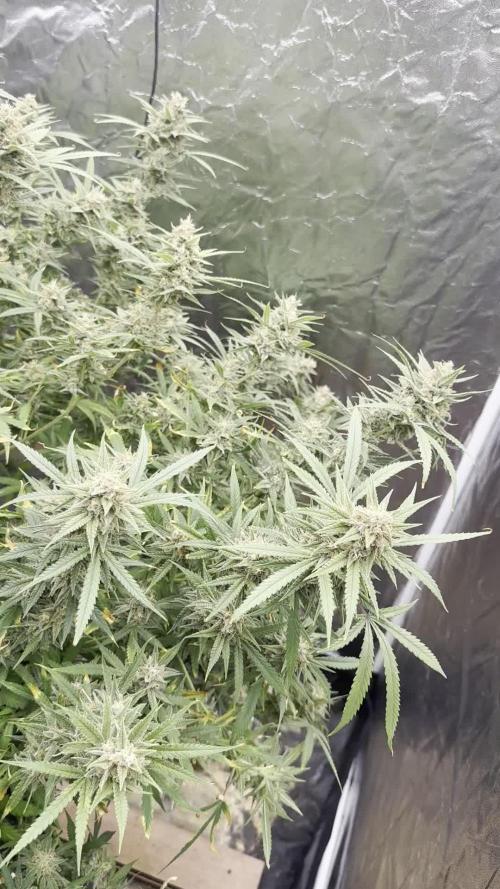
This week the plan will be to continue LST by tying down new shoots to encourage new flower sites. I am starting to see some hairs so I am going to call this week 1 of flower. I had hoped for a bit more of a pre-flower stretch on the girls, but hopefully they get a little taller during the flower stretch. At the same time, with continued LST, hoping to increase bud sites and increase overall light penetration. Keeping an eye on the water PH level as mine switches a bit in the winter vs. the summer time. Same system of watering thoroughly when dry, also adding water to the bottom of the fabric pots to be soaked up, to encourage lower soil moisture for root stretching. The Low Ryder genetics in the AK74 seems to be keeping to squat. Hopefully some of the AK47 bud structure comes through in some of these phenotypes.
I've taken out measuring the plant height, as it is slightly hard to accurately describe that with the constant LST. I've also highlighted HST as a grow technique, but this is mostly just some simple Super Cropping on some of the bud sites that are a bit more awkward to tie down with soft ties. At the end of this week or early next week I plan to amend the top soil with some more Gaia Green Power Bloom, as the nutrients used during initial planting will be starting to be used up and we are entering flowering phase with more need for the bloom nutrients. I will likely also add a little bit of the 4-4-4 All Purpose as well, in case the plants still have a bit of nitrogen requirements for vegetation. Otherwise, things are green and things are looking healthy to date. I have some moisture gnats, but not enough for it to be a pain. I will be adding an additional dehumidifier into the environment as we progress into flowering, to make sure to discourage mold or mildew from forming. Additional fans are being added as well for better air flow.



Likes
28
Share


@xmackobox
Follow
Bien pues os presento el nuevo cultivo, 5 variedades de GB Strains de la mano de GB The Green Brand.
Son unas Tropicanna Cookies, Apple Friter, Bannana Wafflez, Grand Daddy Purple y Miracle Alien Cookies.
Les haremos transplante y la maceta definitiva sera de 7L voy a usar la tierra de marca Gramoflor en concreto la Gramomed es una tierra menos compacta, mas aireada y con hongos beneficiosos.
Por ahora llevamos unas 16 horas desde que empezamos a germinar, pronto metere actualizacion de estado :D
05/04/22 -- Actualizacion de estado:
Bien pues he subido mas fotos y os explico:
Las mas grandes se empezaron a germinar el 22/03/22 y las mas peques 1 semana despues, el dia 29/03/22
Las GDP (grand daddy purple) no salieron y las descarte. Creo que pasaron mas frio que las demas y fue fallo mio.
-- Actualizacion 11/04/22
Las mas grandes empiezo ya a contar 1º semana de crecimiento a partir de este lunes 11/04/22 y en 2 semanas maximo transplantamos a 7L definitivas

Likes
34
Share


@PEAKYPLANTERS
Follow
Hello everyone, my friends! this week we will do more with the rinsing of the roots, waiting for these magical nuggets to swell even more 😉🍭
Likes
9
Share


@420Guru
Follow
Iv added the Coco Coir Pellets into my net cups and covered them with clay pebbles. 1 layer of clay pebbles under the Coco Coir Pellets first.

Likes
7
Share


@GYOweed
Follow
It grew a bit in the 3 weeks from last pics. I'm sure indoor growers with 18hr+ light can do better.
She could care less about 2 weeks of around 110f weather.
I hope one is a female. Stem rub is oily and pungent already.
Did a good trim job too.
Likes
8
Share


@Ieiogrow94
Follow
Eccoci di nuovo qui!!!
Super eccitato per questa nuova collab con Exotic Seed, team davvero al top, che mi ha dato l’opportunità di testare questa nuova genetica e di condividere i progressi con tutti voi!!!
Come sempre partiamo nei bicchieri per poi travasare.. Questa volta verrà svolto tutto sotto la Lumatek Zeus 465 ProC, mi aspetto molto da questo ciclo!!
Purtroppo ho perso i file delle scorse settimane e dovrò reiniziare il report da ora scusate per il disagio
Settimana incredibile!!!
Grazie a tutti per il supporto ❤️🍀🔥


Likes
68
Share


@Roberts
Follow
I am just dropping a Auto Northern Dragon Fuel seed for the contest. I will be growing her in a 1.5 gallon potter of coco/perlite mix with a bit of growstone in the bottom. 🤞🏻 everything goes great. Thanks you Medic Grow, and Super Sativa Seed Club. 🤜🏻🤛🏻🌱🌱🌱
Thank you grow diaries community for the 👇likes👇, follows, comments, and subscriptions on my YouTube channel👇. ❄️🌱🍻
Happy Growing 🌱🌱🌱
https://youtube.com/channel/UCAhN7yRzWLpcaRHhMIQ7X4g

Likes
45
Share


@masterofsmeagol
Follow
7/18 I'll make this week a six day week to get back on track since i didn't last week. Rhis has been INCREDIBLY challenging for me to be away from my plants for this long. It will be six days. I'm leaving early to come home and water. We are supposed to get thunderstorms. Not sure if we did but it's only 11am. All pics so far are ones sent to me this morning. It rained a little bit yesterday. I have a lot to do in the garden. I need to assess Amy damage. Probably water (depending on weather), defoliate and hunt pillars. I may decide to spray and I may not. Depends what I see. Plants are getting big though. I'll need to add the second set of supports. I'm hoping I come back and find inch long buds like I did last time with those mendo breath that flowered super early two years ago. I just want to see my girls and take a big deep breath of their smelly goodness. I need to check for deficiencies as well as i usually started nutes by now. Tomorrow morning I'll do a video when I get back.
UPDATE: AROUND 7 O'CLOCK MY INTUITION OR AS I CALL IT "MY SPIDY SENSE" STARTED TINGLING. IT HAD BEEN EARLIER BIT I IGNORED IT. I PLANNED FOR TWO THUNDERSTORMS WE GOT HERE AND WERE SUPPISED TO GET AT MY GROW BIT DIDN'T GET. I FIGURED THE GIRLS WOULD BE OKAY BUT I COULD FEEL THEIR PAIN. I COULDNT REALLY TELL THROUGH THE CAMERA IF IF THEY WERE DROOPING BAD SO I HAD DAD GO LOOK. HE DIDNT RESPOND WHICH PISSED ME OFF. I TOLD HIM THIS MORNING TO KEEP A VERY CLOSE EYE ON THEM AND IF NEEDED TO WATER THEM. NOT WANTING TO ASK TO MUCH OR I WOULDVE JUST SAID DO IT. HE WATERED EACH PLANT A HALF GALLON AND SPLIT A GALLON WITH THE 10 GAL AND THE 5 AND 50 GALLON SEEDLING CONTAINERS. I'M GLAD I CAUGHT THIS. I NEED TO INCREASE THE AMOUNT OF WATER. AT LEAST I HOPFULLY WONT COME HOME TO DROOPING PLANTS. THAT WOULD BE A KICK IN THE NUTS. I'M NOT GOING ON VACATION DURING GROWING SEASON AGAIN. I CANT WAIT TO SEE MY GARDEN.
7/19 Came home to the plants looking okay but very light and needing water. All expected storms missed us so what I planned for water wasn't enough. Plus they are much larger. DAD WATERED ALL CLONES WITH A HALF GALLON OF WATER AND THEN I GOT BACK AROUND 10ish AND GAVE THE PLANTS ANOTHER FULL HALF GALLON. THE GMOs ARE DEFINATELY WATER HOGS. I've noticed some interior leaves fading so I'll start nutes soon. Saw some pillar damage (and the pillar in a picture dad sent) and went hunting. I caught 11 caterpillars!!! Three different species. A big green one that rolled into a ball. Yellow and green normal moth larvae and an inch worm the color of an earth worm! I found no eggs though. I took a video, but I'll have to wait to upload it. Luckily, my intuition is on point, and I have family that will help me. All it takes is a day of this heat advisory over 100f weather and the wind to dry my bags right out! I don't want to over water, but 10% is 2 gallons in the 20s. I'm upping the water to a gallon a plant. The event horizons seem to be a little further in flower and don't seem to be using AS much water. I'll play it by ear. I was going to spray bt but having caught double digit pillars I think I'll hold off and do what I'm doing. I can always spray later if needed.
7/20 Checked my plants late and noticed they were light and starting to droop. I had one gallon mixed up so I gave to what was worse. They seemed like they would be OK until after my wife's doctor's appointment. I got back and EVERYTHING but one event horizon were starting to droop and light as a feather. This was after I gave them half a gallon yesterday afternoon and dad gave them a half gallon the late night before. The plants are just too big and with this heat they need more water. I mixed 8 more gallons amd gave each plant a full gallon. Used another gallon earlier in the morning so a total of 9 gallons was used on the garden today. I defoliated what I could. I noticed a hole in my cage as well. A lathe broke and it left a small hole for an animal to crawl through. I found a small lathe and got the drill and went around and repaired the cage. I have a lot more to do. Some serious defoliation. I need to start nutes and I need to add the second supports which is a trellis. That way I can LST. The cages kinda hold everything close together but once the supports are added things while be spread out much better. Much more room this year. I need to switch the plant in the 10 with the flowering event horizon to better utilize space. Dad says these are the best looking plants I've grown. I don't know if I agree but the are really thick. Could just be the strain. I'm certainly not complaining. Things look good. If I can hunt pests myself I'd rather do that than spray chemicals. Got a few more pillars and jpn beetles. Took a video but it won't upload until tomorrow.
7/21 It was definately a good idea to up the watering amounts. If not they'd probably be dead. They are growing at a significant rate. Some seem to be in early flower. I have damage from pillars but considering how many I've caught from hunting im still on the fence about spraying. I probably still should. I went through abd manually removed as many as possible. When I went over this morning I checked the weight of every plant. Every plant was noticeable lighter than after I had watered them yesterday. That kinda suprised me. My water hogs were actually significantly lighter. We haven't been getting rain either. I'm going to have to water every day. I think a gallon a plant should be enough. 10% is 2 gallons though. I'd rather understand water than over water but I'd like to get it so I'm not watering every day. Or every other day which I'm sure is what will happen. I'm planning on having to water tomorrow. I'm still going to mull over whether I should apply the BT tonight or not. I probably should. They aren't a problem now but further in flowering they wreck havoc on flowers. Eating and shitting and spreading mold every where they go. There's no way I got all of them. I keep saying it but never do it but I should get netting. That would basically solve this problem. Oh, didn't get a chance to upload the video I made. I'll do it tomm.
UPDATE: THAT "SPIDEY SENSE" STARTED TINGLING AGAIN SO I DROVE TO INSPECT MY PLANTS. ITS BEEN SUNNY AND HIGH 80S/90. ALMOST ALL PLANTS WERE DROOPING. SOME WERENT FEATHER LIGHT BUT THEY WERE LIGHT AND DROOPING. THE WIND WAS WHIPPING AND WHEN IT DOES THAT IT DRIES THOSE BAGS OUT QUICK. INTERESTING ENOUGH THE EVENT HORIZON THATS IN THECMIDDLE OF THE CAGE SURROUNDED ON ALL SIDES ABDCPROTECTED FROM THE WIND STILL HAS WEIGHT. IT LOOKED A LITTLE DROOPY BUT DOESNT GETCTHE WIND THE OTHERS DUE. IM WONDERING IF I COULD BE OVER WATERING THAT ONE PLANT WITH THE FREQUENCY OF WATERING. THE SOIL WAS DUSTY AND DRY BUT WHEN I STUCK MY FINGER IN SOME DIRT STUCK TO IT SO I DIDNT WATER THAT ONE PLANT. I MIXED UP EIGHT GALLONS OF WATER AND GAVECEVERYTHING A GALLON. I GAVE A HALF GALLON TO THE PLABT IN THE 10 AND BRIEFLY HIT THE CONTAINER PLANTS. THE REMAINING HALF GALLON WAS ADDED TO THE PLANTSCTHAT ARE USING THE MOST WATER. GMOS WERE USING MORE THAN ANYTHING BUT THAT SHERB PIE AND TOASTED TOFFY SEEM TO HAVE CAUGHT UP. LOOKED FIR PILLARS BUT COULDNT FIND ANY. ILL UPDATE TOMORROW. IM WONDERING IF I SHOULD GO FOR A GALLON AND A HALF EVERY TWO DAYS OR A GALLON A DAY DURING THIS HOT WEATHER. LUCKILY I CAN KEEP AN EYE OUT AND FIGURE IT OUT. I HAVEXA COUPLE PLANTS THAT ARE TRANSITIONING TO FLOWER. EXCITING TIMES! OH AND AFTER WATERING THE GIRLS PICKED THEMSELVES RIGHT BACK UP. I KNOW ITS NOT IDEAL BUT ITS BETTER TO UNDER WATER THAN OVER WATER. I STILL HAVE NIGHTMARES ABOUT FUSARIUM.
7/22 Much cooler day. It's 74 at 9:40 bit it was 60 earlier this morning. With the cooler weather I'm hoping I won't have to water as often. I think I hadn't been giving them enough water at a time for the conditions. I'm not going to water again until all bags are super light. That's what I had been doing but I don't want my plants getting to the drooping phase. Luckily I check on them multiple times a day and I've got the cams. I caught approx half a dozen inch worms this morning. I'm wondering if I should still spray. If I'm catching this many there has to be more. I'm not removing the damaged leaves if they aren't bad so it's hard to tell if it's new damage. It was extremely windy yesterday. I assume that is what helped dry the bags put so much. I already doubled the water intake so I don't want to do anything else until I see how this turns out. I figure I'll have to water tomorrow. We are getting some rain in the next few days but not much.
7/23 This will be the last entry for this week so I can get back on track. If you've been following along you'd see that I had pretty much doubled my watering amount due to it not lasting until next watering. I take the weather reports I to account. They have really been passing me off lately. On vacation we were supposed to get two large storms at my grow. We got ZERO rain amd it just followed me to my vacation (where the weather WAS supposed to be sunny) and poured some of the heaviest shert rain I've seen. Now after I over watered my plants (just a litttle) I found out the weather changed. Today, tomorrow and Wednesday we were supposed to get TINY amounts of rain. It totaled like .35in for the 3 days. I'm thinking cool. Instead it get changed last minute to supposably get an inch of rain JUST today. It was sheet rain earlier but it has totally stopped raining. The GMOs aren't really over-watered (too bad at least) and look normal. Nothing looks BAD. I can just tell by the weight that some of these girls are overwatered. That's OK though. If we get any wind (which we should) it will dry those bags out quick. With the gmos and that sherb pie it would be very hard to overwatercto the point where it hurts the plant. I just need to realize the GMO'S just use more water. They are asparagusing right up. Event horizon is in early flower. Everytime I go to my grow I'm able to kill multiple pests. I got at least 5 moth larvae, a couple moths, couple leafhoppers and I missed this giant grasshopper that had been going to town chomping leaves. I think it's time to start nutes. I also think I'm going to spray either BT or captain Jack's after this rain. I don't need pillars come flower. Since I can SEE multiple pests it might be best to use something broader like spinosad but we will see how it goes. I also need to switch a couple plants for better room, defoliate and add the trellis and second set of supports. The first support kinda keeps the branches together so I need to lst and tie down branches to open up the plant.

Likes
2
Share


@Sundown
Follow
As you can see it's not a very photogenic plant at the moment, thats why i didn't took her to many pics with quality, but she is getting hugeee.
The smell is like a strong mix of haze and something really sweet.

Likes
100
Share


@AsNoriu
Follow
Day 99. All 3 girls down. Wet trim . Can't wait to try them out. Scissors hash was so sweet ...
1.6 kg for wet plant is not bad too I think. Plant A should be biggest in this grow from all strains ... She has to beat 202 g. of AD.
Happy Growing !!!

Likes
55
Share


Likes
Comments
Share


Likes
39
Share


@Bluemels
Follow
Tag 119: In einer Woche wird geerntet, nun sollte ich mich freuen aber die Blätter der Shogun sehen mittlerweile furchtbar aus 😱
Zu allem Überfluss hat sie nun auch noch Pollsäcke entwickelt 😨 ich habe versucht die sichtbaren mit einer Pinzette zu entfernen😩
Mir graust jetzt schon ein wenig vor dem Endergebnis.
Die Shogun scheint ein warmes Klima nicht zu vertragen, anders als bei Royal Queen seed angegeben....😞
Tag 120: ich denke ich bin zu schnell mit dem Dünger hoch gegangen, mich beschlich jedenfalls ab und an schon das Gefühl😶
Aber ich habe mich strickt an das Düngeschema von Biobizz gehalten, aber dabei ignoriert das die Blüte Zeit bei der Shogun länger ist, und somit ich zu früh in die vollen gegangen bin 😒
Naja wieder was dazu gelernt 😁
Tag 123: Die Shogun riecht nur sehr dezent, sie klebt kaum 😞
