


Likes
Comments
Share

@Thedibber
Follow
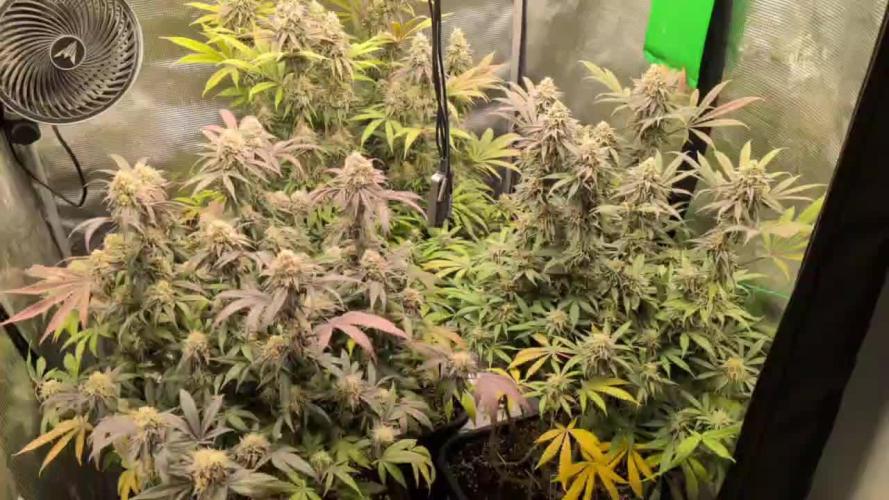
Final few weeks left of the Bubba cheesecakes just tapwater from now on no microben 👌

Likes
15
Share


@Skinnytalls420
Follow
So this was a simple going grow!!! It’s strange how the hot so big under the light! I had one blue cheese under the same light and tent and it was way smaller!! Anyway 1 of these has come out perfect very happy the other two I’m not to sure the hairs were still pointing up but I really don’t have the time to have them going another week there already over the time they was supposed to be done but yeah I’d say out of 10 I’d rate this blue cheese growing experience a 6 out of 10 hopefully this improves when it’s dry!!!

Likes
31
Share


@Mr_ZAF_Budz
Follow
Hello Canna Fam,
So the end of week 8 has arrived and the ladies have started to bud up😎
I did a bit of defoliation last night to the Six Shooter and the Girl Scout Cookies as they were very bushy. Hopefully I wasn’t too heavy handed with the plucking and the growth does not slow down too much.
The LSD-25 and the Gorilla Cookies are the most developed in terms of bud size and trichomes production but the Girl Scout Cookies is closing in nicely.
I hope you all enjoy the progress pics and happy growing✌️🏼

Likes
8
Share


@SkunkyDog420
Follow
Hallo zusammen 🤙.
Habe sie heute geerntet.
Sie wird jetzt 3 Wochen trocknen und dann kommt die Beurteilung.
Bis in 3 Wochen

Likes
5
Share


@GirlGoneWeed
Follow
Here we grow!
These are clones of Mandarin Cookies, rooted in peat plugs, under low light T5 Sunblaster 24w, inside a dome, keeping humidity levels high.

Likes
11
Share


@Souri93
Follow
Début du deuxième mois les pistils deviennent marron et les tricomes sont tous laiteux il leur reste un bon deux semaine de rinçage est elle sera prête elle dégage déjà une odeur agrume citronné sucre surtout quand je touche les tète avec mes doigt il ce colle entre eux magique cette tropicanna cookies
Likes
43
Share


@TheCannaProphet
Follow
~ GG4 SHERBET FAST FLOWER by FastBuds ~
Well fam, here we go again with another epic strain from FastBuds Fast Flowering stable. After having such tremendous success growing their Gorilla Cookies Fast Flower outdoors last year, I've decided to run another of their fast flowering strains outdoors this year... GG4 Sherbet Fast Flower!
The best description of this awesome cultivar comes directly from my friends at FastBuds which is as follows:
"Bred from extremely potent and flavorful Gorilla Glue and Orange Sherbet genetics, GG4 Sherbet FF (Fast-Flowering) takes all the best traits to the next level, offering a high-yielding strain that can produce up to 600 g/m2 in a 7-week flowering time. This super resilient Indica-leaning hybrid thrives indoors and outdoors, and in all types of climates while producing mouth-watering sweet, fruity, spicy and earthy terps that translate into a delicious sugary hazelnut aroma. Expect an extremely relaxing and overall happy effect that’ll leave you with a huge smile from ear to ear. It’s the perfect strain for growers of all levels of experience seeking low-maintenance yet highly productive photoperiod varieties that deliver quality and quantity without extra effort.
GG4 Sherbet FF grows chunky buds with long dark orange hairs and spade-shaped calyxes that get encrusted with trichomes by harvest time, giving them a gorgeous silvery-white appearance. This medium-sized photoperiod can reach up to 200 cm in height and yields up to 650 g/m2 while developing that typical hybrid structure. GG4 Sherbet FF grows with a stocky, bushy appearance, developing one sturdy main cola and fat side branches that support huge yields without much effort. This super-fast variety produces distinctive light-green buds with a high bud-to-leaf ratio, making your trimming sessions a breeze. It’s a top-notch resin producer that doesn’t need much maintenance and will thrive in almost every climate, rewarding growers of all levels with extremely flavorful resin that makes for outstanding hash end extracts."
________________________________________________________________________________________________________________________________________________________________________________________________________________________________________________________________________________________________________________________
The Setup:
This is going to be an outdoor grow, but I have started the GG4 Sherbet Fast Flower indoors as our weather is still too cold to put her outside (nighttime temp's dipping regularly into the 30's℉).
The plan is simple... let her grow inside under a 19/5 light schedule until the nighttime temperatures stay above the mid 40's℉, at which point she'll be moved outside and transplanted into the soil which I have already setup and inoculated with beneficial microbes, and then let the fun begin!🤪💚
________________________________________________________________________________________________________________________________________________________________________________________________________________________________________________________________________________________________________________________
Weekly Updates:
9/12- Here we GO fam! The time is drawing near for the FastBuds GG4 Sherbet Fast Flower to finally be harvested and I won't lie, I am thankful that she's just about finished as our weather has turned cool and wet, which is a HUGE no bueno for big dense cannabis flowers which are prone to Boytris(bud rot).
9/14- Today I took some final pic's and a video of the FastBuds GG4 Sherbet Fast Flower in preperation of the harvest. I also defoliated her, removing a ton of shade leaves which will hopefully help with air circulation around her flowers.
9/15- Chop Day for the GG4 Sherbet Fast Flower from FastBuds! I got up just before sunrise today and took her down. After cutting off sections of the plant, I then transferred them inside to a climate controlled room. Once hung, I set the RH in the room to 50% for the first 24-36 hours to knock down the enormous moisture content present when the plants are freshly hung. I also have the temperature set to 65℉ and have two fans circulating the air in the room without blowing directly onto the hanging plants (very important). The GG4 will hang for 10-12 days, at which point I'll be locked in 'Trim Jail' for a few days at least! Thank you so very much for following along this journey with me and for all the positivity and love that has been expressed!😎🙏💚💚💚 See you at the Harvest Report!
Thank you for checking out my diary, your positive comments and support make it all worthwhile! 💚Growers Love!💚😎🙏


Likes
37
Share


@boneyjones77
Follow
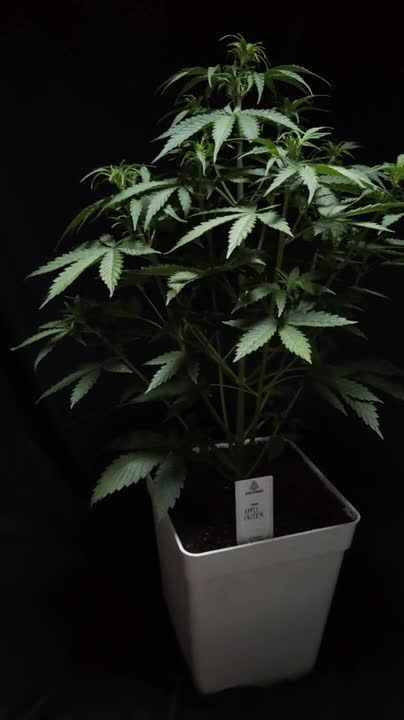
HELLO FARMERS , ITS YOUR FRIENDLY BARN RAT BONEY !
Glad to be back for another week, not too much different with my watering techniques.
Just getting into some training techniques and defoliation.
Been messing around with 432 Hz half an hour twice a day .



Likes
2
Share


@Almo420
Follow
I'm just all to excited with how the next two weeks are gonna span out😁
Started giving only water this week as the plants are fading fast, and im seeing an amber trichome here or there.
Not to long now!😄
Likes
61
Share


@DutchFarmer
Follow
She has returned with two 2 tops
Lets hope she turns purple!
She is so strong 💪 and stable im impressed with Kannabia Genetics !
I LOVE YOU KANNABIA GENETICS! 😍😘
Check out my Cannabis Community, please👇like👇, follow, comment, and subscribe to my YouTube channel👇. ❄️🌱🍻
https://www.youtube.com/@DutchF4rmer
Join our cannabis community community for weekly giveaways 👌
(Discord Server)
https://discord.gg/VMu6rH4a7V
It will be appreciated! ❤️
Happy Growing 🌱🌱🌱


Likes
6
Share


@captaincondor
Follow
I've given her 3 doses of dragon force and will just use filtered water for the next two waterings I am hoping to chop her this week , I need her down to make way for my purple queen. I am sure she is ready to chop now but she is still dark green so I will be patient


Likes
2
Share

@BennyBud2210
Follow
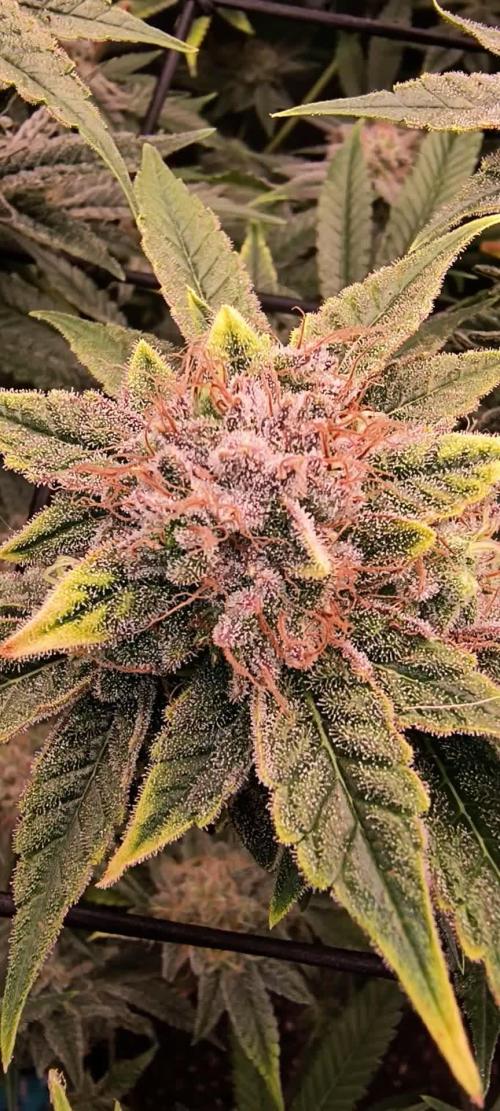
Die letzte Woche...
Alles ohne Dünger oder Booster...
Im Nachhinein hätte ich den PH Wert messen sollen..
Nun ja, ist notiert für den nächsten Grow 🤣
Likes
1
Share


@undermink
Follow
I stopped giving them Bio Grow since the harvest is near.. I cut some yellow leaves and they all look beautiful :) Can't wait until harvest :D


Likes
8
Share


@Piro420
Follow
Triming a bunch of leaves and branches 10mins in morning ten at night before co2 kicks on.
I flipped sooner then normal because they where very aggressive. And they are hitting the lights at day 21 :(
I was able to to creep the light up 3 inches with some temporary straps touching the light.
I hope that 3 inches is all I need (that's what she said)..
Otherwise plant is amazingly aggressive and smelly lots of tops and sites..
Likes
151
Share


@CANNASIM
Follow
------SETUP------
-HOMEBOX TRIANGLE+ .4sqm
-BOSSLED LIGHTS 250W REAL
-INTAKE FAN HIGH PRO - 107 m³/h
-EXHAUST FAN PROFAN - 220 m³/h
-TWO SMALL VENT FANS
-HUMIDIFYER WHEN NEEDED
-AC IN THE ROOM
-15L SMARTPOTS
-50%PERLITE 50%SPHAGNUM PEAT MOSS
------STRAIN------
SEEDSMAN BLUEBERRY = SM BB.
Blueberry was originally created by Canadian DJ Short and dates back to the 1970s. It is a 3-way indica-dominant hybrid cross of an Afghani strain together with Thai and a Purple Thai. When grown in good conditions it can grow into a fairly large plant displaying a range of red, purple and blue colours and producing very good yields.
Another quality of Blueberry is that, although taking a while to cure out, when correctly prepared and packaged it has a very long shelf-life compared with many strains available today..
/BOUQUET
Unsurprisingly when fully-cured Blueberry has an incredibly fruity perfume along with the unmistakable sweet flavour of blueberry.
/EFFECTS
The effect is a pot smokers dream - a very potent yet happy high which is very euphoric yet relaxing and enduring.
------GENERAL COMMENT------
The first 7 days of this grow is almost complete, Blueberry and the AK47 germinated fine, had some issues with the Candy Kush Express, so the last seed is germinating, and seams that it will emerge soon! I'm optimistic, so basically till now we will do a free seed run, since this ones came with the genetics I purchased from seedsman and gyo green. 😎😛
-251217
First feed with a very light nutrient dose. Will implement some cal mag next water.
Humidity has been a little hard to control, is oscillating a lot.
------SM.BLUEBERRY COMMENT------
Development is ok, nothing overwhelming for now, lets see how things evolve. Still not convinced of the easy plugs, kind of hate them, direct soil seams more effective. 👍
Likes
34
Share


@Mom74
Follow
In dieser Woche haben wir das letzte mal entlaubt und kleine Triebe entfernt. Ab jetzt lassen wir die Pflanzen in Ruhe und werden nur noch bedarfsgerecht düngen.Der Geruch wird auch etwas intensiver.Einige Blüten glitzern schon . Vorwiegend die Indica Sorten sind mit Kristall belegt.
Heute habe ich mir einen Vaporisator bestellt. Mal sehen ob es was für mich ist. Bin ja wie gesagt Nichtraucher,möchte es aber wenigstens mal getestet haben. Könnt ihr euch noch an euer erstes Raucherlebnis erinnern? Habe als Automatik Caramel angebaut. Soll sehr köstlich und gut für Anfänger sein.
Letzte Woche hatte ich eine Fortbildung zu medizinischen Cannabis und der Verordnungsfähigkeit von Hilfsmitteln zum Inhalieren.War sehr spannend und ich hoffe es setzt sich durch. Oft hilft es besser als die hochpotenten Medikamente welche auch einiges an Nebenwirkungen mit sich bringen. Bin als Krankenschwester in der Palliativmedizin unterwegs.
Also Leute bleibt schön gesund und viel Spaß weiterhin beim Anbauen.

Likes
15
Share


@Huckleberry39
Follow
This plant is a beauty!! Ivamba little worried about how close she is to the light, but my light is as high as it can go and my plant is as low as it can go so, if anyone has any suggestions let me know. I am super happy with this 420 Fast Buds plant. Today is day 41 and this Gorilla Cookies is blowing my mind. Thank you 420 Fast Buds!!