Likes
Comments
Share

@Catawbiense
Follow
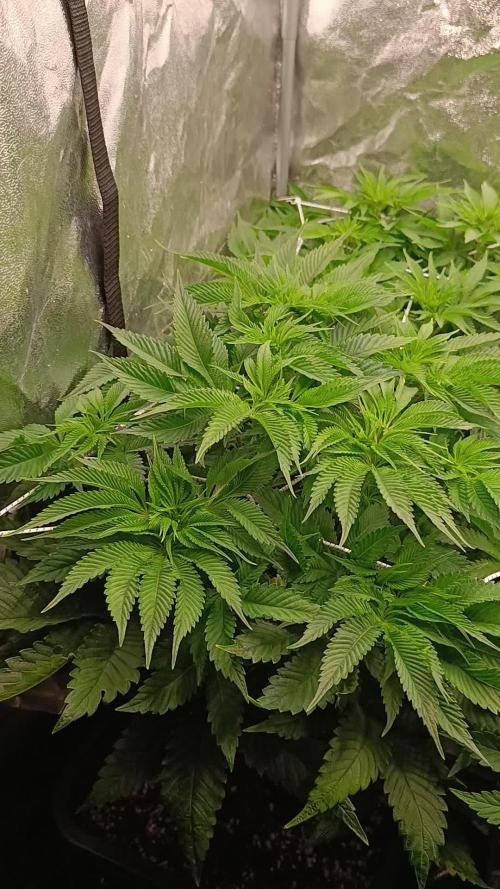
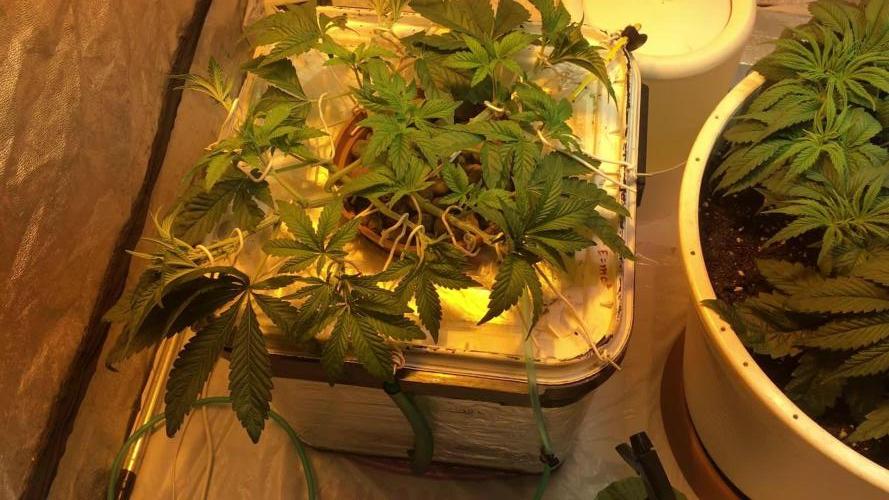
Umstellung auf 12/12 erfolgte diese Woche. Die Pflanzen haben sich gut vom CalMag-Mangel erholt und zeigen bereits Vorblüte. Wachstum ist kräftig, Blattfarbe gesund.
Das SCROG-Netz wurde abgesenkt, die Triebe werden weiterhin sanft unter das Netz geführt, um eine gleichmäßige Canopy zu erreichen. Zwei Pflanzen sind etwas höher. Aktuell wird mit je 1ml/L BioGrow BioBloom und Calmag gedüngt (PH 6.2). Tag 21 Blüte gibt es dann ein ordentliches lollipopping und eine moderate Entlaubung.
Soweit bin ich sehr zufrieden. Bin gespannt auf den Stretch, letzten Grow haben die Frosted Guavas sich nicht stark gestreckt. Allerdings sind die Bedingungen aktuell besser. Keine Trauermücken, effizientere Lampe und stabileres Klima.

Processing
Likes
2
Share


@highview_autoflowers1
Follow
It's getting cold don't know how good she will hold up
Likes
9
Share


@Ukgrower99
Follow
Final week of flower she's only been given plane water she will be cut down in a few days the dark colour on the leafs are really showing

Likes
62
Share


@masterofsmeagol
Follow
8/9 It didn't rain last night and there is no rain in the forecast so I lightly watered. I actually had a copper fungicide in my hand yesterday but decided against buying it after research saying it burn cannabis. I didn't research enough and I may end up going that route. I may also move the problem plant. We shall see. Instead I treated all plants early this morning with the amazing Dr. Zymes. I'll follow up with another form of treatment and see what happens. All around I can see foliage with septoria. Not around my grow but still. It's in the area. Burdocks, maple trees and other small foliage on the ground. I hate having to make decisions like this. Otherwise plants seem to be doing great. Definitely transitioning to flower. Found moth eggs and damage on inner leaves in the pm.
8/10 No water today as the plants were soaked. It rained last night. 68 at 9am. This morning I defoliated and really got on the inside of my plants. I wanted to see if I could find what was damaging leaves. I found an earwig on a plant. That makes me fairly certain they are responsible for the sporadic damage I'm finding. Lower branches have some small leaves dying and in a couple spots it looks like the ate off a bud site. It was were I would've lollipoped but still. I think another application of Spinosid may be needed. Plants are definitely in flower with the dreamcatcher's leading the bunch with small little buds formed. Flowering seems much later than the strains I grew last year. I need to go in the cage at night with some kind of light to see what's going on then. pH meter wouldn't read.
8/11 It had rained earlier but it's been so hot that the plants needed water. I watered but not thoroughly as pots weren't completely dried out. I didn't see any earwigs. I was prepared this time with a spray bottle with dawn. That is supposably supposed to kill them on contact. Unfortunately I haven't had the opportunity to test it. I did find a jpn beetle this morning. I believe they may be responsibly for some of the damage I've noticed. I had a very early appointment this morning so I didn't get a chance to take any pictures or a chance to feed. Plants are definitely flowering. The seedling (I say seedling only because the others are clones) in the 50 gallon pot hasn't been watered as much and I'm not sure if I have been watering enough. I figured the rain would help but I noticed that the soil is very compressed and appeared dry before watering. I also had no idea how much the nutrients effect the pH of the water after added. I have the drops I use to measure pH but that's basically impossibly with big bloom murking the water all up. Also I don't think the plant I was going to cull has leaf septoria. I think it's just been ravaged by pests and has white powder mildew. I will continue to monitor. Temps are supposed to be very high the next few days.
8/12 Fed two gallons to the garden today. Used tiger bloom as I think it plays better. I'll use the Kool bloom though. I do need to say my plants were much further along by now last year. Different strains though. Added a pinch of pH up but it appears the pH is fine after mixing my nutes. Rained AGAIN last night. All this rain brings the earwigs out to climb plants. I included a picture of the damage. I need to do another app of Spinosid it appears. Then alternate with a spray treating the wpm that I see. It's a bad year for mildew. UPDATE 90 degrees out at 2pm. Defoliated the dead spots inside and looked to see what kind and how much damage from ear wigs. It's all minor but still. A few lower branches (bottom that probably should've been clipped) have shoots that are damaged. At spots it appears the earwigs lollipopped the stem. Nothing up high or middle though. Buds are developing and they (luckily) haven't gotten there. I've tried a few things already but today I put petroleum jelly on all my stocks and supports so hopefully those little bastards can't get up to the plant. If the rain laid off it would probably be better. Not a single aphid though and no signs of typical cannabis pests so I guess it's a little give and take. Made a video but will have to upload later.
8/13 Didn't water this morning. A storm came through at 6pm last night. Torrential rain and high winds but no damage. Found more moth eggs and two spots where leaves were rolled up with webbing and inch worms emerged when opened. Other growers suggested the damage could be from inch worms so I think before I do much else I'll apply BT tonight.today is going to be even hotter than yesterday. 85 at 9:30. Will update as I progressed. Added a video.
8/14 Watered this morning as it's been dreadfully hot. In the 90s with super high humidity. Found another leaf with moth eggs and a inch worm crawling on a bud. I did a treatment of BT this morning that I hope will take care of things. Plants look amazing. Walking down to the cage I get hit in the face with a pungent skunky smell. Plants are huge and seem to be flowering more everyday. Strange the amount of difference I notice in just a days time.
8/15 No water today as it rained yesterday off and on and soil was damp. Plants are flowering nice with dreamcatcher in the lead and ice cream cake bringing up the rear. Everyday the little buds seem a little bigger. I will probably need to do another application of BT since it rained yesterday. Still finding some lower branches stripped of new growth shoots where a bud site should be. I don't know if inch worms are capable of this or whether it's earwigs. I WILL find out though. I'll go out LATE tonight and look with a flashlight and spray bottle. Smell is incredible. As long as we have a nice September and a warm fall this is going to be a good year. It got down to like 50 last night but it was 90 yesterday. These plants are resilient to take temp changes like that without it phasing them.


Likes
74
Share


@AsNoriu
Follow
Day 92. First of 3 girls down. Amazing, super productive strain !!! Loved that girl a lot !
Others still to come...
Day 101. #1 is jared and #2 is chopped, busy day !
Day 111. #2 is Jared. Only Monster girl left. She is still pushing in ex dry tent.
Day 125. Last girl is down !
Day 135. 240 g of nugs from her !!!! My record breaker by a mile !
Happy Growing !!!


Processing
Likes
8
Share


@Lazuli
Follow
the flowering starts to kick in now, the stems of this plant smell like cherry bubblegum with a hint of glue

Likes
6
Share


@mikheil007
Follow
In my opinion it's last week for Girl Scout Cookies Auto and for Power Plant Auto tilll harvest, how do you think?? Vanilla Latte Auto is on it's 3rd week of flowering period and is very strong and beautifull plant


Likes
8
Share

@tiboosgarden
Follow
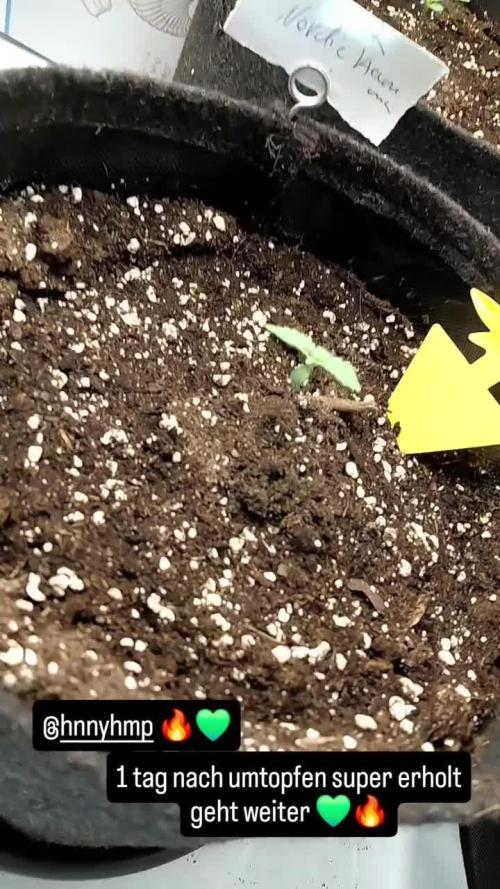
Letsee Gooo 💚💚 nach 6 tagen in 11l Umgetopft und gleich super angenommen als ob sie nicht umgetopft wurde 💚💚
Likes
3
Share

@lasonda
Follow
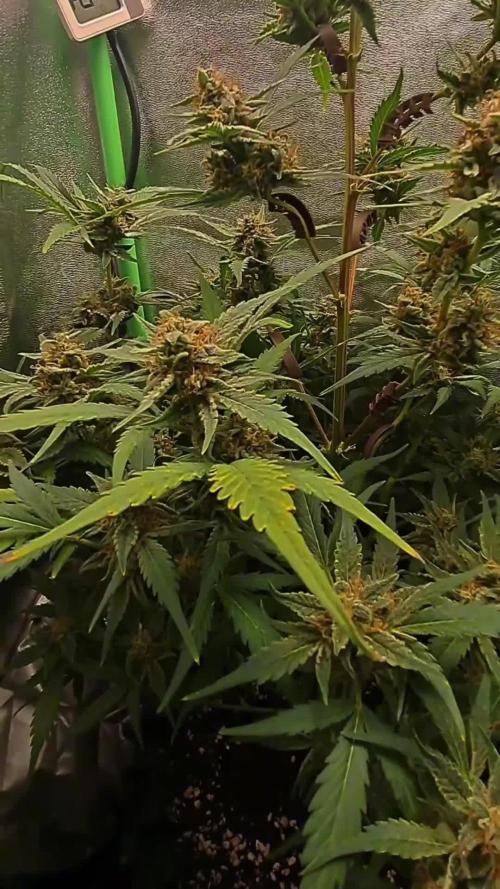
Flowering is going well, I removed Big Bud and introduced Overdrive. The buds are already full of resin and as you can see they're already tending to orange, I'm really curious to see what the final product will be like. 💪😋😊

Likes
14
Share


@Black_Widow
Follow
привет садоводы
началась 4 неделя
растение выглядит хорошо , цвет листьев хороший

Likes
5
Share


@Mr_nugs_lover_David
Follow
Healthy looking lady, although she's having to deal with a fungus gnats pest she's growing super fast and "healthy" not as healthy as she should but healthy anyways. She's gonna make a huge change once I apply the nematode called steinernema feltiae to finally get rid of gnats, peace out everybody! 💚❤️💛


Likes
58
Share

@Natrona
Follow
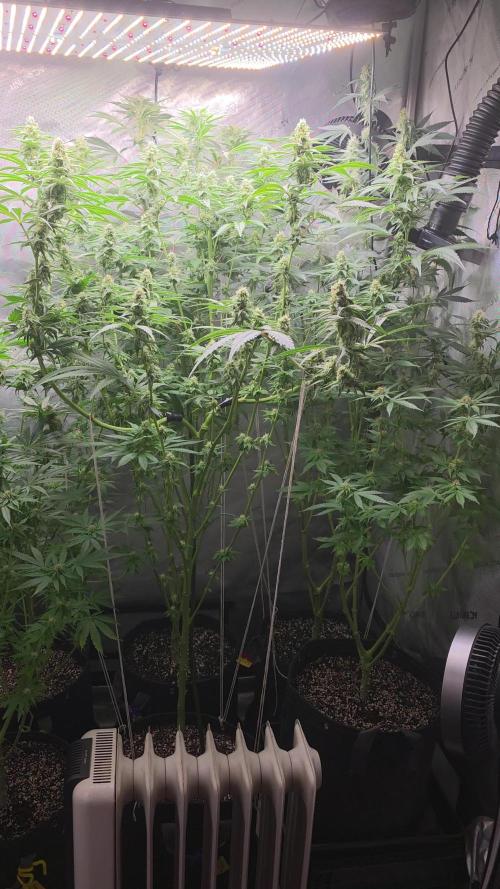
Strawberry Cadillac – STRNG Seeds
W12F3 1/25-31
I fed on 1/24 but Cadillac#1 needs more frequent watering than the others. Watered ph6.4 on 1/26 with another gallon. She is the largest and dries out next to the heater.
1/27 TPS1 14ml/g
Silica Gold 3ml/g
1/27 73 6.5 ph & 935 ppm
1/27 66.3F, 6.6 ph & 1014 ppm
To balance out the feed solution, I blend some of one bucket into the other and then back to the first bucket. I do this a couple of times to even out the PPM and temperature.
Strawberry Cadillac #1 51” #2 52” each drinks 1.5 gal
Strawberry Trop Cherry #1 37” #2 57” #2 drinks 1.5 gal #1 only 1 gal
Straw-Lectric Lemonade #1 40” #2 50” both drink 1 gal.
Other than bud development, they should not stretch any more.
1/29 I did the final defoliation on all strawberry gals. video
1/30 TPS1 14ml/g
Silica Gold 3ml/g
65.6f 6.3 ph & 1110 ppm
66.3f, 6.3 ph & 1120 ppm These are after blending the buckets.
Important dates
11/9 Germination
11/25 Transplant to 1.5 gal,
12/1 Topped, Pinned and removed 2 large center leaves
12/5 Repositioned pins and removed lowest fan leaves
12/16 Topped 4 tops on each plant except Cadillac1 (first topping) and put manuka honey on the cut.
12/24 Transplant to 5 gal
12/27 Defoliate all
12/28 Flip to 12/12
1/05 Supercrop Cadillac #1 at the joint where I topped her.
1/11 !st flower week defoliation and lollipop for all the Strawberry collection.
1/16 More super cropping of Cadillac1 and 1st time Trop Cherry2.
1/29 I did the final defoliation on all strawberry gals.
Stay green, growers love 💚🌿
💫Natrona💫
Likes
34
Share


@Ultraviolet
Follow
Yellow butterfly came to see me the other day; that was nice.
Starting to show signs of stress on the odd leaf, localized isolated blips, blemishes, who said growing up was going to be easy!
Smaller leaves have less surface area for stomata to occupy, so the stomata are packed more densely to maintain adequate gas exchange. Smaller leaves might have higher stomatal density to compensate for their smaller size, potentially maximizing carbon uptake and minimizing water loss. Environmental conditions like light intensity and water availability can influence stomatal density, and these factors can affect leaf size as well. Leaf development involves cell division and expansion, and stomatal differentiation is sensitive to these processes. In essence, the smaller leaf size can lead to a higher stomatal density due to the constraints of available space and the need to optimize gas exchange for photosynthesis and transpiration. In the long term, UV-B radiation can lead to more complex changes in stomatal morphology, including effects on both stomatal density and size, potentially impacting carbon sequestration and water use. In essence, UV-B can be a double-edged sword for stomata: It can induce stomatal closure and potentially reduce stomatal size, but it may also trigger an increase in stomatal density as a compensatory mechanism. It is generally more efficient for gas exchange to have smaller leaves with a higher stomatal density, rather than large leaves with lower stomatal density. This is because smaller stomata can facilitate faster gas exchange due to shorter diffusion pathways, even though they may have the same total pore area as fewer, larger stomata. Leaf size tends to decrease in colder climates to reduce heat loss, while larger leaves are more common in warmer, humid environments. Plants in arid regions often develop smaller leaves with a thicker cuticle and/or hairs to minimize water loss through transpiration. Conversely, plants in wet environments may have larger leaves and drip tips to facilitate water runoff. Leaf size and shape can vary based on light availability. For example, leaves in shaded areas may be larger and thinner to maximize light absorption. Leaf mass per area (LMA) can be higher in stressful environments with limited nutrients, indicating a greater investment in structural components for protection and critical resource conservation. Wind speed, humidity, and soil conditions can also influence leaf morphology, leading to variations in leaf shape, size, and surface characteristics. Small leaves: Reduce water loss in arid or cold climates.
Environmental conditions significantly affect gene expression in plants. Plants are sessile organisms, meaning they cannot move to escape unfavorable conditions, so they rely on gene expression to adapt to their surroundings. Environmental factors like light, temperature, water, and nutrient availability can trigger changes in gene expression, allowing plants to respond to and survive in diverse environments.
Depending on the environment a young seedling encounters, the developmental program following seed germination could be skotomorphogenesis in the dark or photomorphogenesis in the light. Light signals are interpreted by a repertoire of photoreceptors followed by sophisticated gene expression networks, eventually resulting in developmental changes. The expression and functions of photoreceptors and key signaling molecules are highly coordinated and regulated at multiple levels of the central dogma in molecular biology. Light activates gene expression through the actions of positive transcriptional regulators and the relaxation of chromatin by histone acetylation. Small regulatory RNAs help attenuate the expression of light-responsive genes. Alternative splicing, protein phosphorylation/dephosphorylation, the formation of diverse transcriptional complexes, and selective protein degradation all contribute to proteome diversity and change the functions of individual proteins.
Photomorphogenesis, the light-driven developmental changes in plants, significantly impacts gene expression. It involves a cascade of events where light signals, perceived by photoreceptors, trigger changes in gene expression patterns, ultimately leading to the development of a plant in response to its light environment.
Genes are expressed, not dictated! While having the potential to encode proteins, genes are not automatically and constantly active. Instead, their expression (the process of turning them into proteins) is carefully regulated by the cell, responding to internal and external signals. This means that genes can be "turned on" or "turned off," and the level of expression can be adjusted, depending on the cell's needs and the surrounding environment. In plants, genes are not simply "on" or "off" but rather their expression is carefully regulated based on various factors, including the cell type, developmental stage, and environmental conditions. This means that while all cells in a plant contain the same genetic information (the same genes), different cells will express different subsets of those genes at different times. This regulation is crucial for the proper functioning and development of the plant.
When a green plant is exposed to red light, much of the red light is absorbed, but some is also reflected back. The reflected red light, along with any blue light reflected from other parts of the plant, can be perceived by our eyes as purple.
Carotenoids absorb light in blue-green region of the visible spectrum, complementing chlorophyll's absorption in the red region. They safeguard the photosynthetic machinery from excessive light by activating singlet oxygen, an oxidant formed during photosynthesis. Carotenoids also quench triplet chlorophyll, which can negatively affect photosynthesis, and scavenge reactive oxygen species (ROS) that can damage cellular proteins. Additionally, carotenoid derivatives signal plant development and responses to environmental cues. They serve as precursors for the biosynthesis of phytohormones such as abscisic acid () and strigolactones (SLs). These pigments are responsible for the orange, red, and yellow hues of fruits and vegetables, while acting as free scavengers to protect plants during photosynthesis.
Singlet oxygen (¹O₂) is an electronically excited state of molecular oxygen (O₂). Singlet oxygen is produced as a byproduct during photosynthesis, primarily within the photosystem II (PSII) reaction center and light-harvesting antenna complex. This occurs when excess energy from excited chlorophyll molecules is transferred to molecular oxygen. While singlet oxygen can cause oxidative damage, plants have mechanisms to manage its production and mitigate its harmful effects.
Singlet oxygen (¹O₂) is considered a reactive oxygen species (ROS). It's a form of oxygen with higher energy and reactivity compared to the more common triplet oxygen found in its ground state. Singlet oxygen is generated both in biological systems, such as during photosynthesis in plants, and in cellular processes, and through chemical and photochemical reactions. While singlet oxygen is a ROS, it's important to note that it differs from other ROS like superoxide (O₂⁻), hydrogen peroxide (H₂O₂), and hydroxyl radicals (OH) in its formation, reactivity, and specific biological roles. Non-photochemical quenching (NPQ) protects plants from damage caused by reactive oxygen species (ROS) by dissipating excess light energy as heat. This process reduces the overexcitation of photosynthetic pigments, which can lead to the production of ROS, thus mitigating the potential for photodamage. Zeaxanthin, a carotenoid pigment, plays a crucial role in photoprotection in plants by both enhancing non-photochemical quenching (NPQ) and scavenging reactive oxygen species (ROS). In high-light conditions, zeaxanthin is synthesized from violaxanthin through the xanthophyll cycle, and this zeaxanthin then facilitates heat dissipation of excess light energy (NPQ) and quenches harmful ROS.
The Issue of Singlet Oxygen!!
ROS Formation: Blue light, with its higher energy photons, can promote the formation of reactive oxygen species (ROS), including singlet oxygen, within the plant.
Potential Damage: High levels of ROS can damage cellular components, including proteins, lipids, and DNA, potentially impacting plant health and productivity.
Balancing Act: A balanced spectrum of light, including both blue and red light, is crucial for mitigating the harmful effects of excessive blue light and promoting optimal plant growth and stress tolerance.
The Importance of Red Light:
Red light (especially far-red) can help to mitigate the negative effects of excessive blue light by:
Balancing the Photoreceptor Response: Red light can influence the activity of photoreceptors like phytochrome, which are involved in regulating plant responses to different light wavelengths.
Enhancing Antioxidant Production: Red and blue light can stimulate the production of antioxidants, which help to neutralize ROS and protect the plant from oxidative damage.
Optimizing Photosynthesis: Red light is efficiently used in photosynthesis, and its combination with blue light can lead to increased photosynthetic efficiency and biomass production.
In controlled environments like greenhouses and vertical farms, optimizing the ratio of blue and red light is a key strategy for promoting healthy plant growth and yield.
Understanding the interplay between blue light signaling, ROS production, and antioxidant defense mechanisms can inform breeding programs and biotechnological interventions aimed at improving plant stress resistance. In summary, while blue light is essential for plant development and photosynthesis, it's crucial to balance it with other light wavelengths, particularly red light, to prevent excessive ROS formation and promote overall plant health. Oxidative damage in plants occurs when there's an imbalance between the production of reactive oxygen species (ROS) and the plant's ability to neutralize them, leading to cellular damage. This imbalance, known as oxidative stress, can result from various environmental stressors, affecting plant growth, development, and overall productivity.
Causes of Oxidative Damage: Abiotic stresses: These include extreme temperatures (heat and cold), drought, salinity, heavy metal toxicity, and excessive light. Biotic stresses: Pathogen attacks and insect infestations can also trigger oxidative stress. Metabolic processes: Normal cellular activities, particularly in chloroplasts, mitochondria, and peroxisomes, can generate ROS as byproducts. Certain chlorophyll biosynthesis intermediates can produce singlet oxygen (1O2), a potent ROS, leading to oxidative damage. ROS can damage lipids (lipid peroxidation), proteins, carbohydrates, and nucleic acids (DNA). Oxidative stress can compromise the integrity of cell membranes, affecting their function and permeability. Oxidative damage can interfere with essential cellular functions, including photosynthesis, respiration, and signal transduction. In severe cases, oxidative stress can trigger programmed cell death (apoptosis). Oxidative damage can lead to stunted growth, reduced biomass, and lower crop yields.
Plants have evolved intricate antioxidant defense systems to counteract oxidative stress. These include: Enzymes like superoxide dismutase (SOD), catalase (CAT), and various peroxidases scavenge ROS and neutralize their damaging effects. Antioxidant molecules like glutathione, ascorbic acid (vitamin C), C60 fullerene, and carotenoids directly neutralize ROS. Developing plant varieties with gene expression focused on enhanced antioxidant capacity and stress tolerance is crucial. Optimizing irrigation, fertilization, and other management practices can help minimize stress and oxidative damage. Applying antioxidant compounds or elicitors can help plants cope with oxidative stress. Introducing genes for enhanced antioxidant enzymes or stress-related proteins over generations.
Phytohormones, also known as plant hormones, are a group of naturally occurring organic compounds that regulate plant growth, development, and various physiological processes. The five major classes of phytohormones are: auxins, gibberellins, cytokinins, ethylene, and abscisic acid. In addition to these, other phytohormones like brassinosteroids, jasmonates, and salicylates also play significant roles.
Here's a breakdown of the key phytohormones:
Auxins: Primarily involved in cell elongation, root initiation, and apical dominance.
Gibberellins: Promote stem elongation, seed germination, and flowering.
Cytokinins: Stimulate cell division and differentiation, and delay leaf senescence.
Ethylene: Regulates fruit ripening, leaf abscission, and senescence.
Abscisic acid (ABA): Plays a role in seed dormancy, stomatal closure, and stress responses.
Brassinosteroids: Involved in cell elongation, division, and stress responses.
Jasmonates: Regulate plant defense against pathogens and herbivores, as well as other processes.
Salicylic acid: Plays a role in plant defense against pathogens.
1. Red and Far-Red Light (Phytochromes):
Red light:
Primarily activates the phytochrome system, converting it to its active form (Pfr), which promotes processes like stem elongation and flowering.
Far-red light:
Inhibits the phytochrome system by converting the active Pfr form back to the inactive Pr form. This can trigger shade avoidance responses and inhibit germination.
Phytohormones:
Red and far-red light regulate phytohormones like auxin and gibberellins, which are involved in stem elongation and other growth processes.
2. Blue Light (Cryptochromes and Phototropins):
Blue light:
Activates cryptochromes and phototropins, which are involved in various processes like stomatal opening, seedling de-etiolation, and phototropism (growth towards light).
Phytohormones:
Blue light affects auxin levels, influencing stem growth, and also impacts other phytohormones involved in these processes.
Example:
Blue light can promote vegetative growth and can interact with red light to promote flowering.
3. UV-B Light (UV-B Receptors):
UV-B light:
Perceived by UVR8 receptors, it can affect plant growth and development and has roles in stress responses, like UV protection.
Phytohormones:
UV-B light can influence phytohormones involved in stress responses, potentially affecting growth and development.
4. Other Colors:
Green light:
Plants are generally less sensitive to green light, as chlorophyll reflects it.
Other wavelengths:
While less studied, other wavelengths can also influence plant growth and development through interactions with different photoreceptors and phytohormones.
Key Points:
Cross-Signaling:
Plants often experience a mix of light wavelengths, leading to complex interactions between different photoreceptors and phytohormones.
Species Variability:
The precise effects of light color on phytohormones can vary between different plant species.
Hormonal Interactions:
Phytohormones don't act in isolation; their interactions and interplay with other phytohormones and environmental signals are critical for plant responses.
The spectral ratio of light (the composition of different colors of light) significantly influences a plant's hormonal balance. Different wavelengths of light are perceived by specific photoreceptors in plants, which in turn regulate the production and activity of various plant hormones (phytohormones). These hormones then control a wide range of developmental processes.


Likes
Comments
Share


Likes
45
Share

@JaramnieJazz
Follow
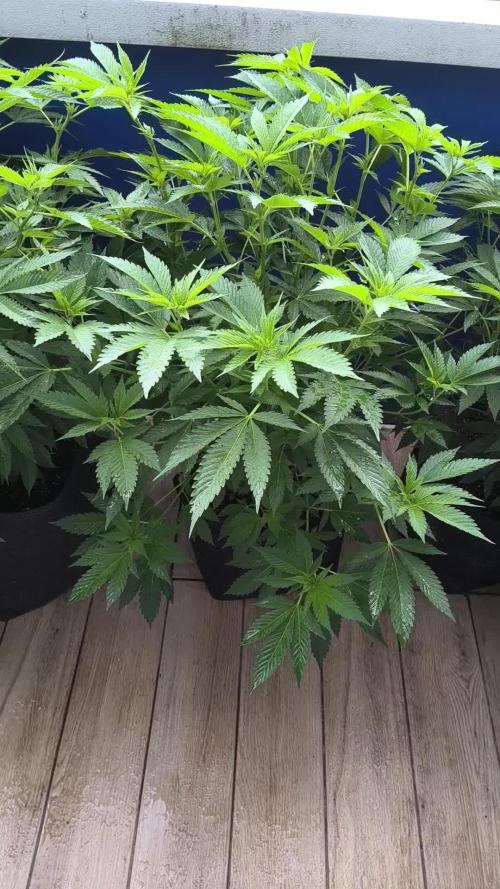
03.06.26 Erster Tag der 19 Veg Woche ...Läuft im Video die Reihenfolge ist: Black Lemon, Sour Diesel, Chocobang, GDP, Apple Betty, Skunk Haze
04.06.26 Letzte Tage nur Regen hoffe es wird besser die Tage und Wochen ist aber noch Zeit bis zur Blüte die Frage ist nur wann, wie die Jahre zuvor am 01.08 oder doch früher wie letztes Jahr und es regnete nur und versaute mir die Ernte letztes Jahr
Daumen drücken
05.06.26 Läuft die kleinen wachsen und scheinen immer noch nicht hungrig zu sein haben immer noch ein schönes Grün wäre cool wenn ich gar nicht mehr füttern müsste aber wenn ich sie zum 01.08.26 in die Blüte schicke werden sie wohl was haben müssen sind noch 2 Monate und 1 Monat sind sie schon in den end Töpfen wir werden sehen muss weiter beobachten werden 🏻 Peace
06.06.26 Läuft das Wetter scheint auch besser zu werden ich hoffe nur ich bekomme das hin alle Tops gut zu entwickeln weil es sind teilweise so über 30 Stück bei der Apple Betty zB
Und ich glaube ich benutze Mental Rainbow 🌈 zum Samen machen sie wird einfach Gang gebangt von allen Männchen die ich finde der name past ja auch Rainbow 🌈 alle Farben des Regenbogens werde dazu die Männchen falls ich welche finde mit ihr Weck bringen damit ich hier nur ausgewählte Äste bestäuben kann und sie wird ja.....,😚😘😍🌋❤️🔥❤️🌈
Hab an der Sour Diesel Rum gespielt und den einen doppelten trieb geteilt der andere hat sich von selbst geteilt 1 von den 2 wächst normal der andere aber als ob es immer noch 2 wären da es zur Seite wächst wie der trieb den ich geteilt habe jetzt liegt das Innere des stiehls frei hoffe das da kein Infekt/Pilz sich breit macht ansonsten werde ich ihn abschneiden muss weiter beobachtet werden Peace 🏻 🕊️
08.06.26 GDP geht ab
09.06.26 Läuft das Wetter ist leider Mies hoffe das geht nicht so weiter sonst endet es noch wie letztes Jahr


Likes
30
Share


@Hawkbo
Follow
The grow went well considering the circumstances. 3 grows horizontally until flower and needs support for the branches as the buds got so big. 2 was easier to manage it didnt need much support. Theres no waste from this strain, barely any trim and the trim there is is smokable it's so covered in frost. My meter got out of wack in late flower and I ended up giving a heavy feed which burnt the tips of the buds.

Likes
6
Share


@Organic473
Follow
The heat is really intense these days as I've noticed her leaves are curling up…she was transferred to the 5-gallon pot 2 days ago.