


Likes
Comments
Share

@MaltedMadness02
Follow
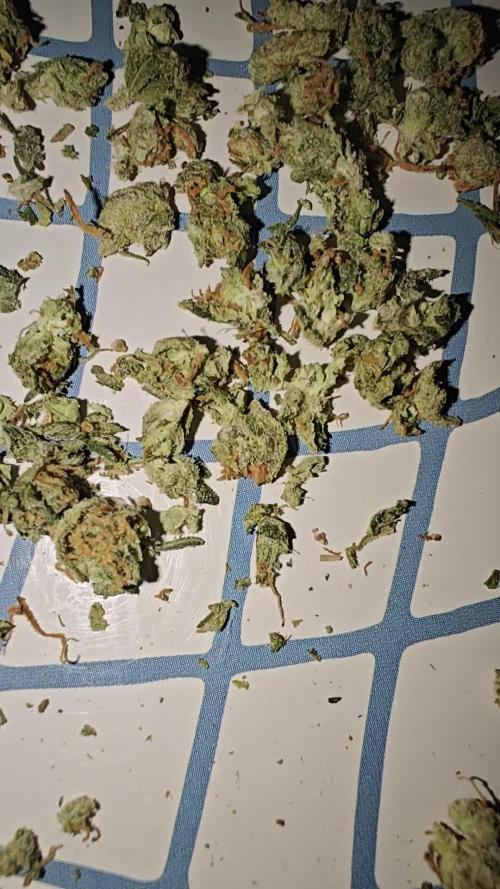
I chopped her down after taking a closer look at the trichromes, she was quite amber on some buds and I did make sure to check the calyxes, not the sugar leaves. Didn't want to risk over opening her, and I'm already nervous about drying so. Better to get it over with no? Low and slow. 60%rh and 60°F. My cheap equipment is struggling to keep the tent there, but it's chugging along. Anything id buy won't get here in time to save the harvest, so if it gets overdried.. it gets overdried. Its a bummer but what'll you do. This was a very educational experience for me, and my second plant (check out my new diary) will hopefully preform much better! Kudos!

Processing
Likes
5
Share


@I_roll_my_own_420
Follow
Hello growers! flowering is doing good, healthy and tough. cheers!

Likes
9
Share


@Krautbauern
Follow
The clone is in the same height as the rainbow triangle. we set the Forbidden Nectar a little bit up because she is the smallest one…indica dominant
After 25 days of flowering we recognized that the forbidden nectar is already starting to purple a little bit (last picture)

Likes
29
Share


@eldruida_lamota
Follow
Venga familia que ya viene la cosecha, que ganas que tenia ya de darles machetazo.
No veas que pinta que tienen estas plantas.
No son grandes pero si están bien gordas.
No soy de plantar autoflorecientes pero e de comentar que con este cultivo e hasta disfrutado. Pronto la cataremos 💨💨💨.
Agrobeta:
https://www.agrobeta.com/agrobetatiendaonline/36-abonos-canamo
Mars hydro:
Code discount: EL420
https://www.mars-hydro.com/
Hasta aquí es todo , espero que lo disfrutéis, buenos humos 💨💨.

Likes
7
Share


@Cultivatorcarlos
Follow
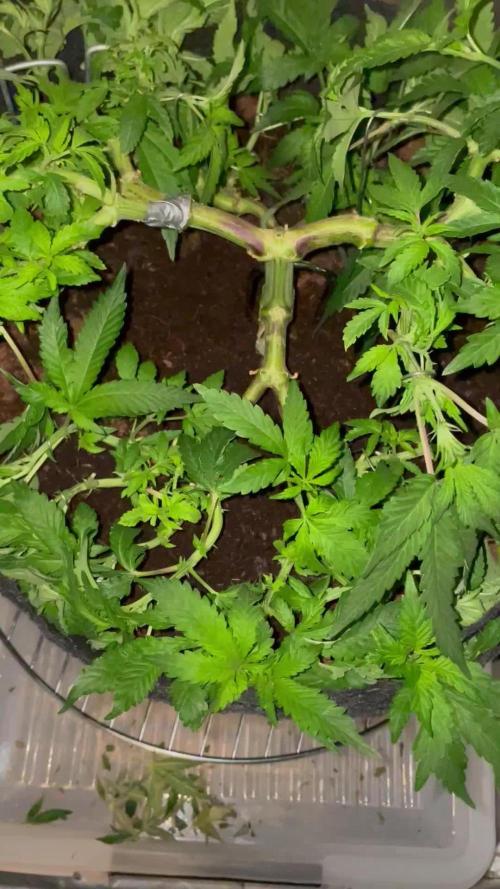
everything in the second week of flower went well. she really stretched and the buds quickly started getting fat. also every watering i would notice a very strong odor of weed.
december 22nd 2021: gaver her last half of gallon used in last feeding. also nothing was tested. ph tested at 6.6 last feeding and it usually comes out a little higher after a few days.
january 1st 2022 i noticed the first trichomes.






Likes
44
Share


@Buffynuffy
Follow
It’s amazing watching these plants grow, it’s been an experience already and so much to go with this grow and with all the learning to come I hope it looks okay to you guys anyone who would like to comment please do I’d love to hear other’s thoughts!
Likes
2
Share


@EyeMKing
Follow
Started the first top dressing of Gaia Green All Purpose and Power Bloom at a 50/50 ratio of 1tbsp/gal each.

Likes
8
Share


@Papastroumf
Follow
Day 66 : The lady seems to be stabilized with the burns , so i started some juices to her water in order to help her with fattening. Hope to wake her a bit and produce some terpenes.
Edit Day 70 : I increased again juices to 3ml / L. Also added 1ml / L CalMag. She started to turn purple.


Likes
Comments
Share

@AsNoriu
Follow
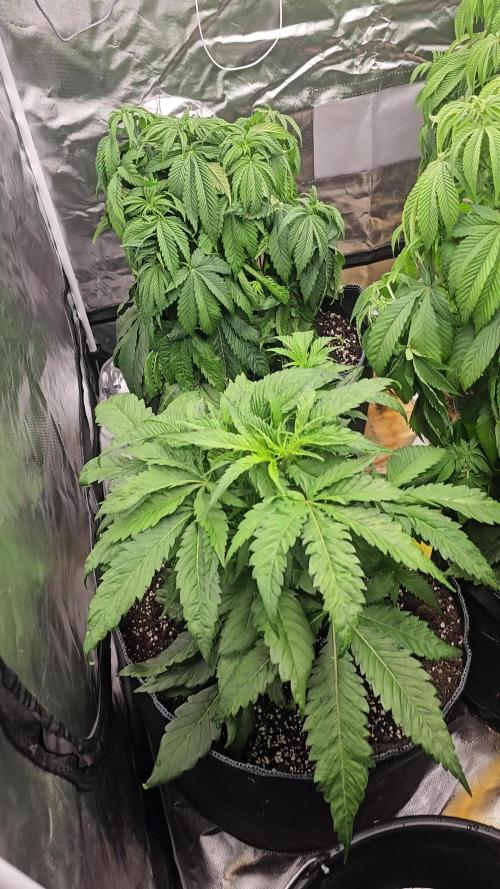
Day 42. Huge disaster !!!! i stucked at my house on the lake for 7 days, normally i water them every 4-5. This girl got biggest damage, her leaves folded like stairs on the pot. leaves were brittle and dry as paper. Lost a lot of foliage. If i would need to recomend most forgiiving strain - thats the one, girl coped with all the shit i gave her ...
Happy Growing !!!

Likes
8
Share


@Gorilla_alien
Follow
End of week 3 plants look healthy for the most part fed lightly once at the beginning of the week just water and recharge seems to be working great!!! Gave them their first nute feeding on day 20 at 1/4 strength using flora grow, flora micro, flora bloom, cal mag, and 1/2 teaspoon of recharge ph’d at 6.6 so hopefully we see some big growth this week!!!!


Likes
51
Share


@420DeepGrow
Follow
La cosecha de Smashberry Fumez ha sido un éxito rotundo! 🎉🍇 Los cogollos son simplemente impresionantes, densos, resinosos y con un aroma delicioso que promete mucho. 😍💨
No podría estar más contento con los resultados, todo gracias al gran trabajo de @XpertNutrients para mantener a las plantas sanas y fuertes.
Y, por supuesto, las luces de @MarsHydro hicieron su parte para maximizar el rendimiento y la calidad 🌟💡
¡Gracias a todos los que hicieron posible esta cosecha increíble 🔥🙌 .

Likes
9
Share


@my420experiment
Follow
Learning a ton as I go.
Started low stress training using rubberized wire poked down into the soil.
Spent a lot of time just tucking the fan leaves down.
I'm an idiot when it comes to watering.
I dont think I'm getting enough down to the bottom of the pot, but dont want to over water.
I'll just continue with what I'm doing.

Processing
Likes
7
Share


@greenflipcali89
Follow
Another week in the books and significant growth as I increase dosage of nutrients, closer to 100% full dosage. I have read mixed messages about feeding every watering, to every other, to once a week...full strength, 1/2 strength, etc etc. I decided to ease into the nutes and work my way up, and feed only weekly. Less is more! Wait for her to get a little bigger and more mature and will feel better feeding at 100% full dosage. Did some more LST, pulling down higher stems and continue to build the table.
Day 37: more growth; did some light defoliation to open up center; raised light to 18" (was at 15" in some spots) as it continues to grow.
Day 41: more growth; transplanted into 5 gal fabric pot; installed ScROG and will continue veg stage until rest of the plant catches up to at least a few inches above the screen
Likes
20
Share


@NoProbation4Weed
Follow
dry weight of buds after trimming = 93 gram and about 5 gram of Trim so 98g Total.
Actual plan was to leave the plant some more days but after seeing some Nanas developing inside the buds i decided to cut it at day 65 of flower.
great smell and cant wait to smoke the final product. All in all definetly a good strain for living soil.


Likes
10
Share


@GrowingGrannie
Follow
Good week... she's grown a lot, is looking VERY strong - #1's stem is already pretty thick for such a young plant.... so I think I'm going to let her get a couple more nodes on her and then top and clone her... #2 is a little weaker so I think I might top her this week. I've put them both on an aggressive veg feed and they're both responding very nicely to it... such a difference from autoflowers! I find it fascinating..... so much so that I tend to rather ignore them... for example, I think I MAY have given them a drink of something only 4 or 5 times in their lives (they've just celebrated their 4th week from seed)... never any complaints, never saying "hey, fool - pay attention to me!" .... I glance at them once a day and move on.... Still trying to decide where in my yard they're going to be planted - but I've got at least 4 more weeks before I'll feel comfortable enough with the weather to go dig a hole for them... SHOULD also start some LST, I suppose.... going to be relying on LST a lot outdoors so I can hopefully avoid the bud rot that plagued me last year...
Great fun!
May 4 - I've decided I'm going to top #1 today and stick the top in Clonex, into a RootRiot and plunk it into a DWC bucket ... so while I'll have these two plants out in the yard waiting for an October harvest, I can flip the clone indoors for an earlier harvest to see if I like the strain at all.... Hmmm... maybe I'll do that to both of them and keep one in veg while I flip one of them... This is kind of cool - I'm learning about all the possibilities growing photoperiods gives you... just amazing! I'm like a kid in a candy store! LOL! I'll put up a video when I top and clone... but don't take it as gospel because this will be my first time and I don't REALLY know what the hell I'm doing... just having fun and experimenting!
May 5 - Happy Cinco de Mayo! Didn't get around to topping and starting a clone yesterday... but I've just now posted up two videos - the first where I'm determining where to top - and the second, longer one, where I place the top I've just cut off into DWC to clone... or ATTEMPT to clone! LOL! God knows if this is going to work... if you've got any comments on what I've done, hints for a better way of doing things PLEASE comment below! I could use all the help I can get! Should I, for example, chop off the lower fan leaves of the top? Or are they needed for the top to survive? I can't help but think they're a pretty big drain on the poor thing...
#1, which is the one I topped, is really showing me she needs to get outside in the yard... her roots are starting to peek through the drainage hole at the bottom of the pot.... I THOUGHT a 2-gallon would be big enough to last at least a month and a half but..... I'm going to have to get serious about where to put these ladies!
Likes
Comments
Share

@MyLittleGarden
Follow
Vegetationswoche 6 - 26.05. – 01.06.2026
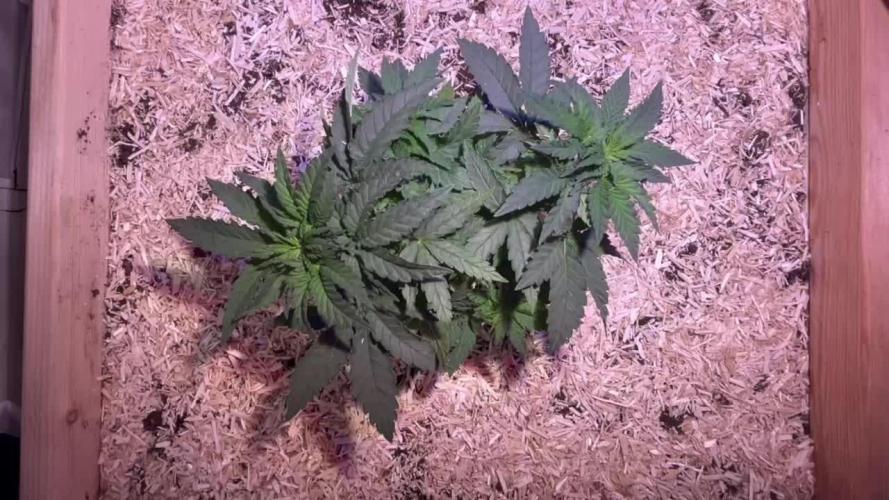
In der sechsten Vegetationswoche bekam die Blue Sunset Sherbert zunächst vor allem Ruhe, um sich vollständig an das neue Beet anzupassen. Nach dem Umtopfen und dem Toppen lag der Fokus bewusst darauf, die Pflanze möglichst stressfrei anwachsen zu lassen.
Im Laufe der Woche entwickelte sie sich sichtbar weiter. Besonders die Anzahl neuer Triebe nahm deutlich zu und auch die Blattmasse wurde spürbar dichter. Trotz der positiven Entwicklung blieb das Höhenwachstum eher gering. Insgesamt wuchs die Pflanze nur etwa vier Zentimeter.
Dafür entwickelte sich die Blue Sunset Sherbert sehr kompakt und buschig. Die Internodienabstände blieben kurz und die Blätter wirkten klein, kräftig und auffallend dunkelgrün. Insgesamt machte die Pflanze jedoch einen gesunden und vitalen Eindruck.
Vermutlich spielen mehrere Faktoren gleichzeitig eine Rolle:
- die nährstoffreiche neue Living Soil
- hohe Temperaturen zwischen 22–28°C
- niedrige Luftfeuchtigkeit um etwa 50%
Gegossen wurde in dieser Woche ein- bis zweimal, da die Erde durch die Temperaturen vergleichsweise schnell austrocknete. Zusätzlich wurde leichtes Low-Stress-Training mit Clips ausprobiert. Die Triebe erwiesen sich allerdings bereits als überraschend stabil, wodurch die Clips teilweise Druckstellen verursachten. Ein Seitentrieb wurde dabei leicht angeknackst und hängt aktuell nur noch teilweise am Pflanzengewebe. Bisher zeigt der Trieb jedoch noch keine vollständigen Schäden und bleibt weiterhin vital.
Insgesamt entwickelt sich die kleine sehr gut. Die Pflanze wächst langsam, aber gesund und wirkt stabil. Besonders das kompakte Wachstum und die zunehmende Verzweigung könnten später sehr interessant für den geplanten SCROG-Aufbau werden.