


Likes
Comments
Share



Likes
Comments
Share

@Count-Dooku
Follow
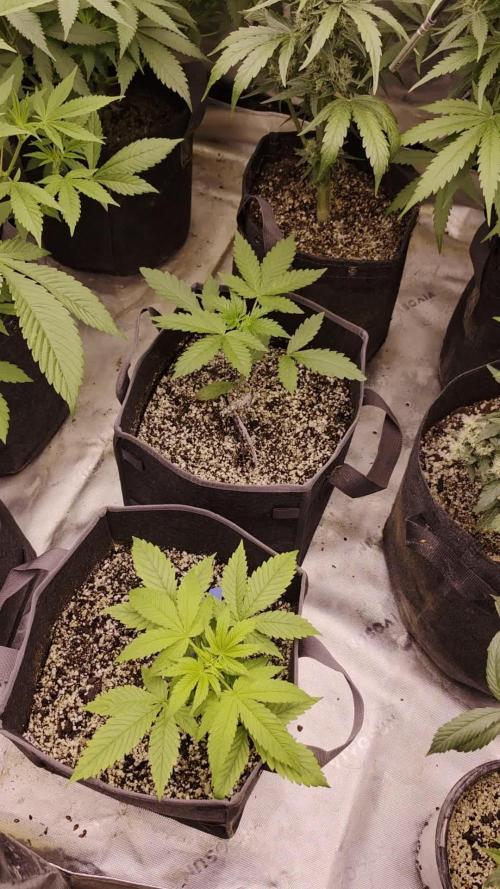
Another sub in, I'm gonna give the gskz a week or two to build roots, since I pulled it out of the dwc cloner to pot. This blue dream is billed as a mostly sativa, so actually it should take longer than the apple blossom.
Likes
10
Share


@Cronic
Follow
Week 7 - The end's in sight.
Some unseasonal hot days here, 29° to 34° this week so, the shade cloth has come out and they're placed in an area with the most airflow. Aphids keep on appearing so I contiune to check and spray with water on infected areas to keep the pop as low as pos; so far i'am on top of them.
The pineapples are really packing it on and the smell is getting stronger every day. I've upped the nutes close to Biobizz's recommened and so far, there seems to be no negative feedback. Due to the heat I can't help but be a little concerned though humidity has dropped to during the day to about 50 and 80 at night for a few hours. I hope they're as resilient as their reputation suggests.
The lemonade contiunes to chunk up, though I think she's as tall as she's going to get. The smell continues to increase in intensity which actually compliments the pineapples nicely. Again the weather's abit of a concern, even more for this girl as Fastbuds recommened cooler temps for this strain; I wasn't banking on temps like this for another month or so yet. I'am thinking I should start a few weeks earlier next season because if the Lemonades smoke as good as they look and smell i'll be growing them next season for sure. Fingers crossed.
Likes
97
Share


@Wastent91
Follow
Allora ragazzi come va?? La splendida ragazza della sweet seeds anche se l ho toppata continua a crescere a dismisura ho dovuto alzare la lampada della Marsh hydro al massimo possibile, che sfiora il filtro a carbone dell' aria!! 😁Questo tipo di generiche XL sono davvero una cosa portentosa, cmq ho avuto e sto avendo dei problemi... Perché nn mi era accorto di dare Bud Candy e quindi è andata , secondo me spero, in deficienza di calcio e magnesio , spero che questo mio errore nn contribuisca allo sfacelo totale del risultato della pianta , xké vedo cmq dalle foglie di colore verde chiaro che sta soffrendo... Ora ho rimediato integrandolo , ma spero di nn aver dato un eccesso di nutrienti e che sia in blocco... Apparte questo le cime hanno un bel colore viola intenso e sembra stiano crescendo.. vedremo prossimamente perché cmq io nn sono un esperto di questi fertilizzanti minerali della linea advanced nutrients, poi non avendo tutta la linea è normale che la pianta vada in carenza perché il terriccio è solamente un light mix , quindi poco fertilizzato.. speriamo bene! Ringrazio come al solito sweet seeds e Mars hydro x aver reso possibile tutto ciò! Buon 420 a tutti! 😼🐱💯💪🌱🌿🌲

Likes
59
Share

@WhiteEdge
Follow
Flowering W2 D1
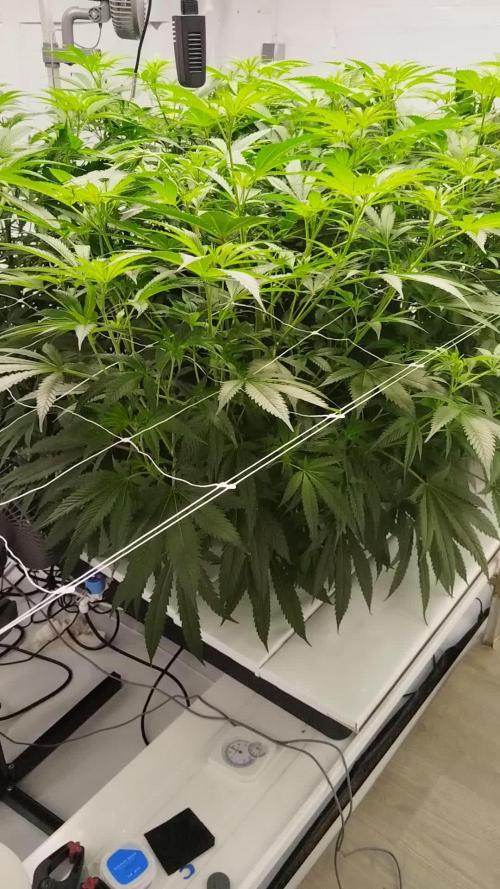
Middle girl - 75cm,h from yesterday 2-3cm 3cm, SUPERCROPPING on all main stems. Think there is no other way to reduce height at this point.
Too late for topping, so supper cropping is the best option right now. After bending secure main stem with wire for first 2-3 days
Add 10l solution to tank, clean return line and filters
Light intensity - Max 850 PPFD in middle , Light distance - 55cm, DLI - 37, Light Interval 12/12
Midea AC-27c5% day/night, TM 68/63%, AC Infinity AUTO
Day RH - 69/72%, Night RH - 63/74%,
Day Temperature - 28/29c, Night Temperature -22c/23c,
Leaf temperature 25/26,
VPD Day - 0.8/1.0 , VPD Night 0.8/0.9
CO2 - 400+PPM
Nutrient Tank - 2.80EC, PH-5.80 Temperature - 19/20c, ORP-410/450mV
Day Misting - 15s ON/20min OFF + 1 x 5 minute long shot
Night Misting - 15sON/30min OFF
Runoff 12.00h-r3030ec - low runoff, 18.00h-r2980ec, 22.00h-r2860ec
Flowering W2 D2
Super cropping looking nice, girls getting up they heads, leaving like this for now, no touching
Light intensity - Max 850 PPFD in middle , Light distance - 55cm, DLI - 37, Light Interval 12/12
Midea AC-27c5% day/night, TM 68/63%, AC Infinity AUTO
Day RH - 69/72%, Night RH - 68/70%,
Day Temperature - 28/29c, Night Temperature -23c/24c, - getting warmer nights, reducing night/day temperature differential, slowly..
Leaf temperature 25/26,
VPD Day - 0.8/1.0 , VPD Night 0.8/0.9
CO2 - 400+PPM
Nutrient Tank - 2.80EC, PH-5.80 Temperature - 19/20c, ORP-410/450mV
Day Misting - 15s ON/20min OFF + 1 x 5 minute long shot
Night Misting - 15sON/30min OFF
Runoff - 10.00h-3030ec/6.05ph, 22.00h-r2860ec
Flowering W2 D3
Light intensity - Max 850 PPFD in middle , Light distance - 55cm, DLI - 37, Light Interval 12/12
Midea AC-27c5% day/night, TM 67/63%, AC Infinity AUTO
Day RH - 69/72%, Night RH - 68/70%,
Day Temperature - 28/29c, Night Temperature -23c/24c, - getting warmer nights, reducing night/day temperature differential, slowly..
Leaf temperature 25/26,
VPD Day - 0.8/1.0 , VPD Night 0.8/0.9
CO2 - 400+PPM
Nutrient Tank - 2.80EC, PH-5.80 Temperature - 19/20c, ORP-410/450mV
Day Misting - 15s ON/20min OFF + 1 x 5 minute long shot
Night Misting - 15sON/30min OFF
Runoff - 10.00h-3080ec/6.08ph, 19.00h-r2890ec
Flowering W2 D4
Foliar feed - Athena Stack 0.2ml + 1 drop H4SiO2 - 200ml
Remove wire from tops-supper-cropping,
Light intensity - Max 800 PPFD in middle , Light distance - 55cm, DLI - 36, Light Interval 12/12
Midea AC-28c5% day/night, TM 67/63%, AC Infinity AUTO
Day RH - 69/72%, Night RH - 68/70%,
Day Temperature - 28/29c, Night Temperature -23c/24c, - getting warmer nights, reducing night/day temperature differential, slowly..
Leaf temperature 25/26,
VPD Day - 0.8/1.0 , VPD Night 0.8/0.9
CO2 - 400+PPM
Nutrient Tank - 2.80EC, PH-5.80 Temperature - 19/20c, ORP-410/450mV
Day Misting - 15s ON/20min OFF + 1 x 5 minute long shot
Night Misting - 15sON/30min OFF
Runoff - 16.00 r3130/5.95, 21.00h-r2900ec..
Flowering W2 D5
Runoff around 3450ec-5.95ph, girls looking great, growth 2-3cm/Day - 80cm
Get some carbonization in tank, tomorrow new solution
Flowering W2 D6
Runoff - 10.00 r3210, Nutrient Tank solution change, 2.80ec/5.95 , 2.92ec/5.99ph
New irrigation timings - 20/20 - 20/30
Filter change, girls have some leaf tip burn, but stacking is great!
Flush in midnight, 10min - 5+5+5+5, two longer feeds per day is sufficient ( 18.15 i 00.10)
Checking runoff daily ,+3.0ec or more
Flowering W2 D7
Foliar feed - Athena Stack + H4SiO2 - 200ml
Canopy @ 86-88cm, growth for this week 15/16cm
Light intensity - Max 800 PPFD in middle , Light distance - 55cm, DLI - 36, Light Interval 12/12
Midea AC-28c5% day/night, TM 67/63%, AC Infinity AUTO
Day RH - 69/72%, Night RH - 68/70%,
Day Temperature - 28/29c, Night Temperature -23c/24c,
Leaf temperature 25/26,
VPD Day - 0.8/1.0 , VPD Night 0.8/0.9
CO2 - 400+PPM
Nutrient Tank - 2.80EC, PH-5.80 Temperature - 19/20c, ORP-410/450mV
Day Misting - 20s ON/20min OFF + 1 x 5 minute long shot
Night Misting - 20sON/30min OFF
Runoff - 19.30 Flush5 r2940, 19.50 Flush5 r2830! reset after 10min flush, 00.30 Flush3 r3090

Likes
6
Share

@weedelicious
Follow
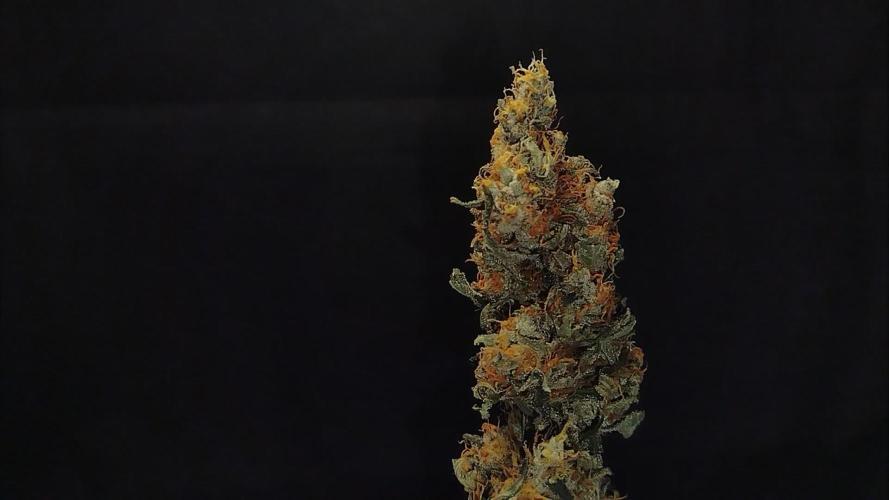
My three grow runs went great overall — except for the extreme heat. The new tent and accessories from Spider Farmer performed really well. Hesi nutrients were excellent, and the Biobizz soil was fantastic.

Likes
6
Share

@Dottgreenthumb
Follow
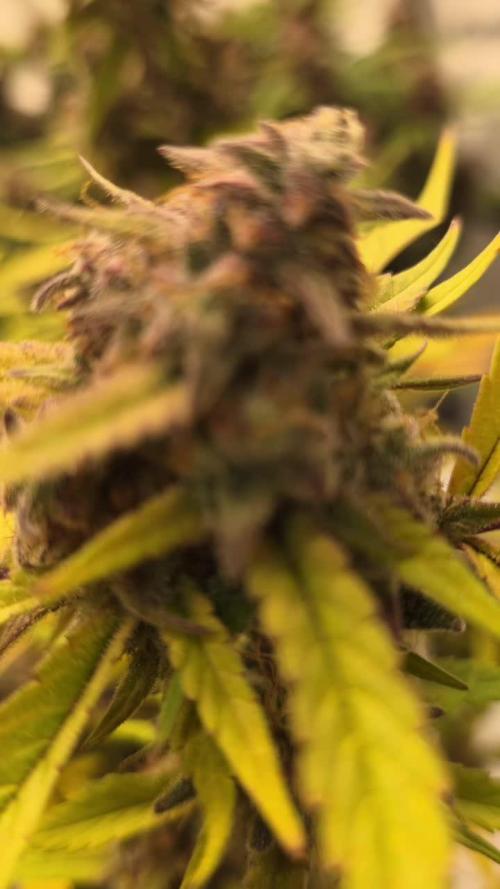
95 giorni la papaya cookies è quasi pronta al taglio run off 0.4 ec
Lo strain banana purple puch rf3 Inizia oggi il flush
La gelato ancora un altra settimana di fertilizzazione
Likes
207
Share


@DogDoctorOfficial
Follow
One more week here we go, and this girls are ready to Flower, I’ve defoliate them a bit, gave them some foliar feeding and provably tomorrow or so i will put them to sleep for 24 h and wake them up at 12/12.
Color on the leafs is back were i like and there for the time is now, the only reason I didn’t do it yet is because i want to take some clones from them just in case something outstanding comes out of this run, better safe than sorry and this way i can save the pheno with i like the most 😇💚
As for the LED department, i believe this VIPRARSPECTRA P2000 is just perfect for this 3x3 closet, PPFD numbers are on point and my girls are loving the spectrum coming out of it. Pretty soon the real testes begin and in flower mode we will see how it goes 🤩😇💚 for now i have to admit that im pretty surprised with it all, the quality on building and materials, the amount of heat it produces,the spectrum, etc etc , the amount of photons released seems to be just perfect and the correct ones 😅🤩💚🙏 Thank you VIPARSPECTRA for this opportunity and for the quality of your product, so far i have nothing but good things to say about it 🙌🙌🙌💚💚💚🙏🙏🙏
Decided to give my girls couple days more before flipping them to 12/12, also decided that was perfect time for scrog net to go in and with it spread the canopy true the all tent and try and maximize this 3x3 space, i know they look thirsty in this last photos 😆😅 they wore watered minutes before them pictures 😆 i will post better ones asap 💚💚💚🙏🙏🙏
Better photos uploaded 😆😅💚 I normally dont let them dry to that point 😆
You can check out last week timelapse https://growdiaries.com/diaries/126067-grow-journal-by-dogdoctor/week/686411 and if you in to timelapse stuff i have just recently uploaded the Magnum auto Timelapse just for fun here https://growdiaries.com/diaries/105893-grow-journal-by-dogdoctor , hope you guys enjoy it 💚💚💚 growers love and one more week up we go 🙏🌱💚
And with enormous honor and pleasure that i start collaborating with Zamnezia and Viparspectra
For this run i will have the pleasure of growing some Runtz genetics from Zamnezia seeds that they wore kind enough to send me for test and review 🙏🙏🙏💚💚💚🙏🙏🙏 and for the testing and reviewing i was blessed with the VIPARSPECTRA model P2000💚💚💚🙏🙏🙏 they wore amazing and send me this LED light for me to do some testing and some reviews. Special thanks to Zamnezia and to Viparspectra for this opportunity, lets make magic together 💚💚💚🙏🙏🙏
All i grow is medicine for myself, for me and for my best friend with is me 😆 nothing to sell, so don’t even ask 😅💚💚💚
All info and full product details can be find in can find @
https://viparspectra.eu/collections/grow-lights DISCOUNT CODE 5% - DOGDOCTOR ( all store )
https://www.zamnesia.com DISCOUNT CODE 10% - GROWITGD ( just for seeds )
https://aptus-holland.com/
More info and updates @
https://growdiaries.com/grower/dogdoctor
https://instagram.com/dogdoctorofficial
https://youtube.com/channel/UCR7ta4DKLFMg2xxTMr2cpIg
💚💚💚Growers love to you all 💚💚💚

Likes
12
Share

@KnightRider
Follow
Hey Cannafam Happy Tuesday,
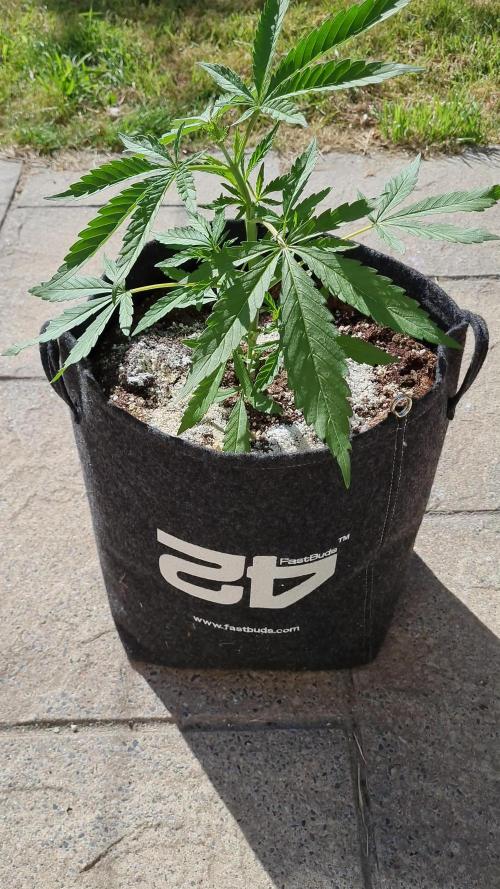
My little Guava girl has had another good week due again to good weather 😊
Although not as hot as last week its been Sunny everyday apart from a little rain Friday morning, its been really consistant with daytime temps of 21c -23c Tuesday - Sunday, yesterday thing crept up fo 25c and today things are hotting up again at 27c! nights with last days of heat are now an average 18c. Humidity has remained high in the range of 70-90% and Daylight hours are currently at 16 hrs 13 minutes.
I've been on two minds most of the week on whether or not she should receive any training, due to what seems like very short intrrnodal spacing, although i do want a low profile as it makes her blend into her surroundings easier in case unwanted visitors.
On Saturday i decided to FIM her, mainly because i've never FIMed an auto, but also topping would slow her down. Since then recovery has been fine and auxilary shoots have started growing out well, im going to train these out to the side of the pot hopefully in a nice formation. Also today shes just ticked over into flower, so hopefully any stretch should also be directed sideways.
She has been dined on this week slightly by a snail or slug but luckily i think it must have been a baby as only slight damage. This was entirely my fault as after a good watering i didn't replace the diamatous earth and she wasn't placed near my other grow which has a beer trap next to it, this has now been replenished!
All in all another solid week and really happy with our weather and her progress 😊
Have a chilled week and thanks for stoppin by ✌️💚
Likes
19
Share


@Haoss
Follow
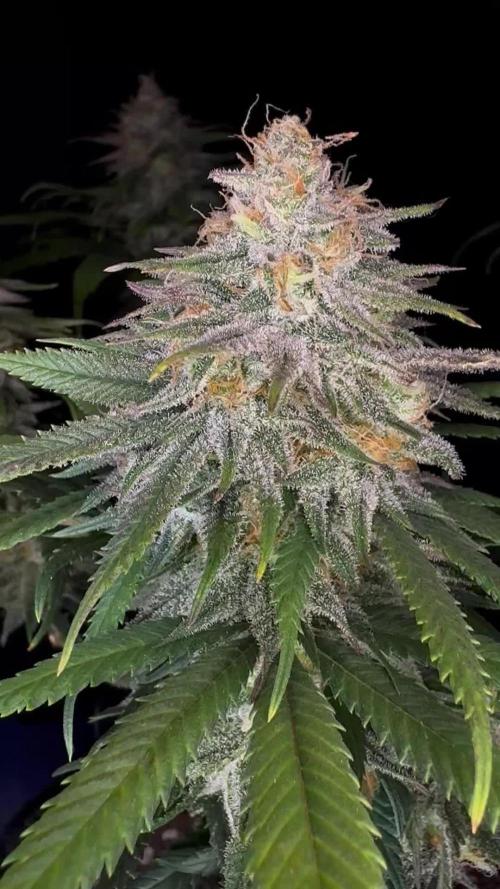
The buds have started to get bigger and produce a lot of trichomes, very sugary, I started the bloom boosters, she feels really good 🌋💚
Likes
20
Share


@NONSENSE
Follow
Good day everyone,
So right now I clean the plant with water.
I just correct the PH to 6.3-6.5 and use simple water with PPM 180-200.
the plant looks very nice.
Please see the pictures - looks like winter time, all plant covered with snow :) I like it.
the smell is fruity.
After about 4-5 days I will harvest it and will update the report with the results and smoke experience.
Good luck

Likes
13
Share


Likes
39
Share

@THcHunteR23
Follow
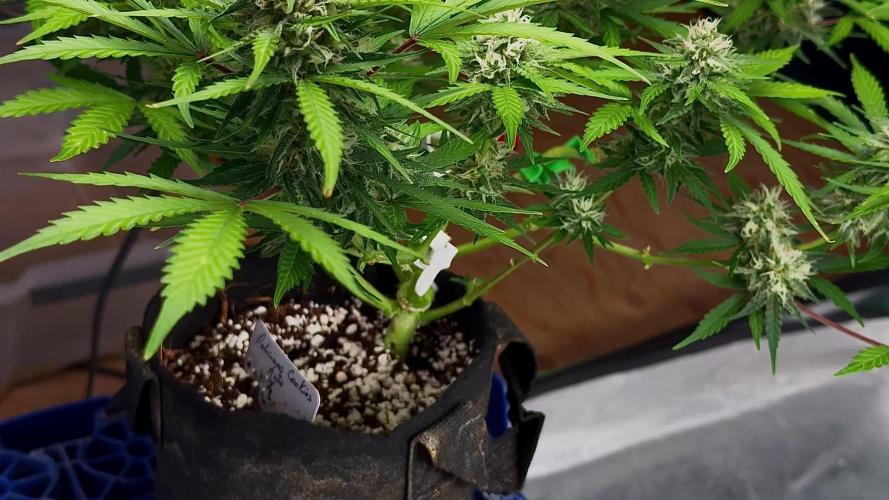
Elle change de couleur mais devrait pas je soupçonne avoir été un peu léger avec les engrais. J’ai quand même rincer les racines donner du cal mag et je vais augmenter la dosage d’engrais
2 jour plus tard elle reprend une couleur uniforme

Likes
16
Share


@Albeginner420
Follow
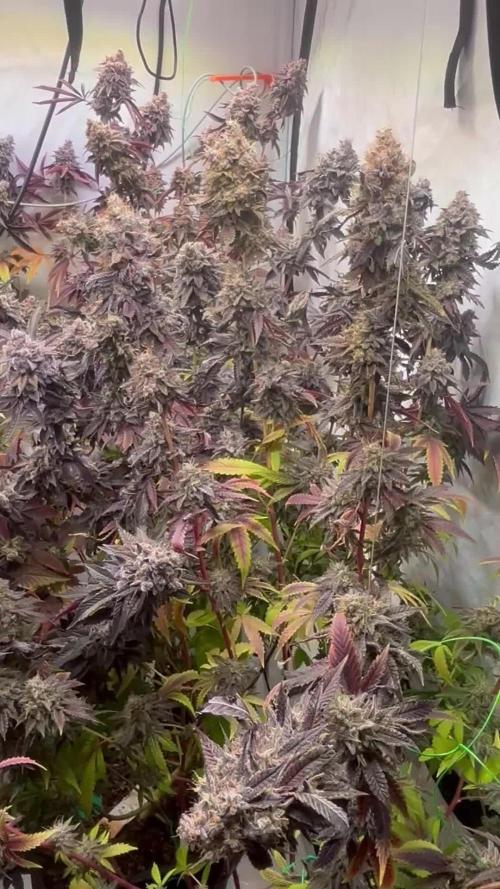
The gelato is obviusly a strain that develop large fat colas instead of long colas, she's very resinous. The smell Is pumping out and Is like a breeze that refresh my lungs every time i open the box. She doesnt need too much water. 3 weeks to go.


Likes
17
Share


@BLAZED
Follow
Week 9 (27-3 to 2-4)
27-3
Temperature: 25 degrees (lights on) 18.9 degrees (lights off)
Humidity: 63% (highest) 55% (lowest)
Added 15L to the reservoir.
28-3
Temperature: 25.1 degrees (lights on) 18.5 degrees (lights off)
Humidity: 64% (highest) 56% (lowest)
29-3
Temperature: 27.2 degrees (lights on) 19.4 degrees (lights off)
Humidity: 67% (highest) 48% (lowest)
As you can see on the pictures, the Chemdog #2 has a flat stem.
I dont know how, but the same happened with the grow before this one, but to a Biscotti from a different seed bank.
I never seen this before, so i am really surprised to see this happening back to back. Does anyone know if its just coincidence or can lightstress or LST/HST cause this?
30-3
Temperature: 25.3 degrees (lights on) 20.5 degrees (lights off)
Humidity: 65% (highest) 54% (lowest)
31-3
Temperature: 25.8 degrees (lights on) 20.8 degrees (lights off)
Humidity: 62% (highest) 56% (lowest)
Today i decided to turn of the reservoir/autopots.
I think the plants are overwatered, and because of that probably have light stress and other problems.
Also, it can be that i underfeeded them, and that the PH was too high.
I turned the light down to 40% strength aswell.
1-4
Temperature: 23.6 degrees (lights on) 20.6 degrees (lights off)
Humidity: 62% (highest) 57% (lowest)
2-4
Temperature: 22.6 degrees (lights on) 19.8 degrees (lights off)
Humidity: 62% (highest) 56% (lowest)
No pictures.


Likes
9
Share


@Bigtinyy
Follow
Being my first grow not 100% sure what was going on there.. They did slow growth for a few days..
Likes
13
Share


@GrandmasBoy2021
Follow
I had a fun experience growing this strain. She started out strong and finished pretty strong! The buds are covered in THC and smells sweet. The only thing I would really do better next time is trying not to nutrient burn her as much as I did towards the end. I also experimented with harvest time and came to the conclusion that the it's best to harvest a few weeks after their recommended time if you want denser buds (in my opinion). I do wish the buds were a bit more dense but I'm not a pro grower and that could be the reason for that. It's all a learning experience. It could be the strain because I'm going a Gorilla Cookies (FastBuds) and those buds are huge and don't have as many leaves. Overall I'm blessed with the outcome and I'm going to enjoy the perfectly dried buds soon :D
I hope you all enjoy the little videos and music! haha I've only grown one plant before this which resulted in less than an eighth of bud so I'm beyond happy to say the least lol
Let me know if you have any questions regarding growing and for some possible tips! Happy growing Growmies!