


Likes
Comments
Share


@Ninjabuds
Follow
Turing into some fire it’s a small compact plant but has big buds and there are covered in tricombs

Likes
1
Share


@BurnBae420
Follow
Flip date: September 12
Today: Day 29 after flip, entering Week 5
Plants: 2 Cinderella Purple + 1 Purple Afghan Kush
Day 21 (Oct 2): Major defoliation of CP #1
Day 27 (Oct 8): Flushed all 3 plants due to runoff EC ~2.0
Environment: 24–26°C lights on, 47–59% RH
CP #1 is currently leading in growth and flower development compared to CP #2 and PAK. She’s progressing faster, showing more advanced flowering, and responding well to the training and defoliation. Each plant has its own phenotype and pace, so the goal is to maintain consistency and monitor each one individually. Different speeds, same goal—healthy growth and quality flowers. 💪🌿


Likes
8
Share

@Seeds_growforgreen
Follow
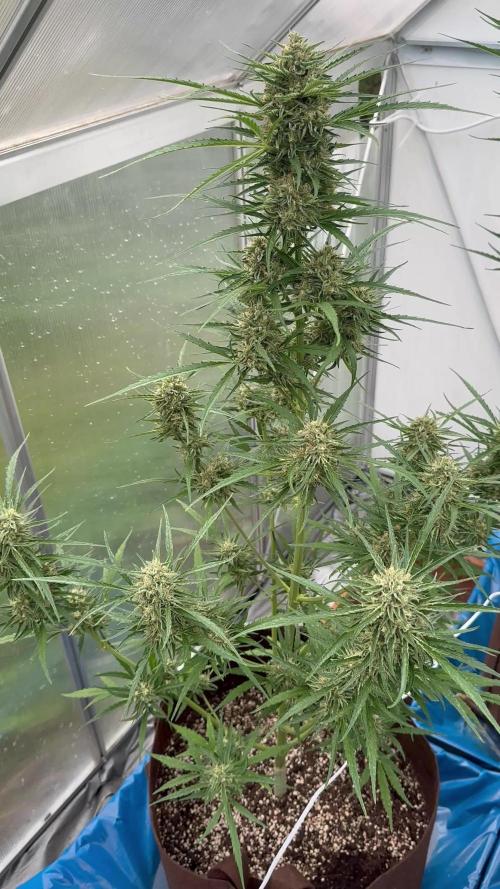
The flowers are beautifully colored.💐💚
The scent is extremely sweet and reminiscent of strawberries..🍓😛
The weather is not good, it's summer and it's still raining. The worst summer in the last 10 years..
Temperatures around 20 degrees Celsius during the day, dropping below 15 at night..
Despite the weather, the flowers still look very good, the humidity outside is high and I'm afraid of mold. The air in the greenhouse is maximally circulated..
After a thorough inspection, no mold was found, I'm very happy that it's not raining on my beautiful flowers. I add Plagron to the maximum, the flowers love it..

Likes
4
Share


@Ageddd
Follow
Nice colour, she liked the nutrients, was increasing in vigorousity all week long..
Perfect moment to test some Topping and later LST :)


Likes
5
Share

@GoodTimesOrganics
Follow
Hi liebe Community and Welcome back! 💚
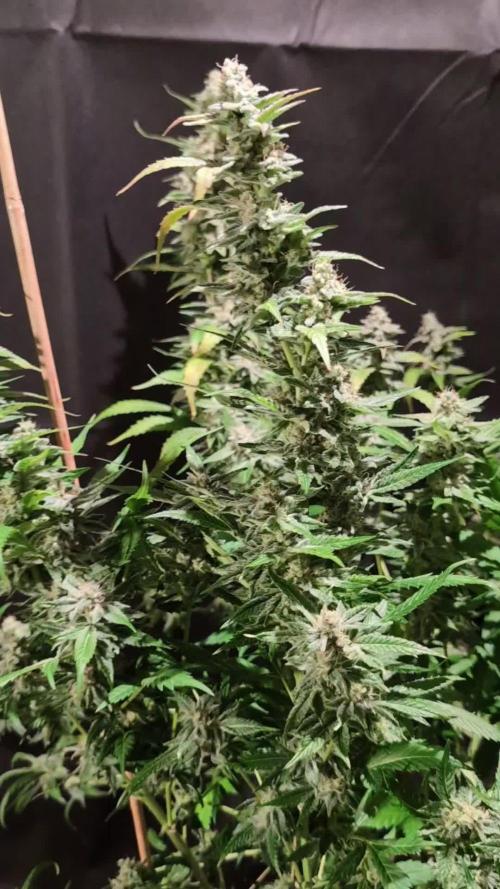
Jetzt war es Zeit für den Trichomcheck und ja, es sieht genau so aus, als wäre die Pflanze exakt in der 8 Wochen Blüte Range.
Nächste Woche ist es dann endlich soweit und die DMO Grapefruit kommt unter die Schere ✂️.
Ich habe die Pflanze nochmal Stark ausgedünnt und es zeigt sicher eine sehr stark ausgeprägte Blütenstruktur. Absolut im XL Bereich.
Es lässt sich beobachten, dass die Blütenbildung im mittleren Bereich der Colas stark ausgebreitet hat und die Pflanze Richtung Spitze eher etwas dünner wird.
Sie bildet die Blüten sehr vielseitig aus, von dünner kompakt bis hin zur breiten dichteren stellen.
Ihr Geruch ist nun sehr stark ausgeprägt und eine Grapefruit Note zeichnet sich als markante Hauptnote ab.
Bei diesem Typ nochmal etwas intensiver als bei der #2.
Abgerundet wird dass ganze durch etwas skungige, Säure und etwas Zwiebel/Pfefferigel Noten. Auch eine leichte Süße Komponente kommt etwas hindurch.
Die Wachstumsbedingungen im Growzelt sind aktuell wieder super!
———————
🌞 Temp: 23°C
🌚 Temp: 20 °C
💨 RH: 53%
VPD: 1,00 kPa
😎PPFD: 830 mqm
———————
Stay Tuned! 💚
Processing
Likes
34
Share


@DudeGrowsWeed
Follow
Sour Diesel haze is packing on some weight. Bud development is looking very nice! She still has a way to go (3-4 weeks I assume). I backed down a little on the Recharge this week, but still giving twice the suggested amount. Also still giving her Mammoth P. Will start with MegaCrop (Greenleaf) nutrients later this week. 👍

Likes
7
Share


@BushDoctor740
Follow
Things are moving along great.The buds are developing and smelling absolutely amazing.Cherry cola won’t be a big producer but wow is her scent potent.The Lemon cherry cookies having the biggest buds so far and will finish first but still needs some time.Ive increased light intensity to 80 percent which kinda fried the fan leaves but no longer needed at this point.


Likes
22
Share


@Basementganja
Follow
Day 57, and looking super spicy!!! The yields aren't too big on this one, but the potency is well making up for that!
I will have to try growing this strain out again, in hopes for a bigger phenotype!
Likes
59
Share


@Schneidersitz
Follow
Danke @SlowpokeFuegobud für den Hinweis, dass ein Video für jede Woche benötigt wird.
Ich werde nach und nach Videos für die einzelnen Wochen nachreichen. Ich hab mir überlegt mit den Videos einen genaueren Einblick über meine Erde, Keimung, Wie bekämpfe ich Trauermücken etc zu geben.
Die Sherbet reift aus. die masstphase ist zu ende. sie klebt an allen ecken. die bildung der trichome ist atemberaubend.
Lange hat sie nicht mehr!
Likes
5
Share

@GREENPHOENIX6262
Follow
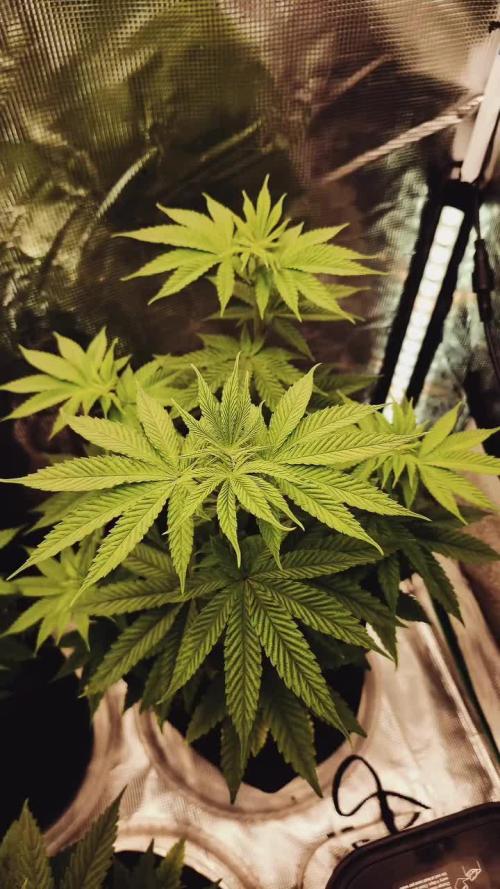
09/07 - I have decided to flip them into flower to avoid wasting anymore time - They seem to have stopped vegging early and to negate any negative draw back they have been flipped - Again the purpose of this grow is not for yield just yet, these three mothers are strictly for research, technique efficiency and final product outcome.
😎😎😎😎😎😎😎😎😎😎😎😎
09/12 - After flipping into flower the plants have recovered completely - PPM's and EC's are holding at 1.3 and PH 6.5 - Gave them a lite 3 day clean water flush followed by their first flower feed - Running 2 AC Infinity fans for increased air circulation. Stay tunned 😎😎😎😎😎😎😎😎
Likes
5
Share


@TheDutchGrower
Follow
I moved everything into a corner en but up some foil walls and installed a second light. Now 2 x
vs1000 vivosun.
Going on 75 % but actually i think i put them tomorrow to 100 %, and move them like 50 cm from the plants. Maybe 53.
They are going good i guess? Little small but the new lamp should help out and show a little results.
Enter the 5th week!
Likes
4
Share


@Growin_Ish
Follow
Somehow I miscalculated the days and started week 6 prematurely. I will just continue here thru to week 7
Day 32 From Seed
NYD#2
Started LST. Pot was light, watered at 6.3 including Fish Sh!t.
NYD#3
The pony tail backfired. The main is mangled. Despite small nodes, I started LST and watered at 6.3 including Fish Sh!t.
Day 33 From Seed
Did some research and found out the ponytail should only be used during the light cycle and removed for the dark period. I left it on, which caused the ugly. Lesson learned!
Day34
Adjusted and added LST. Watered #2 at 6.5. #3 was still heavy, no water needed.
Day 37
Watered, adjusted LST
Day 39 From Seed
Watered, adjusted LST. Found a bug that isn't a fungus gnats (NYD#3). Inspected both plants for more. Did a neem oil top drench and added Vicks Vapor Rub to the pot rims (bug deterrent). So raised light roughly 4 inches.
Day 41
Light watering, adjusted LST ties, top drenched with Neem Oil. Added a few ounces of peroxide to the humidifier. They'll both need a top dress soon.
Likes
20
Share


@UDAAC
Follow
I am open to any information
Good morning December 1 week six flowers looking good .she is still growing vertically but also still fill out . It’s amazing how much tca has grown in the last two weeks ! . Any questions or comments down below let’s go up down all around !!
December 2nd
Likes
8
Share


@Hiroots420
Follow
26/05/2021 (Day 71)
Se realizo un nuevo cambio de nutrientes y las plantas vienen mas felices que nunca, no se observa ni una carencia en las hojas y los parámetros se encuentran muy controlados.
29/05/2021 (Day 74)
Se agregó 20L de solución, las plantas vienen muy bien comenzándo el engorde de una manera muy optima.
El espacio de cultivo está repleto 100% en conjunto con los 600W en 8 chips de Citizen que logran llegar a todos los puntos de la carpa.

Likes
19
Share

@Brujha77
Follow
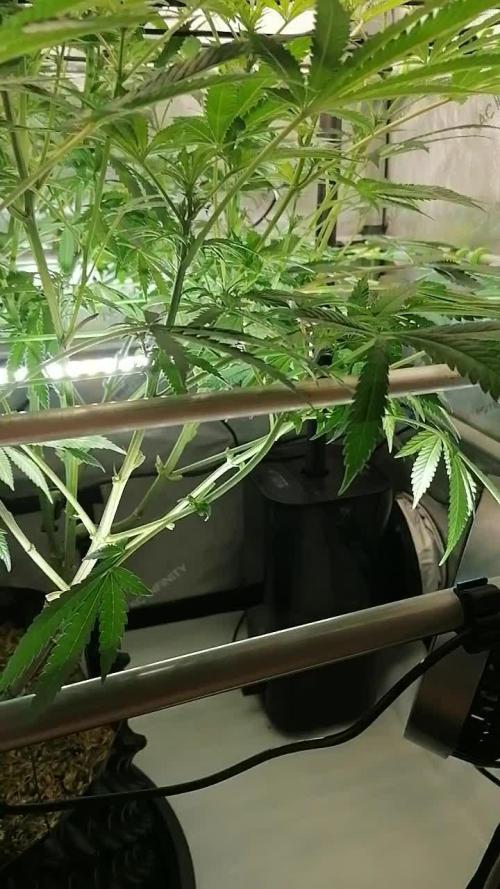
Start Woche 3 Blüte
Heute wurde nochmal einiges ausgenommen. Das wurde einfach zu viel...
Zudem kam doch wieder ein 2. Netz rein und zusätzlich noch ein paar Lst Clips für die Ausreißer.
Heute gab es auch wieder 4l Wasser mit Green Bull und Bio PK von Biotabs.
Aktuell bekommt sie alle 2-3 Tage jeweils 3-4l.
Vpd ist aktuell auf 1.2kpa bei ca. 900-1000ppfd
Die Chilled Cherry wächst auch🍒
Grade nur wieder recht kalt. Aber schaut bisher ganz gut aus.

Likes
5
Share


@TTerpz
Follow
Start of week 14 (hopefully the last)
Fed with water 5/15/25
Fed with nutrients: 5/17/25
Likes
116
Share


@Kitties_and_Colas
Follow
~_~_~_~_~_~_~_~_~_~_~_~_~_~_~_~_~_~_~_~_~_~_~_~_~_~_~_~_~_~_~_~_~_~_~_~_~_~_~_~_~_~_~_~_~_~_~_~_~_~_~_~_~_~_~_~_~_~_~_~_~_~_~_~_~_~_~_~_~_~_~_~_~_~_~_~_~_~_~_~_~_~_~_
😺💡🌱 Start week 4!! Plants seem good but 2 are still looking a little hungry,.. there was little change in their color 3-4 days after their last feeding so we fed them again but set PH to 6.5 this time to see if this helps them take it., we also gave 2ml/gal bloom solution to all plants..these seem a little on the small side but we've had a few auto strains start out this way before, i guess time will tell! 😺👌...The MarsHydro is running super cool in that tent, temps have looked great since fixing the timer issue..we'll be sure to update again midweek..thanks for stopping by and happy harvests everyone!! ❤️❤️❤️
⚡Mars Hydro/SP-3000⚡ Specifications ⚙️:
Diodes: Samsung LM301B / Osram 660nm (960 total!)
Driver: Meanwell 300watt 🔌 (300W±5% @AC120V-277V)
PPF: 824umol/S ☢️
PPE: 2.8 µmol/j 〰️〰️
Lifespan: >50k hrs ⌛
Veg Coverage: 3 x 5 ft 🌱
Flowering Coverage: 2 x 4 ft 🌼
Weight: 10.1 lbs (4.6kg)
-The SP-3000 uses an aluminum heatsink (no fan) and the driver can be placed outside the tent 🌡️⬇️
-IP65 waterproof ratings, tolerant to high humidity grow environments 💦 ..
-Up to 30 can be daisy-chained together and all controlled from a single light!
💡~💡~💡~💡~💡
~_~_~_~_~_~_~_~_~_~_~_~_~_~_~_~_~_~_~_~_~_~_~_~_~_~_~_~_~_~_~_~_~_~_~_~_~_~_~_~_~_~_~_~_~_~_~_~_~_~_~_~_~_~_~_~_~_~_~_~_~_~_~_~_~_~_~_~_~_~_~_~_~_~_~_~_~_~_~_~_~_~_~
11/9/21
😺 We moved the MarsHydro again to approx 18inches, I think this is the sweet spot, all the girls are praying again..I found a PAR chart done by a different grower at 19inches using the SP-3000 and numbers are incredible (I included a pic if his results)...we've been giving all plants 2ml/gal grow solution with every watering, i know its trace but I've overfed way too many autos and just assume play it safe..one of the autos is further along than the rest and she's now showing a little calcium deficiency, we added 3ml/gal calmag with her last feeding and will just monitor for now..thanks for reading my novel lol and happy harvests everyone!!! 😽 💨
~_~_~_~_~_~_~_~_~_~_~_~_~_~_~_~_~_~_~_~_~_~_~_~_~_~_~_~_~_~_~_~_~_~_~_~_~_~_~_~_~_~_~_~_~_~_~_~_~_~_~_~_~_~_~_~_~_~_~_~_~_~_~_~_~_~_~_~_~_~_~_~_~_~_~_~_~_~_~_~_~_~_~
Processing
Likes
5
Share


@I_roll_my_own_420
Follow
The smell is getting stronger, lots of citrus in it. All grows without any problem, as always with barneys seeds. Amnesia Lemon stopped stretching finaly and its now working on buds. looks like Im almost at the half of flowering. Will see how it goes next weeks. Cheers!

Likes
28
Share


@MyWeedAccount
Follow
5/11 - Started the "flush" this week! Making it as easy as possible on myself and just using straight tap water to fill the res', and guess what?! I installed the new AC Infinity 6" in-line fan, and it's finally allowing me to keep the tent closed while maintaining an optimal environment. Smell begone!...until I open the tent, that is. The tester nug I clipped from the other week is losing the hay smell, and looking like the frostiest bud I've ever seen. Everything is looking like a 5/16 harvest! Do I seem excited?! I am!! I'll add some pics later today when the lighting is better. Funny how I now have the optimal setup with only a week left to go. Excited to utilize it for the next round though!
5/16 - Y'ALL!!....Y'ALL!!!!!! Attention, please! I have a very important announcement. It is time for Helen to go on to the next life. To commemorate this historic and paramount moment, I am uploading my first video and some amazing (iPhone) pictures (if I do say so myself). As a first-time grower, but loooooonng time cannabis enthusiast/consumer, I still cannot believe I grew this amazing plant. In fact, I am now writing this entry after having vaped part of the tester bud, and let me tell you, I almost cried tears of happiness after the high sank in -- it's phenomenal. The taste has a hint of lemon, lime, earthiness, dominant pine, with a menthol exhale. The effect is very cerebral (as expected for an early harvest), but relaxing. I feel a wave of calmness flow down my body and a nice pressure around my eyes and sinus (which is usually stuffed). I hope she doesn't mind me sharing, but I thought it was touching (and humorous) that my gf legitimately started crying when I told her it was Helen's time. It's ok, she will be remembered and honored over the next several months, and ages to come.
----
Thanks for following 🤙 Always appreciative of tips or suggestions
