


Likes
Comments
Share

@TyRun
Follow
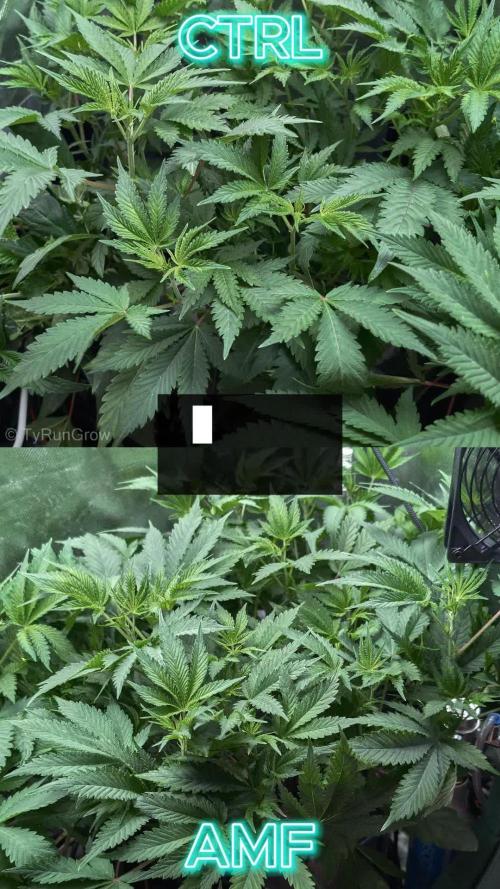
A bit too much Potassium (yellowing tips on the newer leaves), reduce the amount added. Keep stretching.
Crop steering (generative strategy for 3 weeks) help to reduce the stretch amount.

Processing
Likes
88
Share


@No_Clout
Follow
25/07/18 - watered with 300ml each 24 hours ago giving them their first taste of veg nutes and their responding well so far, I will be upping the dosage later this week.
29/07/18 - everything’s looking alright so far, plant #3 did fall over because of the weight of the leaves but I’ve sorted it all out and it’s back to standing on it’s
own two feet.
30/07/18 - I dident feed them from 72hrs and the girl in the middle started to droop so I fed them all 600ml each.
31/07/18- the girl in the middle has perked up abit but all three seem to be not praying 🙏🏻 to the sungod.

Likes
8
Share

@Northern_Ent
Follow
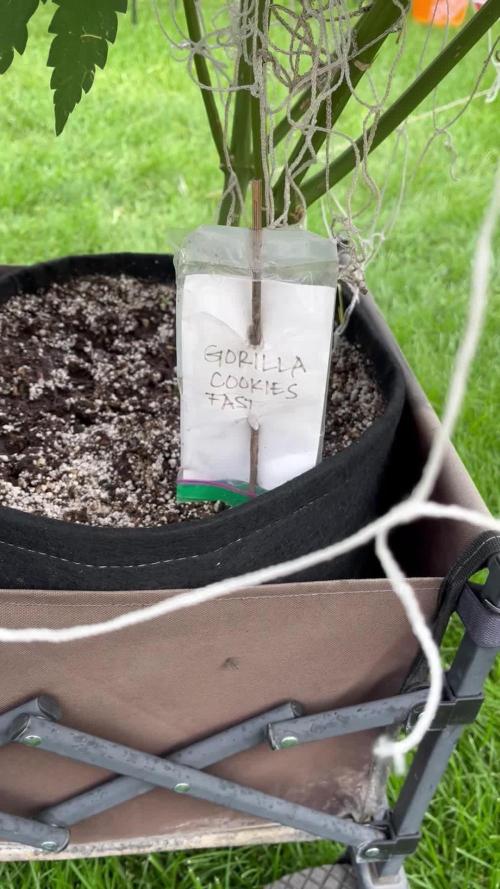
Aug 1: she’s doing great after two weeks of force flowering. In dark garage at 9 pm, few seconds of 730 nm far red light and out of garage at 7 am. This gives 10 h of darkness plus 2 h of ‘virtual’ dark by initiating dark mode faster. Like having a 26 h day which is a great trick if you have daily access to your plant.
Added another scrog net layer that is clipped to the lower net that is tied off to 500 g weights which holds things apart to let sunlight in.
Hail net was out for a brief hard rain, but no hail this time.
Aug 7: check out the graphs showing how the last 90 days compare to historic data. This year was a bit warmer than average but with record rainfall.

Likes
49
Share


@Roberts
Follow
I thought I had major issues, and stunned this plant during growth. Apparently this plant is a very short strain. I didn't mess it up as bad as I thought. I did have issue with the grow. Bud smells very intriguing, and looks potent. I don't have much else to report, but am curious to how it smokes. Thank you Fast Buds, Athena, and Medic Grow. 🤜🏻🤛🏻🌱🌱🌱
Thank you grow diaries community for the 👇likes👇, follows, comments, and subscriptions on my YouTube channel👇. ❄️🌱🍻
Happy Growing 🌱🌱🌱
https://youtube.com/channel/UCAhN7yRzWLpcaRHhMIQ7X4g
If anyone needs to purchase fastbuds here is a link for my affiliate program
https://myfastbuds.com/?a_aid=60910eaff2419
Likes
2
Share


@Dralph
Follow
No recuerdo como fue esta semana, las Blackberry tienen 4 semanas, la White widow 6 y añadi un par mas de autos que luego retirare para exterior


Likes
12
Share


@NurseGreen23
Follow
This girl is speeding toward the finish line. Except for the very tops of the buds most of the pistils are still white so i haven't bothered looking closely at the trichs yet. Will be aiming for a 1 week flush with ph adjusted water. Such a low maintenance girl. Have been feeding with same regimen as my other girl and she's not been causing me any concern.


Likes
132
Share


@Crashoverite
Follow
Hi all👨🌾👋
Welcome to my another week update
Hope everyone keeping well 🧑🌾
Week 6
Mar 8 - Mar 14
It was another easy and exciting week. Everything going absolutely great. Both girls stretched nicely despite selective defoliation on Mar 9. They bounced back almost immediately. Started adjusting mixtures towards removing fish mix completely and replacing with Bio grow. In coming week will adding bio bloom and top max to mixture. There was 2 waterings of 3ltr on Mar 9 + last foliar feeding and second on Mar 13 and it was first large feeding 6 ltr beetwen both. Surprisingly only a few drops of runoff. Watering in stages of approx. 500ml every 20-30min. Decided to not install a scrog this time as want to have opportunity to apply more old school methods of training and to be able to remove/rotate girls easily. Let's see if this will pay me off. So far girls enjoying my care very much 😁🧑🌾
Thank you very much for all your likes, follows and comments. 🙏💚❤️💜
Wishing you all amazing rest of the week✨🍀
Peace and love brothers and sisters 👨🌾✌️💚
Stay tuned for new week update soon
Links
https://2fast4buds.com/seeds/TROPICANA-COOKIES-AUTO
https://www.biobizz.com/
https://fishheadfarms.com/
Processing
Likes
17
Share


@Gordy
Follow
Beginning of week 8 of flower.
This week I tossed a different light into the tent to be able to see what it really looks like. I think she’s looking really good. Today I gave her the last feeding before harvest. Regular water from here on out.
The plant doesn’t seem to be doing anything at all. I don’t notice much difference, but I am looking at it each day, so it will be harder for me to notice.
I'm receiving a dehumidifier today. This will help me really control the humidity in here.

Likes
12
Share


@Ashbash
Follow
60x60x120cm tent. Basic cheap one not sure what brand, if any. 200w CFL for veg, and a 250w HPS for bloom. Gonna continue with biobizz and maybe a couple of other supplements later down the road. Soil is biobizz allmix. Says pH ready so no need to adjust. Hopefully that's right!


Likes
3
Share


Likes
8
Share


@Marihumama
Follow
64 days after i planted her seed directly in a pot outside 😱the reaper came, i hung her upside down for 6days then cut her &put her on a net to dry some more
While cutting I found some little catterpillars about 5 guess that were the eggs that I found on some of the plants last week.☺️
After a few days drying on the net i weighed it:53,6gr
The taste is great
I'm very happy with the result catterpillars included☺️
Likes
28
Share


@Salgeezi
Follow
Here we are week 6/7 in this post. Slowly fattening up. I don't think they will swell much more. Sugar leaves are showing signs of amber but actual bud there's still many clear Tris.
Breeder says 8 weeks. My grows tend to go over breeder specs of strain lol. I'd like to push it as far as I can ALOT of the plants bid sites are very small was expecting them to get alot bigger.


Likes
25
Share


@Ultraviolet
Follow
Permanent Marker weed strain possesses the genetics for high anthocyanin production, which is responsible for its signature deep purple. While the genes are present, the expression of these colors is often enhanced by "thermal stress" (lower temperatures) during the final three weeks of flowering, which triggers the production of these pigments.
👋 Raising the Carbon-to-Nitrogen (C:N) ratio in the growing medium to avoid over-immobilizing nitrogen, on the flip side, being careful not to trigger early autophagy. Moderate, controlled increases in sugar support the energetic demands of flowering and act as a signal trigger, but excess sugar is more likely to inhibit flowering or damage the plant. Balance, like everything else. Visually, when the chloryphyll green gets darker, it is a subtle indicator that the concentration of nitrogen is increasing / more is being stored than is being used. I noticed when you push very high intensity lighting, it slowly fades the green as the plant degrades chloryphyll faster than it can be replenished. When the green of the leaf continually gets darker, it is an indication that the concentration levels of nitrogen are increasing, and I dont want to increase light intensity.
Turn down the nitrogen faucet. C:N ratio dictates the rate at which nitrification occurs, if at all.
The Carbon-to-Nitrogen (C:N) ratio acts as a critical biological "on/off switch" (or regulator) for nitrogen turnover by determining whether microbes
immobilize (consume/tie up) or mineralize (release) nitrogen during the breakdown of organic matter. This ratio regulates microbial activity by defining the balance between available energy (carbon) and building materials (nitrogen). The C:N ratio in a medium acts as a critical regulator of nitrification, effectively functioning as an "on/off" switch for the dominance of either autotrophic nitrifying bacteria or heterotrophic bacteria.
The shade of green in chlorophyll is subtly linked to the enzyme Rubisco through a co-evolutionary, functional relationship designed to optimize photosynthesis. Chlorophyll absorbs blue and red light for energy, reflecting green light, a process that ensures the "light-dependent" reactions provide the correct, controlled amount of energy (ATP and NADPH) needed by Rubisco to perform its "light-independent" carbon fixation. Because Rubisco is a relatively inefficient and slow enzyme—often considered the bottleneck of photosynthesis—chlorophyll and the overall structure of the leaf have evolved to manage energy distribution to prevent overwhelming the Calvin cycle.
While chlorophyll absorbs mainly red and blue light, it is not perfectly efficient, and leaves appear green because some green light is reflected or transmitted. This reflection allows light to penetrate deeper into the leaf, preventing the surface chloroplasts from becoming overloaded and enabling a more efficient distribution of energy to the high volume of Rubisco located throughout the leaf's mesophyll.
The rate of chlorophyll-driven electron transport (light reactions) is matched to the potential rate of carbon fixation (Rubisco activity). If Rubisco were faster, leaves might be darker; however, the "shade of green" represents a balance that prevents chlorophyll from producing more energy than the inefficient Rubisco can process. The green color itself is a byproduct of a photosynthetic system tailored to feed a slow, yet crucial, enzyme (Rubisco) just enough energy to maximize carbon assimilation without inducing excessive oxidative stress or inefficiency.
The shade of green in leaves is directly linked to the concentration of chlorophyll, which is in turn strongly correlated with the amount of
Rubisco (Ribulose-1,5-bisphosphate carboxylase/oxygenase) and, consequently, the rate of carbon fixation. Darker green leaves generally indicate a higher concentration of both chlorophyll and Rubisco, signifying greater capacity for photosynthesis.
Increase output or reduce input. Subtle tells.
While an excess of nitrogen (specifically ammonium) can cause an imbalance, nitrification—the microbial conversion of ammonia to nitrate—is highly sensitive to a variety of environmental, chemical, and physical factors. Because it depends on specific, slow-growing bacteria (Nitrosomonas and Nitrobacter) and archaea, anything that stresses these organisms can disrupt the process.
