


Likes
Comments
Share


@Yukagrls
Follow
This plant is completely organic. I only poured water and 2tsp of coffee grinds. She is very healthy and growing fast. Cant wait for her to be ready. :)

Likes
2
Share

@GreenEldritchGardens
Follow
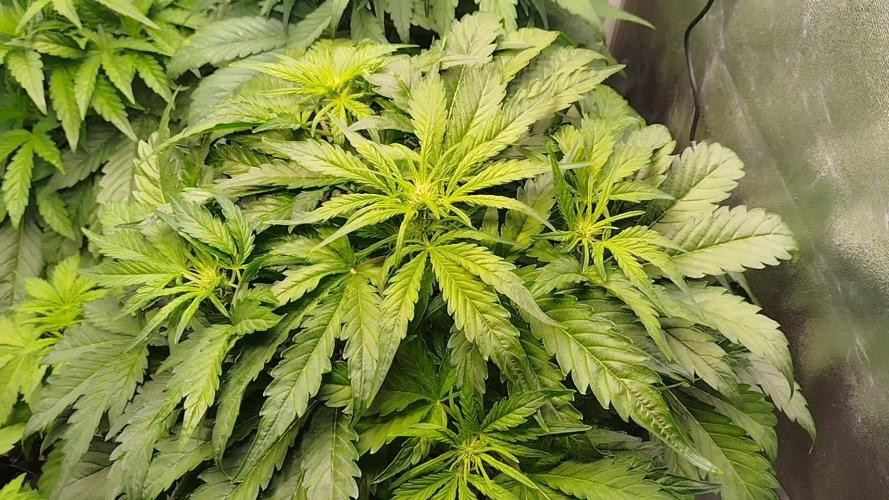
Maybe she needed some defoliation on top but my focus was to clean the bottom half, she is is growing naturally into this bush shape so I will just leave her be.
First first week stretch she drank a 10l+ of water plus good nutrients consumption, during my soil grows from this strain I almost always had some yellowing, so she seems to consume a lot in stretching phase!

Likes
8
Share


@LACREME
Follow
E aí vamos nós!
Quero agradecer a toda a equipe da Fastbuds por me mandar essas seeds.
Em meu país é muito difícil encontrar genética boa de verdade, então foi uma benção para mim.
Essa Kosher eu resolvi fazer no kokostec e usarei GH com Fórmula de Lucas, knf e micorrizas. Nesse inicinho aplico apenas enzimas e microorganismos benéficos para a raíz.
Enfim, acompanhe, e qualquer sugestão ou critica, fala comigo!

Likes
Comments
Share


@Chamed33
Follow
Just feed her ph water for the last couples of days I’ll be chopping her down this week due to heat wave in my area ..
wish I could let her go few more days
At this stage she’s releasing nitrogen still
Likes
11
Share


@Homegrown93
Follow
This was a good grow, I was hoping for a bigger phenotype but overall I’m happy. She smells sweet and dank, all her flowers are pretty dense and compact. She has good resistance to stress and humidity considering her structure.


Likes
Comments
Share

@THIRTYthirty
Follow
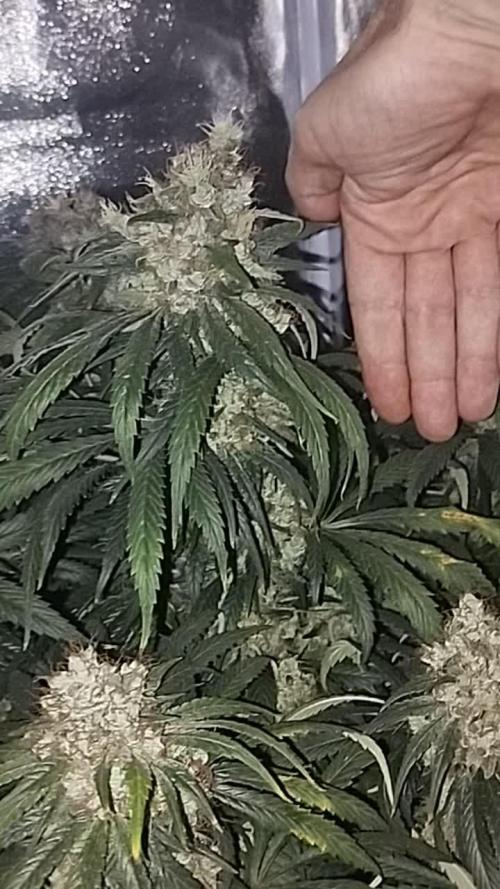
Nur noch Osmose Leitungswasser 500 Leitwert.
Wochen Ende wird geschlachtet.❤️❤️❤️

Processing
Likes
6
Share


@dank604
Follow
Coming along now, I think her early breaching caused a bit of a slow-down, could also be due to the transplant or combination but she's on her way. I don't plan on feeding any nutes until week 4 this time around, FFOF seems to be a hot soil so I want to learn from my 1st grow.
Happy growing y'all!
Likes
8
Share


@J_N_Z
Follow
This is now the one before the last week of my grow. Since it's my first grow, I'm not sure when to harvest, I wanted to wait another week and then harvest what do you think ?!
Likes
16
Share


@Andres
Follow
they are growing excellent right now outdoors ... and from now on I will put the wvoluxion dw my 2 purple afgham kush that have the same date of germination ...

Likes
237
Share


@1Right_Angle
Follow
Sept 19 2022
- chopped the Russian this morning and is she ever ready.
- 85 cm tall and 2lbs 8oz wet weight
- target is 14 days hanging min.
20th
- LSD does Not get chopped today… we’ll leave that for the weekend.
25th
- LSD gets harvested tomorrow afternoon
- Honduras x Panama and Panama Red get fed today
30th
- day 12 of hanging and the Tzar Bomba is Not brittle yet
Oct 1st
- day 13 hanging, only 1 branch objected, we’ll get a few more days out of her


Likes
25
Share


@eldruida_lamota
Follow
Bueno familia, las prisas y demás quiero dejar el Piso en el que estoy y pues eso machete secado rápido en 23 grados y 40% humedad.
Flores no muy grandes pero si compactas. La verdad que sorprendido con la variedad.

Likes
13
Share


@Robeeriegenetics
Follow
Chugging along week six licking my wounds and biding my time all is well though I ain’t mad leasons learned no reason to cry over spilt milk
Likes
16
Share

@Michijardinero
Follow
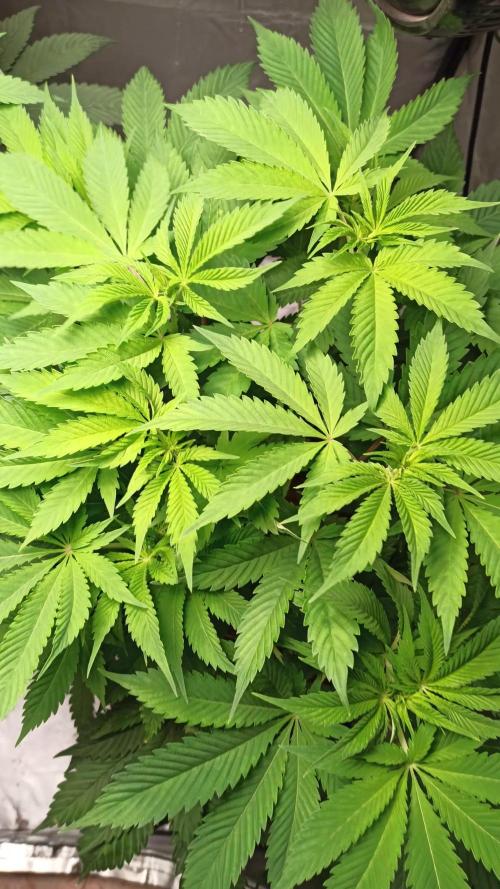
Muy buenas familia aquí estamos otra semana más hoy cumplimos la primera semana de floración damos comienzo a la segunda están creciendo que dan miedo jejejeje de momento yo creo todavía está semana seguiré con el riego de crecimiento o ya le voy metiendo un poco de floración ustedes como lo ven que me recomiendan? De momento todo sigue igual pH de riego 6.3 y pH de la tierra más o menos igual la altura del foco esta trabajando al 75% a 30cm de las puntas más o menos el humidificador se lo quite el mismo día que cambie a 12/12 ahora la humedad ronda el 45% y bueno en unos días le are la última poda de ramas bajas y brotes escondidos de la luz alguna pequeña defoliacion y de momento la dejare tranquila que engorde bien 😁😁como siempre familia espero sus visitas y sus comentarios nos vemos en una semana familia Paz


Likes
27
Share


@RDWCGrowing
Follow
5/23/2023
Week 7- Day 1 of Flower (Day 110 overall) (Day 49 of Flower)
There was a couple of small super small sucker buds on the lower stocks that needed to be cleaned off but that was it. Just watching them Flower!!
5/24/2023
Week 7- Day 2 of Flower (Day 111 overall)
Tucked a few fan leaves below lower buds but didn't see any blatant offenders that needed to be removed. I typically do start my checks in Week 8 but since this is a new strain I decided to go ahead and do a Trichome check just to see what was what.. Just as I thought nothing but clear glassy Trichomes. I will check again in one week....
5/25/2023
Week 7- Day 3 of Flower (Day 112 overall)
Just letting them grow today!! Smell is getting stronger I would say it is a hint of Pine and a heavier fruity smell.
5/26/2023
Week 7- Day 4 of Flower (Day 113 overall)
I did Nothing but took some pics and I enjoyed it!!!! It is nice to be able to just sit back and watch them on auto pilot.. :-) Tomorrow Water Change Day!!
5/27/2023
Week 7- Day 5 of Flower (Day 114 overall)
I admit it.. I had to defoliate a little bit.. I looked in while changing the water today and there were just a couple blatant offenders blocking the light from lower bud sites and those leaves they just had to go. Other than that I changed the water and this week is where I drop everything and start preparing them for this last phase of the grow. Loving a few of these buds they are starting to beef out very nicely.
I added 36 gallons
Mammoth Silica = .5Mil/Gal= 18Mil
Root DRIP = 1Mil/Gal= 36Mil
CalMag= .5Mil/Gal= 18Mil
FloraMicro = 3.8Mil/Gal= 137Mil
FloraGro= 2.8Mil/Gal= 100Mil
FLoraBloom= 4.6Mil/Gal= 166Mil
LiquidKoolBloom= 2.5Mil/Gal= 90Mil
TPS SIGNAL= 4.0Mil/Gal= 144Mil
ORCA = .5Mil/Gal= 18Mil
Water Temp= 70.1
Tent Temp= 76
Humidity =64 ** I have two dehumidifiers running on Ink bird controllers to try and keep the humidity down, In late in flower I like to keep the humidity above 45 but below 60.
5/28/2023
Week 7- Day 6 of Flower (Day 115 overall)
Opened the back of the tent today and boy did she need some defoliation love in the back. Other than that I took off a few little sucker buds trying to form. I did start to setup my Dry space as well as did a Trichome Check today and the brown tips are coming in nicely.
5/29/2023
Week 7- Day 7 of Flower (Day 116 overall)
Found a few baby sucker buds trying to form so I removed them. Other than that I am enjoying watching her mature.
I also started my Reverse of the Clone I took 6 weeks ago in Apr from #3. I am uploading footage of the reversing process for your viewing pleasure.


Likes
4
Share


@Lazuli
Follow
So this was my third tropicana, so far all different phenos, this was the biggest yielder of them
Likes
36
Share


@SAC87
Follow
Day 70
Well things have really turned around this last week. The buds are hard. They have gotten significantly firmer since flushing. Flushed with Typhoon Cleanse. The smell is a potent blueberry sweet aroma. It and the others are too much for my old carbon filter to handle. I have another ordered.
So now I’m just watering when dry til the trichomes are ready and watching the colors change!!! Too bad the leaves were damaged by the lockout.
Happy Growing 🌱👍🏻