


Likes
Comments
Share

@kvnvn
Follow
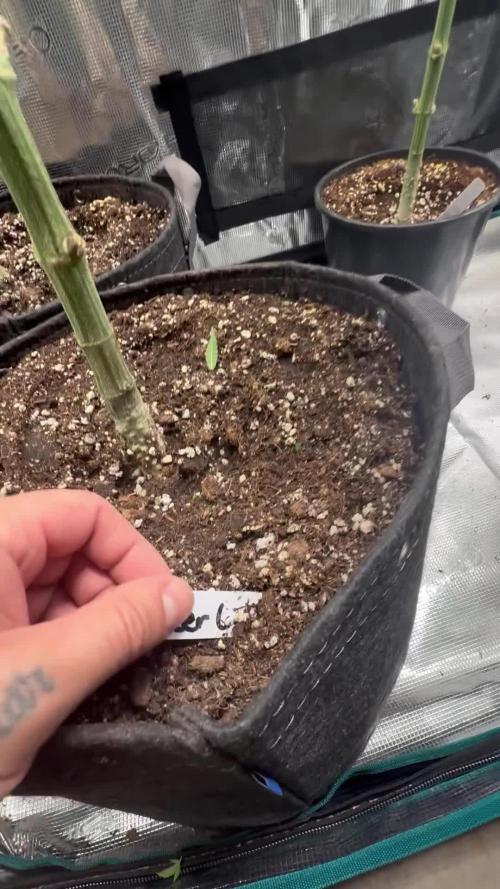
Not sure why it won’t let me add different strains in earlier weeks on here but, here’s the zeltzer and sour d, along with chem rsv week 2 flower…… also don’t mind the canopy…this is for a pheno hunt on what to run in my mothership. Zeltzer, sour zeltzer, chem rsv x cheese danish, and Cali sour diesel




Likes
16
Share


@CJgrows
Follow
Starting to ripen up probably another week or two on gorilla glue and strawberry pie the grapefruit is just now packing on bud so I’d say maybe 4-5 weeks left on grapefruit. Little bit of amber showing on the gorilla glue. Mostly clear yet on the strawberry pie. Overall happy with gorilla glue and strawberry pie. Grapefruit not so impressive yet. The smell is quite strong at this point and is getting stronger by the day with the really sweet notes of strawberry and the earthy medicinal smell of the gorilla glue.

Likes
4
Share


@WuTangVibez
Follow
This Week i let them just continue to grow out of the LST. Last Day of the Week i cut down all the lower branches and defuliated the leaves.
First Week of Flower and the Plant shows some nice female Flower-pistols.
This Week i started with the Flower Feeding, i gave her about 4 tsp Seabird Guano as Topdress Feeding, it got a NPK of 7-4-5 so not idial for Flower but i guess Perfect for Streching-phase.
Please Let me Know if you do Lollipop your Autoflowers ?? i was pretty unsure if i should do it but i was afraid that if i didn't do it it would cause problems cause of the ventilation.
Hope you like the Grow so far !
Likes
6
Share

@ControlledChaos
Follow
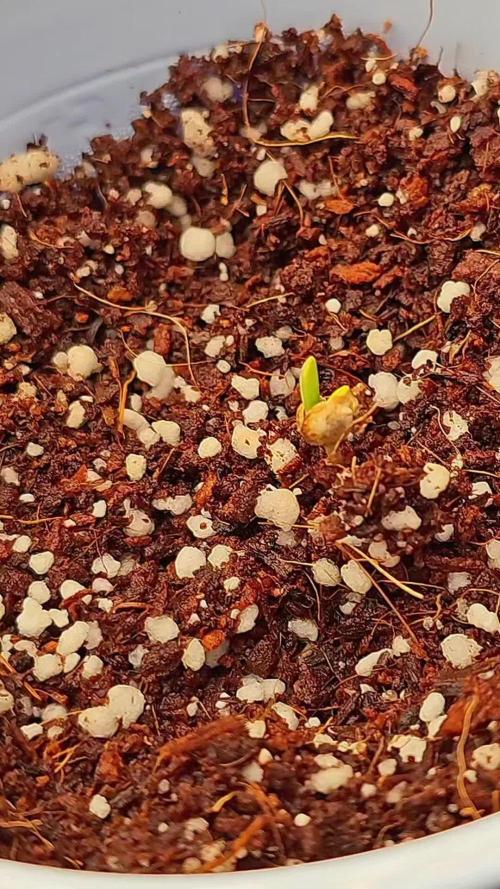
Popped easy, then put into Coco Coir/Organic Perlite Mix and used CropSalts Veg A Veg B and Run Clean. Ran 5.8ph and 800 EC as Coco was pre buffered and first run off was over 1300. Adjusted well then adjusted EC to 900. Runoff was still equally out before transplant.



Likes
2
Share


@Krautis_IndoorFarm
Follow
🚀 13 Tage Power Wachstum, Nächster Meilenstein erreicht! 🌱
Wahnsinn, wie schnell das geht! Unsere vier Ladies Oreoz Milkshake 🍪🥤 und Z-Valley 🌿 von @positronics_seedsarg sind mittlerweile 13 Tage alt und sie legen einen unglaublichen Turbo hin!
Der Fortschritt ist atemberaubend. Die Sämlinge haben sich in der letzten Woche prächtig entwickelt und sind bereit für das nächste große Abenteuer!
🌳 Die Vegi-Phase beginnt offiziell!
Die Wurzeln sind stark, die ersten Blattpaare wachsen rasant, und die Pflanzen saugen das Licht förmlich auf. Das behutsame Gießen und die Pflege haben sich ausgezahlt. Nun steht der entscheidende Schritt bevor:
➡️ Nächster Halt: Umzug ins neue Zuhause!
Wie angekündigt ziehen unsere Power Ladies bald in den nährstoffreichen Living Soil von @panova25.de um, um ihr volles genetisches Potenzial zu entfalten. Das wird den nächsten großen Wachstumsschub auslösen! 💥
Bleibt dran, um den Umzug und die explosive Vegetationsphase zu verfolgen! Welcher der vier Töpfe wird wohl der schnellste sein? 🤔
Folgt unserem Projekt für tägliche Einblicke in unsere Grow Journey! 👀
🤝 Partner & Support: @canna.community.germany
🌱 Seeds: @positronics_seedsarg
🏗️ Setup & Living Soil: @panova25.de
📸 Projekt: @krautis_indoorfarm
#Tag13 #Wachstumsupdate #VegPhase #IndoorGrow #CannabisCommunityDeutschland #PositronicsSeeds #LivingSoil #GrowJourney #OreozMilkshake #ZValley #CannabisAnbau #PowerLadies
@cannacommunity.deutschland
@canna.community.germany


Likes
Comments
Share


Likes
26
Share

@Borberad
Follow
Finale Woche
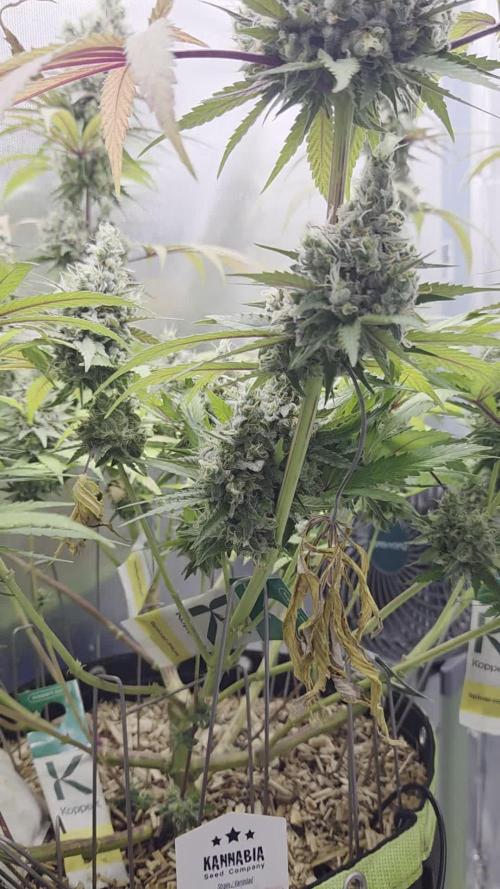
Blütetag 61 und die Köpfe rollen. Es duftet fruchtig süß. Die unteren Etagen dürfen noch reifen.

Processing
Likes
6
Share


@Silverback_Guerilla
Follow
SATURDAY 9/21:
After having had my entire rig and all my cured produce stolen from me by my pardner in crime, I'm starting from scratch.
(That f**king asshole!)
Special thanks to the fabulous folks at Fastbuds for sending me some replacement beans!!!
I mylar'ed up a closet and got a little light to get them started with. It's 3500k with some extra 660nm and draws about 200w from the wall. I am going old-school this time around..no pre-soak and no paper towels. I bought some soluble myco + tricho + all the good beneficial bacteria and mixed a little into a liter of distilled water and wetted rapid rooter plugs. I planted all three Stardawg beans in the rapid rooter plugs and put them in a little humidome under 9w of pink light.
TUESDAY 9/24:
All three emerged with no problems, but one is still wearing a "hat"..
THURSDAY 9/26:
All three had taproots sticking out a few inches, so I planted them in their 3 gallon pots and put little mini-domes over them.
FRIDAY 9/27:
I knew better than to try to start some seedlings with no humidifier, but the asshole stole mine, so I tried it anyway..I have several seedlings that probably aren't gonna make it, but so far all 3 x Stardawgs look fine.
I wet them down and put some trays of water in the closet to try and bring up the RH.
TUESDAY 10/1:
Okay, so only one survived, and she's starting to grow.👍
My soil mix was too hot for them...rookie mistake...
I finished working on my homemade frame and mounted 6 x 120w quantum boards to it, but one of my 3 x 240w drivers failed, so I gotta get a replacement sometime in the next few weeks. I still gotta get my ventilation squared away before I can even run them.😎
FRIDAY 10/4:
She's my lone Fastbuds plants..got high hopes for her.
She'll be surrounded by a bunch of Candy Cane hybrids.
Likes
7
Share


@Theia
Follow
I've repotted into her final 15l auto pot.
The procedure I used is as follows.
Items needed..
Clay pebbles
Hydro coco 60/40 clay pebbles/Coco.
Silicium Flash
Startrex
Mycrotrex
Bactrex
And of course Bio tablets X2.
15l of hydro coco was mixed with 25g of Silicium Flash and 25g of Startrex. Mixed up well to form the main substrate.
I filled the autopots to a depth of 5cm with clay pebbles and then layered up the amended substrate making a nice hole for my 300ml nursery pots.
Into this hole I sprinkled in 5g of Mycrotrex and then dropped the seedling in.
This then gets 2 biotabs pushed 5-8cm into the substrate and 1l of water mixed with 5ml of Bactrex.
I put domes over them but I think the Rh was a bit too high and this lady seems to have gone a bit floppy. Not an issue and shee will be fine in a day or two now I've removed the domes.
I need to top feed the autopots for a couple of weeks so the root system can establish before I transfer to my flower room and the gravity feeding trays..🤘🏼👍🏼
I'm keeping temps at a constant 25c and lights are on 24hrs a day. Rh is sitting around 65%.it too low hence the domes but then it goes too high. I'm going to run a couple of days with the 65% but vpd over 1 is a bit high for so early.. we shall see.
Likes
147
Share


@MrJones
Follow
What can I say this was my largest single yield harvest to date - The BlackBerry OG from Emerald Triangle Seeds are worth growing and just be prepared to have a load of bud to trim, there are other strains that are east to trim than this one, it was laced with sugar leaves and took a while to trim up,, it was in the dry tent for 15 days, honestly I was worried and should have trusted my instinct and left it in longer, this may have made it easier to clean.. If you do not buy this stran and give it a try you are missing out!

Likes
16
Share

@Bncgrower
Follow
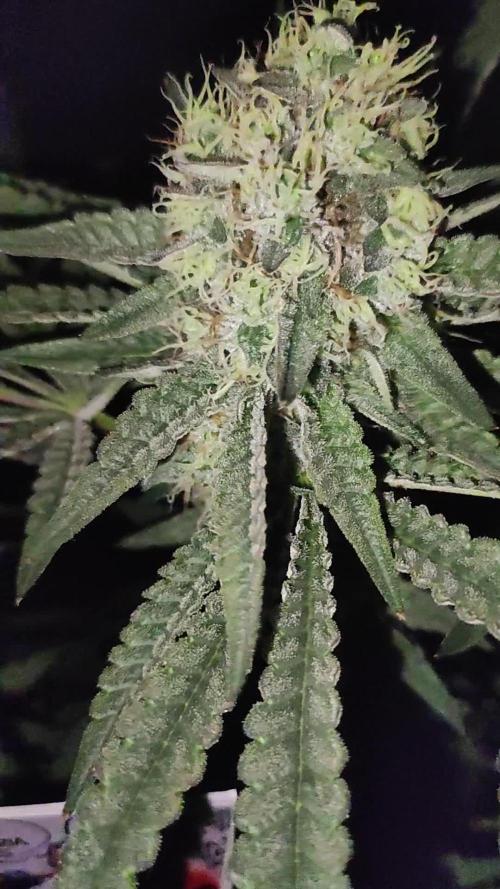
Final stretch, next week it's time to flush them. The smell is really strong when I open the bedroom door, I believe in an extremely satisfactory result.. ❄️💪🌲
***The photo of the trichomes ended up getting mixed up, so I'll post photos of all the plants.
Likes
7
Share

@Redweasel
Follow
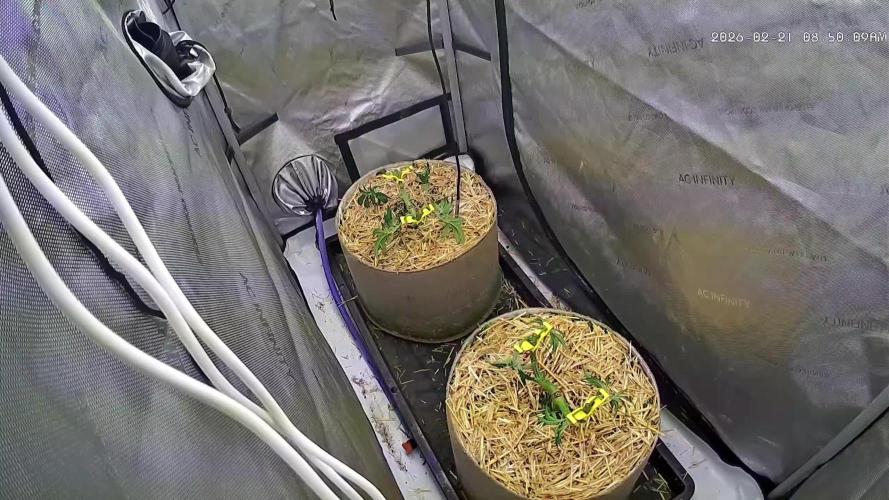
Total tent entry time this entire week was 15 minutes.
Today was focused on recording data mainly. I'm giving them a weekend off before full schwazze, top dress, & flip next week.
Tucked any fan leaves blocking growth sites.
Worked 1/4 cup Kiss My Frass, mealworm derived insect Frass, into straw mulch top layer of each container.
Hand watered each plant with 1/2 gallon 6.5 ph 13 ppm reservoir water mixed with 1/2 tsp each of coconut water powder, Azos, & quillaja powder.
Raised DLI to 35. I fully expect it to naturally raise to 40 as the plants expand vertically.
Raised average VPD to 1.0
-Expression #1-
Previous Week
Height-5"
Width-6"x9"
Current Week
Height-10"
Width-18"x20"
-Expression #2-
Previous Week
Height-4.5"
Width-8"x7"
Current Week
Height-8.5"
Width-15"x14"
Likes
6
Share

@Borberad
Follow
Woche 12
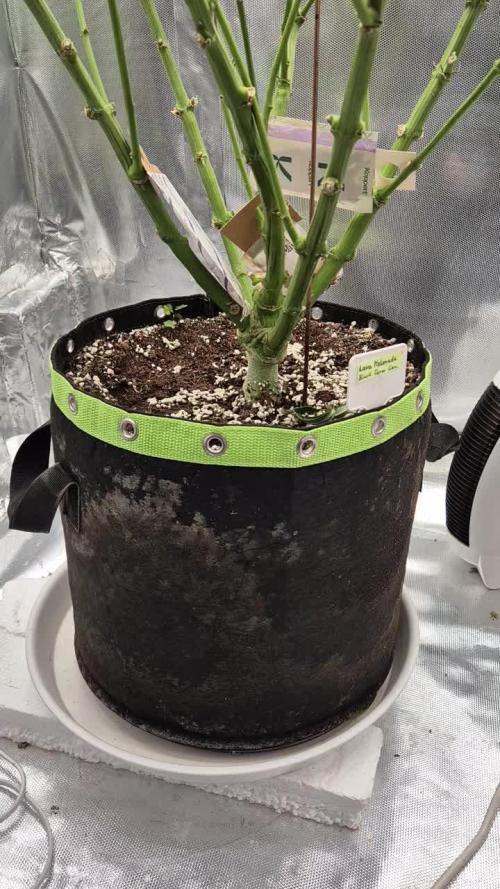
Die Woche beginnt weniger erfreulich. Schimmel in den Buds! Waren aber auch wirklich dicke Monster. Dennoch! Bisher haben wir keine Erklärung dafür. Luftfeuchte unter 60% auch im Dunkeln. Temperatur Tag und Nacht 25°C. Gießen alle zwei Tage. Bleibt nur frühzeitige Headbud Ernte. Trichome glücklicherweise schon fast alle Milchig. Begeben uns auf die Suche nach den falschen Parametern.
Plan: Mehr Hygrometer an verschiedenen Stellen im Zelt. Evt. falsche Messtelle zur Überwachung der Luftfeuchte gewählt??? Die andere Pflanze im Zelt erscheint hingegen vollkommen Schimmelfrei. Pflanze evt. Durch unsaubere Arbeit (Kontakt mit Kleidung / Nase beim
riechen) kontaminiert?
Demnächst kommen alle Nasen ab, bevor wir an die Blumen gehen. 👃🔪😜
Nach genauerer Betrachtung unter dem Mikroskop scheint die Pflanze schon nahezu fertig zu sein, haben uns daher wieder zu einer Teilernte entschieden die Headbuds können schonmal ab. Der Rest darf noch etwas nachreifen. Was uns schon etwas wundert, ist die Tatsache das die Blume mit 56 - 63 Tagen angegeben ist aber schon jetzt fast vollständig ausgereift zu sein scheint!?
Likes
3
Share

@Jardin33ro
Follow
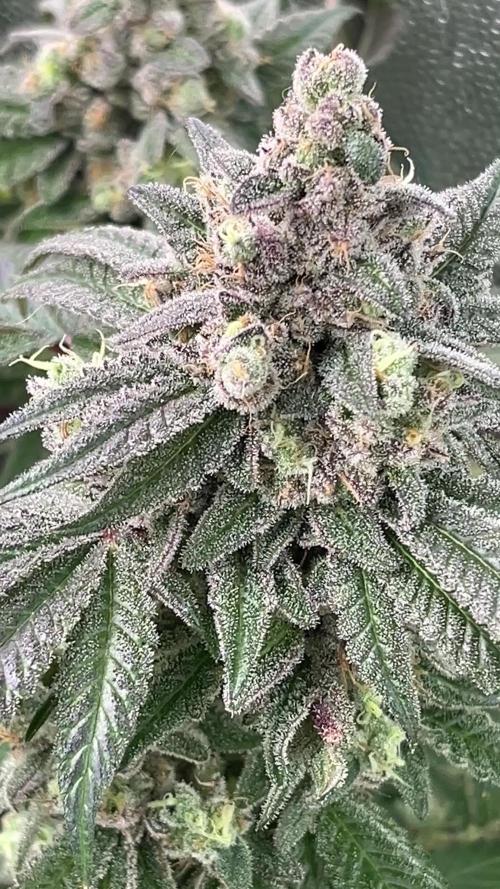
Ultima semana!! Esperemos asi sea jaja Bueno el engorde es notorio, la resina ha aumentado y el olor cada vez mas fuerte. Comienza el lavado, a tratar de llegar a 0 EC en el corte.
Esta genetica ha presentado 2 fenotipos, uno con pistilos mas largos, cogollo mas denso y mas verde. Asi mismo tiene un aroma a citrico con un toque muy dulce. El otro feno es mas puntiagudo, el cogollo es mas violeta, pistilos mas cortos y menos cantidad. En cuanto a resina van similares. Y el olor es mas ácido, con un toque fresco.
Likes
20
Share


@Dunk_Junk
Follow
18cm vertical growth this week. She's growing well. Not much else to report.

Likes
7
Share


Likes
6
Share


@MrPipi
Follow
Mr. Pipi welcomes you to the 15th Week of Grow and the ~6th week of flower.
I guess the Colas stopped bulking up as quickly as at the beginning. Sadly, but that´s nature.
Maybe a last time watering with molasses and then the next 2weeks flushing. Maybe some ice cubes to see if she gets purple, but i doubt it :D
Day 107: its exactly 7 weeks since Mr. Pipi switched light cycle.
Girl is starting getting purple.

Likes
32
Share


@WATP55
Follow
Day 83
Currently drying, will update before Robert Smith turns up....
Day 87 5 days in, all trimmed and back in to dry.
Temp 18c RH 50%
Will raise humidity to 62% for last 5 days and add fan.
Day 92 Girls pruned to similar size buds and in jars to cure.
Will wait a few days until the residual moisture dissipates then weigh for the final time.
Lemony tones coming off her already.
Pleased as was getting worried during drying. Think I'll try a dry trim on the two Lemon Kix I have in atm (see my other diary)
Sampled some this afternoom and eveb before a cure its smooth enough to smoke, citrusy in profile and burns a nice clean white ash.
Looking forward to seeing the flavour/texture evolve over next few weeks before smoke report.
I'm not the most patient person, this part is extremely difficult.
Day 97 Final weight dried and a week cured is 87.8g (3.1oz)
Extremely pleased with the yield.
Smoke report
I've got to be honest, it's not the stinky monster I was expecting but its made up for it in other areas.
Really smooth on the inhale, lemony forest taste, no horrible aftertaste.
No coughing, which is a novelty!
For my first run, I'm v happy.
I feel the excessive heat may have microwaved some of the terps but we live and we learn.
Not long until my Auto Lemon Kix are ready, hopefully got the temp under control in time for them.....
Likes
7
Share


@BIYEI
Follow
Floracion (Tiempo estimado 64 dias)
Quinta Semana de Floracion
05/02/2024 - 5:00hrs y 22hrs: Se hace cambio de solucion nutritiva, con parametros ajustados a la semana, Se hace Lavado de cubetas, tuberias, bomba, humificador, y perifericos, Se realiza limpieza completa del indoor, Se verifican parámetros básicos del agua, mantener cuidados específicos, el olor es mas penetrante pero gracias al filtro de carbono se mantiene fuera del indoor sin aroma, empiezan a observarse mas el crecimiento de los Cogollos.
Agua de osmosis: Ph 6.0, PPm 950-1200, Ec 1.9-2.3, Temperatura 18°C - 24°C
Ambiente: Temperatura 19-25 °C, Humedad 65%, Ventilación 20%, 12 hrs de luz , 12 hrs de obscuridad.
06/02/2024 - 5:00hrs y 22hrs: Se verifican parámetros básicos del agua, mantener cuidados específicos.
Agua de osmosis: Ph 6.0, PPm 950-1200, Ec 1.9-2.3, Temperatura 18°C - 24°C
Ambiente: Temperatura 19-25 °C, Humedad 65%, Ventilación 20%, 12 hrs de luz , 12 hrs de obscuridad.
07/02/2024 - 5:00hrs y 22hrs: Se verifican parámetros básicos del agua, mantener cuidados específicos.
Agua de osmosis: Ph 6.0, PPm 950-1200, Ec 1.9-2.3, Temperatura 18°C - 24°C
Ambiente: Temperatura 19-25 °C, Humedad 65%, Ventilación 20%, 12 hrs de luz , 12 hrs de obscuridad.
08/02/2024 - 5:00hrs y 22hrs: Realize por la mañana riego foliar con agua de osmosis sobre toda la planta, quedo empapada, al iniciar el ciclo de luz y verificar la planta se noto lama dentro del recipiente de la solucion y canastilla hidroponica por arriba y abajo de ella, La unica accion que realize fue quitar la malla de guia para que subieran los tallos y no se contaminaran, Se verifican parámetros básicos del agua, mantener cuidados específicos.
Agua de osmosis: Ph 6.0, PPm 950-1200, Ec 1.9-2.3, Temperatura 18°C - 24°C
Ambiente: Temperatura 19-25 °C, Humedad 65%, Ventilación 20%, 12 hrs de luz , 12 hrs de obscuridad.
09/02/2024 - 5:00hrs y 22hrs: Se realizo limpieza de la mold en el cubo hidroponico, acomode los aspersores de modo que el chorro de agua diera al mold, cambie la bomba de oxigeno, se nota un cambio por la tarde considerable, Se verifican parámetros básicos del agua, mantener cuidados específicos.
Agua de osmosis: Ph 6.0, PPm 950-1200, Ec 1.9-2.3, Temperatura 18°C - 24°C
Ambiente: Temperatura 19-25 °C, Humedad 65%, Ventilación 20%, 12 hrs de luz , 12 hrs de obscuridad.
10/02/2024 - 5:00hrs y 22hrs: Se observa mejoria considerable en las raices y el cubo hidroponico, Se limpia el prefiltro del extractor de 8 pulgadas, Se verifican parámetros básicos del agua, mantener cuidados específicos.
Agua de osmosis: Ph 6.0, PPm 950-1200, Ec 1.9-2.3, Temperatura 18°C - 24°C
Ambiente: Temperatura 19-25 °C, Humedad 65%, Ventilación 20%, 12 hrs de luz , 12 hrs de obscuridad.
11/02/2024 - 5:00hrs y 22hrs: Se nota una mejora considerable en la raiz y en el cubo de reserva, Parece haber desaparecido el moho, Se verifican parámetros básicos del agua, mantener cuidados específicos.
Agua de osmosis: Ph 6.0, PPm 950-1200, Ec 1.9-2.3, Temperatura 18°C - 24°C
Ambiente: Temperatura 19-25 °C, Humedad 65%, Ventilación 20%, 12 hrs de luz , 12 hrs de obscuridad.