



@DogDoctorOfficial
Follow
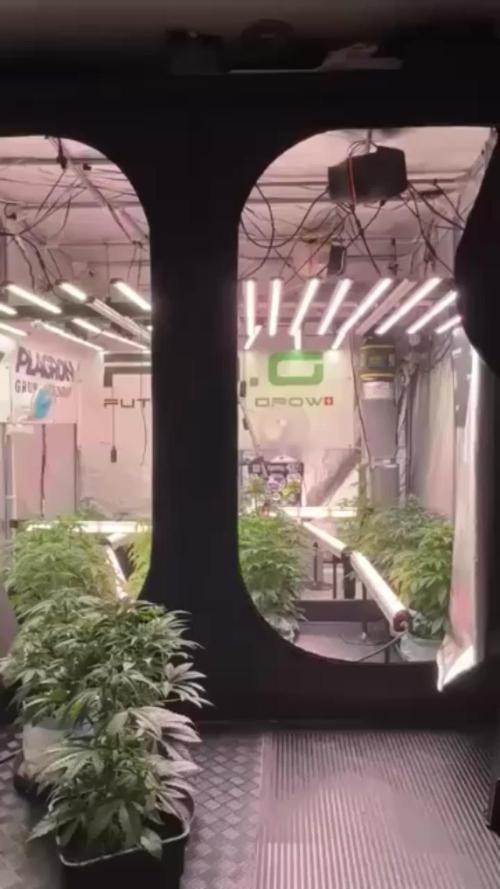
🌱 Week 7 From Seed | 12/12 From Germination
Transition Phase — Early Flower (Week 1)
📌 Quick Context (For New Readers)
These plants have been grown 12/12 from seed from day one.
Because of this light schedule, development timelines do not match traditional veg/flower calendars.
Although we are technically at Week 7 from seed, the plants are now entering what we consider Early Flower (Week 1).
Pre-flower signs are present but still subtle, which is completely normal for this method, especially with training involved.
Think of this as:
Week 7 from seed ≈ Week 5 in overall physiological development
⸻
🌿 Overall Plant Status
All plants are healthy, vigorous, and responding extremely well to training.
• Strong lateral growth
• Very bushy structure
• Tight internodes
• No major deficiencies or stress responses
The genetics are clearly expressing well under this method and environment.
⸻
🧠 Training Update & Learning Moment
This week involved low-stress training using plastic clamps and this was my first time.
• Most plants responded beautifully
• However, one branch was left clamped slightly too long, resulting in a partial break
Recovery Action • White tape was applied immediately
• The branch is stable
• Early pre-flower signs are still visible on that plant
👉 Based on experience and current visuals, full recovery is expected.
For comparison:
• Another plant is trained using metal clamps, shown in the last photo
• This plant is more delayed and not yet showing flower signs
This contrast clearly shows how training intensity and timing can influence flowering onset under 12/12 from seed.
⸻
🌡️ Room Conditions
Despite very cold temperatures outside, the room has been stabilized well:
• Temperature: 27.5°C
• Relative Humidity: 65.4%
• CO₂: ~909 ppm
Humidity is slightly higher than ideal for flower, but plants are thriving and showing no negative responses.
⸻
💧 Root Zone & Nutrition
Adjustments were made this week to prepare the plants for flowering demand.
• EC: Increased to 2.4
• Water Temperature: ~21°C (70°F)
• pH: Raised to 6.5
🔬 Why the pH Change?
This was a deliberate, science-based decision, not guesswork.
As plants transition into flower, a slightly higher pH:
• Improves availability of Calcium, Magnesium, and Phosphorus
• Supports early flower initiation
• Helps the plant shift metabolic focus
From here:
• pH will be cycled between 6.0 → 6.5
• Always kept above 6.0
• Adjusted based on plant feedback
Until now, pH ranged around 5.8–6.0, which favored vegetative uptake.
This marks the nutritional transition into flower physiology.
⸻
💡 Lighting Update
• PPFD Range: ~600–800 µmol/m²/s
• Taller plants receive closer to 800–850
• Smaller plants around 600–700
• Top Lights: 100%
• Under-Canopy Lighting: ~40–45% and increasing gradually
The goal is to let plants adapt to photons coming from all directions, promoting:
• Stronger lower growth
• Better canopy balance
• Reduced larf later in flower
⸻
🔮 What to Expect Next
Next 1–2 weeks:
• Clear flower initiation on most plants
• Stretch phase beginning
• Increased nutrient demand
• Continued canopy management (tucking & bending only)
What NOT to expect yet:
• No heavy defoliation
• No aggressive stress training
• No rushing the transition
The harder training plant will be given more time — no forcing.
⸻
🙏 Final Words
Thanks to everyone following along — newcomers, supporters, critics, and sponsors alike.
This run is about learning, transparency, and showing what 12/12 from seed really looks like when done patiently and intentionally.
More updates soon 🌱
As always — observations welcome.
Community Note
Due to YouTube community guidelines, our educational channel was taken down.
While we firmly believe the content was purely educational, we respect YouTube’s decision and are actively exploring alternative platforms to continue sharing this work.
📡 Please stay tuned.
🙏 Thank you for your patience and continued support.
FOR DISCOUNT CODES AND MORE JUST FOLLOW THE LINK https://website.beacons.ai/dogdoctorofficial
📲 Don’t forget to Subscribe and follow me on Instagram and YouTube @DogDoctorOfficial for exclusive content, real-time updates, and behind-the-scenes magic. We’ve got so much more coming, including transplanting and all the amazing techniques that go along with it. You won’t want to miss it.
GrowDiaries Journal: https://growdiaries.com/grower/dogdoctorofficial
Instagram: https://www.instagram.com/dogdoctorofficial/
YouTube: https://www.youtube.com/@dogdoctorofficial Deleted by Youtube
Vimeo : https://vimeo.com/dogdoctorofficial Under construction stay tuned ⸻
Explore the Gear that Powers My Grow
If you’re curious about the tech I’m using, check out these links:
🔆 Lighting & Environmental Control
• Future of Grow — Advanced LED lighting technology
https://www.futureofgrow.com/
DISCOUNT CODE: DOG20
• Lumiflora — Under-canopy LED lighting
https://lumiflorade.com/
• TrollMaster — Environmental controllers and automation gear (past collaboration)
⸻
Genetics
• Zamnesia Seeds — Genetics used in this project
https://www.zamnesia.com/
⸻
🌱 Soil, Substrates, Boosters & Root Support
• Plagron — Substrates, bio mixes, and supportive products
https://plagron.com/en/
⸻
🎒 Storage, Curing & Preservation
• Grove Bags — Curing and storage solutions
https://grovebags.com/
⸻
📸 Photography Equipment & Tools
(Not sponsors, but part of my creative toolkit)
• Sony A6700
• Sony full-frame macro lens + few more
• Stacking photography workflow - learning
• iPhone (for behind-the-scenes shots)
We’ve got much more coming as we move through the grow cycles. Trust me, you won’t want to miss the next steps, let’s push the boundaries of indoor horticulture together!
As always, this is shared for educational purposes, aiming to spread understanding and appreciation for this plant. Let’s celebrate it responsibly and continue to learn and grow together.
With true love comes happiness. Always believe in yourself, and always do things expecting nothing and with an open heart. Be a giver, and the universe will give back in ways you could never imagine.
💚 Growers love to all 💚
📸 P.S. – The Eye Behind the Lens
All photos in this diary (for now — except for the ones showing the camera, which I took with an iPhone) are taken with a Sony A6700 paired with a Sony full-frame macro lens and a few more.
Photography is part of the story — it’s how we share the fine textures, the glow, and the quiet details that words can’t always capture.
I’ve also started experimenting with photo stacking — a technique where multiple images, each taken at a slightly different focus point, are layered together to create one perfectly sharp image from front to back.
It’s not digital enhancement or AI; it’s pure photography — a way to reveal the plant’s beauty in microscopic depth, from trichome to petal.
You’ll even see a few shots of "ghost me" capturing the shots — camera, lens, setup — because every grow deserves not just to be cultivated, but documented like art.
FOR DISCOUNT CODES AND MORE JUST FOLLOW THE LINK https://website.beacons.ai/dogdoctorofficial
NEW DISCORD - Official Server Invite Link : https://discord.gg/ksjAkA5T74



@Culinarychemist
Follow
Buds are getting dense very strong smell from touch have to get another and separate the three unfortunate the buds are not turning purple on either plants but great grow otherwise



@Ultraviolet
Follow
2nd net is up. Early bud formations are promising. holding up to the extremes pretty well, some leaves taking minor damage, but overall, she is holding up, gave her 1 night at 50F see how she would react, stressful. Not advised as it messes with her metabolism, but I want to see if it triggers any anthocyanin response. Love to see her purp up but no signs yet.
My homework.
Rubisco regeneration is intrinsically linked to nitrogen supply because Rubisco is a major sink for nitrogen in plants, typically accounting for 15% to over 25% of total leaf nitrogen. The regeneration phase itself consumes nitrogen through the synthesis of the Rubisco enzyme and associated proteins (like Rubisco activase), and overall nitrogen status heavily influences the efficiency of RuBP regeneration.Structural Component: Nitrogen is an essential building block for all proteins, and the sheer abundance of the Rubisco protein makes it the single largest storage of nitrogen in the leaf.
Synthesis and Activity: Adequate nitrogen supply is crucial for the synthesis and maintenance of sufficient Rubisco enzyme and Rubisco activase (Rca), the regulatory protein responsible for maintaining Rubisco's active state. Nitrogen deficiency leads to a decrease in the content and activity of both Rubisco and Rca, which in turn limits the maximum carboxylation rate, Vmax, and the rate of RuBP regeneration Jmax, thus reducing overall photosynthetic capacity.
Nitrogen Storage and Remobilization: Rubisco can act as a temporary nitrogen storage protein, which is degraded to remobilize nitrogen to other growing parts of the plant, especially under conditions of nitrogen deficiency or senescence.
Nitrogen Use Efficiency (NUE): The allocation of nitrogen to Rubisco is a key determinant of a plant's photosynthetic nitrogen use efficiency (PNUE). In high-nitrogen conditions, plants may accumulate a surplus of Rubisco, which may not be fully activated, leading to a lower PNUE. Optimizing the amount and activity of Rubisco relative to nitrogen availability is a target for improving crop NUE.
Photorespiration and Nitrogen Metabolism: Nitrogen metabolism is also linked to the photorespiration pathway (which competes with carboxylation at the Rubisco active site), particularly in the reassimilation of ammonia released during the process.
To increase RuBisCO regeneration, which refers to the process of forming the CO2 acceptor molecule Ribulose-1,5-bisphosphate (RuBP) during photosynthesis, the primary methods involve optimizing the levels and activity of Rubisco activase (Rca) and enhancing the performance of other Calvin-Benson-Bassham (CBB) cycle enzymes.
Biochemical and Environmental Approaches:
Optimize Rubisco Activase (Rca) activity: Rca is a crucial chaperone protein that removes inhibitory sugar phosphates, such as CA1P (2-carboxy-D-arabinitol 1-phosphate), from the Rubisco active site, thus maintaining its catalytic competence.
•Ensure optimal light conditions: Rca is light-activated via the chloroplast's redox status. Adequate light intensity ensures Rca can effectively maintain Rubisco in its active, carbamylated state.
•Maintain optimal temperature: Rca is highly temperature-sensitive and can become unstable at moderately high temperatures (e.g., above 35°C/95F° in many C3 plants), which decreases its ability to activate Rubisco. Maintaining temperatures within the optimal range for a specific plant species is important.
•Optimize Mg2+ concentration: Mg2+ is a key cofactor for both Rubisco carbamylation and Rca activity. In the light, Mg2+ concentration in the chloroplast stroma increases, promoting activation.
•Manage ATP/ADP ratio: Rca activity depends on ATP hydrolysis and is inhibited by ADP. Conditions that maintain a high ATP/ADP ratio in the chloroplast stroma favor Rca activity.
Enhance Calvin-Benson-Bassham (CBB) cycle enzyme activity: The overall rate of RuBP regeneration can be limited by other enzymes in the cycle.
•Increase SBPase activity: Sedoheptulose-1,7-bisphosphatase (SBPase) is a key regulatory enzyme in the regeneration pathway, and increasing its activity can enhance RuBP regeneration and overall photosynthesis.
•Optimize other enzymes: Overexpression of other CBB cycle enzymes such as fructose-1,6-bisphosphate aldolase (FBA) and triose phosphate isomerase (TPI) can also help to balance the metabolic flux and improve RuBP regeneration capacity.
Magnesium ions, Mg2+, are specifically required for Rubisco activation because the cation plays a critical structural and chemical role in forming the active site: A specific lysine residue in the active site must be carbamylated by a CO2 molecule to activate the enzyme. The resulting negatively charged carbamyl group then facilitates the binding of the positively charged Mg2+ion. While other divalent metal ions like Mn2+ can bind to Rubisco, they alter the enzyme's substrate specificity and lead to dramatically lower activity or a higher rate of the non-productive oxygenation reaction compared to Mg2+, making them biologically unfavorable in the context of efficient carbon fixation. The concentration of Mg2+ in the chloroplast stroma naturally increases in the light due to ion potential balancing during ATP synthesis, providing a physiological mechanism to ensure the enzyme is activated when photosynthesis is possible. At the center of the porphyrin ring, nestled within its nitrogen atoms, is a Magnesium ion (Mg2+). This magnesium ion is crucial for the function of chlorophyll, and without it, the pigment cannot effectively capture and transfer light energy.
Mg acts as a cofactor: Mg2+ binds to Rubisco after an activator CO2 molecule, forming a catalytically competent complex (Enzyme-CO2-Mg2+). High light + CO2) increases demand: Under high light (60 DLI is a very high intensity, potentially saturating) and high CO2, the plant's capacity for photosynthesis is high, and thus the demand for activated Rubisco and the necessary Mg2+ cofactor increases. Mg deficiency becomes limiting: If Mg2+ is deficient under these conditions, the higher levels of Rubisco and Rubisco activase produced cannot be fully activated, leading to lower photosynthetic rates and potential photo-oxidative damage.
Optimal range: Studies show that adequate Mg2+ application can enhance Rubisco activation and stabilize net photosynthetic rates under stress conditions, but the required concentration is specific to the experimental setup.
Monitoring is key: The most effective approach in a controlled environment is to monitor the plant's physiological responses e.g., leaf Mg2+ concentration, photosynthetic rate, Rubisco activation state, and adjust the nutrient solution/fertilizer to maintain adequate levels, rather than supplementing a fixed "extra" amount.
In practice, this means ensuring that Mg2+ is not a limiting factor in the plant's standard nutrient solution when pushing the limits with high light and CO2.
Applying Mg2+ through foliar spray is beneficial to Rubisco regeneration, particularly in alleviating the negative effects of magnesium (Mg) deficiency and high-temperature stress (HTS). While Mg can be leached from soil, within the plant it is considered a mobile nutrient, particularly in the phloem. Foliar-applied Mg is quickly absorbed by the leaves and can be translocate to other plant parts, including new growth and sink organs.
Foliar application of: NATURES VERY OWN MgSO4 @ 15.0g L-1 in a spray bottle.
Foliar sprays are often recommended as a rapid rescue measure for existing deficiencies or as a supplement during critical growth stages, when demand for Mg is high. Application in the early morning or late evening can improve absorption and prevent leaf burn.
The starting point [of creativity] is curiosity: pondering why the default exists in the first place. We’re driven to question defaults when we experience vuja de, the opposite of déjà vu. Déjà vu occurs when we encounter something new, but it feels as if we’ve seen it before. Vuja de is the reverse—we face something familiar, but we see it with a fresh perspective that enables us to gain new insights into old problems. Come walk in the enchanted forest.


@Legendaryseedthumb
Follow
Amazing!. The big plant smells so good
Drying day 6: they are still moist! A very good drying session is going on over here. The longer the better!
Trimmed today after 10 days. Ended up with 80grams pure buds! Super nice chunky buds smells amazing and 8grams of sift from the leaves.
I’ll filter the leaves again with my bubble bags



@FourTwenty_Plants
Follow
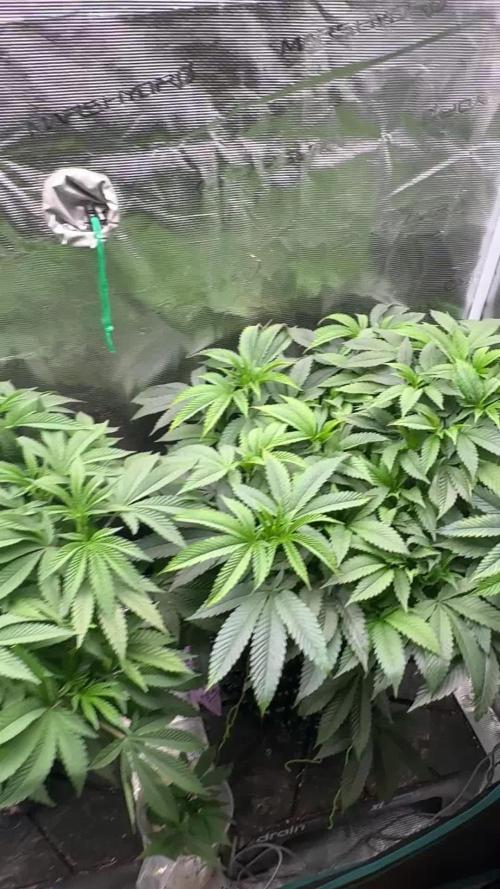
Last days in veg—she’s doing very well and I’m really hyped for the bloom phase.
Thanks to the topping and consistent LST, she didn’t just form a canopy—it’s more like a full-on “sea” of tops. Everything is spread out wide and super even, with tons of strong growth points all sitting on the same level.
The main stem is thick as hell, and the four mains built from topping are insanely solid—each one feels like its own plant. Structure is dialed in perfectly, light penetration is on point, and she handled every bit of training like a champ.
She’s more than ready for the flip



@Solitude
Follow
Cultivation Overview
This run featured a combination of established grower cuts and experimental phenohunt selections, with a focus on evaluating flower structure, resin production, terpene expression, and overall phenotype quality.
Genetics were divided into two groups:
Grower Cuts
- Lemon Cherry Gelato (LCG)
- LCG × Grape Pie
- Dopamine
- Route 65
- Alien Mints
Pheno Hunt
- Medusa
- Selene
- Verzace (TwerkQuake)
- Designer Marker
- Strawlime
4. Estimated Trimmed Weight
Using the 35% trimming-loss assumption recorded in the harvest notes:
Strain
Estimated trimmed
FF 45.5 g
Dopamine 58.5–65 g
LCG × GP 45.5 g
Designer Marker 105.8 g
Medusa 103.35 g
Verzace 96.2 g
Selene 167.05 g
Route 65 28.6 g
LCG 32.5 g
Estimated trimmed weight for strains with a 35% allowance
683–690 g
5. Phenotype Observations
Based on the previous grow notes and observations:
Medusa
- #1 — Light floral aroma.
- #2 — Jackfruit-like, sour and unusual profile.
- #3 — Herbal aroma with fluffy flower structure.
Verzace (TwerkQuake)
- #2 — Strong aroma, good overall effect, little noticeable sweetness on the palate.
- #3 — Average expression, less interesting than the other phenotypes.
Other genetics
The previous genetic records identify:
- Dopamine — Blueberry Banana × Grape Gas.
- Route 65 — Studio 54 × RS11.
- Alien Mints — Animal Mints BX.
- LCG × Grape Pie — Backpackboyz Mystic Cut.
- Strawlime — Strawberry Gummy × Lemon Tree S1 × Runtz.
- Designer Marker — Permanent Marker × TwerkQuake #15.
- Selene — Blue Ritz × Yellow Mermaid.
- Verzace — Wavy × BebeSita.
- Medusa — Yellow Mermaid #1 × TwerkQuake #15.
Overall Evaluation
This run provided a useful comparison between established genetics and experimental phenotypes.
The phenohunt selections offered an opportunity to evaluate differences in aroma, flower structure, and individual expression, while the grower cuts provided established reference points for comparison.



@lefthandedJ
Follow
Flowering looks awesome on the ChemDog! Lots of bud sites and they're growing at a respectable rate. ATF's are running 3 plants in 3 diff stages- one's a couple weeks into flower, one's just starting,and one's still the holdout. Meanwhile, I've got flowering on the Night Nurse and one of the Viper Cookies. The rest are close but I can't say for sure they've transitioned. Weather's getting into a hot and humid phase, gotta watch that ChemDog. Think it's got a decent structure for ventilation but I've read horror stories on how the Dog loves mold. Further training of the branches has been fruitful, I'm seeing a lot more topside bud sites than usual. I'm working on irrigation-- I set up a 30 gal container and it works for drip, but without a pipe system it's still one at a time, although I have to admit it's worth it to save my back. Plus, I have to have a supply ready for use in case my buddy needs to fill in for me and water the ladies.
Been checking the cameras regularly ( I have them all throughout the property, game cameras with IR flash), and to date haven't seen anything that would constitute a threat. Just some curious raccoons and one really ugly opossum. Even the skunks don't bother them this year, which is nice but a little strange considering they dig in them every year. It's really just the animals I'm watching for, people aren't as much of a concern. Mostly because I don't know any. Aside from that, I sleep with my head feet away from my babies, so somebody would have to have big brass ones to even try. Yes, I know, a little overprotective.
Fingers crossed it'll be one hell of a harvest (by my standards).
8/11 Update:
Been lucky still with the weather, but it's turning really humid. Fed the girls this morning, a mix of 1C molasses and 1/2C epsom salt in 20 gallons. Just a little supplement to the tiger bloom they've been feasting on. Speaking of the Tiger Bloom, I can't help but think I'd do just as well mixing my own nutrient solution, since the cost really adds up quick. For his year, however, it'll be fine. My watering gizmo is working well, just leaks a tiny bit and that's fine for the remainder of the year. Now that I have an idea of what works for me I can spend the off-season setting up something right.
Had to thin out the Lamb's a bit, it wasn't getting anywhere near enough air flow. Also took a few on the ChemDog as I'm expecting mold/rot conditions for a while and she's prone. Shouldn't have much problem, wind blows almost constantly here, but you can never be too careful. Training is taking well, overall they look pretty good. Next year-- bigger grow bags, better soil, and much pickier seed choices. I think I may even abandon the idea of topping them in the future-- it just slows them down and you can get the same end results with training. Granted, my ladies are kinda sparse and ugly, but that's the learning curve. Next time around I think I have a pretty good idea of what to do and when to do it, based on what worked and didn't work this year. Another big thing is nutrient timing-- I def jumped the gun on flower power for a few of them and it just stunted them wicked-- shoulda continued veg food a couple weeks into flower even for the early bloomer, she'd be a monster.


@Mr_Motalovah
Follow
End of week one and seedlings are looking good.
Sprouted fast, stretched a bit because the light was too far but that was fixed by the end of the week.
Leaves are opening up and spreading out fast.
Some roots are already showing up on the sides of the cup.
I placed the seeds in 500ml cups with BioBizz Light Mix soil, beforehand I mixed 1 gram of Synergy per 4 liters of soil.
These are live microbes called Mycorrhiza which live in symbiotic association with the roots.
My idea is to leave them in this container for about 14-21 days until the roots develop correctly then transplant them to their final pot which will be an 11L fabric pot.
As the light mix soil comes blended for at least two week of life, no nutrients will be added until after the transplant.
Happy Growing!😃 🌱 🌿 🌲


@Karl_Heinz420
Follow
Original Sensible Seeds - Frosted Guava 🍈
Enjoy - Week 2 🌼
- 25-26 grad Celsius
- 50-55% humidity level
- 20l Air-Pot
(75% BioBizz All-Mix, 25 % BioBizz Worm Humus)
- RO-water (PH 6,25)
Day 10 🌸
-Defoliation
Sanlight Evo 3-60 80%: about 850 PPFD
Spider Farmer Glow30 12h/12h on


@Wrongholn519
Follow
The Blackberry auto by Fastbuds has been a thrilling plant to grow. Starting off as a tri-cotyledon seedling, she's been a rush from the start.
When she came out mutated I didn't even know if I wanted to keep her; I asked the growdiaries.com community for help. After speaking with a few experts I decided to keep it and see what would happen.. Since then she has developed thick healthy stocks stalks and dark leaves with ripe purple flowers bursting out between them add every node.
Using a home mix super soil with Promis Organic as the base, I decided to feed compost extracts laced with Golden Tree & CalMag which helped kick this girl into over drive and push out these dense sticky buds.
I'm expecting around 3 ounces from her and it's day 73 since she popped out of the soil. She has a sweet aroma and is completely covered in trichomes.
Drying/ Curing process:
- she will be hung upside down by the main stock until she is dry (8-12 days)
- My humidity will be set to 55 - 60 % and my temps will range from 65-70 degrees F
- Will store in Glas Mason jars with 2-way Boveda humidty packs. These are a lifesaver for new growers. They will keep the humidity in the jar at 62%.
- after 2 weeks I'll throw down a mad sesh
Thanks to everyone who offered me tips and help when I needed it.
Thanks Fastbuds for all you do for the community, including growdiaries.com


@Chronickarl
Follow
Finally moved into their forever home and final pots all seems generally good,it's abit tricky with multiple strains as they all react differently so trying to balance and learn what each strain likes is abit harder,net is in place and already using it to spread the canopy out for more top nodes and coverage


@Metatronix
Follow
At the end of this week EC is at 3.0 so first thing to do next week there will be reservoir change.
All goes well looks like the small POGP plant is maturing so probably about two more weeks for her.
I spray them every second day with CannaCure or a hydrogen peroxide solution to be safe from the moldy buds.
The SE7000 runs at 550 Watt and about 35cm from the canopy and is doing an astounding job.
For anyone who is interested in obtaining this efficient and affordable light fixture here's the link:
https://spider-farmer.com/products/spider-farmer-upgraded-se7000-730w-commercial-led-grow-light/
Also i included a unpacking recording of one of the packages Spider Farmer send me for the next grow, If you are interested in buying this 6" exhaust fan with filter here's the link:
https://cutt.ly/gwjZIk9r
Thank you a lot Spider Farmer you guys rock 💚
That's it friends, I hope to see y'all next week.



@Anthonythegrower
Follow
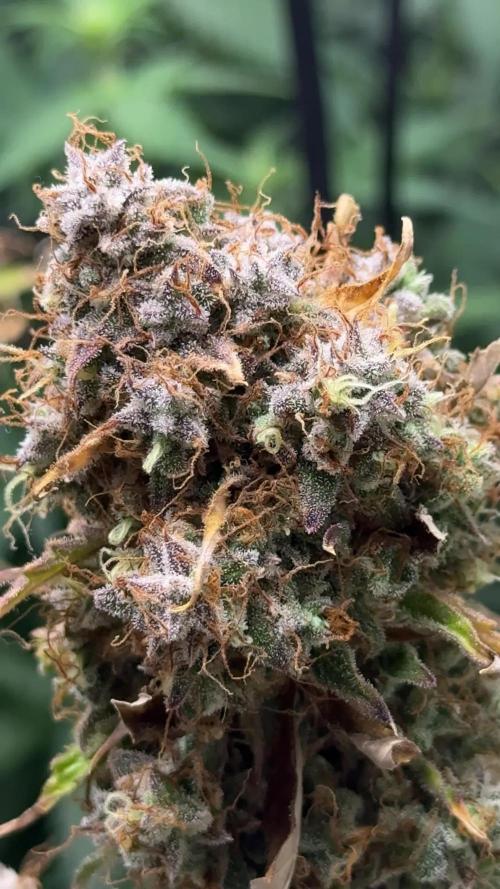
It’s another week of flowering for my plant, and it’s turning out beautifully. You can slowly see purple colors appearing on almost all the buds. All the buds are covered with tons of trichomes — I can hardly believe it, such a beautiful plant.

shorts_status_processing


@Andres
Follow
she with her strong smell ... she has only a couple of weeks to wait ... and here the begining started to lower the temperature and shortened the days ... she will be productive ... with her buds fat ... the stems have begun to bend ... smell of mint between earth and firewood ... a good smell ... 100% recommendable ...


@NewbieLearner
Follow
Very heavy indica. Gets you so freaking stoned its awesome haha. Myself and a few mates already all said this pheno is a definite keeper! huge heads, amazing taste, incredible smell and best of all knocks like a donkey just kicked you😆😂😃
Already got clones growing for the next run! will be growing this strain probably for the next year straight.


@Wastent91
Follow
Ehi come va tutto bene? Caspita questi nutrienti sembra che stiano facendo la differenza!! Ma penso anche dipenda dalla gentica XL che la ragazza è cresciuta in modo esponenziale! Non so già più che training fare per ridurre l altezza come le altre, che mi sa rimarranno più basse xké una gentica poi stabile e piccola forse .. dovrò impegnarmi per la prima volta a fare uno scrog fatto bene , anche se è la mia prima volta perché ho sempre voluto lascia più libera possibile la crescita e quindi "l anima" l essenza primaria della pianta magica!!🧙♂️ringrazio Mars hydro davvero per la fiducia che mi ha donato perché questa luce sta facendo la differenza, tutte le ragazze crescono in modo esponenziale e uniforme in ogni parte della grow come se ci fosse del sole naturale! Sono impressionato dall' intensità luminosa e la sua distribuzione è ottimale!! Vi adoro ragazzi buon 420 a tutti ! 💪🍻🌿🌲😋


@Joni2017
Follow
Day 59, she continues the very healthy flowering 🙌 size 65 cm👏🏻👏🏻 temperature 24º C ☀️, humidity 60% 💧 watering 750 ml alternating one day with nutrients and another without nutrients with osmotized water 💦💦 Session 45 min. of binaural sounds for growth and healing 🎼 and music 😉👍


@Gunnen
Follow
So another week and some more thickening and ripening. The smell is like blueberry on one and the others are sweet as well. Slightly different smell to each. Watering when dry still at pH 6-6.6 and monitoring overall plant trichomes. At this point it's autopilot to the end. No more feeding with slow release and will slowly flush the remaining food out next few weeks. I like my trichomes to have some amber, not too much but mostly cloudy with some amber. Seems like most will be dense, except one plant I've called corona virus. It has smaller buds but are really resinous and smelly. Cheers and happy growing!


